
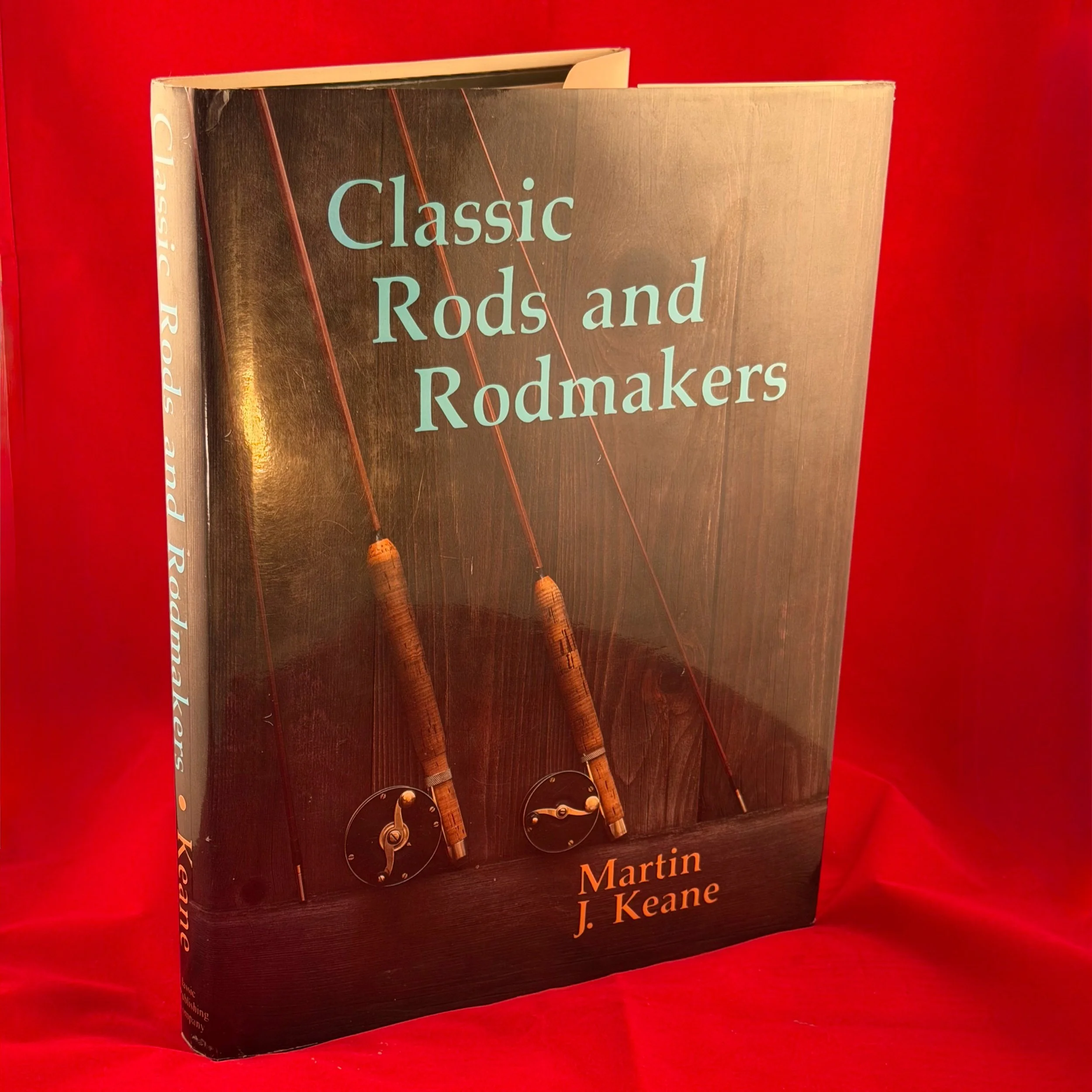
Few books have earned a more enduring place on the shelves of bamboo fly rod collectors than Marty Keane's Classic Rods and Rodmakers.
A respected dealer, collector and authority on classic American fishing rods, Keane brought together a wealth of knowledge concerning the makers, models and traditions that shaped the golden age of American bamboo rodmaking.
The book explores the work of distinguished manufacturers and individual craftsmen, including H.L. Leonard, Thomas & Thomas, and other celebrated names. Its observations on rod design, craftsmanship and the characteristics of individual models make it a particularly useful reference for those who collect, fish and appreciate traditional bamboo rods.
Of particular interest to Alder Creek is Keane's discussion of classic Leonard models, including the powerful 4099½ Tournament, a rod represented in our own collection.
This copy is the third printing, published by Classic Publishing Company in 1992. It is in fine condition and retains its original dust jacket, also in fine condition.
Marty Keane's observations on the great American bamboo rodmakers remain particularly relevant to collectors today. Discover our H.L. Leonard 4099½ bamboo fly rod , a model discussed in Keane's work, or explore our collection of classic angling literature .
Author
Marty Keane
Title
Classic Rods and Rodmakers
Publisher
Classic Publishing Company
Year
1992
Printing
Third printing
Binding
Hardcover
Dust Jacket
Original, fine condition
Condition
Fine
Subject
Classic American bamboo fly rods and rodmakers
Questions about this book, its condition, international shipping, or price are always welcome.
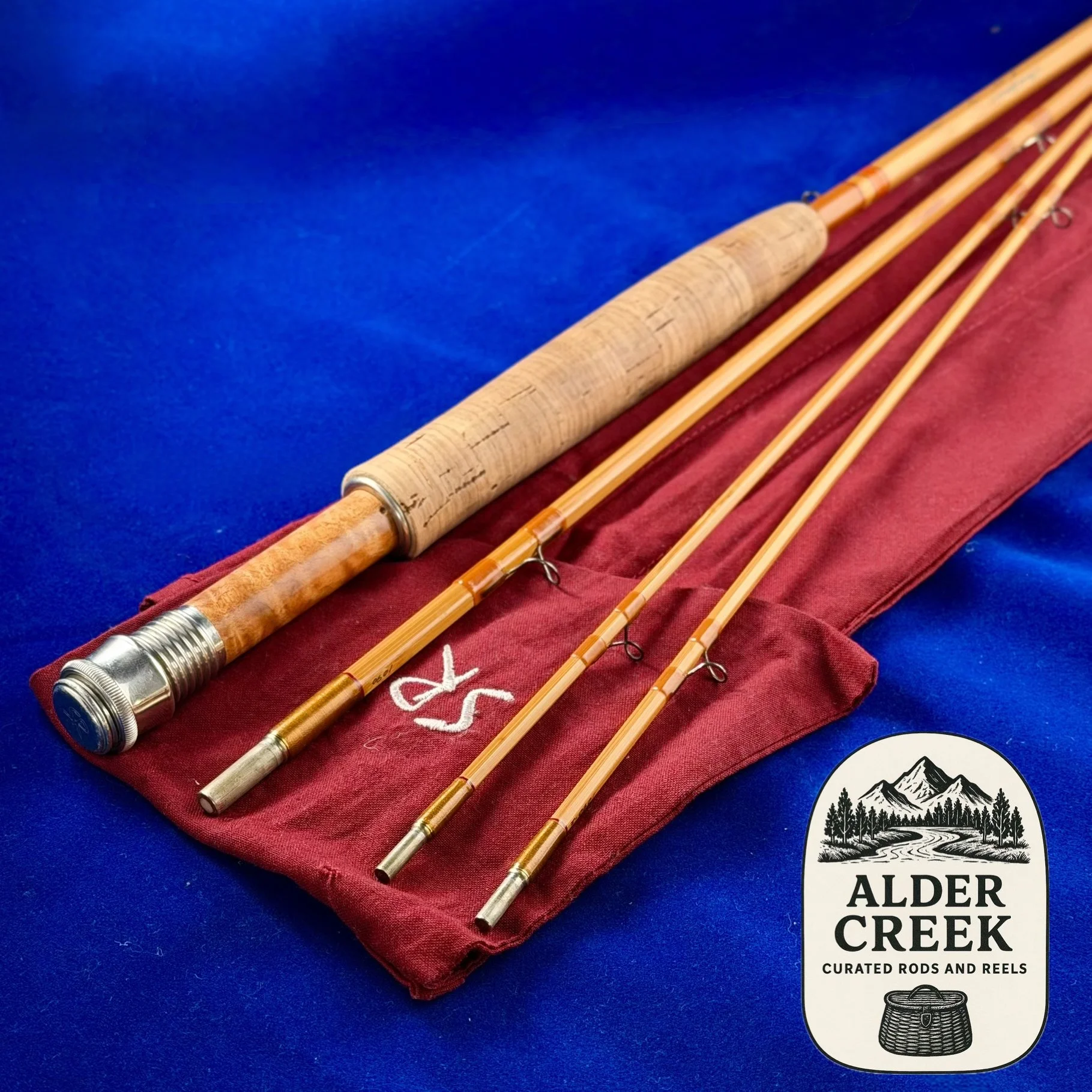
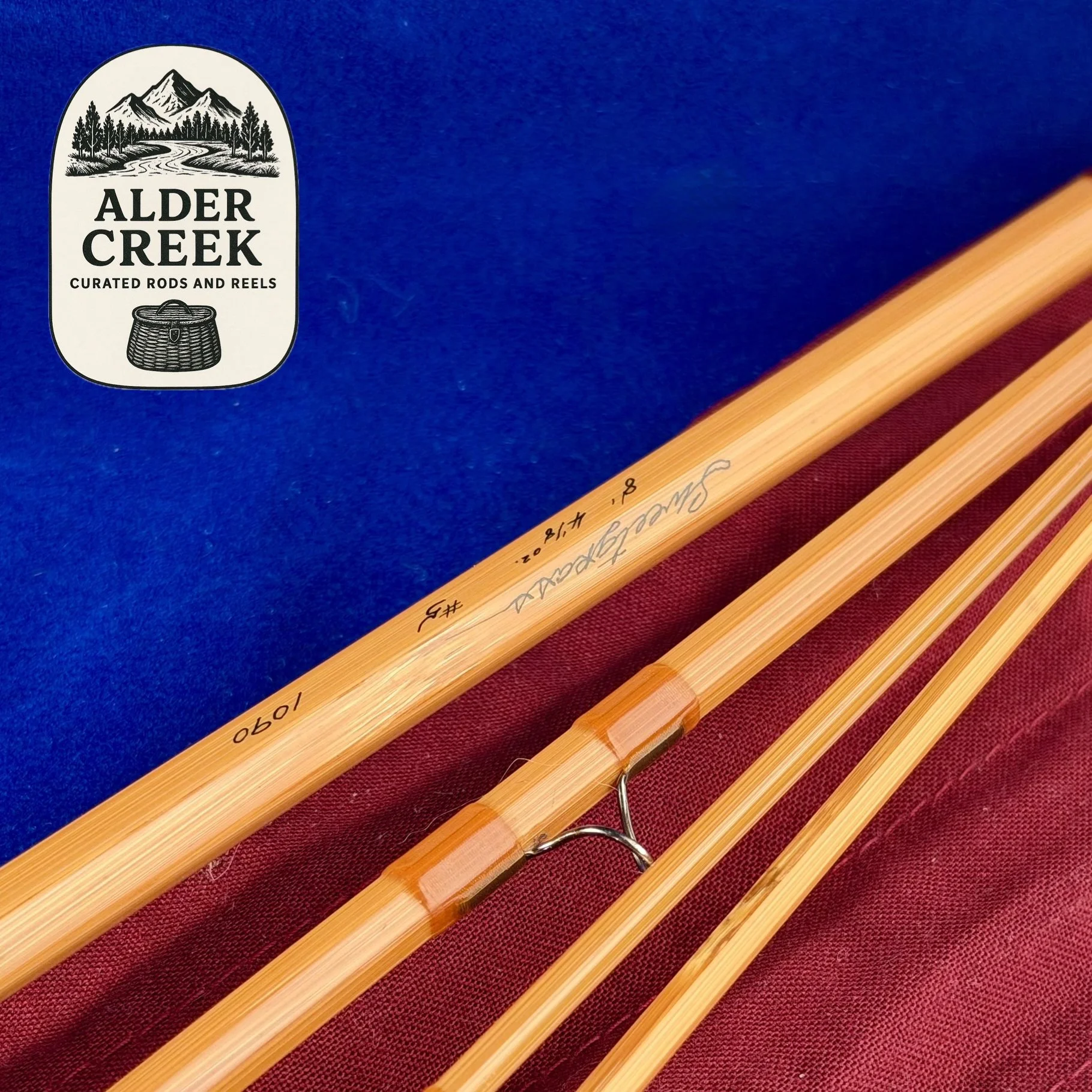
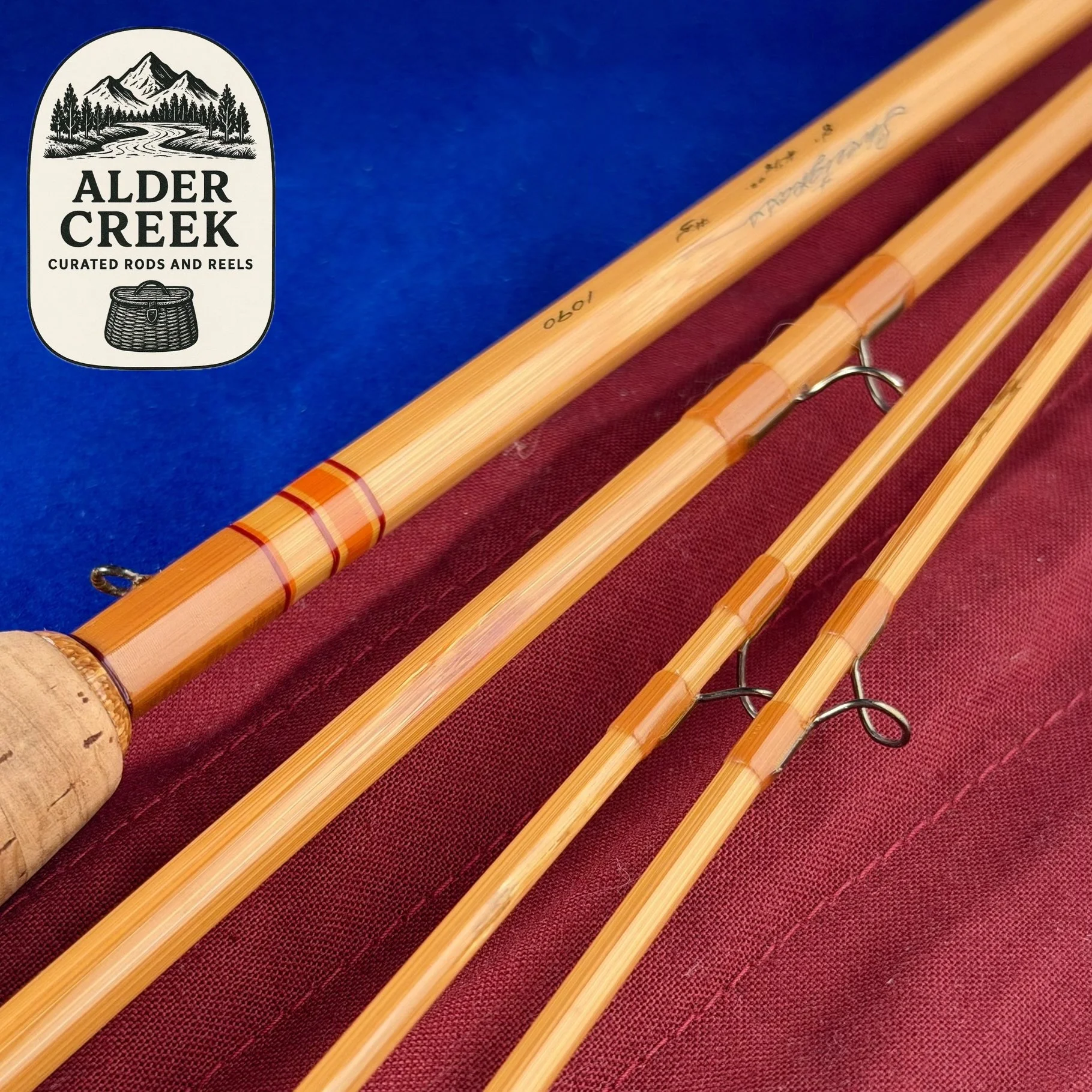
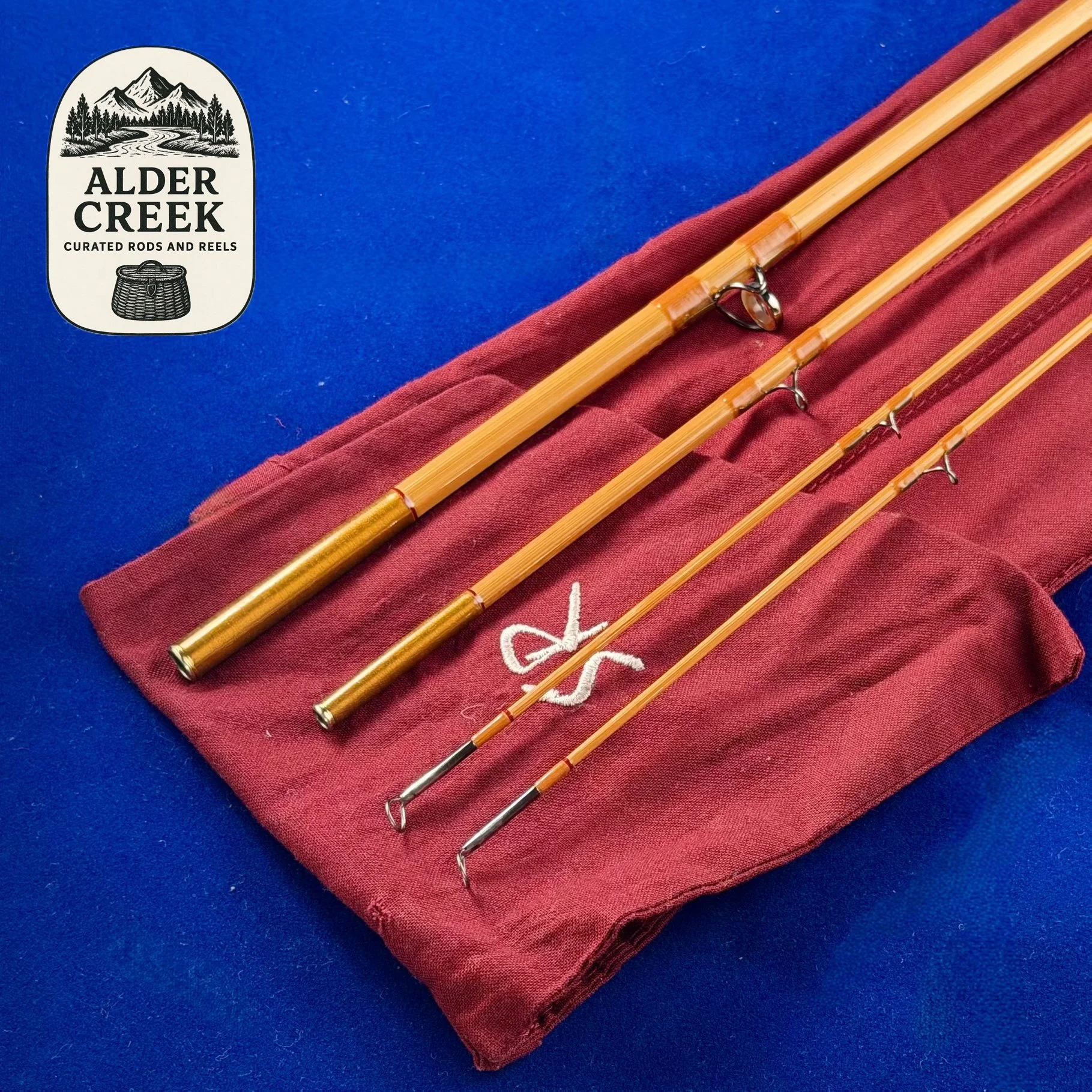
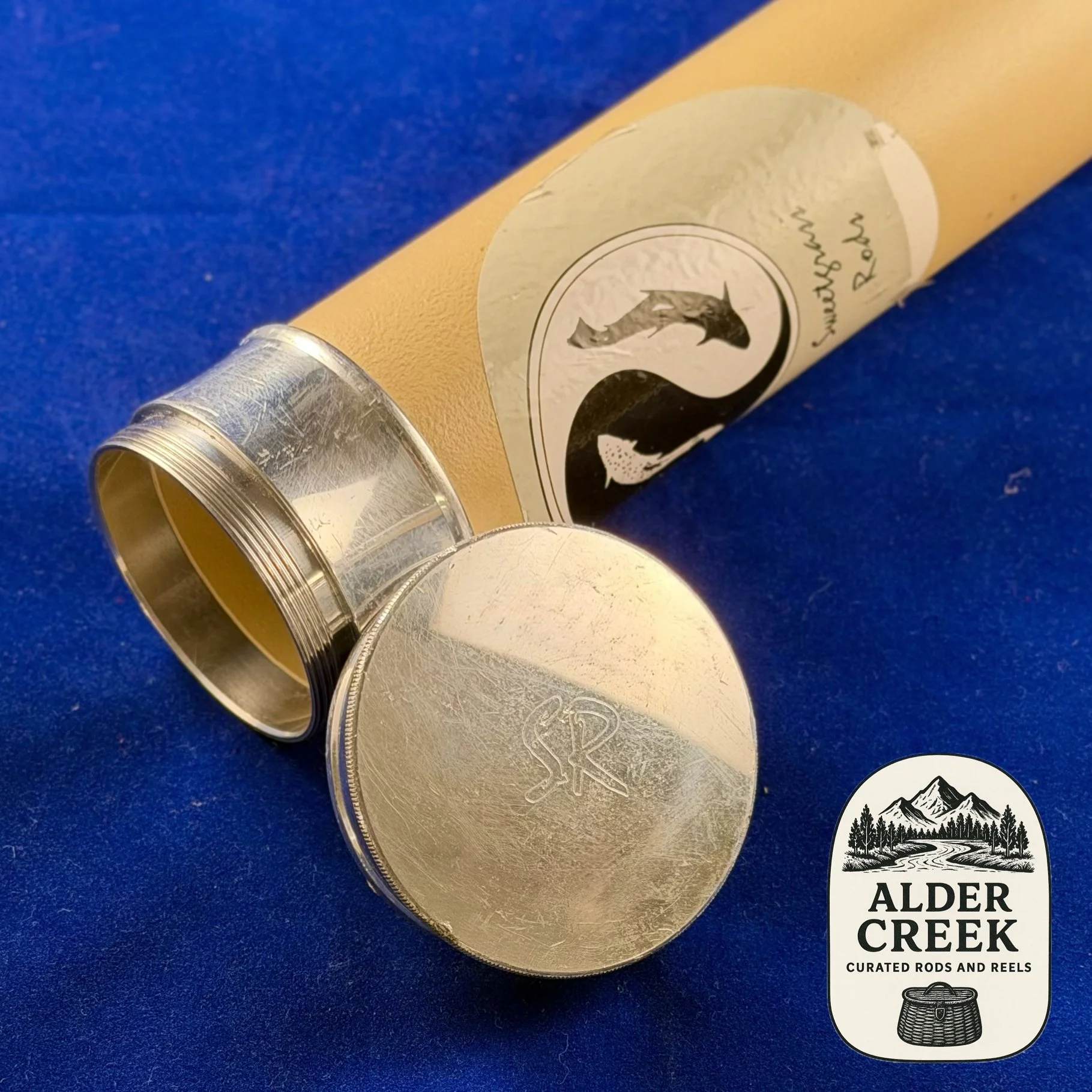
Straw-colored cane with traditional Sweetgrass finish and carefully executed translucent honey wraps. Six-strip hexagonal construction. The rod measures 8' and weighs 4 1/8 oz., built for a #5 line. A beautifully proportioned trout rod, offering an excellent balance between delicacy and reserve. The 8' length provides good line control and reach while retaining the light, responsive feel expected from a fine bamboo rod. Medium to Medium fast action. Serial number 1090. The condition is very good and it has no set in any of the tips. The cork is smooth with light soiling.
The rod reflects the understated elegance and meticulous craftsmanship associated with Glenn Brackett's Sweetgrass rods. His typical writing on the blank. A fine example of contemporary American bamboo rodmaking, it is equally suited to regular use on the river or to a serious collection of modern bamboo rods.
Glenn Brackett is one of the most important figures in modern American bamboo rodmaking. His career was closely associated with the R.L. Winston Rod Company, where he worked alongside Tom Morgan and became an important part of the company's development during its move to Montana.
Brackett later founded Sweetgrass Rods in Twin Bridges, Montana, continuing the tradition of individually crafted bamboo fly rods. His work draws upon the great American rodmaking tradition while reflecting his own considerable experience in taper design, cane preparation and craftsmanship. Through Sweetgrass and the many rodmakers he has influenced, Brackett has played an important role in preserving and advancing the art of American bamboo rodmaking.
Maker
Sweetgrass Rods — Glenn Brackett
Length
8'
Configuration
3-piece / 2-tip
Line
#5
Weight
4 1/8 oz
Action
Medium to medium-fast
Construction
Six-strip hexagonal bamboo
Serial Number
1090
Finish
Straw-coloured cane
Wraps
Translucent honey silk
Condition
Very Good
Questions about this piece, international shipping, or price are always welcome.
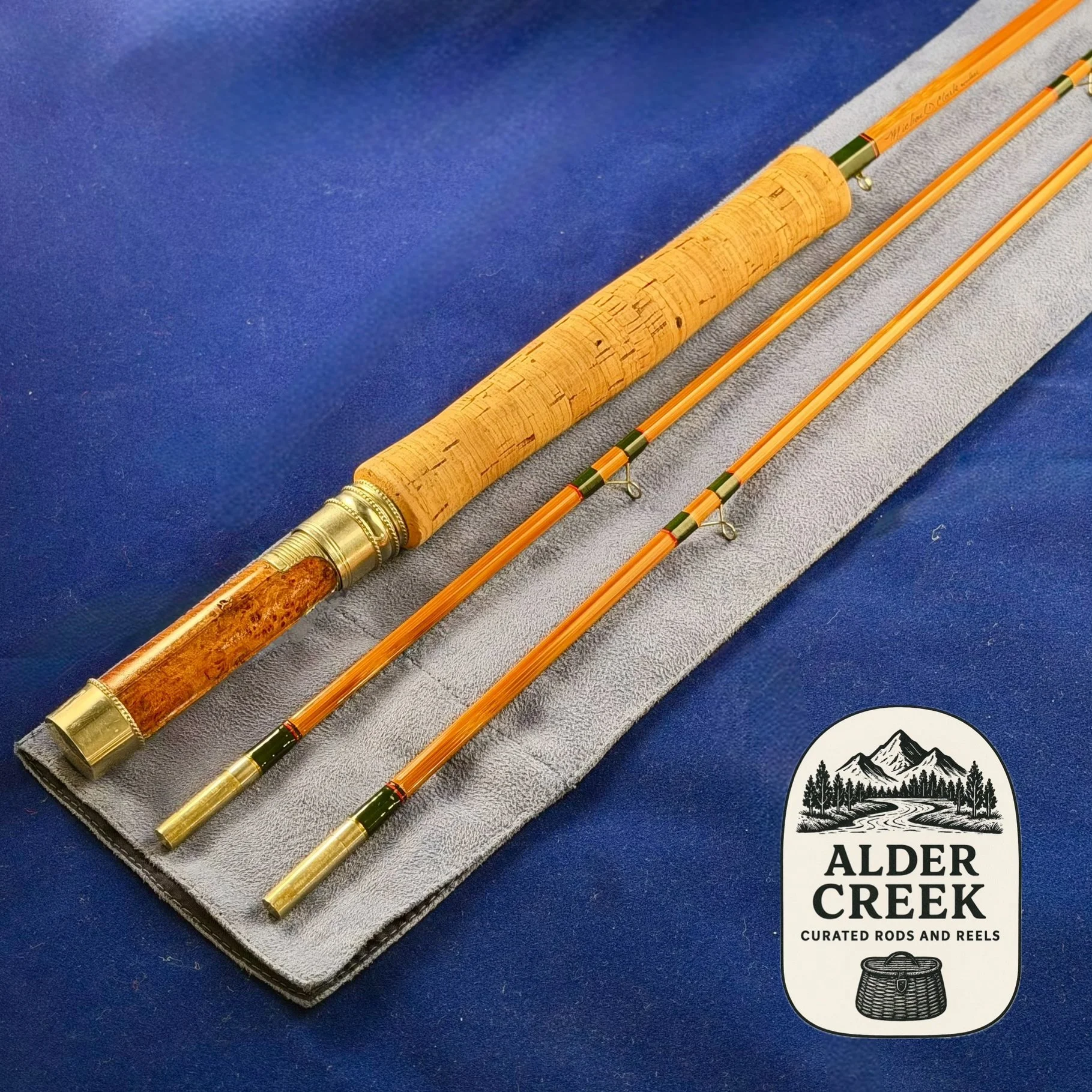
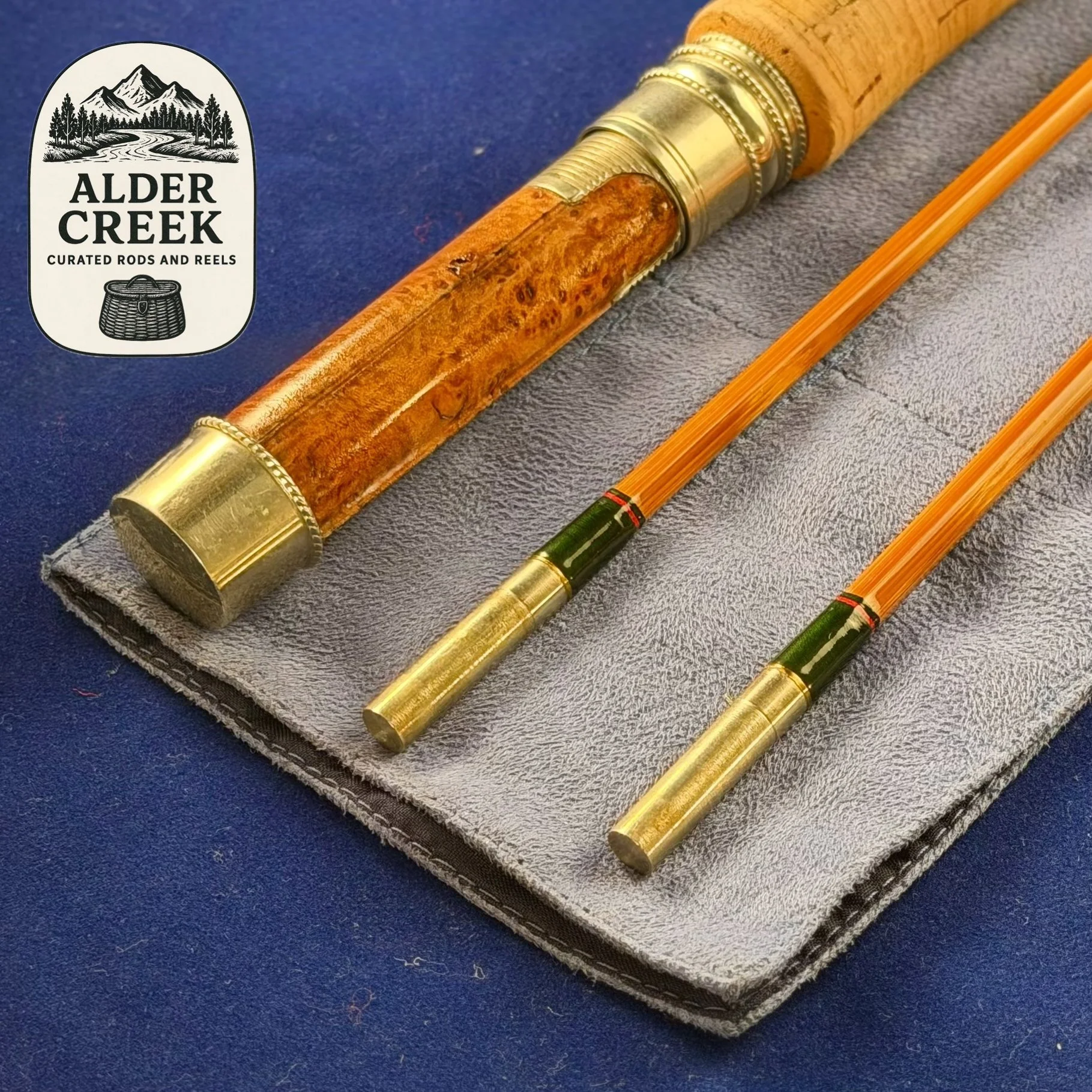
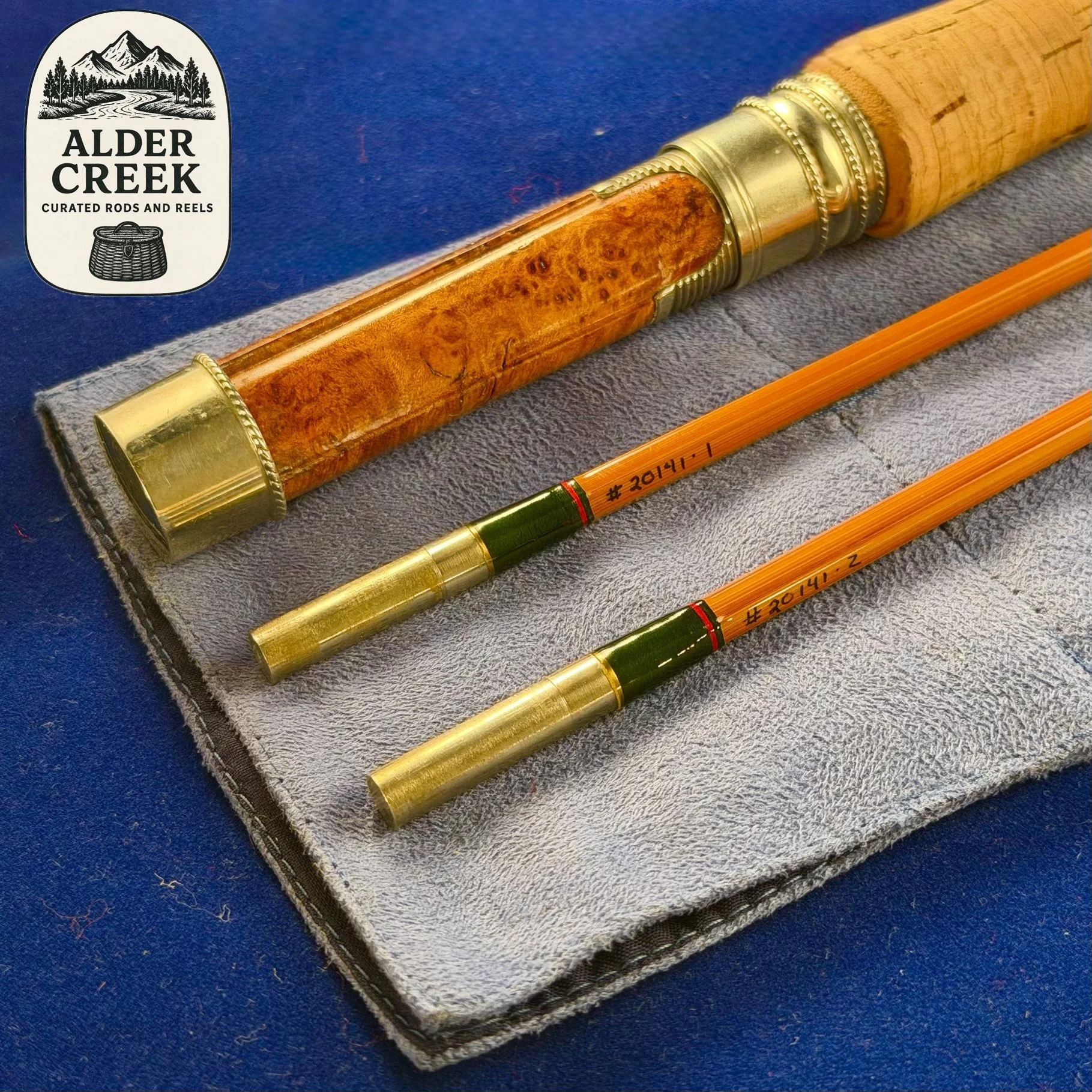
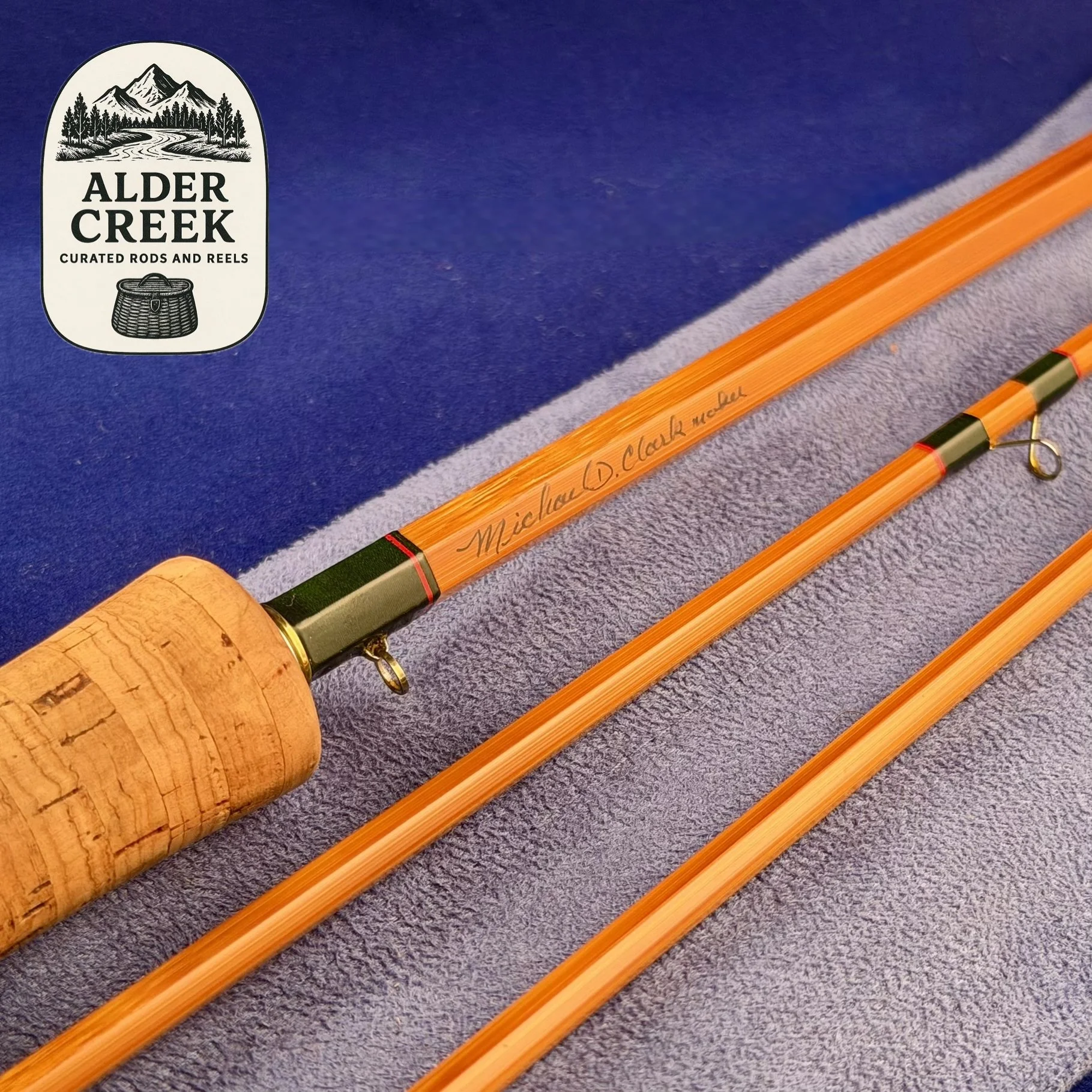
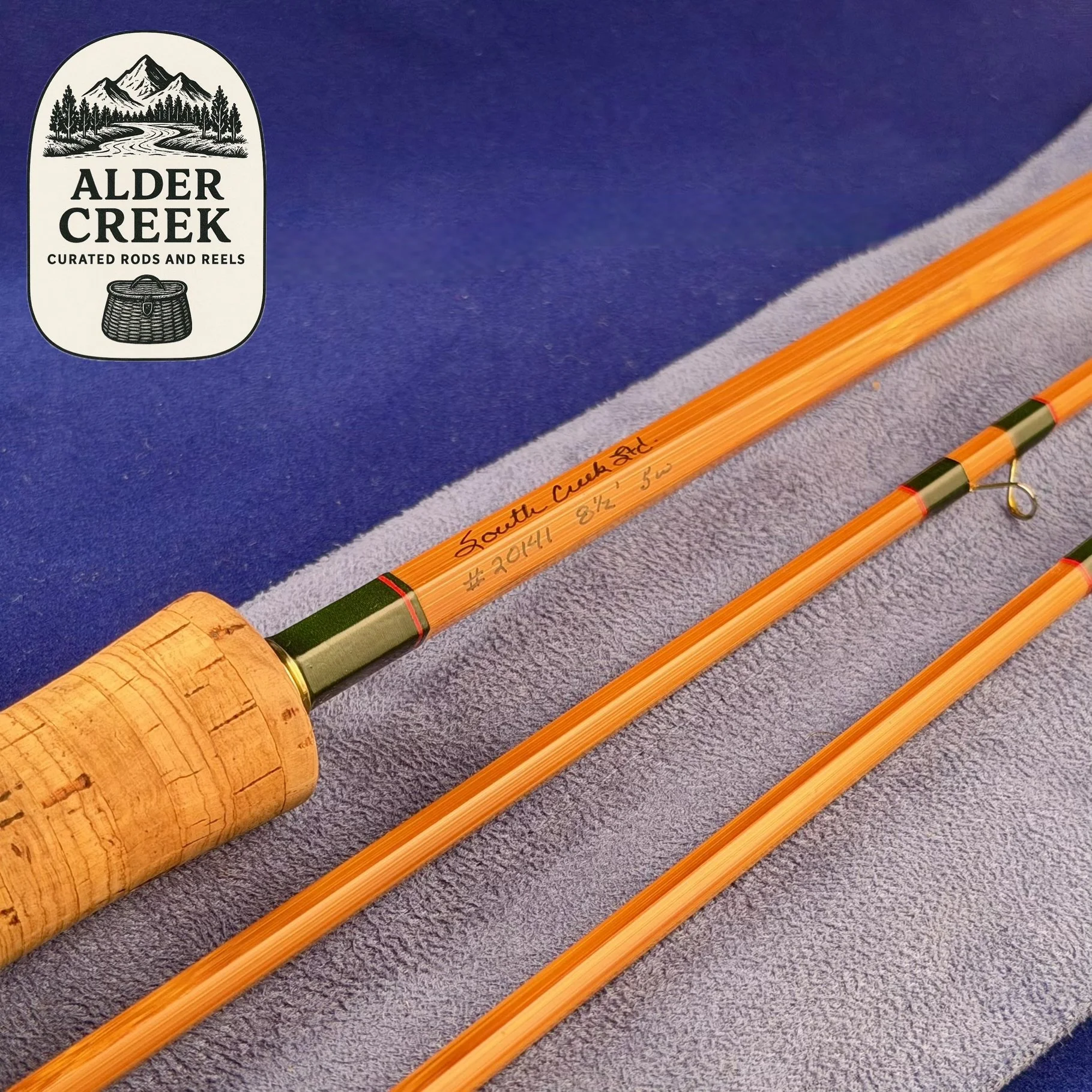
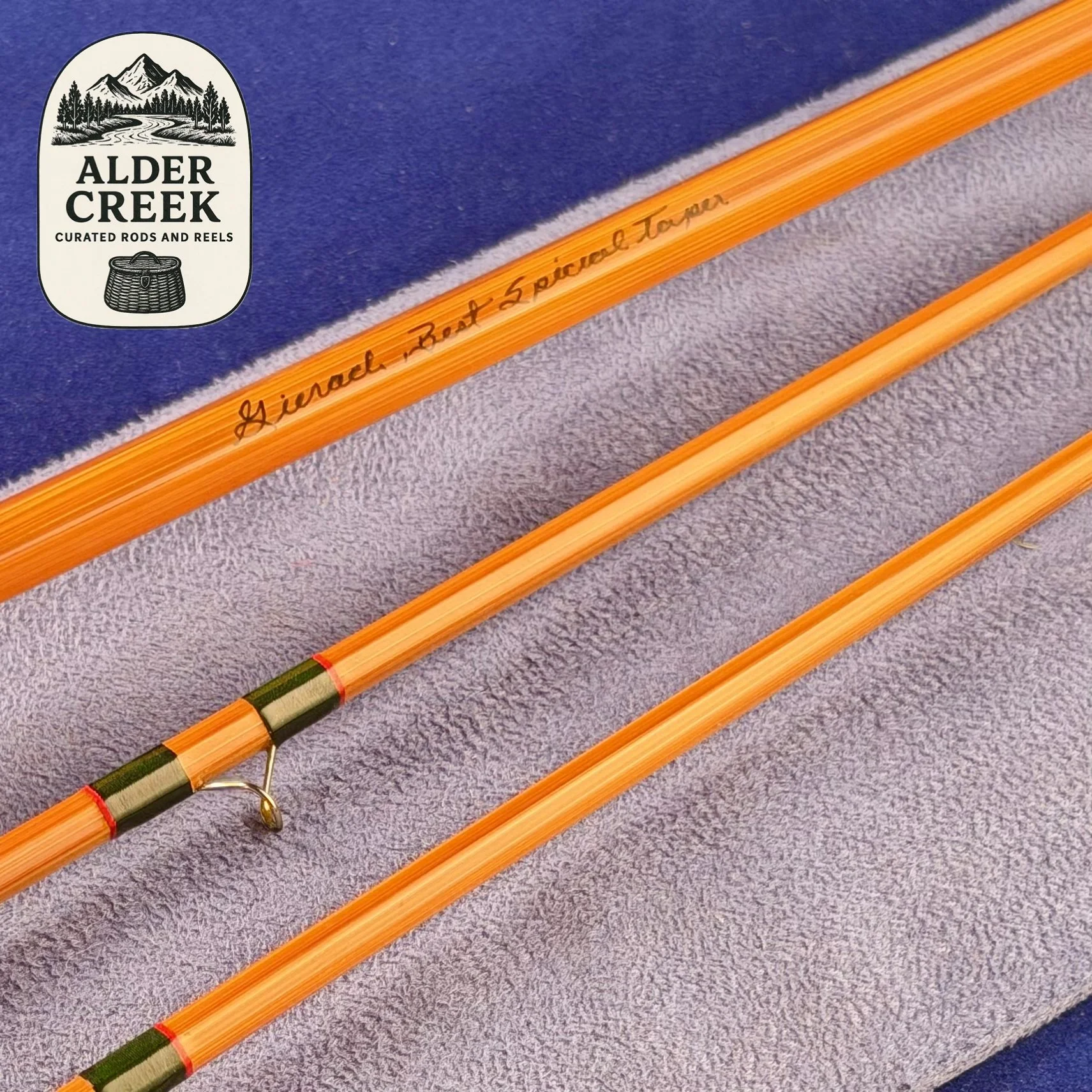
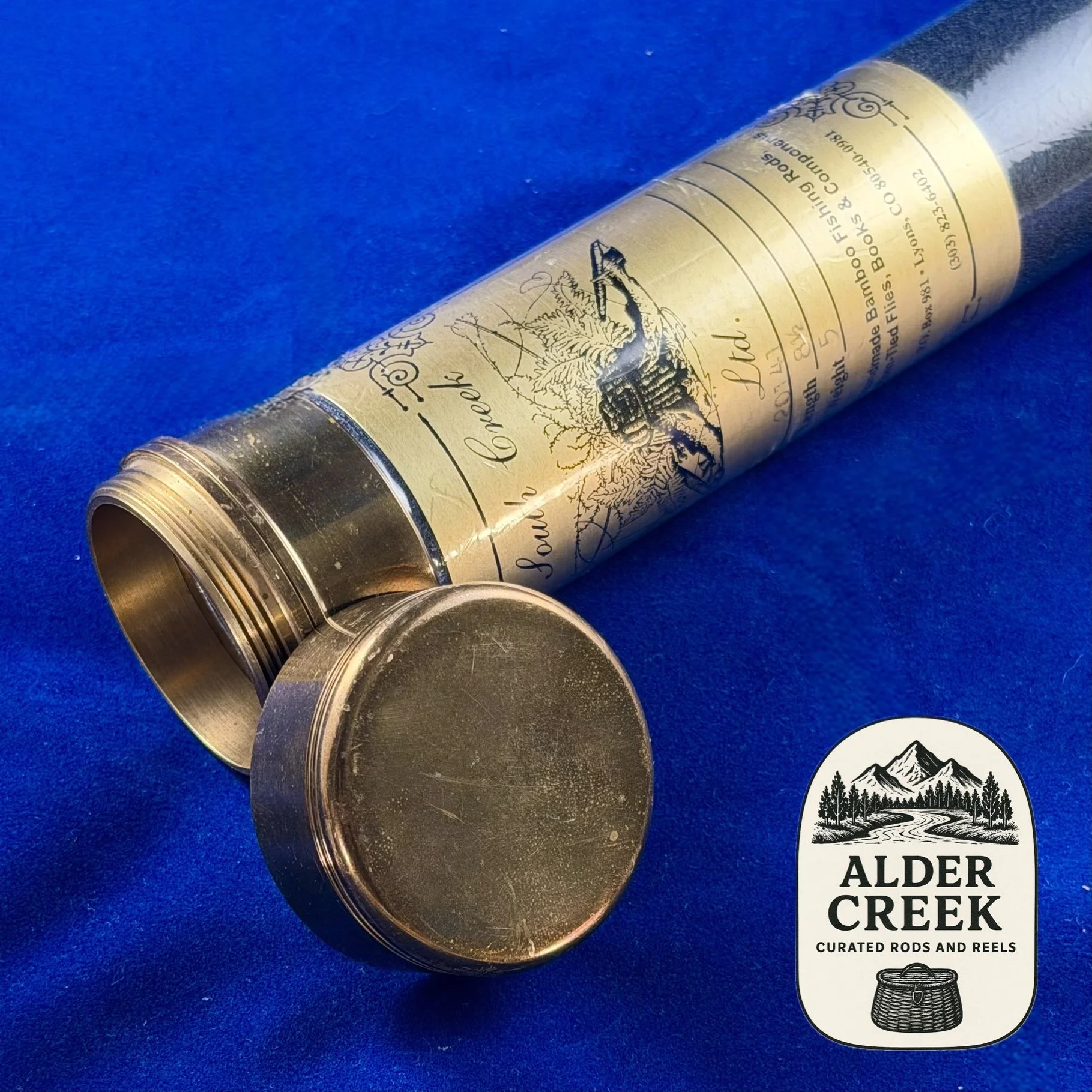
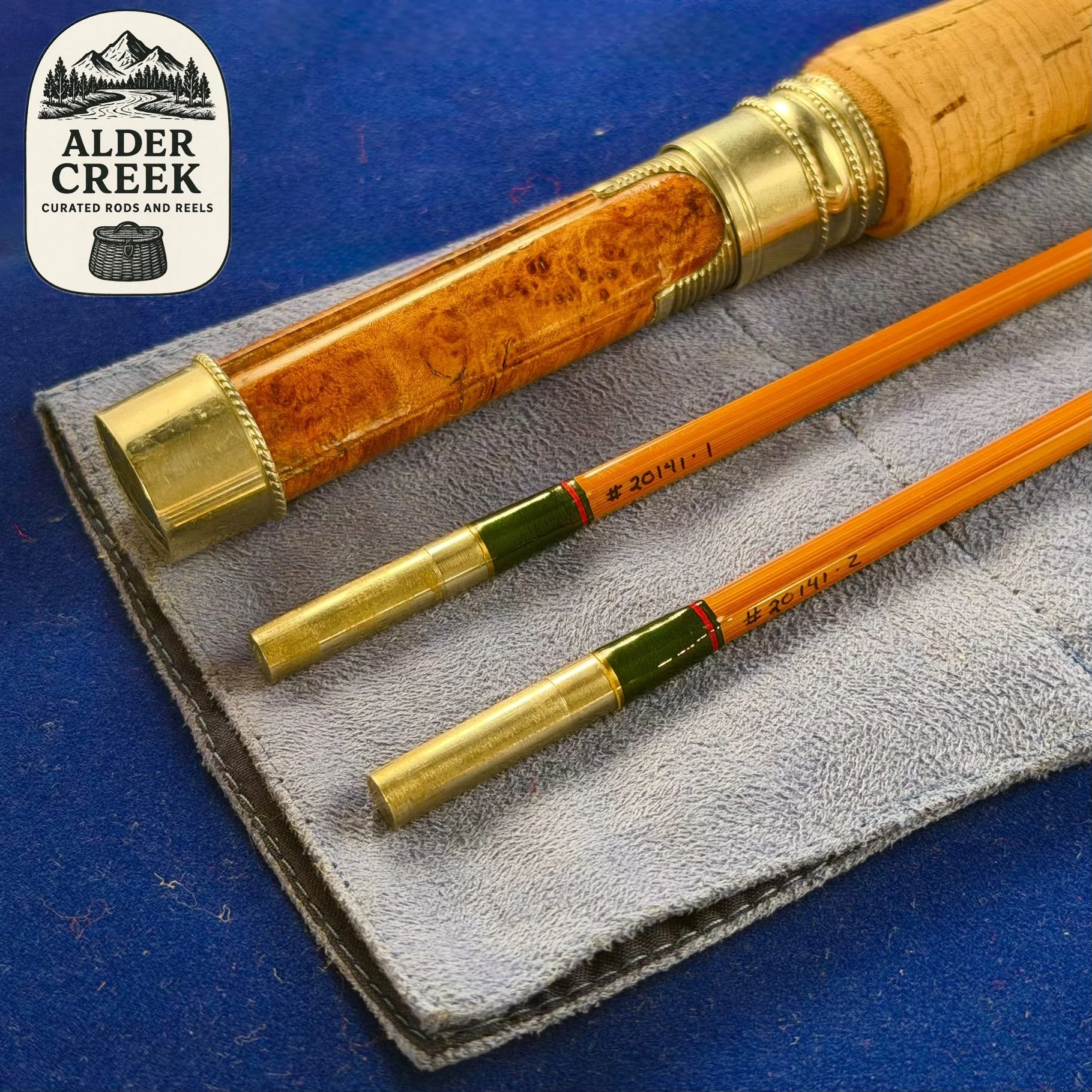
A superb Mike Clark bamboo fly rod, measuring 8'6", three-piece with two tips, and built for a #5 line. This is one of Clark's signature “Gierach Best Special Taper” models, serial #20141.
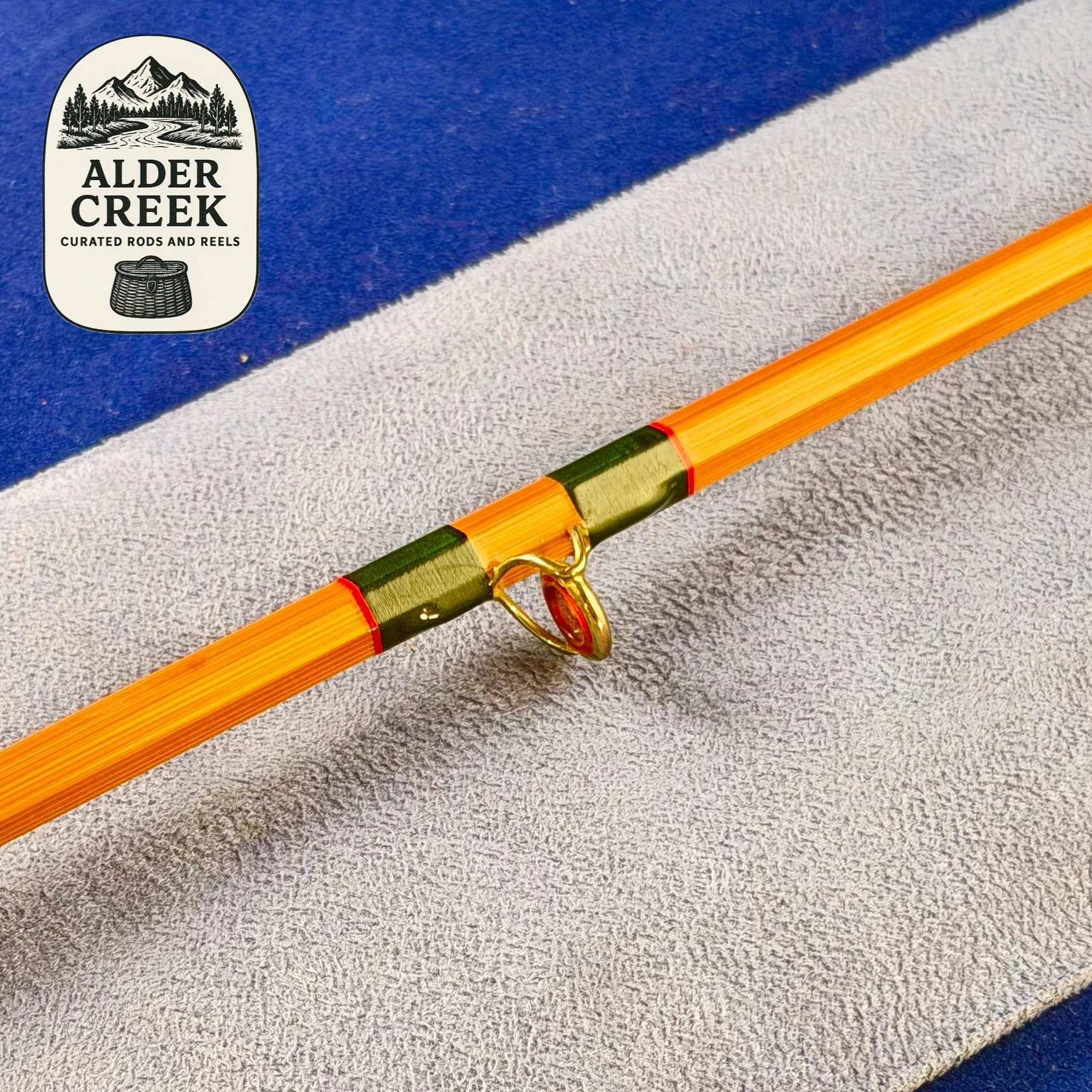
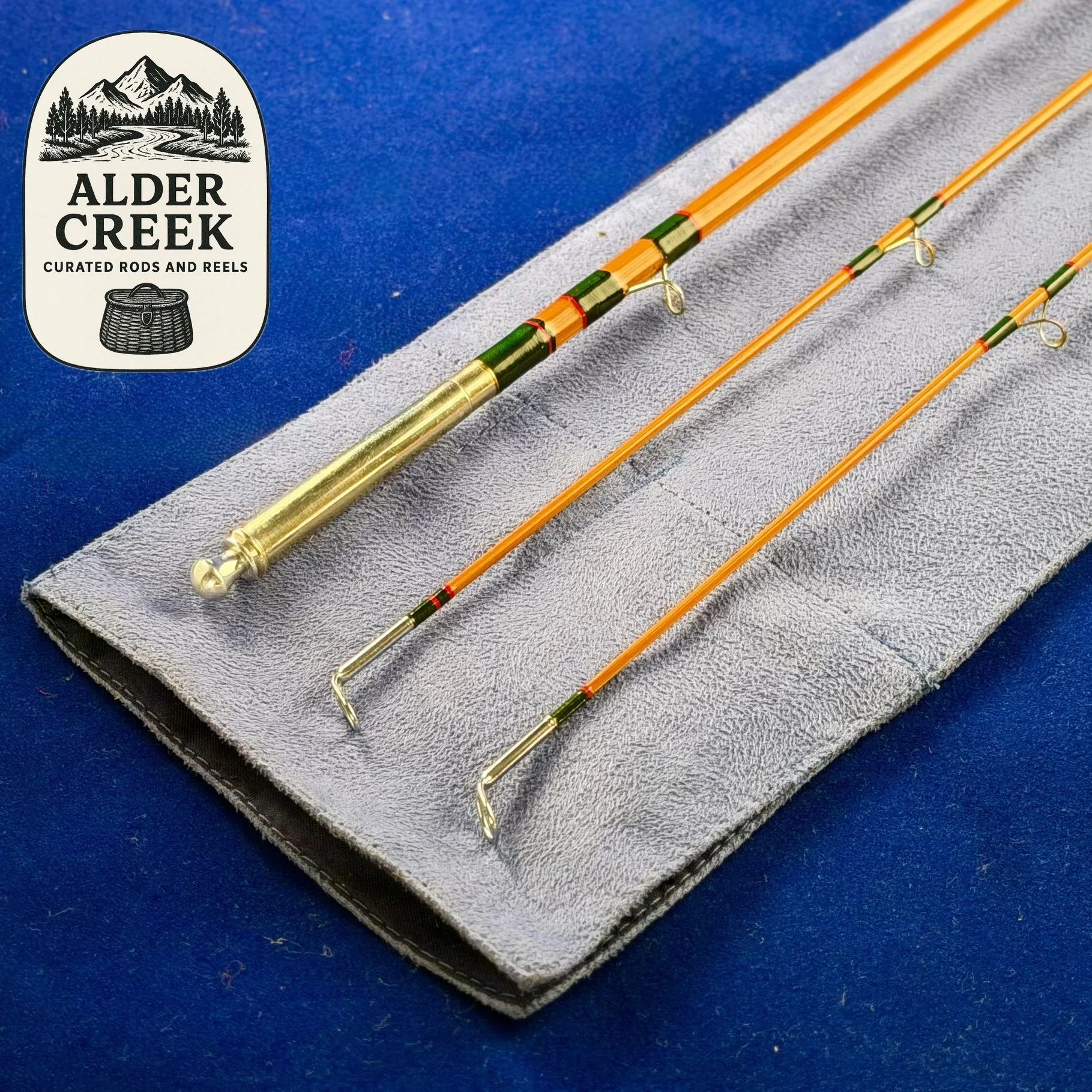
The rod has a quick-tippy action and is presented in fine condition. The cane is lightly flamed, with beautifully small, tight spiral nodes achieved through pressing. Green wraps with red tipping complement the cane, while a striking red agate stripping guide and snake guides complete the guide set. The varnish remains intact throughout.
The ferrules are oxidized Super Z-style ferrules. The 6½" grip is built from ¼" cork rings and shaped to a generous Full Wells profile. The reel seat features a beautifully varnished, mortised walnut spacer, paired with a nickel-silver down-locking screw-lock seat. The nut, slide and cap all carry ornate engraving, giving the fittings an unusually refined character.
The rod comes with its blue Moleskine rod bag and a black-painted aluminum tube with brass hardware, retaining the original South Creek data sticker.
The Special Taper was developed by Mike Clark in collaboration with two influential figures in American fly fishing: outdoor writer John Gierach and writer and fly tier A.K. Best.
Mike Clark describes the 8'6" #5 as follows:
“The Special Taper rods were originally designed in conjunction with outdoor writer John Gierach and writer/fly tier A.K. Best. The 8'6", 2 tip, 5 weight has a quick, tippy action that handles distance casting well and still cushions long, light tippets. This is a good all-around rod that will handle anything from small dry flies and nymphs to medium sized streamers.”
Clark goes on to explain that Gierach and Best fished these rods extensively before the taper became a standard South Creek model, and that the rods are inked “Gierach Best Special Taper” on the blank.
It is a taper with a particularly interesting pedigree: conceived by a master rodmaker and refined through the fishing of two writers whose influence helped shape modern American fly-fishing culture.
Maker
South Creek Ltd — Mike Clark
Model
Gierach Best Special Taper
Length
8'6"
Configuration
3-piece / 2-tip
Line
#5
Action
Medium-slow
Serial Number
20141
Cane
Lightly flamed bamboo
Ferrules
Oxidized Super Z-style
Grip
6½" Full Wells cork
Reel Seat
Engraved nickel silver, walnut spacer
Condition
Fine used condition
Includes
Original bag and tube
Questions about this piece, international shipping, or price are always welcome.
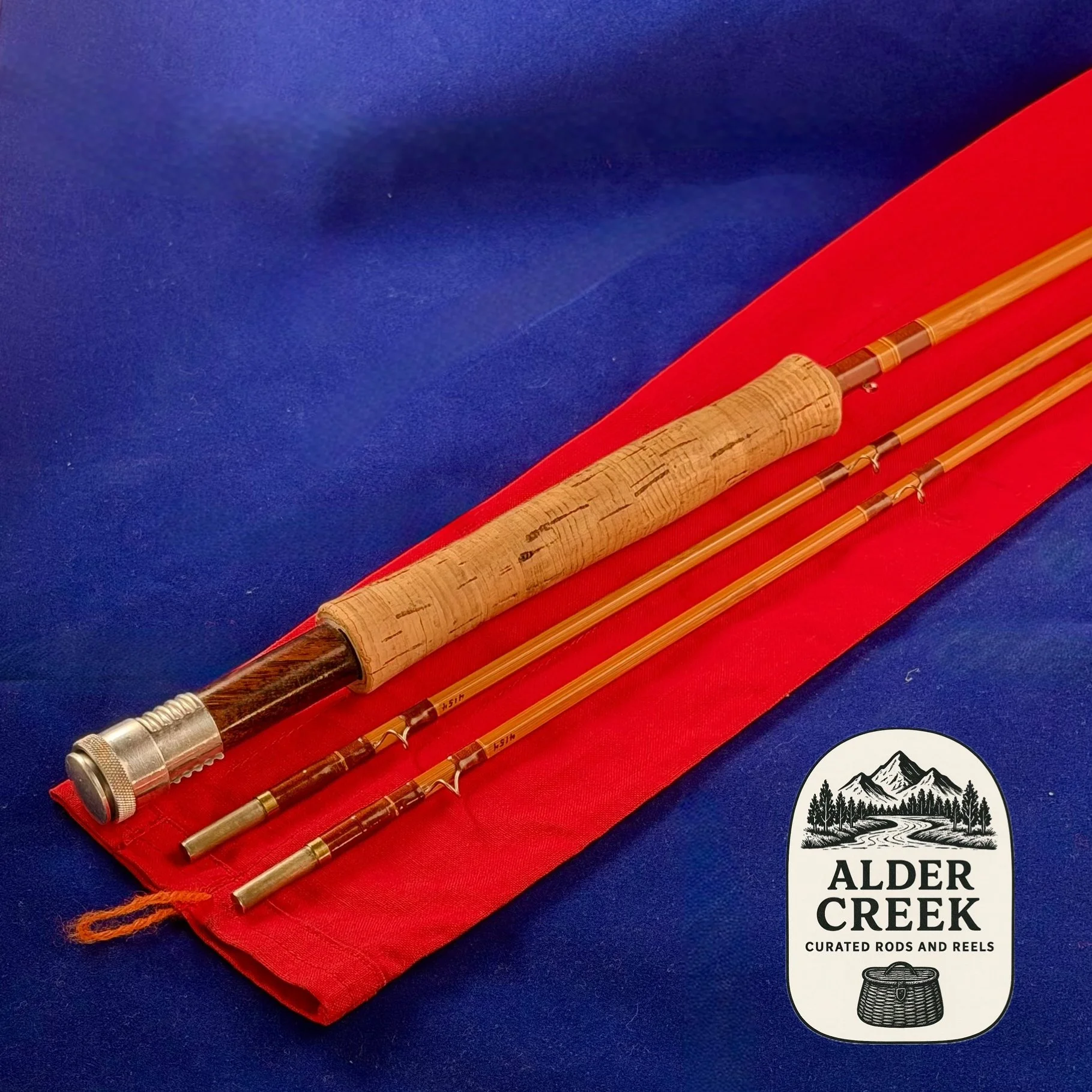
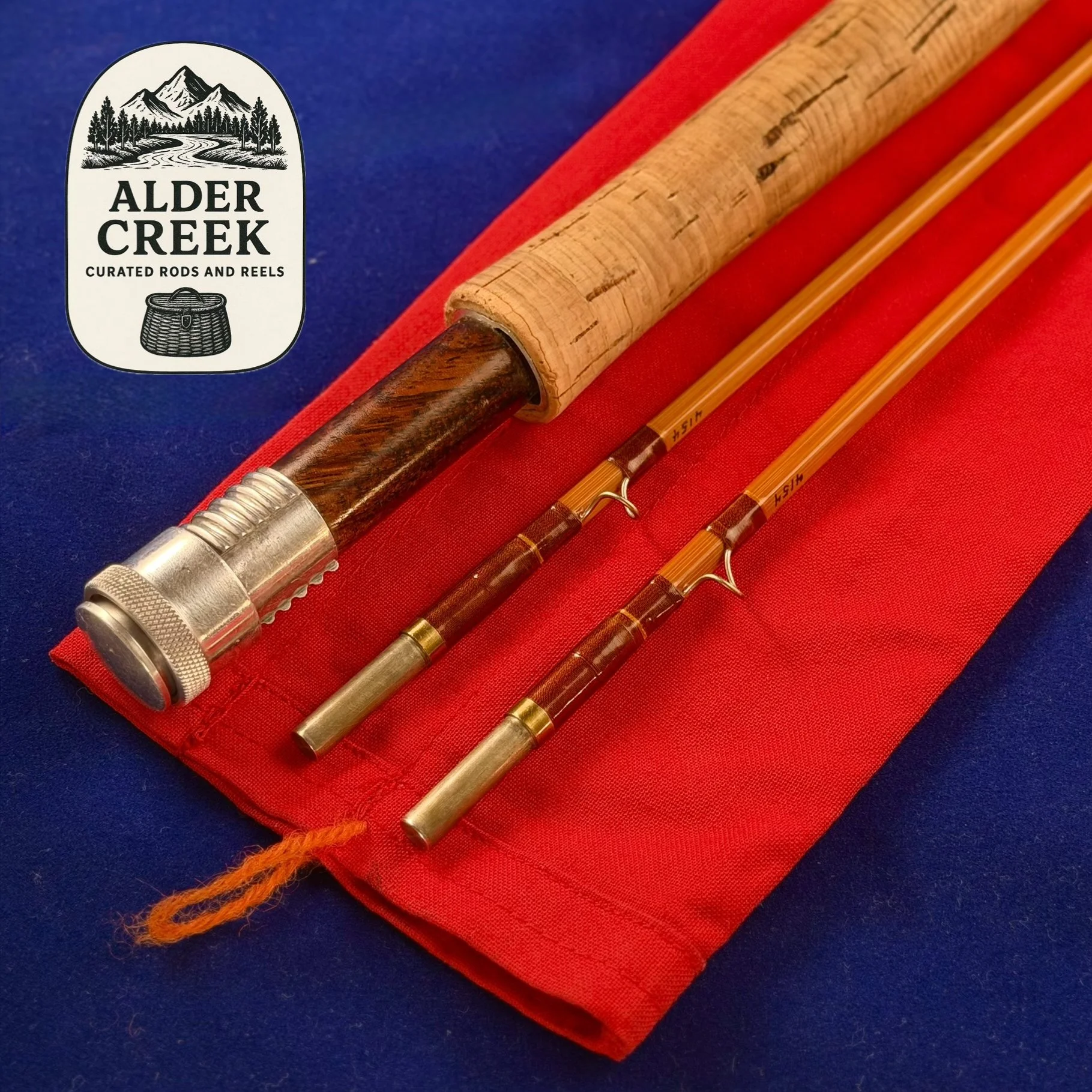
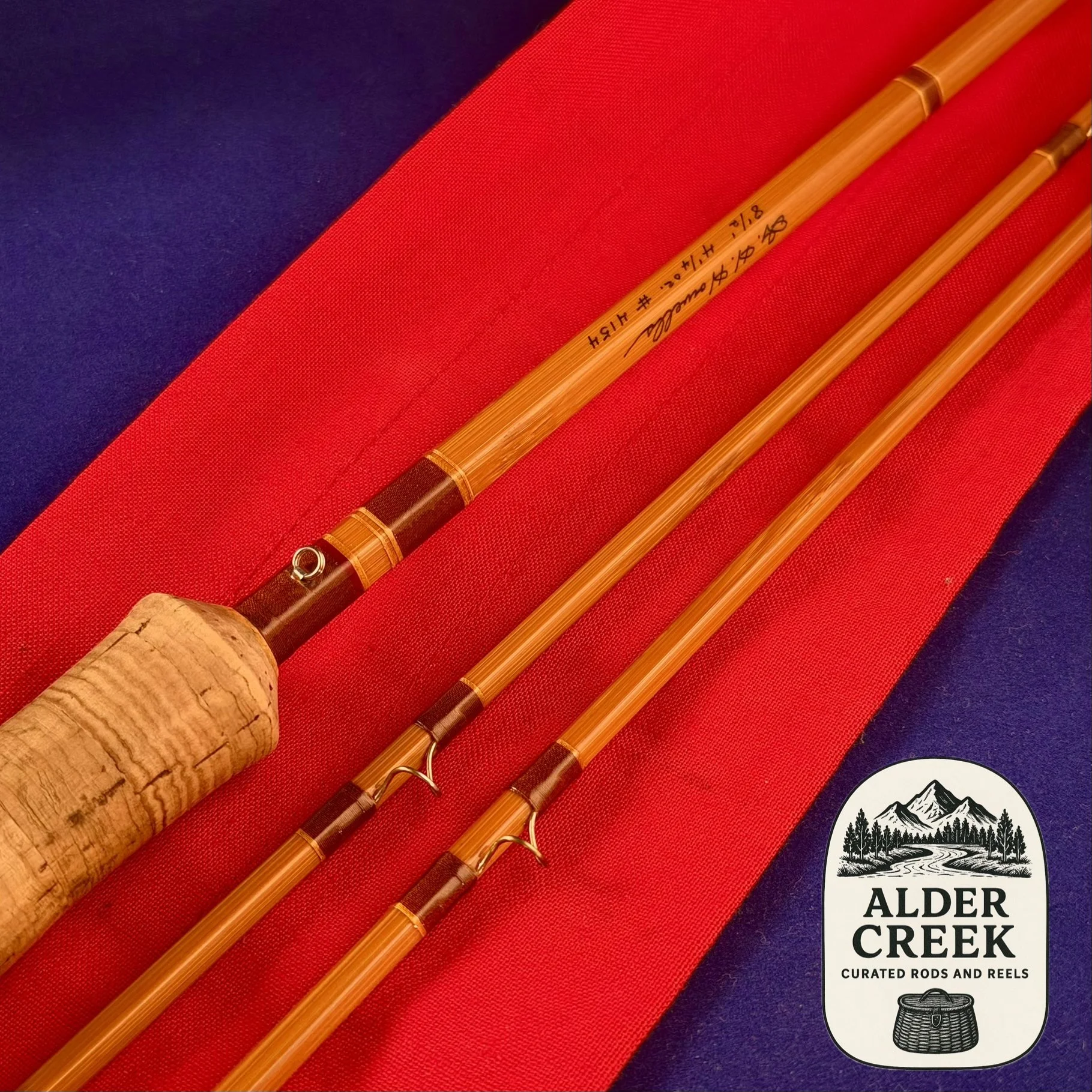
A fine Gary Howells “The Westerner’s choice” bamboo fly rod with exceptional provenance, both as a piece of American rodmaking history and through its previous owner, the Danish fly-fishing legend and author Preben Torp Jacobsen.
Measuring 8'6″ and built in two sections with two tips, this rod is marked “G. H. Howells” and “8 1/2' 4 1/4 oz #4154” on the shaft. The serial number places its manufacture in 1978–79. Although originally designated for a #6 line, the rod performs beautifully with a modern #5, bringing out its smooth, medium full-flexing action.
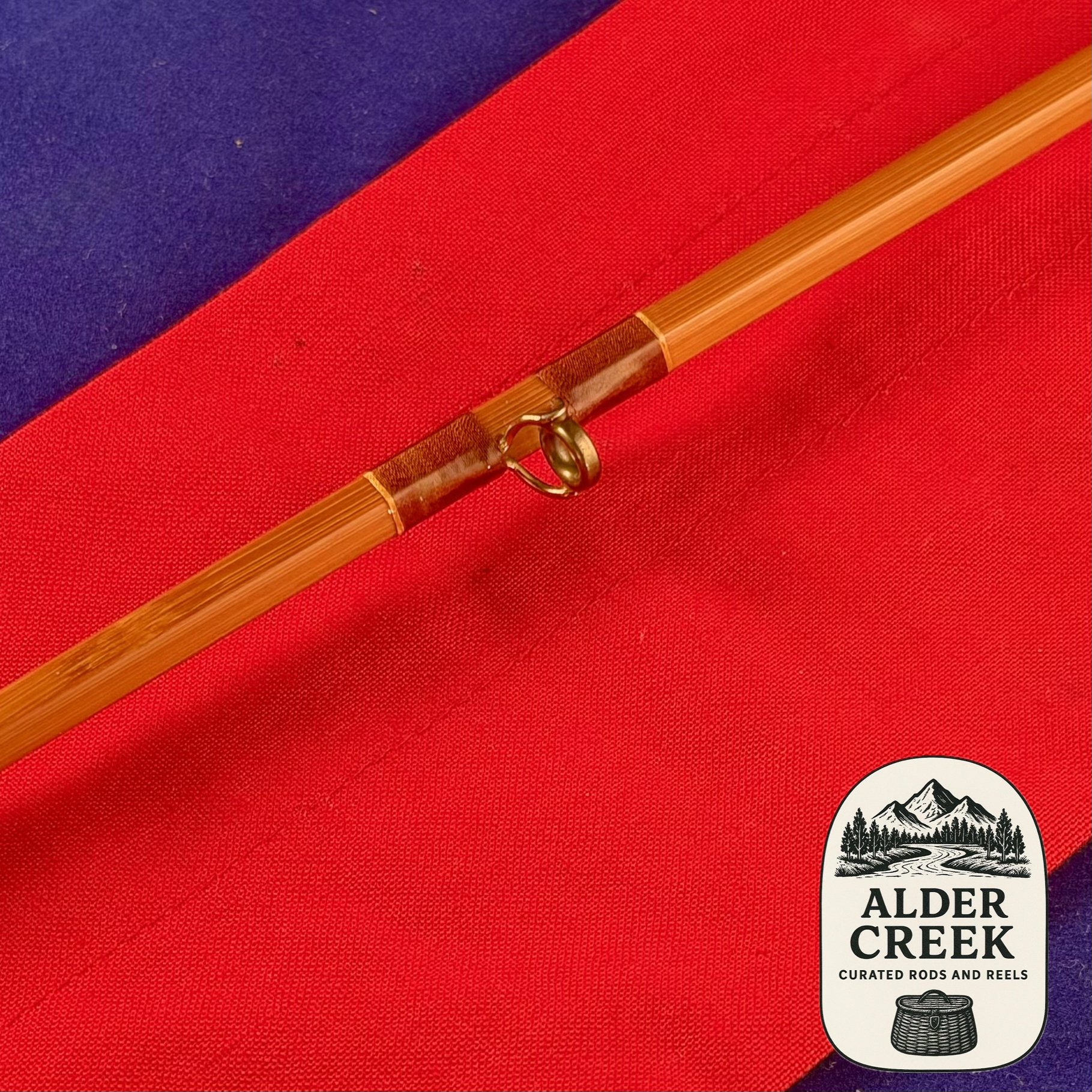
The cane is a handsome medium wheat-straw colour, with nodes arranged in Howells' characteristic three-up pattern. The varnish remains excellent, while the familiar brown wraps are finished with yellow tipping. The ferrules feature Howells' distinctive Winston-inspired brown overwraps, complemented by chrome tip tops.
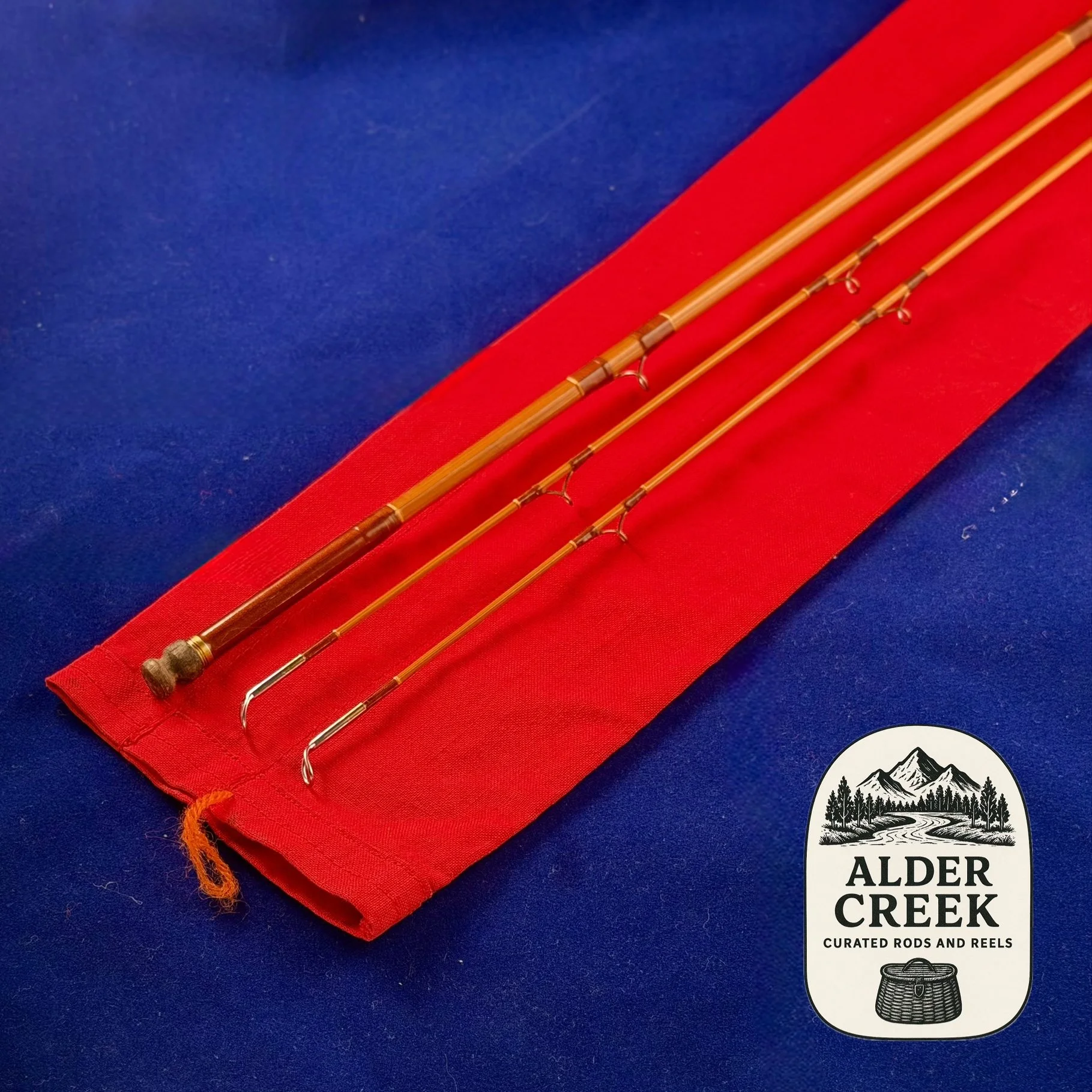
The 6″, Full Wells-style grip shows only light soiling but is completely smooth consistent with use. Ferrule fits remain excellent, and both tips are straight and free from set. The reel seat is an aluminium uplocking slide-band design with pocket cap, built around Gary Howells' trademark zebrawood spacer.
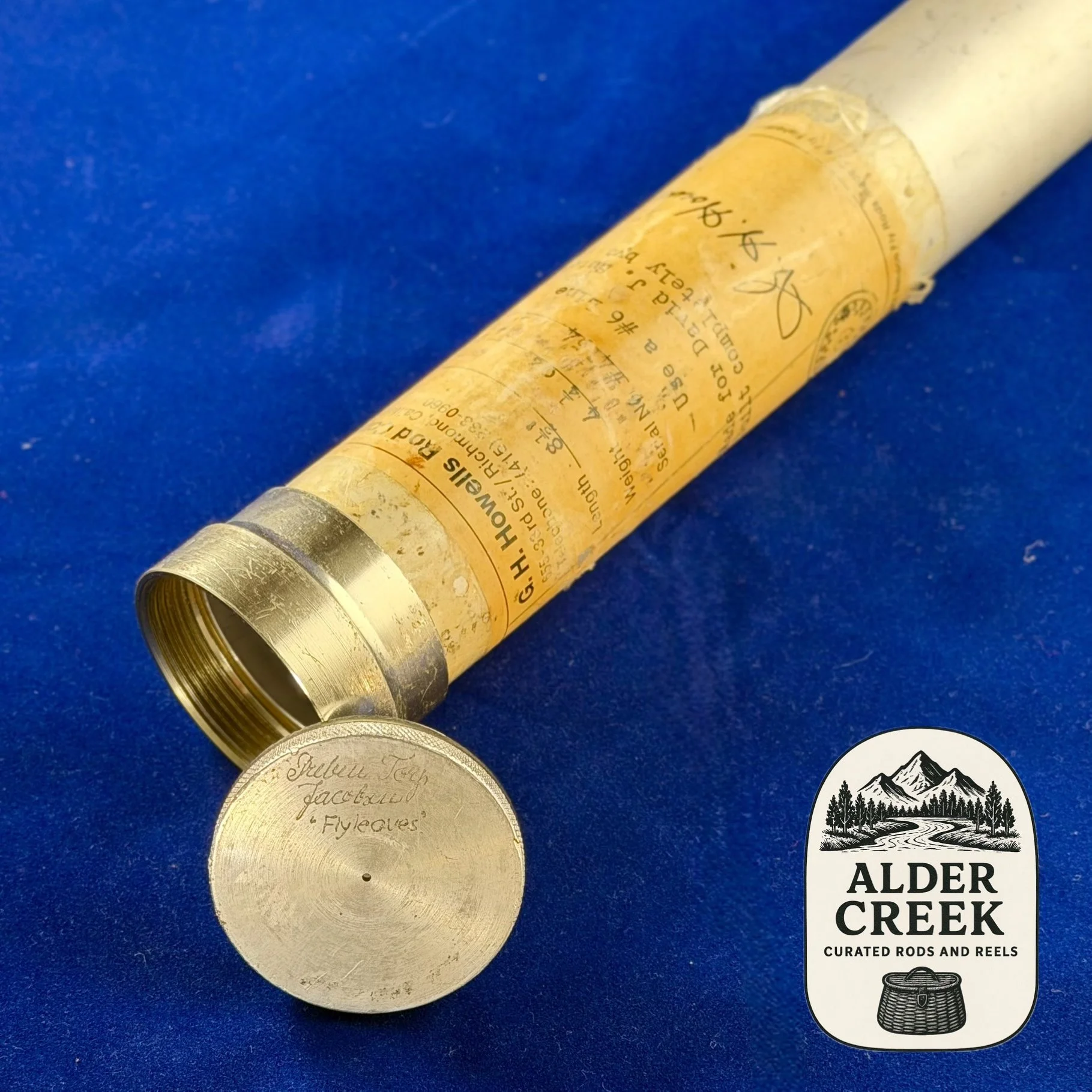
The rod is accompanied by its original bright red cloth bag and aluminium tube with brass hardware, with the original Howells data sticker still intact. The original aluminium tube shows some dents and transport marks consistent with age and use.
This particular rod was formerly owned by Preben Torp Jacobsen, one of Denmark's best-known fly fishermen and authors. His name, together with his “Flyleaves” mark, is engraved on the tube cap, providing a particularly appealing connection to Scandinavian fly-fishing history.
Maker
Gary Howells
Length
8'6"
Configuration
2-piece / 2-tip
Line
#6 (also fishes well with #5)
Weight
4 1/4 oz
Serial Number
4154
Year
c. 1978–79
Action
Medium, full-flexing
Reel Seat
Aluminium, zebrawood spacer
Condition
Very good used condition
Includes
Original bag and tube
Questions about this piece, international shipping, or price are always welcome.
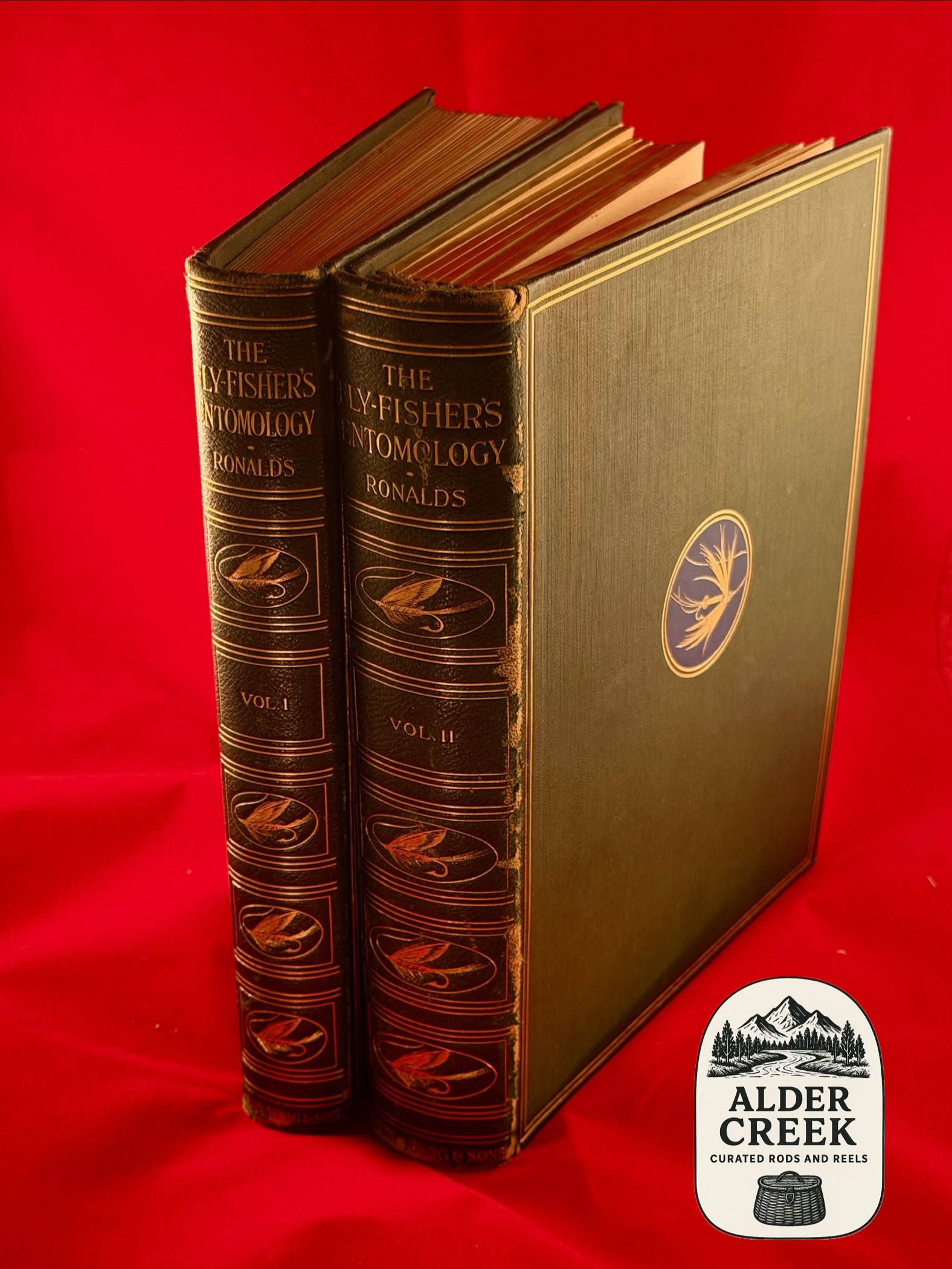
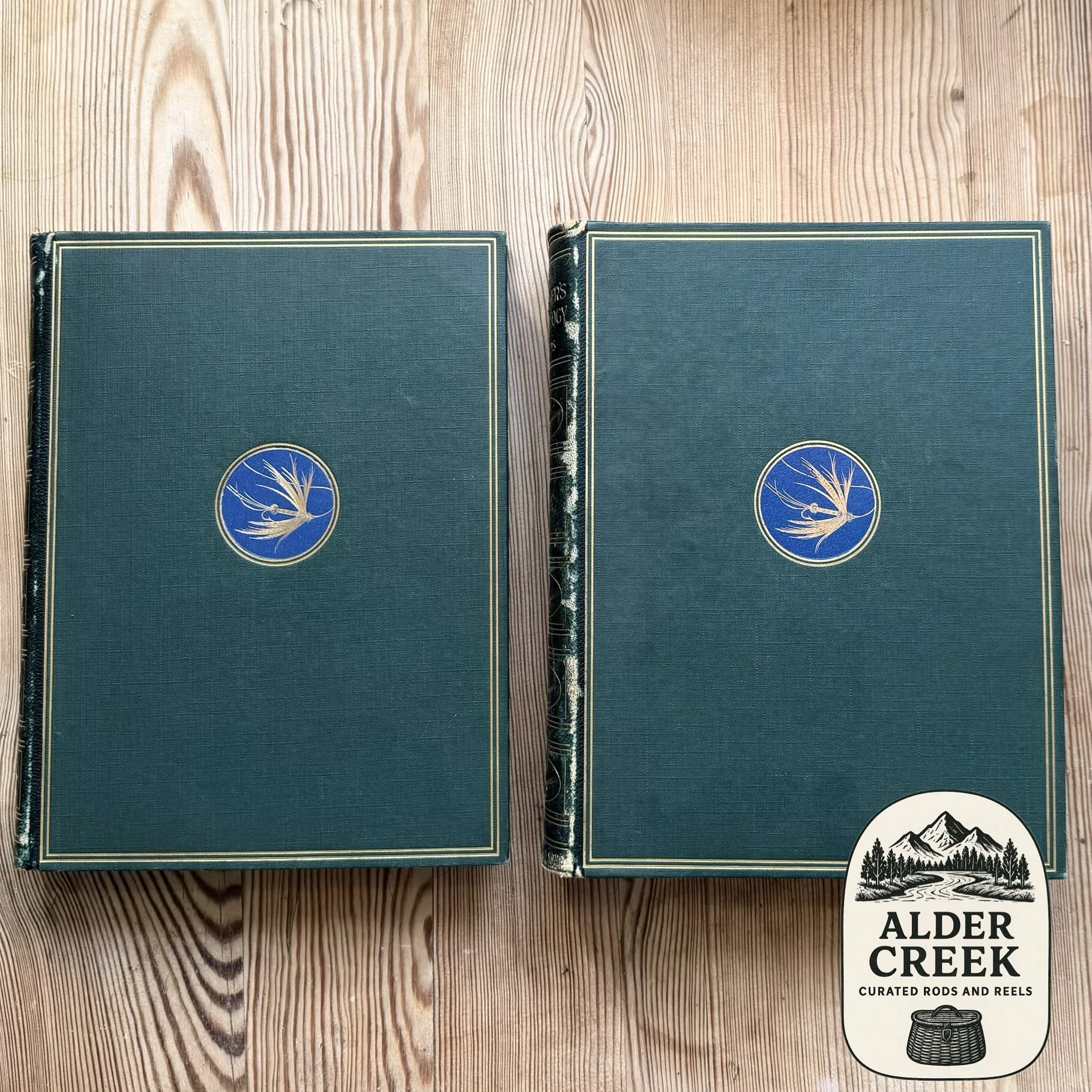
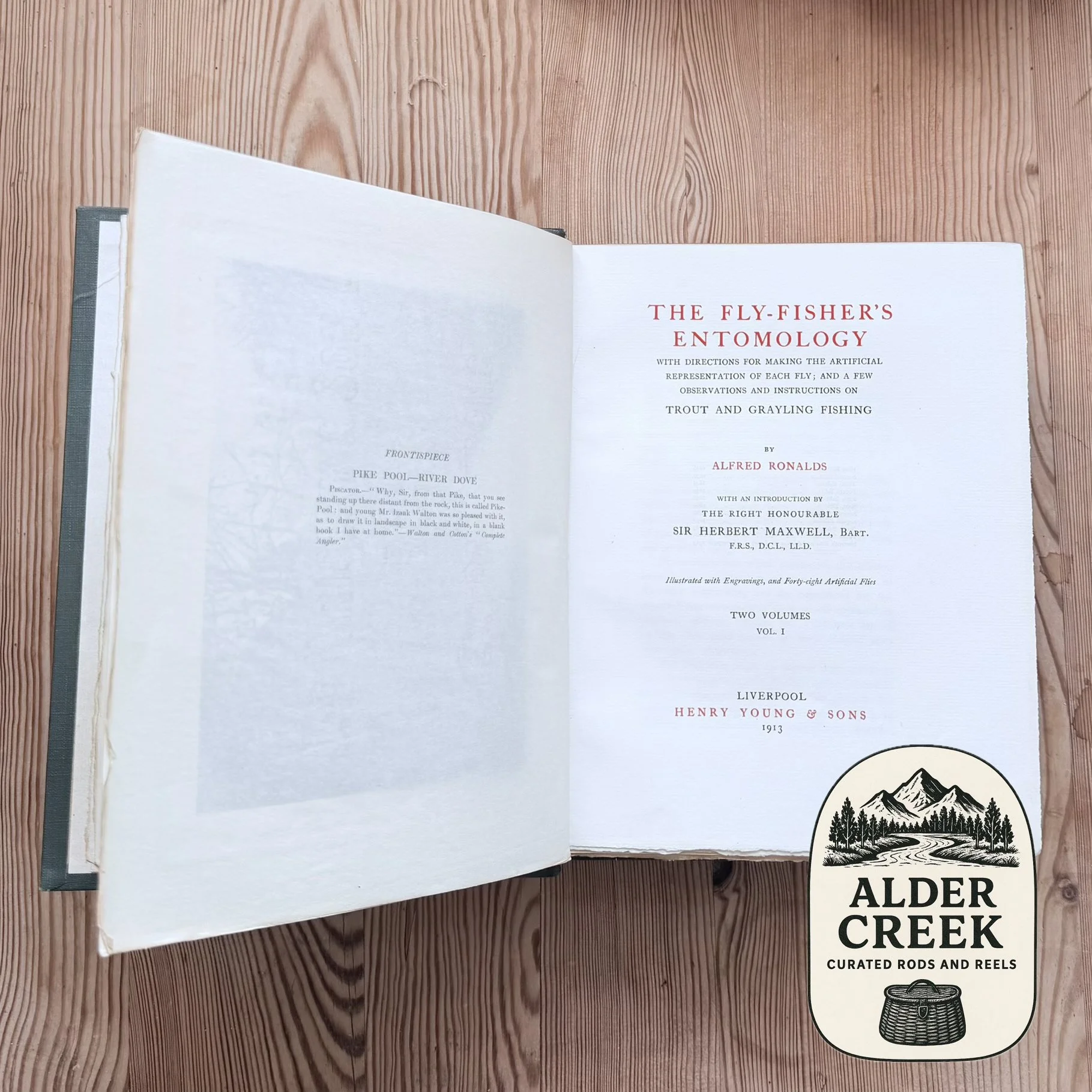
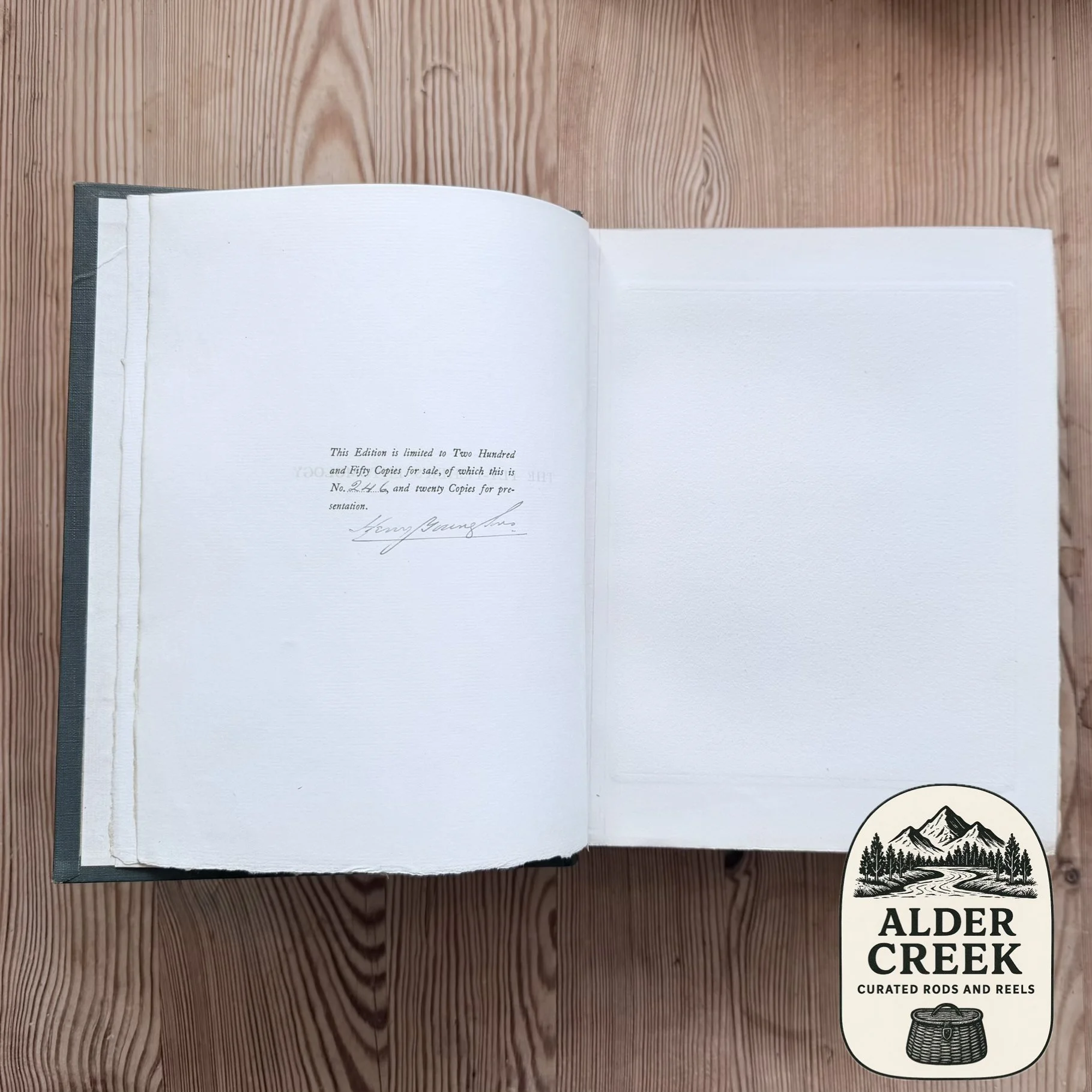
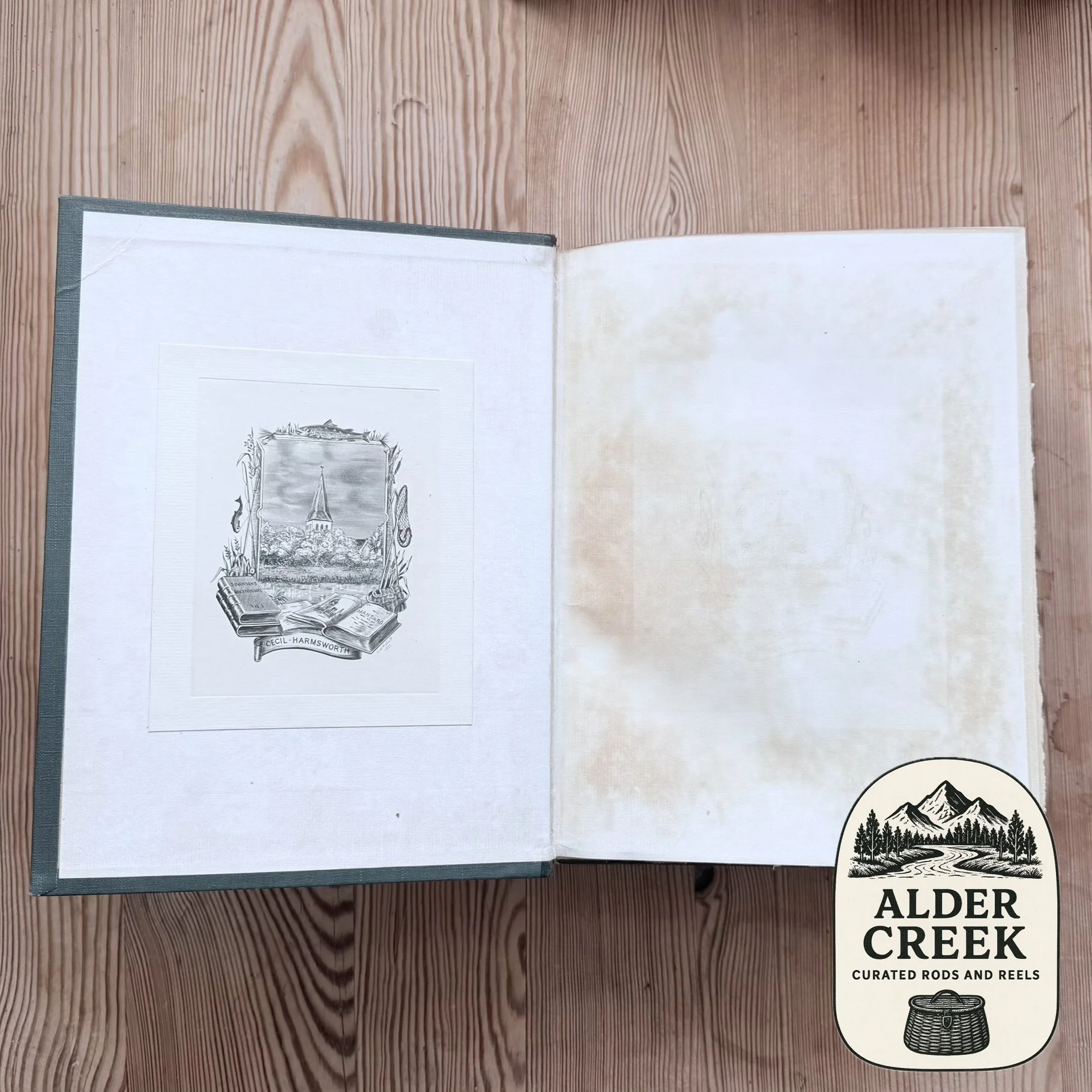
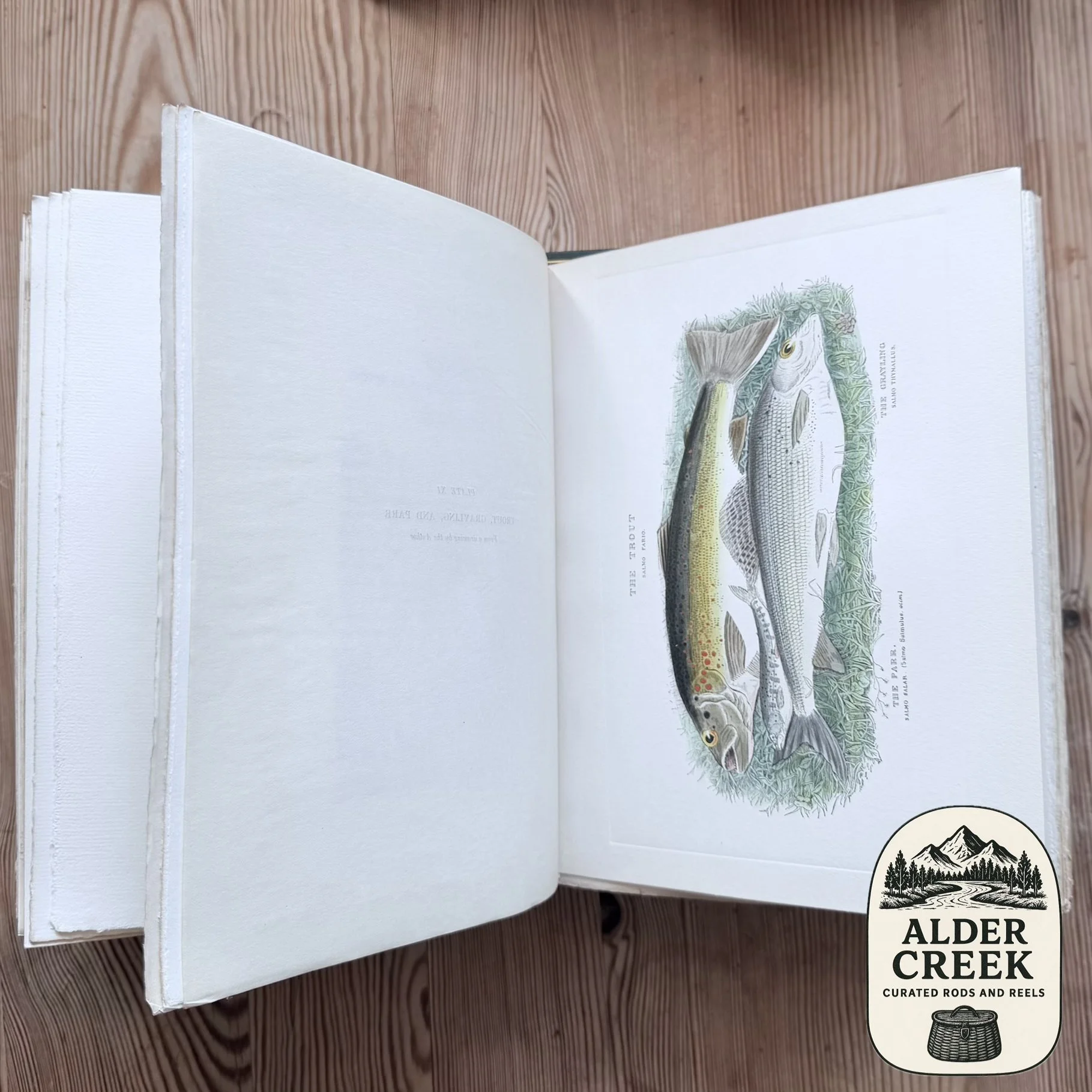
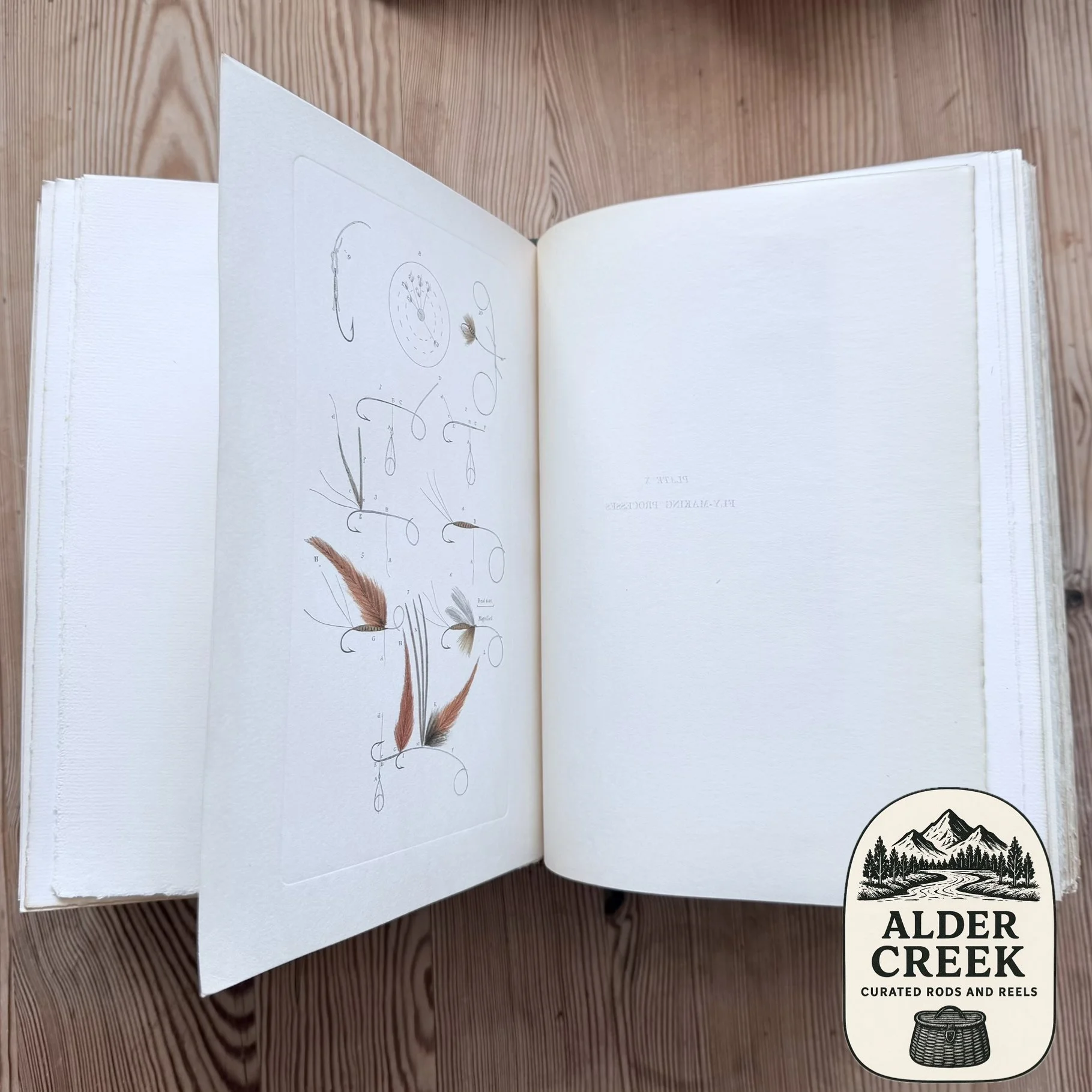
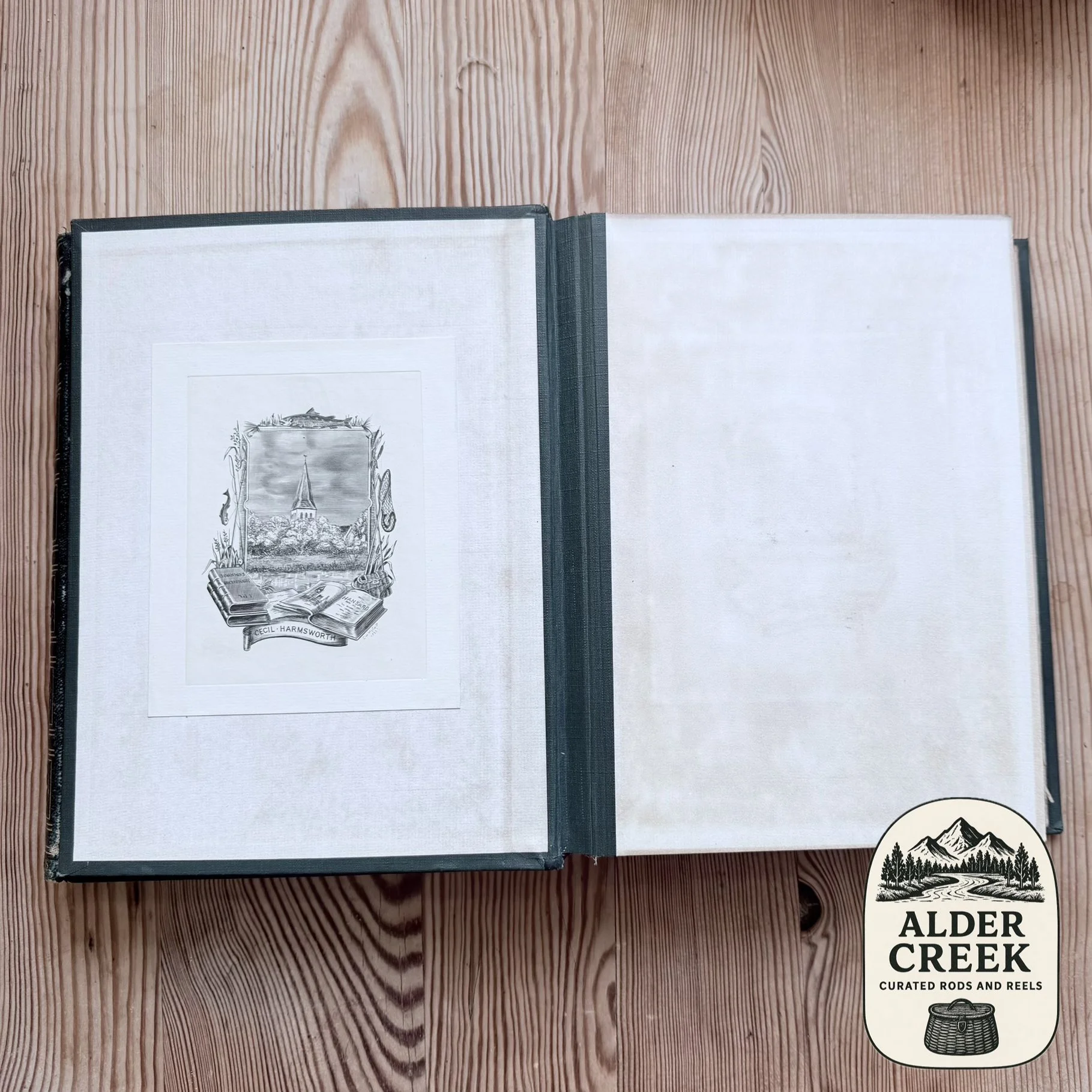
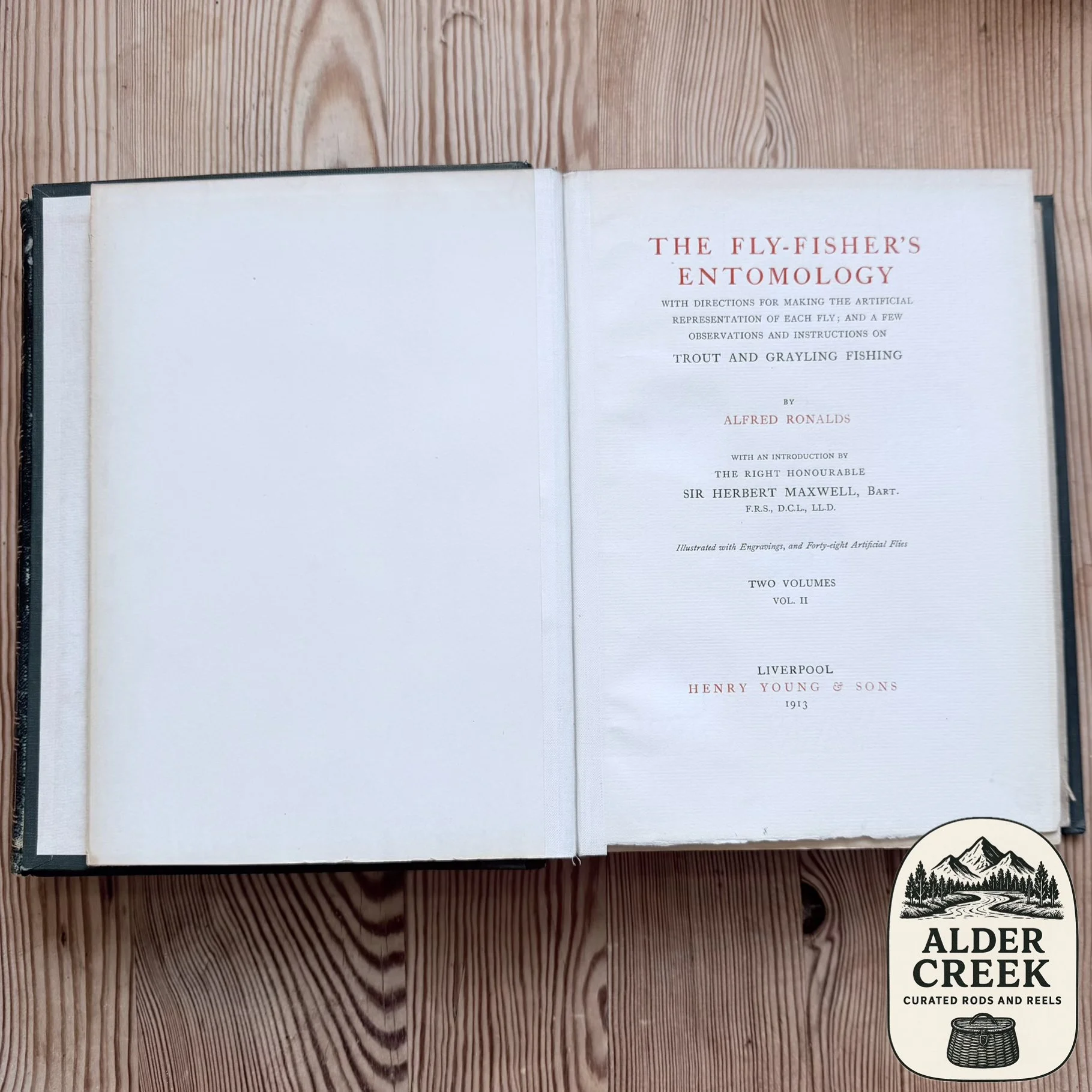
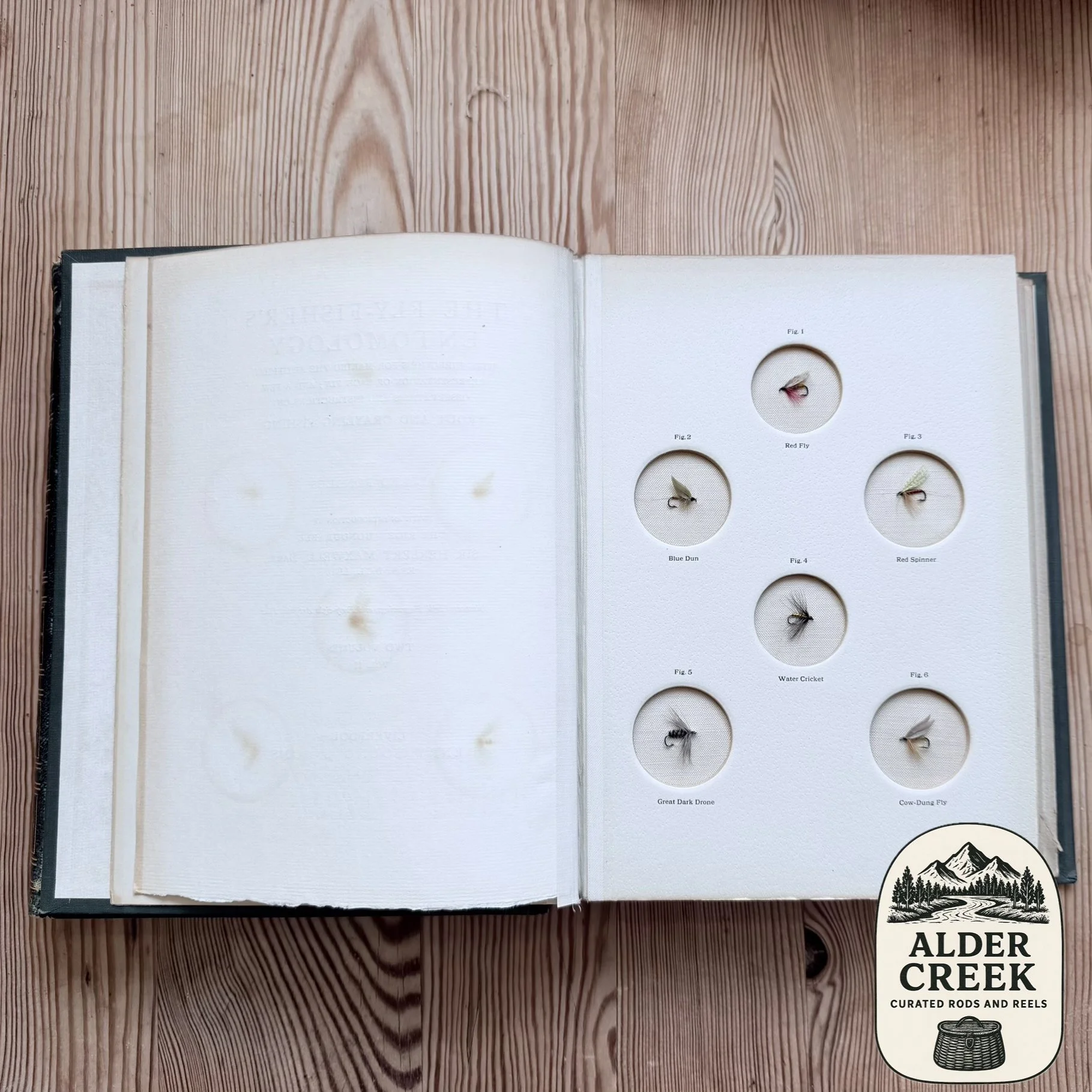
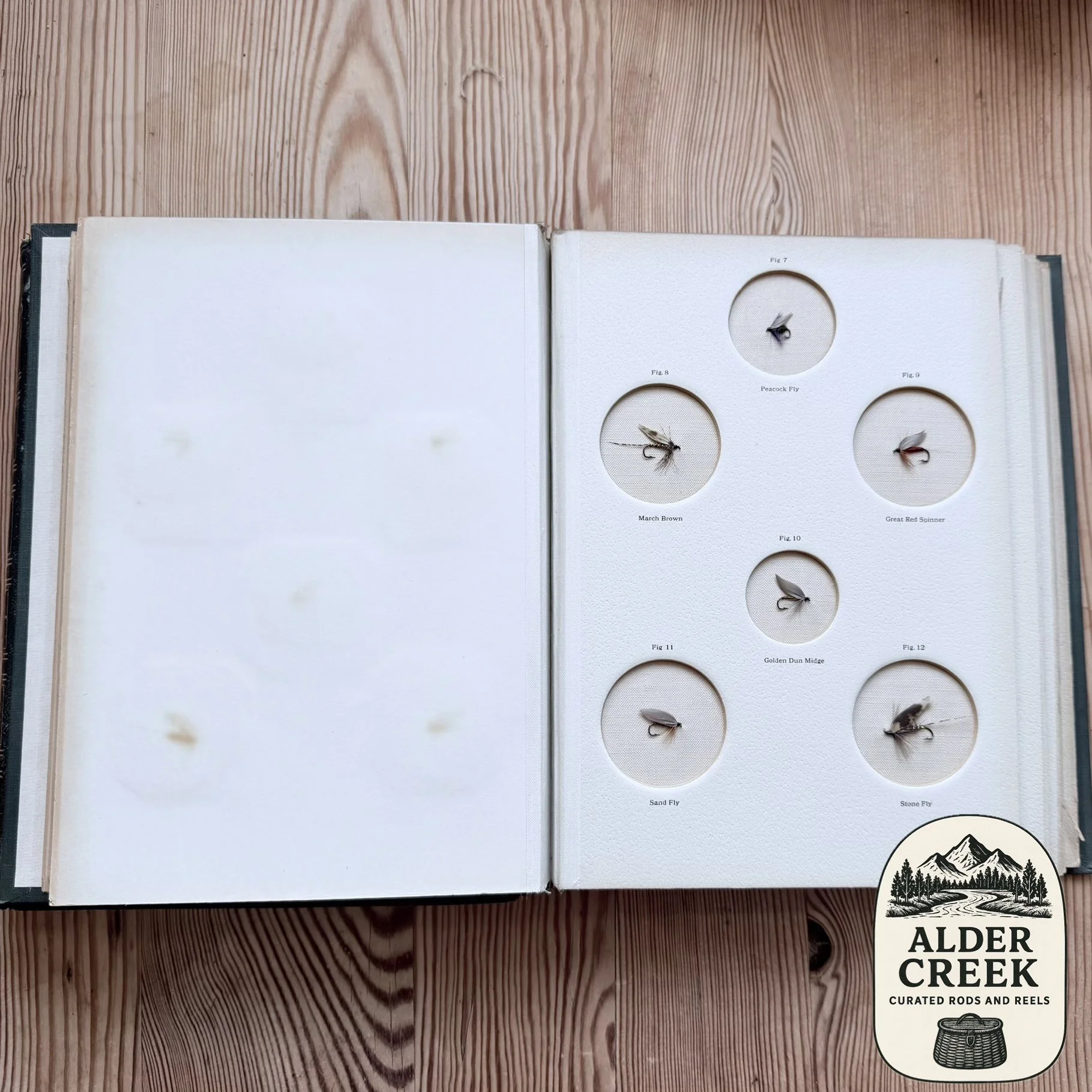
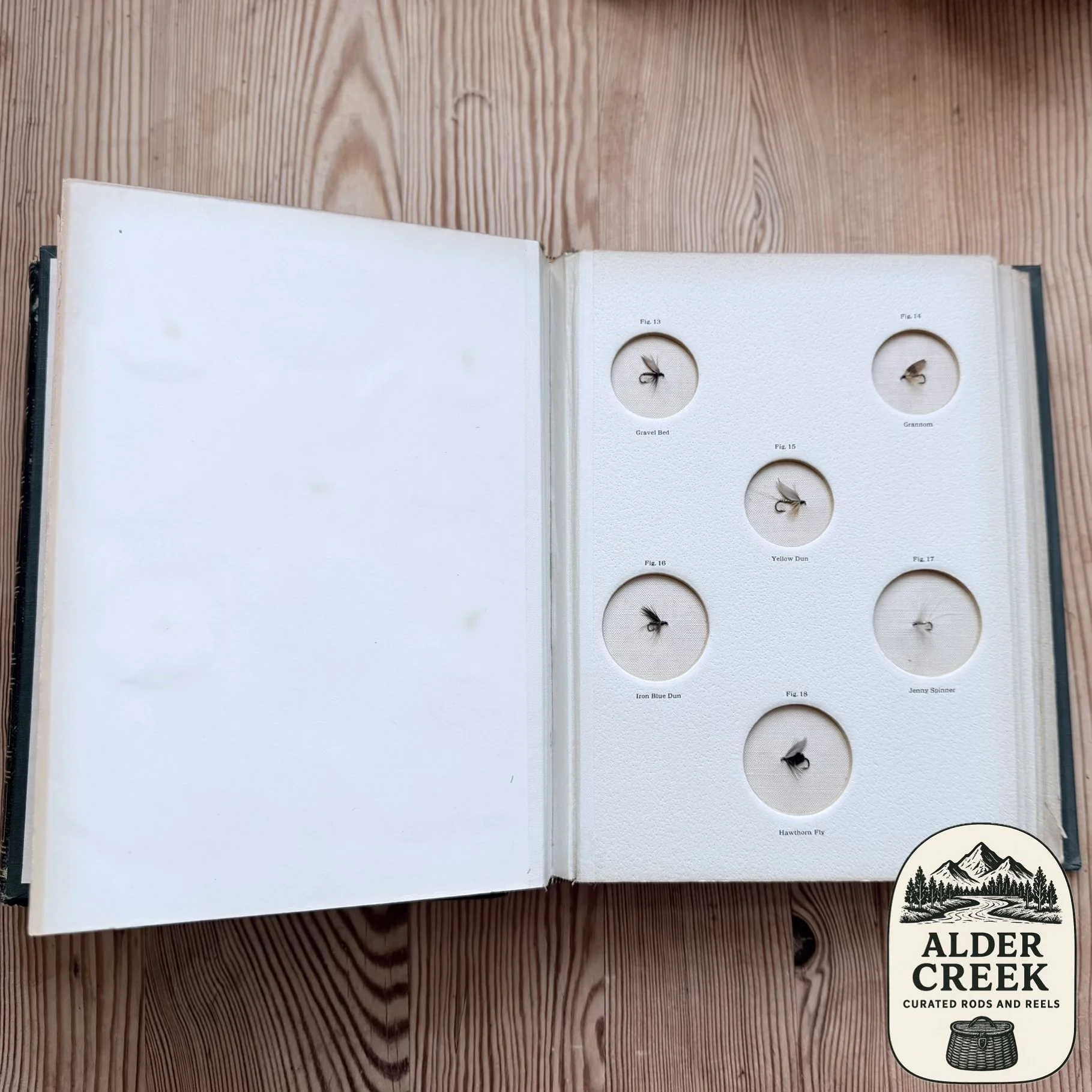
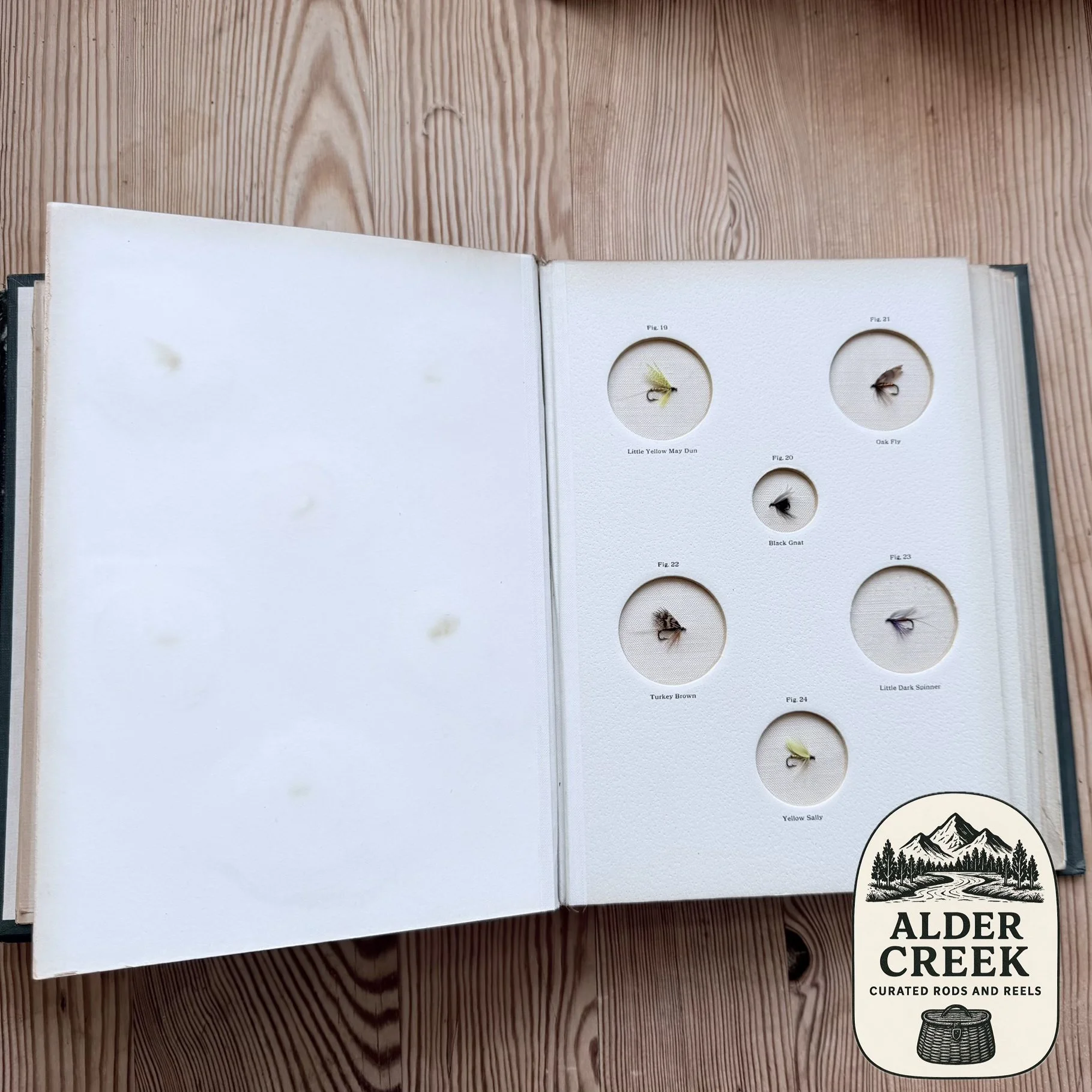
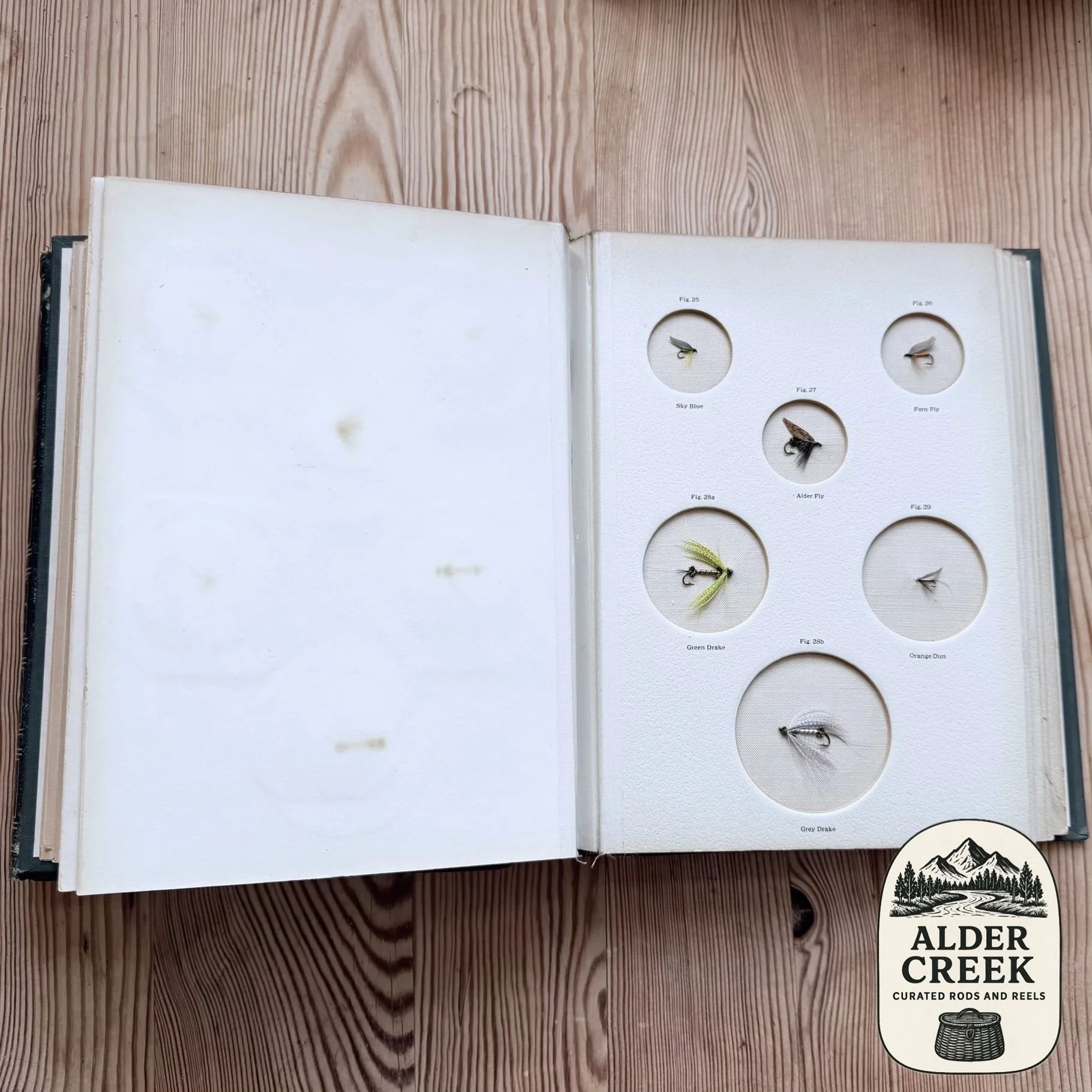
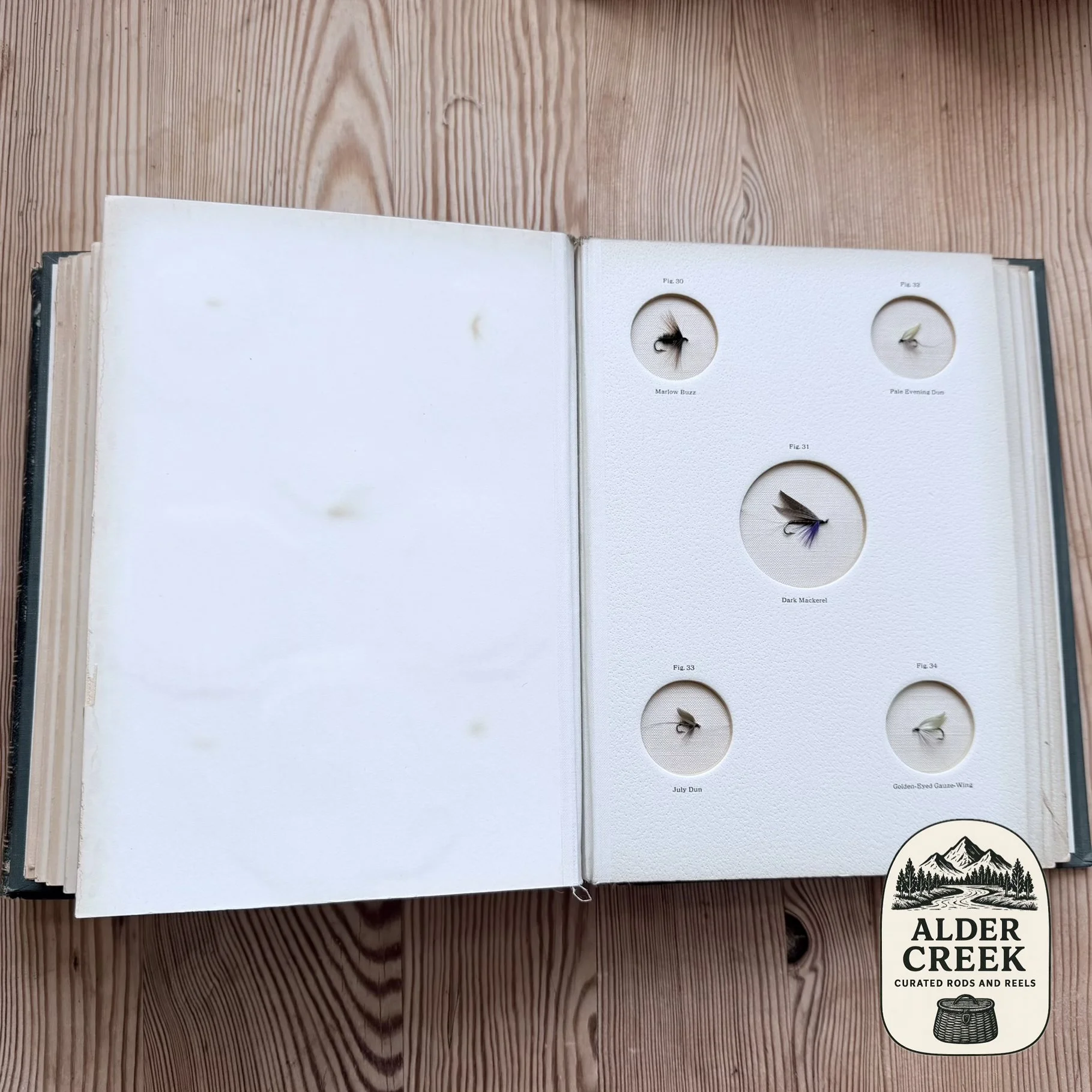
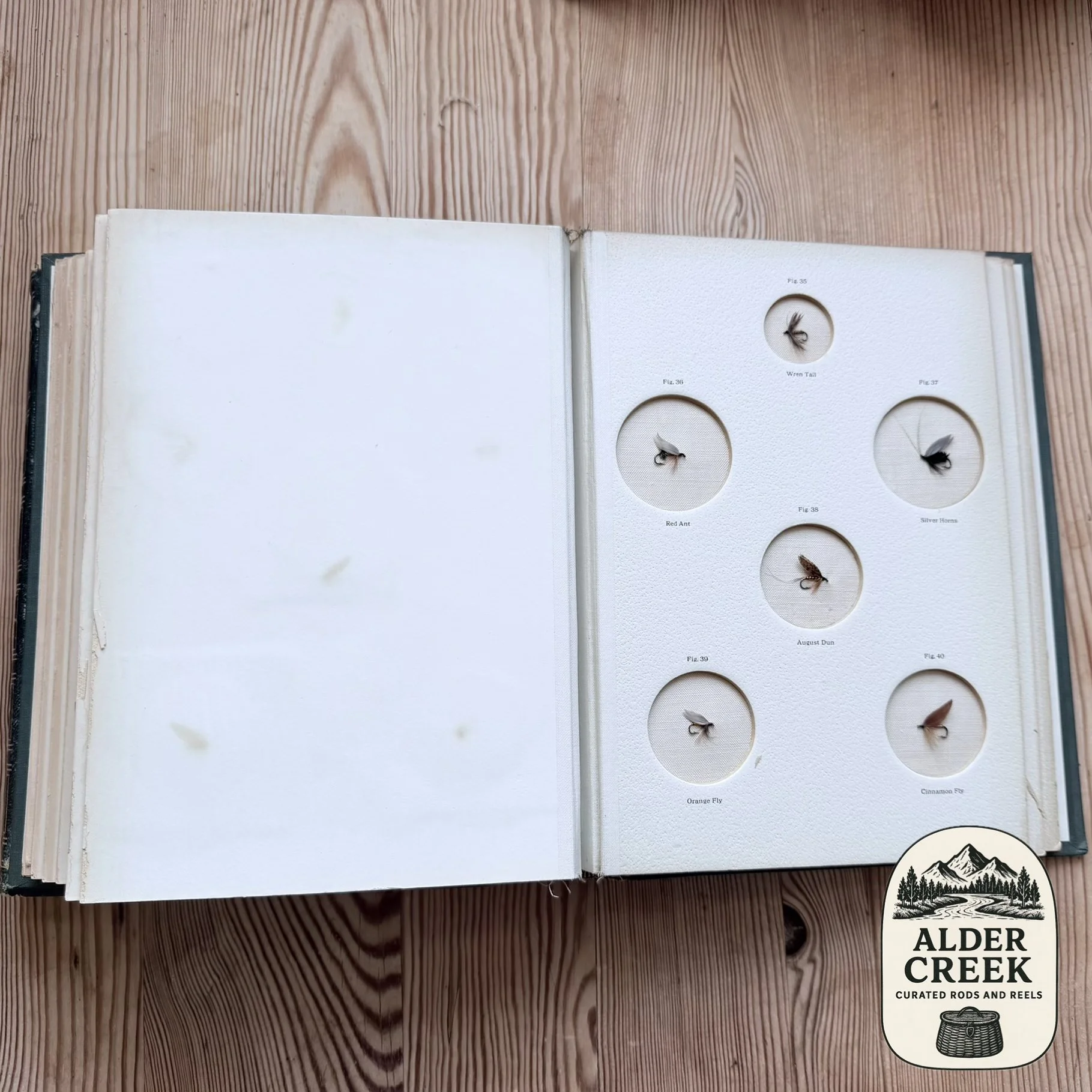
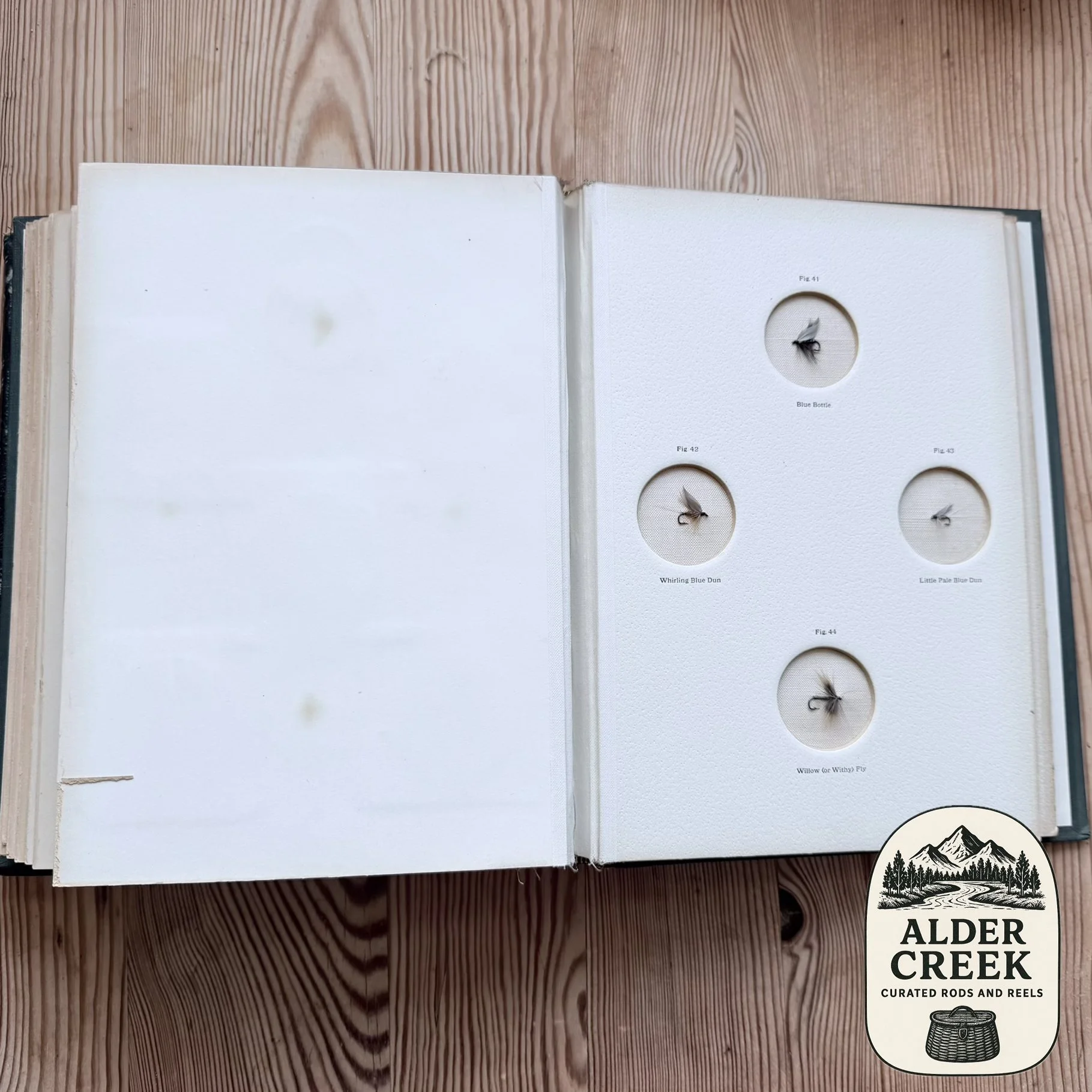
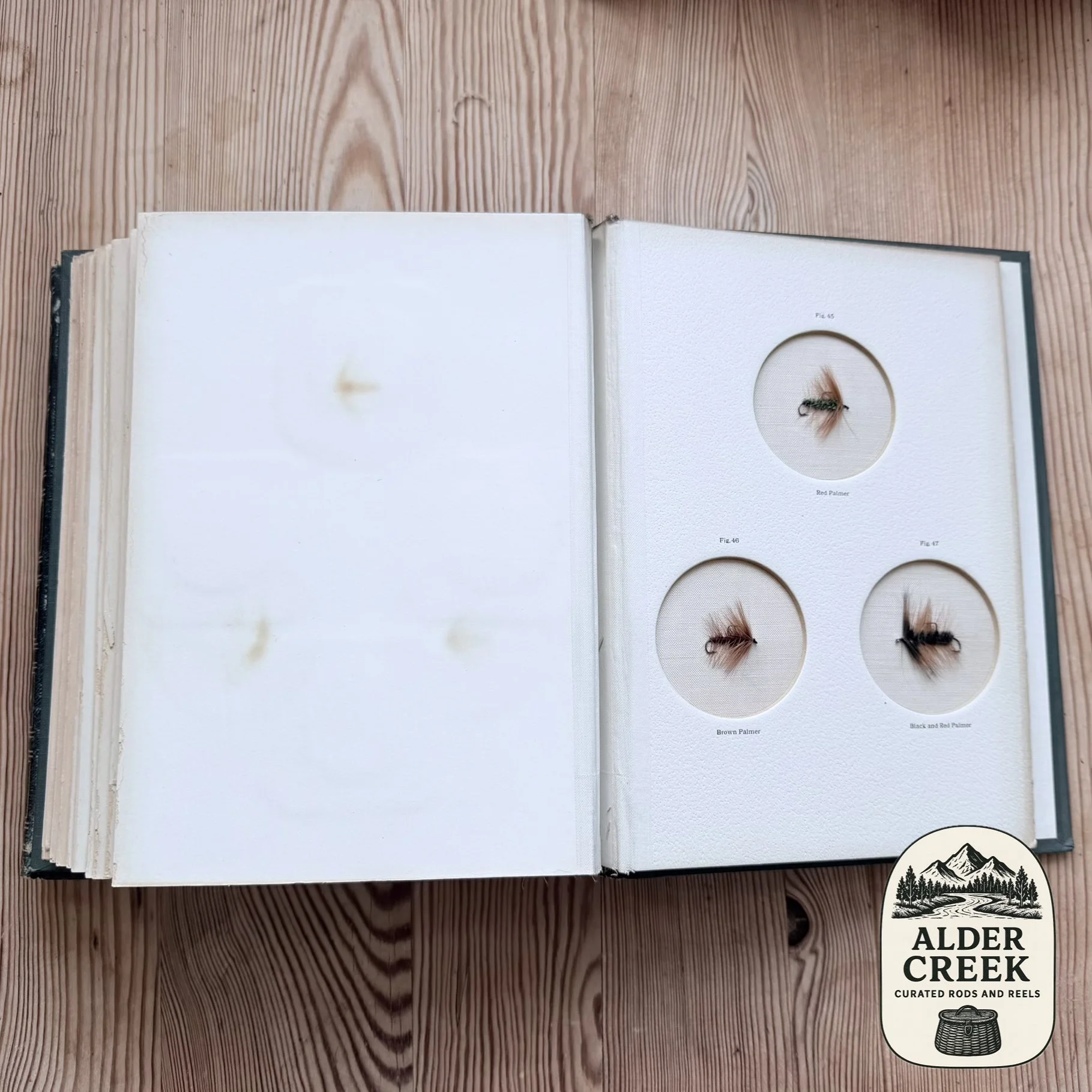
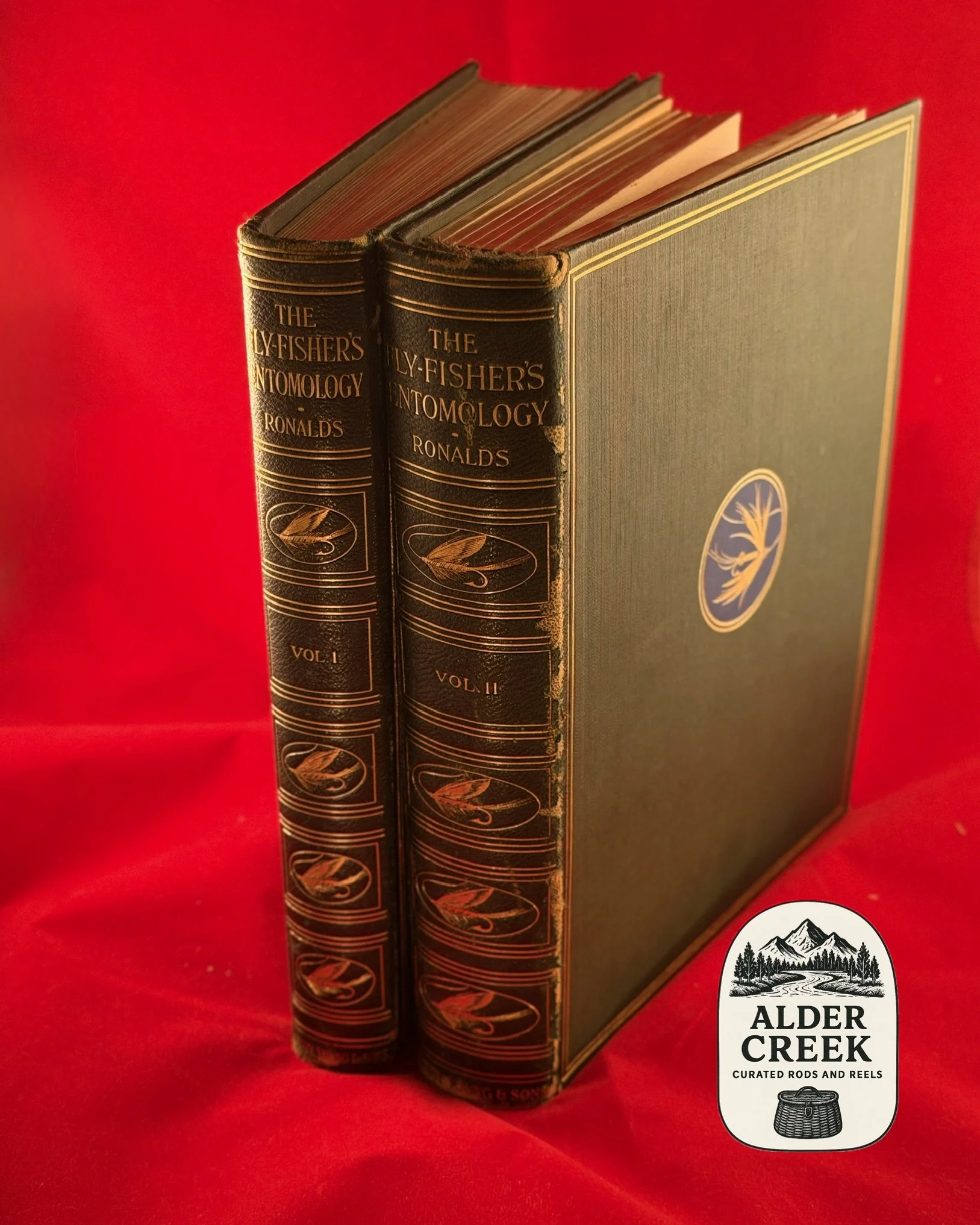
Edition de Luxe, 1913 — No. 243 of 250 — Two Volumes with 48 Original Flies
An exceptional example of one of the most celebrated works in the history of fly fishing, presented in the magnificent 1913 Edition de Luxe, published by Henry Young & Sons of Liverpool.
First published in 1836, Alfred Ronalds’ The Fly-Fisher’s Entomology established a new standard in the observation and imitation of aquatic insects. Combining scientific precision with the practical knowledge of an accomplished angler, Ronalds created a work that would profoundly influence generations of fly dressers and fly fishermen. Its importance to the development of the artificial trout fly can scarcely be overstated.
The 1913 Edition de Luxe represents one of the most desirable forms in which this landmark work was published. Issued in two substantial quarto volumes, it combines the original text and illustrations with an extraordinary collection of 48 actual artificial flies, arranged in recessed, linen-backed mounts across nine thick cards in the second volume.
These flies are not printed illustrations but individually dressed examples of the patterns associated with Ronalds’ pioneering work. Together they provide a remarkable physical record of the traditions of British fly dressing at the beginning of the twentieth century.
The first volume contains photographic views of rivers, portraits and beautifully hand-coloured engraved plates. Both volumes retain their original green morocco-backed cloth bindings, with gilt-lettered spines and gilt top edges.
This is copy number 243 of the 250 numbered copies, from a total edition limited to 270.
Of particular interest is the provenance: the volumes bear the bookplate of Cecil Harmsworth, the British politician and noted book collector, adding a distinguished historical association to an already important work.
The set remains in its original bindings, with some rubbing to the extremities and occasional light spotting, consistent with its age. All 48 flies are present. Photographs of the complete collection of mounted flies are included in this listing, allowing collectors to examine the individual patterns and their preservation in detail.
Few works unite the history of angling, entomology, fine book production and the art of fly dressing quite as convincingly as Ronalds’ The Fly-Fisher’s Entomology. In this lavishly produced edition, the book becomes something more than a classic text: it is a tangible record of the flies and craftsmanship that helped shape the modern sport.
An important addition to a serious collection of rare angling literature.
Author: Alfred Ronalds
Title: The Fly-Fisher’s Entomology
Publisher: Henry Young & Sons, Liverpool
Year: 1913
Edition: Edition de Luxe, numbered 243 of 250 copies
Format: Two volumes, quarto (approximately 250 × 188 mm)
Volume I: Photographic views, portraits and hand-coloured engraved plates
Volume II: 48 original artificial flies mounted on nine recessed, linen-backed cards
Binding: Original green morocco-backed cloth, gilt spines, top edges gilt
Provenance: Cecil Harmsworth bookplate
Condition: Some rubbing to binding extremities and occasional light spotting; all 48 flies present in perfect condition.
Further photographs, details and international shipping information are available upon request. Serious enquiries and considered offers are always welcome.
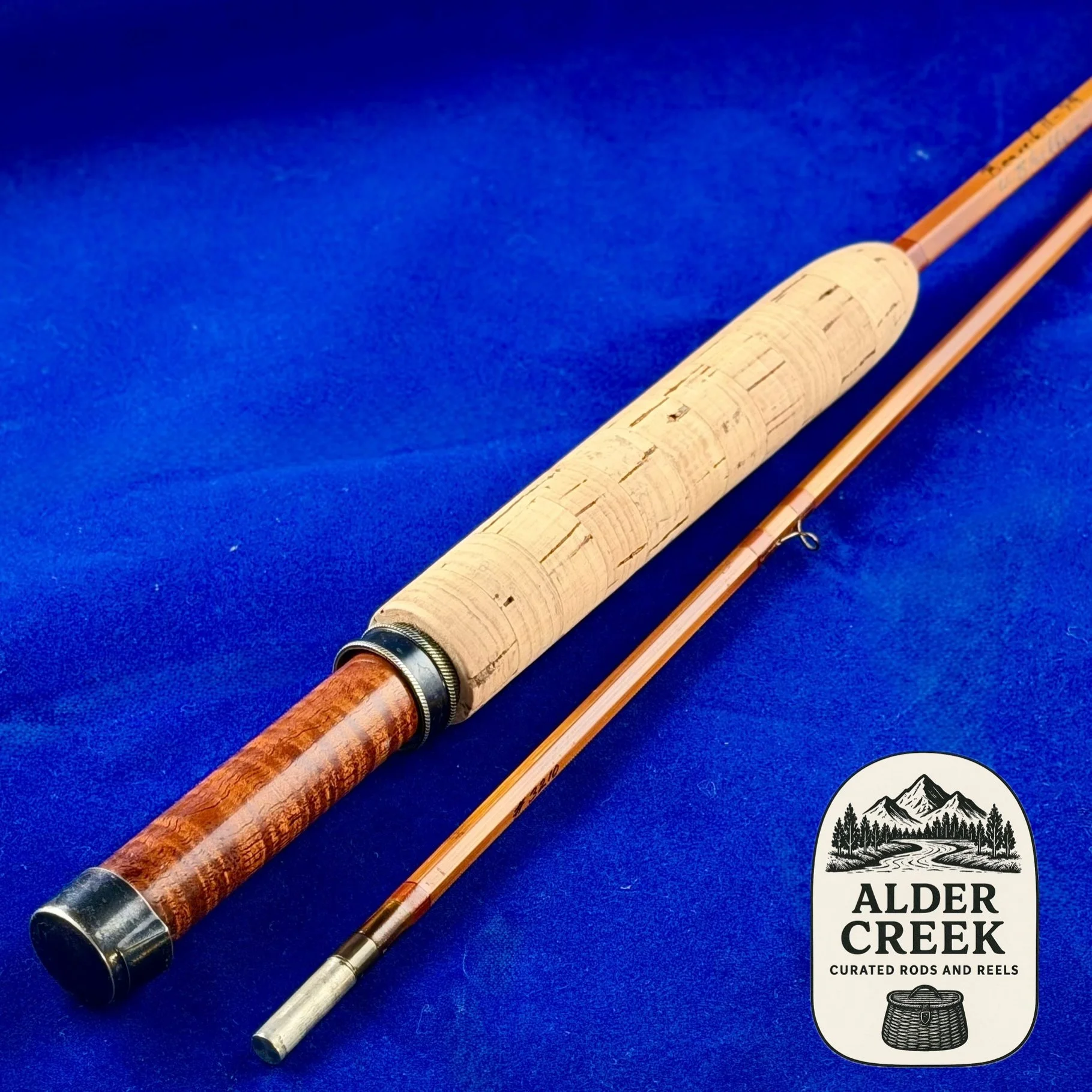
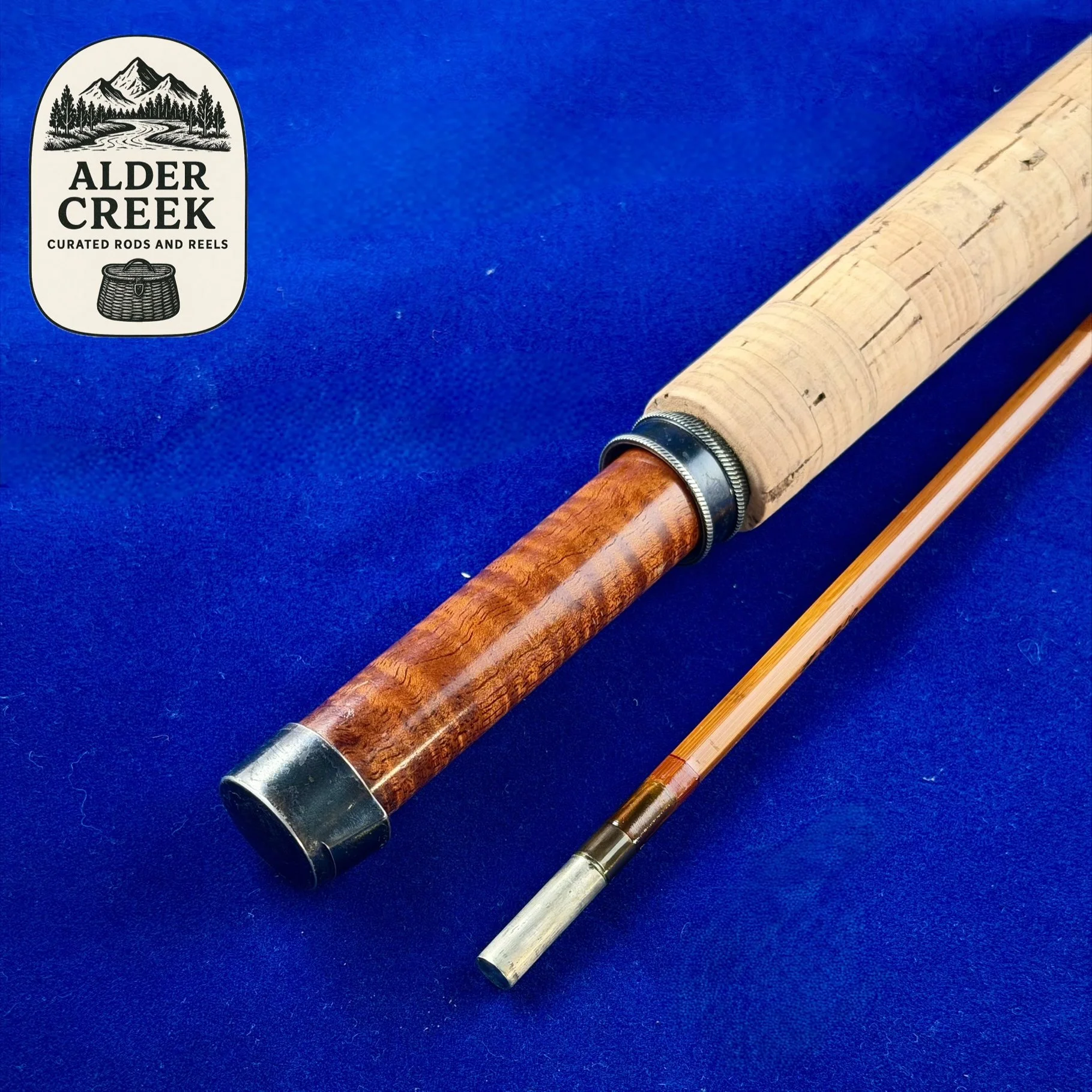
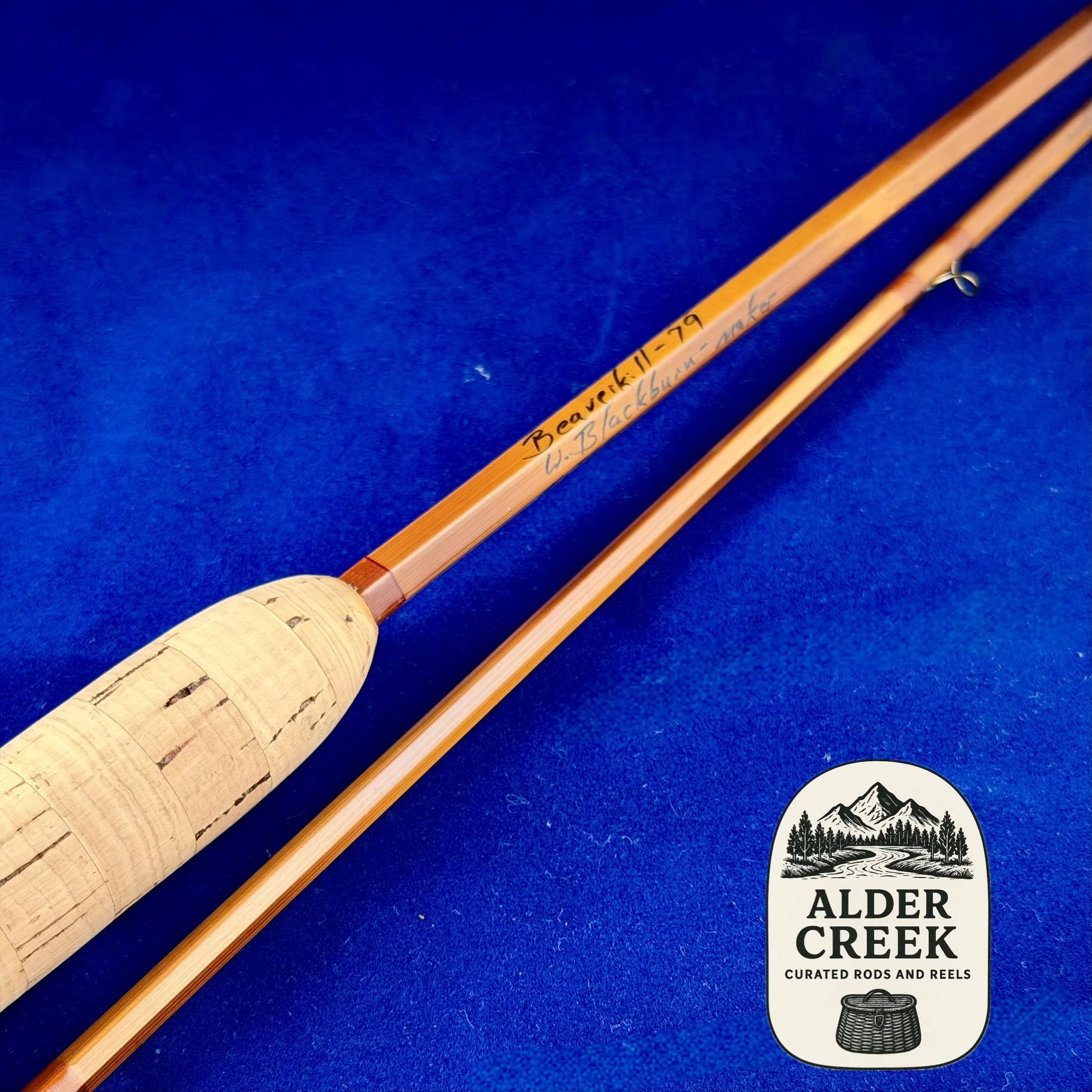
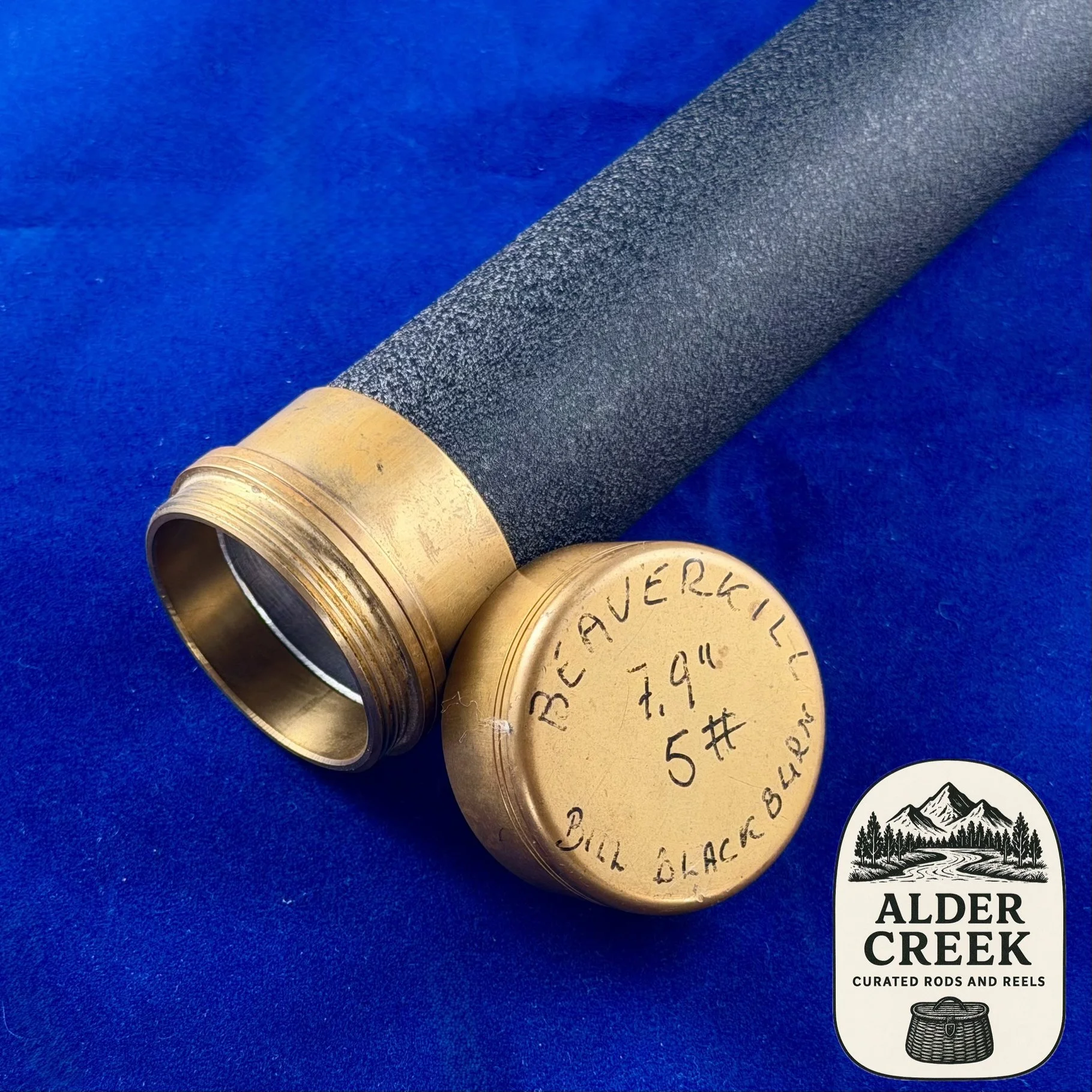
A fine W.W. Blackburn Beaverkill-79, a 7'9", two-piece bamboo fly rod built for a #5 line, serial #3210.
The Beaverkill-79 carries Bill Blackburn's trademark powerful, progressive action—a highly versatile dry-fly taper with plenty of reserve power while retaining the delicacy expected of a fine small-stream rod.
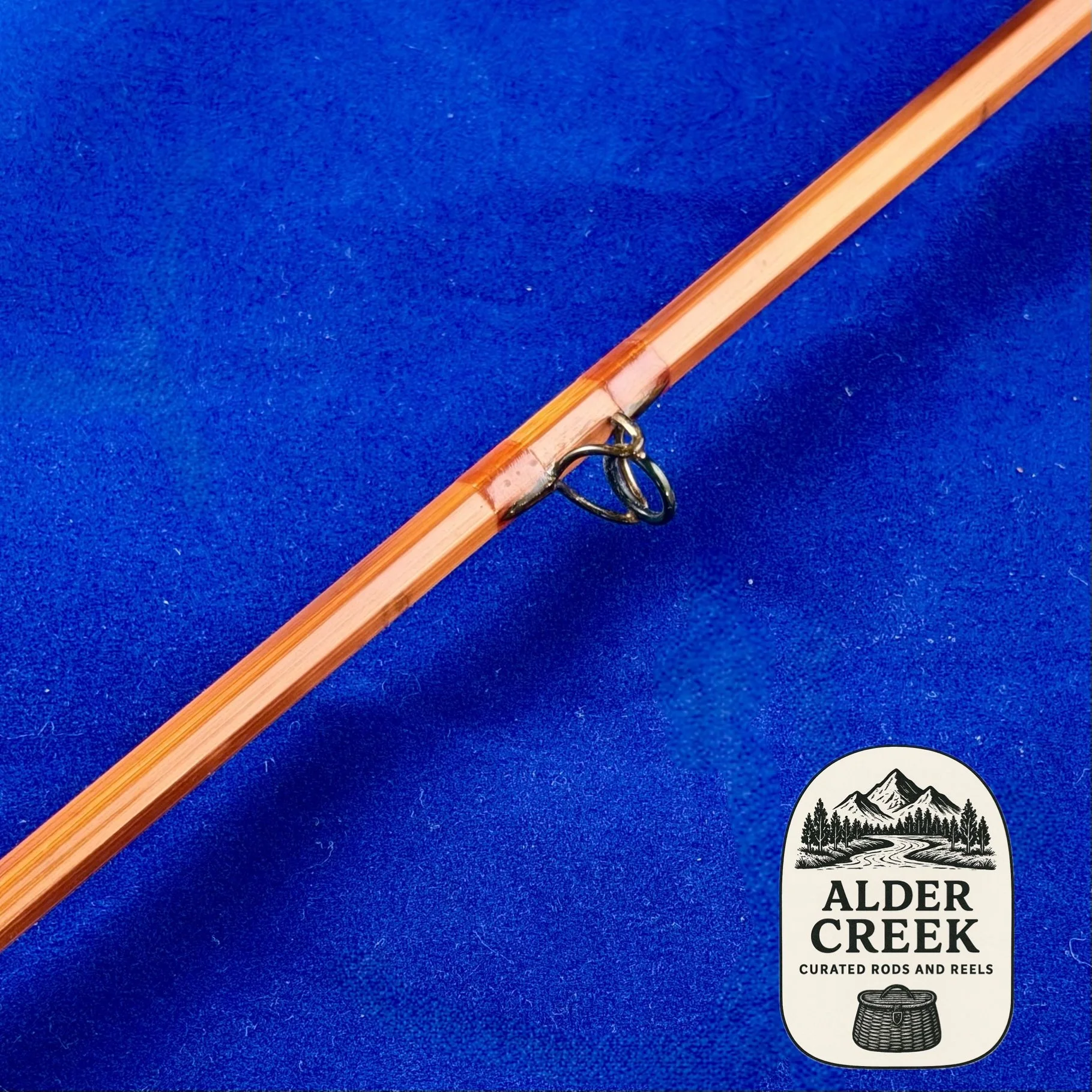
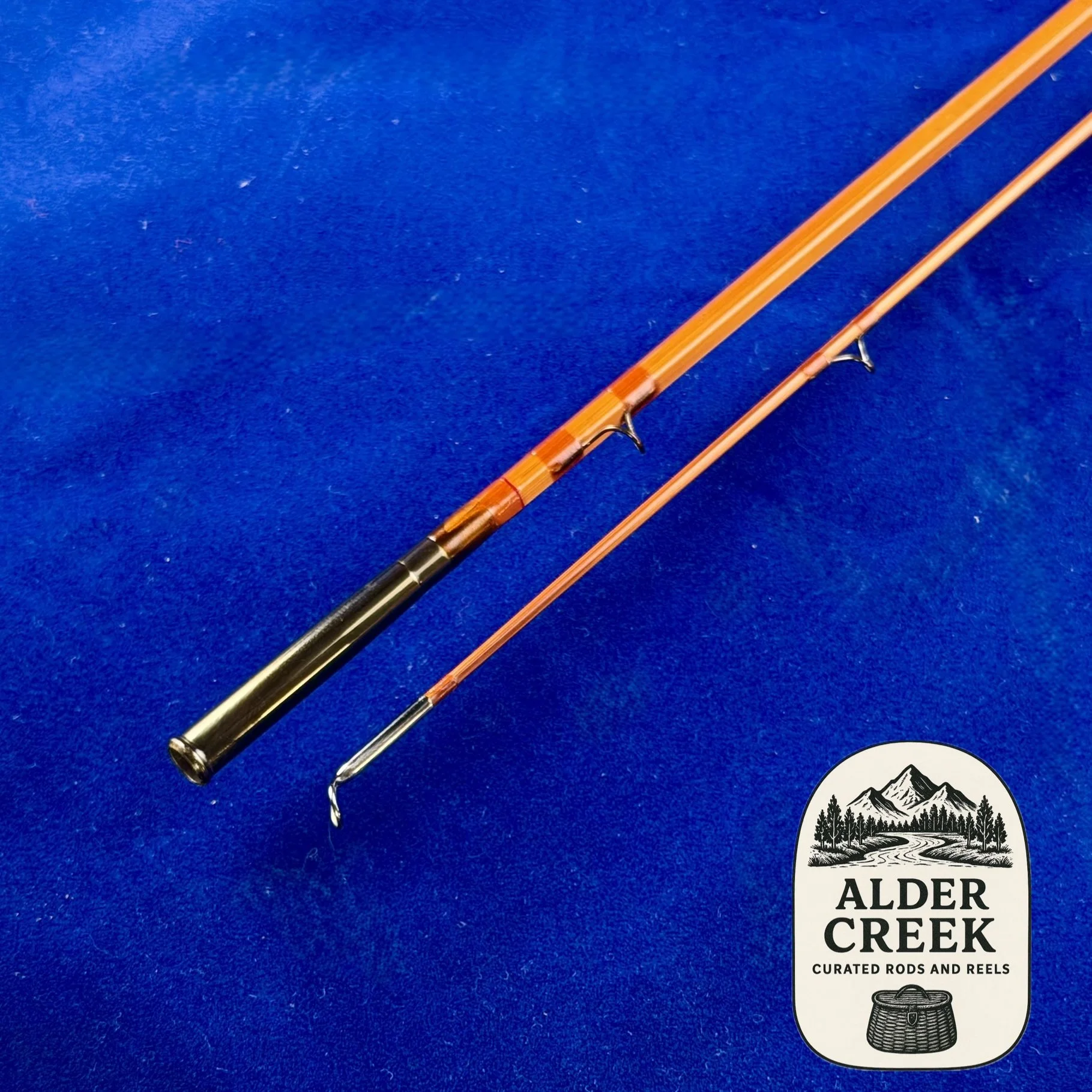
The rod is straight and without set, finished in beautifully flamed dark cane. The main wraps are tan, with subtle black tipping at the grip end and ferrules. The step ferrules have developed an attractive oxidized jet-black finish, complemented by a black stripping guide.
The approximately 6" grip is shaped as a blunt cigar. The cap-and-ring reel seat is similarly oxidized, with a mortised hardwood spacer, possibly cherry. The rod is accompanied by a non-original cloth bag and its original black crackle-finished tube with brass fittings.
William “Bill” Blackburn became an important figure in the later history of American bamboo rodmaking. Beginning in 1999, Blackburn worked under the direction of Tom Morgan at Tom Morgan Rodsmiths, establishing the company's bamboo operation and producing the bamboo blanks that were subsequently finished by Gerri Carlson.
Blackburn remained with Tom Morgan Rodsmiths until the end of 2011, when he left to establish W.W. Blackburn Bamboo Fly Rods in Bozeman, Montana. He was succeeded at Tom Morgan Rodsmiths by Zac Sexton.
The Beaverkill-79 is a particularly appealing expression of Blackburn's own approach to rod design: powerful, progressive and practical, with a taper that makes it equally at home presenting dry flies on a smaller river or opening up on larger water.
A handsome and highly fishable modern bamboo rod from one of the respected names of the American craft.
Maker
W.W. Blackburn — Bill Blackburn
Model
Beaverkill-79
Length
7'9"
Configuration
2-piece / 1 original tip
Line
#5
Action
Progressive, medium-fast
Serial Number
3210
Cane
Dark flamed bamboo
Wraps
Tan with black tipping
Ferrules
Oxidized step ferrules
Grip
6" blunt cigar cork
Reel Seat
Cap and ring, mortised hardwood spacer
Condition
Very Good
Includes
Original tube
Questions about this piece, international shipping, or price are always welcome.
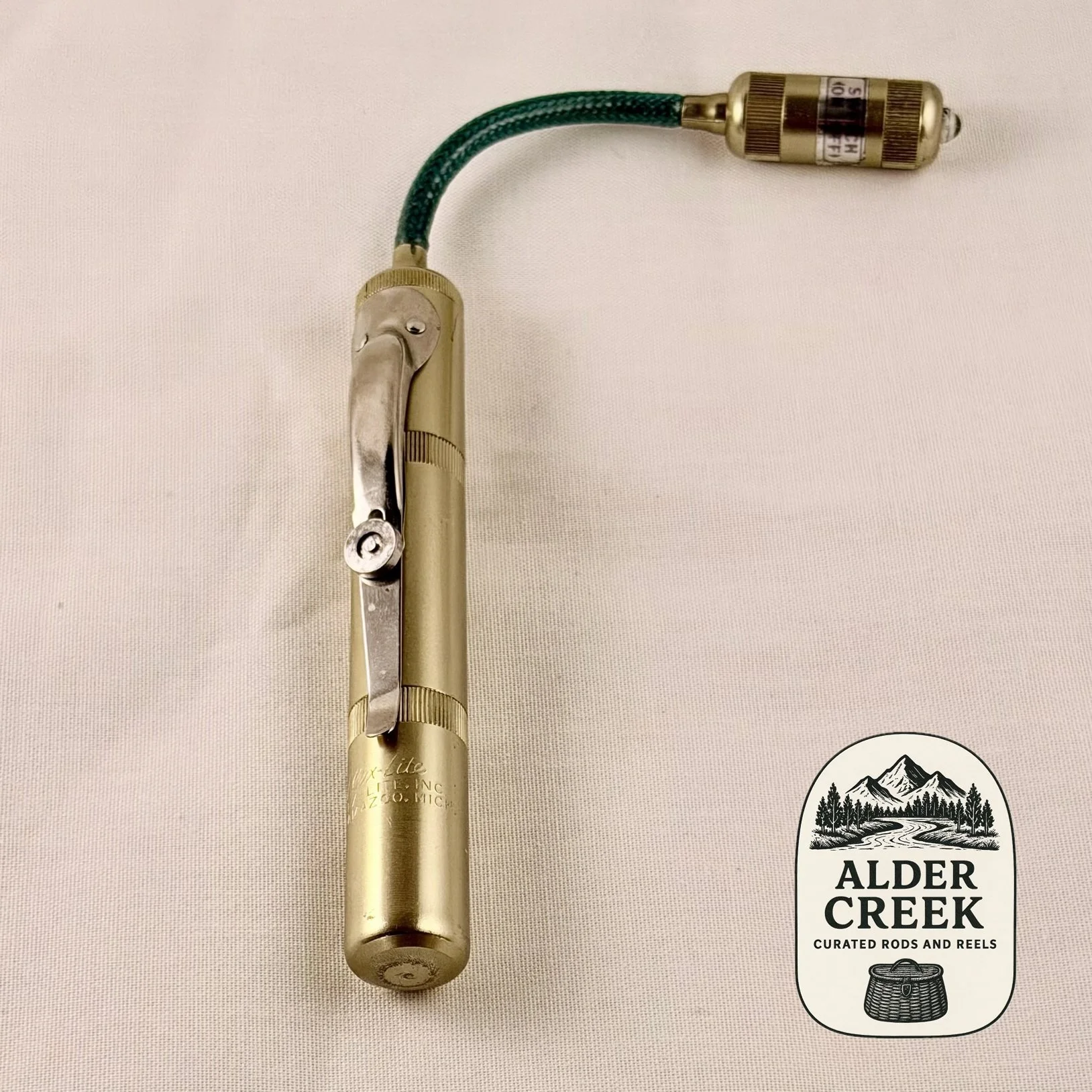
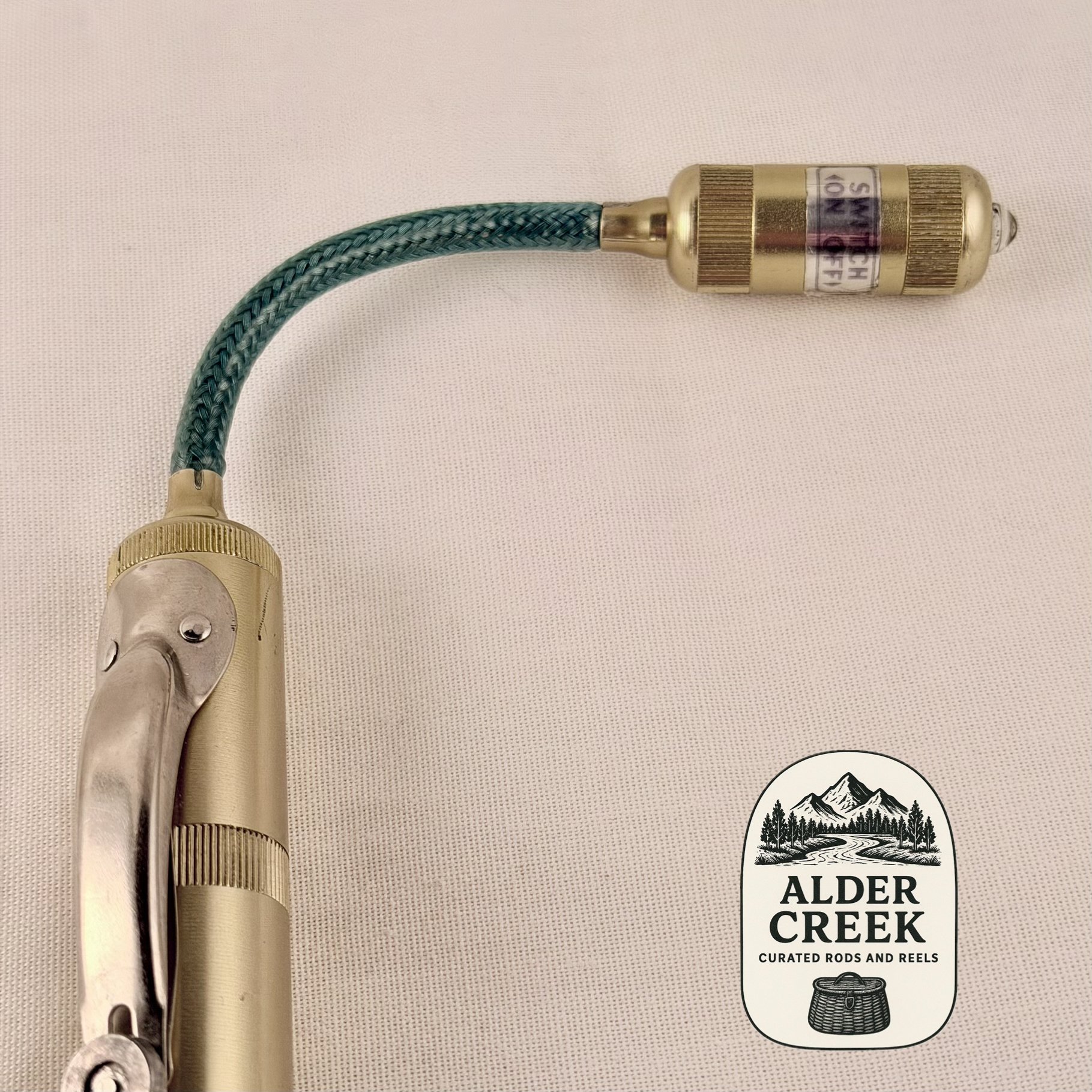
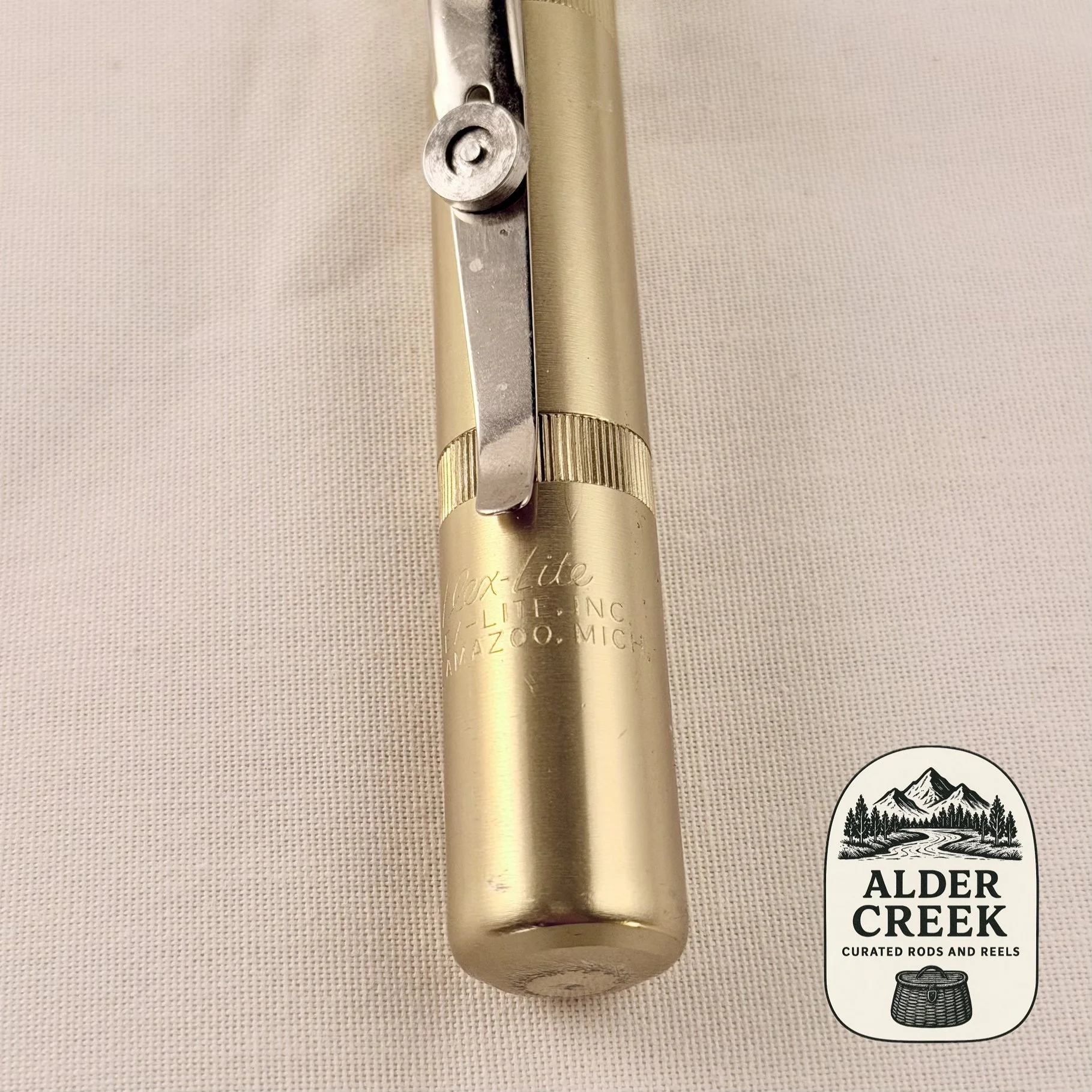
An ingenious piece of American angling equipment
A wonderfully distinctive vintage fishing light by Flex-Lite of Kalamazoo, Michigan, combining purposeful American design with the practical ingenuity of traditional fishing accessories.
The lamp features a slender, flexible gooseneck that allows the light to be directed precisely where needed. Its compact metal body, brass-coloured finish and adjustable neck give it an unmistakably utilitarian character.
Flexible lights of this kind were particularly useful to anglers working with small flies, fine tippets and delicate tackle in poor light. Rather than relying on a fixed beam, the angler could position the lamp to illuminate a particular task while keeping both hands free.
Flex-Lite also produced flexible inspection lights for other practical applications, making these lamps an interesting example of American industrial design finding a place among traditional fishing equipment.
This example retains its characteristic brass-coloured finish and articulated neck. It has been tested and is fully functional.
A charming and increasingly uncommon piece of fishing ephemera, equally appealing as a practical accessory or as an addition to a collection of vintage American angling equipment.
Maker: Flex-Lite
Origin: Kalamazoo, Michigan, USA
Type: Flexible fishing and utility light
Construction: Metal body with flexible gooseneck
Finish: Brass-coloured
Function: Adjustable directional lighting
Working condition: Tested and fully functional
Further photographs, measurements and international shipping information are available upon request.
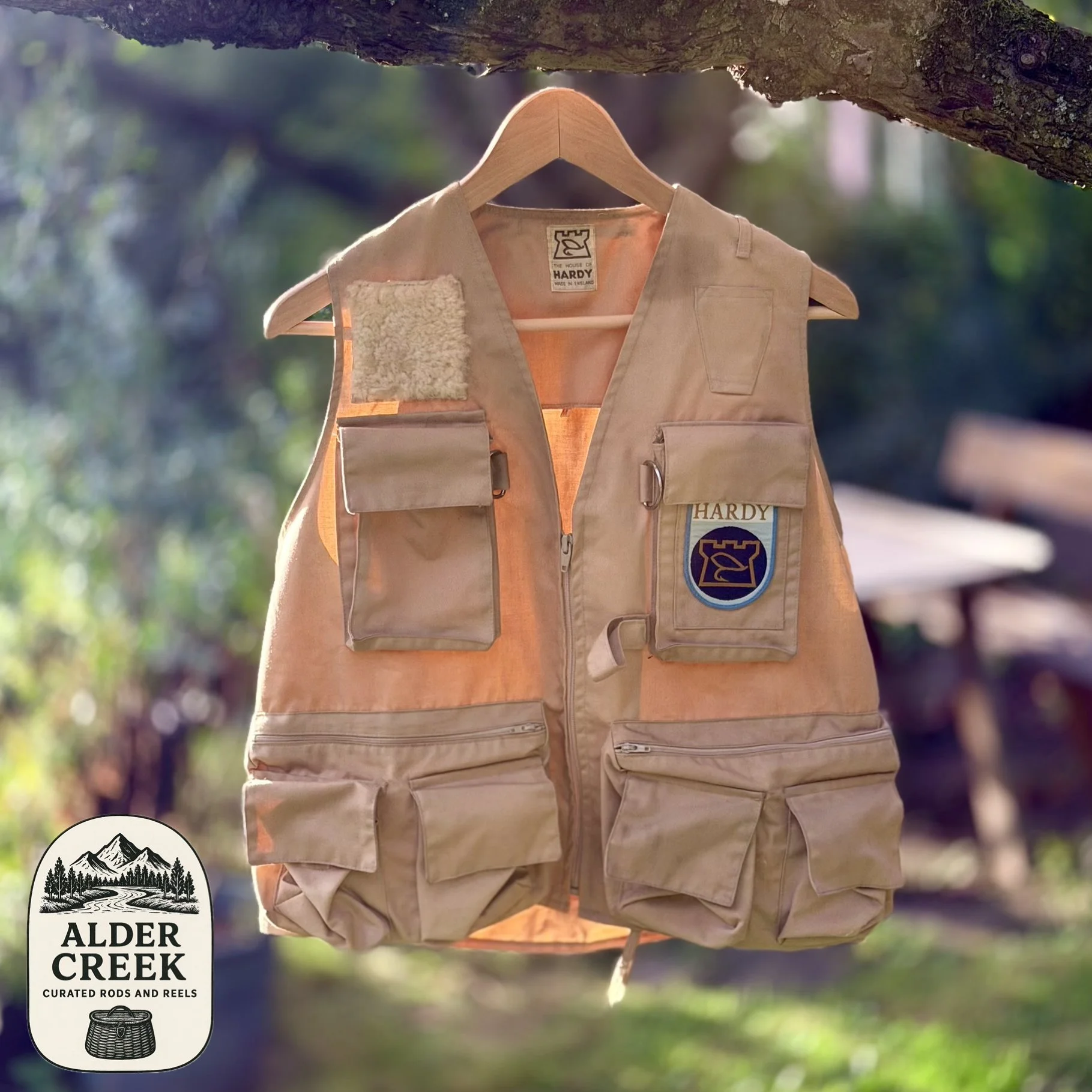
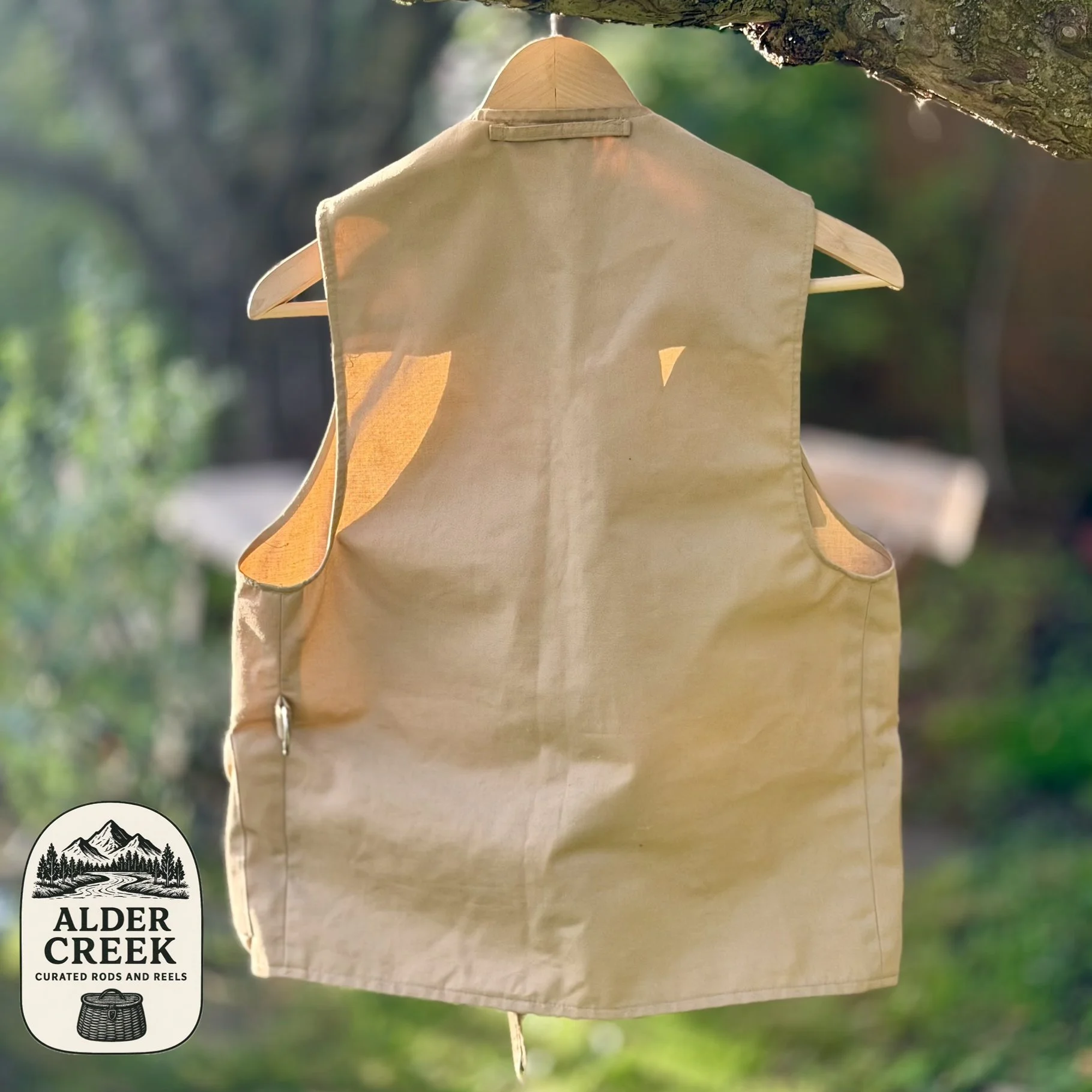
A beautifully preserved vintage angler's vest from the House of Hardy, made in England and dating to approximately the latter half of the 1970s.
Made from traditional khaki cotton, the vest features a practical arrangement of pockets, a wool fly patch on the chest and the distinctive Hardy shield badge. Its understated design reflects an era when fishing clothing was made primarily for utility, comfort and durability rather than fashion.
The House of Hardy of Alnwick needs little introduction. Celebrated for its rods and reels, the firm also produced a range of traditional fishing accessories and clothing, designed with the same appreciation for the practical requirements of the angler.
This example appears to have seen little, if any, actual use. It remains in remarkably fine overall condition, although the cotton fabric shows some natural ageing consistent with its approximately fifty years.
A charming piece of British angling heritage, equally suitable for use on the river or as part of a collection of classic Hardy tackle and accessories.
Maker: House of Hardy, England
Period: c. 1975–1979 (estimated)
Material: Khaki cotton
Features: Multiple pockets, wool fly patch, Hardy shield badge
Condition: Excellent vintage condition, apparently little used, with some ageing to the cotton
Origin: Made in England
Questions about measurements, condition or international shipping are always welcome.
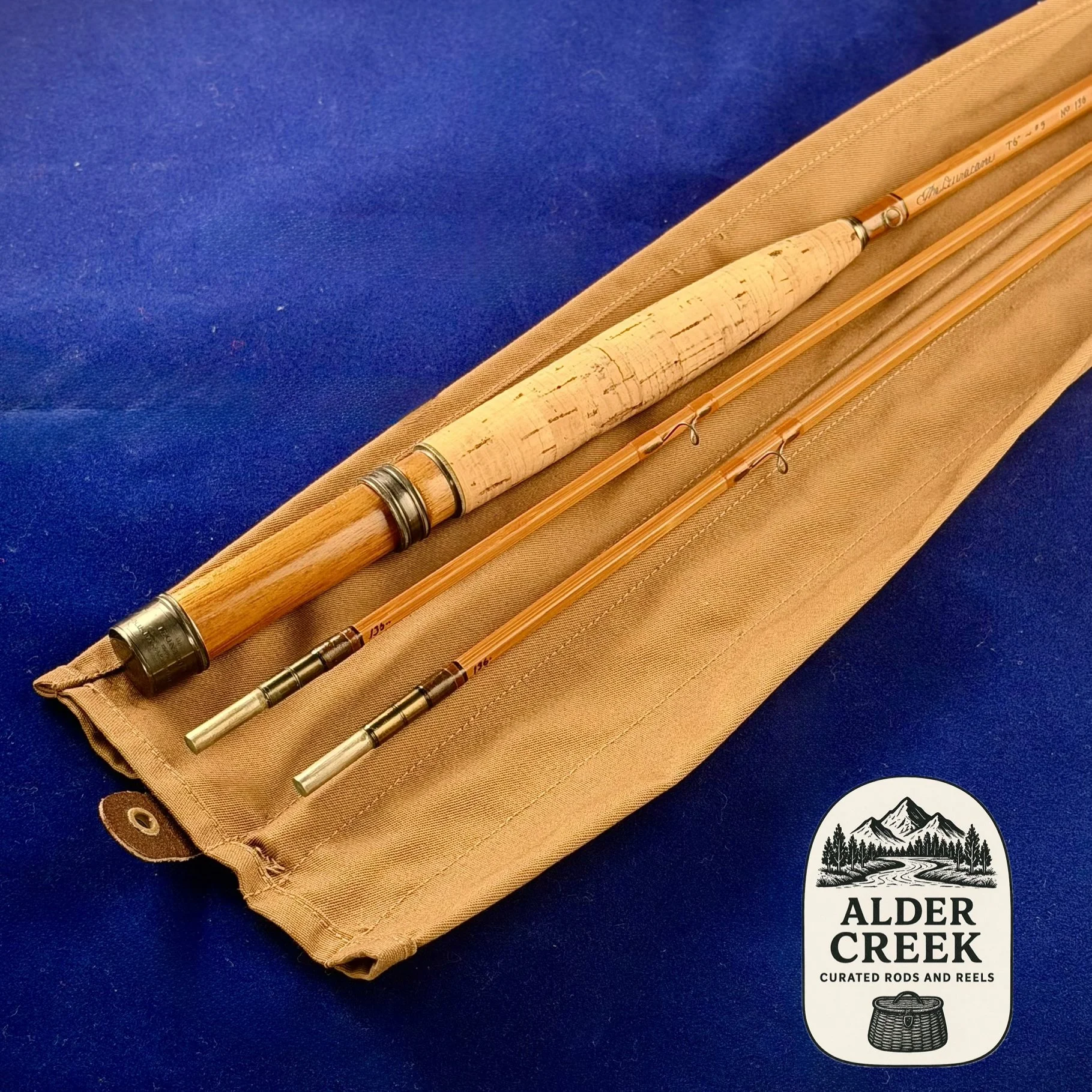
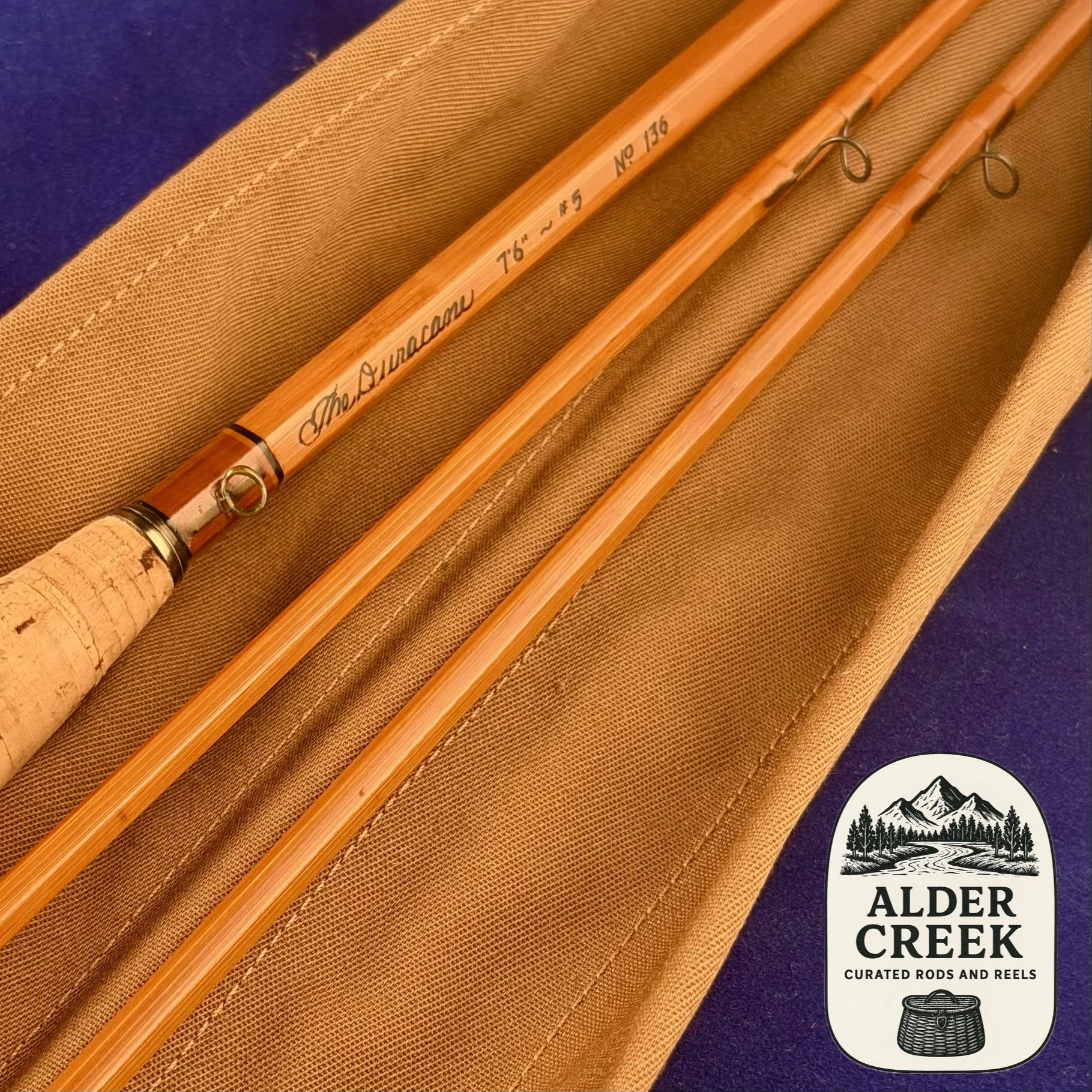
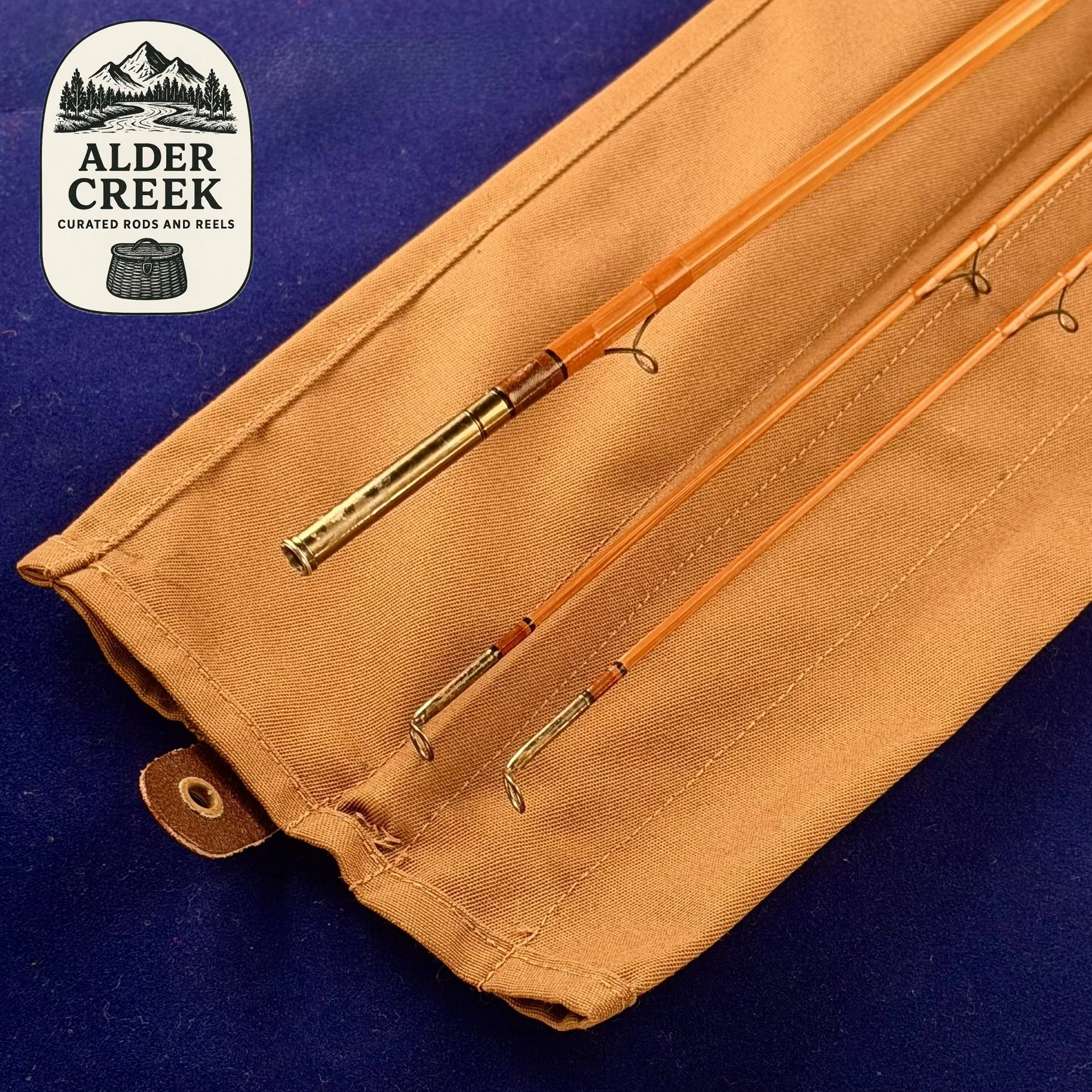
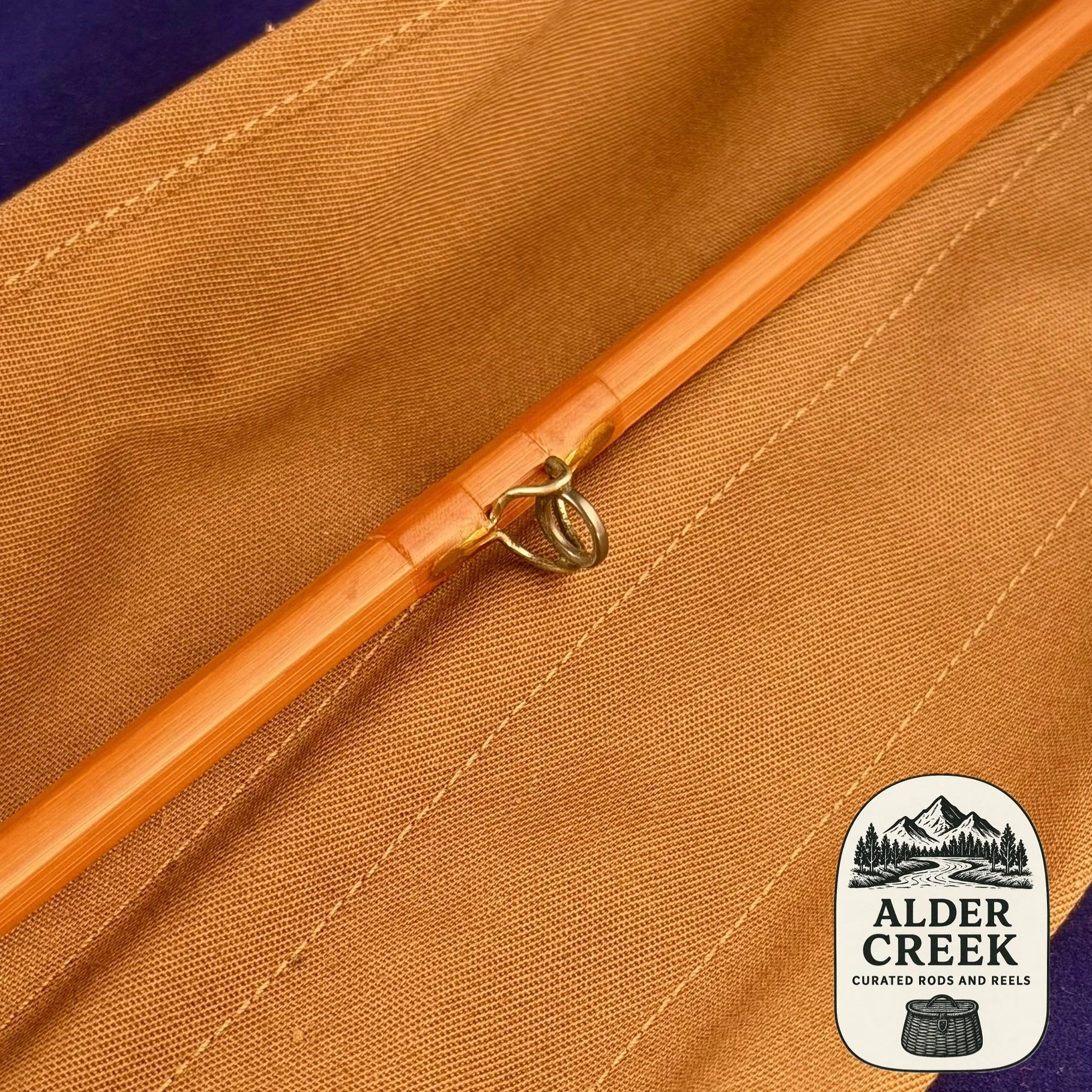
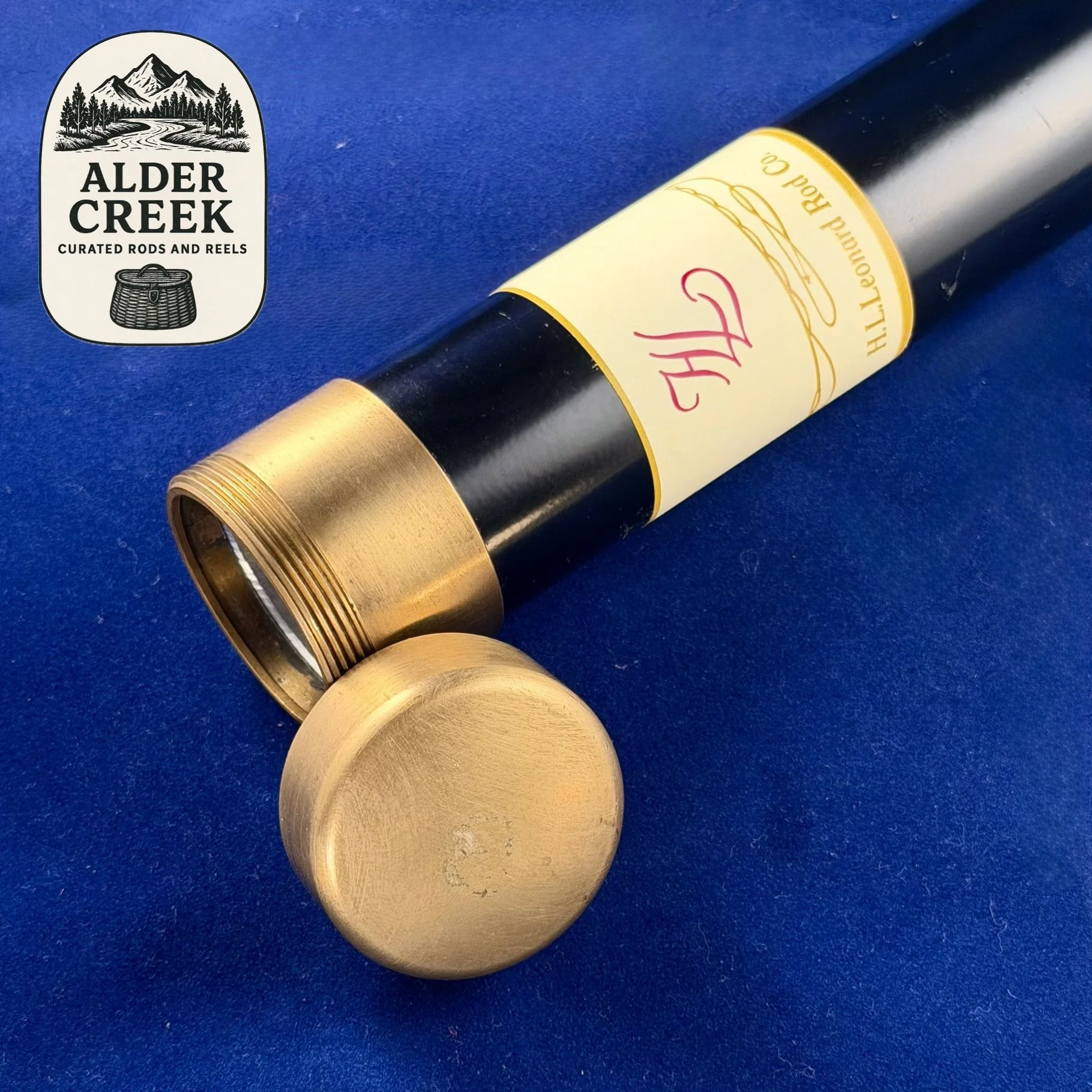
A particularly fine H.L. Leonard The Duracane, measuring 7'6" and built for a #5 line. This is an impregnated bamboo rod from the Tom Maxwell period at Leonard, preserved in very good used condition.
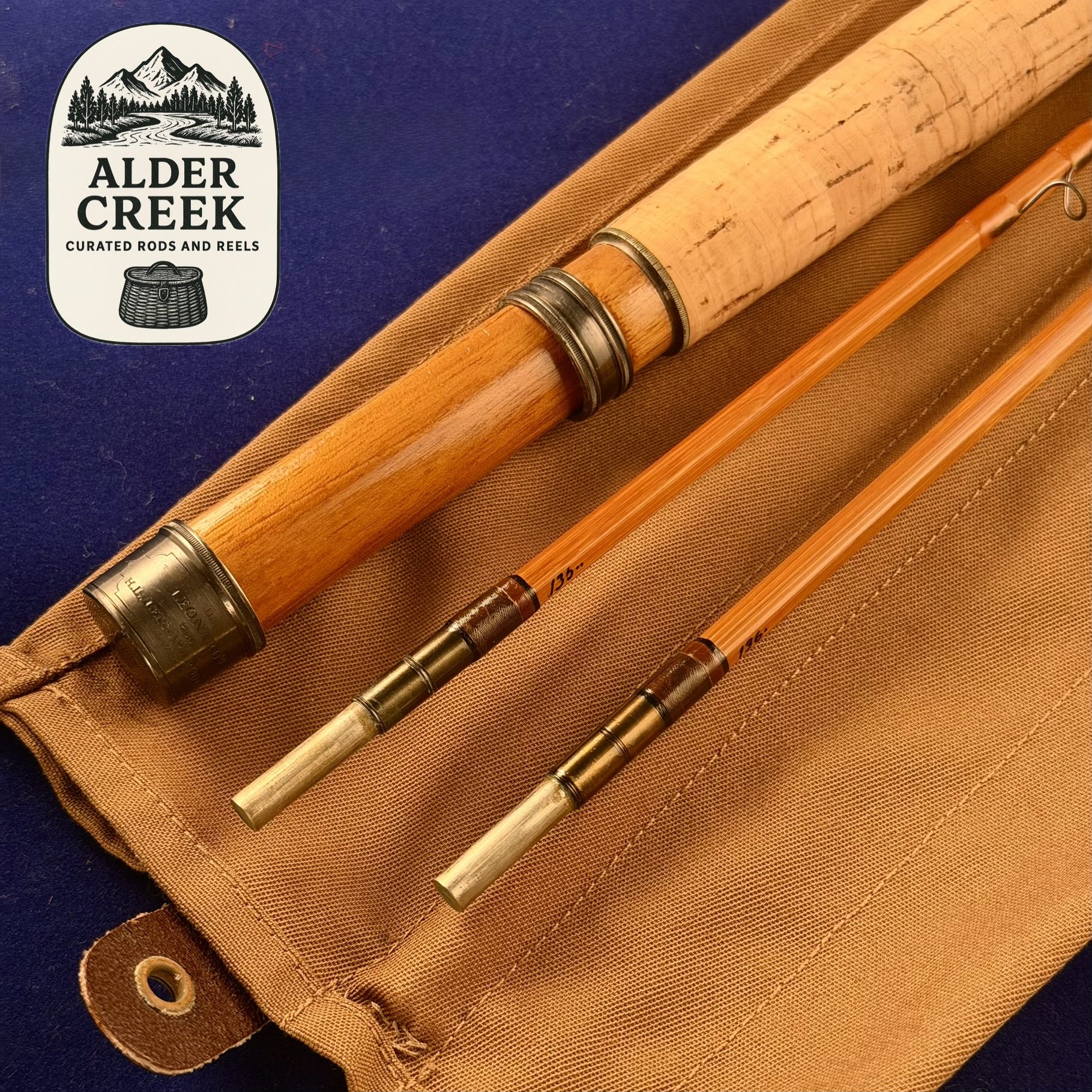
Serial #136, the rod is recorded in the H.L. Leonard database and was most likely made around 1978–79. The medium-tempered cane has lightly oxidized guides with transparent honey windings, complemented by brown and black accents at the ferrules and winding check.
All sections are full length and correctly serialized. The two tips are dead straight, with original 13/64" ferrules that fit perfectly, showing only some external oxidation. The original Leonard inscriptions remain exceptionally clear and crisp, written in Tom Maxwell's distinctive hand.
The approximately 5" cork grip shows some characteristic ridging from use and is fitted with nickel-silver checks. Very clean. The blued cap-and-ring reel seat is mounted over a beautifully figured mortised mahogany spacer, with some signs of use. The rod has a medium action, particularly well suited to a DT5.
It is worth noting that this is a Leonard in-house Duracane blank, rather than one of the Duracanes produced on blanks supplied by Sharpe's. Leonard's own Duracane was developed as a distinct rod series, with its own tapers and impregnated bamboo construction. The 1978 Leonard catalogue describes the Duracane as a rod combining special Leonard tapers with the company's traditional craftsmanship and fittings.
During Tom Maxwell's tenure at Leonard, the designation evolved into “The Duracane.” The Maxwell-era rods bearing this inscription are now readily identifiable by the distinctive wording and Maxwell's characteristic script. Specialist collectors consequently use The Duracane as a useful marker for this particular Maxwell period of production.
In other words, the Maxwell Duracanes are properly referred to as “The Duracane”, rather than simply Duracane. This example, with The Duracane inscription still exceptionally crisp in Maxwell's hand, is a particularly fine representation of the series.
Explore our collection of H.L. Leonard bamboo fly rods, spanning several generations of American rodmaking, from the pre-fire era to the workshops of Tom Maxwell and Marc Aroner. Discover the 50DF Tournament, 4099½, Hunt 50-5, and the Catskill Special 48-4.
Maker
H.L. Leonard Rod Company
Model
The Duracane
Length
7'6"
Configuration
2-piece / 2-tip
Line
#5 (DT5)
Action
Medium
Construction
Impregnated bamboo
Ferrules
13/64"
Serial Number
136
Year
c. 1978–79
Era
Tom Maxwell
Condition
Very Good
Includes
Original bag and tube
Questions about this piece, international shipping, or price are always welcome.
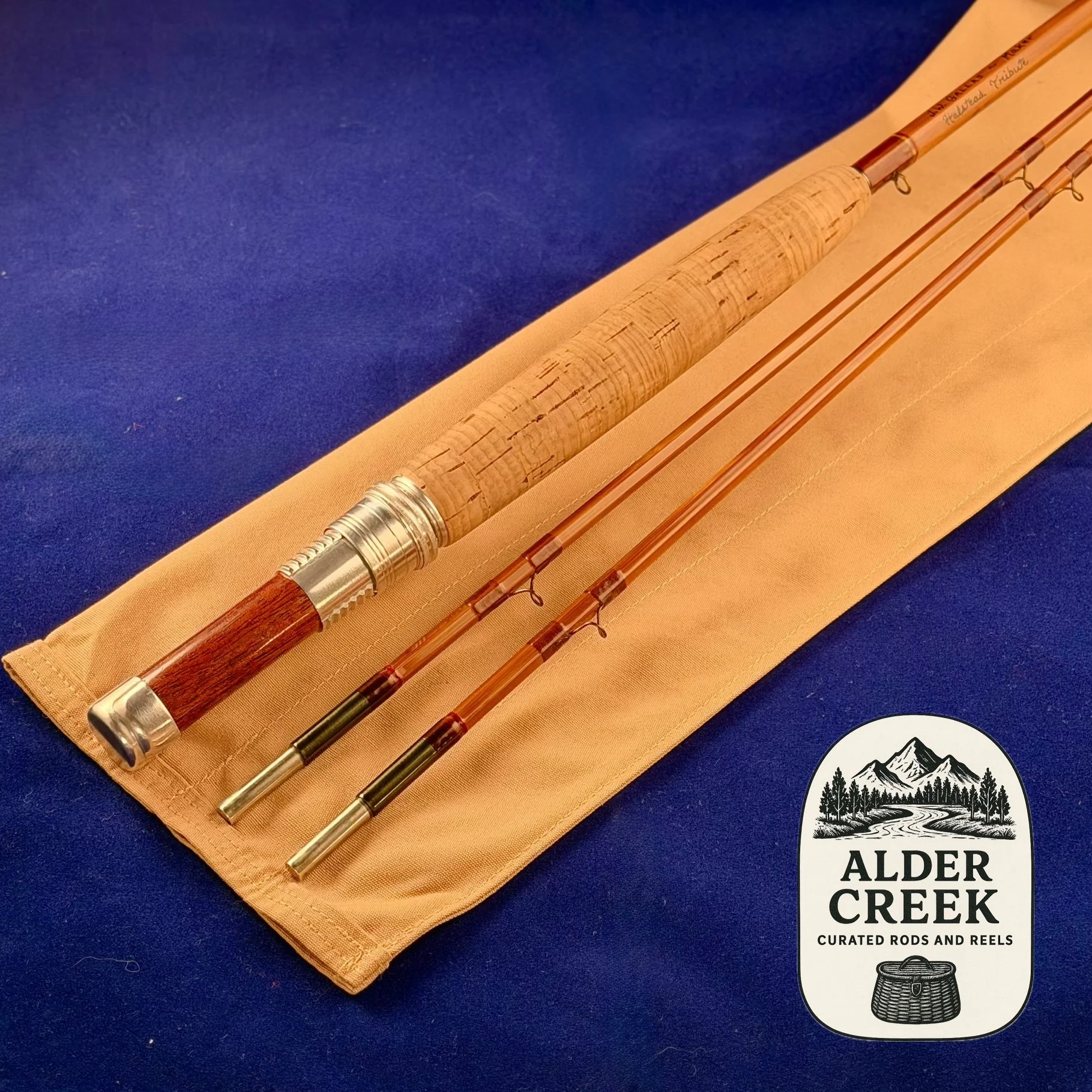
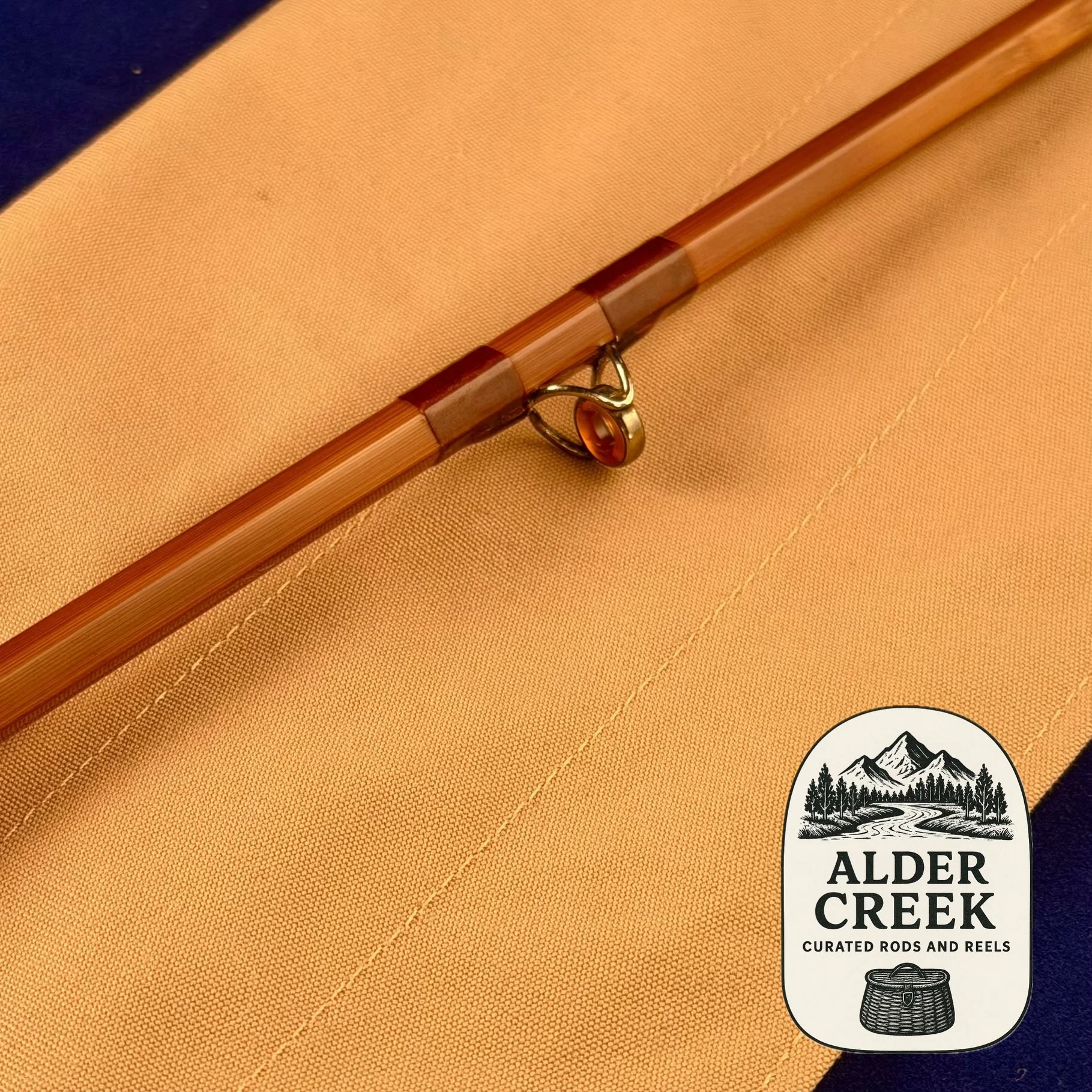
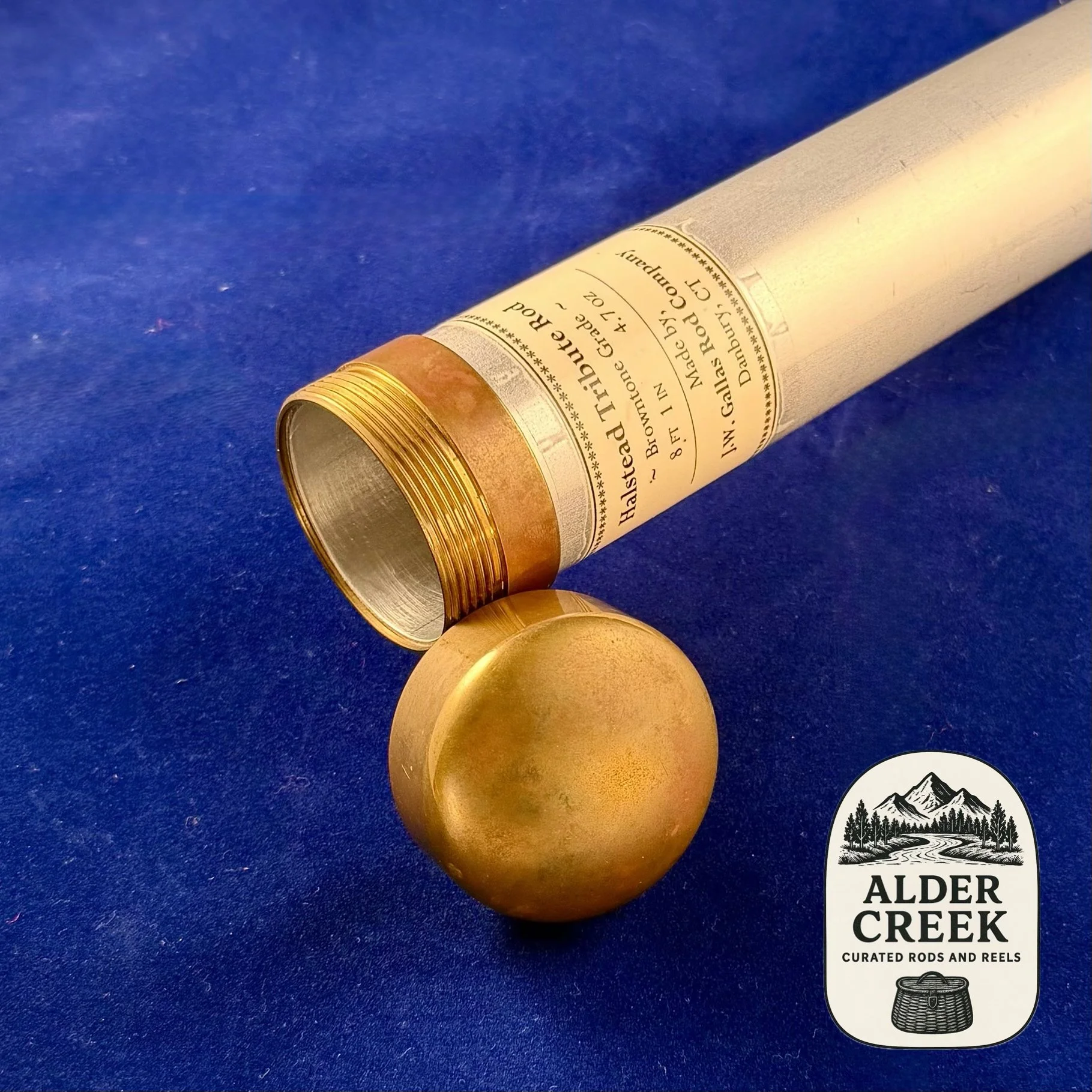
For many years, the J.W. Gallas Rod Company produced exceptional custom bamboo fly rods, pairing proprietary tapers with the traditions and designs of the great American rodmakers. With the Halstead Tribute Series, John Gallas turned his attention to the parabolic rods of George H. Halstead of Danbury, Connecticut, one of the distinguished figures of the Golden Age of American bamboo rodmaking.
The intention was to recreate a line of rods that had, by then, become almost unobtainable. Original Halstead rods are exceedingly rare today, and correspondingly sought after by collectors and anglers alike. The Halstead Tribute Series comprises some of the rarest of these parabolic models, including this handsome and powerful 8'1" 5-weight.
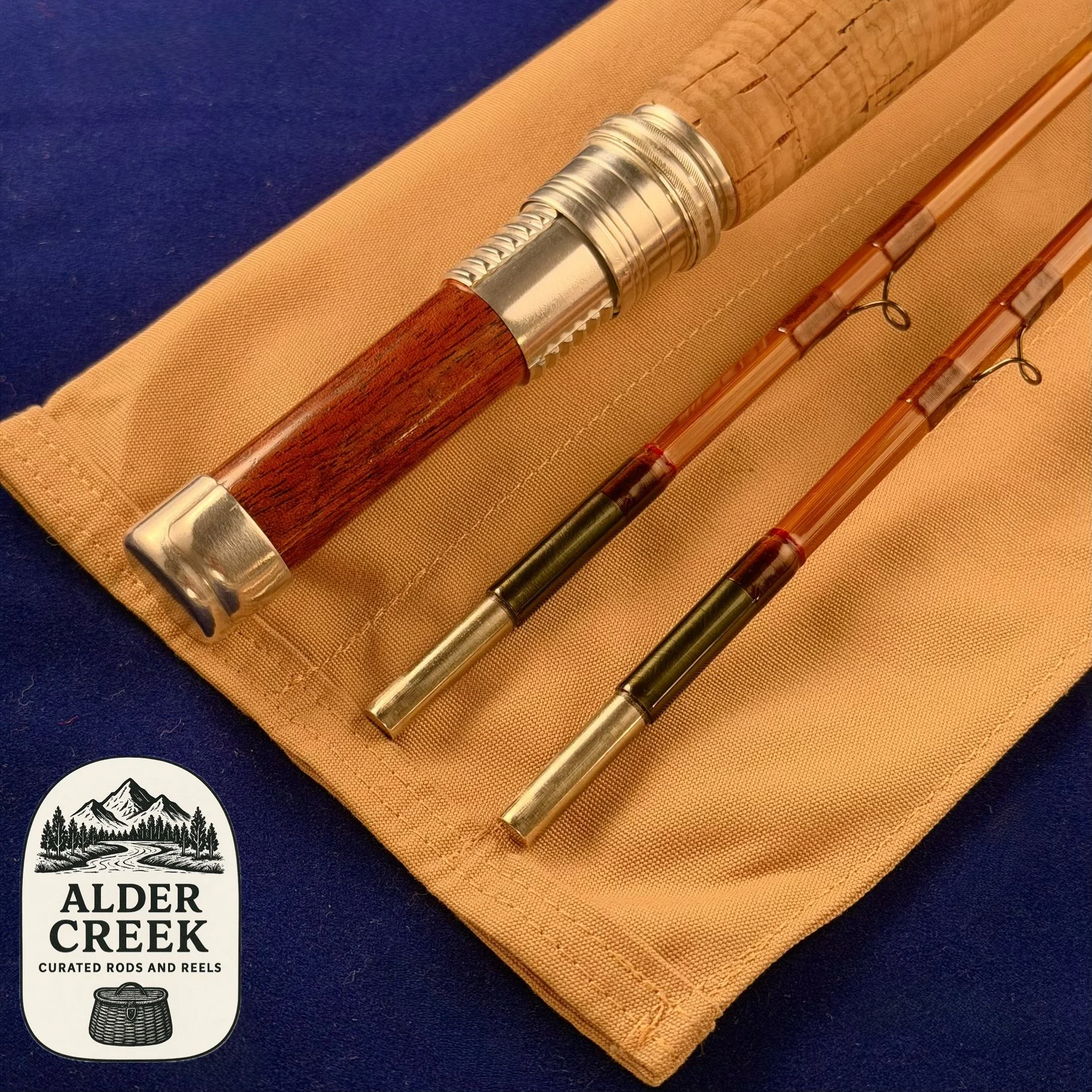
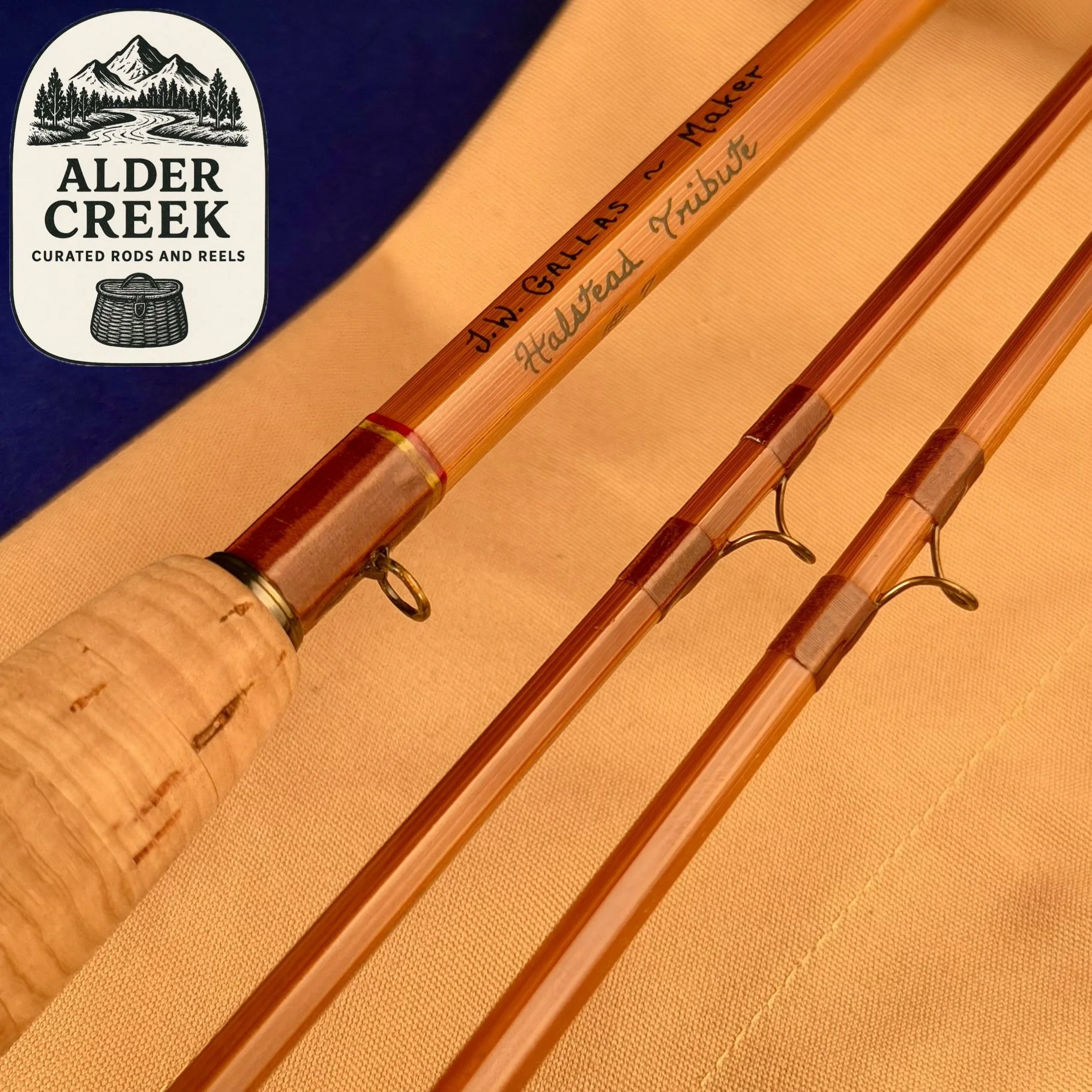
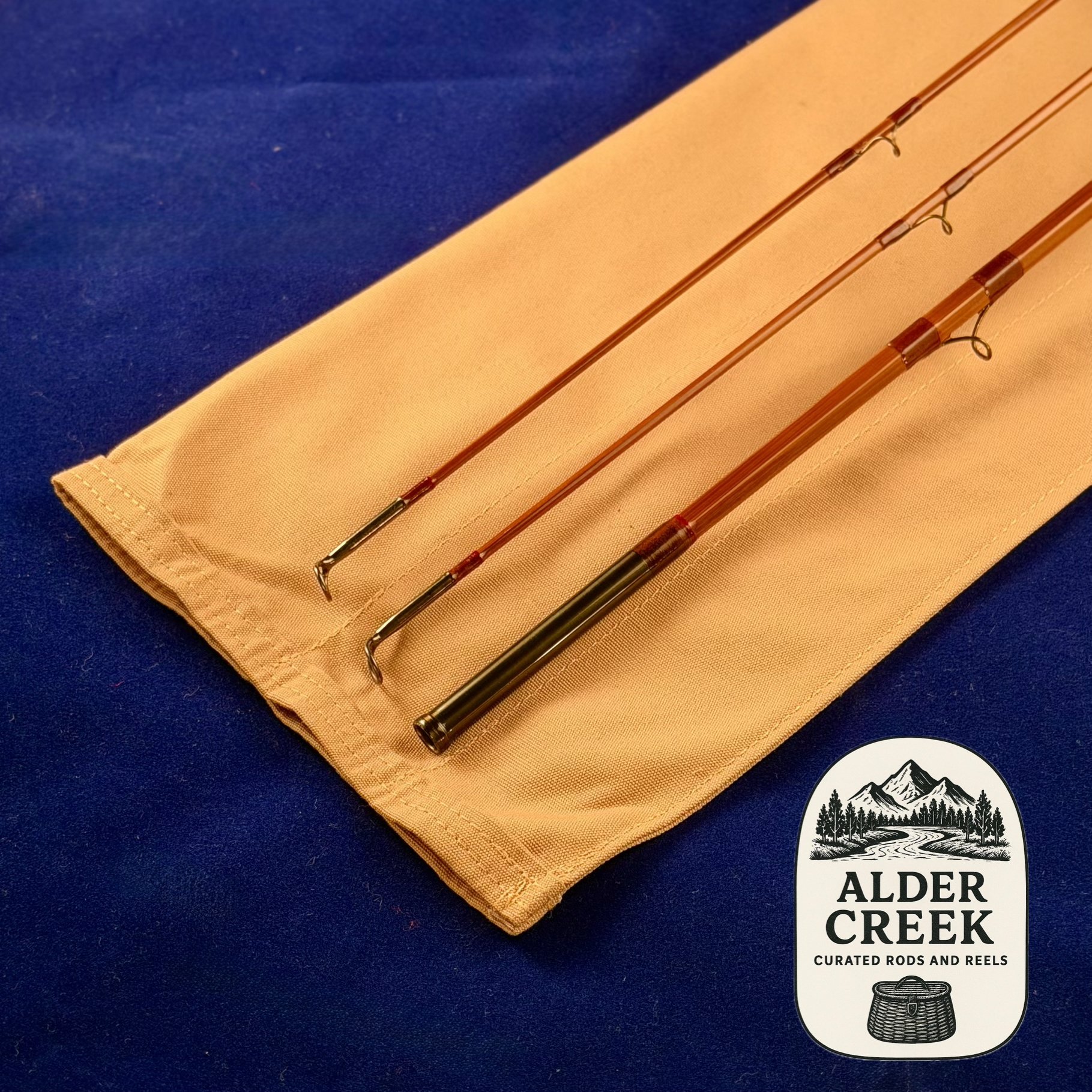
Built as a two-piece, two-tip rod, it follows the original Halstead taper in beautifully flamed cane. The furnishings are equally considered: blued Halstead-style stepped ferrules, an agate stripping guide, bronzed snake guides, and brown silk wraps accented in green and red. The mahogany reel seat is fitted with a polished aluminum screw-locking hardware, the latter displaying Halstead's characteristic dual knurling.
Each rod bears a consecutive serial number specific to the Tribute Series—this being rod no. 7. It remains straight as an arrow and is in fine condition, complete with its original sock and tube.
The late John Gallas wrote the following about his Halstead rods:
“My historical connection and interest in Halstead's work relates to carrying on the great tradition of classic rodmakers from the Danbury area, which also includes Halstead's colleague, H.S. Gillum. Also, through Halstead's stepson, I obtained the last original, unfinished rod blanks from Halstead's shop. I produced a limited edition series of these rods several years ago. They are unmistakably identifiable by two sets of stampings, ‘G.H. Halstead Rod’ and the ‘J.W. Gallas Rod Co.’ logo, bearing credit to each maker. The Halstead Tribute Series is a continuation of this effort in classic rodmaking.
For 28 years, I have offered my original tapers in distinguished rods to discriminating fly fishermen and bamboo rod lovers in the same tradition of past rodmakers. I now look forward to adding the unique Halstead Tribute rods, whose tapers have not been available since the master's death in 1961.”
Maker
J.W. Gallas Rod Company
Rodmaker
John Gallas
Series
Halstead Tribute Series
Length
8'1"
Configuration
2-piece / 2-tip
Line
#5
Weight
4.7 oz
Action
Parabolic
Serial Number
No. 7
Cane
Flamed bamboo
Wraps
Brown silk with green and red accents
Ferrules
Blued Halstead-style stepped ferrules
Guides
Agate stripper and bronzed snake guides
Reel Seat
Mahogany spacer, aluminium screw-lock
Condition
Fine condition; straight, without set
Includes
Original rod bag and tube
Questions about this piece, international shipping, or price are always welcome.
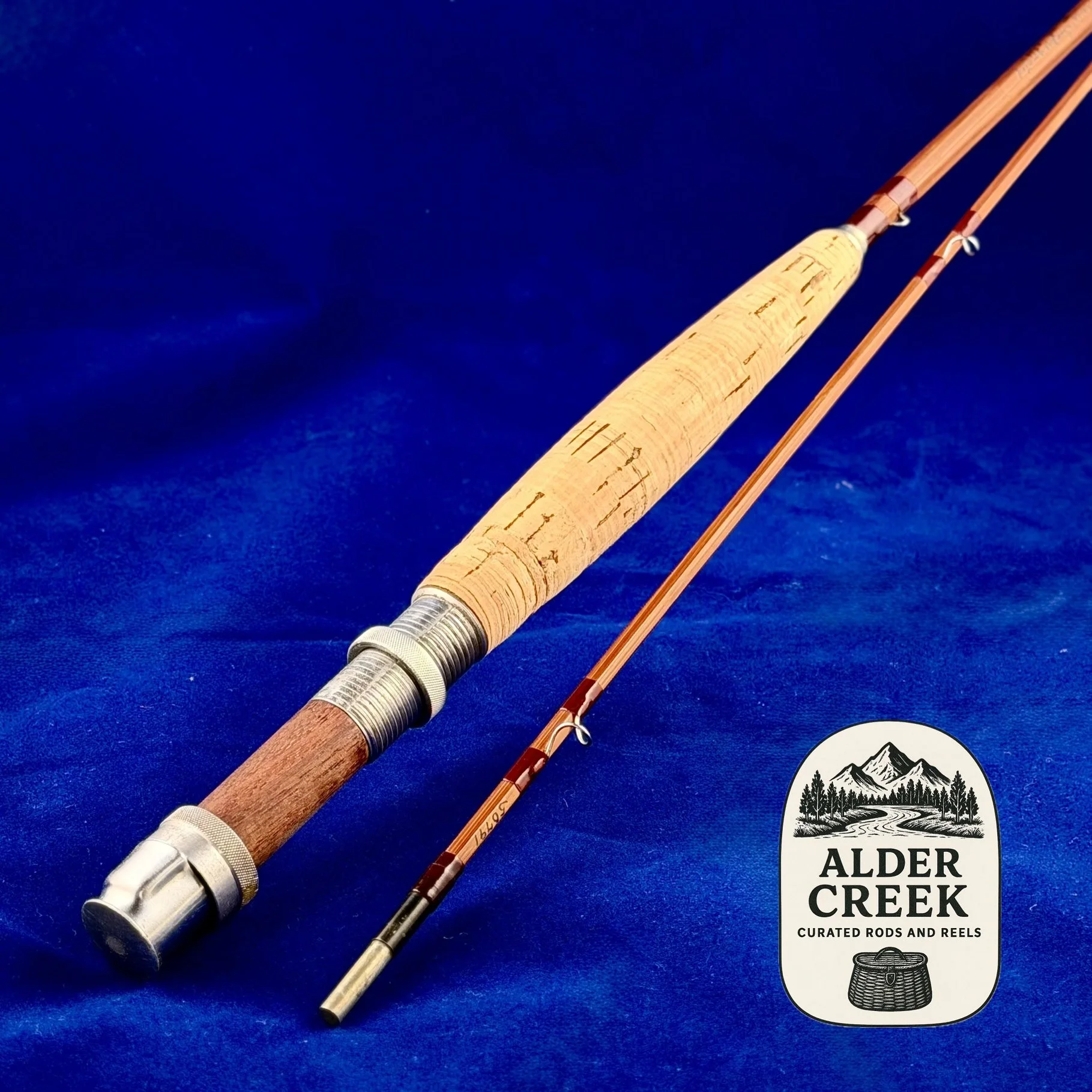
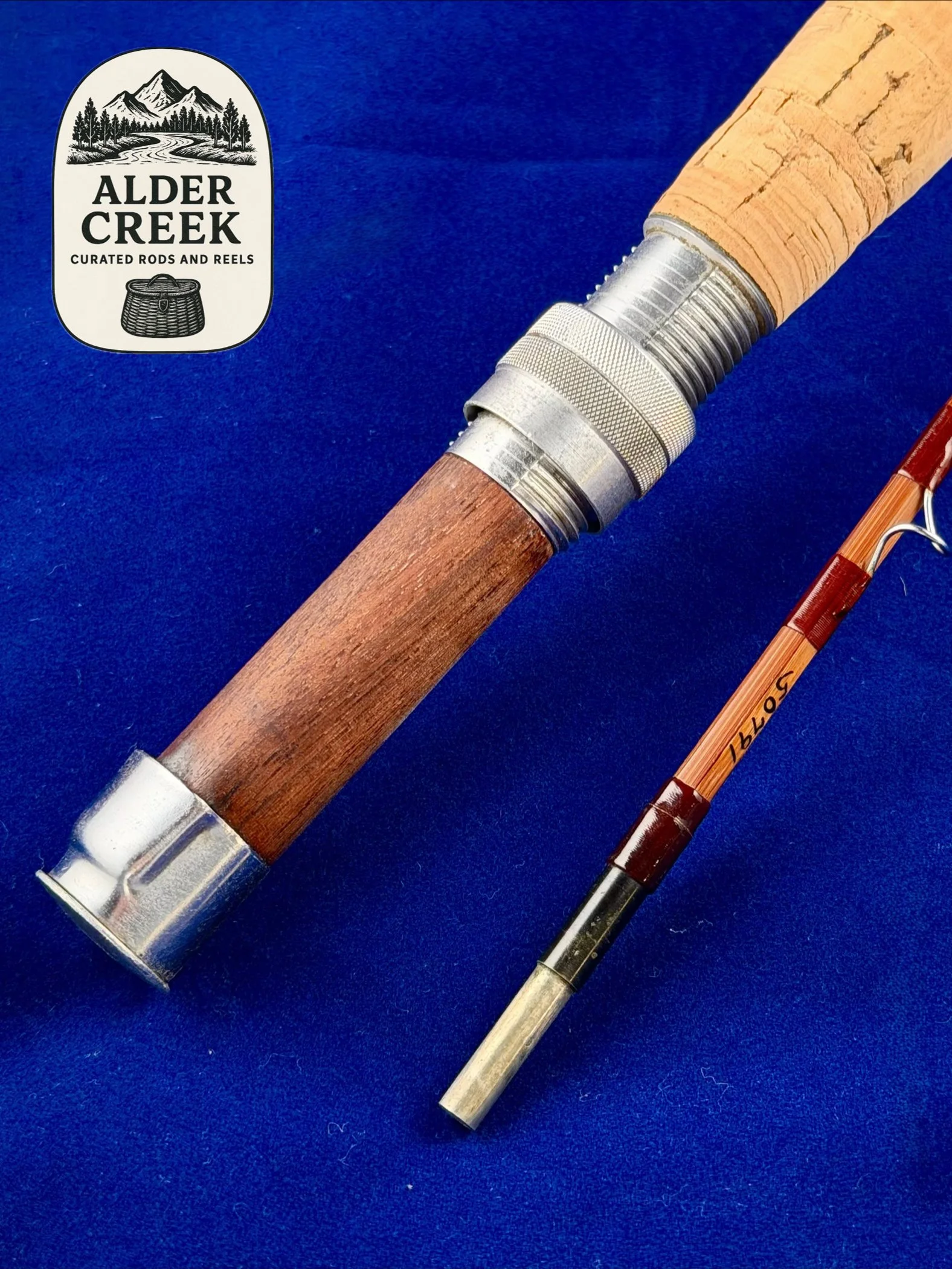
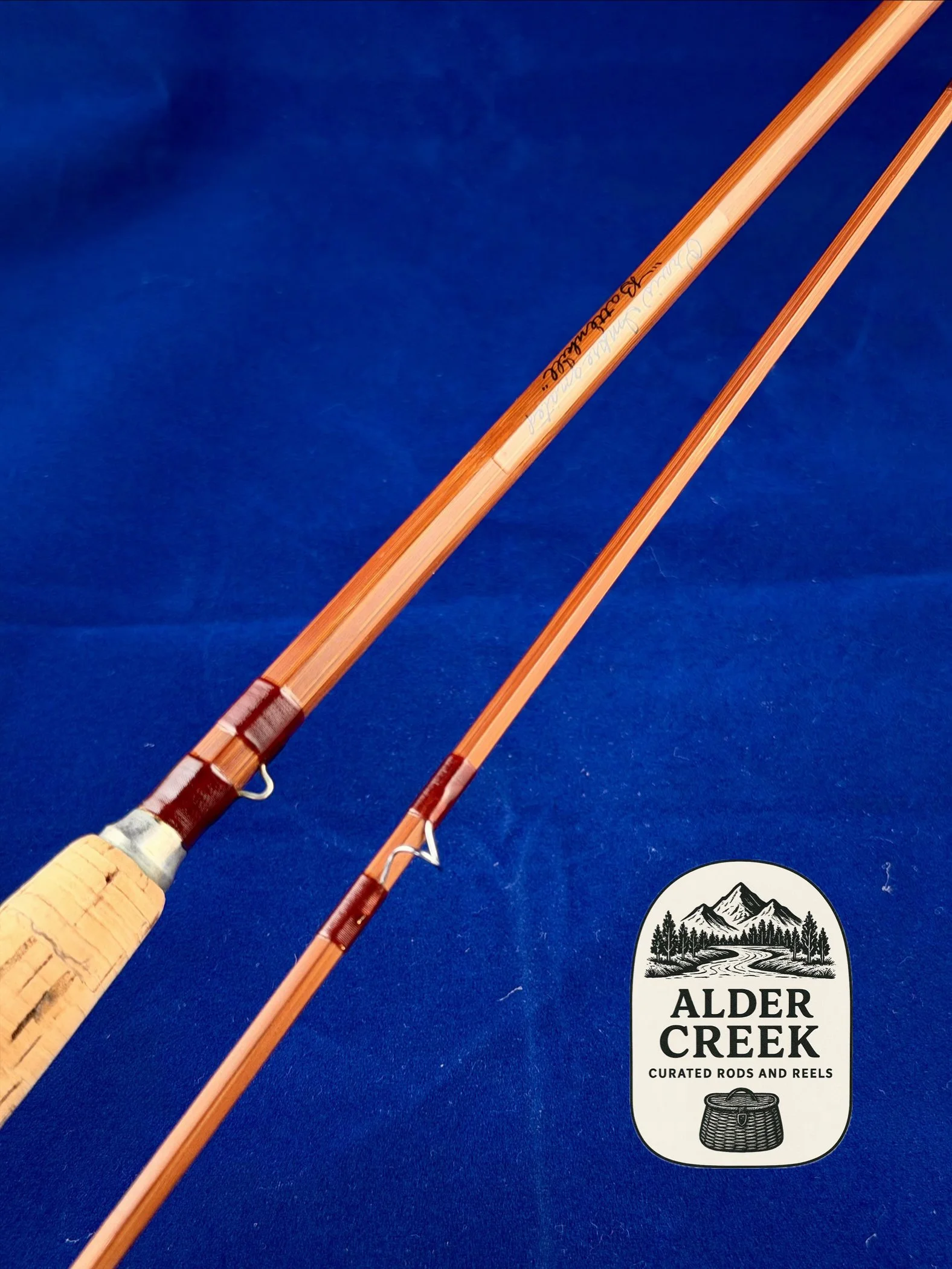
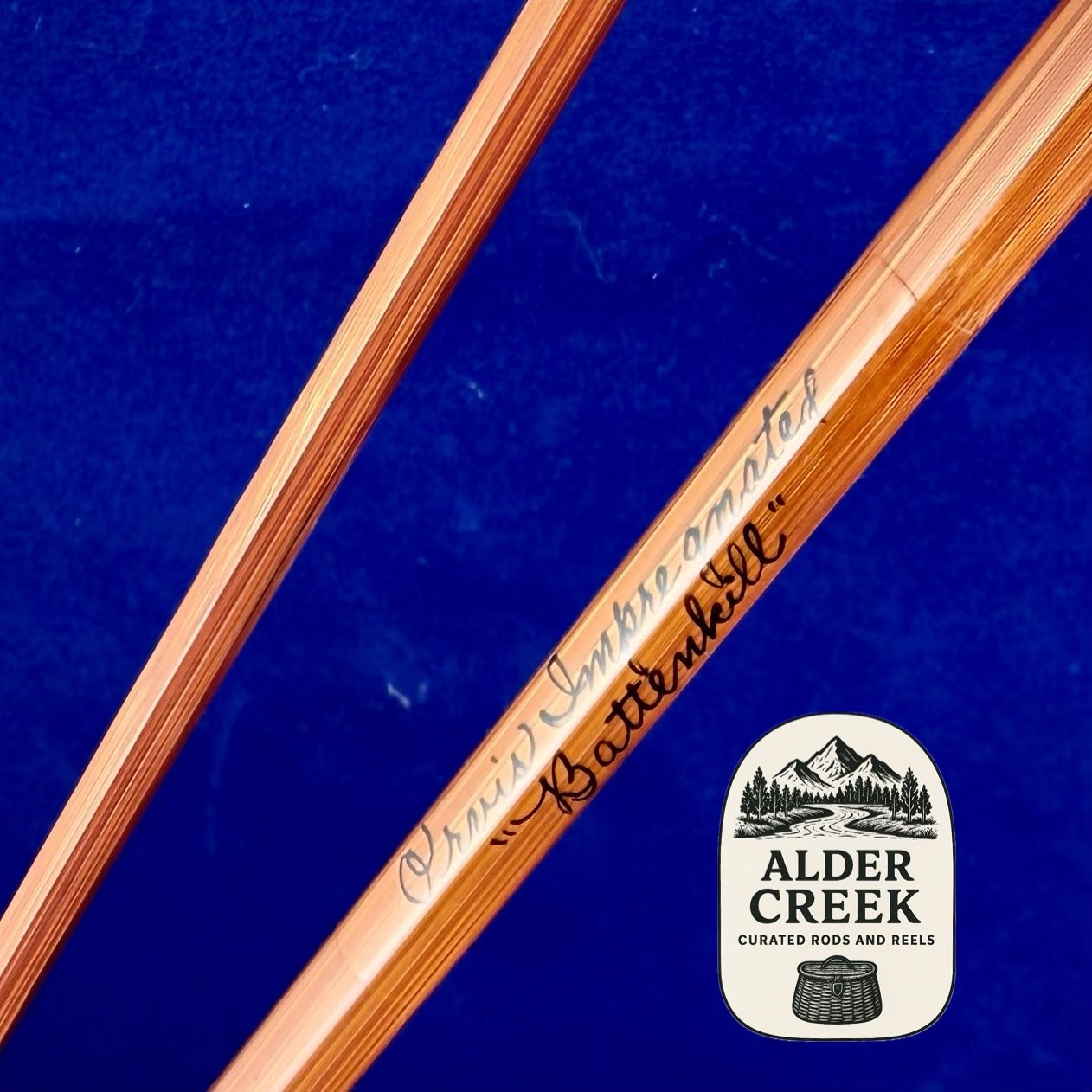
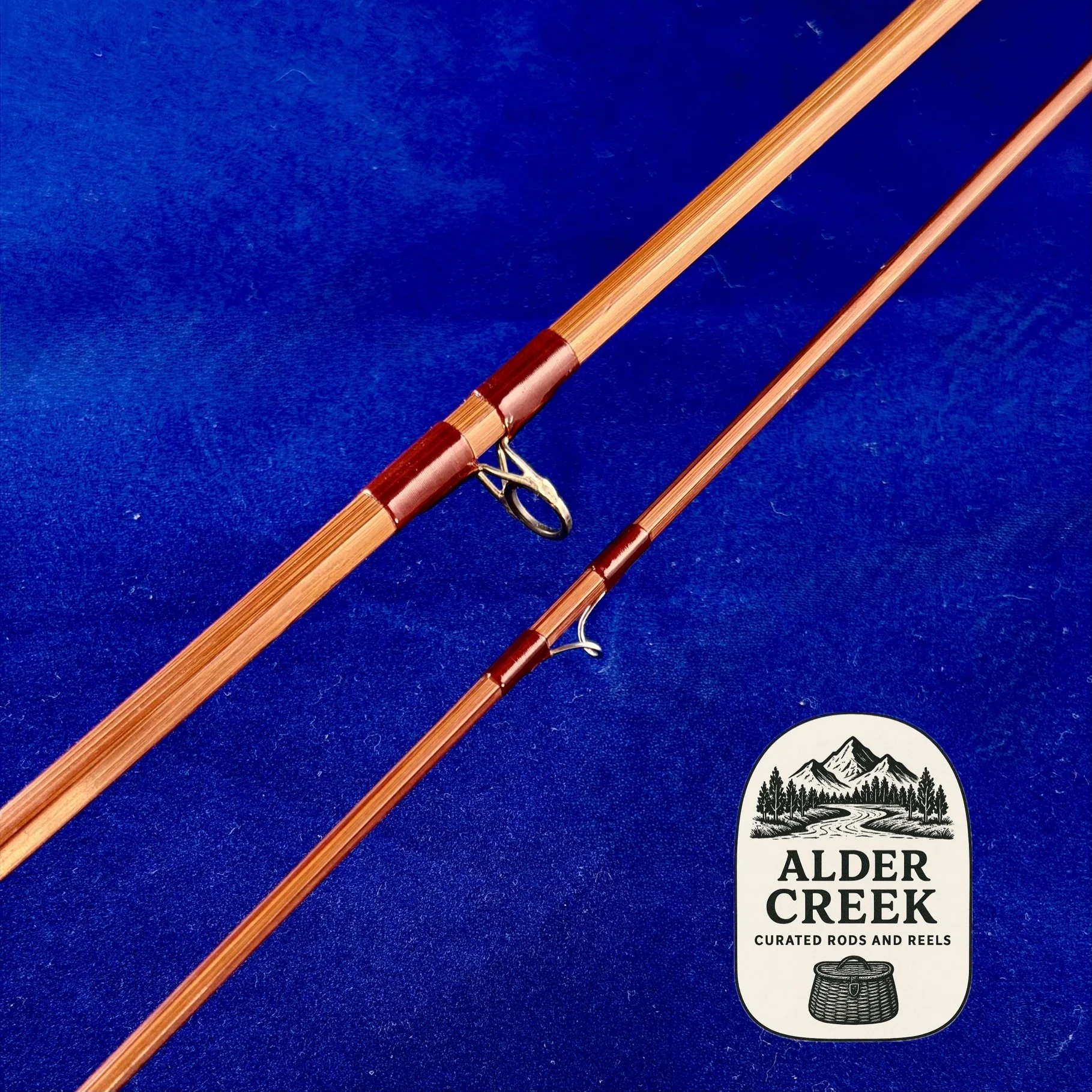
A fine Orvis Battenkill from 1968, dating to the Wes Jordan era and featuring Orvis' distinctive impregnated bamboo construction.
At 7'6" and 3⅞ oz., this is an exceptionally versatile and much-loved Orvis taper—light, refined and ideally suited to smaller rivers and streams. The action is medium to medium-fast, offering a pleasing balance of delicacy and reserve.
The Battenkill occupies an important place in the history of Orvis bamboo. Named for the celebrated trout stream flowing through Manchester, Vermont, the model became one of Orvis' enduring rod families and was produced in a wide variety of lengths, weights and configurations. The taper was offered for everything from delicate trout fishing to considerably heavier salmon, steelhead and bass applications.
Its history is closely connected with Wes Jordan, who became head of rod production at Orvis and was responsible for much of the company's post-war development. Jordan's work on impregnated bamboo produced a rod construction that was highly resistant to moisture and changes in temperature, while also giving the finished cane its distinctive darker appearance. By 1954, impregnated construction had become standard across Orvis' rod production.
The Battenkill consequently became one of the characteristic Orvis rods of the mid-century period: practical, durable and beautifully refined, while retaining the feel and responsiveness of a traditional bamboo rod. Examples from the 1960s remain particularly appealing to anglers because they combine Jordan's mature impregnated construction with the light, progressive actions that made the smaller Battenkill tapers so versatile.
The characteristic impregnated finish gives this rod its understated appearance and the durability for which these Orvis rods are renowned. The tip shows a slight set, which can be corrected upon request
The cork grip shows honest signs of use and has developed a pleasing patina over the years, while remaining sound and supple with some ridging.
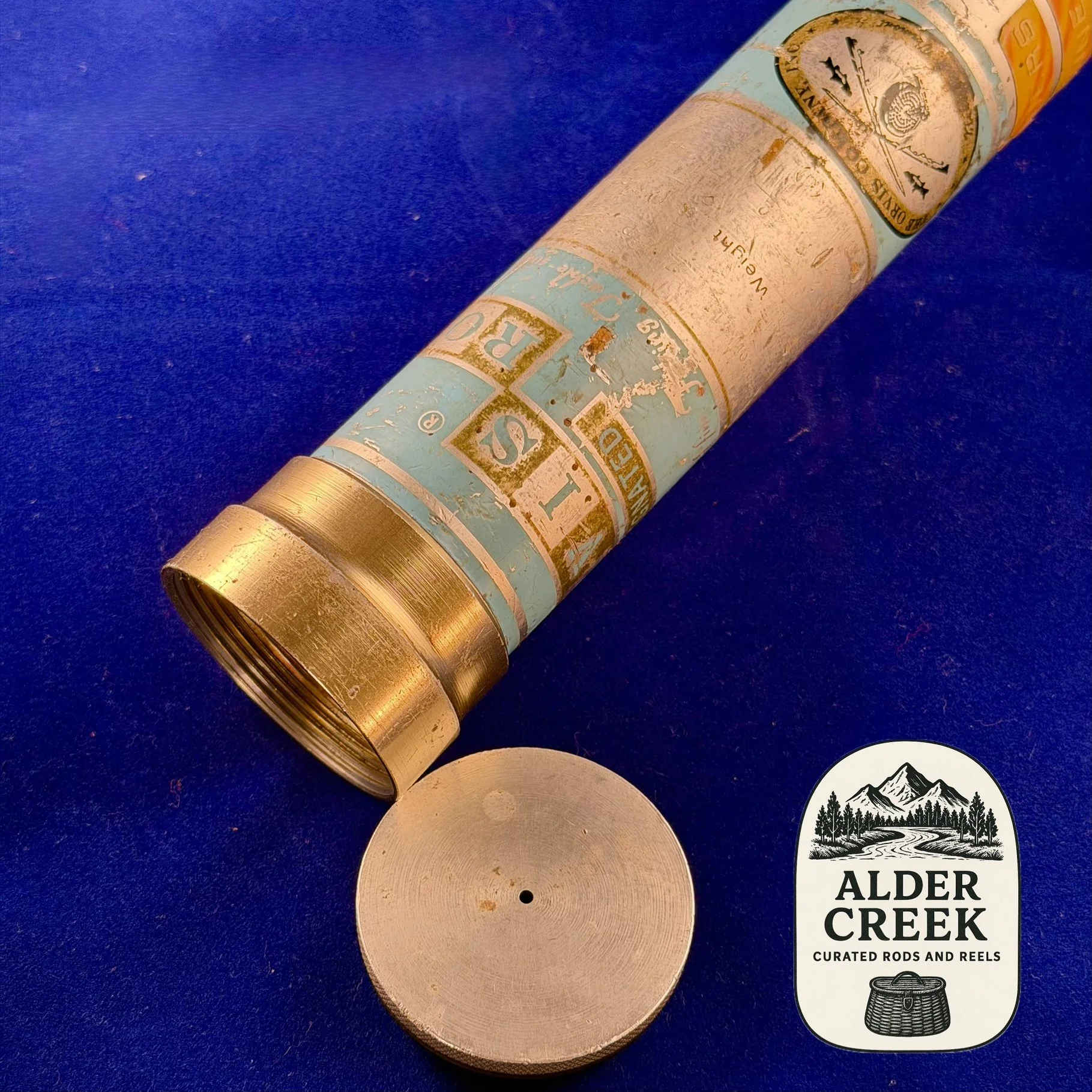
The rod is accompanied by its original Orvis aluminium tube and a non-original rod sock.
A beautifully understated example of a classic Orvis bamboo rod from the Wes Jordan era—a rod made to be fished, rather than merely admired.
Explore our other vintage Orvis bamboo fly rods, including the Midge and Midge Nymph models.
Maker
Orvis
Model
Battenkill
Length
7'6"
Configuration
2-piece / 2-tip
Line
#5
Weight
3 7/8 oz
Serial Number
50791
Year
1968
Era
Wes Jordan
Action
Medium to medium-fast
Construction
Impregnated bamboo
Grip
Original cork, showing use
Condition
Used; slight set reported
Includes
Original Orvis tube and non-original rod bag
Questions about this piece, international shipping, or price are always welcome.
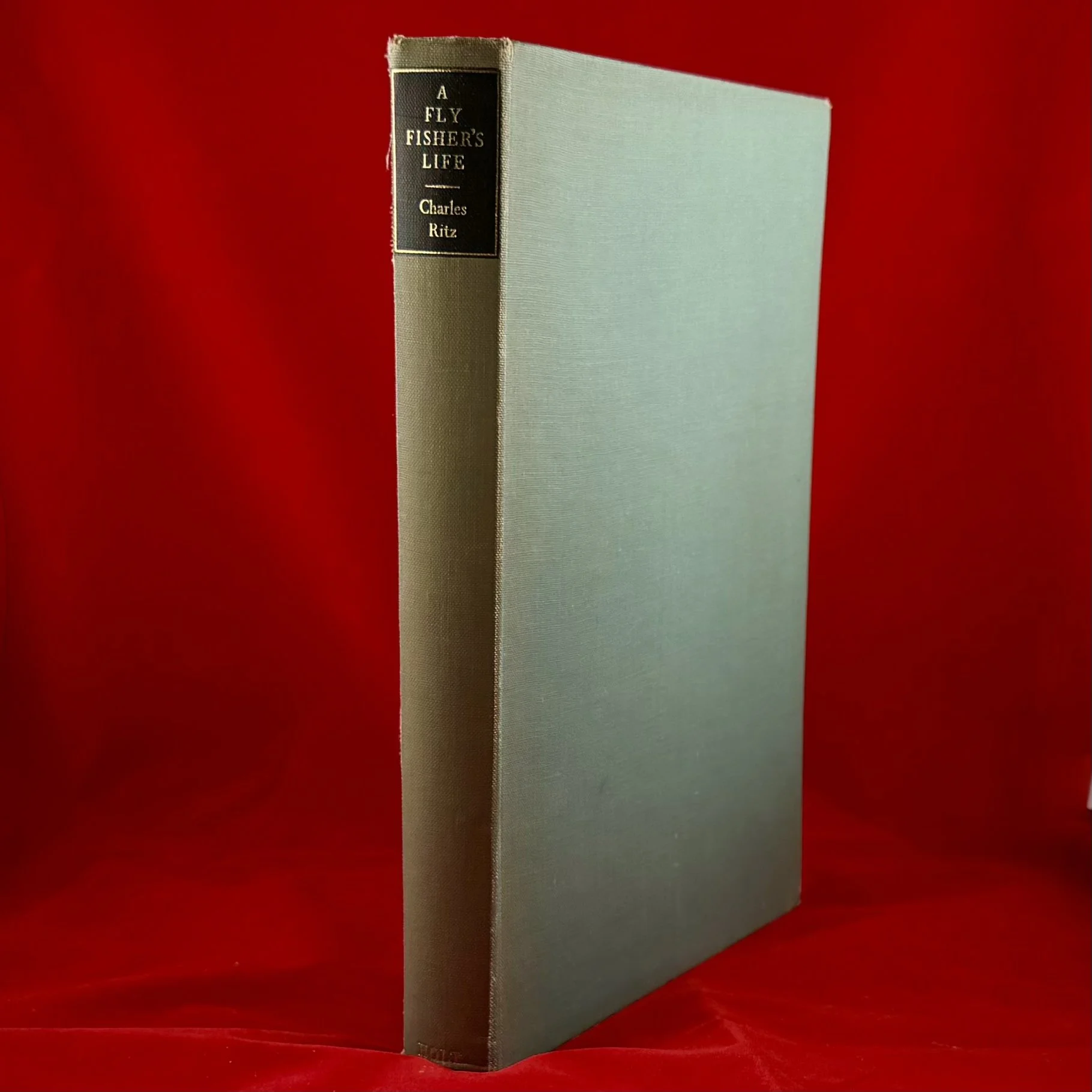
Few names are as closely associated with the development of modern fly fishing as Charles Ritz. A distinguished angler, writer, and advocate of parabolic bamboo fly rods, Ritz helped shape the techniques and traditions of European fly fishing during the twentieth century.
A Fly Fisher's Life is his celebrated account of a lifetime devoted to rivers, trout, and the art of fly fishing. Part memoir and part reflection on angling technique, the book brings together personal experiences, observations on fly rods and casting, and encounters with some of the notable figures of the sport. The American edition includes a foreword by Ernest Hemingway.
Ritz's association with Pezon et Michel and the development of the celebrated Ritz Super Parabolic rods makes this work particularly appealing to collectors of classic bamboo tackle.
This copy is the first American edition, published by Henry Holt & Company in 1959. It retains its original blue cloth binding and is in very good condition. The dust jacket is not present.
A distinguished work of twentieth-century angling literature, equally rewarding to read and to collect.
Charles Ritz's influence on fly rod design is reflected in the celebrated Pezon et Michel Super Parabolic series. Explore our Pezon et Michel Master Lambiotte , or discover further titles in our collection of classic angling literature .
Author
Charles Ritz
Title
A Fly Fisher's Life
Publisher
Henry Holt & Company, New York
Year
1959
Edition
First American Edition
Binding
Original blue cloth hardcover
Dust Jacket
Not present
Foreword
Ernest Hemingway
Condition
Very good
Questions about this book, international shipping, or price are always welcome.
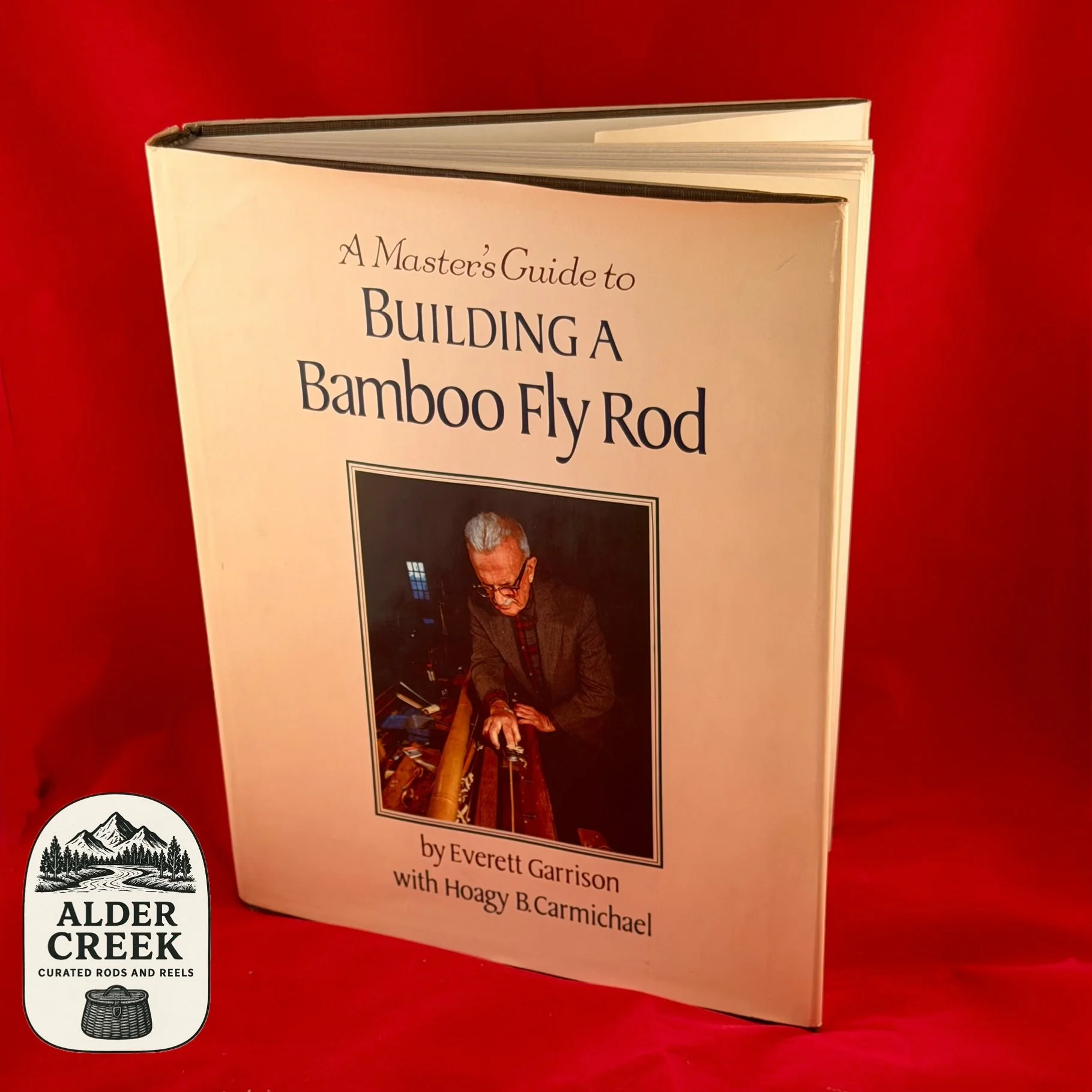
One of the most influential works ever published on the craft of bamboo fly rodmaking, A Master's Guide to Building a Bamboo Fly Rod remains an essential reference for rodmakers, collectors, and students of the American bamboo tradition.
Everett Garrison was among the most respected American bamboo rodmakers of the twentieth century, celebrated for his exacting methods, mathematical approach to rod design, and uncompromising standards of craftsmanship. Working with Hoagy B. Carmichael, his knowledge and techniques were preserved in a book that has become a cornerstone of modern bamboo rodmaking literature.
The work explores the principles and practical methods of constructing a split-cane fly rod, including taper design, bamboo preparation, tools, ferrules, fittings, and finishing. Richly illustrated, it offers a rare insight into the methods of one of the great masters of the craft.
This copy is the 1985 Winchester Press edition, bound in cloth and accompanied by its original dust jacket. The book is in near fine condition, remaining tight, clean, and well preserved. The dust jacket is in good condition, with some edge wear and minor nicks.
A distinguished addition to any collection of classic American angling literature, and a particularly fitting companion to a fine bamboo fly rod.
Explore further works in our collection of classic angling literature, or discover the craftsmanship described in these pages through our selection of vintage and contemporary bamboo fly rods.
Authors
Everett Garrison & Hoagy B. Carmichael
Title
A Master's Guide to Building a Bamboo Fly Rod
Publisher
Winchester Press
Year
1985
Binding
Cloth hardcover
Pages
296 pages, with additional plates and preliminary pages
Illustrations
Black-and-white and colour illustrations, photographs, diagrams and facsimile
Format
Approximately 29 cm
Dust Jacket
Present; good condition with minor edge wear
Condition
Near fine book; tight, clean and well preserved
Questions about this book, international shipping, or price are always welcome.
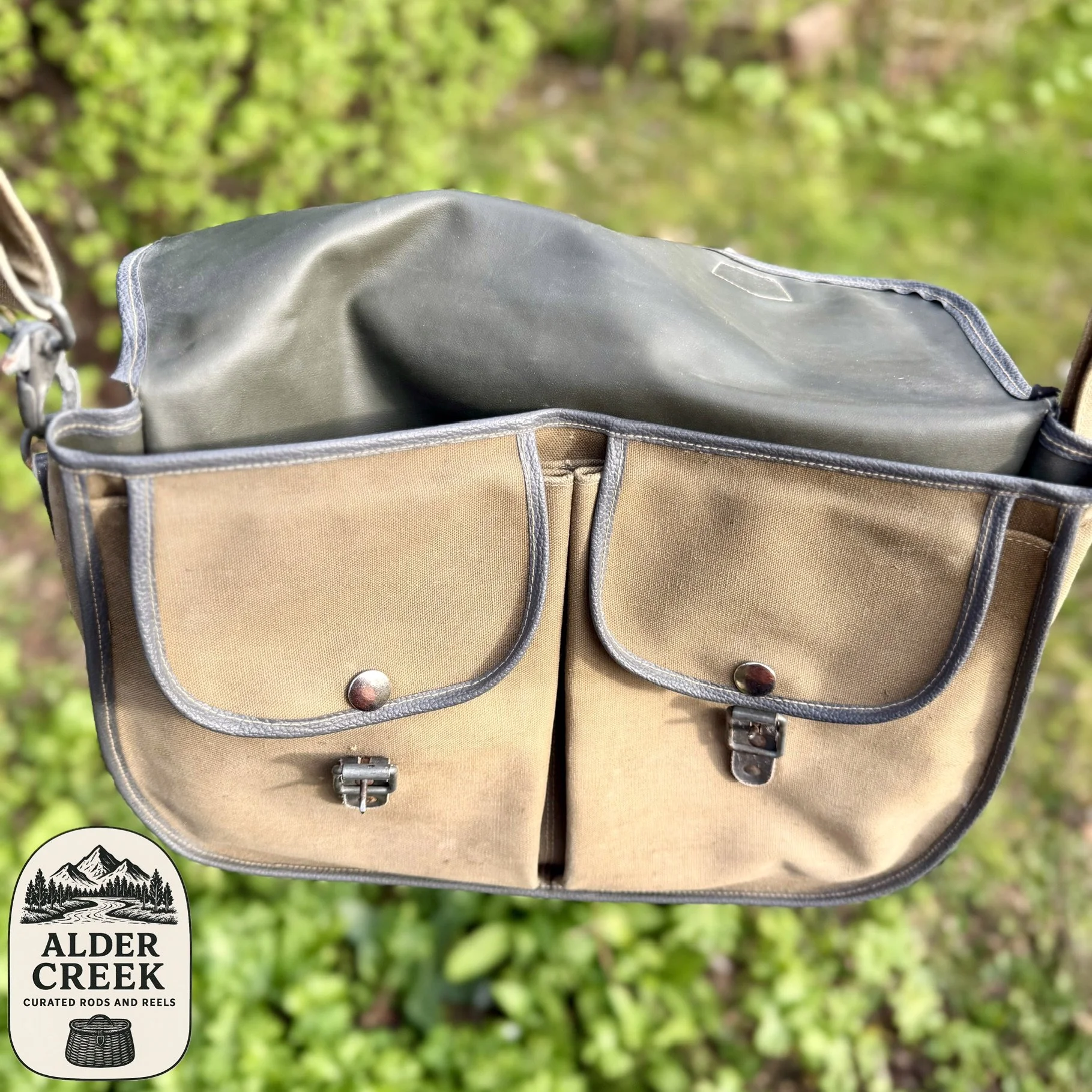
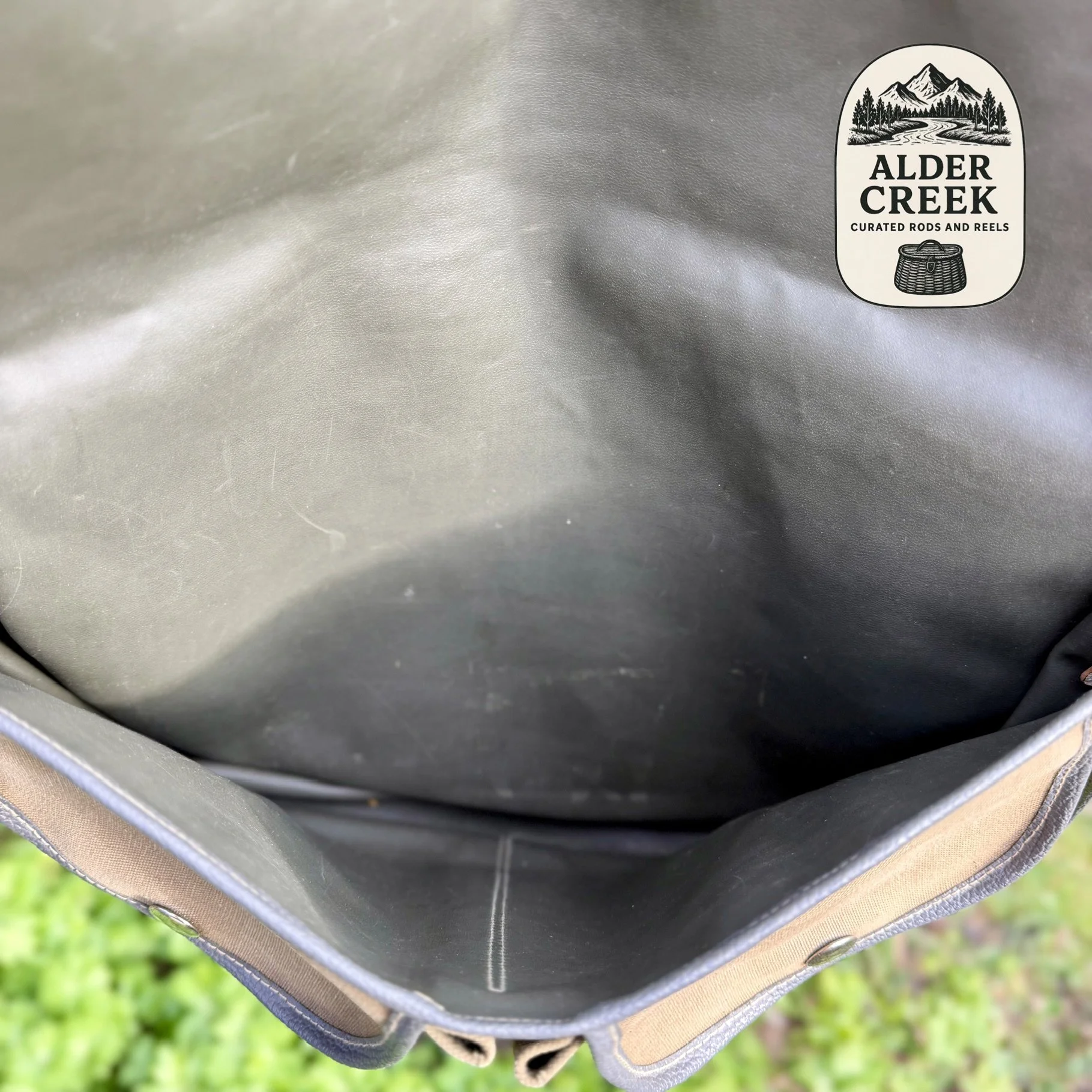
Traditional canvas, leather and brass — a dependable companion on the river
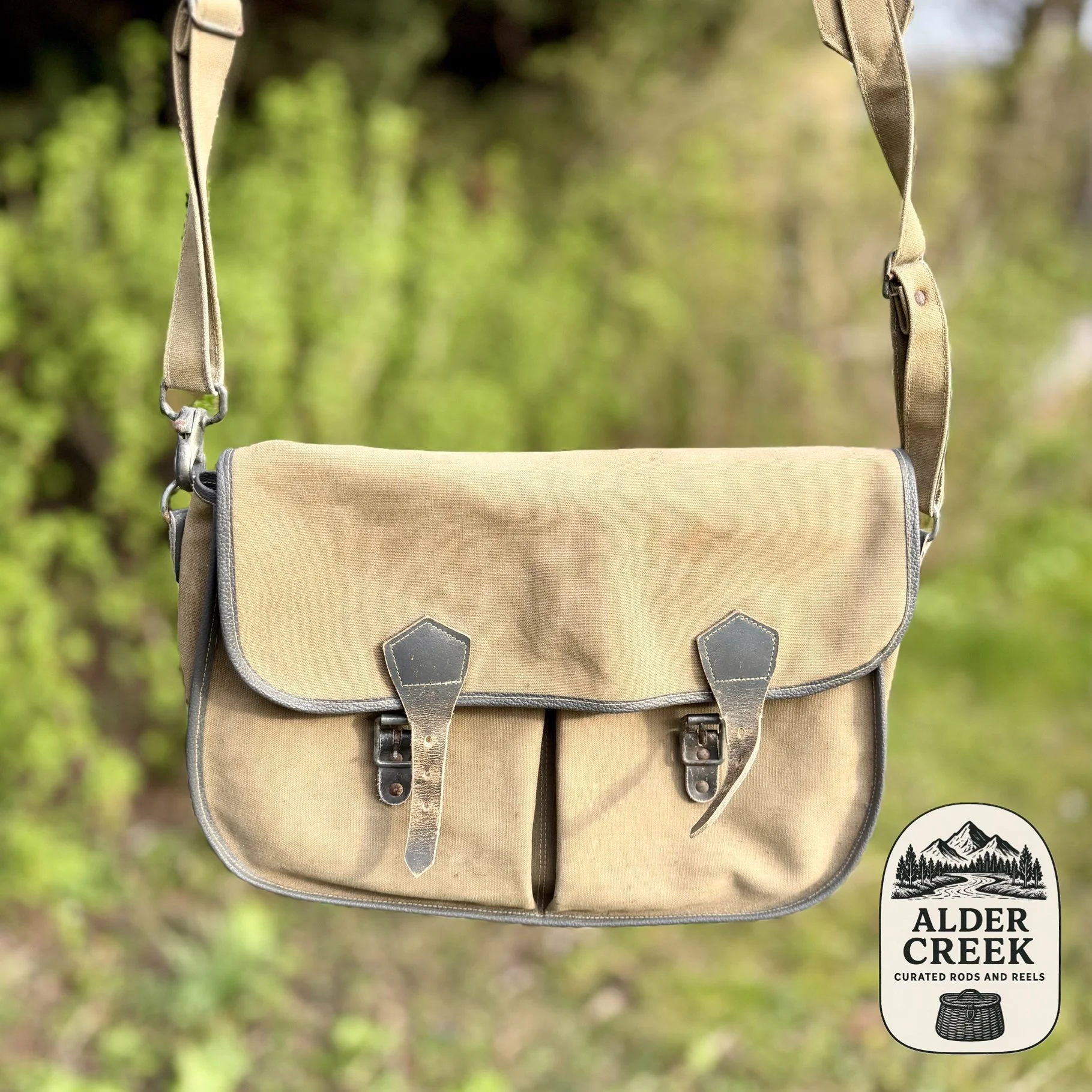
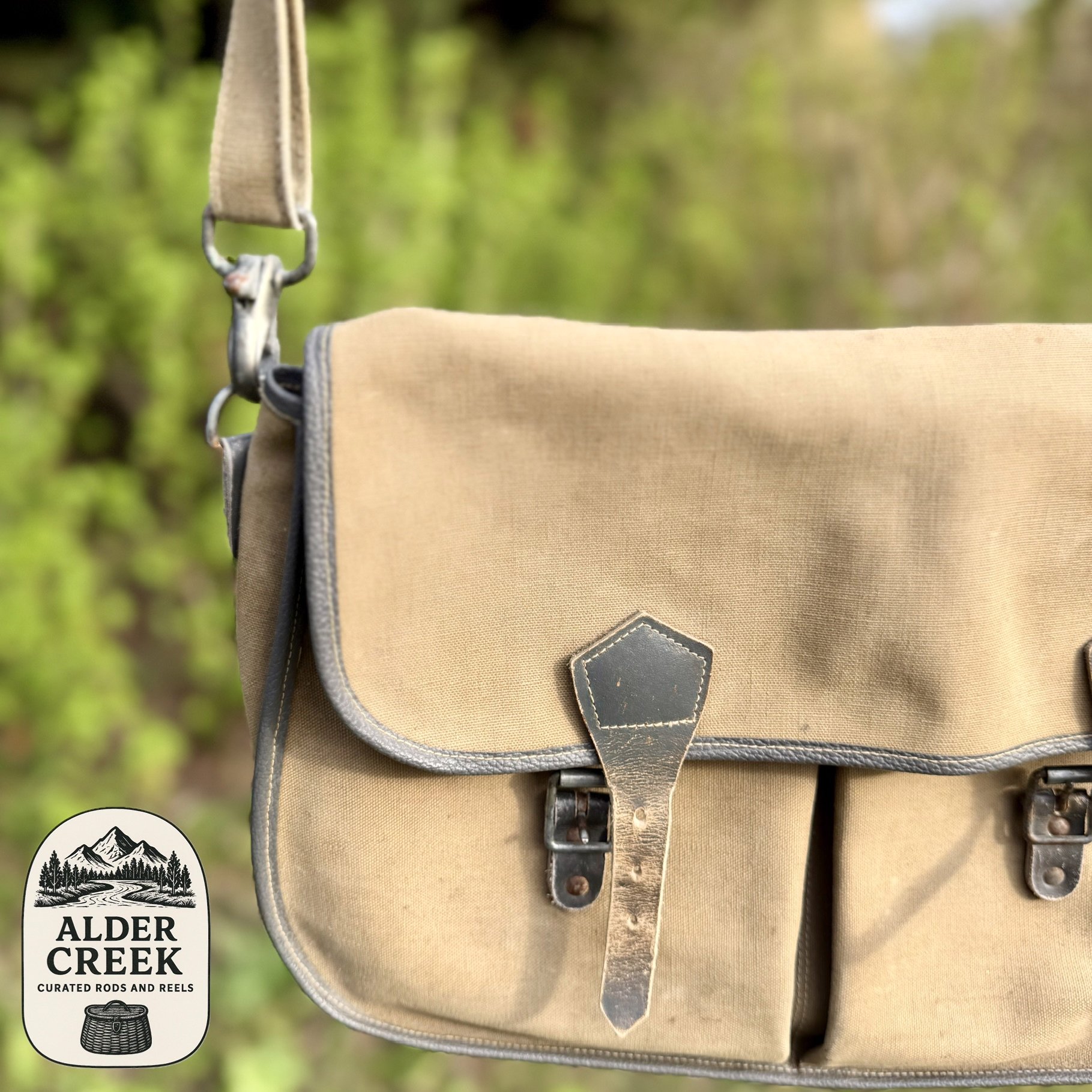
A sturdy, unbranded angler's shoulder bag of traditional design, made from hard-wearing canvas with leather fittings and brass hardware.
Simple and purposeful in construction, the bag features a spacious rubberised main compartment and two smaller front pockets, providing practical storage for fly boxes, leaders, tools and the other essentials of a day's fishing.
There is something particularly appealing about traditional fishing bags of this kind. Made without unnecessary embellishment, their value lies in straightforward construction, useful proportions and materials that acquire character through use.
The rubberised interior provides an additional layer of protection for the contents, while the canvas exterior and leather fittings give the bag the familiar appearance of classic British and European angling equipment.
Unmarked by any identifiable maker, this is an honest and functional piece of fishing equipment rather than a collector's item distinguished by a famous name.
A practical, characterful shoulder bag, ready to accompany its next owner through many more seasons on the river.
Maker: Unmarked
Type: Traditional angler's shoulder bag
Material: Canvas with leather fittings
Hardware: Brass
Main compartment: Rubberised interior
Storage: One main compartment and two front pockets
Condition: Vintage used condition; see photographs for details
Questions about measurements, condition, international shipping or price are always welcome.
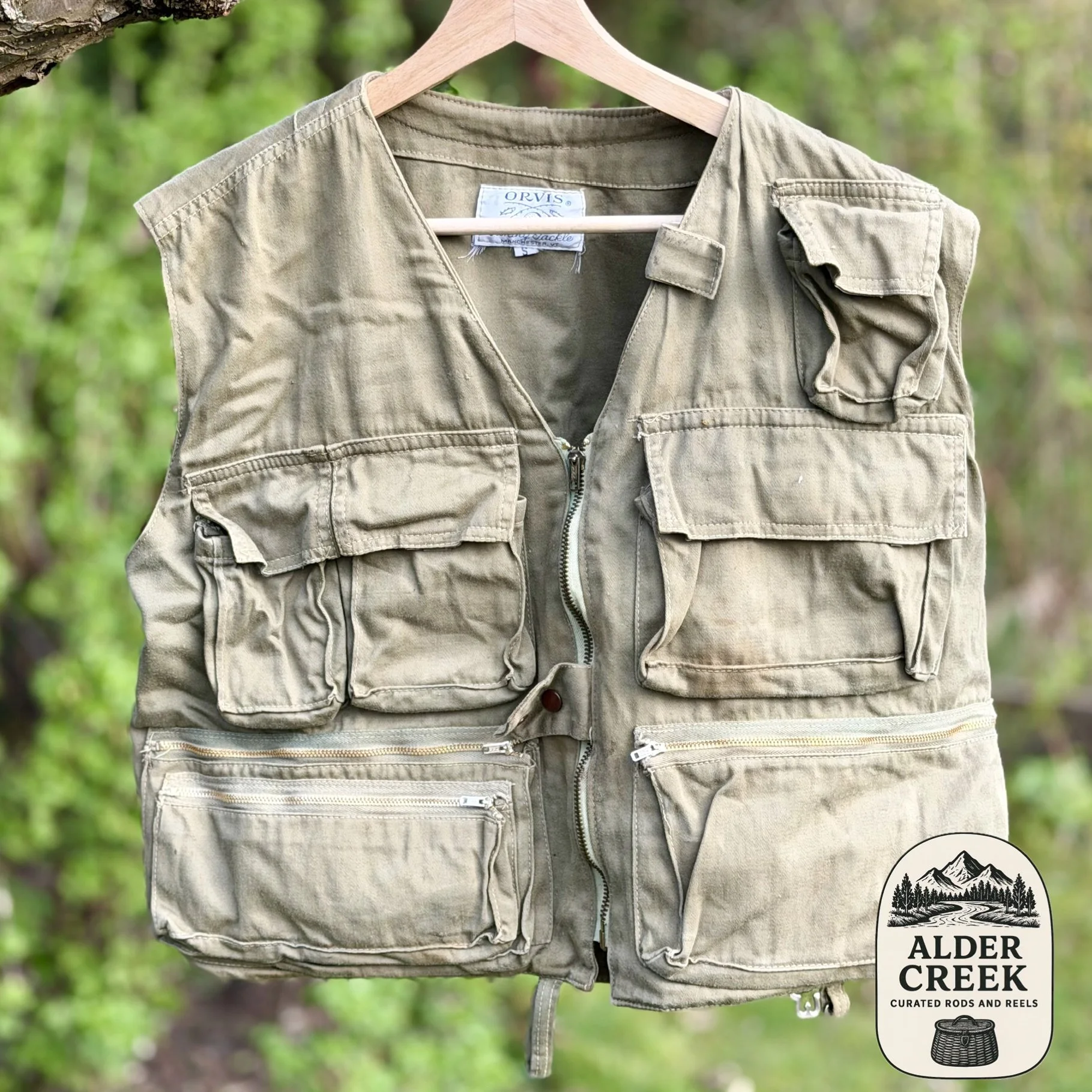
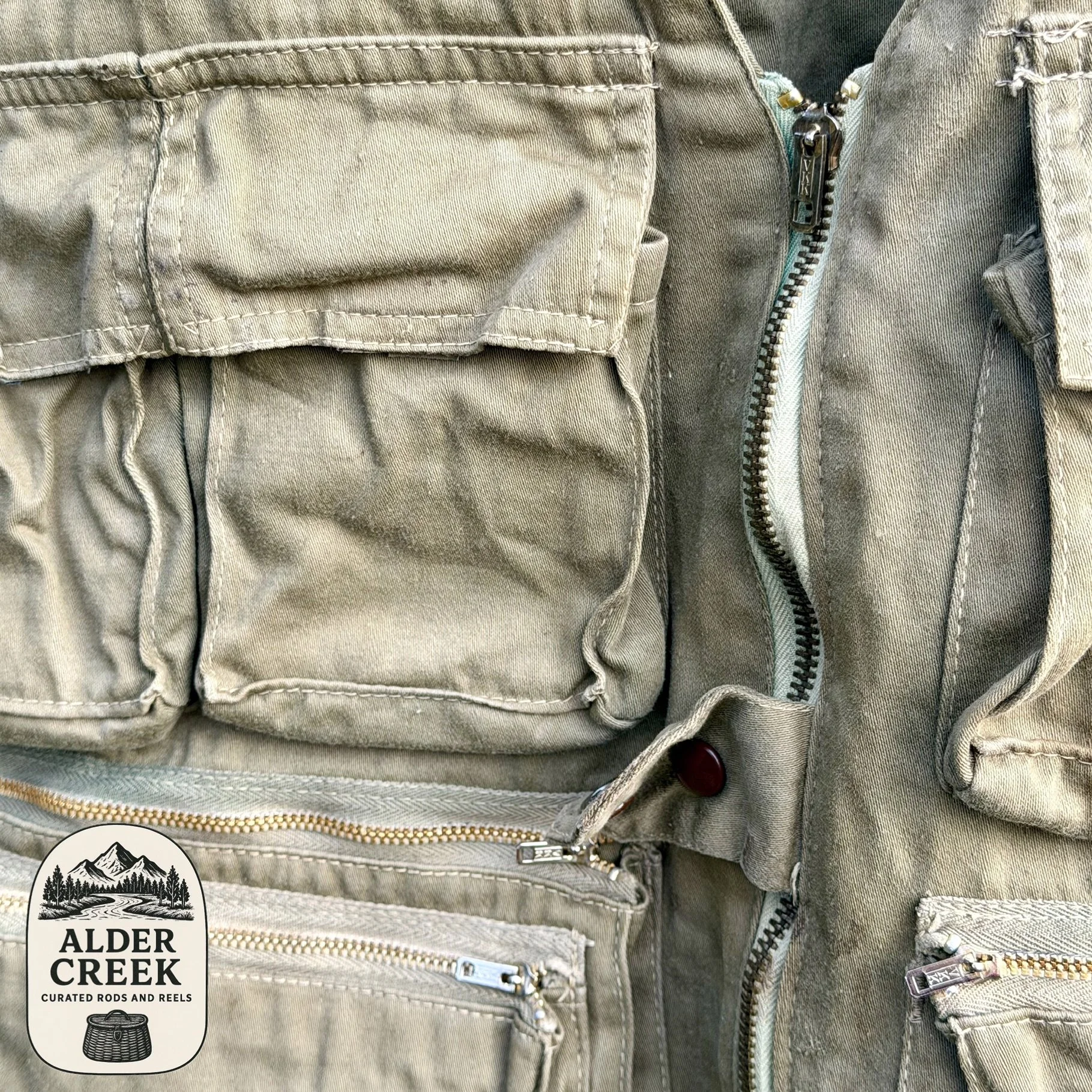
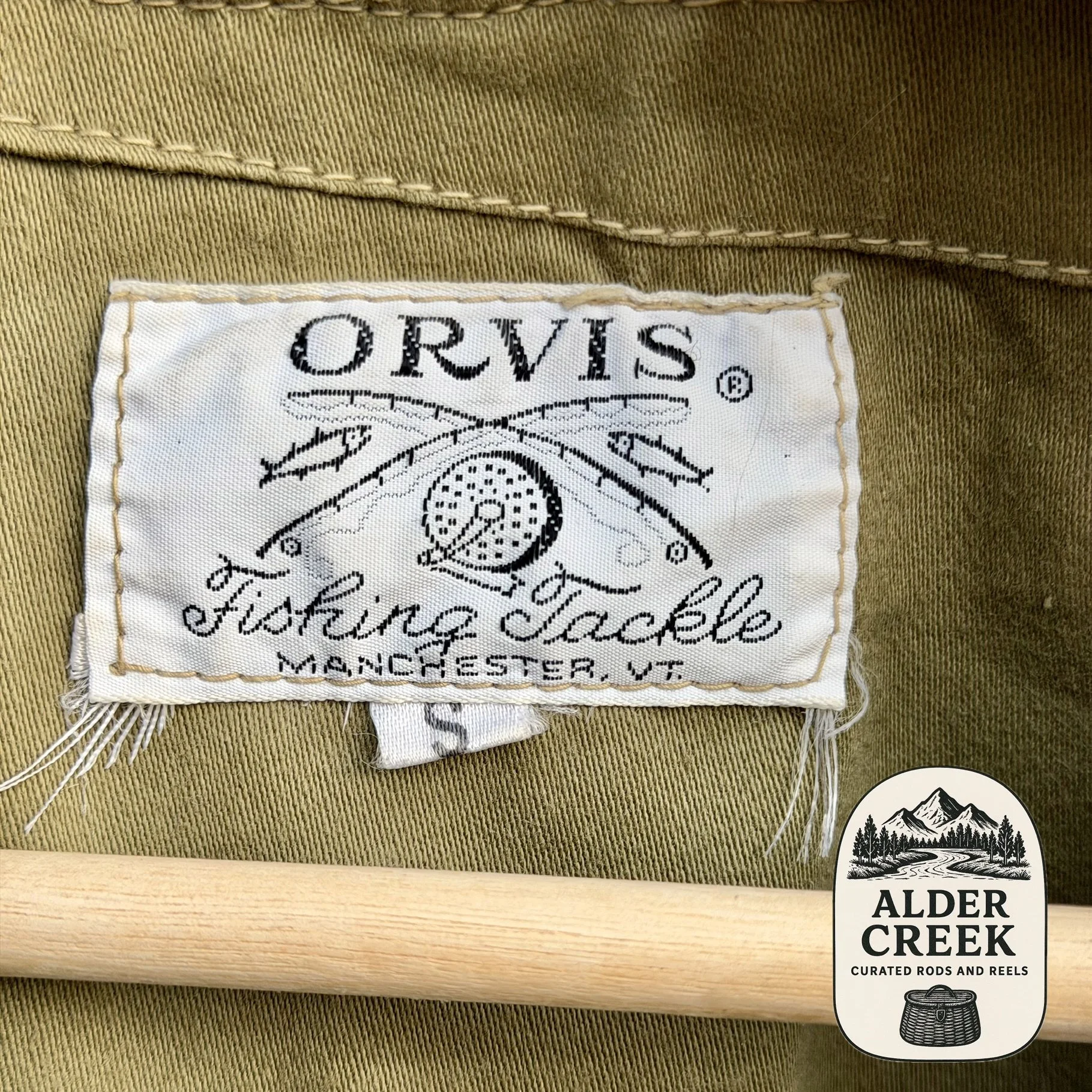
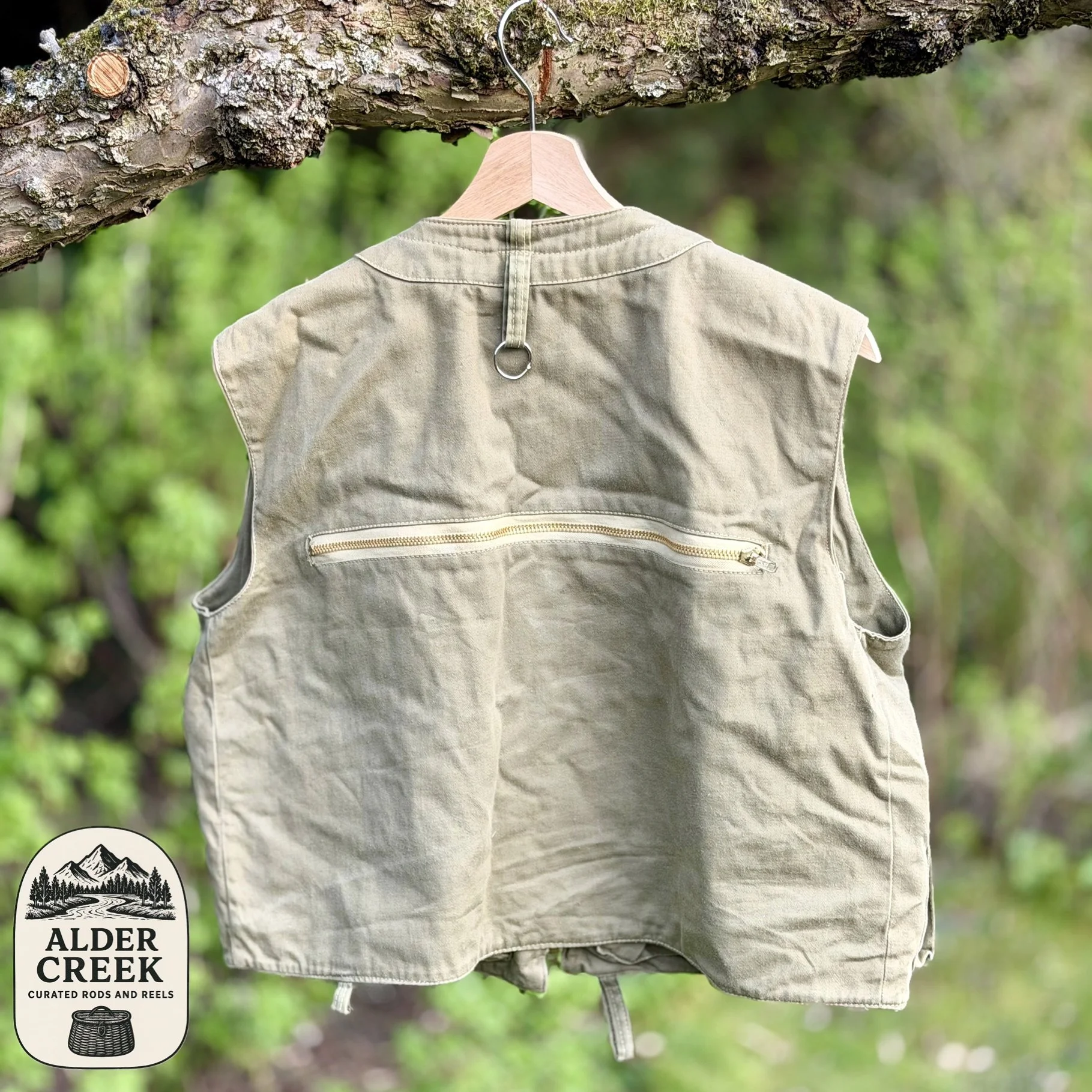
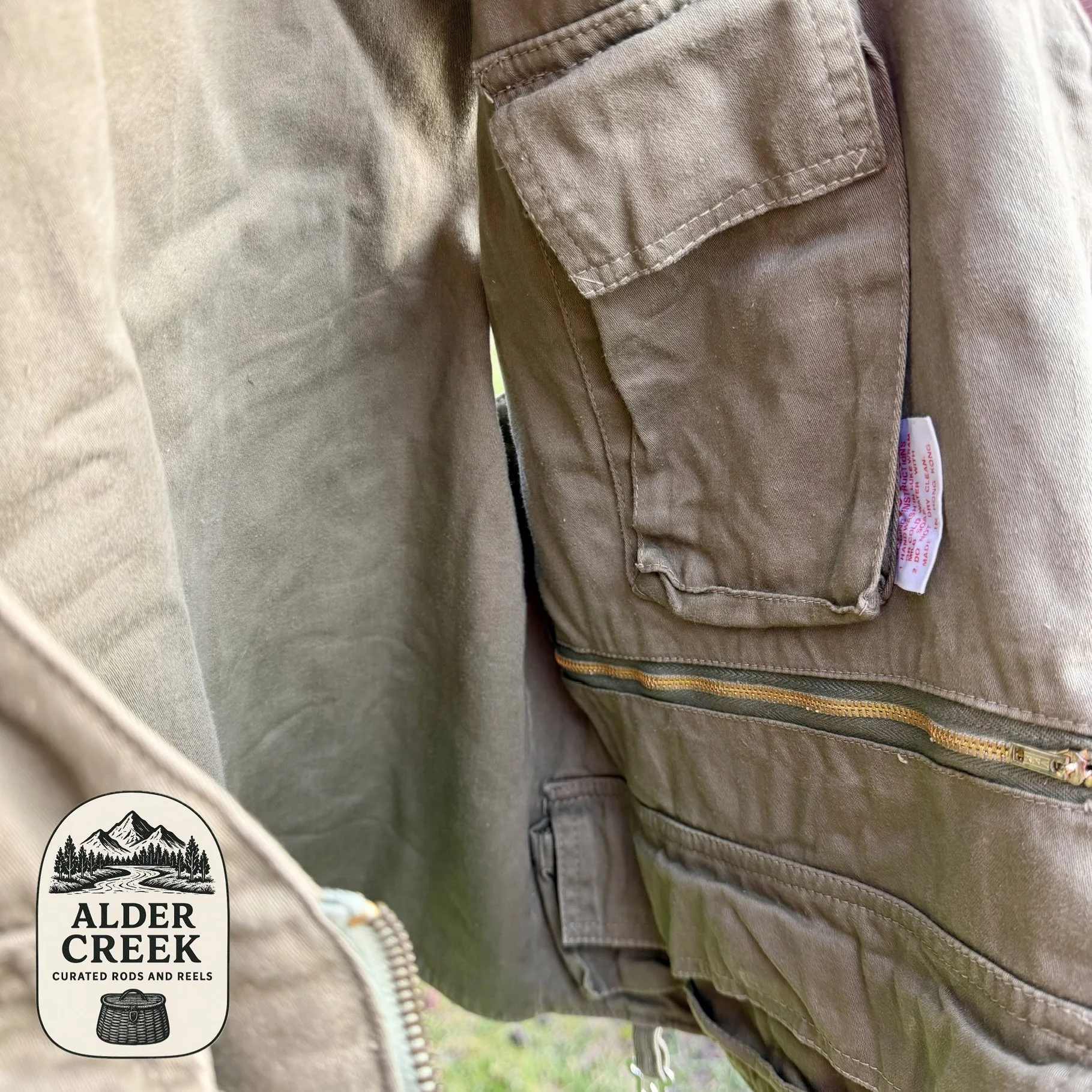
A classic vintage fly-fishing vest from Orvis, dating to approximately the 1970s.
From an era when the traditional fishing vest was an essential part of an angler's equipment, this is a fine example of the practical and understated design associated with American fly fishing.
Long before modern technical packs and lightweight fishing systems became commonplace, the angler's vest offered a simple and dependable way to carry fly boxes, leaders, tippet, tools and the many small necessities of a day on the river.
Founded in Manchester, Vermont, in 1856, Orvis became one of the most recognisable names in American fly fishing. Alongside its celebrated bamboo rods and reels, the company offered an extensive range of fishing clothing and accessories that helped define the traditional appearance of the twentieth-century fly fisherman.
An appealing piece of vintage angling equipment, equally at home on the river or among a collection of classic American fly-fishing tackle.
A fitting companion to an Orvis bamboo rod and a Hardy-made CFO reel.
Brand
Orvis
Period
c. 1970s (estimated)
Manufacture
Made in Hong Kong
Material
Cotton
Hardware
Brass zippers and buttons
Size
Labelled S; fits approximately M
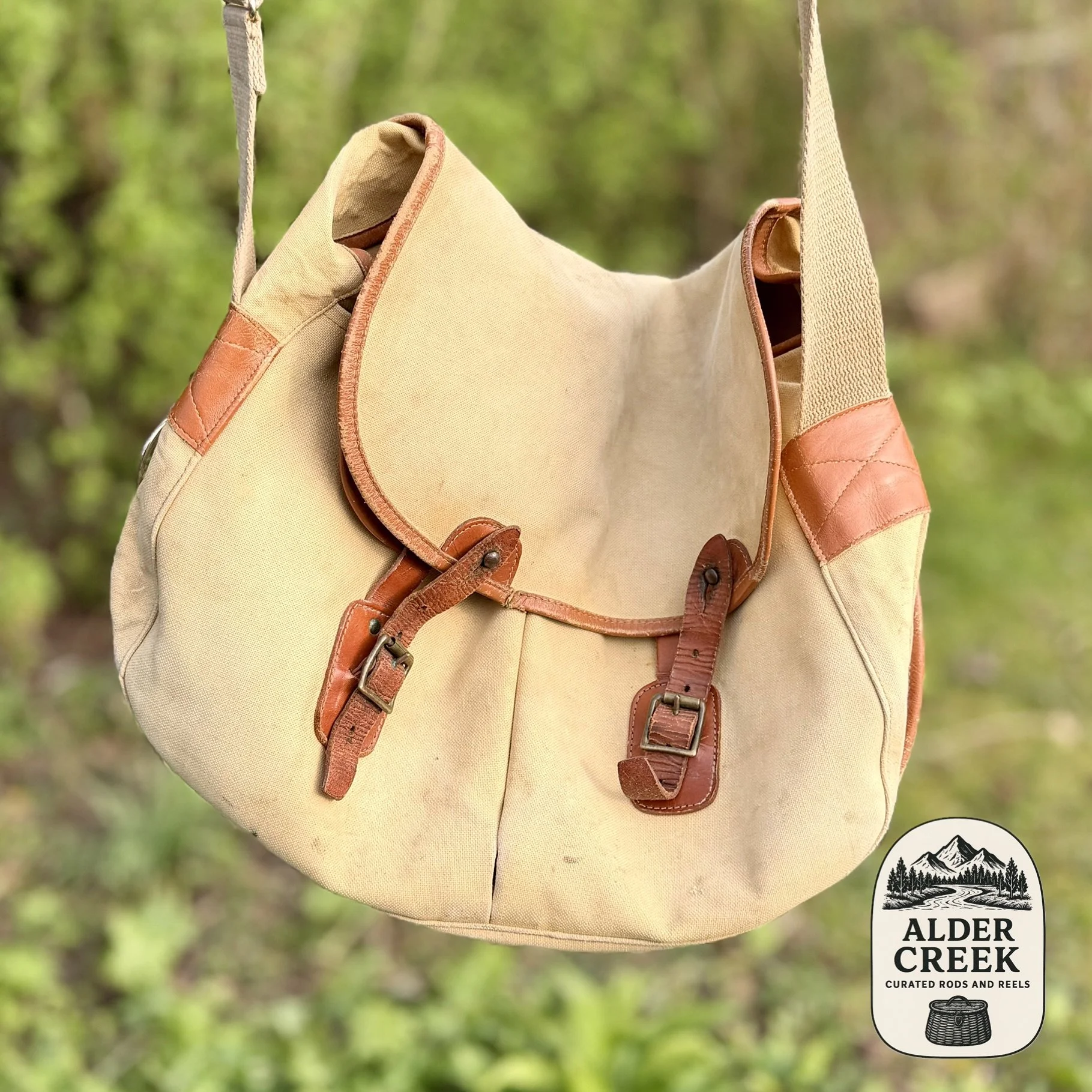
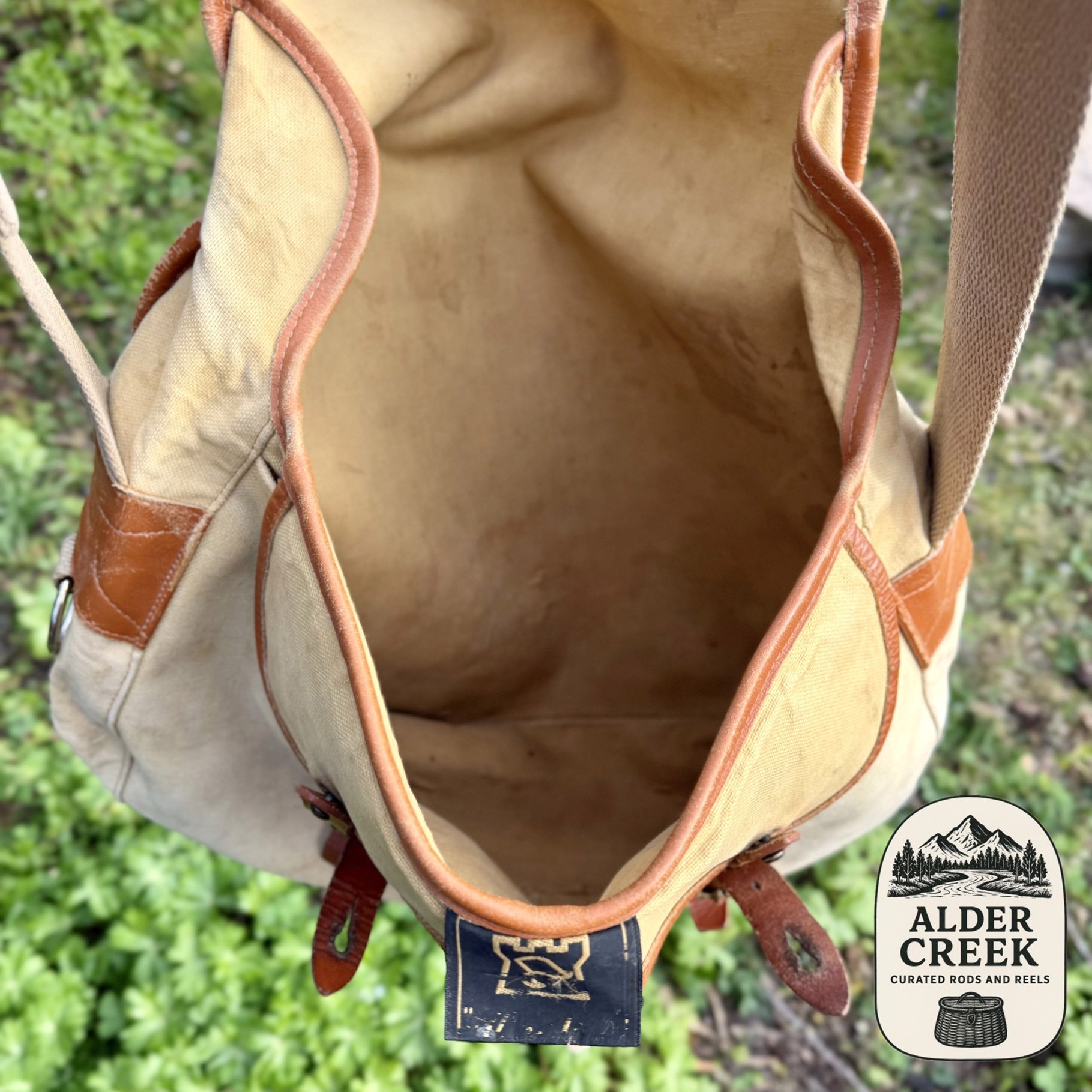
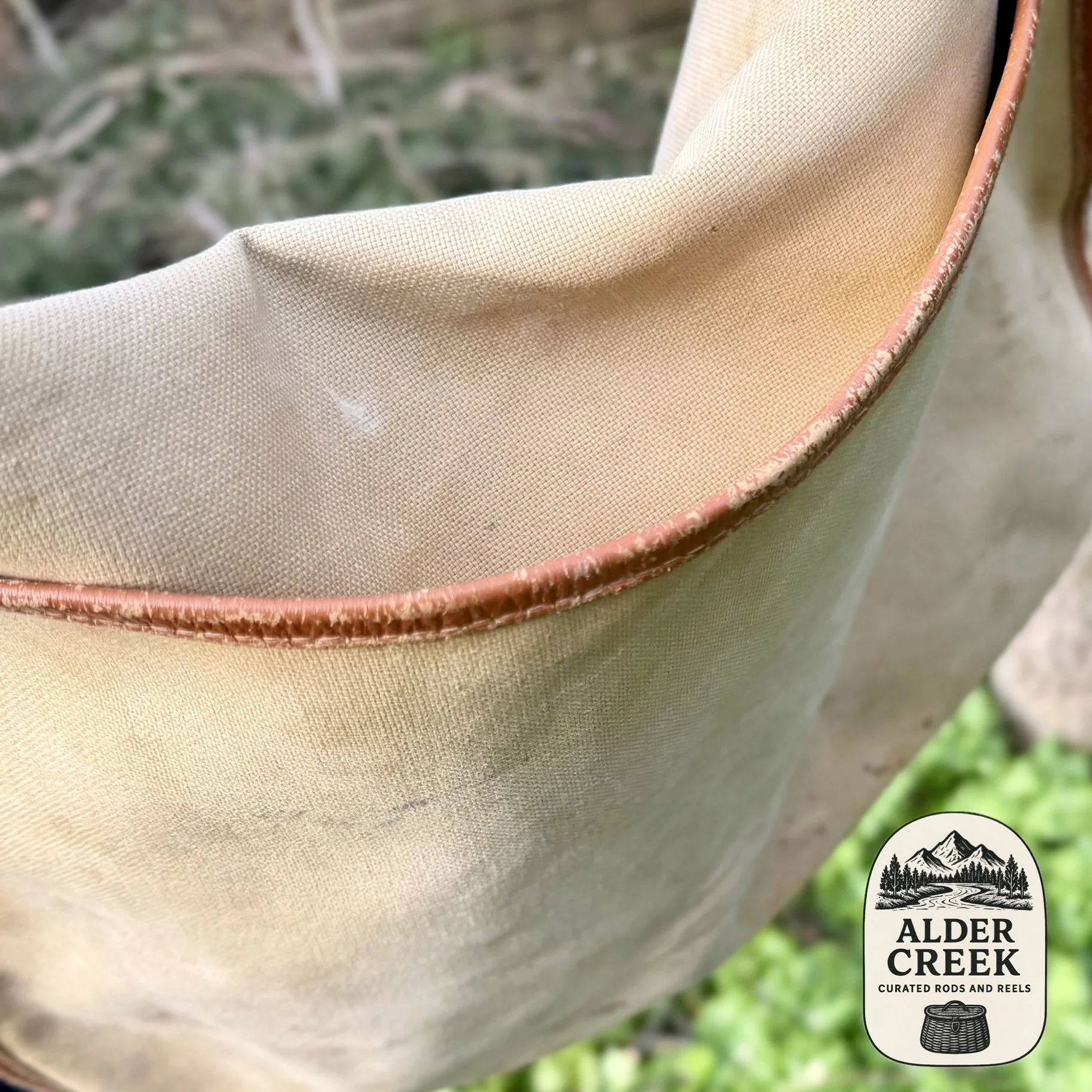
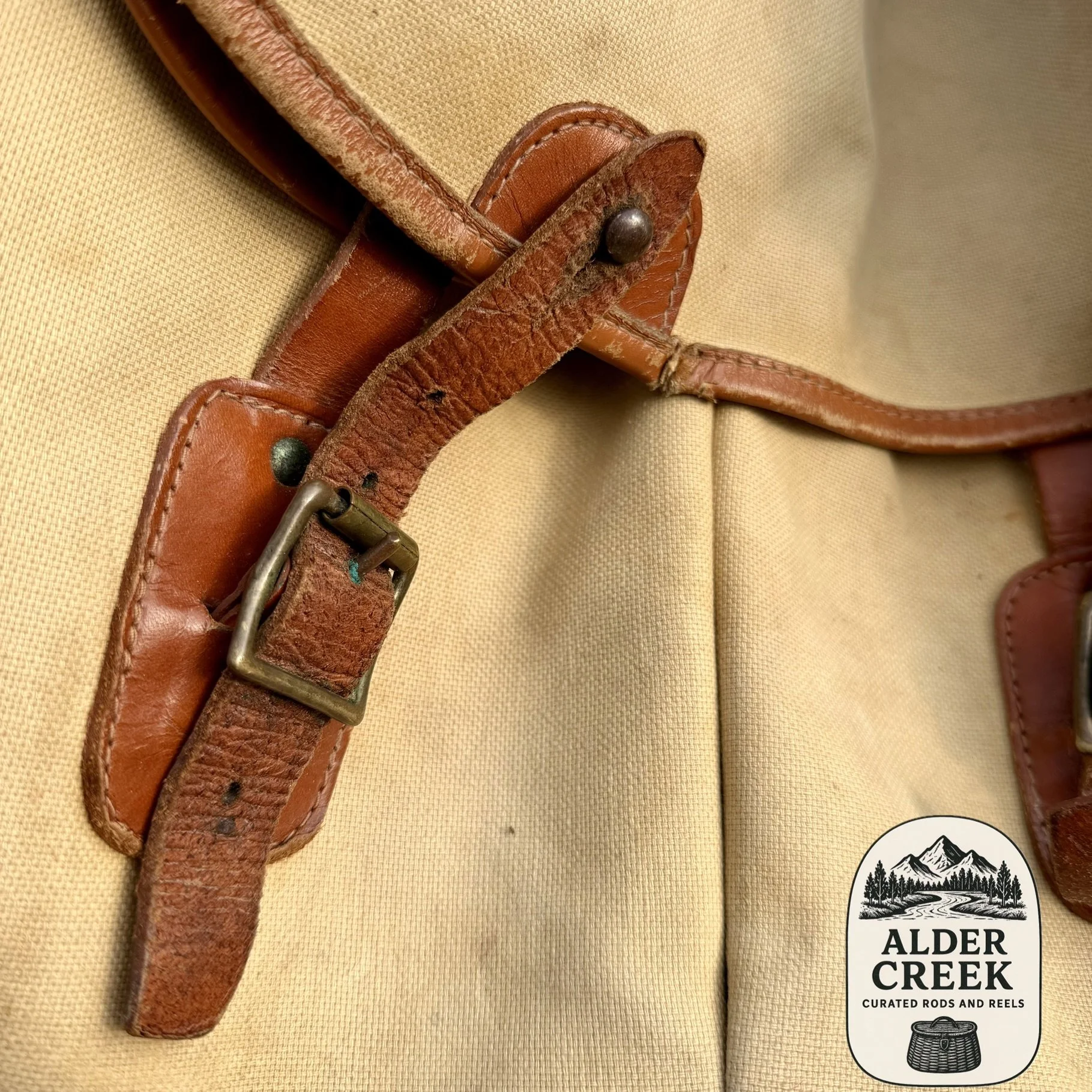
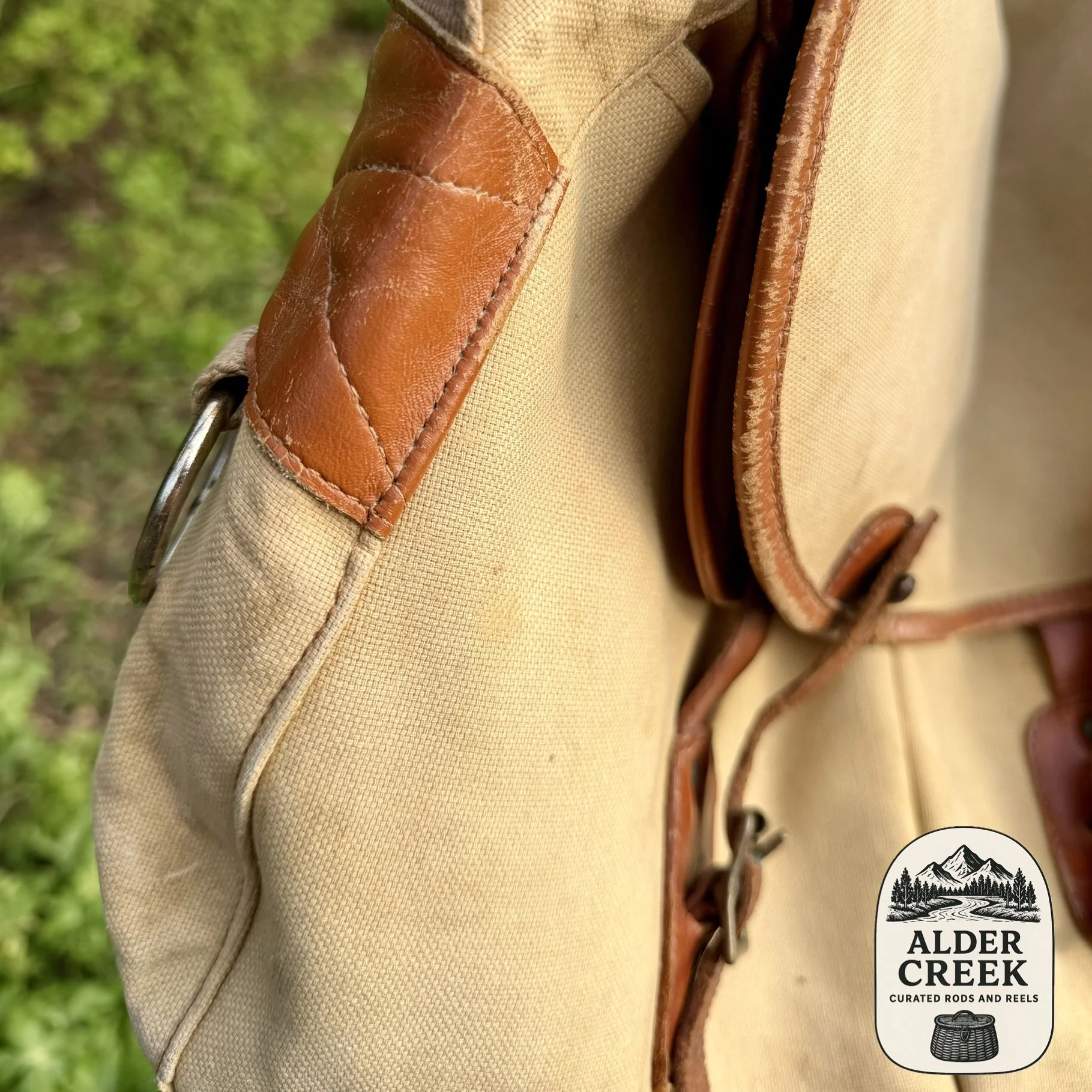
A traditional canvas and leather angler's bag from Alnwick, England
A wonderfully characterful vintage fishing shoulder bag from Hardy Brothers of Alnwick, combining the practical simplicity of traditional British angling equipment with the unmistakable patina of a piece that has spent many years by the river.
Constructed from sturdy canvas with leather straps and brass buckles, the bag features a generous main compartment and two external pockets. A broad, adjustable shoulder strap provides comfortable carrying, while a brass landing-net ring is fitted to one side.
The design is characteristic of an era when an angler's equipment was expected to be functional, dependable and capable of acquiring character through years of use.
This is a well-used example, with the attractive patina that only genuine use and age can provide. The canvas, leather and brass fittings show the marks of a long working life, but the bag remains sound, with no tears or structural defects noted.
There is some staining to the interior. Although these marks could probably be reduced through careful cleaning, they have deliberately been left untouched, preserving the bag's original character.
For those who appreciate traditional fishing equipment, this is part of its appeal: a piece that has clearly accompanied an angler through many seasons, yet remains ready for further use.
A handsome and practical companion to a classic Hardy rod and reel, or an evocative addition to a collection of British angling accessories.
Maker: Hardy Brothers, Alnwick, England
Type: Traditional angler's shoulder bag
Material: Canvas with leather fittings
Hardware: Brass buckles and landing-net ring
Compartments: One main compartment and two external pockets
Strap: Broad, adjustable shoulder strap
Condition: Well-used vintage condition with substantial patina, interior staining, no reported tears or structural defects
Further photographs, measurements and international shipping information are available upon request.
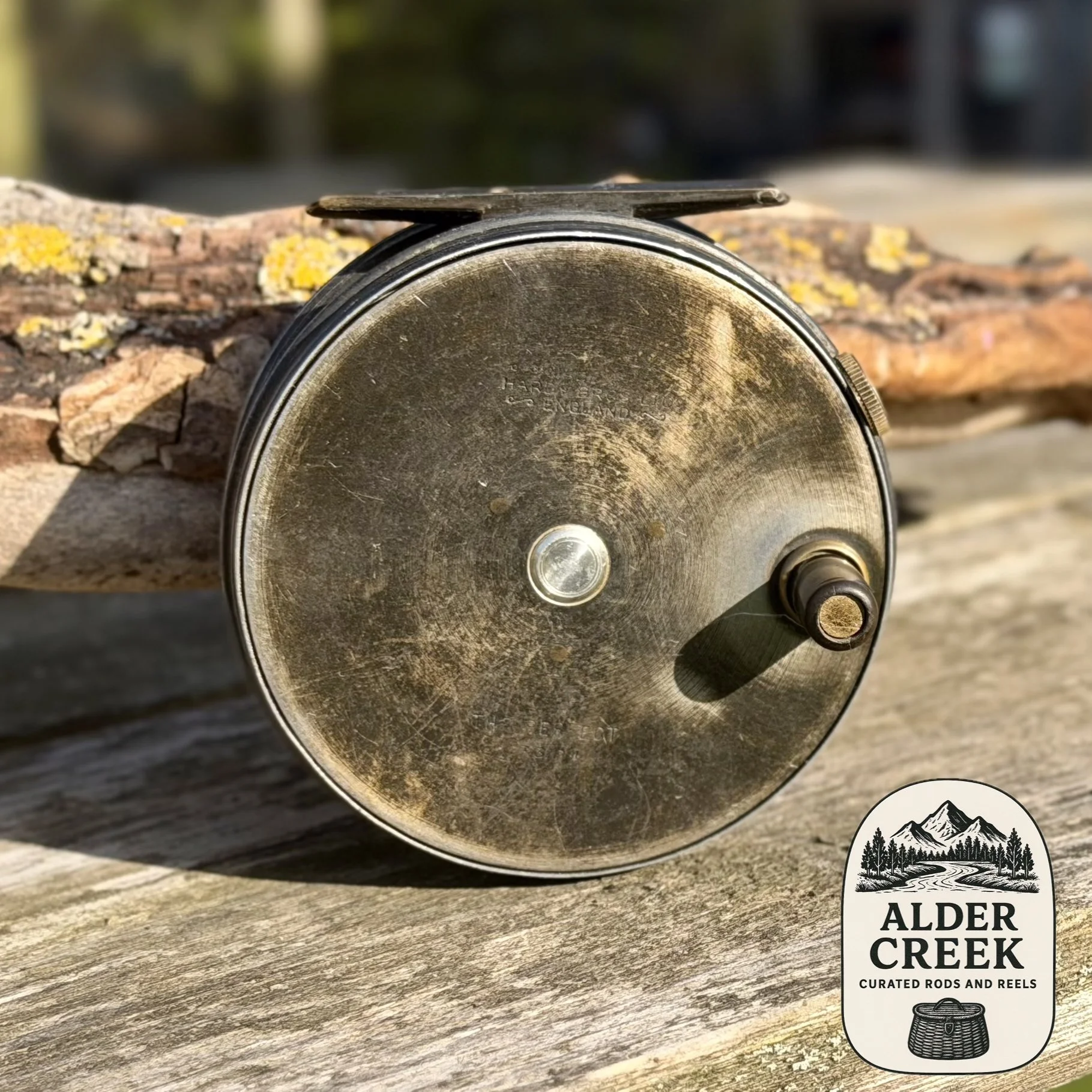
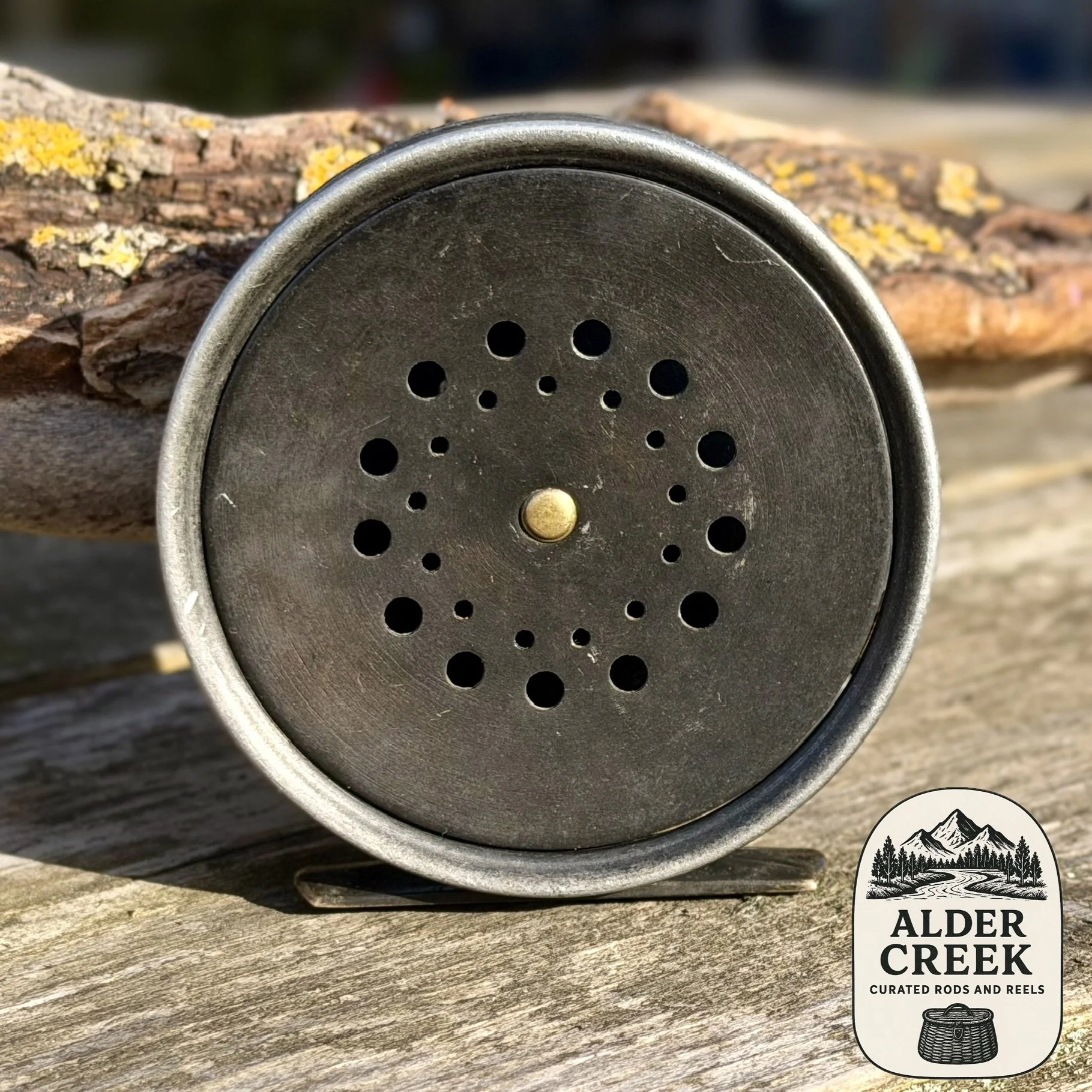
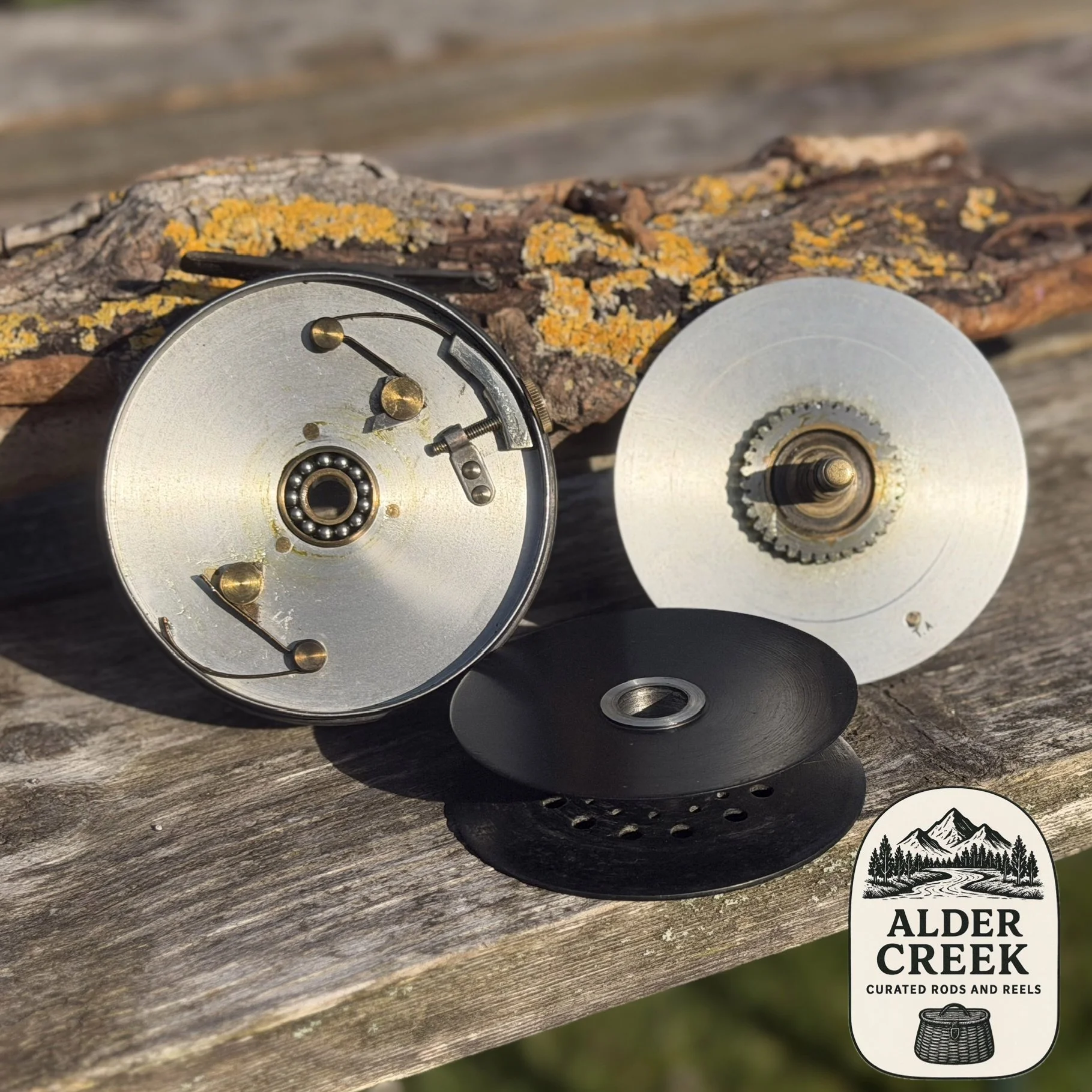
A fine vintage Hardy Perfect 3 3/8", manufactured in Alnwick, England, and dating to approximately the 1930s–40s.
This example features the desirable factory guide-less configuration, offering the versatility of either right- or left-hand wind. A particularly appealing size for traditional trout fishing with approximately #5–7 lines.
The reel retains its characteristic straight-line Hardy logo and an attractive aged leaded finish, with honest surface wear and patina consistent with its age. The spool runs true without noticeable wobble, while the check mechanism operates smoothly and positively.
Inside the spool is the inspection stamp “TA”, associated with Thomas Appleby, whose work at Hardy spanned much of the first half of the twentieth century. Such details offer a tangible connection to the craftsmen behind these celebrated reels.
Introduced in the late nineteenth century, the Hardy Perfect became one of the defining fly reels of British angling. Its distinctive construction, reliable check mechanism and enduring proportions established a standard that has influenced generations of reelmakers.
Early examples remain highly regarded by collectors, while well-preserved reels such as this continue to offer genuine practical value on the water.
A handsome and mechanically sound Perfect, retaining the character, craftsmanship and understated elegance of a classic Hardy reel.
Explore our collection of classic Hardy fly reels, including the Uniqua 3 3/8", Uniqua 3 1/8", and Uniqua 3 5/8" Duplicated Mark II.
Maker
Hardy Bros., Alnwick, England
Model
Perfect
Diameter
3 3/8"
Period
c. 1930s–40s
Configuration
Factory guide-less
Winding
Right- or left-hand wind
Line
Approx. #5–7
Finish
Aged leaded finish
Markings
Straight-line Hardy logo; TA spool stamp
Mechanism
Smooth, positive check
Condition
Good vintage condition; no noticeable spool wobble
Questions about this piece, international shipping, or price are always welcome.
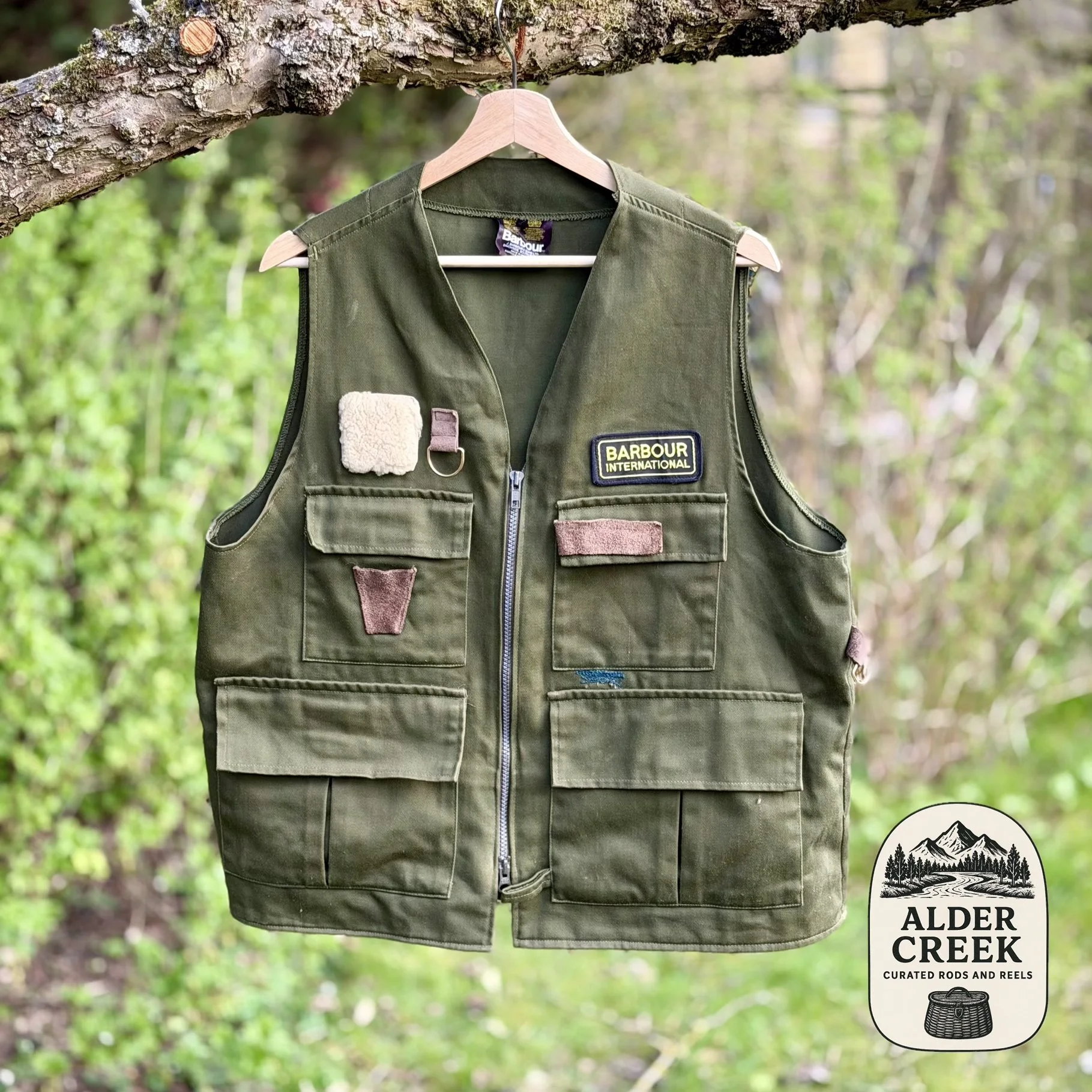
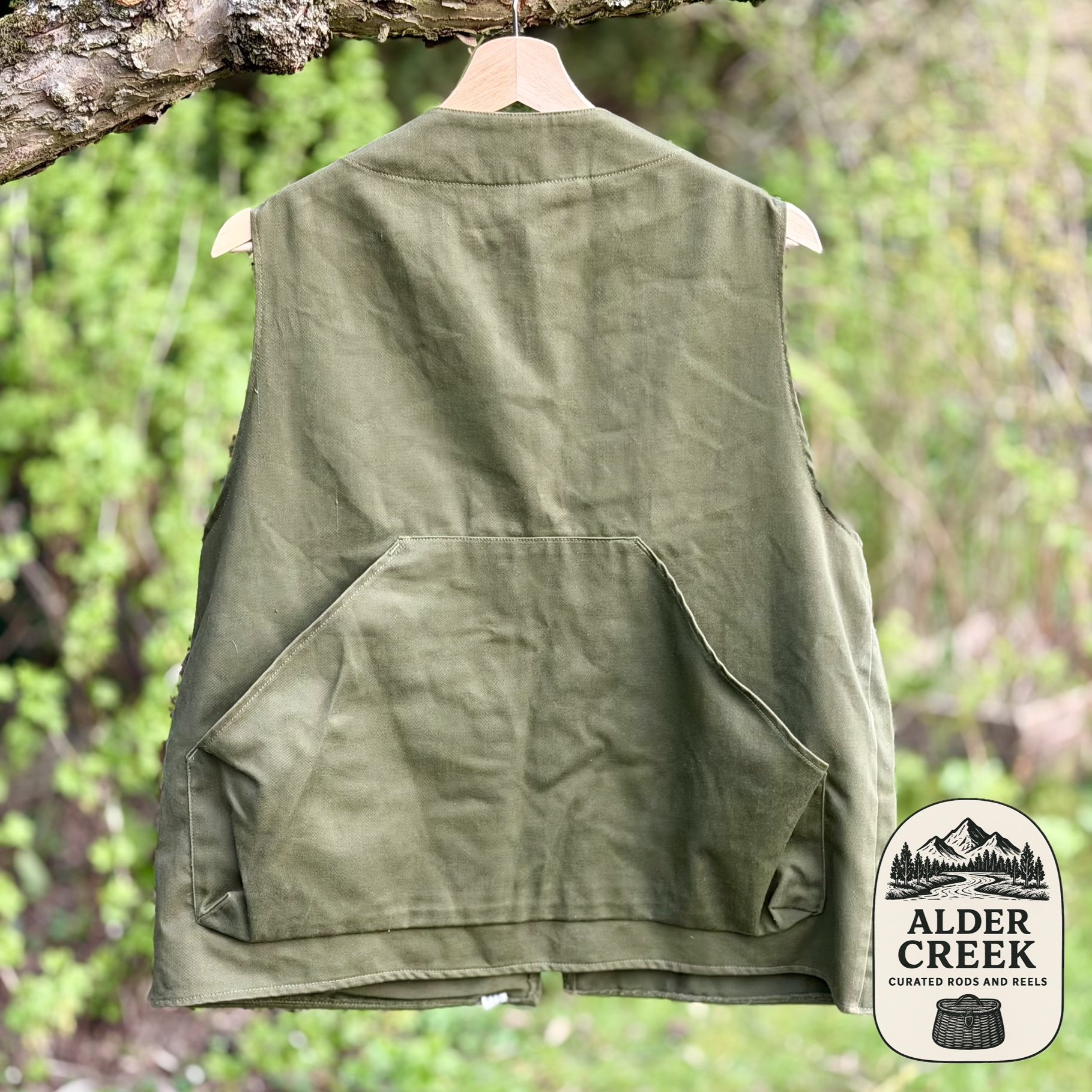
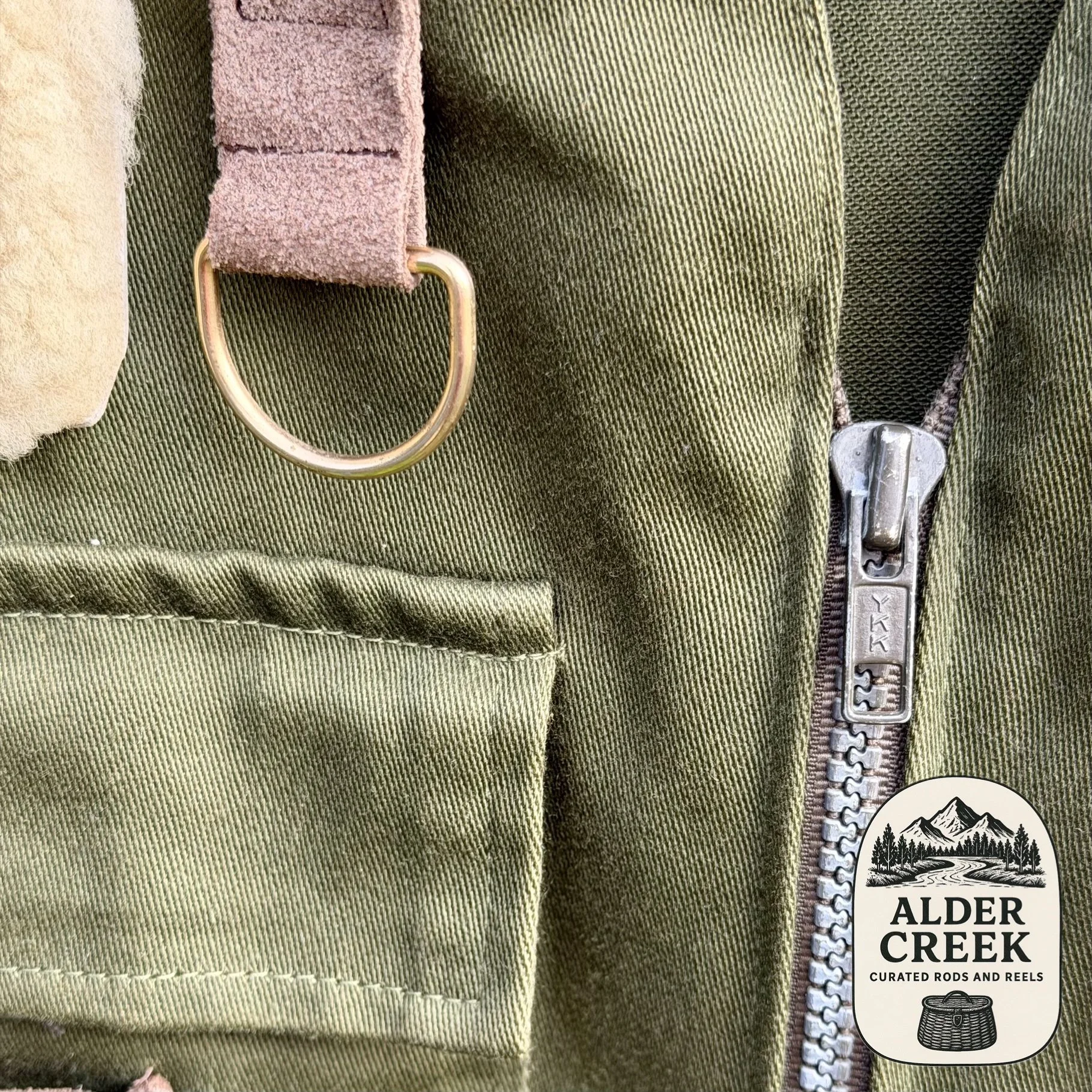
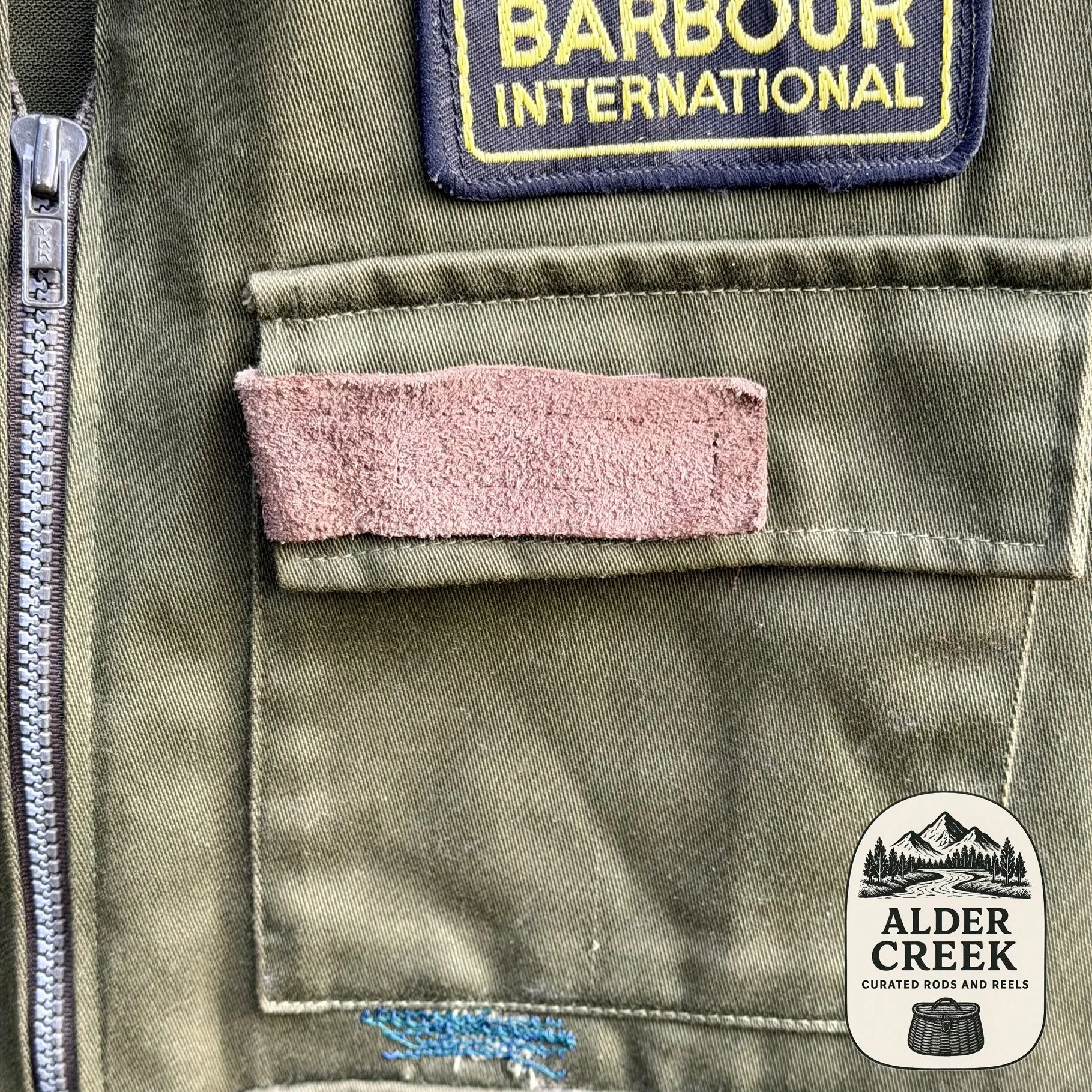
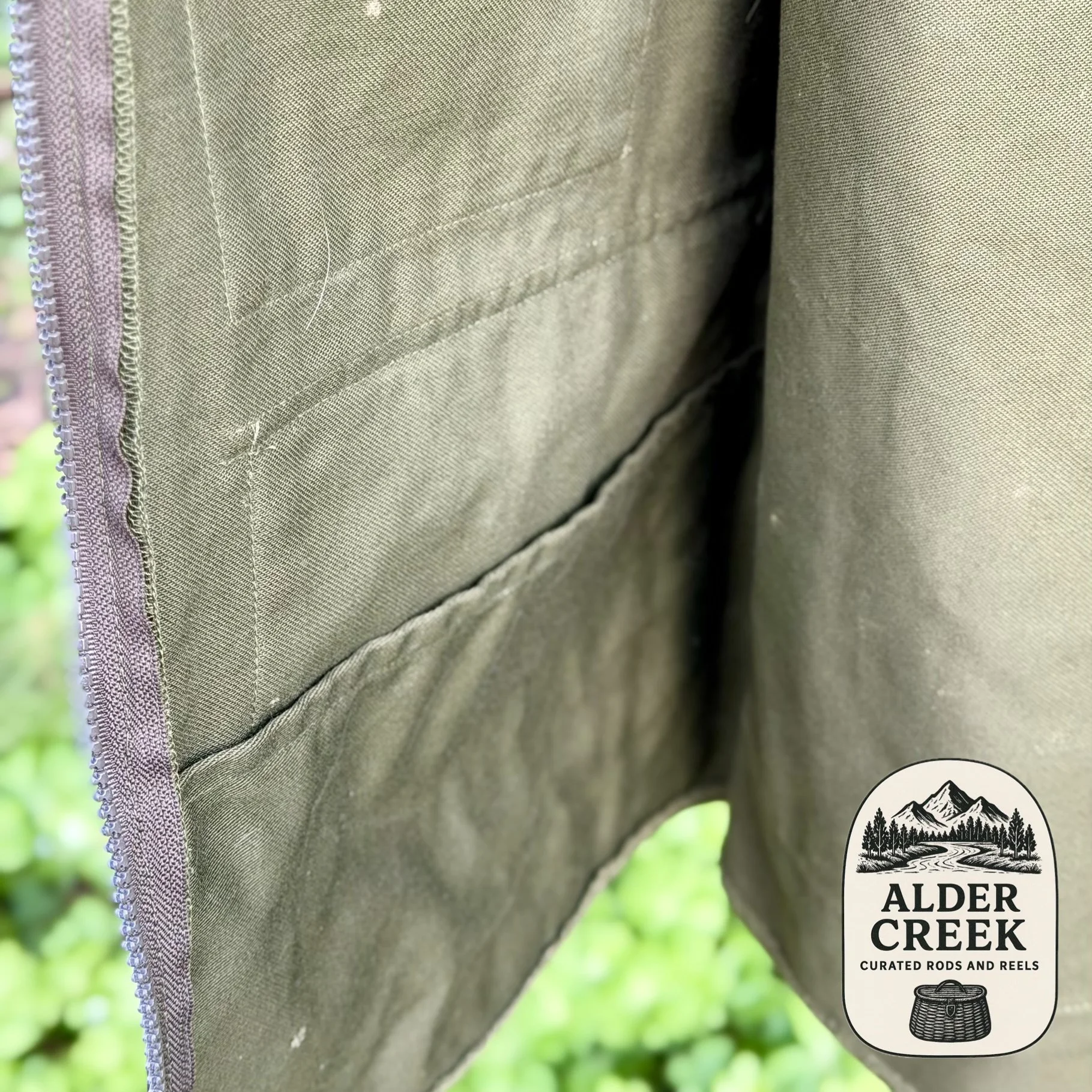
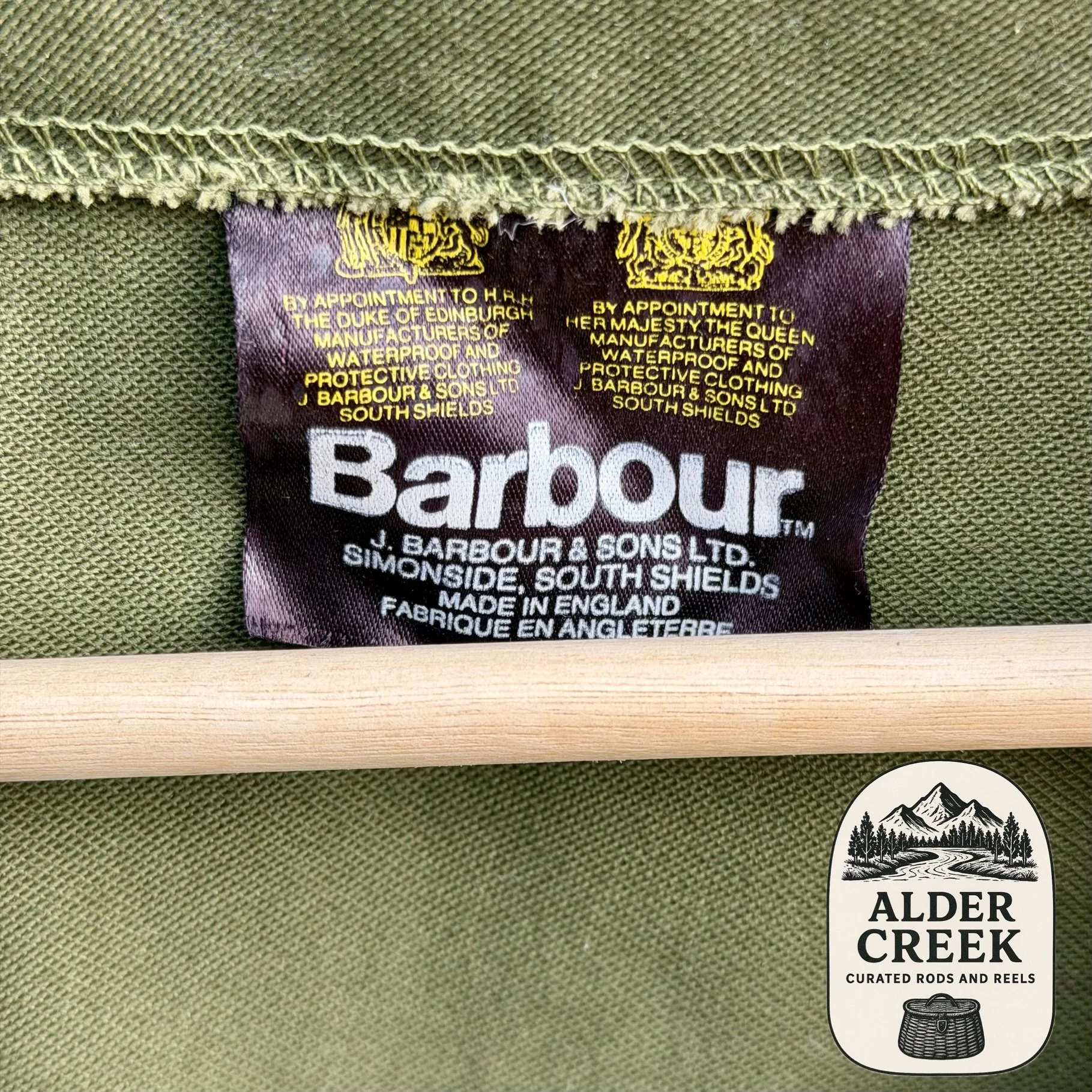
A discontinued classic from the British heritage outfitter
A fine example of Barbour's now-discontinued Dry Fly fishing vest, combining the firm's traditional outdoor character with an unusually restrained and practical design.
Unlike the heavily pocketed fishing vests commonly associated with traditional fly fishing, the Dry Fly takes a more understated approach. Its clean lines and carefully considered details give it a distinctive appearance, equally suited to a day on the river or casual everyday wear.
The vest features YKK zippers, brass rings and small faux-leather fittings, details that reflect the functional character of the original design.
Founded in South Shields in 1894, Barbour became one of Britain's most recognised manufacturers of practical country clothing. Although best known for its waxed cotton jackets, the company also produced a range of specialist garments for anglers and other outdoor pursuits.
The Dry Fly belongs to this less familiar side of Barbour's history. No longer in production, it offers an appealing alternative to the conventional angler's vest, with a design that is both purposeful and quietly elegant.
A handsome addition to a collection of classic British angling clothing, and a practical companion to traditional fly-fishing tackle.
Maker
Barbour
Model
Dry Fly
Type
Fly fishing vest / angler's gilet
Production
Discontinued model
Zippers
YKK
Details
Brass rings and faux-leather fittings
Design
Minimalist, traditional angling style
Questions about measurements, condition, international shipping or price are welcome.
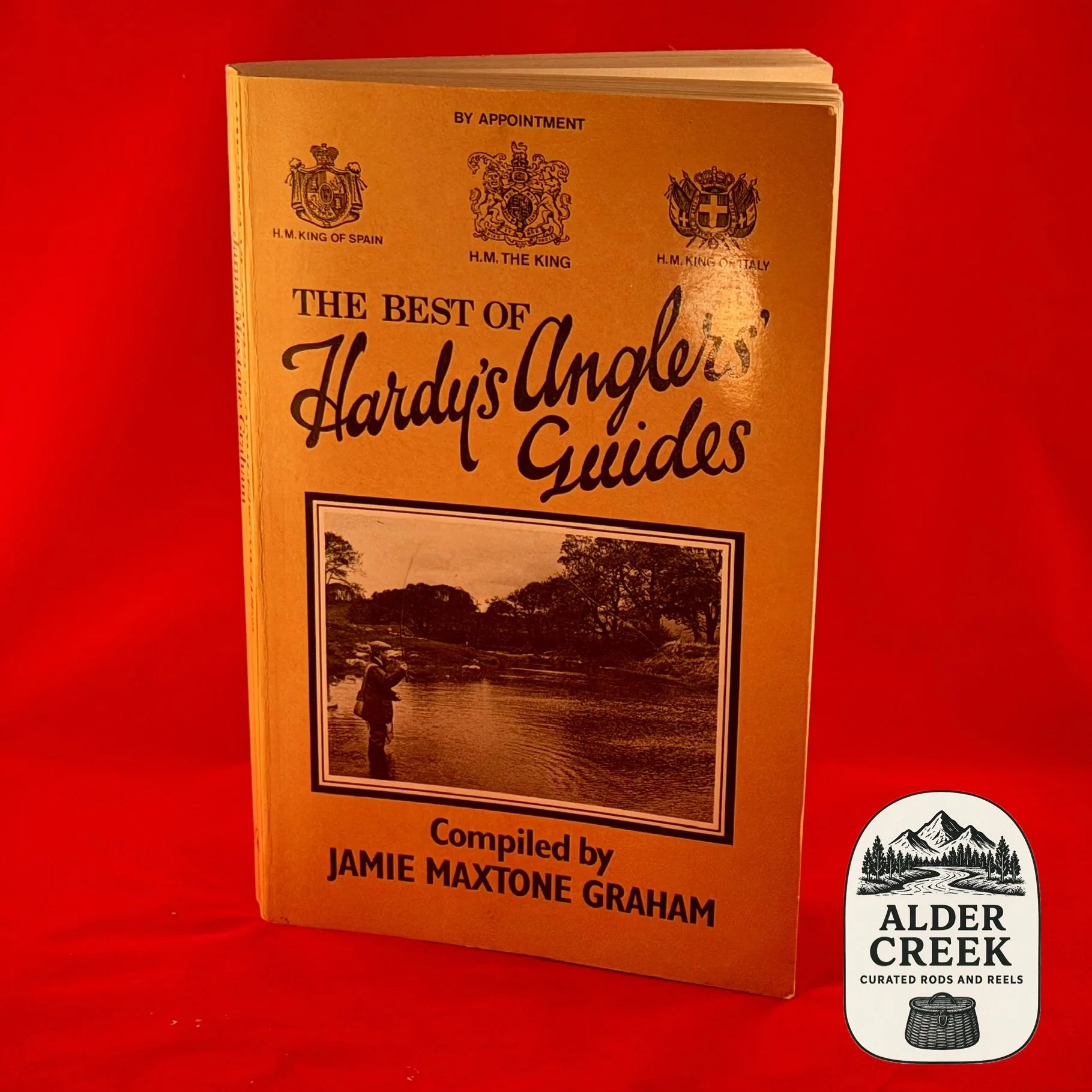
An engaging and particularly useful reference for collectors of vintage Hardy fishing tackle, bringing together selected material from the celebrated Hardy Brothers' catalogues.
For generations, the Hardy Anglers' Guides served as far more than ordinary sales catalogues. Lavishly illustrated and carefully produced, they documented the development of some of the finest fishing rods, reels and accessories ever made in Britain.
In The Best of Hardy's Anglers' Guides, Jamie Maxtone Graham draws upon his extensive collection of original Hardy catalogues to present a selection of historically important designs, innovations and products from the Alnwick firm.
Of particular interest are the developments in Hardy's celebrated fly reels, including the Perfect, alongside rods, flies, accessories and the many ingenious pieces of equipment that established Hardy's international reputation.
Beyond its value as a collector's reference, the book offers a fascinating insight into the evolution of fishing tackle during a period when craftsmanship, mechanical ingenuity and practical experience were closely intertwined.
This copy is the first edition, published by Macdonald Publishers, Midlothian, Scotland, in 1982. The volume comprises 208 pages, including an index, and contains colour plates, black-and-white photographs and line illustrations.
Bound in the original yellow pictorial wrappers with black titles.
An excellent companion to a collection of classic Hardy reels and an appealing record of one of the most distinguished names in British fishing tackle.
The evolution of Hardy's celebrated fly reels can be explored through our own collection, including the Hardy Perfect 3 3/8" and Hardy Uniqua 3 3/8" . Discover further works on classic tackle in our angling literature collection .
Compiler
Jamie Maxtone Graham
Title
The Best of Hardy's Anglers' Guides
Publisher
Macdonald Publishers, Midlothian, Scotland
Year
1982
Edition
First Edition
Pages
208, including index
Format
Octavo, approximately 8 × 6 inches
Illustrations
Colour plates, black-and-white photographs and line drawings
Binding
Original yellow pictorial wrappers
Subject
Hardy Brothers, vintage fishing tackle, reels, rods and catalogues
Questions about this book, its condition, international shipping, or price are always welcome.
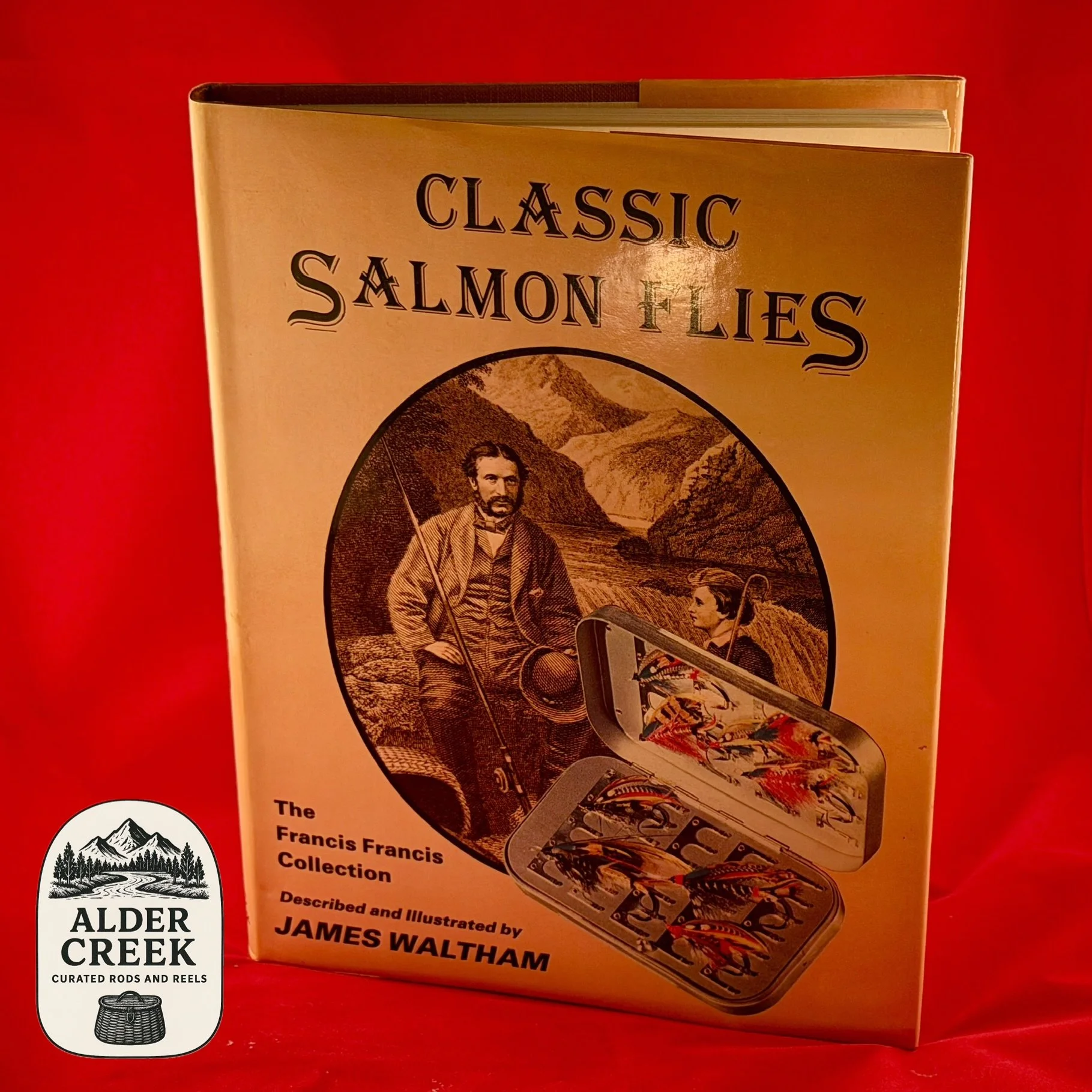
A beautifully illustrated exploration of traditional British salmon flies, drawn from the celebrated writings of Francis Francis and brought together by James Waltham.
Francis Francis's A Book on Angling, first published in 1867, remains one of the important works of nineteenth-century British fishing literature. His detailed accounts of salmon flies and their dressings offer a fascinating record of the patterns, materials and traditions of the Victorian salmon angler.
In Classic Salmon Flies, James Waltham presents a carefully edited selection of this material, making the original descriptions more accessible to the modern reader. The flies are arranged according to the regions of the British Isles with which they were associated, preserving a valuable sense of their historical and geographical origins.
Waltham supplements the original text with practical information on fly-dressing techniques, a guide to feathers and suitable substitutes, and an appreciation of the life and work of Francis Francis.
Of particular distinction are the eight colour plates of traditional salmon flies, painted by Waltham himself, which give the volume considerable visual appeal.
This copy is the first edition, published in 1983. The quarto-format volume comprises xii + 116 pages, with colour plates and black-and-white illustrations. Bound in brown boards with gilt spine lettering.
An attractive addition to a collection of classic salmon fishing literature, especially for those interested in the history and craftsmanship of the traditional fully dressed salmon fly.
Explore the history of the traditional salmon fly through George M. Kelson's The Salmon Fly and Keith Fulsher and Charles Krom's Hair-Wing Atlantic Salmon Flies, alongside further titles in our collection of classic angling literature .
Author / Editor
James Waltham
Original Author
Francis Francis
Title
Classic Salmon Flies: The Francis Francis Collection
Year
1983
Edition
First Edition
Format
Quarto, approximately 195 × 254 mm
Pagination
xii + 116 pages
Illustrations
Eight colour plates of salmon flies; black-and-white illustrations
Binding
Brown boards with gilt spine lettering
Original Source
A Book on Angling (1867)
Subject
Traditional salmon flies and fly dressing
Questions about this book, its condition, international shipping, or price are always welcome.
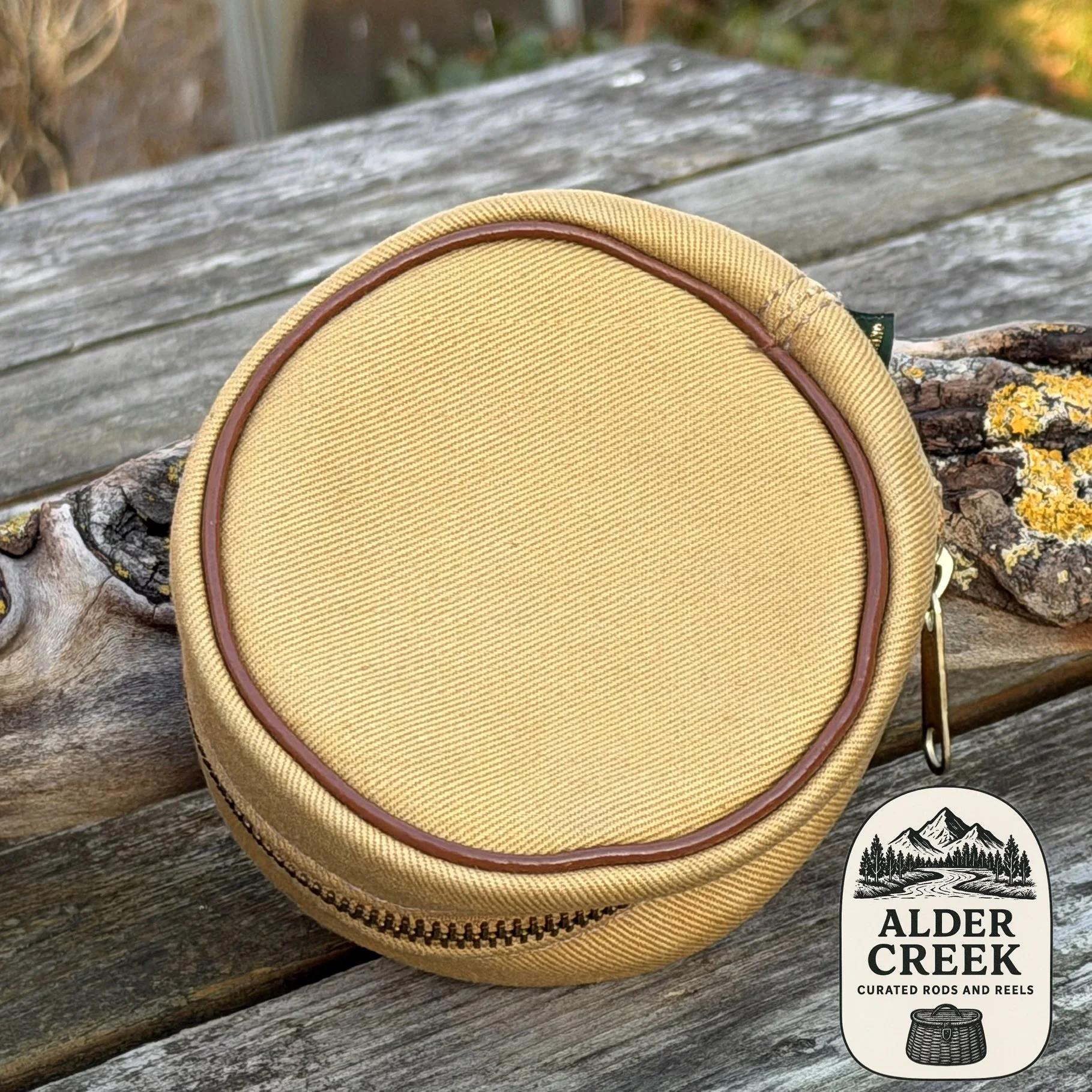
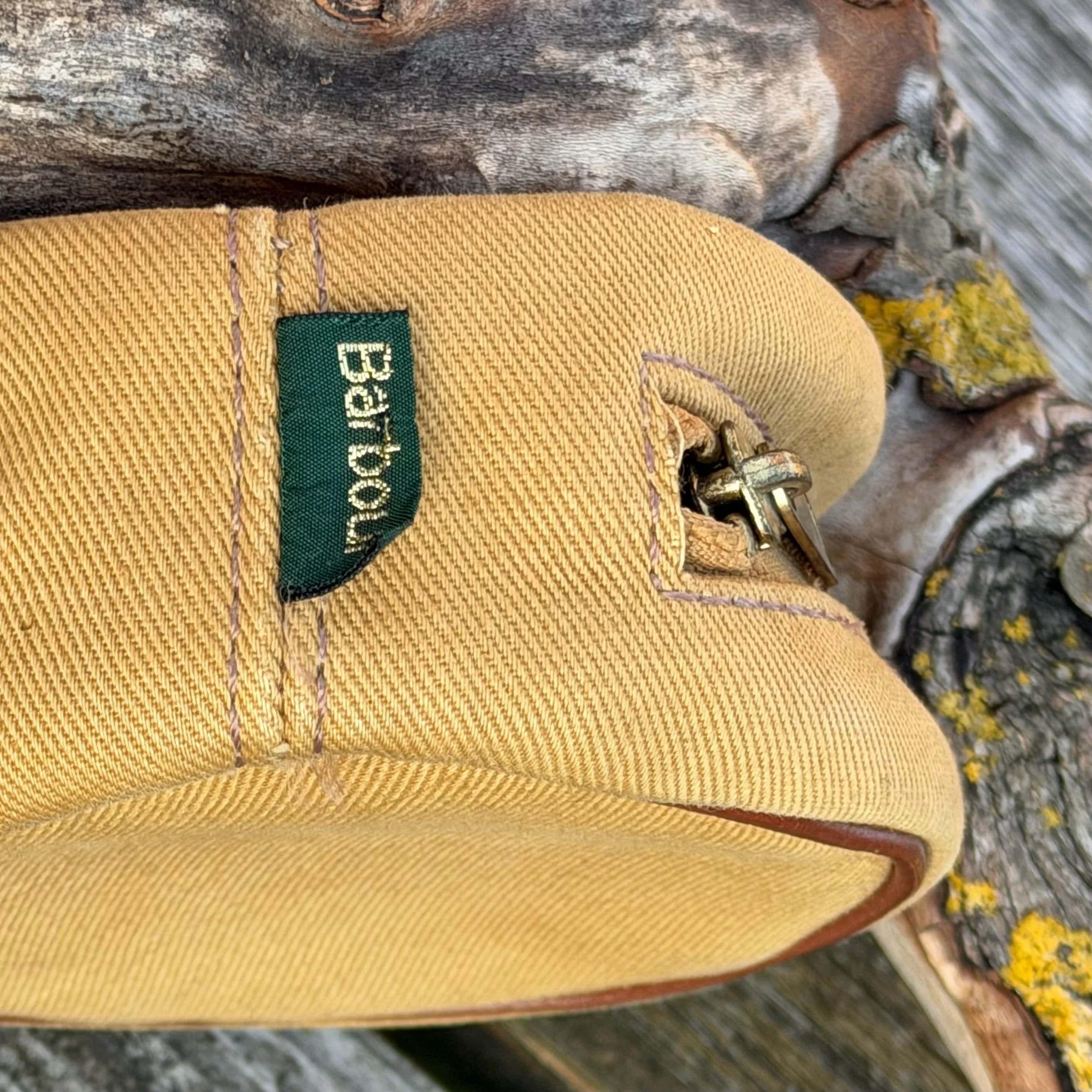
Traditional canvas, leather and shearling reel protection
A handsome vintage fly reel case from Barbour, combining the practical character of traditional British angling accessories with the understated quality for which the company is known.
Constructed from sturdy canvas with leather trim, the case features a brass zipper and a soft shearling lining designed to protect a treasured reel from scratches and handling marks.
Its generous proportions accommodate a larger salmon reel of approximately 3¾ inches in diameter, making it a particularly fitting companion to a classic Hardy Perfect, St George or similar traditional fly reel, subject to the reel's overall dimensions.
Barbour's long association with British country pursuits is reflected in the case's straightforward construction and choice of materials. There is nothing superfluous about the design: simply a practical, attractive piece of equipment made to protect a fine reel.
A useful addition to the tackle collection of anyone who appreciates traditional fishing accessories and the quiet elegance of well-made vintage equipment.
Maker: Barbour
Type: Fly reel case
Material: Canvas with leather trim
Closure: Brass zipper
Lining: Shearling
Capacity: Approximately 3¾-inch salmon reel
Condition: Please refer to the photographs for details
Further measurements and international shipping information are available upon request.
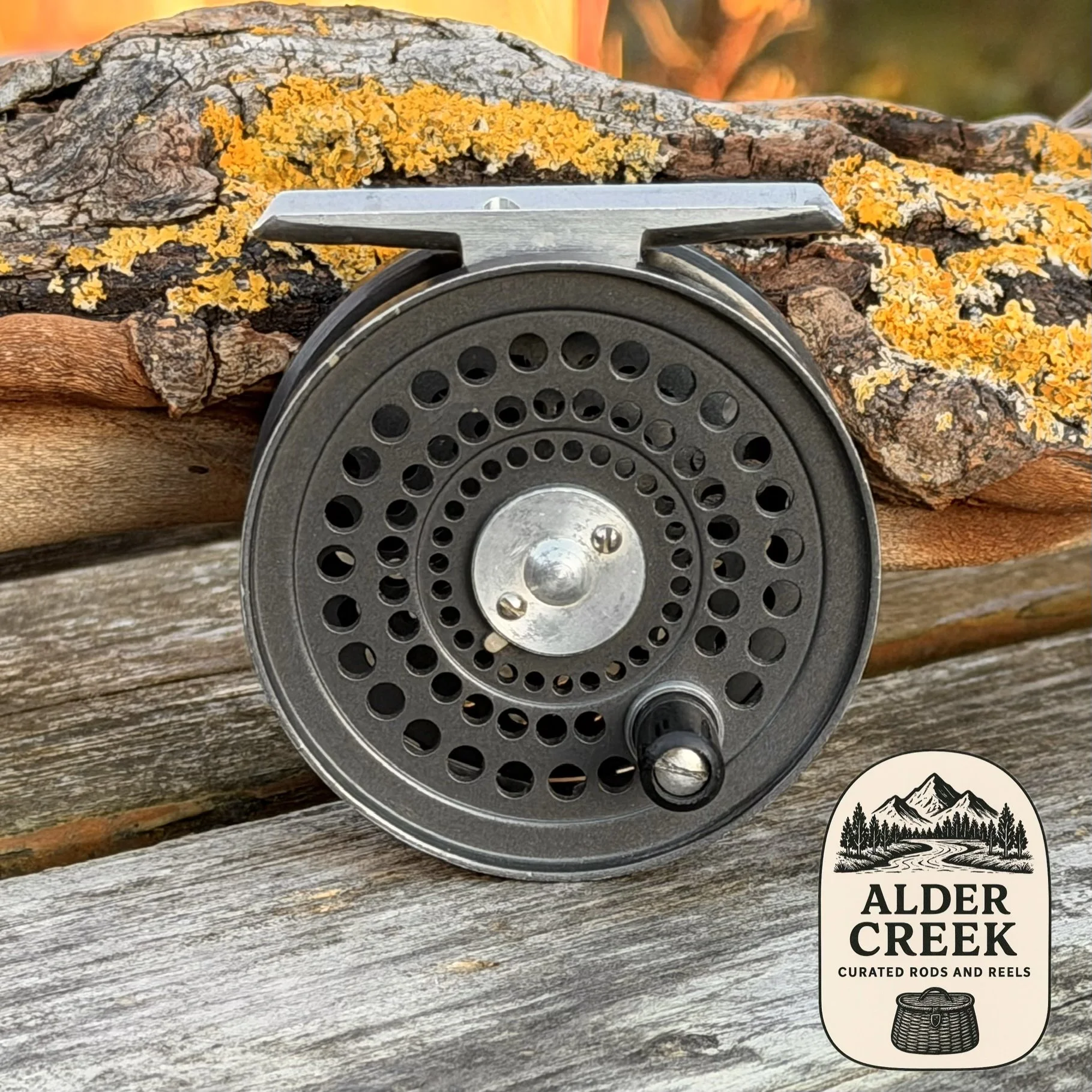
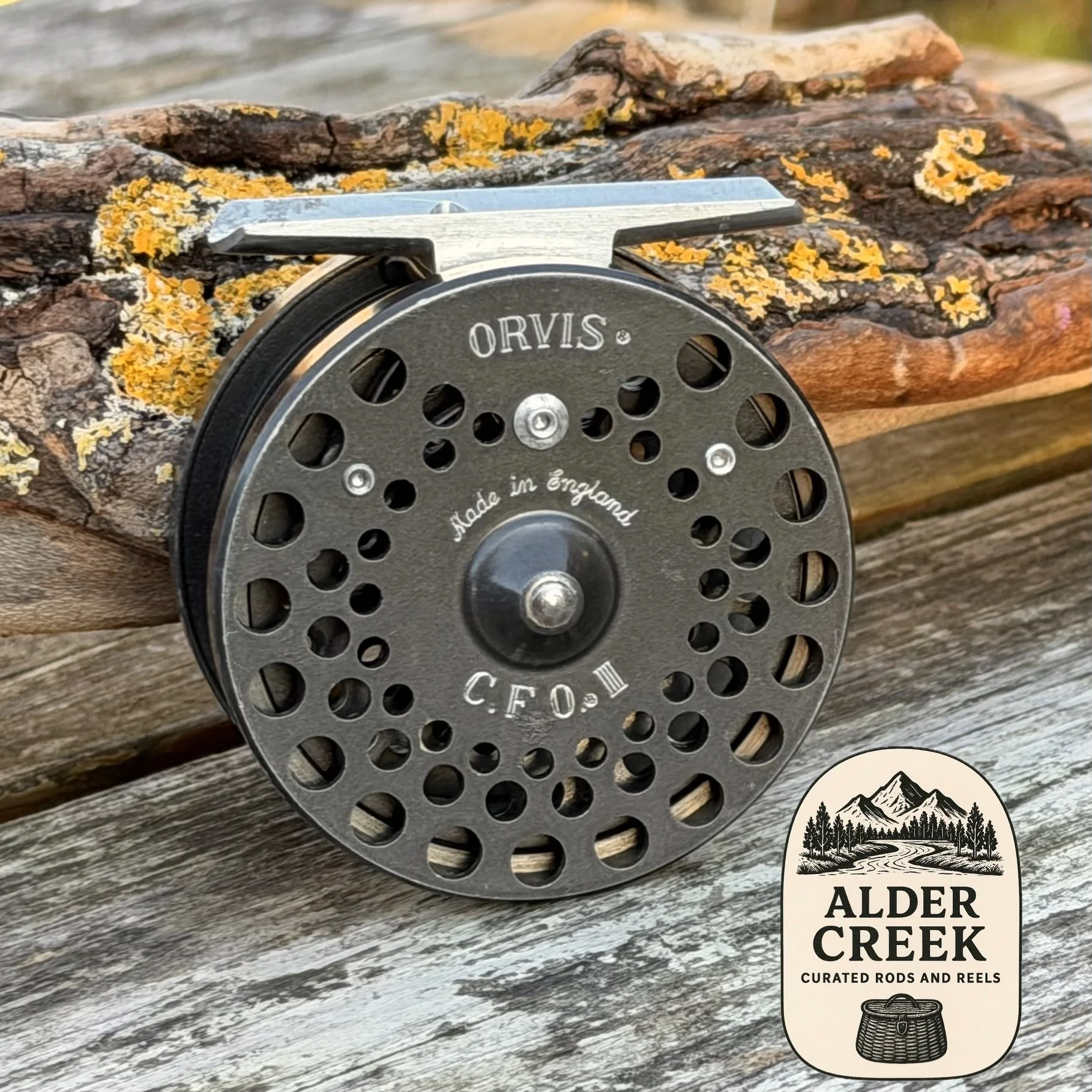
An early Orvis CFO II fly reel in good used condition. Made in England by Hardys. Originally released in the early 1970's, this model followed the early "screwback" reels that was made in the first few years of production - likely manufactured middle to late 70’s. Fixed click & pawl drag that can be flipped to either RHW or LHW (currently set for LHW). Smooth alloy 3-hole foot, fully ventilated frame and spool with palming rim. The reel shows signs of modest use but is mechanically intact, with no spool wobble. Weight is 2.08oz, best with a 1/2/3wt line. Sold with non-original velvet pouch.
Brand
Orvis
Manufacturer
Hardy Bros., England
Model
CFO II
Period
c. mid-to-late 1970s
Weight
2.08 oz
Line
Approx. #1–3
Retrieve
RHW/LHW convertible; currently LHW
Check
Fixed click-and-pawl
Construction
Ventilated frame and spool
Reel Foot
Smooth alloy, three-hole design
Condition
Good used condition; mechanically sound
Includes
Non-original velvet pouch
Questions about this piece, international shipping, or price are always welcome.
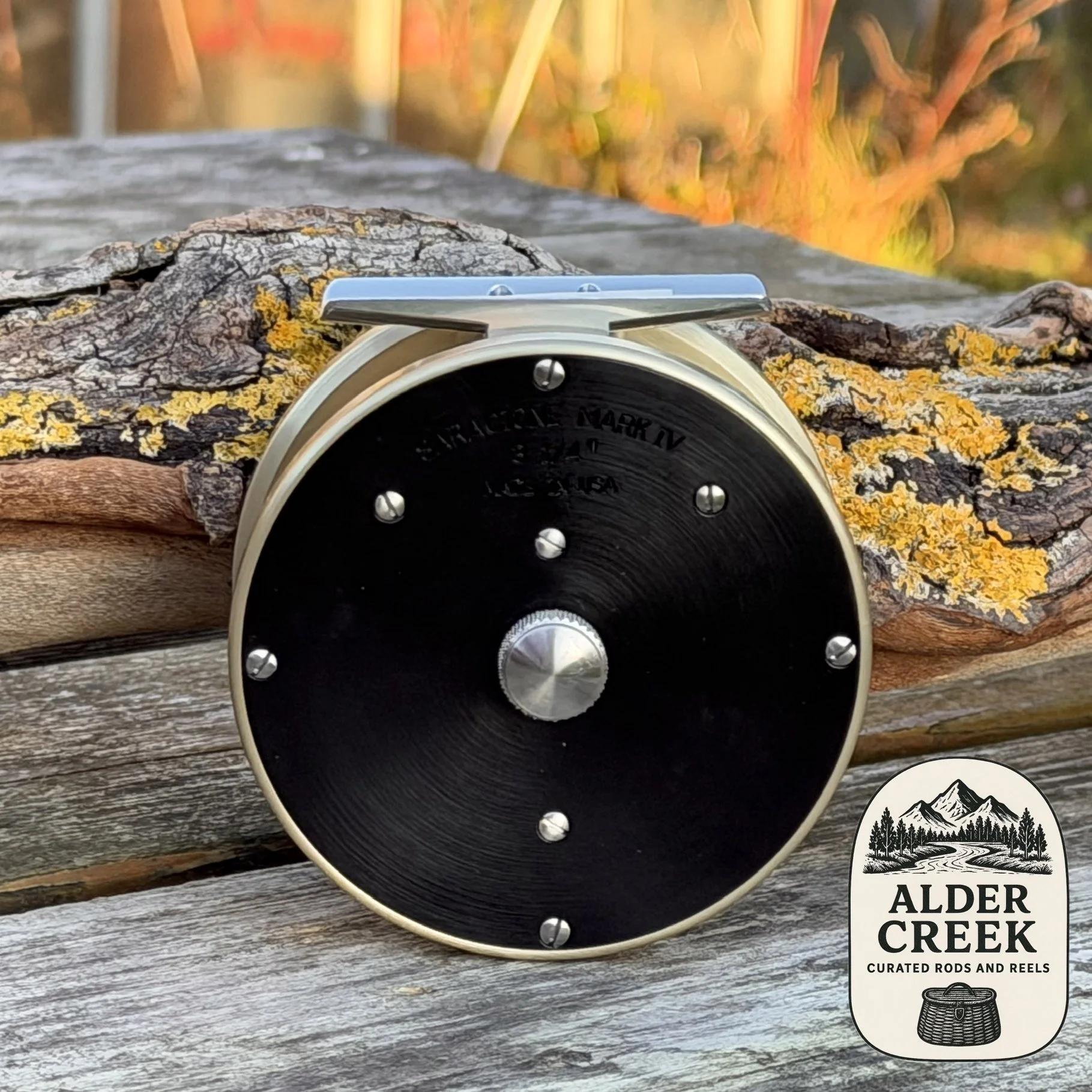
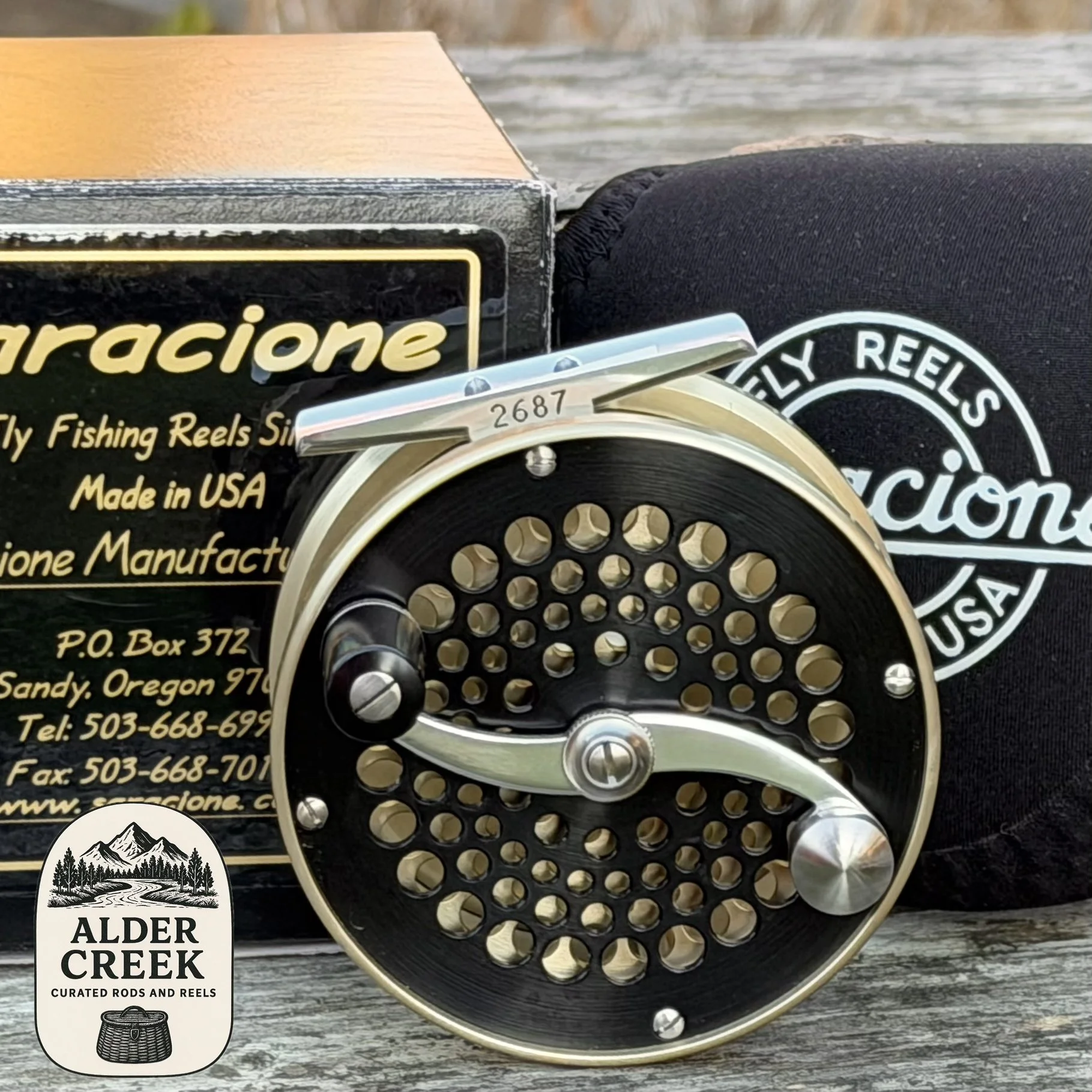
Use: Perfect for trout rods ranging from 7’-9’ in the #4-6 weight class.
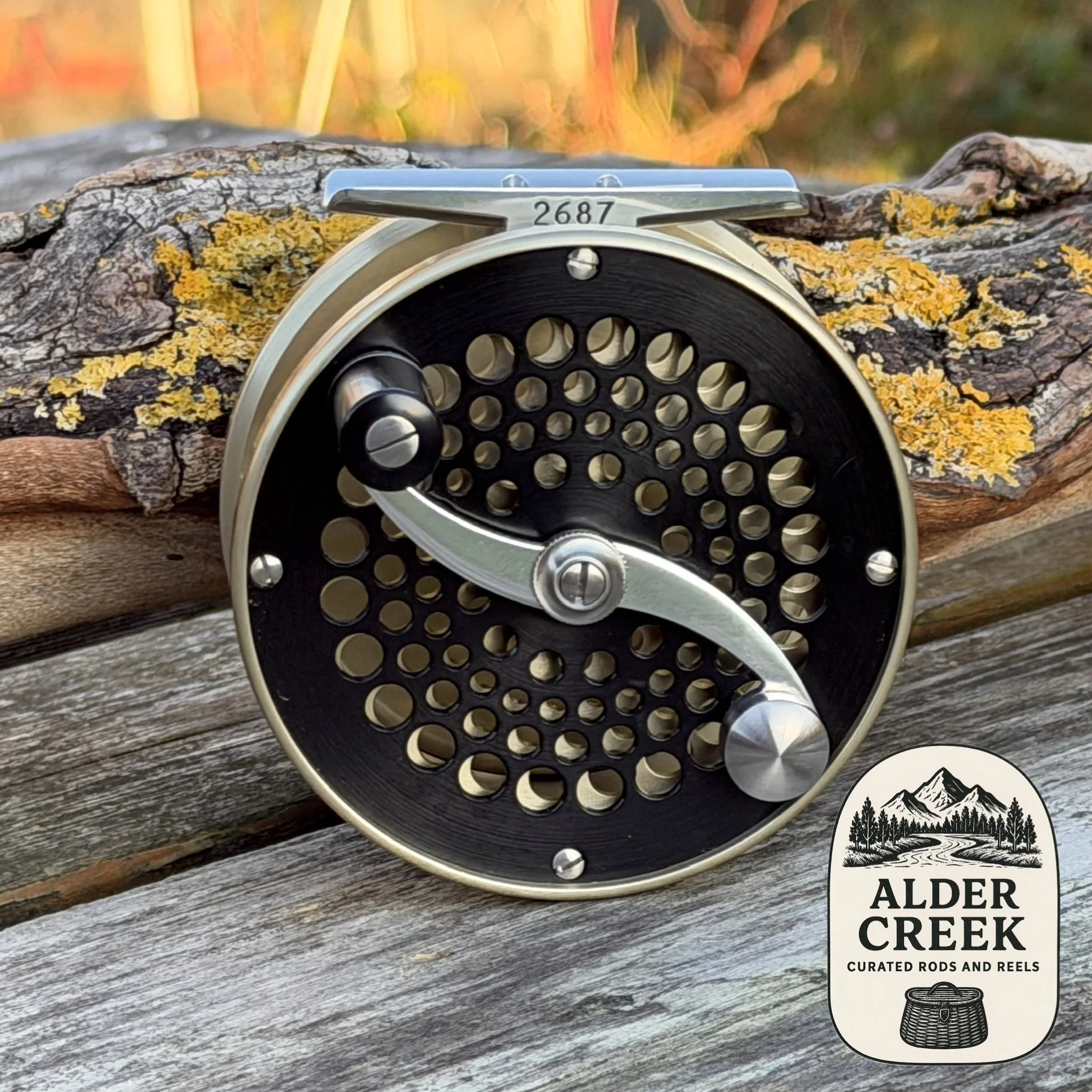
Joe Saracione is without a doubt one of the most accomplished current reel makers. This reel is machined from 6061 -T6 Aluminum Alloy, 300 Series Stainless Steel and silicone bronze. With the Mark IV you have a smooth preset non-adjustable gear & pawl drag that handles the lightest of tippets. Width 11/16”. Weight: 6.3 ounces. Capacity: 60 yards of 20# Dacron. This reel is brand new in box and comes as a non-convertible RHW, with a neoprene pouch. Serial 2687
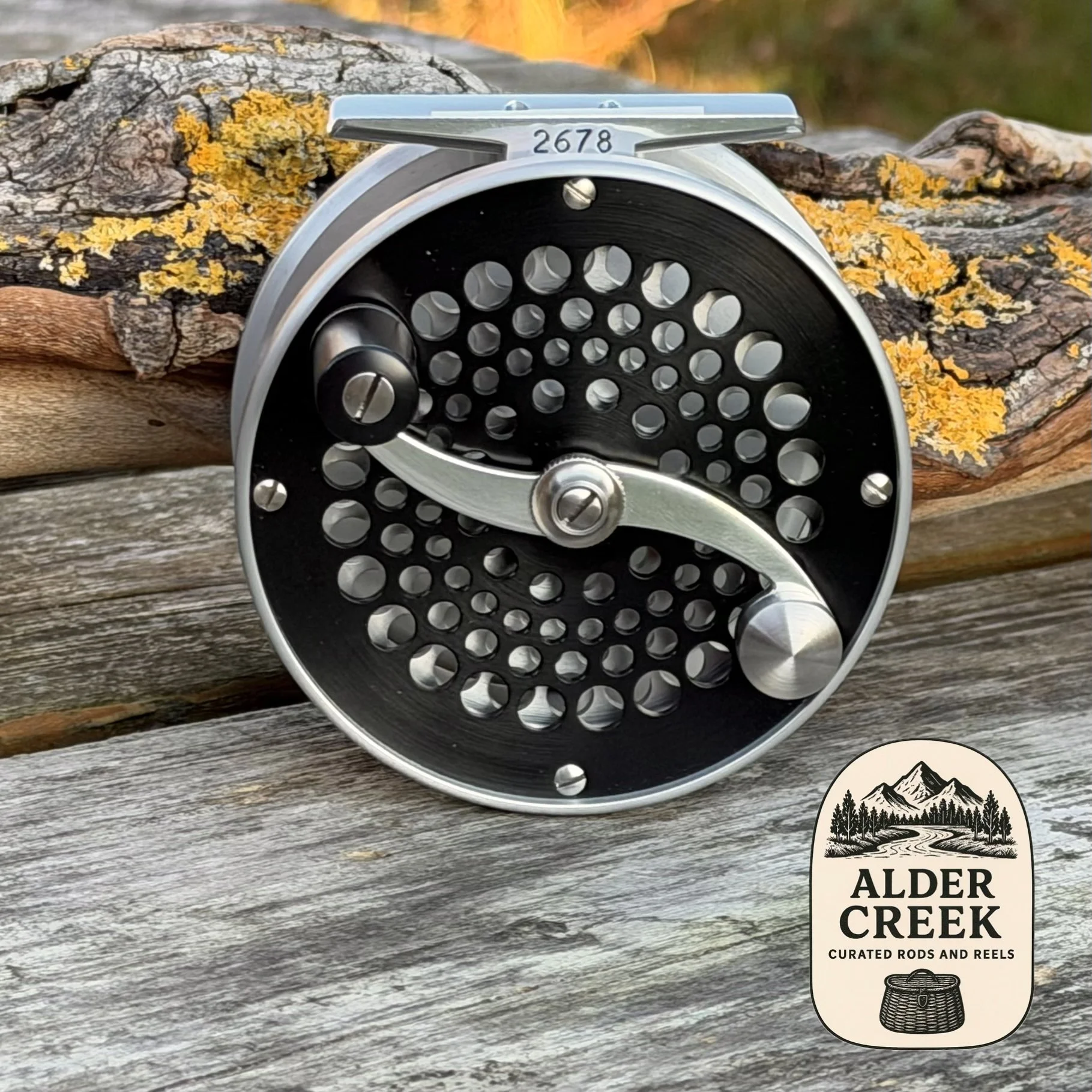
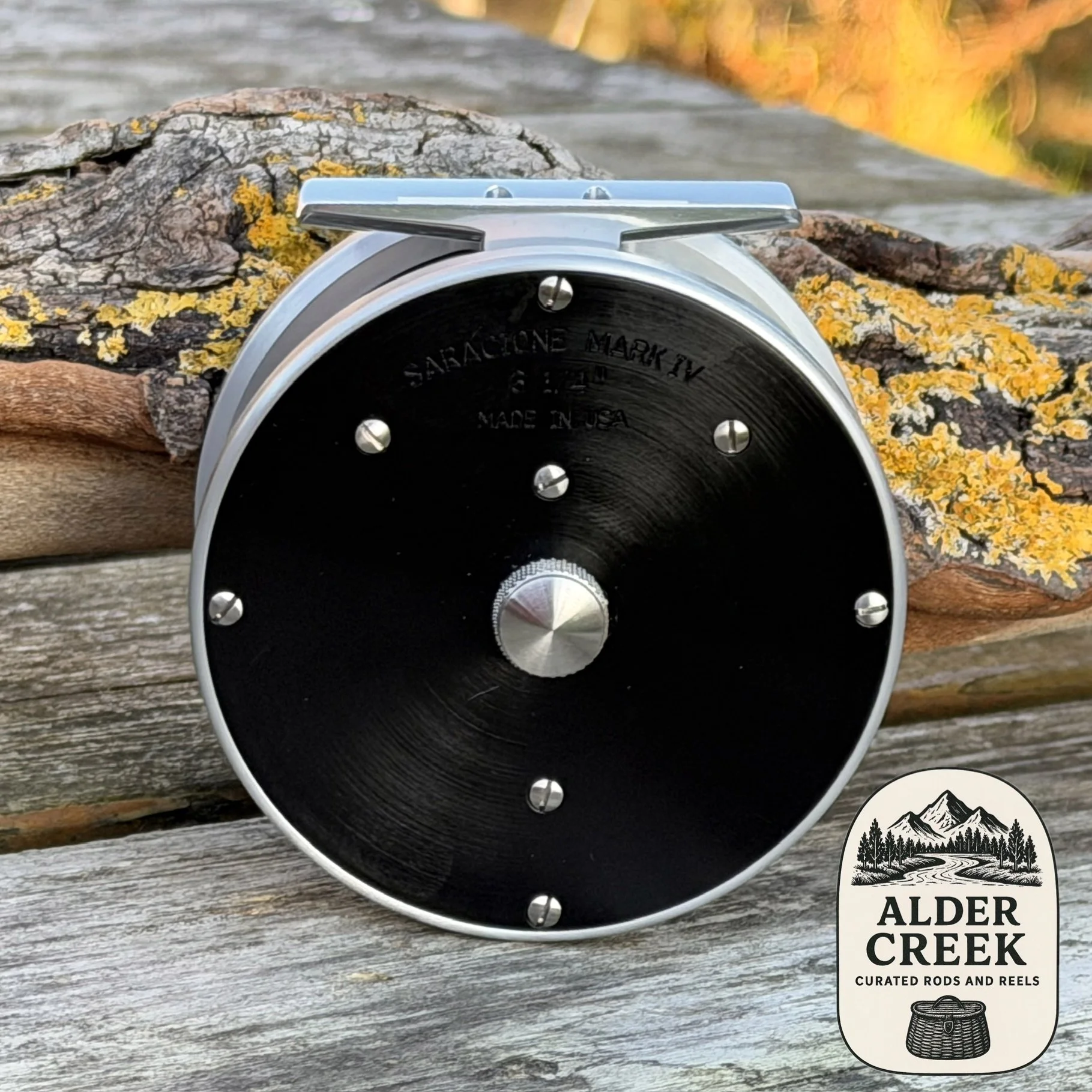
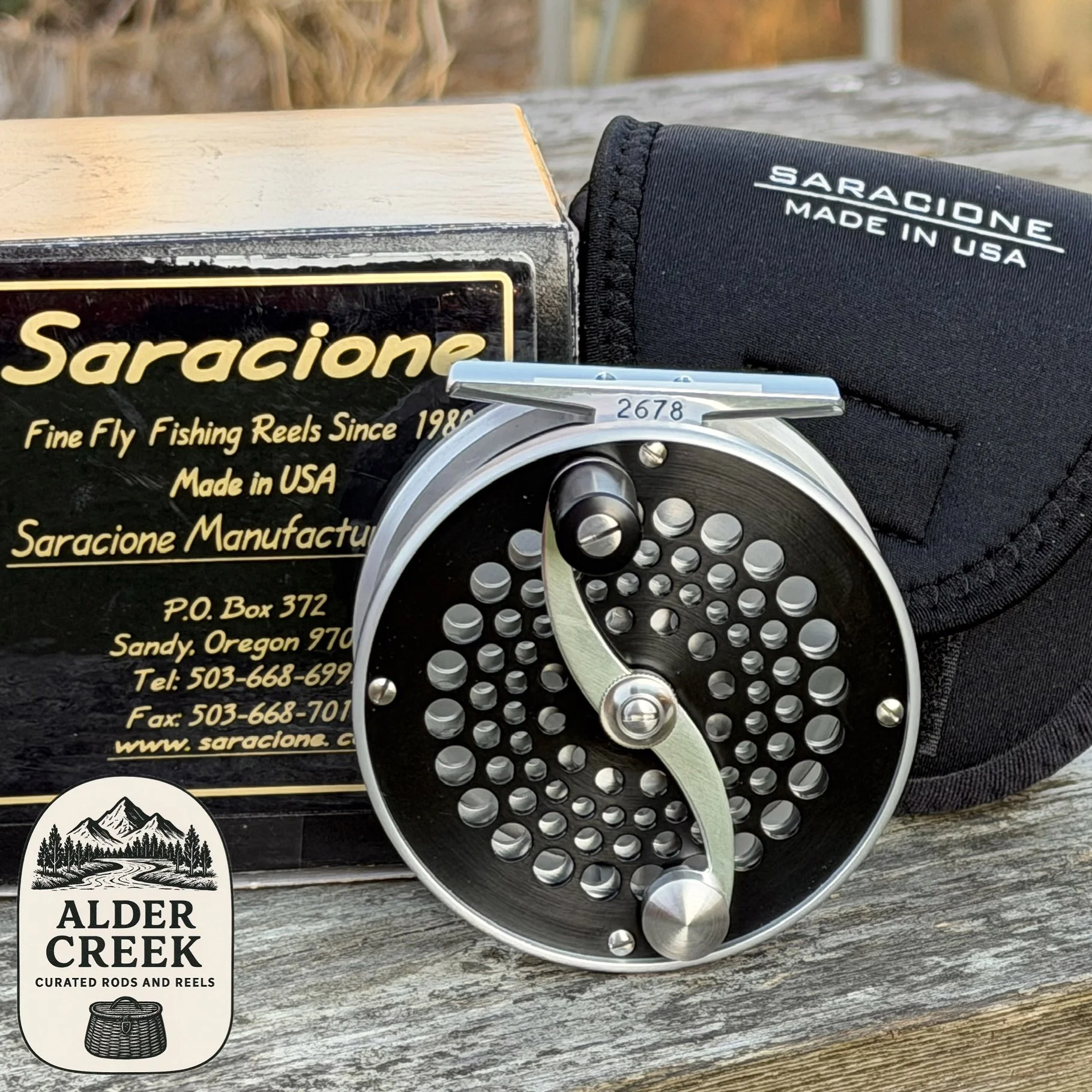
Use: Perfect for trout rods ranging from 7’-9’ in the #4-6 weight class.
Joe Saracione is without a doubt one of the most accomplished current reel makers. This reel is machined from 6061 -T6 Aluminum Alloy and 300 Series Stainless Steel. With the Mark IV you have a smooth preset non-adjustable gear & pawl drag that handles the lightest of tippets. Width 11/16”. Weight: 6.2 ounces. Capacity: 60 yards of 20# Dacron. This reel is brand new in box and comes as a non-convertible RHW, with a neoprene pouch. Serial 2678.
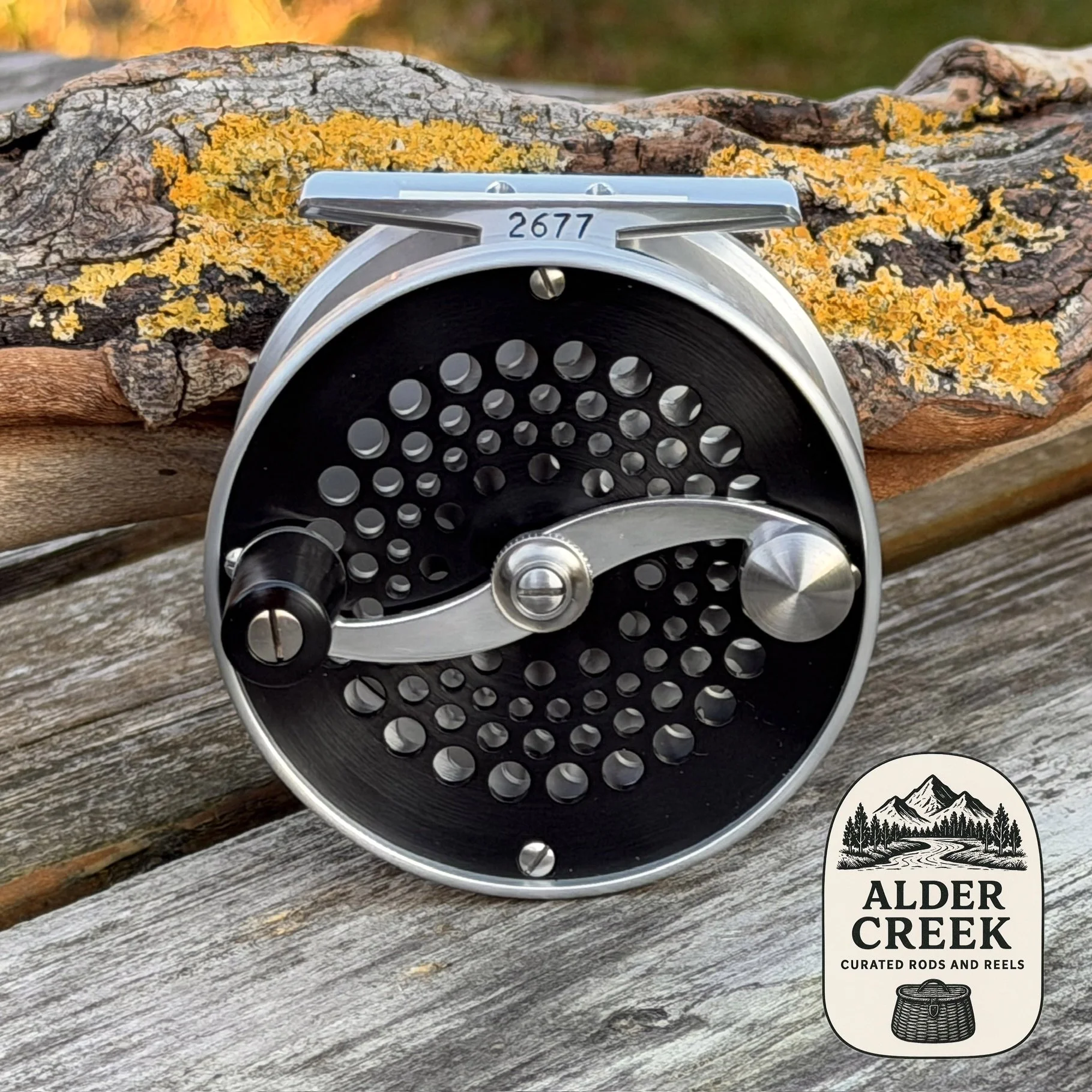
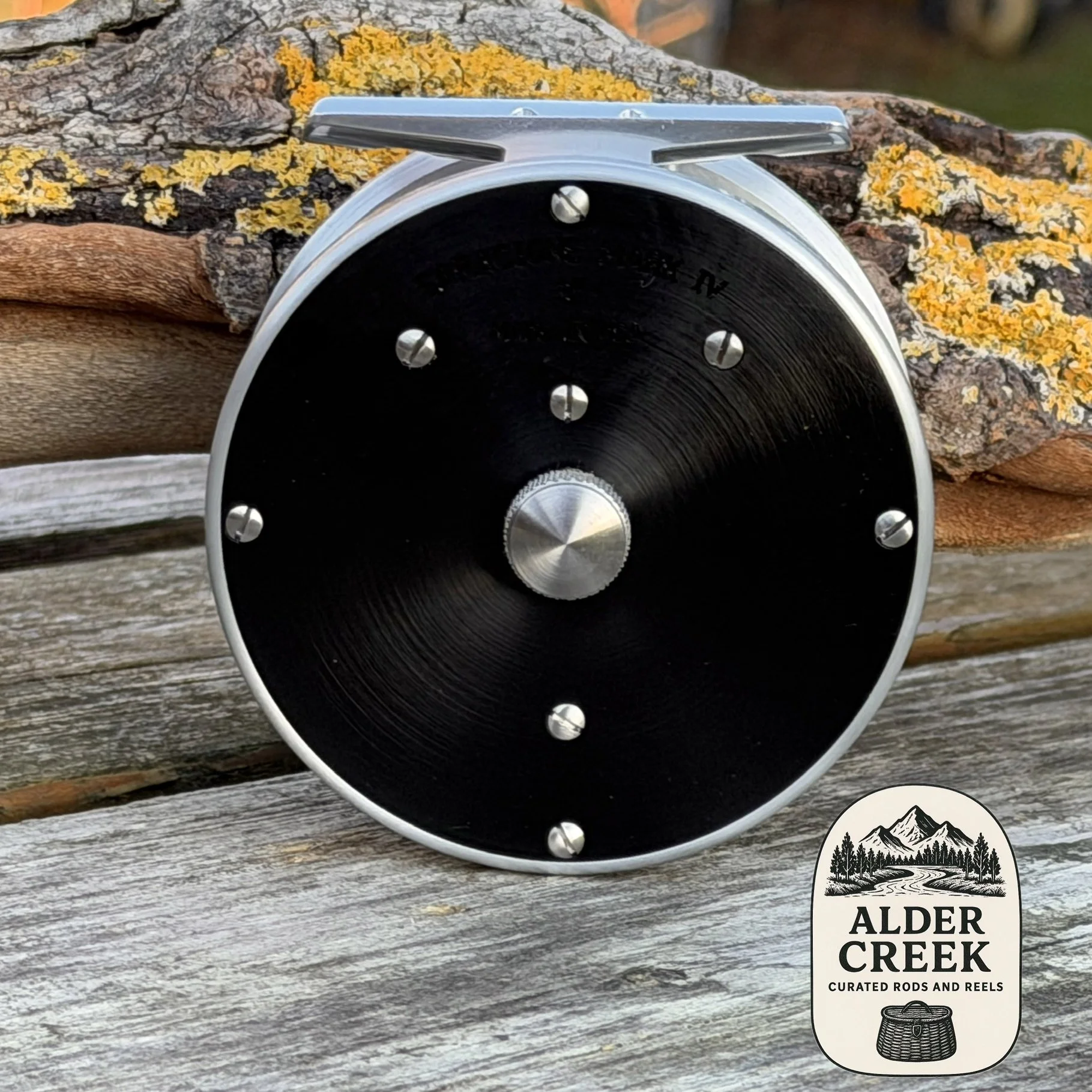
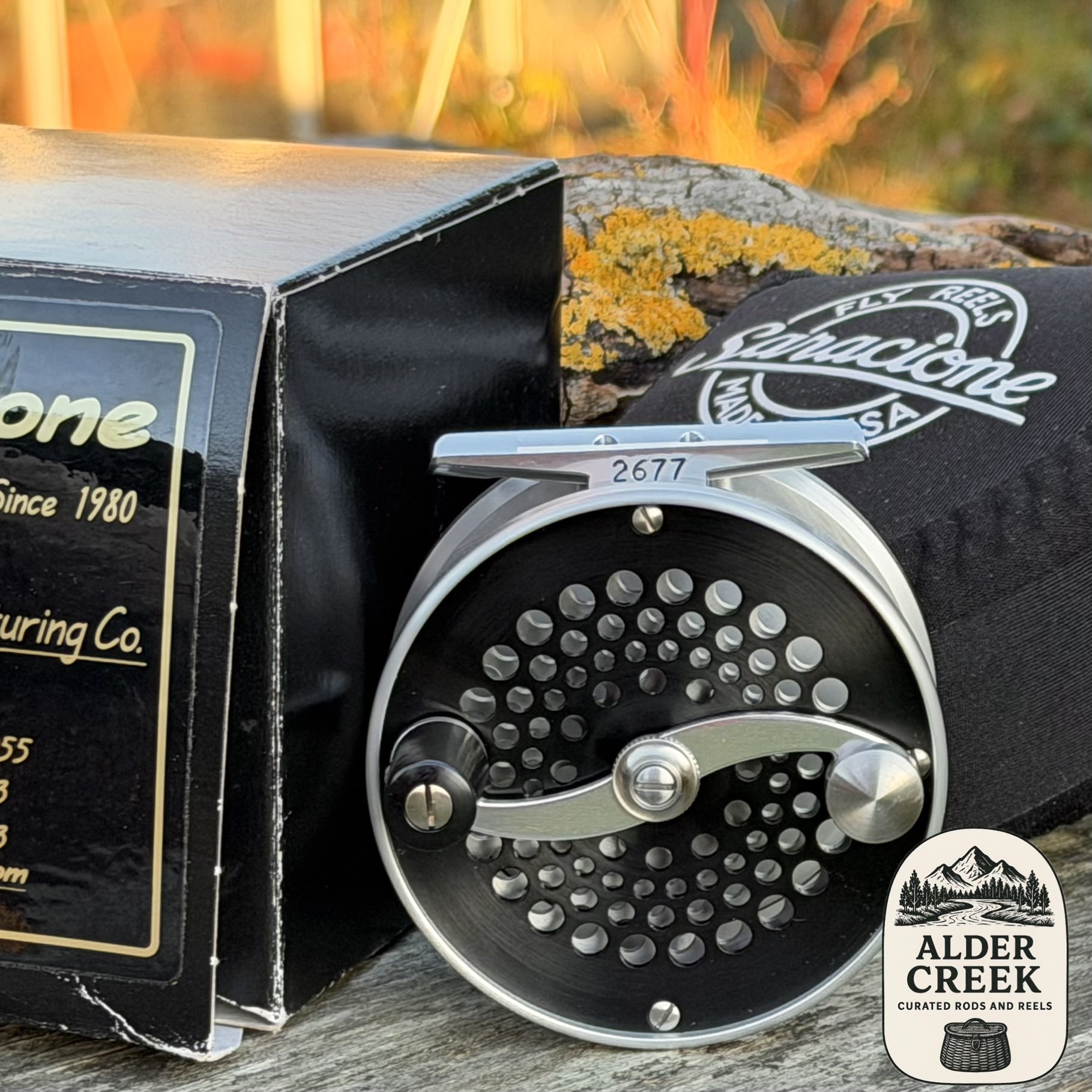
Use: Perfect for trout rods ranging from 7’-8’6” in the #4-6 weight class
Joe Saracione is without a doubt one of the most accomplished current reel makers. This reel is machined from 6061 -T6 Aluminum Alloy and 300 Series Stainless Steel. With the Mark IV you have a smooth preset non-adjustable gear & pawl drag that handles the lightest of tippets. Width 13/16”. Weight: 5 ounces. Capacity: 50yards of 20# Dacron. This reel is brand new in box and comes as a non-convertible RHW, with a neoprene pouch. Serial 2677.
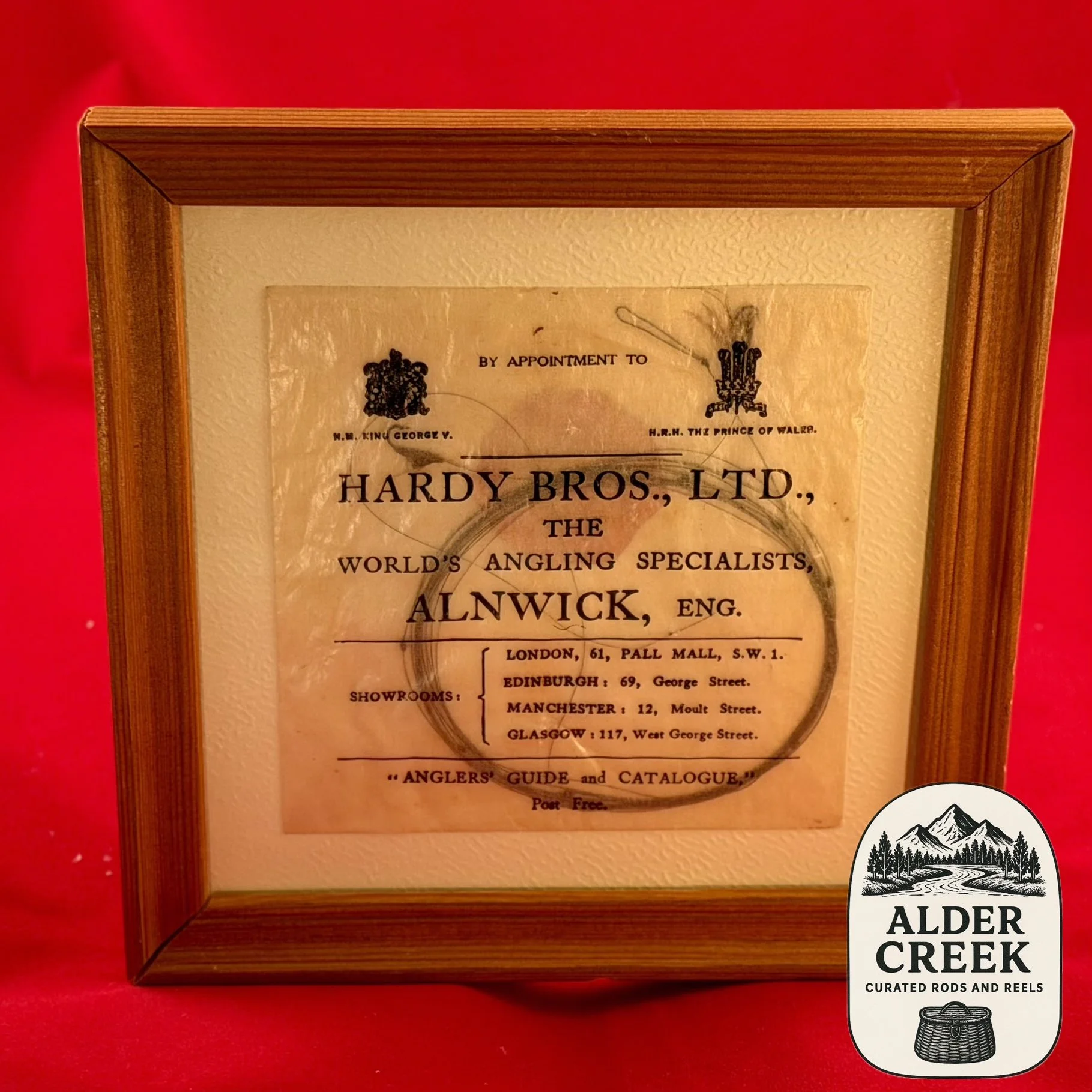
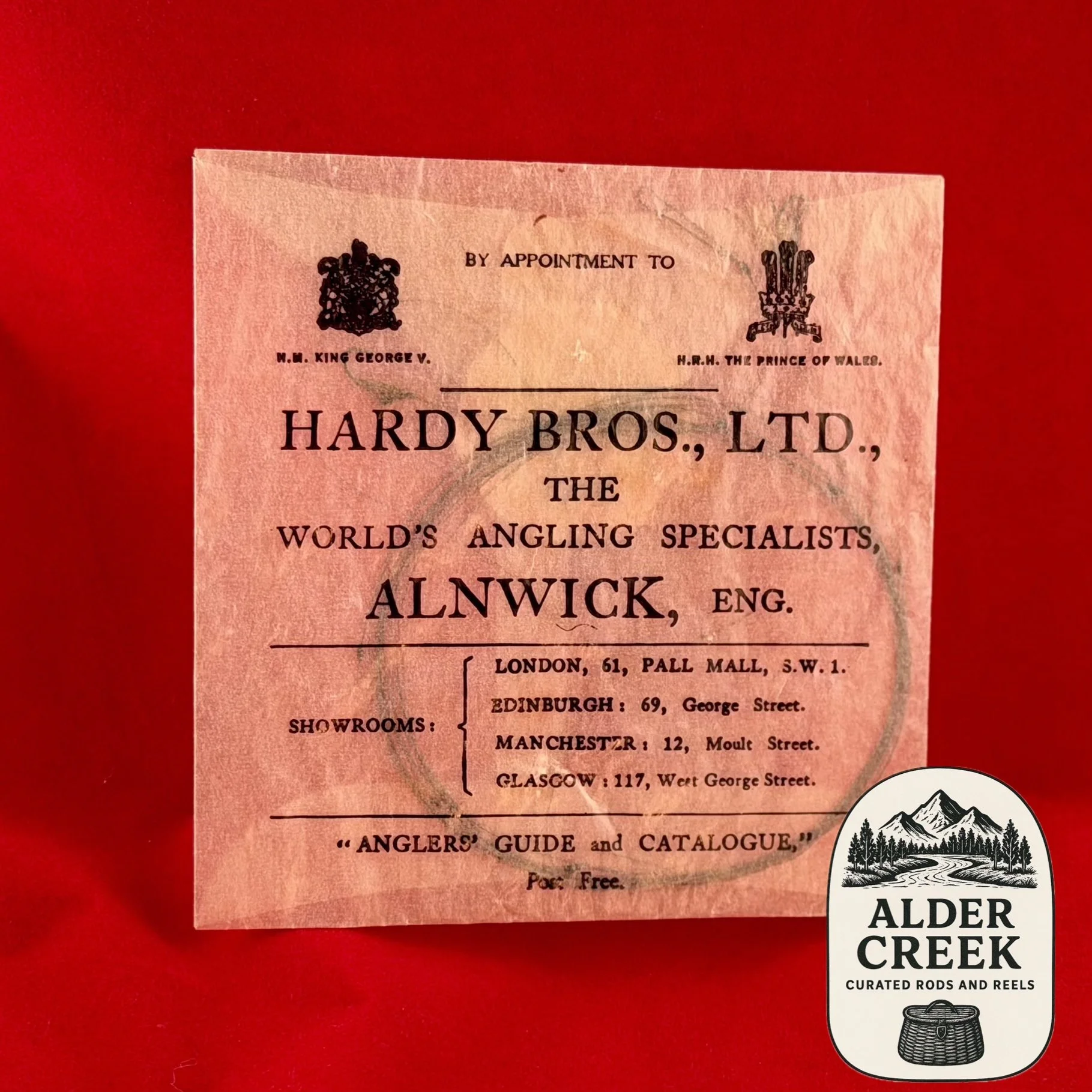
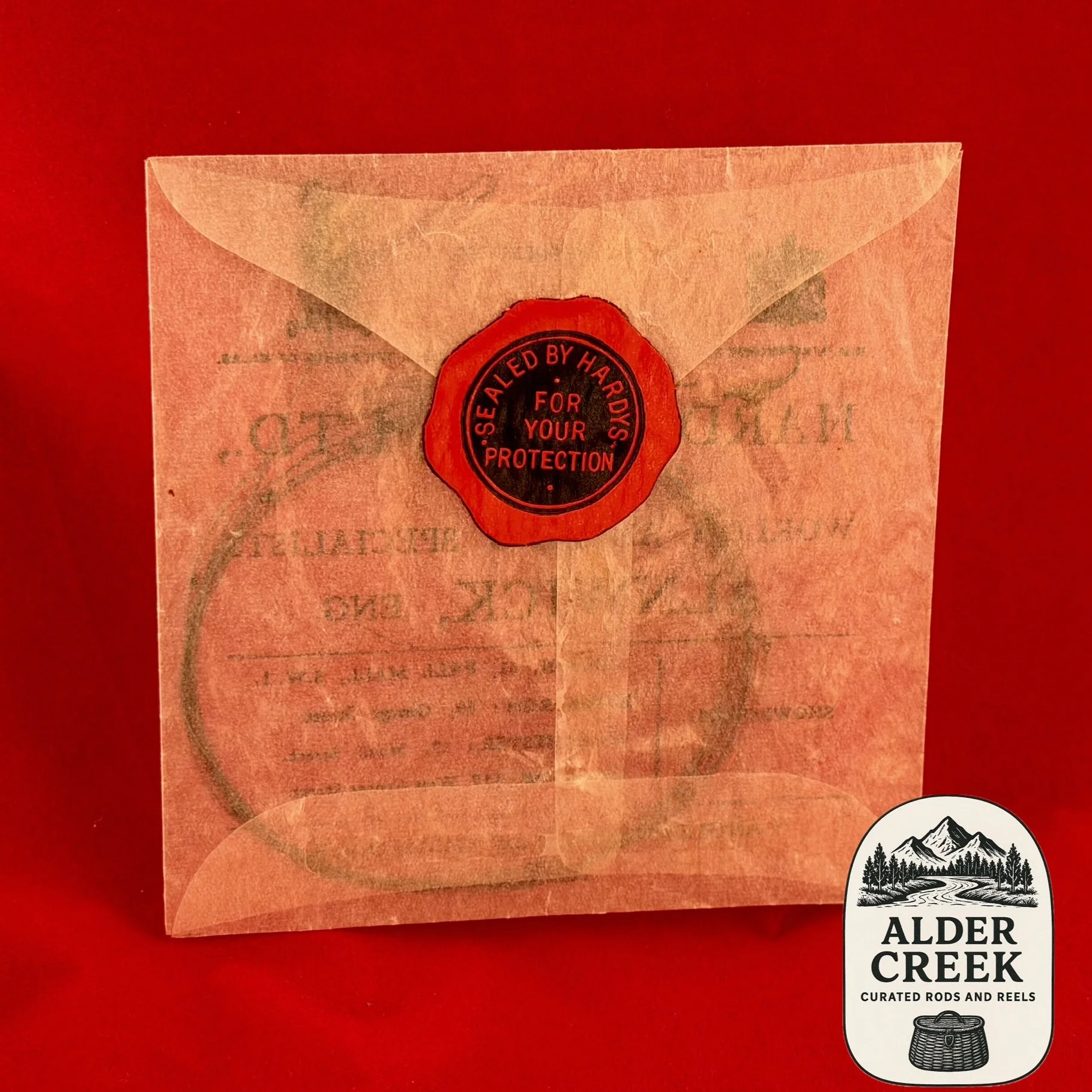
A Small Piece of British Angling History
An original Hardy silk gut fishing leader, preserved in its unopened and sealed paper envelope and presented in a handsome wooden frame.
Before the introduction of modern nylon monofilament, silkworm gut was one of the principal materials used for the construction of fishing leaders and casts. Produced from the silk glands of the silkworm, carefully drawn into fine translucent strands, gut was valued for its strength and relative invisibility in water.
For generations of trout and salmon fishermen, the preparation and care of gut leaders formed an essential part of the angler's craft.
The printed address on the envelope provides an interesting clue to its age. Hardy relocated its Edinburgh premises to 69 George Street in 1930, while the reference to King George V suggests a date before his death in 1936.
On this basis, the packet is believed to date from approximately 1930–1936, although an exact year of manufacture cannot be established.
The original envelope remains unopened and sealed, preserving the leader as it was originally supplied. Its length, diameter and breaking strain are therefore unknown.
The packet is presented in a wooden frame, making it particularly attractive for display in a study, fishing room or collection of traditional angling equipment.
A modest but evocative survivor from the interwar years, offering a tangible connection to the materials and methods of an earlier generation of fly fishermen.
Maker: Hardy Brothers
Item: Silk gut fishing leader
Period: Believed to be c. 1930–1936
Material: Natural silkworm gut
Packaging: Original sealed paper envelope
Length and diameter: Unknown; packet unopened
Presentation: Wooden display frame
Condition: Unopened original packet; see photographs
Collector's note: This is offered as a historical angling collectible rather than as fishing line suitable for modern use.
Questions about condition, shipping or price are always welcome.
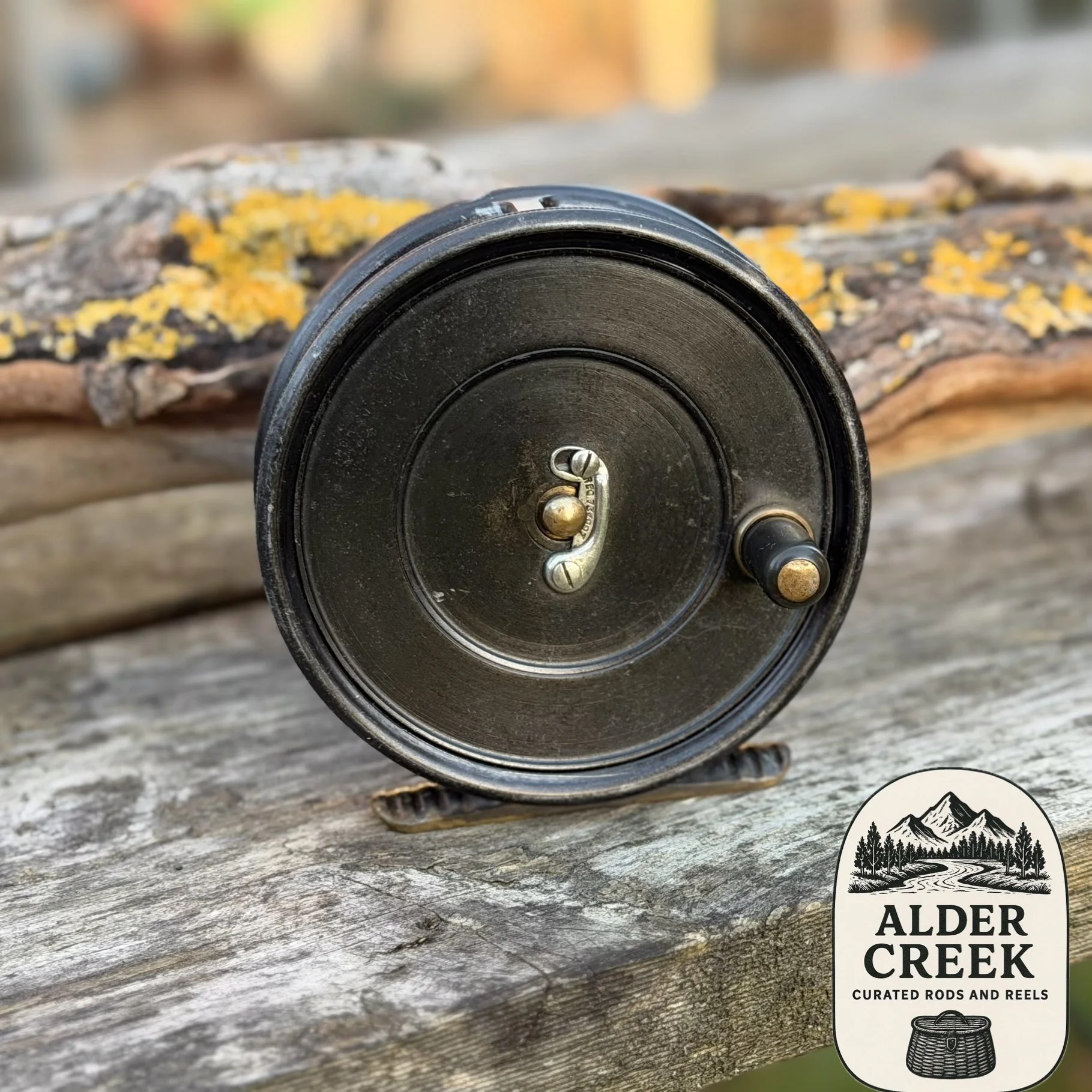
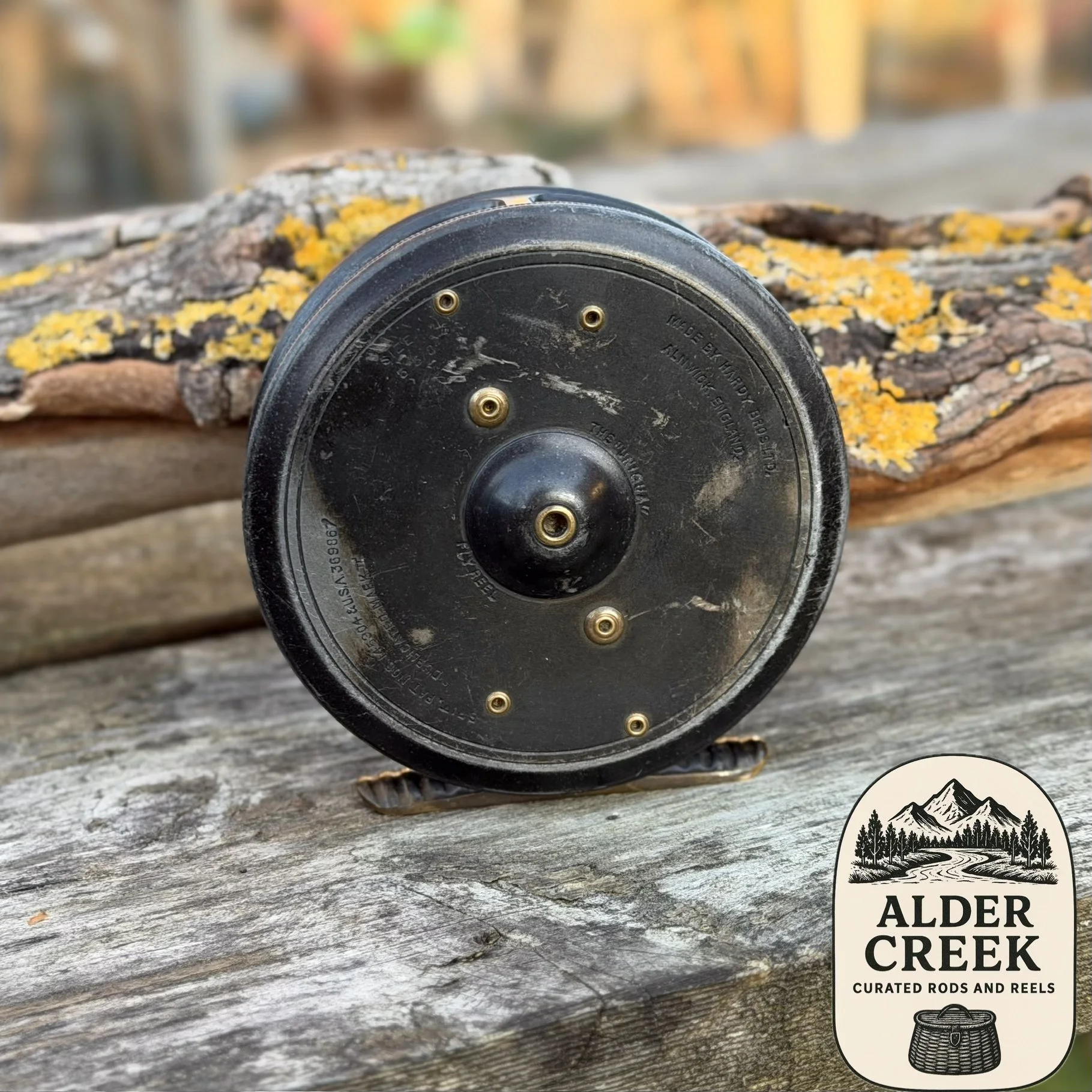
A fine early Hardy Uniqua 3 3/8" fly reel, manufactured in Alnwick, England, and dating to approximately 1923–1932.
This attractive example features the distinctive horseshoe-latch spool release, an original unfiled ribbed brass foot and a brass-capped ebonite handle. The reel retains much of its original dark leaded finish, with a pleasing patina and honest wear, particularly to the rear plate.
The spool is stamped “TH”, a mark associated with Thomas Hall, one of Hardy's craftsmen during the interwar period. The horseshoe latch carries the patent marking PAT. No. 272409, an appealing detail for collectors of early Hardy reels.
Mechanically, the reel remains sound, with a smooth, positive check and a tight, well-fitting spool, free from noticeable play.
Introduced in the early twentieth century, the Hardy Uniqua became one of the firm's most successful and enduring fly reel designs. Simpler and more economical than the celebrated Perfect, it nevertheless offered the robust construction, dependable check mechanism and practical proportions for which Hardy became renowned.
Early leaded examples with brass fittings and horseshoe latches are particularly attractive to collectors, combining traditional craftsmanship with the understated appearance of a working angler's reel.
A handsome and well-preserved Uniqua in the versatile 3 3/8" trout size, equally appealing for fishing or collection.
Explore our collection of classic Hardy fly reels, including the Perfect 3 3/8" Guide-less, Uniqua 3 1/8", and Uniqua 3 5/8" Duplicated Mark II.
Maker
Hardy Bros., Alnwick, England
Model
Uniqua
Diameter
3 3/8"
Period
c. 1923–1932
Finish
Original dark leaded finish
Latch
Horseshoe latch
Patent Marking
PAT. No. 272409
Reel Foot
Original unfiled ribbed brass
Handle
Brass-capped ebonite
Spool Marking
TH
Mechanism
Smooth, positive check
Condition
Good vintage condition; tight spool, original patina
Questions about this piece, international shipping, or price are always welcome.
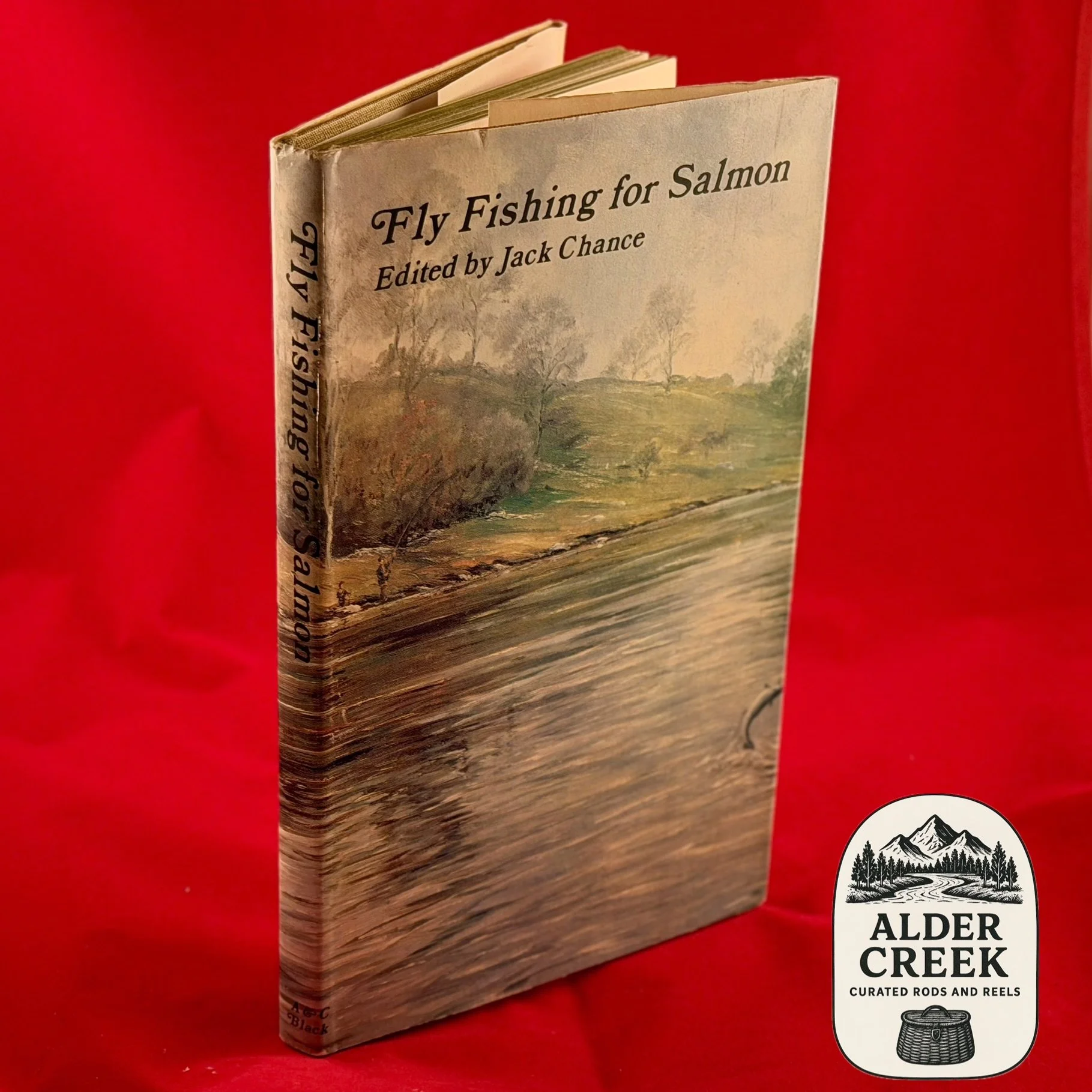
An unusual and quietly moving contribution to British salmon fishing literature, Fly Fishing for Salmon originated as a talk written by an anonymous angler during the final stages of a serious illness.
Shortly before his death, the author entrusted the manuscript to the wife of Jack Chance. Recognising its merit, Chance prepared the work for publication, preserving the original text with only minor alterations and adding occasional footnotes where he wished to clarify or offer a different perspective.
The resulting book is a concise and personal examination of Atlantic salmon fishing, covering the origins and habits of the salmon, suitable tackle, casting and practical methods of fishing.
Its particular charm lies in the circumstances of its creation and the direct, experienced voice of an angler reflecting upon a lifetime's knowledge of the sport.
Published by Adam & Charles Black, London, in 1973, this first edition contains xii + 84 pages, with a colour frontispiece by W.B. Barrington-Browne and black-and-white illustrations by Donald Downs.
This copy is bound in speckled green boards with gilt spine lettering. It is in good condition, showing some browning and signs of use, with slightly soiled endpapers. The original dust jacket is present.
A modest but appealing volume, particularly suited to collectors of British salmon fishing literature and those who appreciate the personal traditions of the sport.
Discover further accounts of British salmon fishing, including works by John Ashley-Cooper and John James Hardy, in our collection of classic angling literature .
Editor
Jack Chance
Author
Anonymous
Title
Fly Fishing for Salmon
Publisher
Adam & Charles Black, London
Year
1973
Edition
First Edition
Pagination
xii + 84 pages
Format
Octavo, approximately 142 × 222 mm
Illustrations
Colour frontispiece by W.B. Barrington-Browne; black-and-white illustrations by Donald Downs
Binding
Speckled green boards, gilt spine lettering
Dust Jacket
Present
Condition
Good; some browning and signs of use, slightly soiled endpapers
ISBN
0713613742
Questions about this book, its condition, international shipping, or price are always welcome.
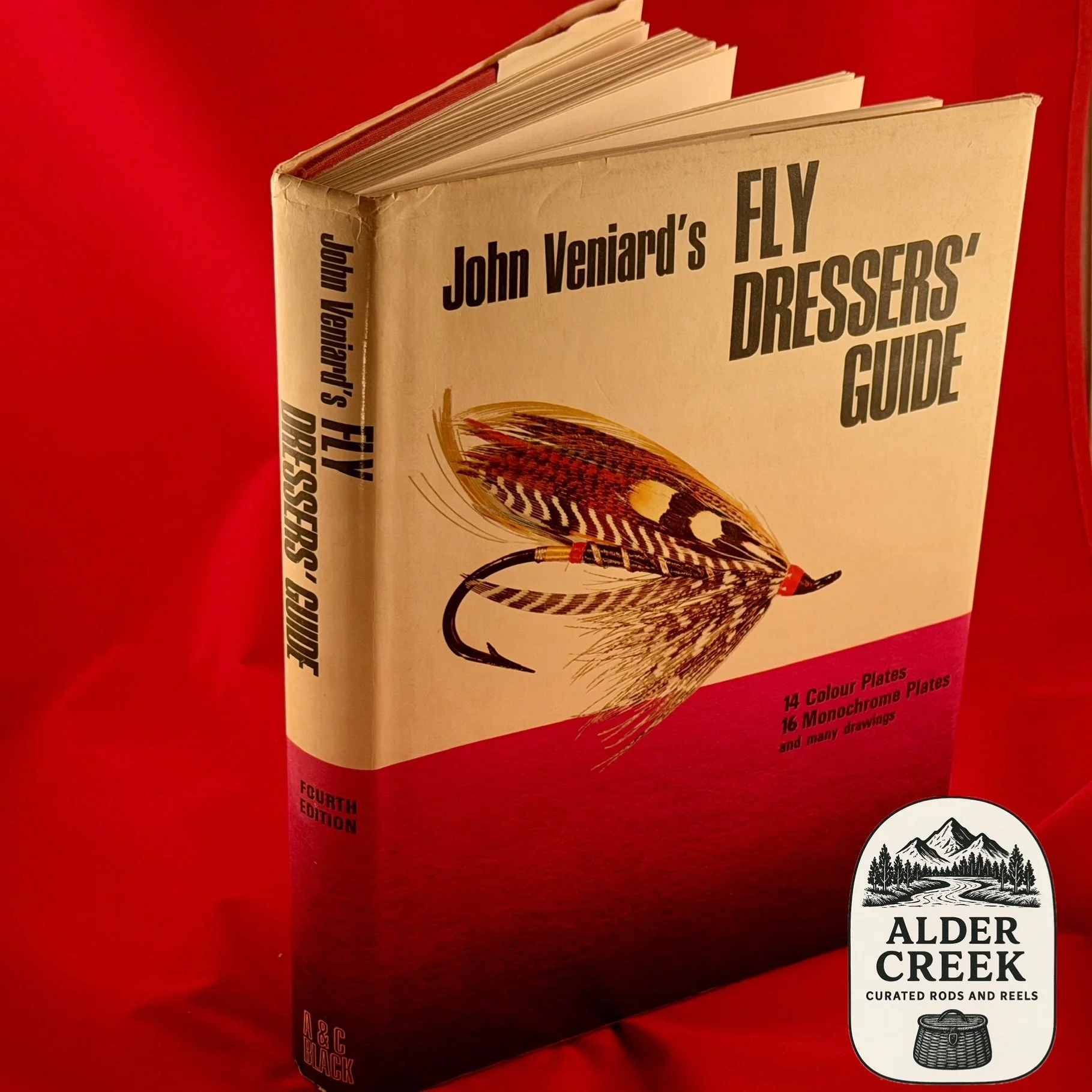
One of the great reference works of traditional British fly dressing, John Veniard's Fly Dressers' Guide has long been valued for its remarkable breadth of patterns, materials and practical instruction.
Drawing upon decades of experience as a fly dresser and supplier of specialist materials, Veniard assembled a comprehensive guide to the art of tying flies for a wide variety of freshwater and saltwater species.
The book covers traditional trout and salmon flies, dry and wet patterns, streamers, hair-wing flies, Spey and Dee patterns, as well as flies for grayling, pike, perch and coarse fish. Detailed discussions of hooks, silks, tinsels, feathers, dyeing and other materials are accompanied by colour plates, photographs and line illustrations.
Of particular interest to the collector is the book's extensive documentation of traditional salmon fly patterns and the materials used to dress them.
This copy is the fourth edition of 1970, reprinted in 1977. It comprises 256 pages and is bound in red cloth with gilt spine lettering.
Condition: Good, with the original dust jacket showing some rubbing and wear.
A practical and historically interesting reference, equally appealing to the experienced fly dresser and the collector of classic angling literature.
Explore further classics of traditional fly dressing, including George M. Kelson's The Salmon Fly and H.G. McClelland's The Trout Fly Dresser's Cabinet of Devices, in our collection of vintage angling literature .
Author
John Veniard
Title
Fly Dressers' Guide
Edition
Fourth Edition (1970)
Printing
1977 Reprint
Pages
256
Binding
Red cloth, gilt spine lettering
Illustrations
Colour plates, black-and-white photographs and line drawings
Dust Jacket
Original, slightly rubbed
Condition
Good
Subject
Traditional fly tying, salmon and trout flies
Questions about this book, international shipping, or price are always welcome.
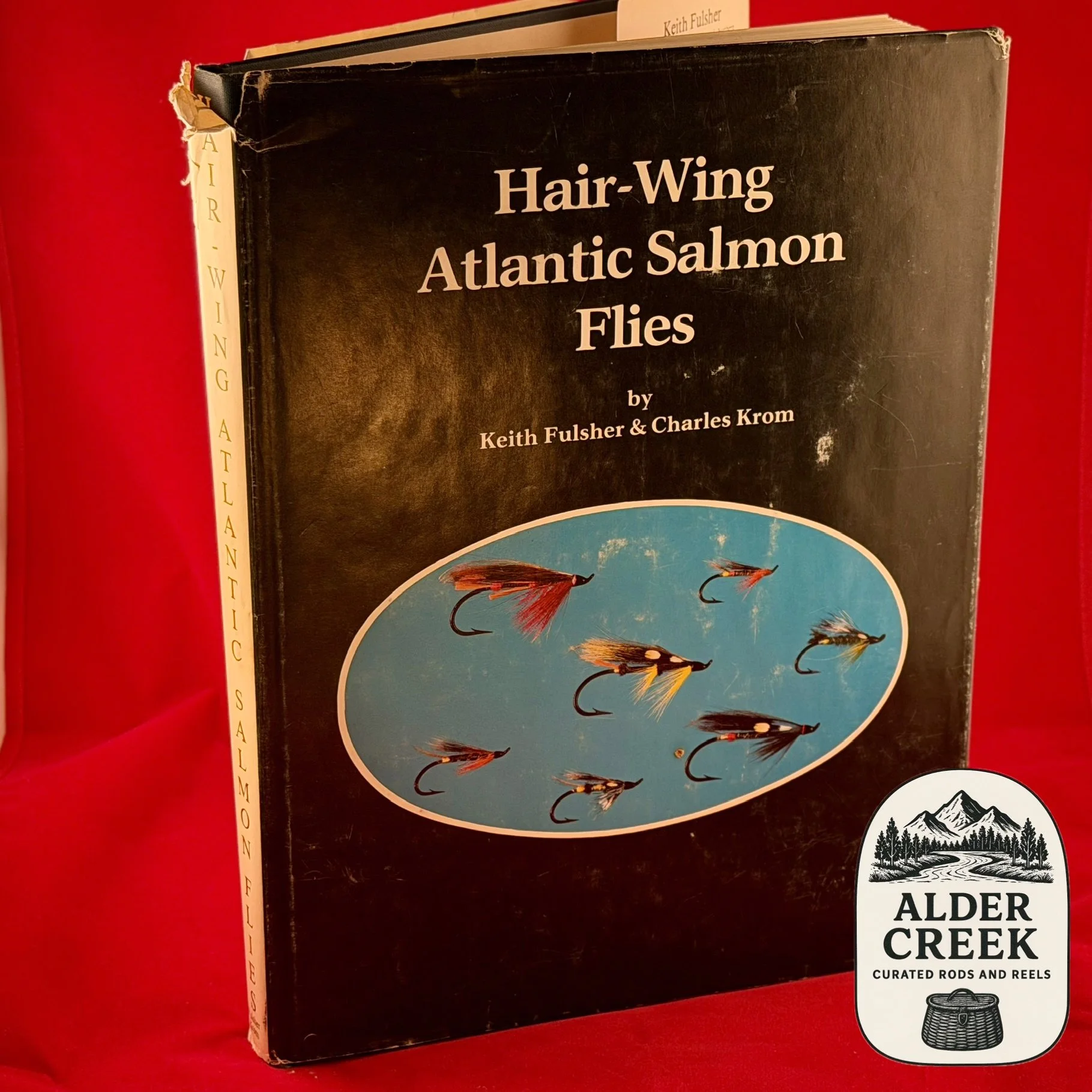
An important and beautifully illustrated work devoted to the art of dressing hair-wing Atlantic salmon flies, written by Keith Fulsher and Charles Krom.
Hair-Wing Atlantic Salmon Flies occupies a distinctive place in modern salmon fly literature. While the elaborate feather-wing patterns of the nineteenth century remain among the most admired creations in traditional fly dressing, the development of hair-wing flies brought a practical and highly effective alternative to the salmon angler.
Fulsher and Krom explore this tradition in considerable detail, offering clear instruction on materials, construction and the adaptation of classic feather-wing patterns into more practical hair-wing designs. Their work combines historical appreciation with the experience of anglers who dress flies to be fished.
The book contains an extensive collection of patterns, supported by six colour plates and numerous black-and-white photographs, including step-by-step illustrations of dressing techniques.
This copy is the first edition, published by Fly Tyer Inc., North Conway, New Hampshire, in 1981. The volume comprises 181 pages and is bound in blue cloth with gilt titles and decoration.
The book itself is in fine condition, retaining its original dust jacket, which shows noticeable wear.
A valuable reference for the salmon fly dresser and an attractive addition to a collection of classic Atlantic salmon fishing literature.
For a complementary perspective on traditional feather-wing salmon flies, discover George M. Kelson's The Salmon Fly (1895, 1979 facsimile) , alongside further works on salmon fly dressing in our collection of classic angling literature.
Authors
Keith Fulsher & Charles Krom
Title
Hair-Wing Atlantic Salmon Flies
Publisher
Fly Tyer Inc., North Conway, New Hampshire
Year
1981
Edition
First Edition
Pages
181
Illustrations
Six colour plates; black-and-white photographs and step-by-step tying illustrations
Binding
Blue cloth with gilt titles and decoration
Dust Jacket
Original, worn
Condition
Fine book; worn dust jacket
Subject
Atlantic salmon flies, hair-wing patterns and fly dressing
Questions about this book, its condition, international shipping, or price are always welcome.
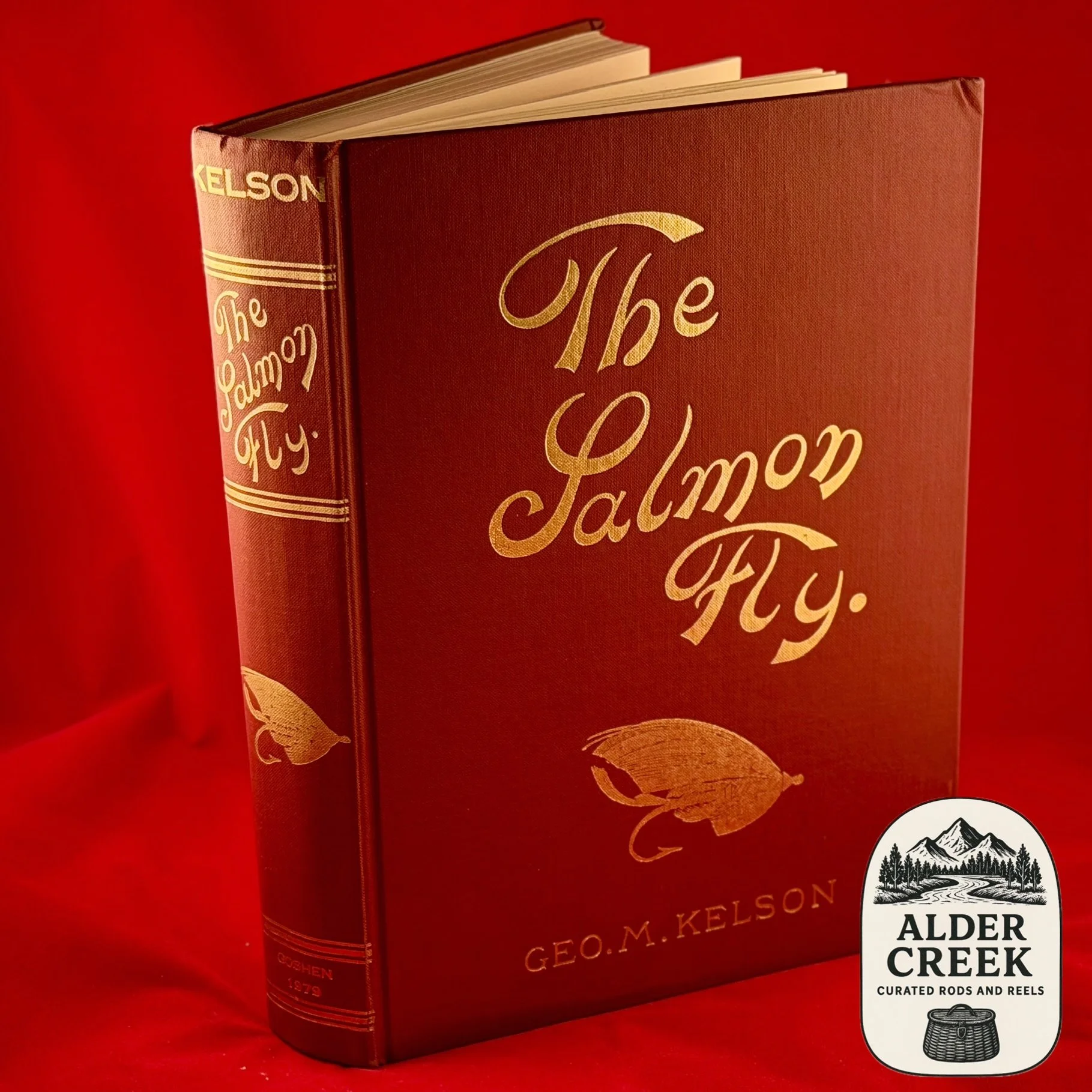
First published in 1895, George M. Kelson's The Salmon Fly: How to Dress It and How to Use It stands among the great works of nineteenth-century salmon fishing literature. Both an ambitious treatise on the art of dressing salmon flies and a practical guide to their use, it remains an important reference for collectors and fly dressers.
The work is particularly celebrated for its detailed accounts of traditional salmon fly patterns, their materials and construction, accompanied by the magnificent colour plates that have made the original edition so highly prized.
This is the first facsimile edition, published by The Angler's and Shooter's Press in Goshen, Connecticut, in 1979. It faithfully reproduces the celebrated 1895 work, including its distinctive scarlet cloth binding with gilt lettering and decoration.
The volume comprises 464 pages, eight colour plates of salmon flies, numerous text illustrations and a frontispiece depicting Kelson holding a seventeen-foot salmon rod.
This copy is preserved in splendid condition, with its handsome scarlet binding presenting particularly well.
An attractive opportunity to own one of the defining works of classic salmon fly literature in a beautifully produced and accessible edition.
Discover further classics of salmon fishing and fly dressing in our collection of rare and vintage angling literature
Author
George M. Kelson
Title
The Salmon Fly: How to Dress It and How to Use It
Publisher
The Angler's and Shooter's Press, Goshen, Connecticut
Year
1979
Edition
First Facsimile Edition
Original Publication
1895
Pages
464
Illustrations
Eight colour plates, frontispiece and text illustrations
Binding
Scarlet cloth with gilt titles and decoration
Condition
Excellent
Questions about this book, international shipping, or price are always welcome.
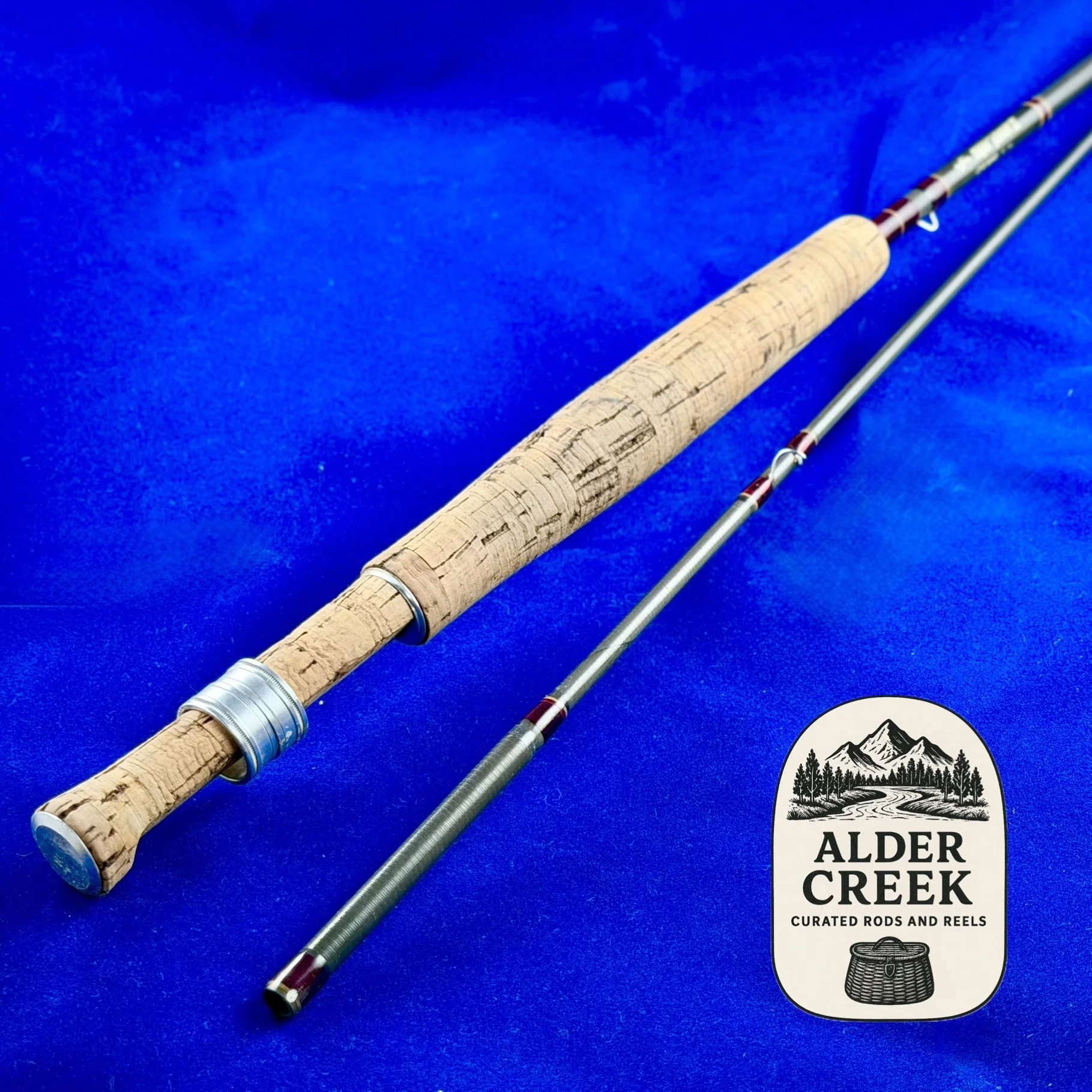
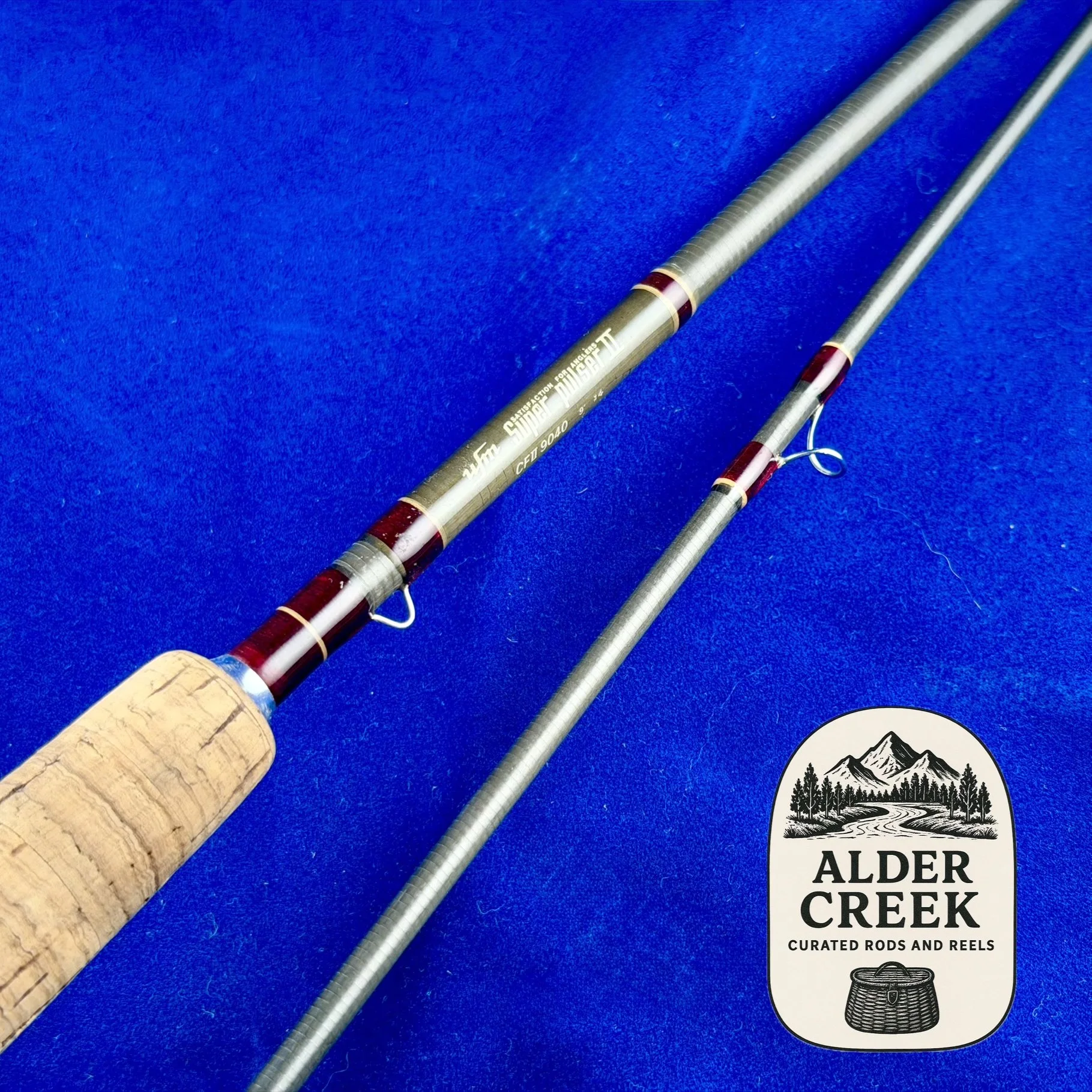
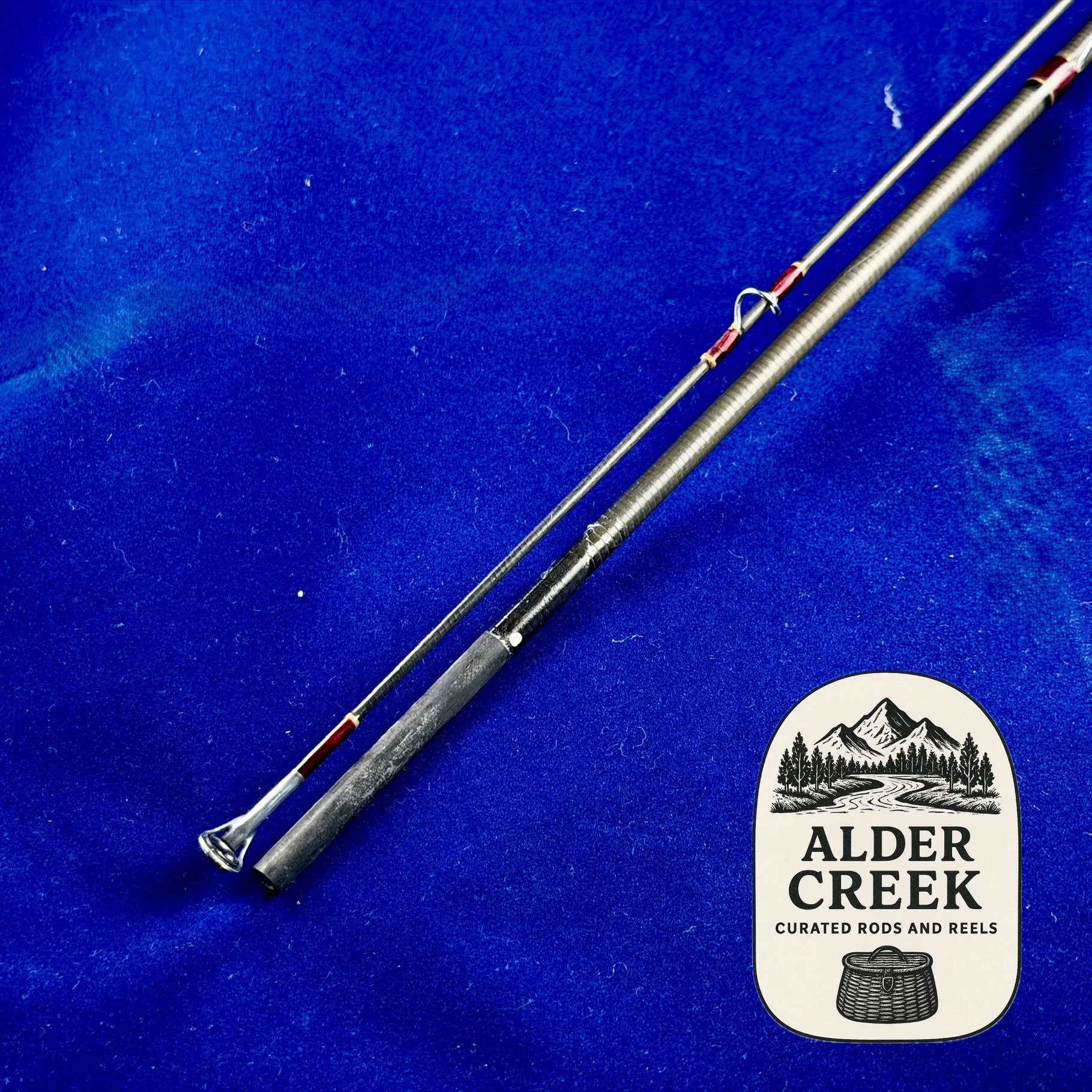
Nice progressive and responsive action from the relatively unknown Japanese company UFM. 2 piece rod with raw carbon finish. Cork is soiled and have ridging. Some small scratches. A real find for fans of 80-90’s graphite rods that saw design stemming directly from bamboo and glass predecessors, enabling delicate presentation combined with faster line speeds.
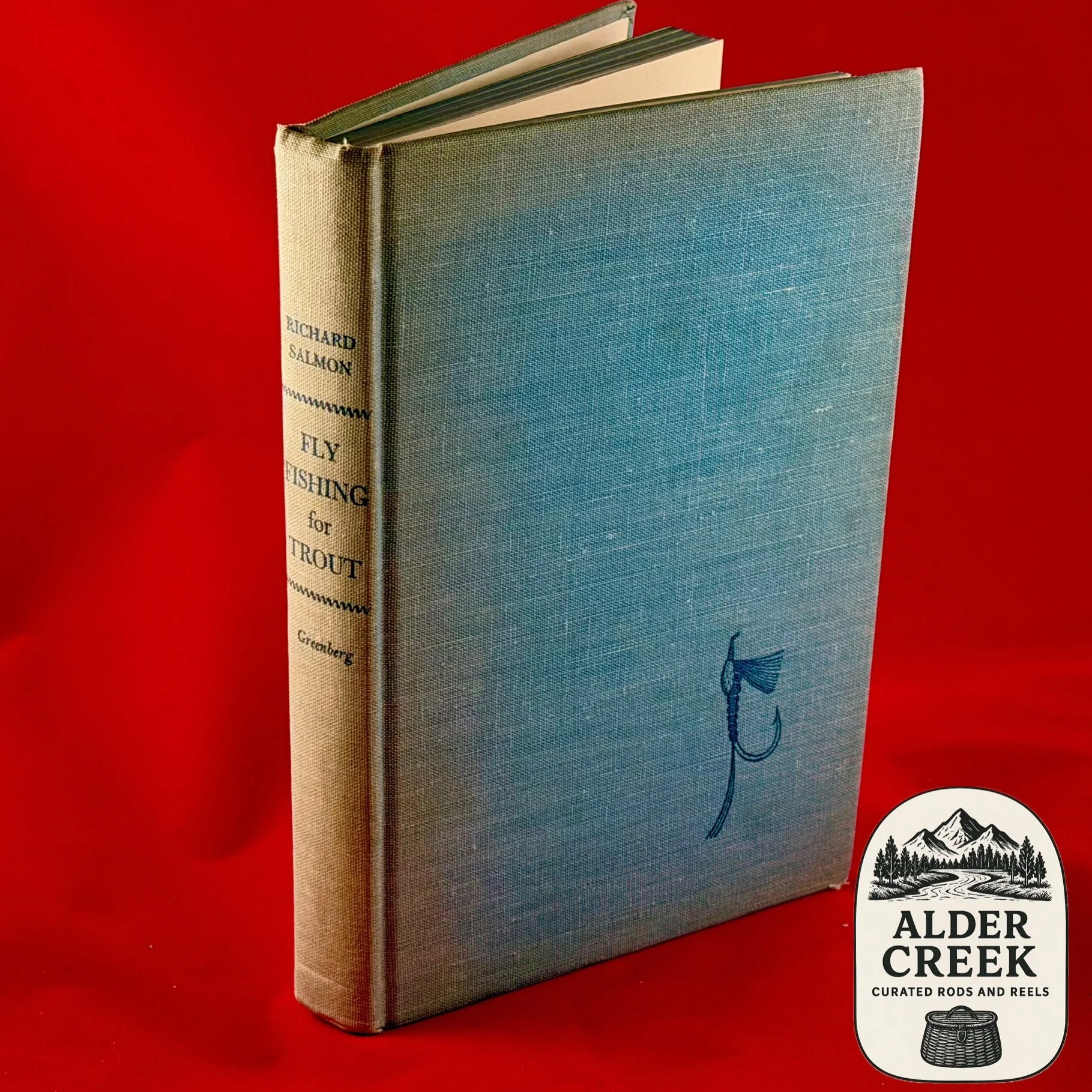
An engaging American fly-fishing manual from the early post-war period, Richard Salmon's Fly Fishing for Trout offers a broad introduction to the methods, equipment and traditions of trout fishing with the artificial fly.
Published in 1952, the book reflects an era when traditional fly-fishing techniques remained closely associated with the craftsmanship of split-bamboo rods, classic reels and hand-dressed flies.
Salmon approaches the subject from a practical perspective, with chapters covering trout, tackle selection, casting, fly tying and entomology. Streamside suggestions and a selection of recipes add a personal and distinctly period character to the work.
Beyond its instructional value, the book offers an appealing glimpse into mid-twentieth-century American trout fishing and the equipment and methods familiar to anglers of the time.
This copy is the first edition, published by Greenberg, New York, in 1952. The hardcover volume comprises 240 pages.
The book is in good vintage condition, with slight fading to the spine and some staining to the rear cover. The original dust jacket is not present.
A charming addition to a collection of American angling literature, particularly for those with an appreciation of the bamboo rod era.
Explore further works on American trout fishing, fly tying and the traditions of the bamboo rod era in our collection of classic angling literature , alongside our selection of vintage bamboo fly rods and reels .
Author
Richard Salmon
Title
Fly Fishing for Trout
Publisher
Greenberg, New York
Year
1952
Edition
First Edition
Series
Rod & Gun Room Library
Pages
240
Binding
Hardcover
Dust Jacket
Not present
Condition
Good; slightly faded spine and staining to rear cover
Subject
Trout fishing, fly tying, casting and entomology
Questions about this book, its condition, international shipping, or price are always welcome.
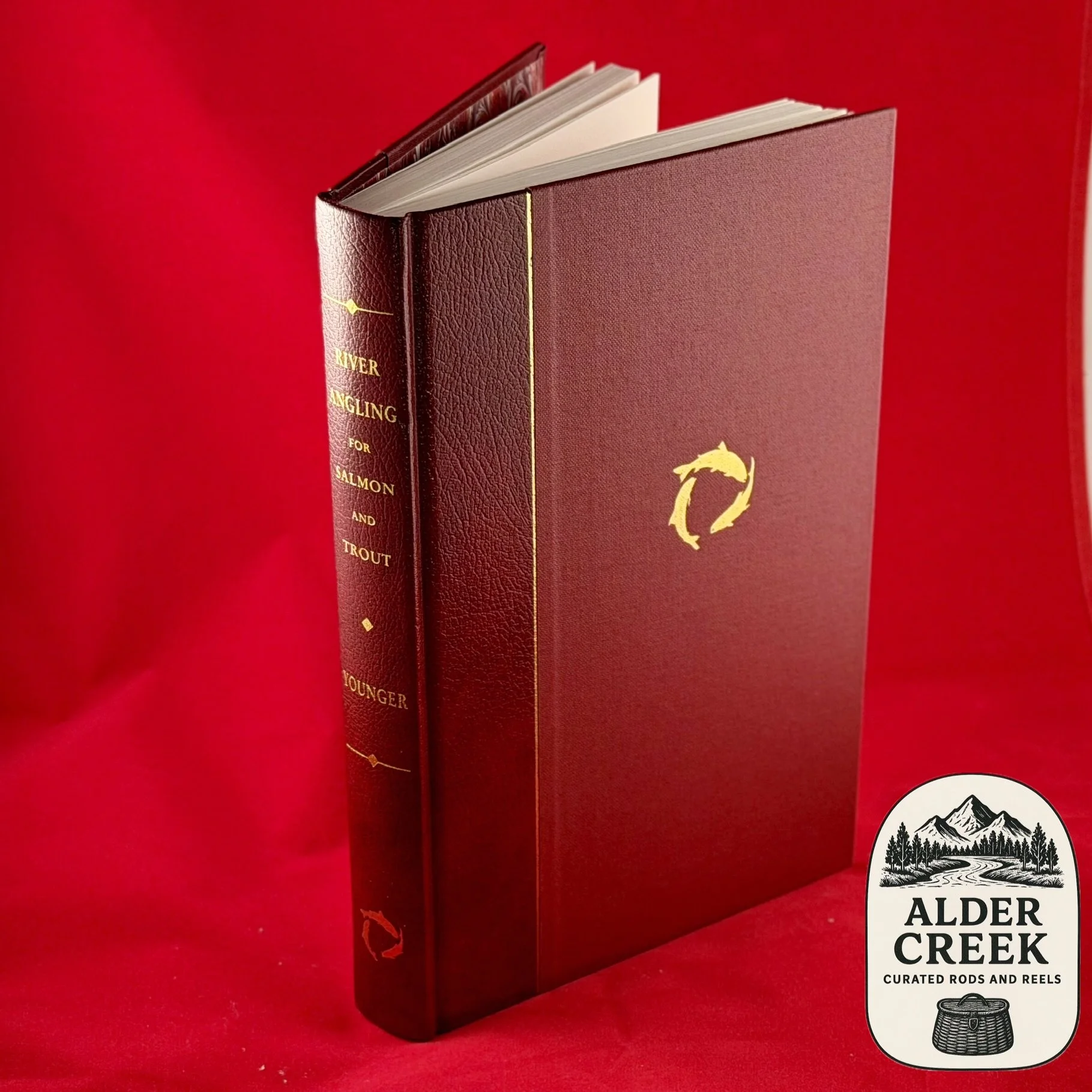
A handsome limited edition of one of the most remarkable works of nineteenth-century Scottish angling literature.
John Younger (1785–1860), the shoemaker of St Boswells on the River Tweed, was an extraordinary figure in the history of fly fishing. Largely self-educated, he became a respected poet, fly dresser and accomplished salmon angler, developing a practical understanding of the river that few of his contemporaries could rival.
First published in 1840, River Angling for Salmon and Trout is particularly celebrated for its observations on the salmon fishing of the Tweed and its early descriptions of traditional salmon flies. Younger's patterns belong to an important period in the development of Scottish salmon fly dressing, preceding the influential writings of William Scrope.
The work is notable for its independence of thought. Rather than relying solely upon established convention, Younger drew upon his own experience of fish, water, weather and the behaviour of salmon and trout. His discussions range from fly patterns and dressing techniques to casting, tackle, river conditions and the practical art of fishing.
This Flyfisher's Classic Library edition reproduces the enlarged third edition of 1864, incorporating a memoir of Younger, additional notes and material concerning the salmon casts and tributaries of the Tweed. It also includes Arthur Ransome's biographical appreciation, The Shoemaker of St Boswells.
This copy was published in 1995 in a limited edition of 1,000 copies. Beautifully produced, it is quarter-bound in dark red leather over matching cloth boards, with gilt spine lettering and the publisher's gilt motif to the front cover. Marbled endpapers, a silk marker ribbon and a frontispiece portrait with facsimile signature complete the presentation.
The book is in fine condition. The original slipcase is not present.
An appealing collector's edition of an important early work on Scottish salmon and trout fishing, particularly suited to admirers of the River Tweed and the traditions of the classic salmon fly.
Discover further classics of nineteenth-century British and Scottish angling, including works by George M. Kelson and John James Hardy, in our collection of classic angling literature .
Author
John Younger (1785–1860)
Title
River Angling for Salmon and Trout
Publisher
The Flyfisher's Classic Library
Publication
Bovey Tracey, Devon, 1995
Original Edition
1840
Text Reproduced
Third Edition, 1864
Limited Edition
1,000 copies
Binding
Quarter-bound in dark red leather over red cloth
Details
Gilt lettering and decoration, marbled endpapers, silk marker ribbon
Illustrations
Frontispiece portrait with facsimile signature
Condition
Fine
Slipcase
Not present
Subject
Scottish salmon fishing, River Tweed, trout fishing and traditional salmon flies
Questions about this book, its condition, international shipping, or price are always welcome.
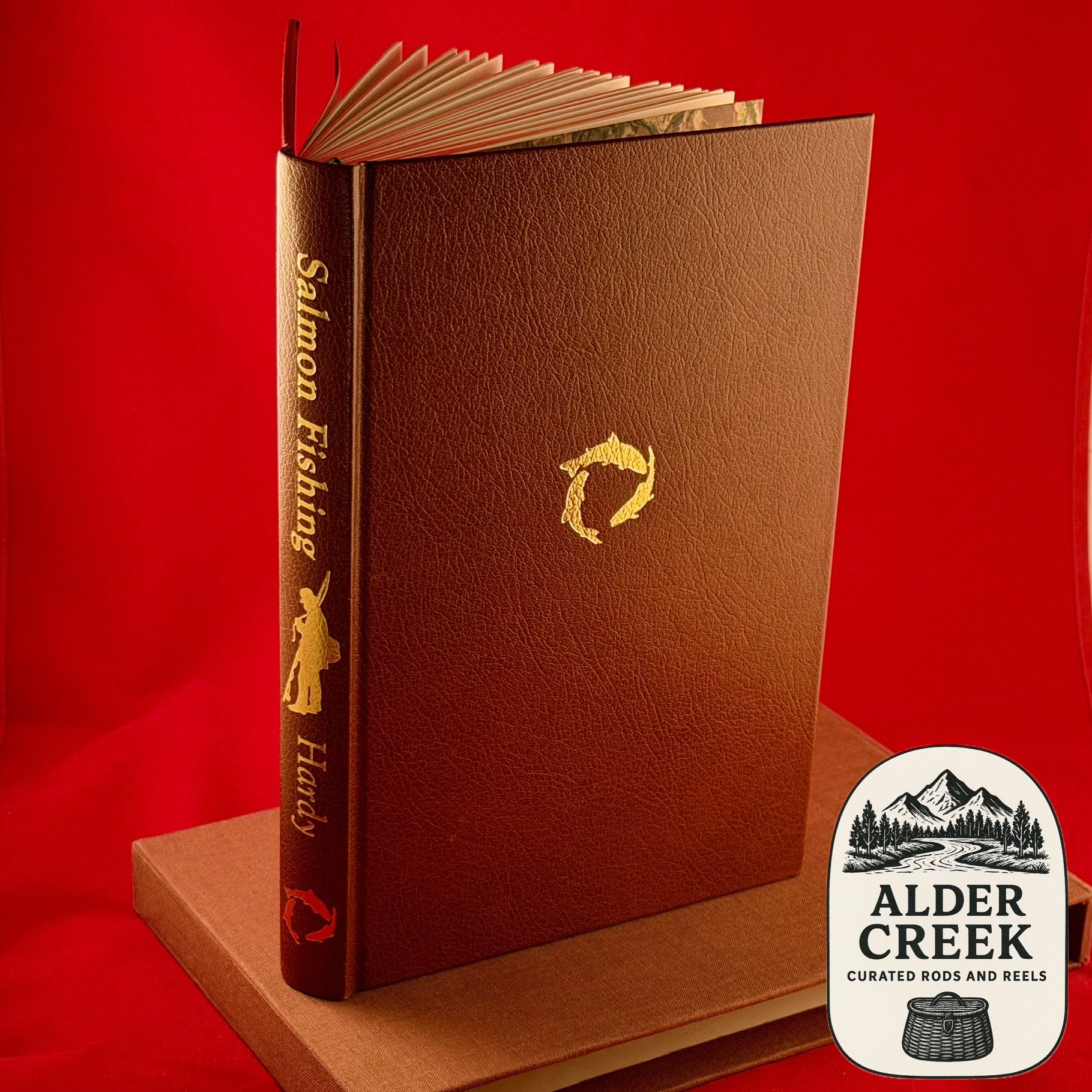
A distinguished work of classic British salmon fishing literature by John James Hardy, a member of the celebrated Hardy family of Alnwick, whose name has become inseparable from the history of fine fishing tackle.
Salmon Fishing is particularly valued for its extensive treatment of traditional salmon flies, including the dressings of 345 patterns. It offers a fascinating record of the materials, methods, and fly designs associated with the golden age of British salmon fishing.
This handsome edition was produced by the Flyfisher's Classic Library in a limited printing of 750 copies. Bound in full leather with gilt lettering to the spine and the library's gilt emblem to the front board, it features marbled endpapers, gilt top edge, and both black-and-white and colour illustrations.
This copy is in as-new condition and is accompanied by its original cloth-covered slipcase, also in fine condition.
An attractive addition to any collection of classic salmon fishing literature, and a particularly fitting companion to a vintage Hardy reel or traditional salmon fly collection.
Explore further works on traditional salmon flies and British angling history in our collection of classic fishing literature , or discover our selection of vintage Hardy reels and classic fishing tackle .
Author
John James Hardy
Title
Salmon Fishing
Publisher / Series
Flyfisher's Classic Library
Edition
Limited leather-bound edition
Limitation
750 copies
Pages
169
Contents
Dressings of 345 salmon flies
Illustrations
Black-and-white and colour
Binding
Full leather, gilt titles and decoration
Details
Gilt top edge, marbled endpapers
Slipcase
Original cloth-covered slipcase
Condition
As new; fine slipcase
Questions about this book, international shipping, or price are always welcome.
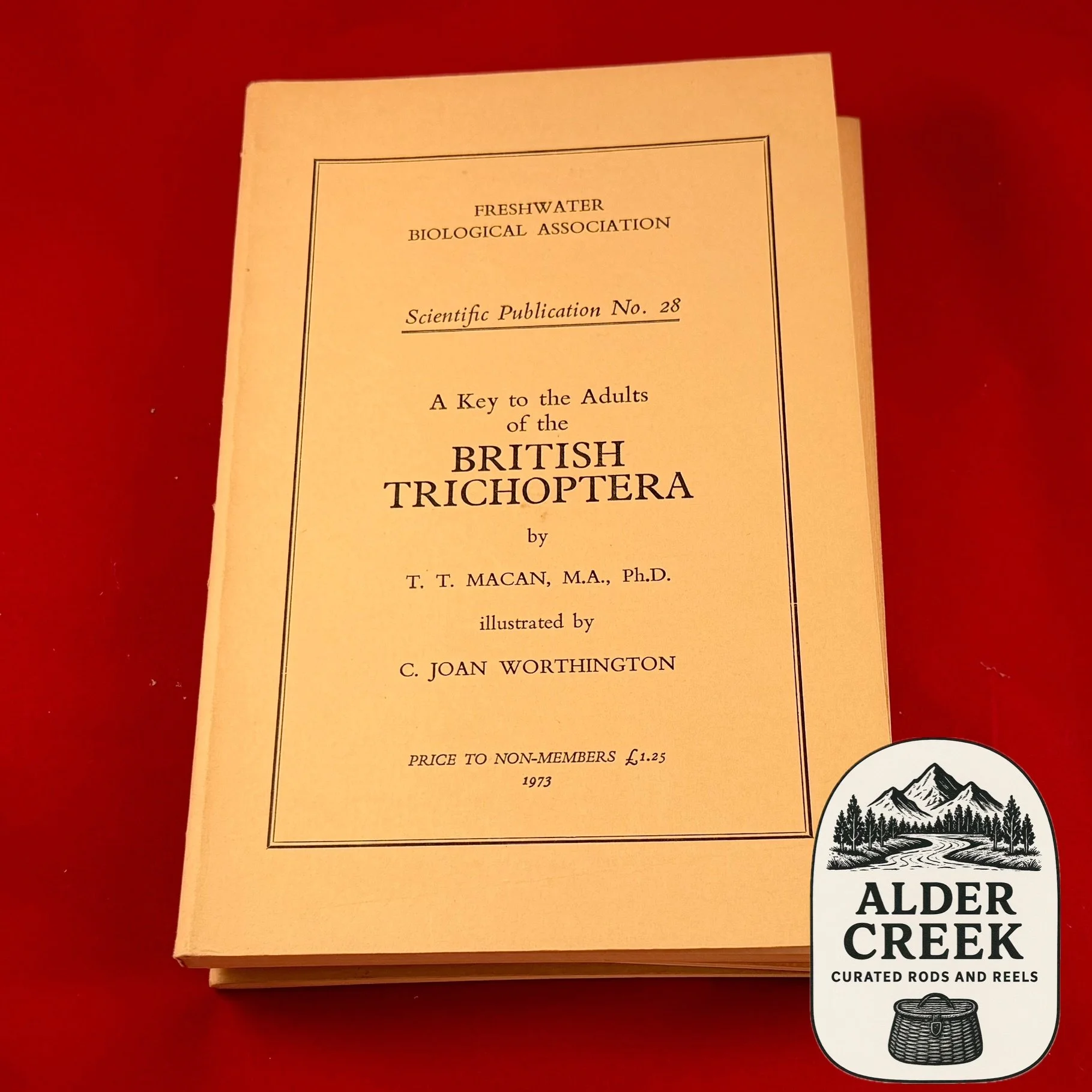
T. T. Macan — Illustrated by C. Joan Worthington
Freshwater Biological Association, 1973
A specialist work of British freshwater entomology, devoted to the identification of adult caddisflies — the insects of the order Trichoptera.
Published as No. 28 in the Scientific Publications series of the Freshwater Biological Association, T. T. Macan's guide provides detailed identification keys to the British species known at the time, supported by the precise scientific illustrations of C. Joan Worthington.
Although intended primarily for entomologists and students of freshwater biology, the book also holds considerable interest for the thoughtful fly fisherman. Caddisflies are among the most important aquatic insects encountered on trout streams, and an understanding of their forms and life cycles has long been central to the traditions of naturalistic fly dressing.
The work includes identification keys, detailed line drawings and plates illustrating the anatomical features used to distinguish different species.
An interesting addition to a collection of classic angling entomology, particularly alongside the writings of Alfred Ronalds and other pioneers of the scientific study of trout-stream insects.
For further reading on aquatic insects and their importance to fly fishing, explore Alfred Ronalds' The Fly-Fisher's Entomology and other works in our collection of classic angling literature .
Author
T. T. Macan
Illustrator
C. Joan Worthington
Title
A Key to the Adults of the British Trichoptera
Publisher
Freshwater Biological Association
Year
1973 (original publication)
Series
Scientific Publication No. 28
Pages
151
Illustrations
Scientific line drawings and plates
ISBN
0900386193
Subject
Trichoptera, caddisflies, freshwater entomology
Questions about this publication, its condition, international shipping, or price are always welcome.
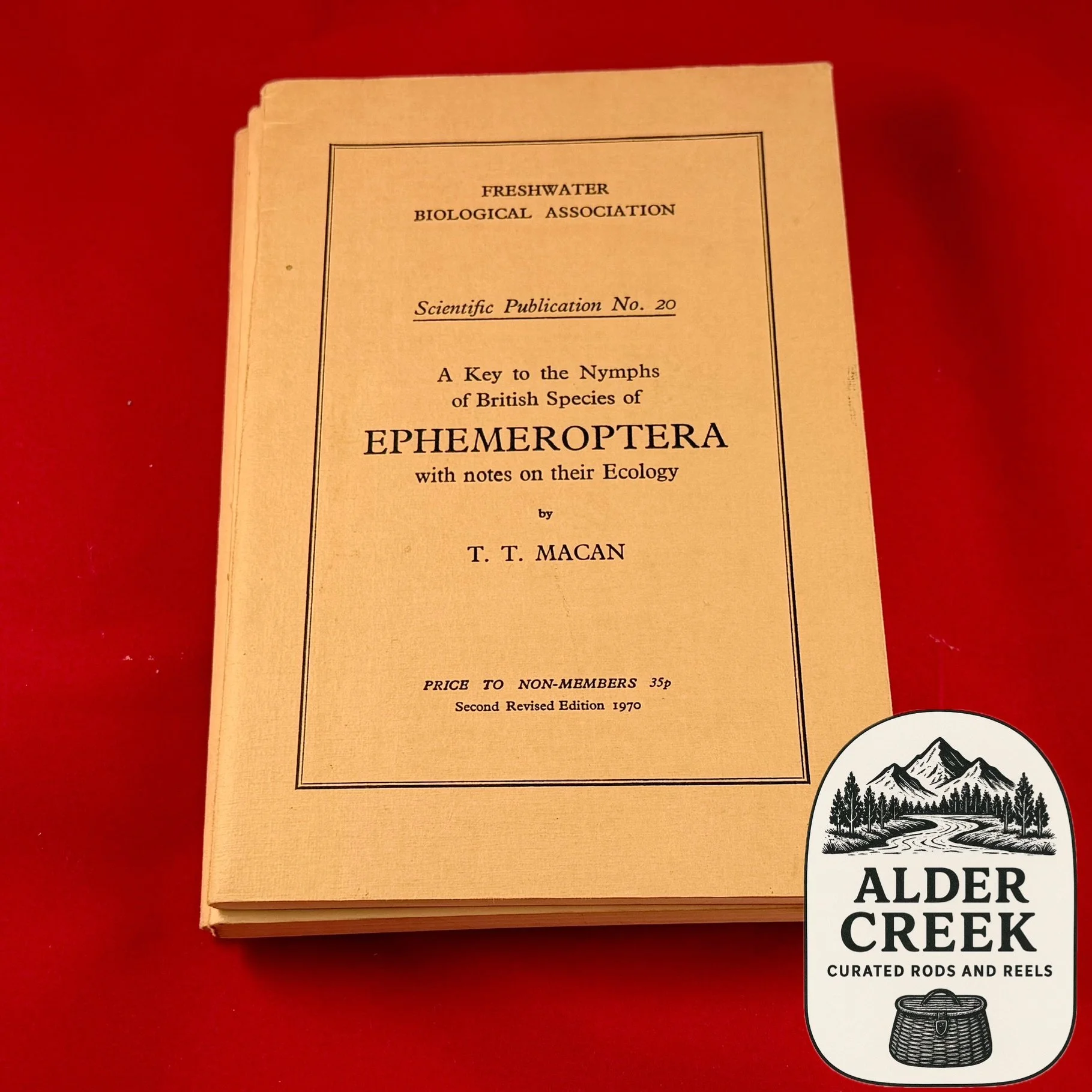
T. T. Macan — Freshwater Biological Association
A classic work of British freshwater entomology, devoted to the identification and ecology of mayfly nymphs.
Written by the distinguished freshwater biologist T. T. Macan, this specialist publication provides systematic identification keys to the nymphal stages of British mayflies, supported by detailed scientific illustrations and observations on their ecology.
Mayflies have occupied a central place in the history of fly fishing, from the earliest entomological observations of the nineteenth century to the development of increasingly accurate artificial fly patterns.
For the thoughtful trout fisherman, the study of aquatic insects offers a deeper understanding of the river and the life upon which trout depend. The ability to distinguish between different species and stages of development has particular relevance to traditional nymph fishing and the selection of suitable artificial patterns.
Published by the Freshwater Biological Association as Scientific Publication No. 20, Macan's work is both a practical identification guide and an interesting document of the development of modern freshwater biology.
A specialist addition to a collection of angling entomology, particularly appealing alongside the works of Alfred Ronalds, G. E. M. Skues and other writers concerned with the relationship between aquatic insects and trout fishing.Entomological key to nymphs of British mayflies.
Explore further works on aquatic entomology, including T. T. Macan's studies of British aquatic insects and Alfred Ronalds' The Fly-Fisher's Entomology, in our collection of classic angling literature .
Author
T. T. Macan
Title
A Key to the Nymphs of the British Species of Ephemeroptera: With Notes on Their Ecology
Publisher
Freshwater Biological Association
Series
Scientific Publication No. 20
Original Publication
1961
Edition
To be confirmed
Illustrations
Scientific line drawings
Subject
Mayflies, Ephemeroptera, freshwater entomology and aquatic ecology
Questions about this publication, its condition, international shipping, or price are always welcome.
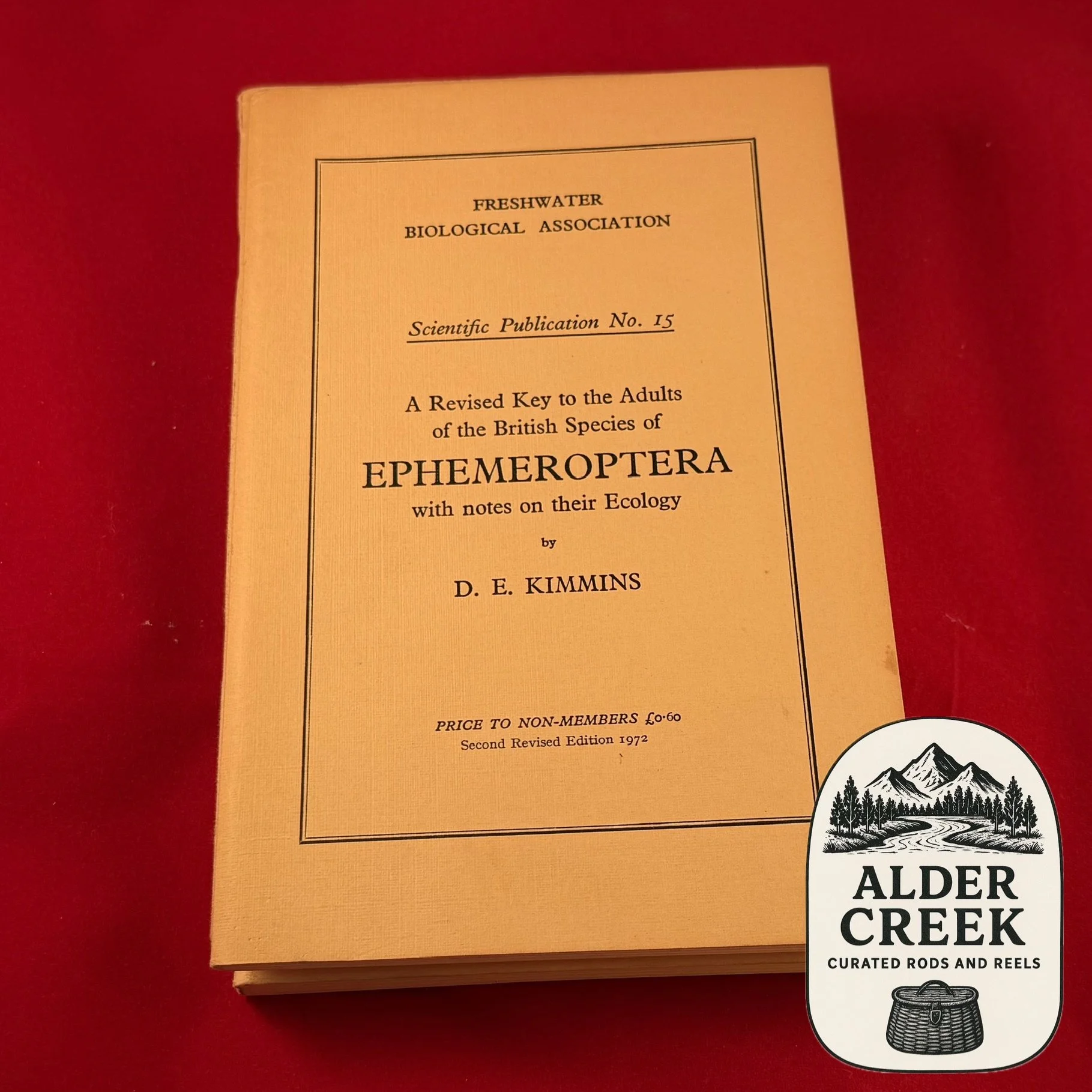
D. E. Kimmins — Second Revised Edition, 1972
A specialist work of British freshwater entomology, devoted to the identification of adult mayflies and their ecology.
Originally published in 1954 and revised in 1972, D. E. Kimmins' identification key forms part of the respected scientific publications of the Freshwater Biological Association.
The book provides systematic keys to the adult stages of British Ephemeroptera, accompanied by detailed scientific illustrations and ecological observations.
Mayflies have occupied a central place in the history of fly fishing. Their emergence, appearance and behaviour have inspired generations of fly dressers and trout anglers, from Alfred Ronalds to the great exponents of the British dry-fly tradition.
Although primarily intended for the naturalist and freshwater biologist, Kimmins' work offers the thoughtful fly fisherman a deeper understanding of the insects that have shaped so many traditional artificial fly patterns.
This copy is the second revised edition, published in 1972, as Scientific Publication No. 15 of the Freshwater Biological Association.
An interesting addition to a collection of classic angling entomology, particularly alongside the works of Alfred Ronalds and T. T. Macan.
Author
D. E. Kimmins
Title
A Revised Key to the Adults of the British Species of Ephemeroptera: With Notes on Their Ecology
Publisher
Freshwater Biological Association, Ambleside
Year
1972
Edition
Second Revised Edition
Series
Scientific Publication No. 15
Pages
75
Illustrations
30 text figures
Binding
Paperback
Subject
Mayflies, Ephemeroptera, freshwater entomology
Questions about this publication, its condition, international shipping, or price are always welcome.
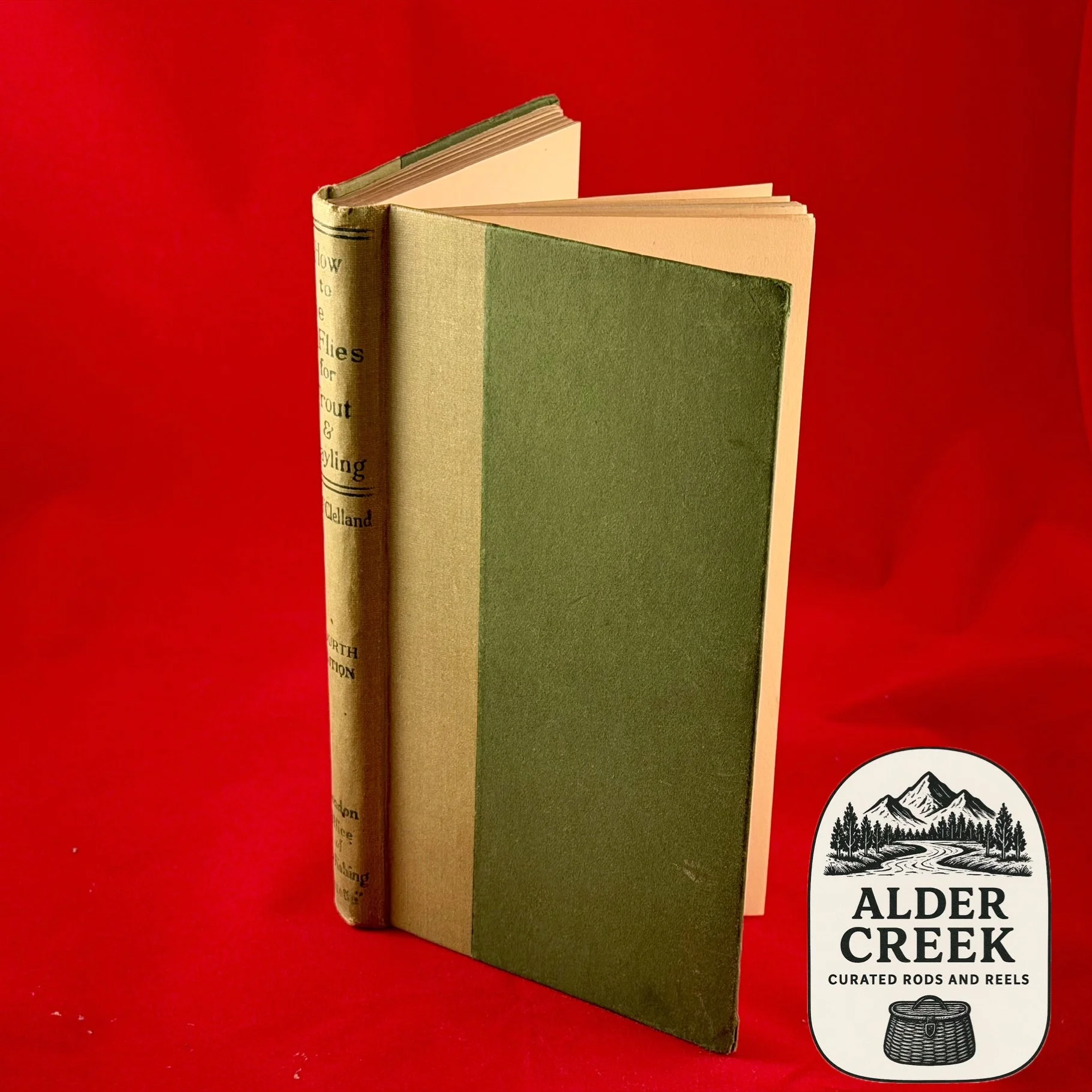
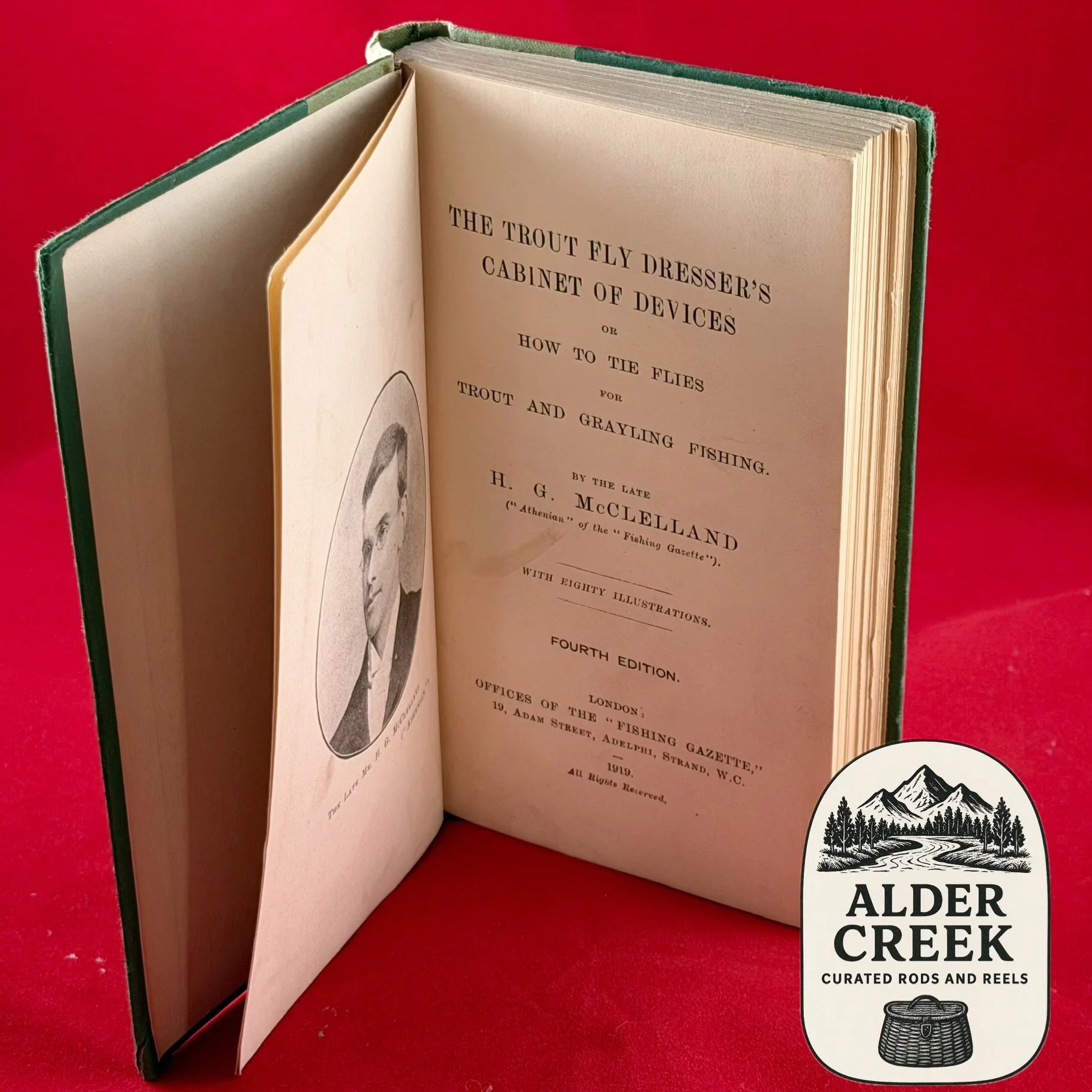
A charming and practical work from the golden age of British fly dressing, H.G. McClelland's The Trout Fly Dresser's Cabinet of Devices; or, How to Tie Flies for Trout and Grayling Fishing offers an engaging insight into the tools, techniques and traditions of early twentieth-century fly tying.
Written for the practical angler, the book explores the craft of dressing artificial flies for trout and grayling. Its numerous illustrations make it particularly appealing to those interested in traditional patterns and the development of fly-dressing methods.
This is the fourth edition, published in London by the Offices of the Fishing Gazette in 1919. The volume contains approximately 137 pages, 80 illustrations and a frontispiece portrait of the author.
This copy retains its original-style binding of light green cloth backing and mid-green paper-covered boards. The condition is good, with some staining to the rear cover and fading to the spine, consistent with its age.
An attractive and affordable addition to a collection of early British angling literature, particularly for the fly dresser with an appreciation of traditional methods and craftsmanship.
For further insight into the history of artificial flies, explore Alfred Ronalds' The Fly-Fisher's Entomology, De Luxe Edition (1913) , or browse our collection of classic angling literature .
Author
H.G. McClelland
Title
The Trout Fly Dresser's Cabinet of Devices
Subtitle
Or, How to Tie Flies for Trout and Grayling Fishing
Publisher
Offices of the Fishing Gazette, London
Year
1919
Edition
Fourth Edition
Format
Tall 16mo
Pagination
Approx. 137 pages + 2 pages of advertisements
Illustrations
80 illustrations and frontispiece portrait
Binding
Light green cloth-backed, mid-green paper-covered boards
Condition
Good; staining to rear cover and faded spine
Questions about this book, international shipping, or price are always welcome.

Few books have had a more lasting influence on American dry-fly fishing than Vincent C. Marinaro's A Modern Dry-Fly Code.
First published in 1950, this remarkable work challenged many established ideas about trout, artificial flies and their presentation. Drawing upon his observations of the limestone streams of Pennsylvania, Marinaro developed a thoughtful and systematic approach to the behaviour of selective trout and the insects upon which they feed.
His observations of the trout's feeding position, the appearance of natural insects upon the water and the importance of accurate presentation helped shape the development of modern dry-fly fishing.
Rather than offering merely a collection of patterns and techniques, Marinaro encouraged anglers to observe more closely, question accepted conventions and approach the river with a naturalist's curiosity.
This is the Nick Lyons paperback edition of Marinaro's classic, offering an accessible opportunity to study one of the defining texts of twentieth-century American fly fishing.
Condition: Like new and unread.
An essential addition to the working library of the thoughtful trout angler, and a particularly fitting companion to the writings of Frederic M. Halford, G.E.M. Skues and Charles Ritz.
For collectors seeking a more distinguished presentation, Alder Creek also offers a limited leather-bound edition of A Modern Dry-Fly Code (1996) , published by the Flyfisher's Classic Library in an edition of 500 copies.
Author
Vincent C. Marinaro
Title
A Modern Dry-Fly Code
Edition
Nick Lyons paperback edition
Original Publication
1950
Binding
Paperback
Condition
Like new, unread
Subject
Dry-fly fishing, selective trout and aquatic entomology
Questions about this book, international shipping, or price are always welcome.
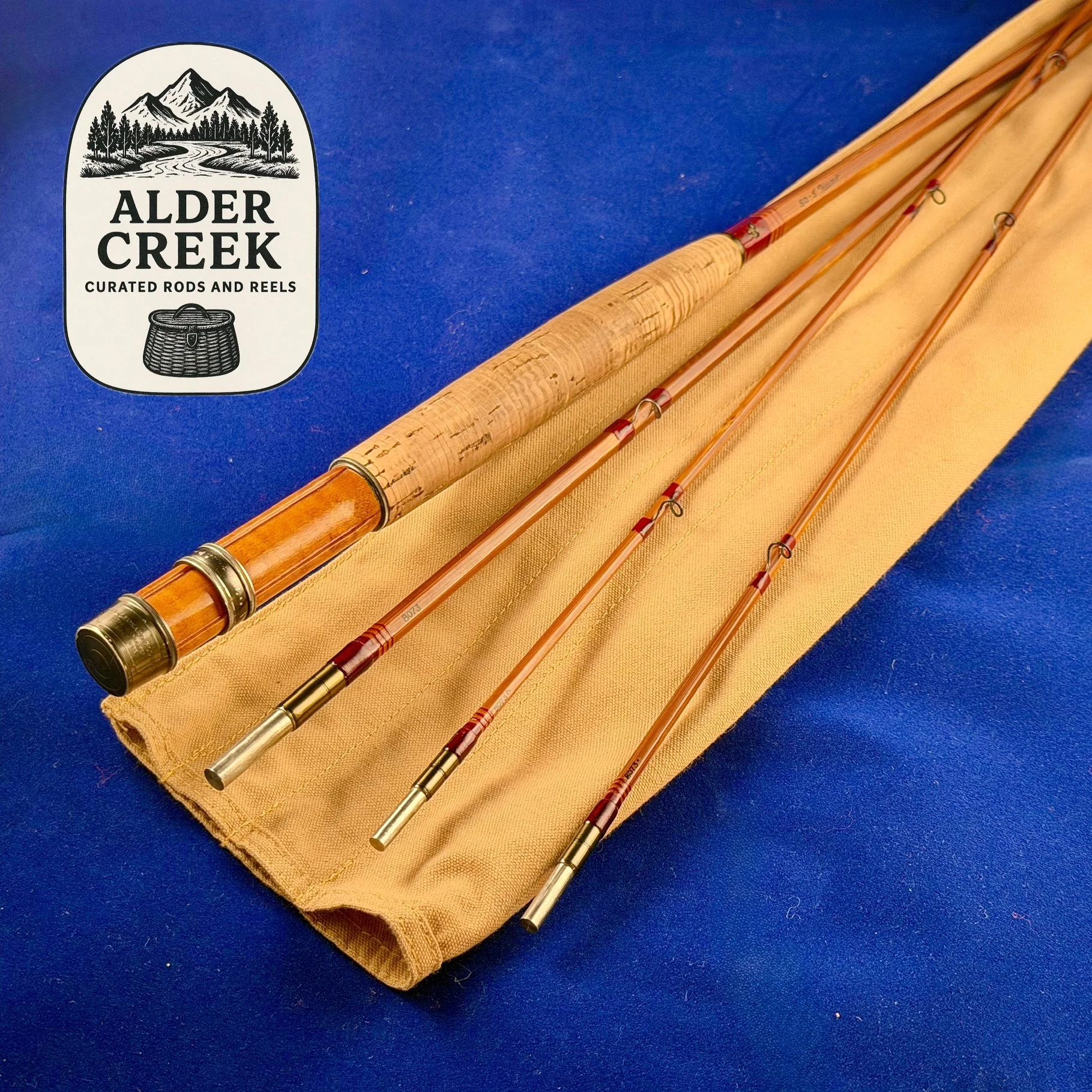
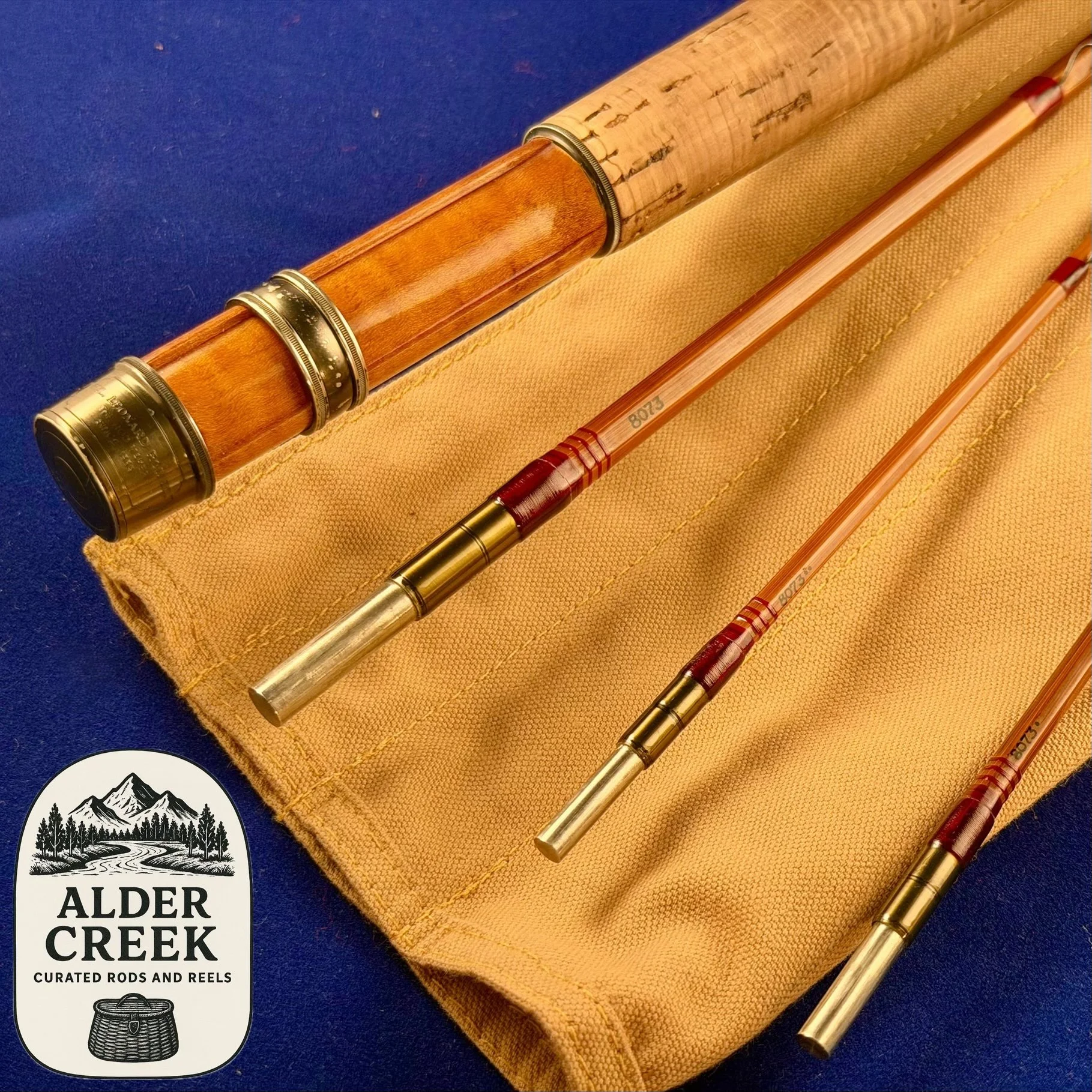
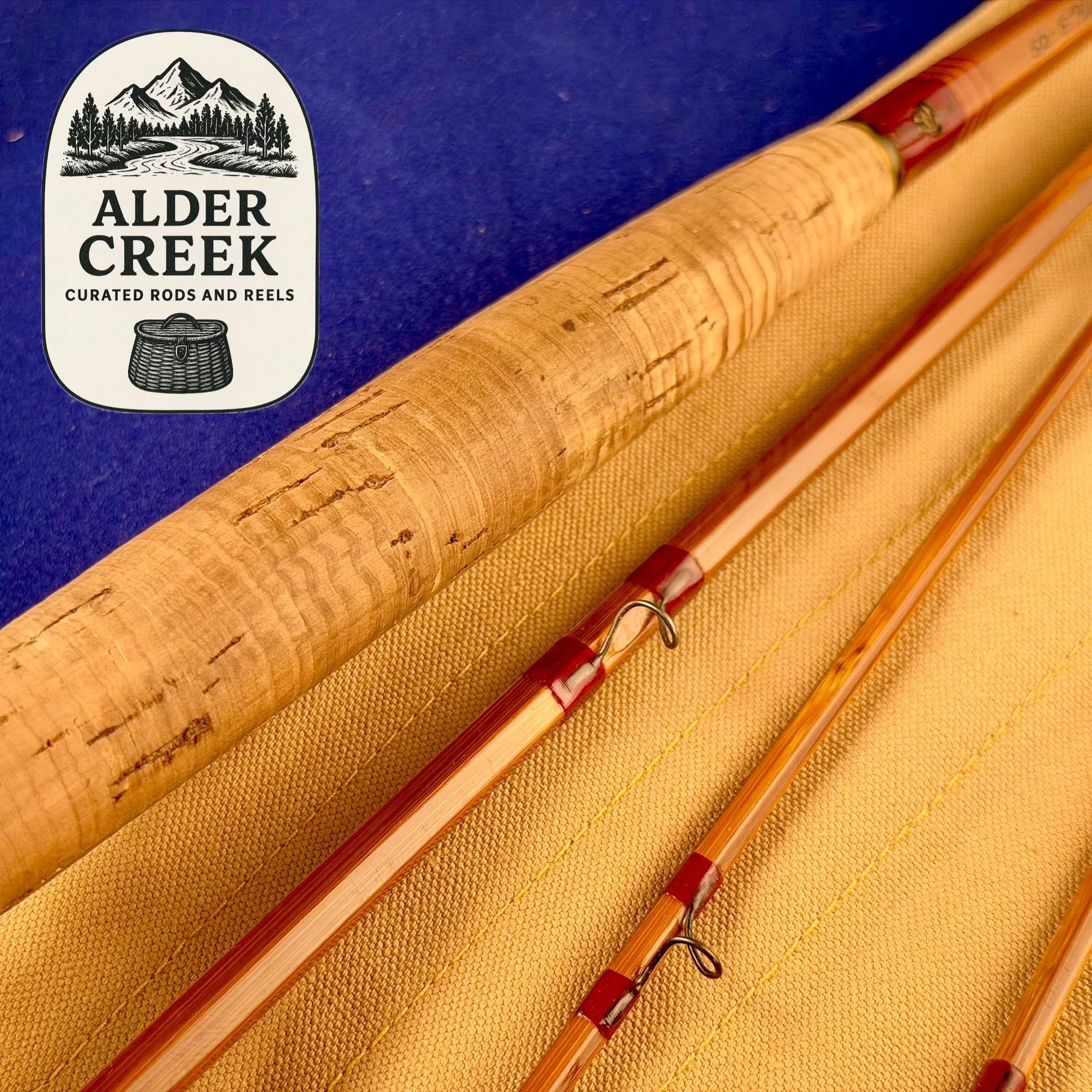
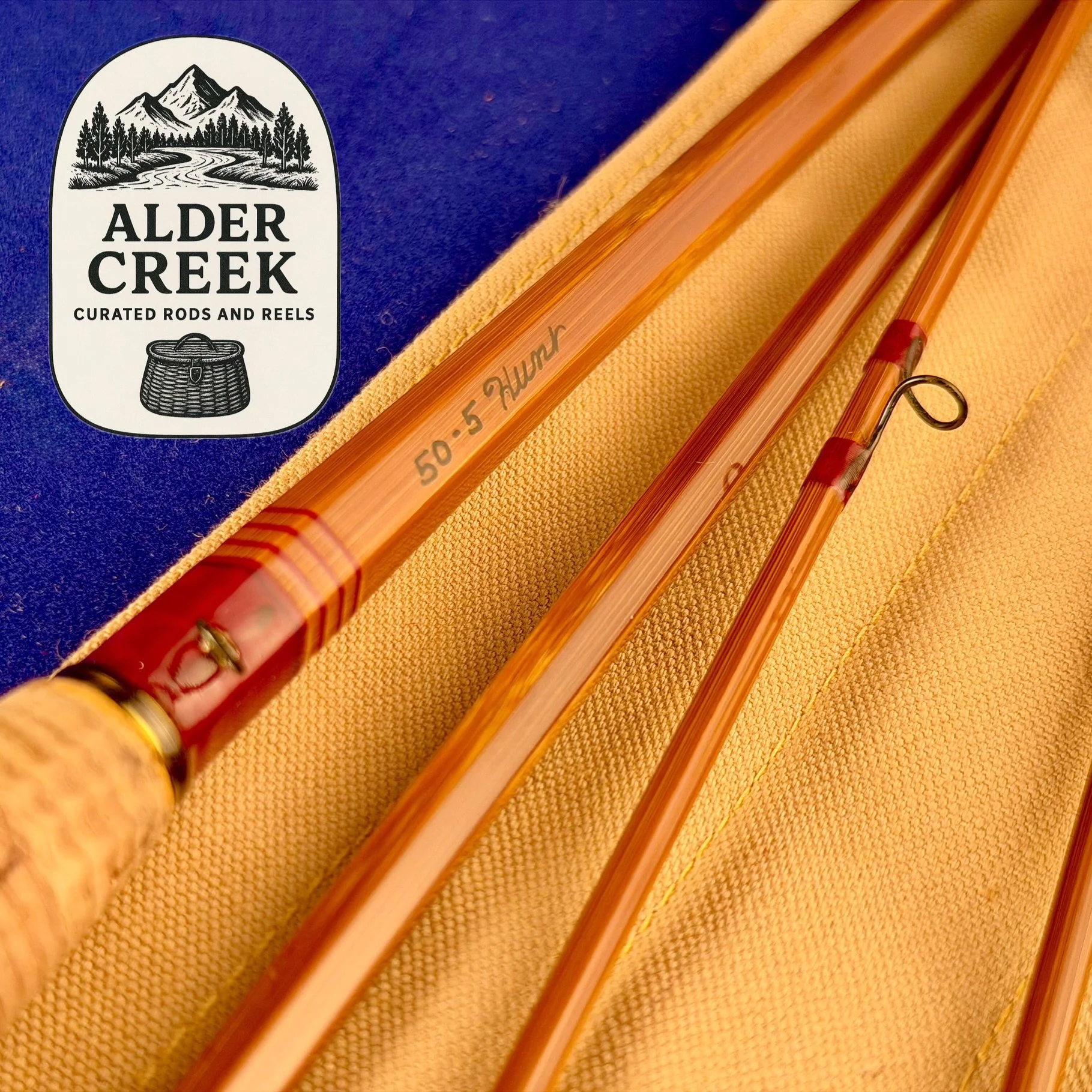
A fine H.L. Leonard Hunt 50-5, made during the Tom Maxwell period and dating to early 1980. At 8 feet, in a three-piece, two-tip configuration for a #5 line, this is one of Leonard’s classic all-round trout rods. Serial number 8073; weight approximately 4.4 oz.
The rod is built from beautifully flamed cane, with Leonard’s characteristic small pressed nodes arranged three-up. The wraps are a handsome plum, accented with purple and red at the hook keeper and male ferrules, complemented by an agate stripping guide and black snake guides. The action is medium to fast — refined, responsive and distinctly Leonard.
Leonard’s stepped ferrules retain virtually all of their original pewter-toned oxidation. The six-inch cork grip is formed in a slender cigar profile and leads to an attractive tiger maple reel seat. The oxidized slide band and butt cap show some light edge wear, while the cap carries the classic stamping:
“H.L. Leonard Rod Co., The Rod Maker, since 1869.”
The rod shows moderate, honest use. There is light soiling to the grip, some brassing to the inner guides and fine casting cracks in the varnish over the ferrule wraps. The tiger maple reel seat is slightly tight, although the sliding band remains fully functional. These signs of use are consistent with a rod that has been fished and carefully kept rather than restored.
Complete with its tan cloth rod bag and sanded aluminium tube with brass fittings.
A particularly appealing Maxwell-era Leonard: beautifully appointed, highly fishable and an excellent example of the Hunt tradition from one of the most interesting periods in the history of the Leonard Rod Company.
Previous owner bought this rod through Spinoza Rods.
Explore our collection of H.L. Leonard bamboo fly rods, spanning several generations of American rodmaking, from the pre-fire era to the workshops of Tom Maxwell and Marc Aroner. Discover the 50DF Tournament, 4099½, The Duracane, and the Catskill Special 48-4.
Maker:
H.L. Leonard Rod Company
Model:
Hunt 50-5
Length:
8'
Configuration:
3-piece / 2-tip
Line:
#5
Weight:
Approx. 4.4 oz
Serial Number:
8073
Year:
1980
Era:
Tom Maxwell
Condition:
Very Good
Includes:
Original bag and tube
Questions about this piece, international shipping, or price are always welcome.
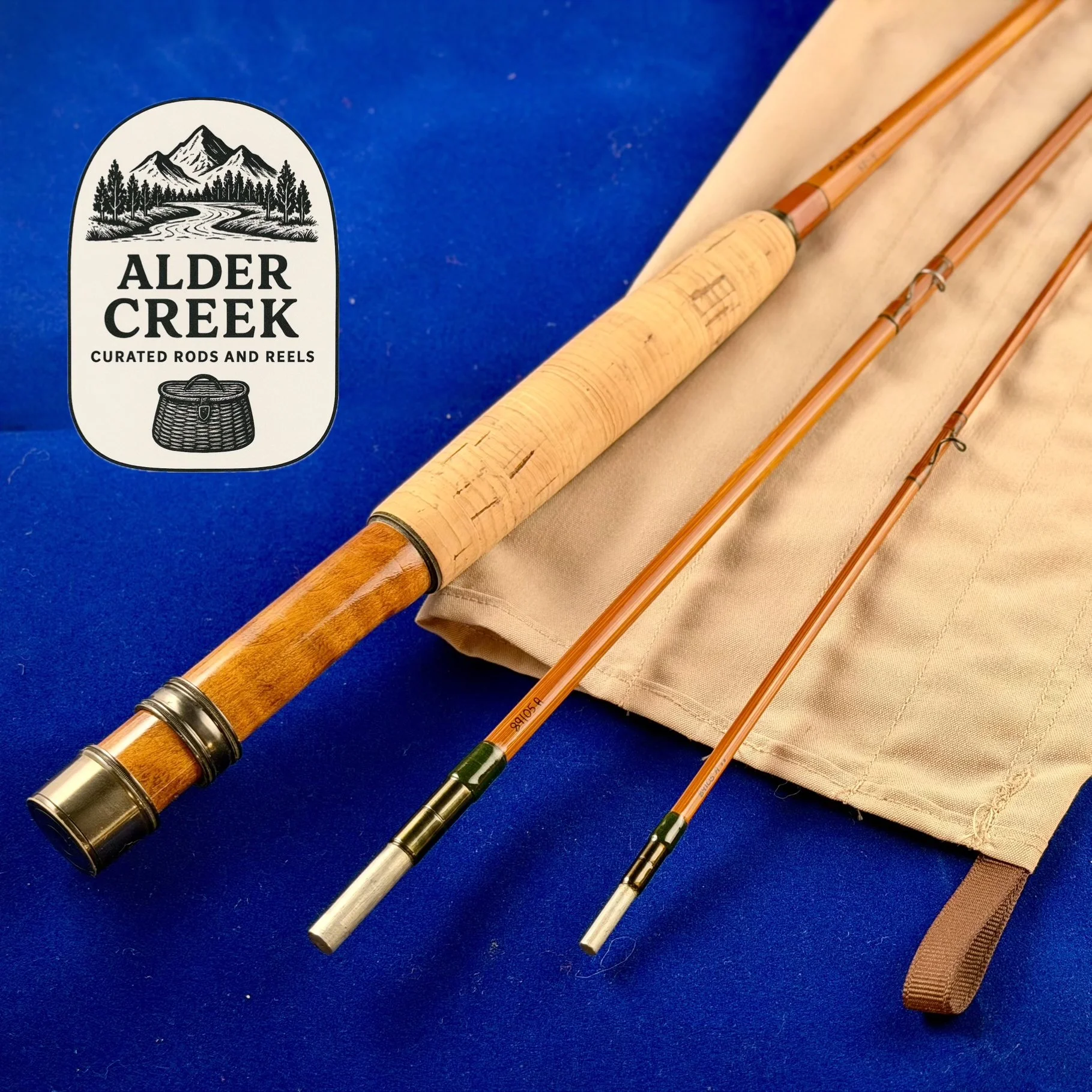
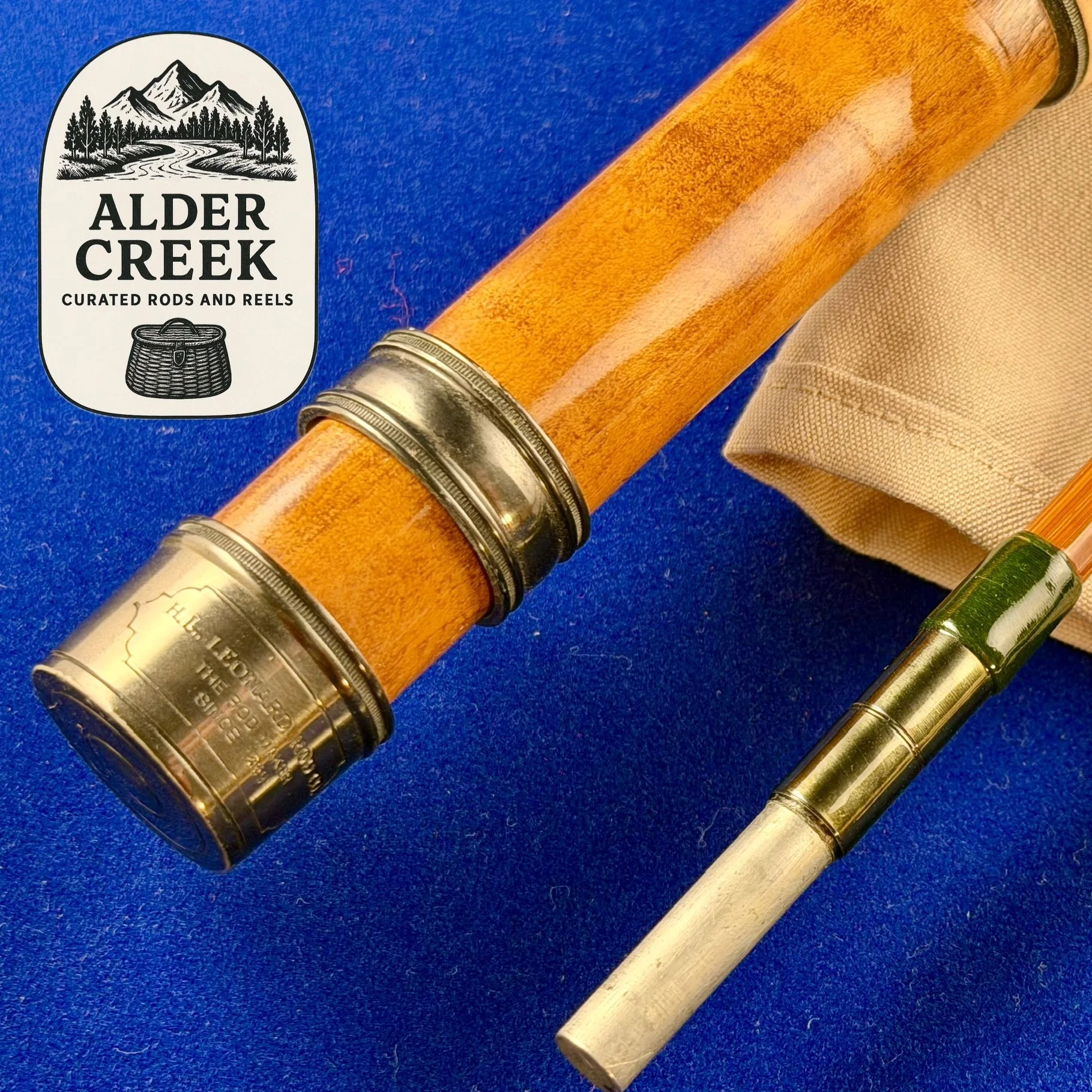
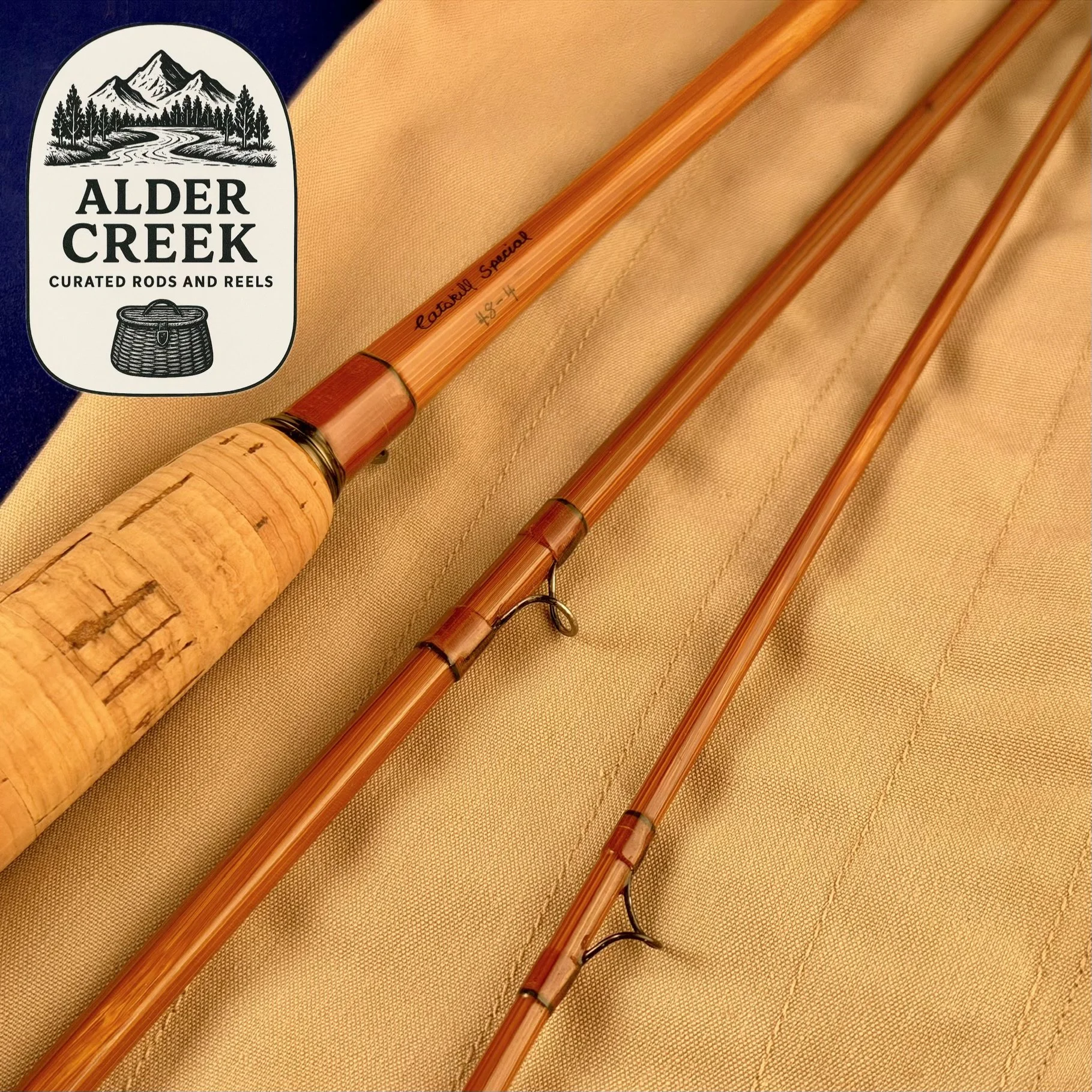
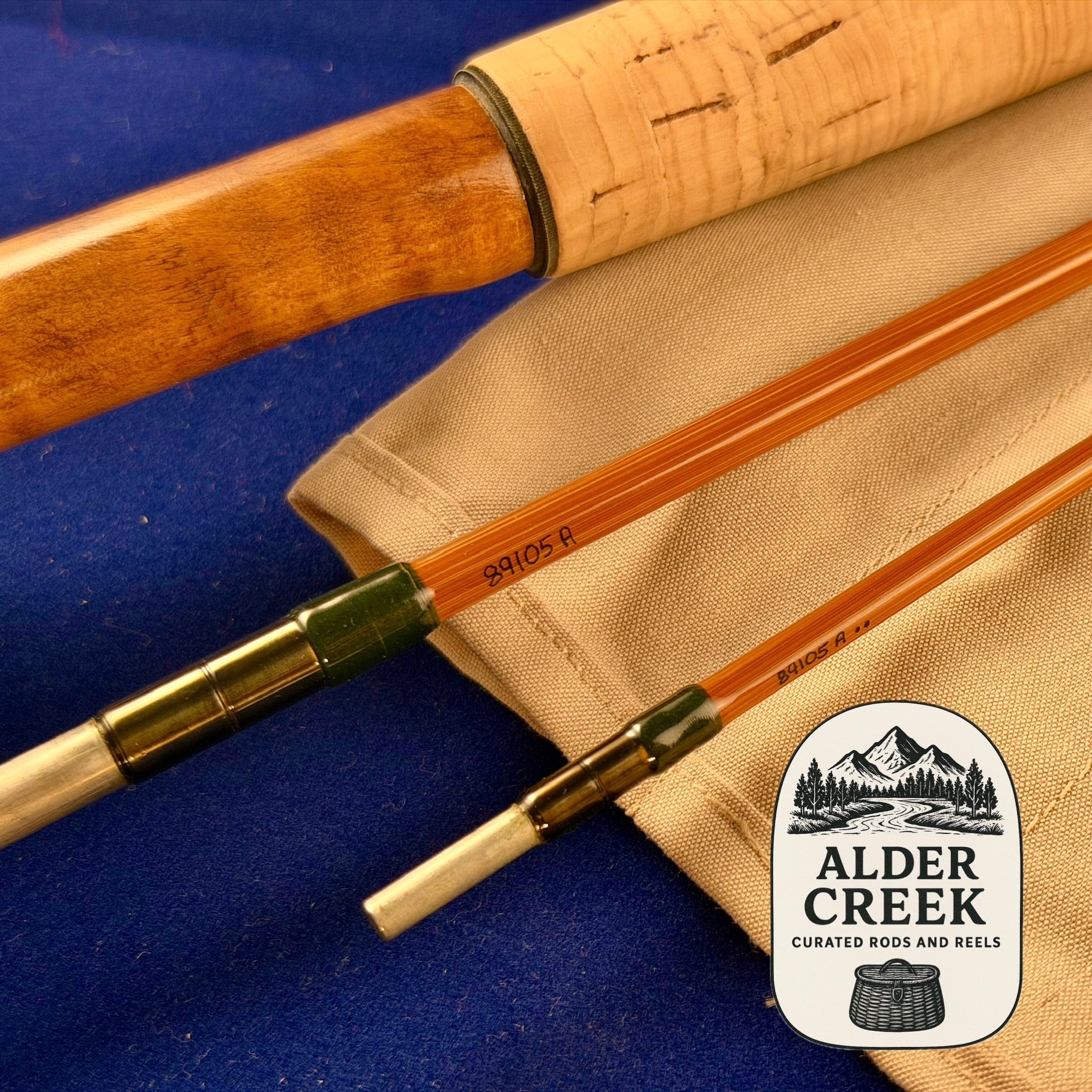
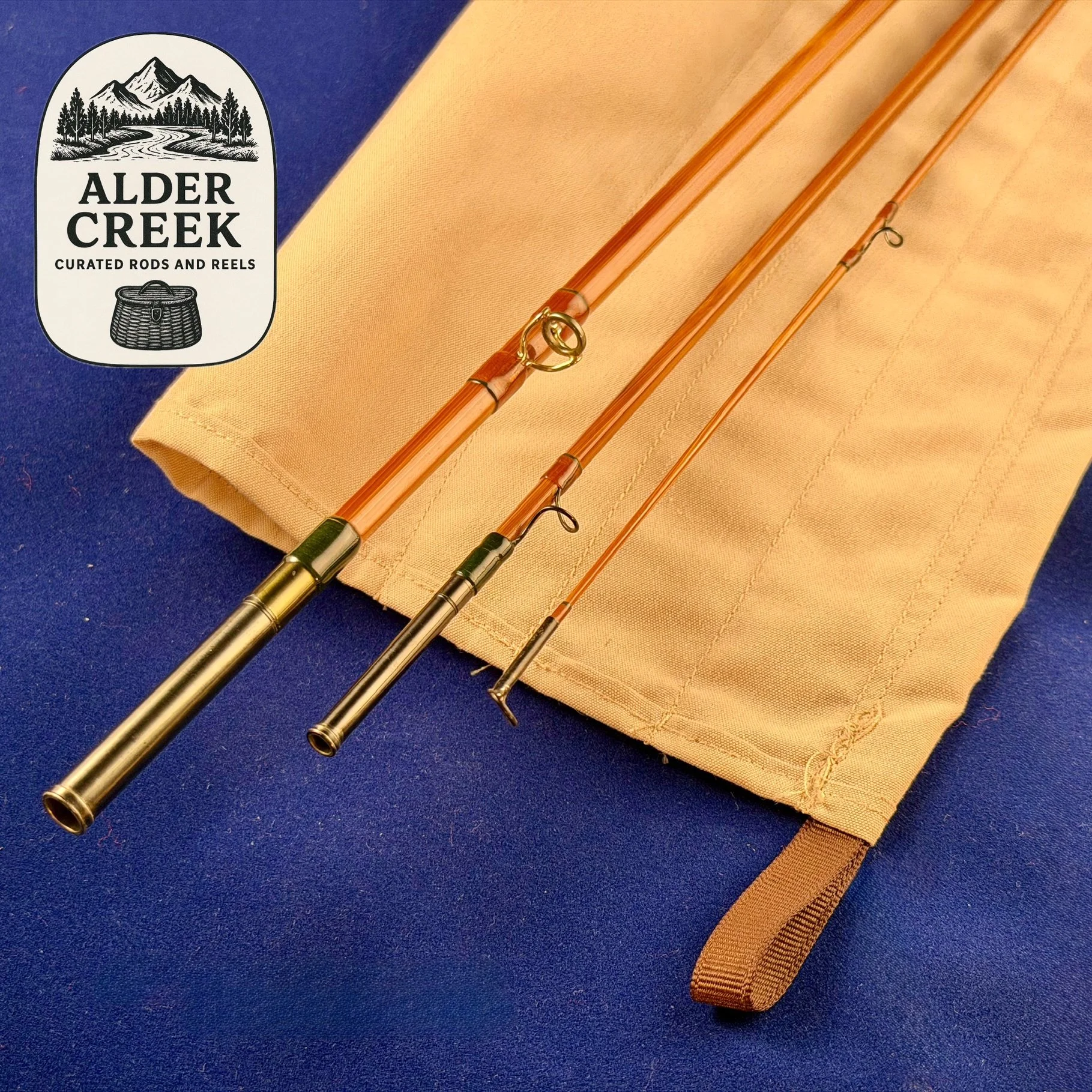
A superb H. L. Leonard Model 48-4 Catskill Special, measuring 7'0" in three sections and originally built with two tips for a #4 line. This example is in very good condition, although one of the original tips is now missing. Serial number 89105.
A particularly interesting rod historically, this Leonard was made by master rodmaker Marc Aroner, approximately between 1990 and 1993, for Larry Foster as part of the effort to preserve the Leonard tradition and trademarks.
There are several distinctive details that identify Aroner's hand. His mortising tool leaves a characteristic circular lip at the top of the cut, whereas the standard Leonard reel-seat mortise has a straight edge. The nodes have also been pressed to an unusually small size, another detail associated with Aroner's work.
The cane is a beautifully even oven-tempered wheat-straw colour, finished with light brown wraps edged in green and a distinctive green double wrap at the ferrules. A carbide stripping guide and keeper on the wrap flats complete the fittings. The serial number is present, with the “A” reportedly added by Marc Aroner, who believed it was Larry Foster's indication of the rodmaker.
The slender 4¼" cigar grip is exceptionally well preserved. The reel seat is fitted with a beautifully figured, lightly stained curly maple spacer, complemented by an oxidized nickel-silver cap and ring. The cap bears the traditional Leonard stamp:
“H.L. Leonard Rod Co, The Rodmaker, Since 1869”
The opposing side is marked “Catskill Special.”
The varnish remains perfect, the step ferrules have developed an attractive oxidized finish, and all three sections are straight and sound.
The rod comes in a cream-coloured poplin bag, configured to accommodate two tips and a non- original aluminium tube.
A remarkable modern Leonard with an important connection to the continuation of the Leonard tradition—beautifully made, exceptionally preserved and, with its Aroner provenance, a fascinating piece of American bamboo rodmaking history.
Explore our collection of H.L. Leonard bamboo fly rods, spanning several generations of American rodmaking, from the pre-fire era to the workshops of Tom Maxwell and Marc Aroner. Discover the 50DF Tournament, 4099½, Hunt 50-5, and The Duracane.
Maker
H.L. Leonard
Rodmaker
Marc Aroner
Model
48-4 Catskill Special
Period
c. 1990–1993
Length
7'
Configuration
3-piece / 1 remaining tip (originally 2 tips)
Line
#4
Serial Number
89105
Cane
Oven-tempered wheat-straw bamboo
Wraps
Light brown with green tipping
Ferrules
Oxidized step ferrules
Grip
4 1/4" cigar cork
Reel Seat
Nickel-silver cap and ring, curly maple spacer
Condition
Very good condition; one original tip missing
Includes
Cream poplin bag and non-original aluminium tube
Questions about this piece, international shipping, or price are always welcome.
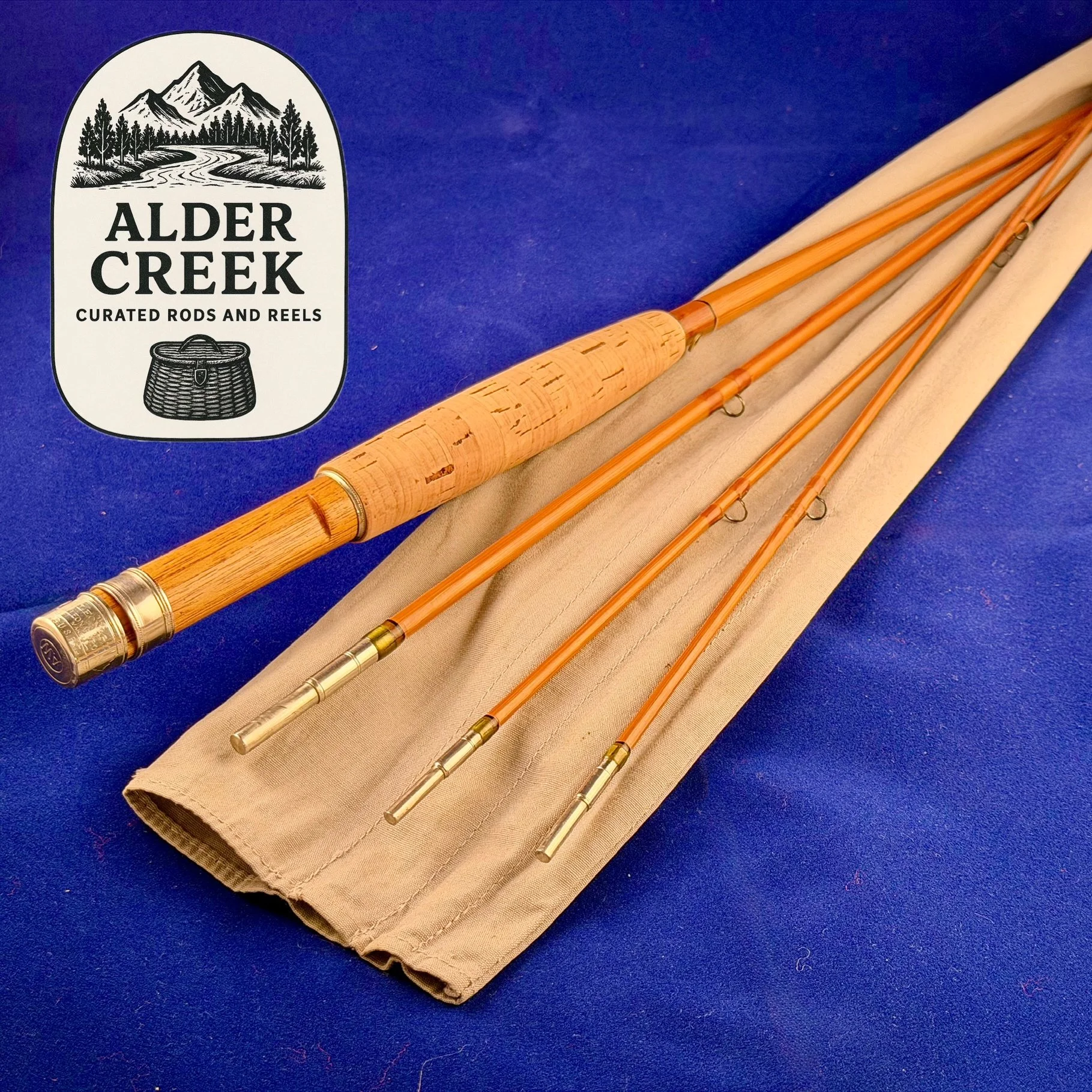
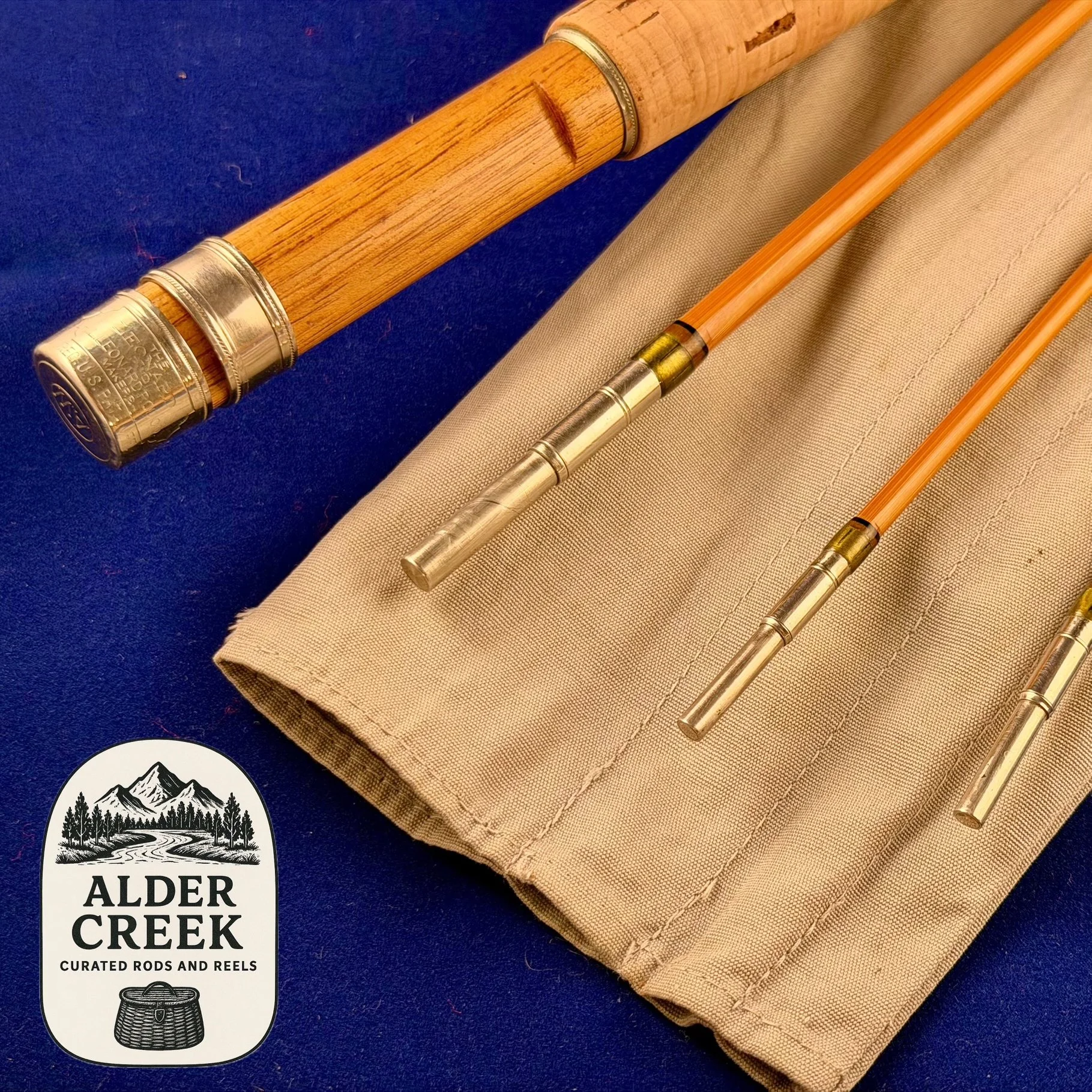
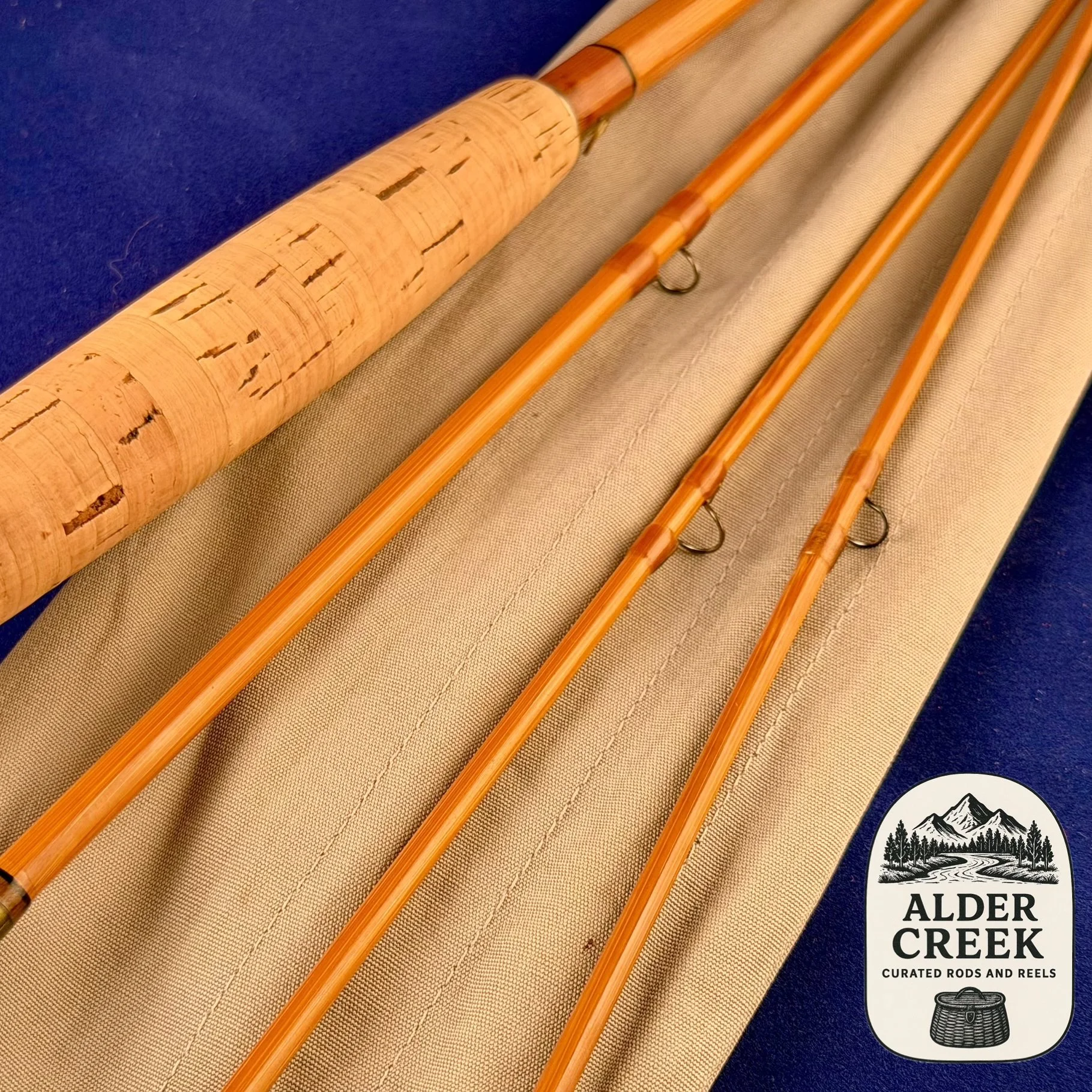
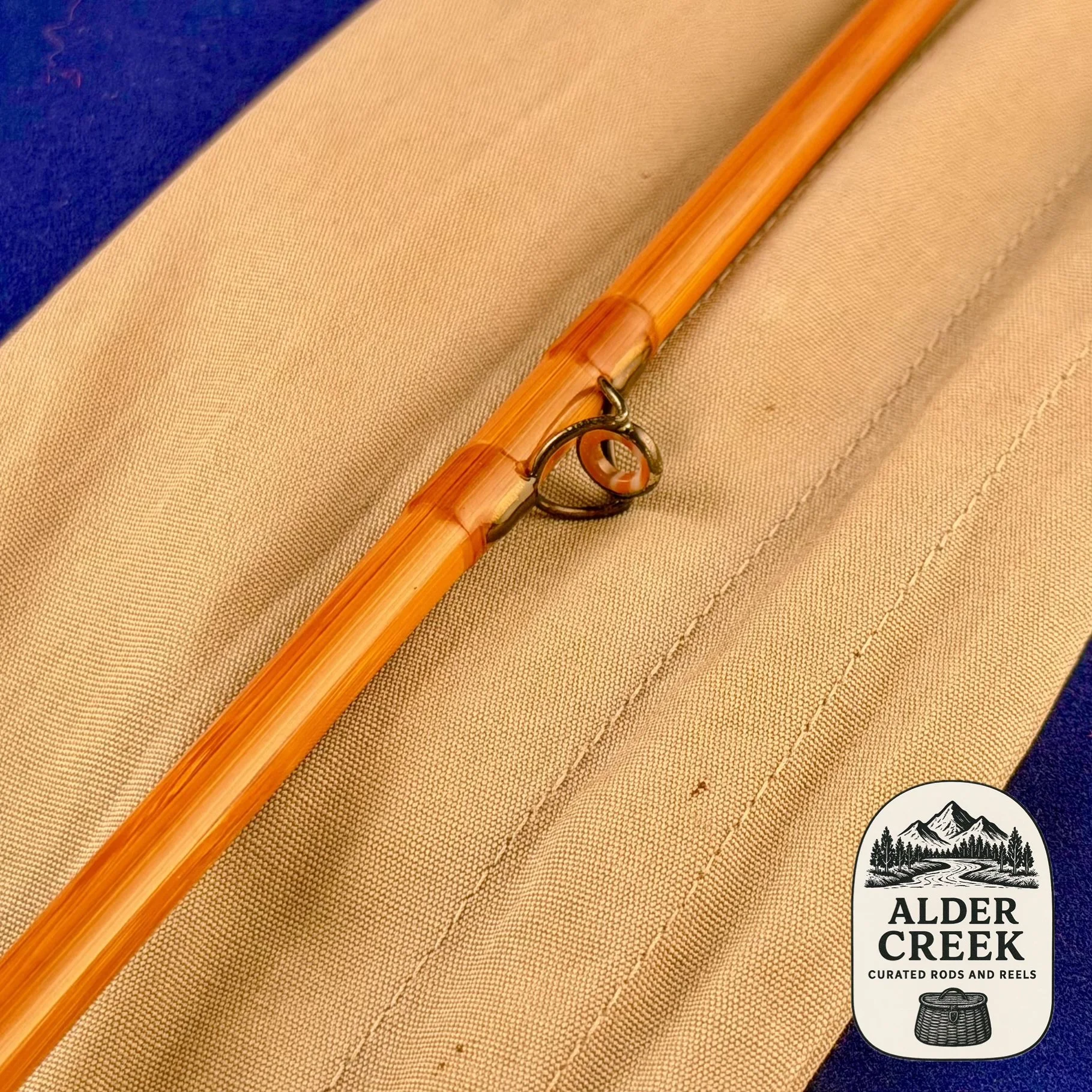
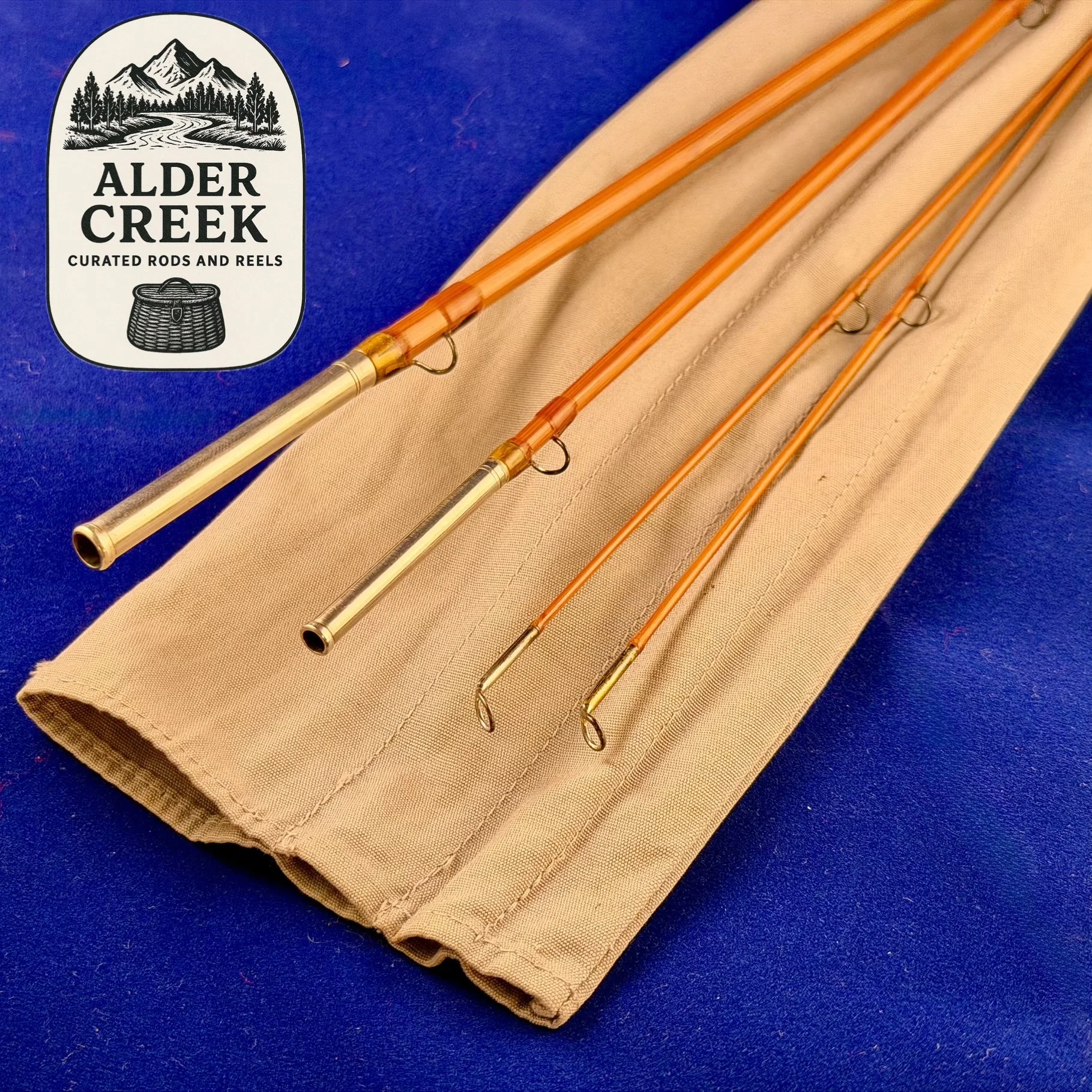
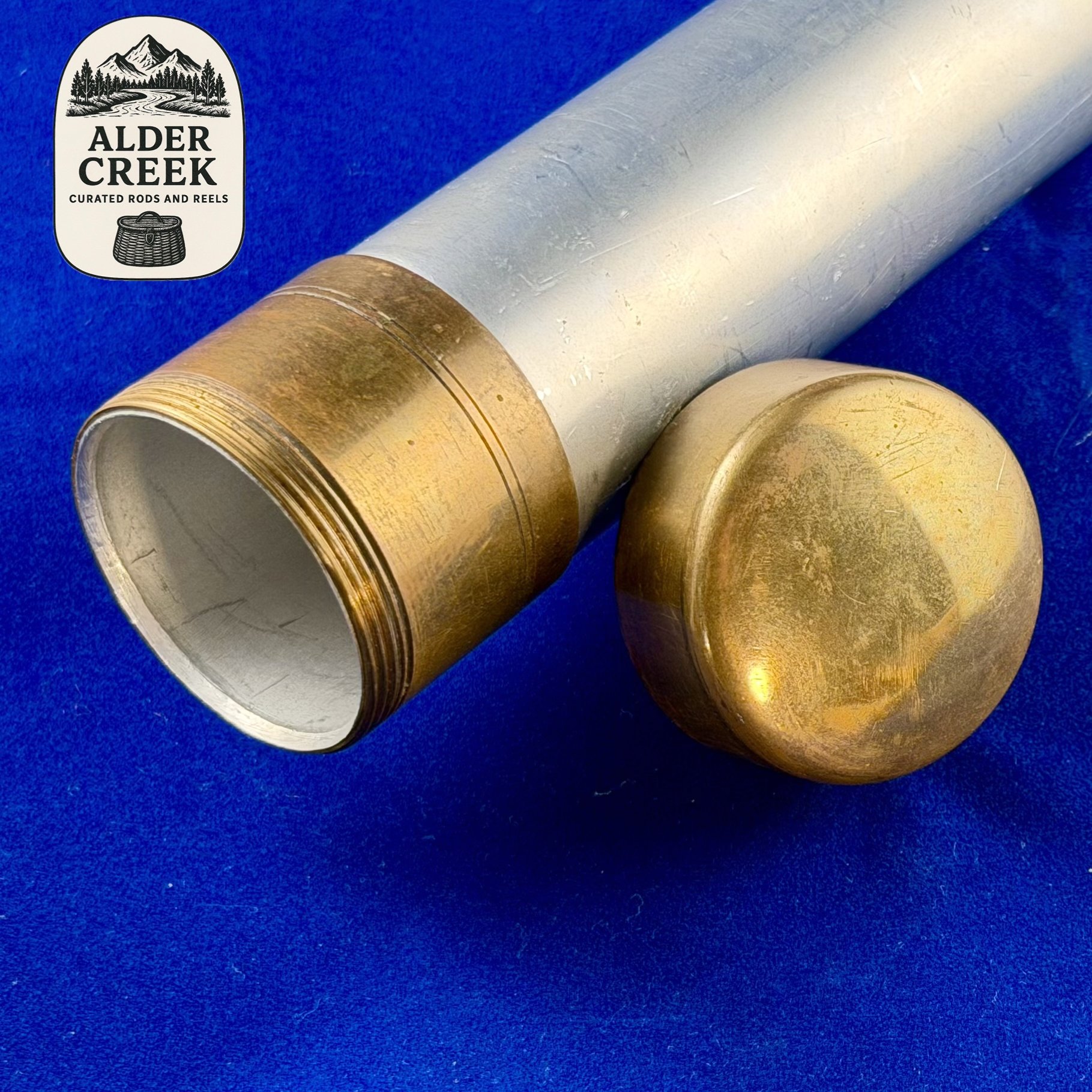
One of the true classics of American bamboo rodmaking: a pre-fire H. L. Leonard 50DF Tournament, an 8' 3/2 rod designed for a #5 line.
This is an exceptionally well-preserved example, and it appears to have received a sympathetic restoration at some point in its life, including a thin, crisp coat of varnish. The underlying cane is exceptionally sound, with no repair wraps and no apparent issues to the bamboo. Most of the silk appears original.
The cane is a beautiful golden straw colour, finished with original-looking gold silk wraps and lighter gold tipping at the winding check, ferrules and tip tops. The rod features English-style reverse-twist guides, an agate stripping guide and agate tip tops, a slightly swelled butt and a traditional ring hook keeper.
The diminutive cigar-style Leonard grip, measuring 4⅞", remains in wonderful condition. There is some light ridging from use, but no significant soiling. The reel seat is the classic Leonard nickel-silver cap-and-ring style, bottom engraved with A.W (original owner), fitted with a warm butternut spacer. The rod weighs just 3⅝ oz.
On the water, the 50DF offers the wonderfully refined medium-fast dry-fly action for which this model has long been admired: light in hand, precise in presentation and possessing considerably more character than its modest dimensions might suggest.
The rod comes with its original bag and original aluminium tube with brass fittings. The bag is missing its hang tag and has some fraying at the bottom, which was sympathetically repaired by a previous owner. Alder Creek would be happy to undertake further restoration of the bag if desired.
A beautiful example of one of Leonard's most celebrated tapers, combining rarity, elegance and genuine fishability.
Explore our collection of H.L. Leonard bamboo fly rods, spanning several generations of American rodmaking, from the pre-fire era to the workshops of Tom Maxwell and Marc Aroner. Discover the 4099½, Hunt 50-5, The Duracane, and the Catskill Special 48-4.
Maker
H.L. Leonard
Model
50DF Tournament
Period
Pre-fire (before 1964)
Length
8'
Configuration
3-piece / 2-tip
Line
#5
Weight
3 5/8 oz
Action
Medium-fast, dry-fly
Cane
Golden straw
Wraps
Gold silk with lighter gold tipping
Guides
Reverse-twist snakes, agate stripper and tip-tops
Reel Seat
Nickel-silver cap and ring, butternut spacer
Condition
Very good; sympathetically refinished
Includes
Original bag and aluminium tube
Questions about this piece, international shipping, or price are always welcome.
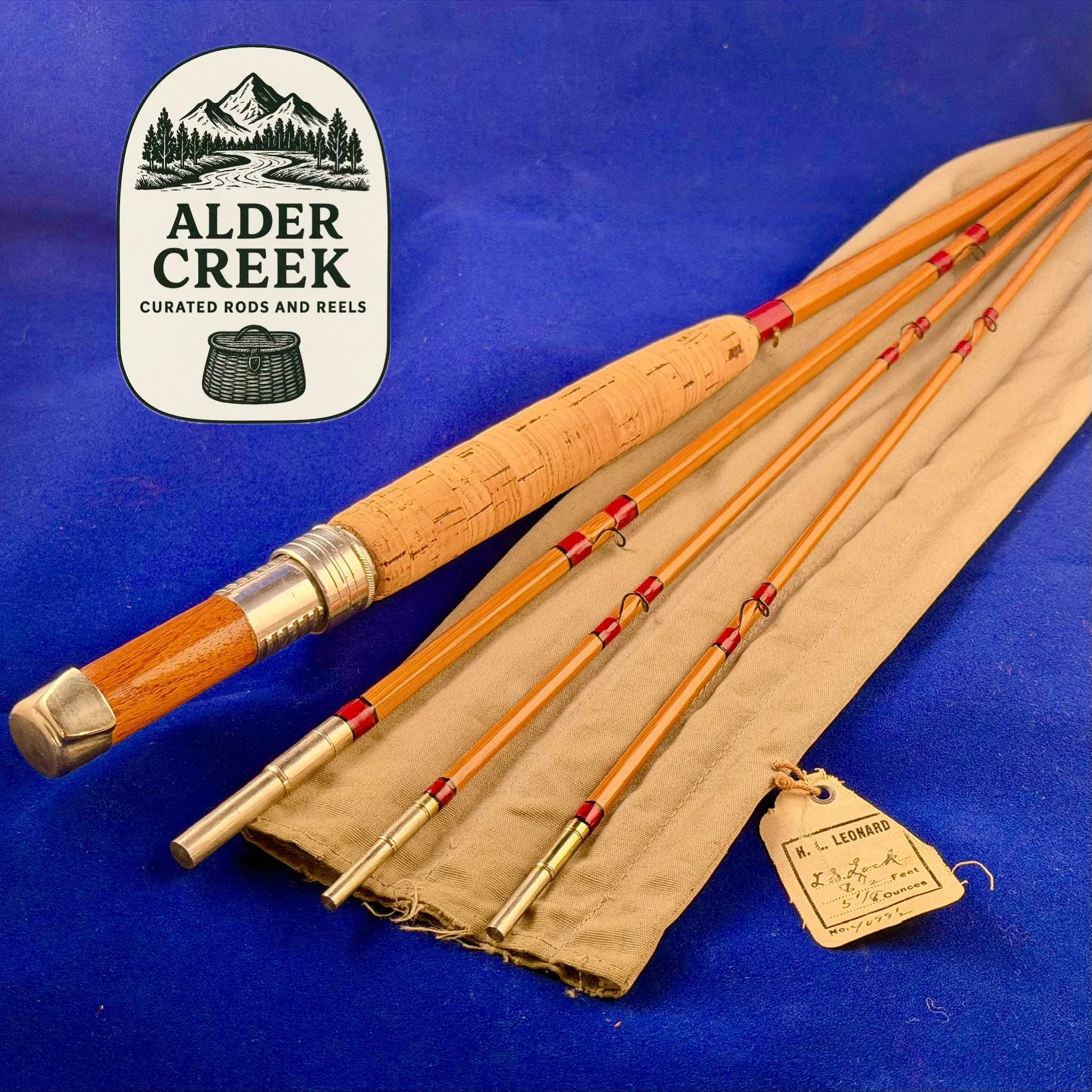
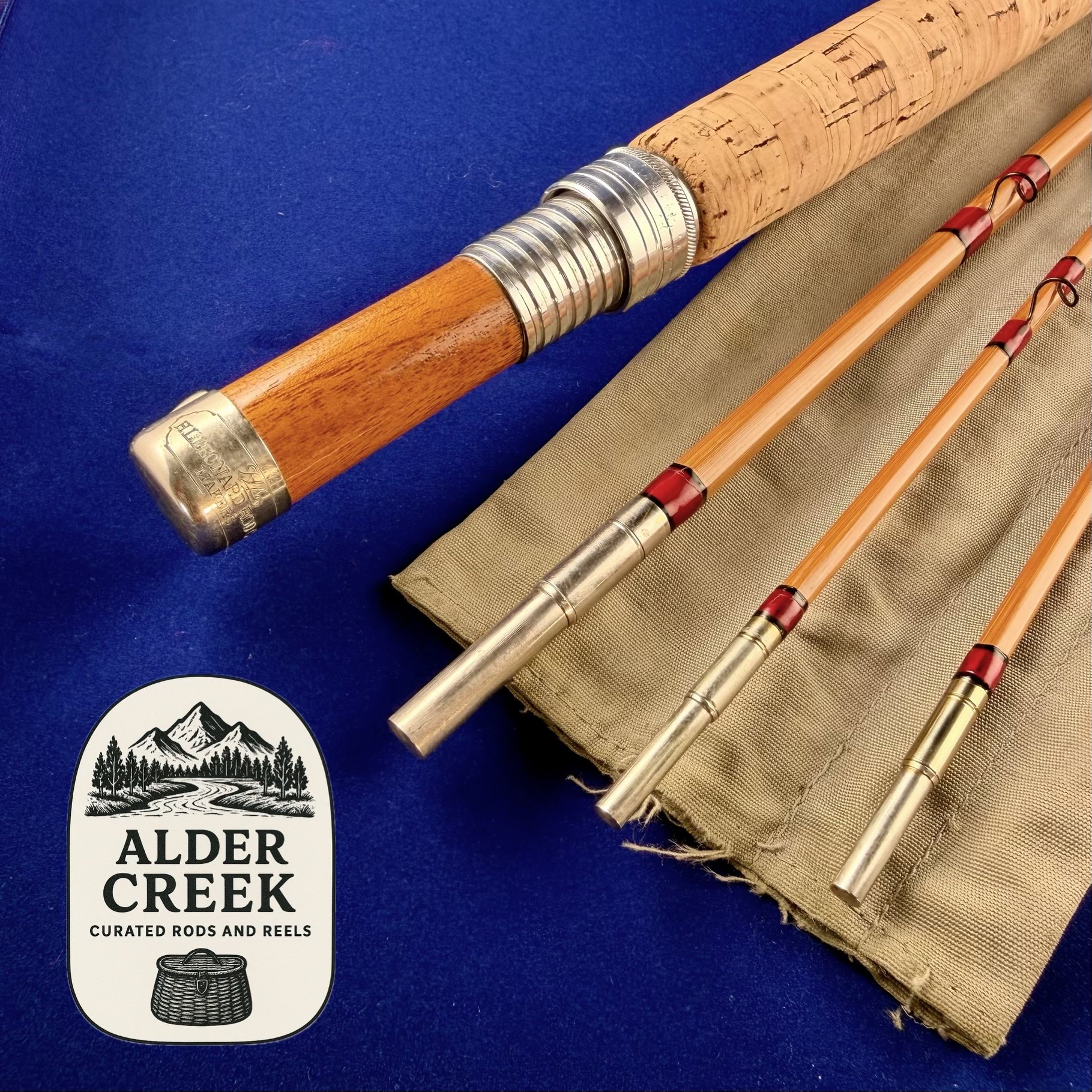
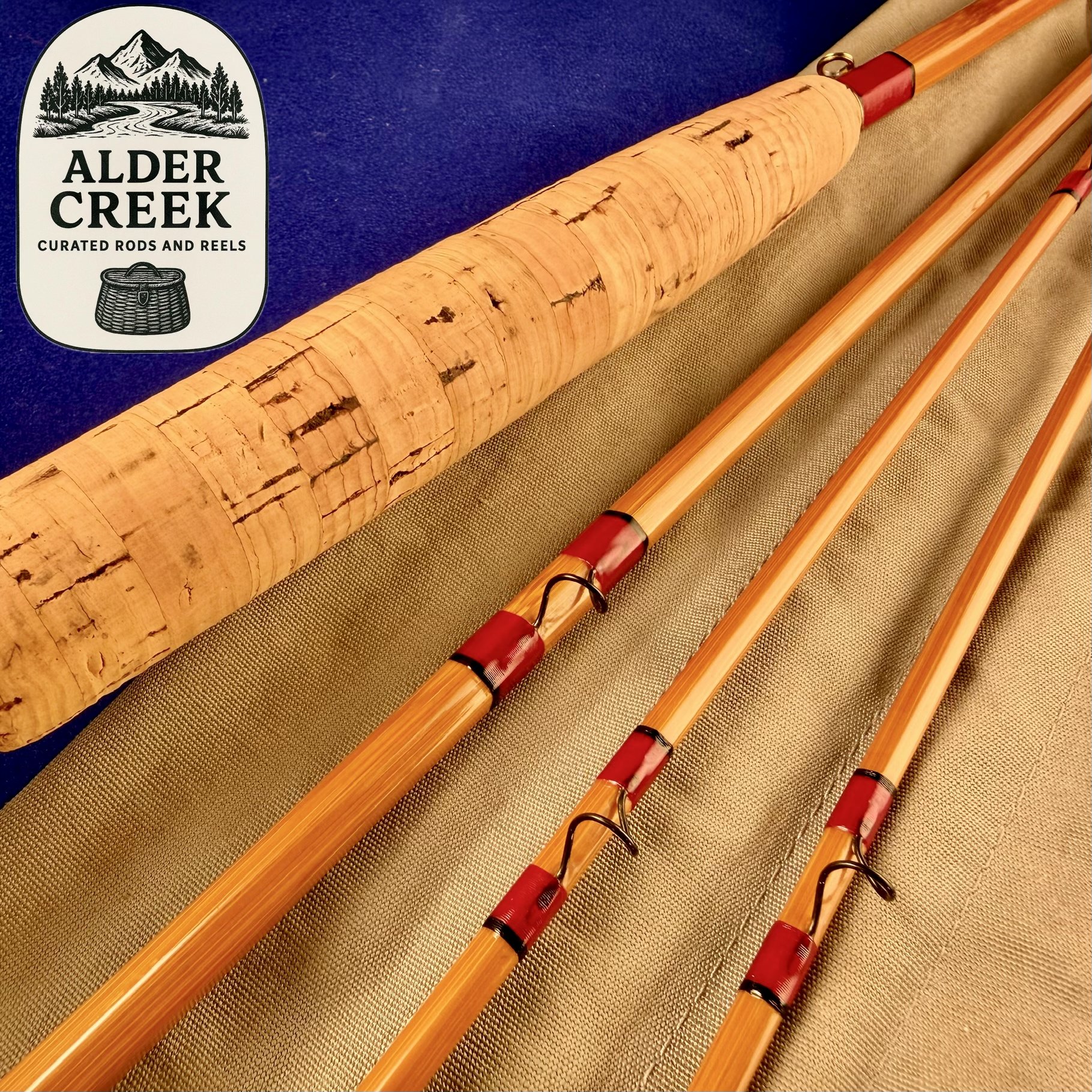
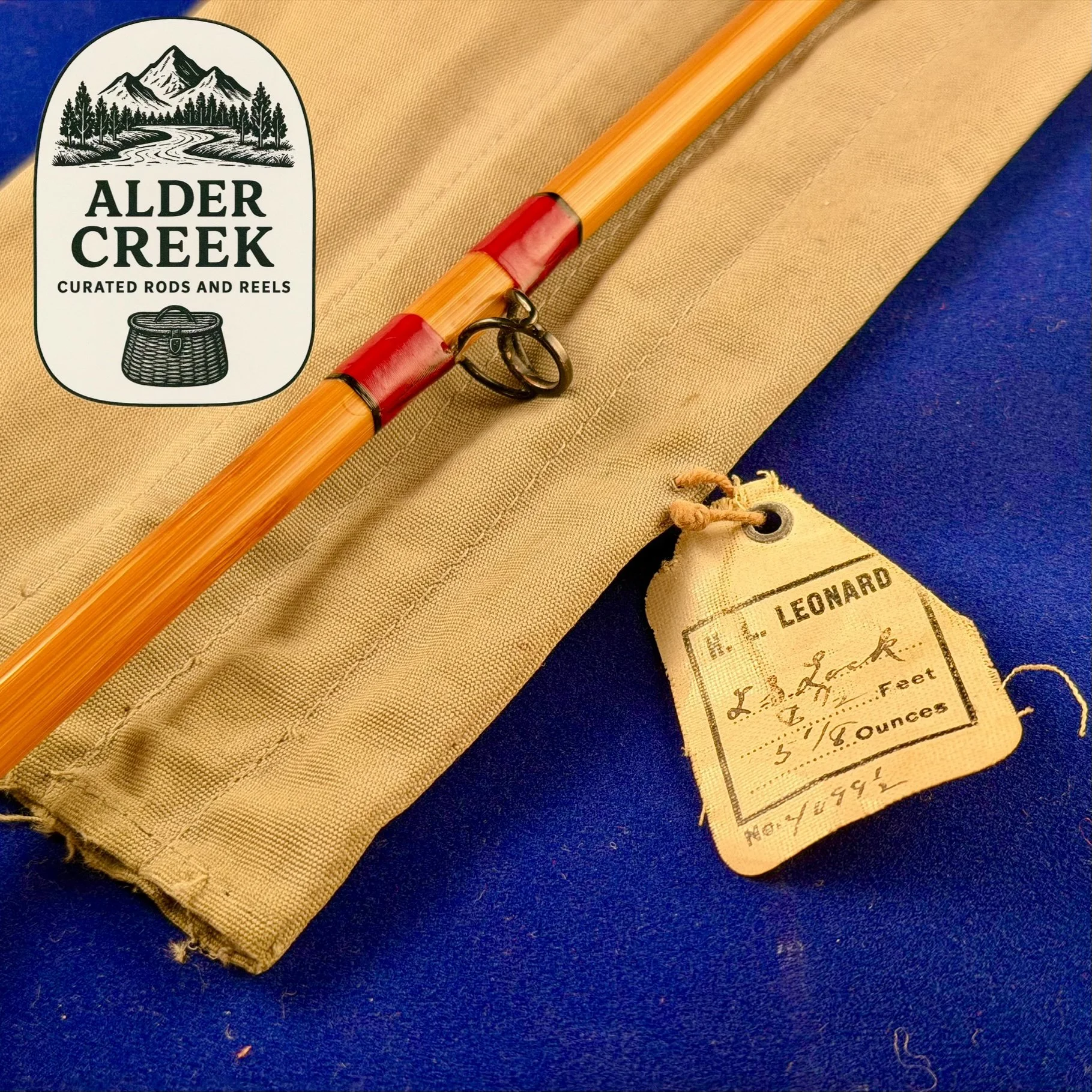
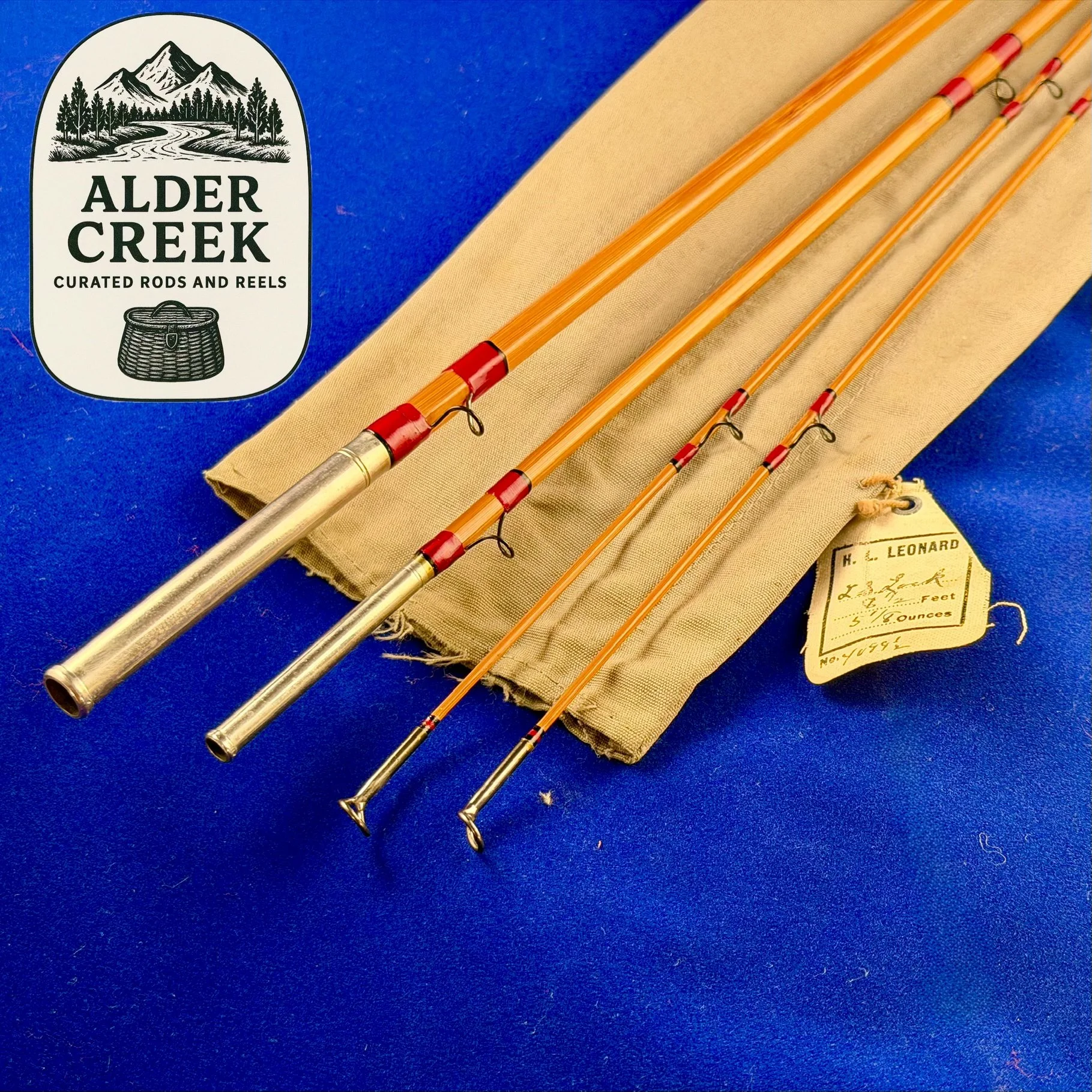
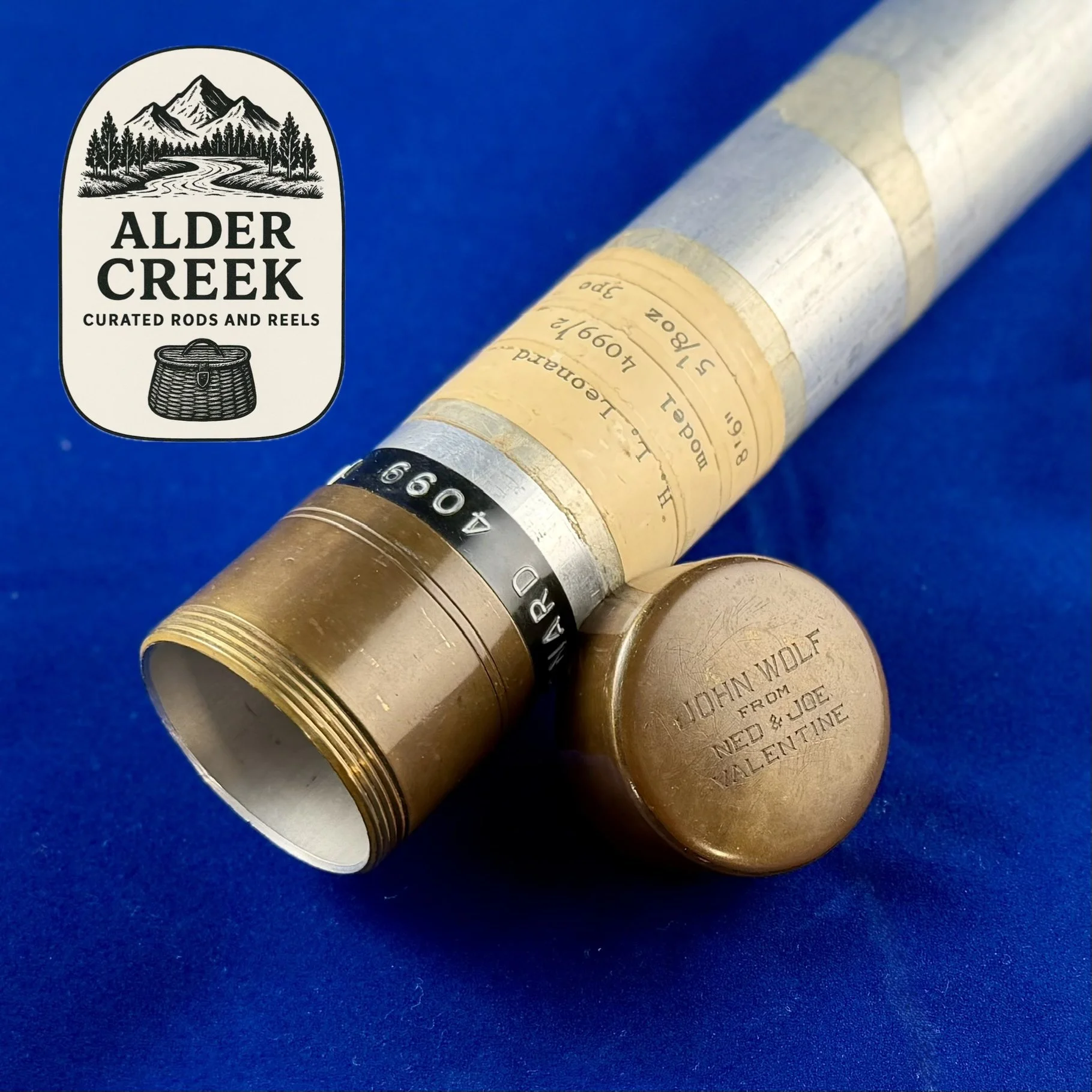
A particularly fine and increasingly scarce H. L. Leonard 4099½, a more powerful development of the celebrated 50½ model. Originally conceived as a tournament rod, the 4099½ is equally at home on large rivers and lakes, where wind, distance and substantial trout demand a little more authority from the rod.
As the original description aptly puts it: “Think big waters, big winds, big fish.”
This is a rare pre-fire Leonard from the Harold Reynolds era, dating from the 1940s, and it remains in excellent condition. The rod handles lines from approximately #6 through #8, giving it considerable versatility for the angler who appreciates a traditional Leonard with some additional power.
The rod retains its original 1940s grey bag and intact hang tag, with burgundy wraps and black tipping. The cane is straight and the ferrules remain tight. The rod has seen only light use, with very light hand soiling and minor ridging to the cork grip. There are some small cracks to the wraps consistent with casting and age. The rod bag shows some fraying at the top.
Few descriptions better capture the character of this model than Marty Keane's account in Classic Rods and Rodmakers:
"Sensing a need to offer a slightly stronger #50DF, the #4099 came forward, and from it one of the great Leonard classics, the #4099 1/2, a three-piece 8 1/2-foot model, originally a tournament rod, weighing 4 1/2 to 5 1/2 ounces - usually closer to the 5 1/4 - 5 1/2 ounce weight. This rod, in my opinion, deserves special mention as a superior instrument, especially for use when large flies, strong winds, and big water must be covered for long periods of time. Its comfortable, slightly thick grip is wisely designed and the powerful tapers allow the angler to make difficult casts with a minimum of effort. The #4099 1/2 has amazed everyone who has performed with it, and it remains a favorite throughout the country with amateur tournament casters and trout fishermen alike."
The 4099½ occupies an especially interesting place in the Leonard catalogue: a powerful, purposeful taper that retains the elegance and refinement for which the great Leonard rods are known. Examples retaining their original bag and hang tag are particularly desirable.
A rare Leonard, preserved in remarkable original condition and ready for the water.
Explore our collection of H.L. Leonard bamboo fly rods, spanning several generations of American rodmaking, from the pre-fire era to the workshops of Tom Maxwell and Marc Aroner. Discover the 50DF Tournament, Hunt 50-5, The Duracane, and the Catskill Special 48-4.
Maker
H.L. Leonard
Model
4099½
Period
Pre-fire, c. 1940s
Length
8'6"
Configuration
3-piece / 2-tip
Line
#6–8
Weight
5 1/8 oz
Action
Powerful, progressive
Wraps
Burgundy with black tipping
Condition
Excellent original condition; minor age-related wear to wraps
Includes
Original grey bag with hang tag
Questions about this piece, international shipping, or price are always welcome.
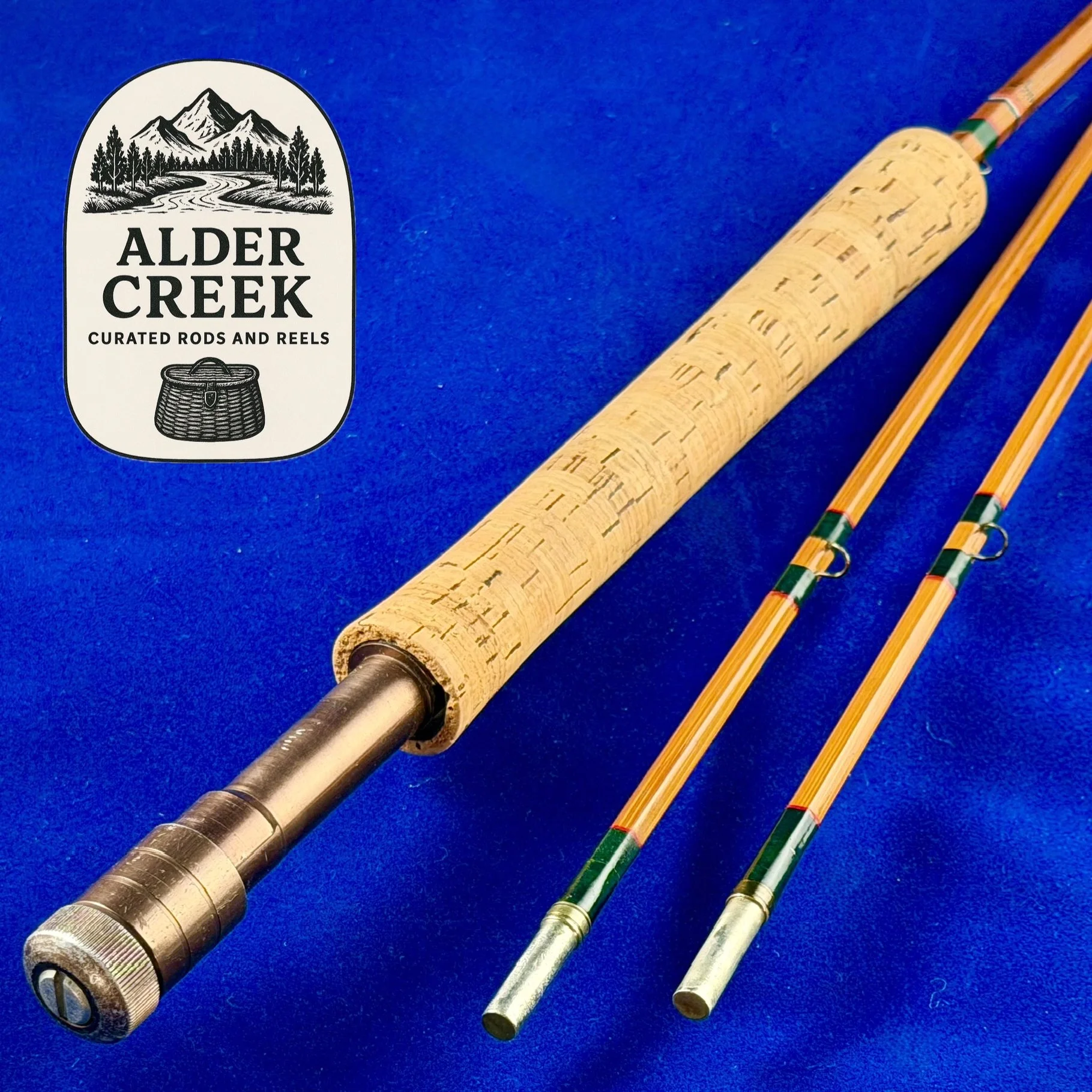
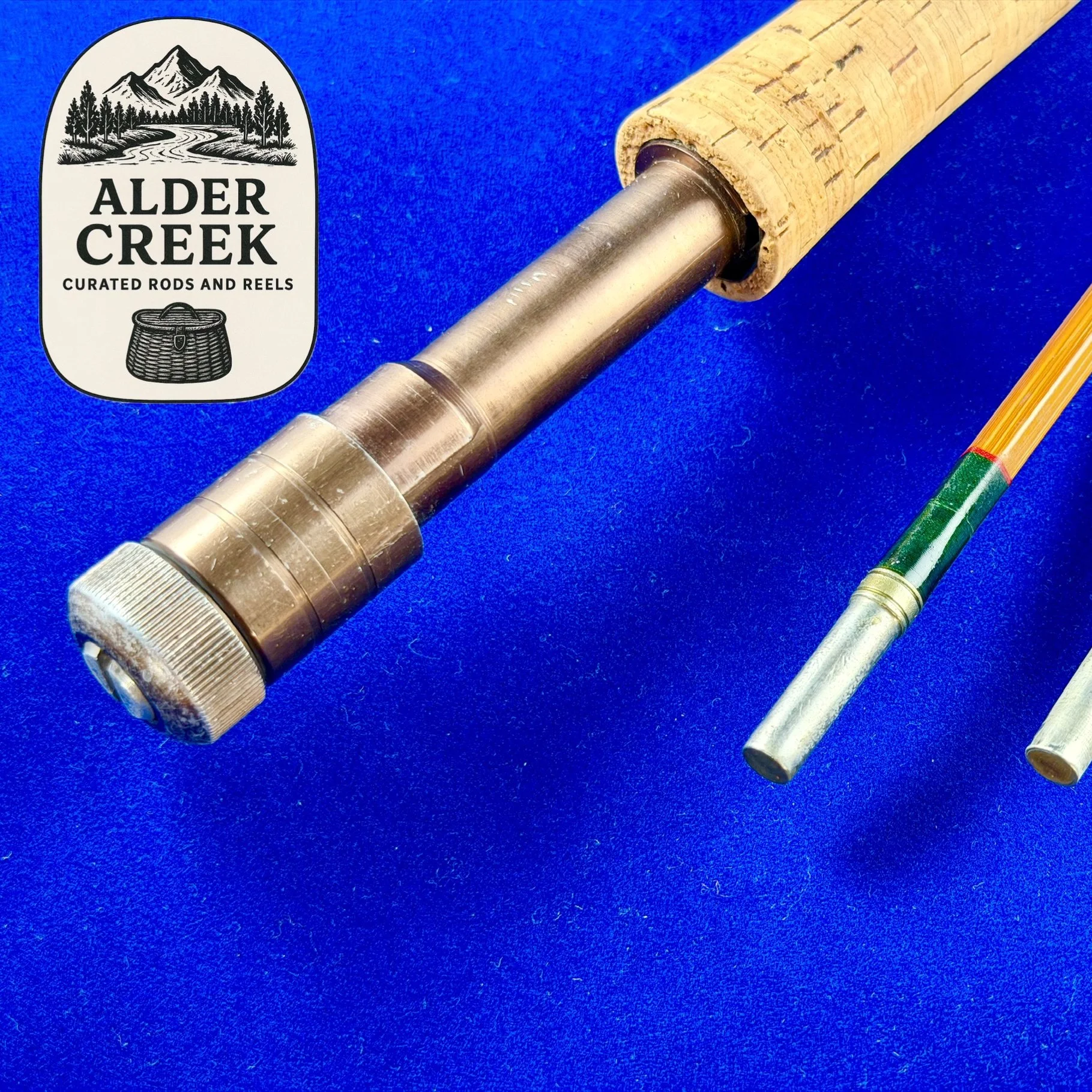
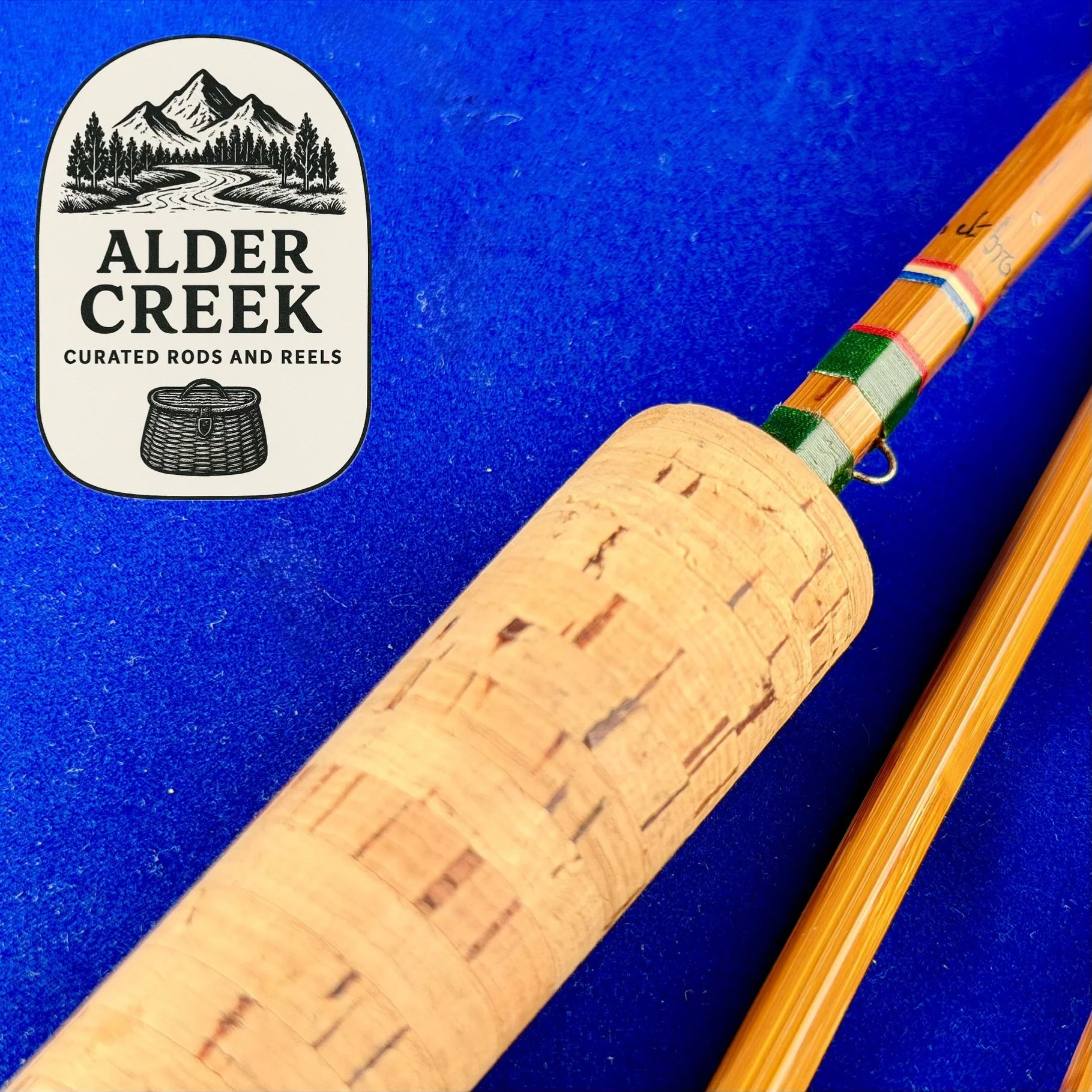
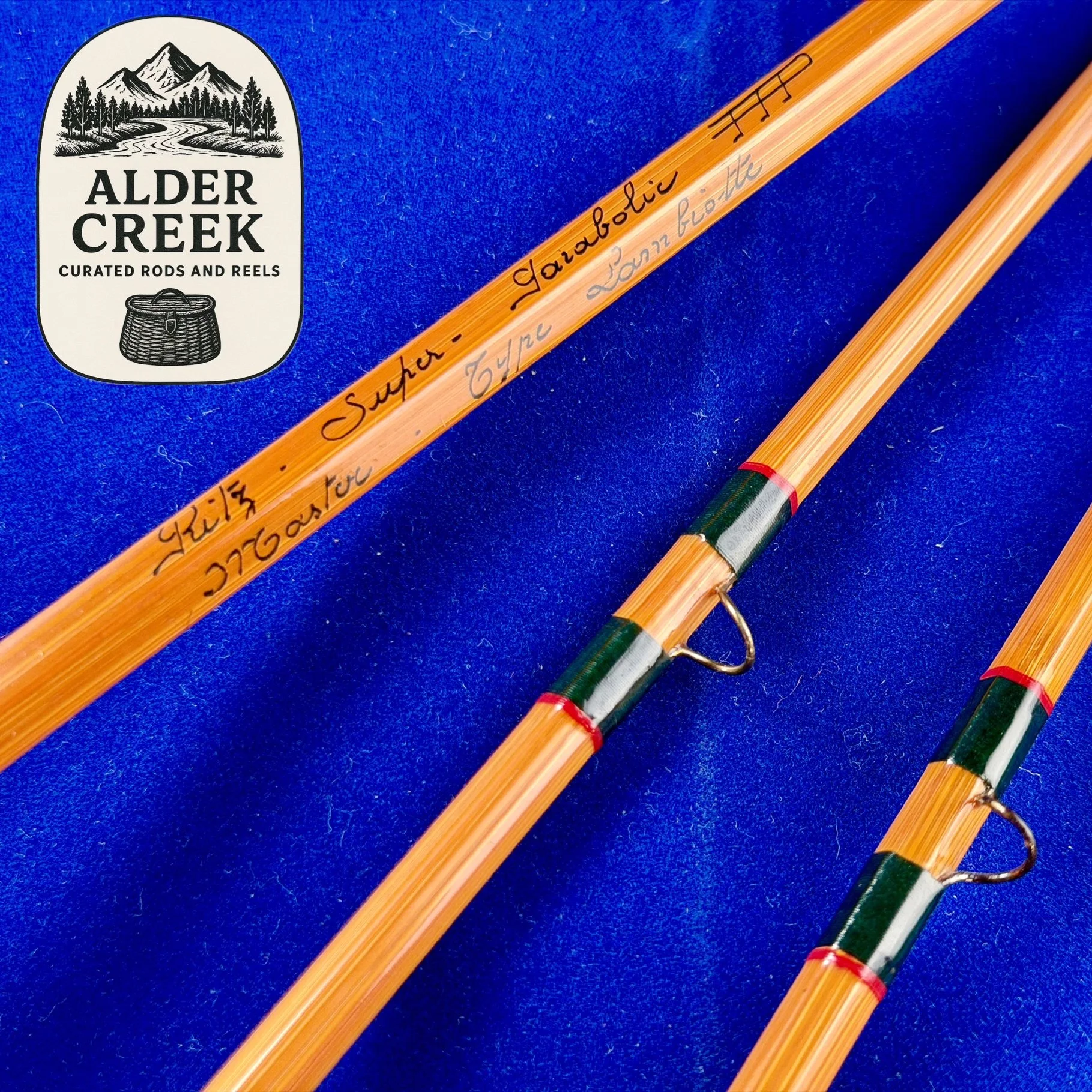
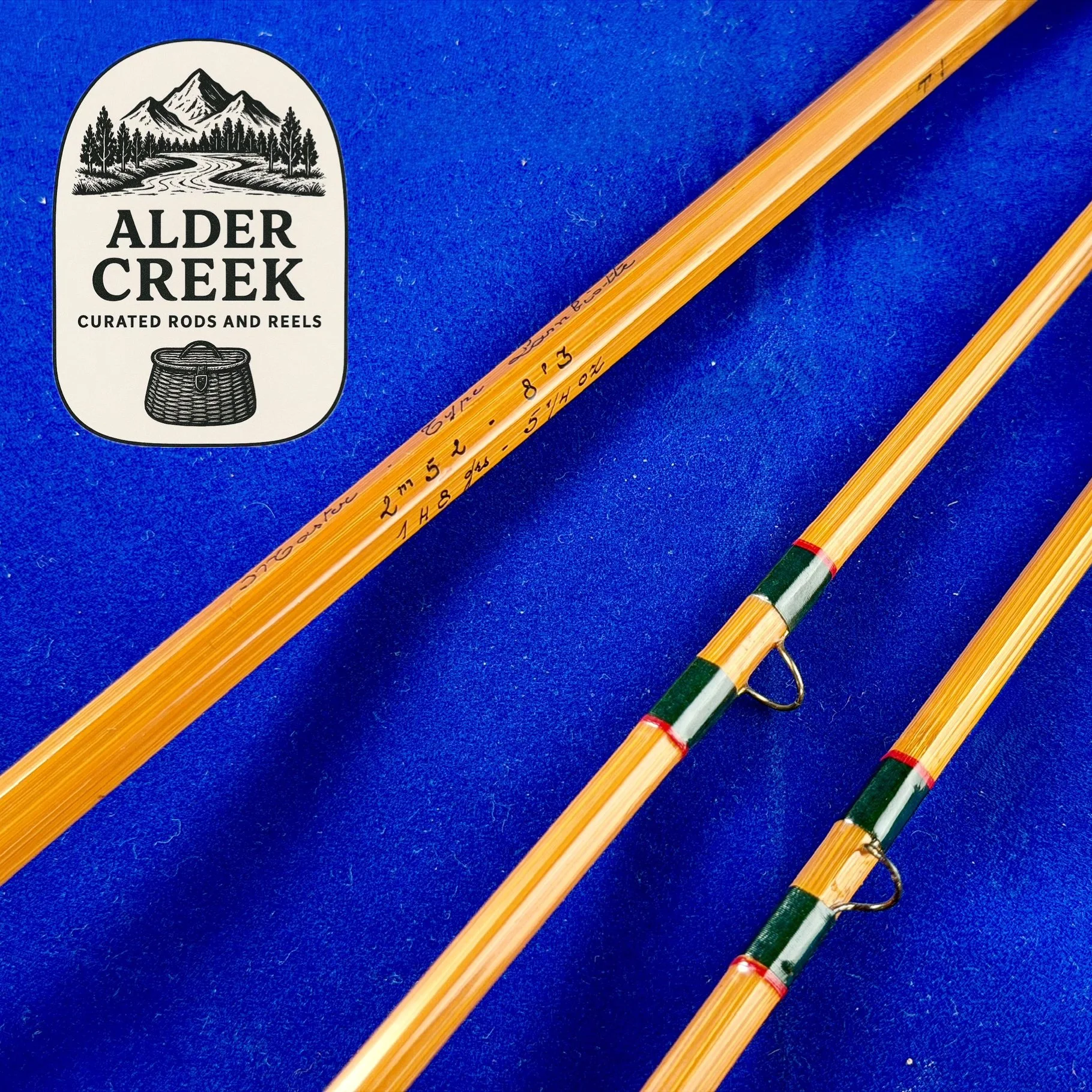
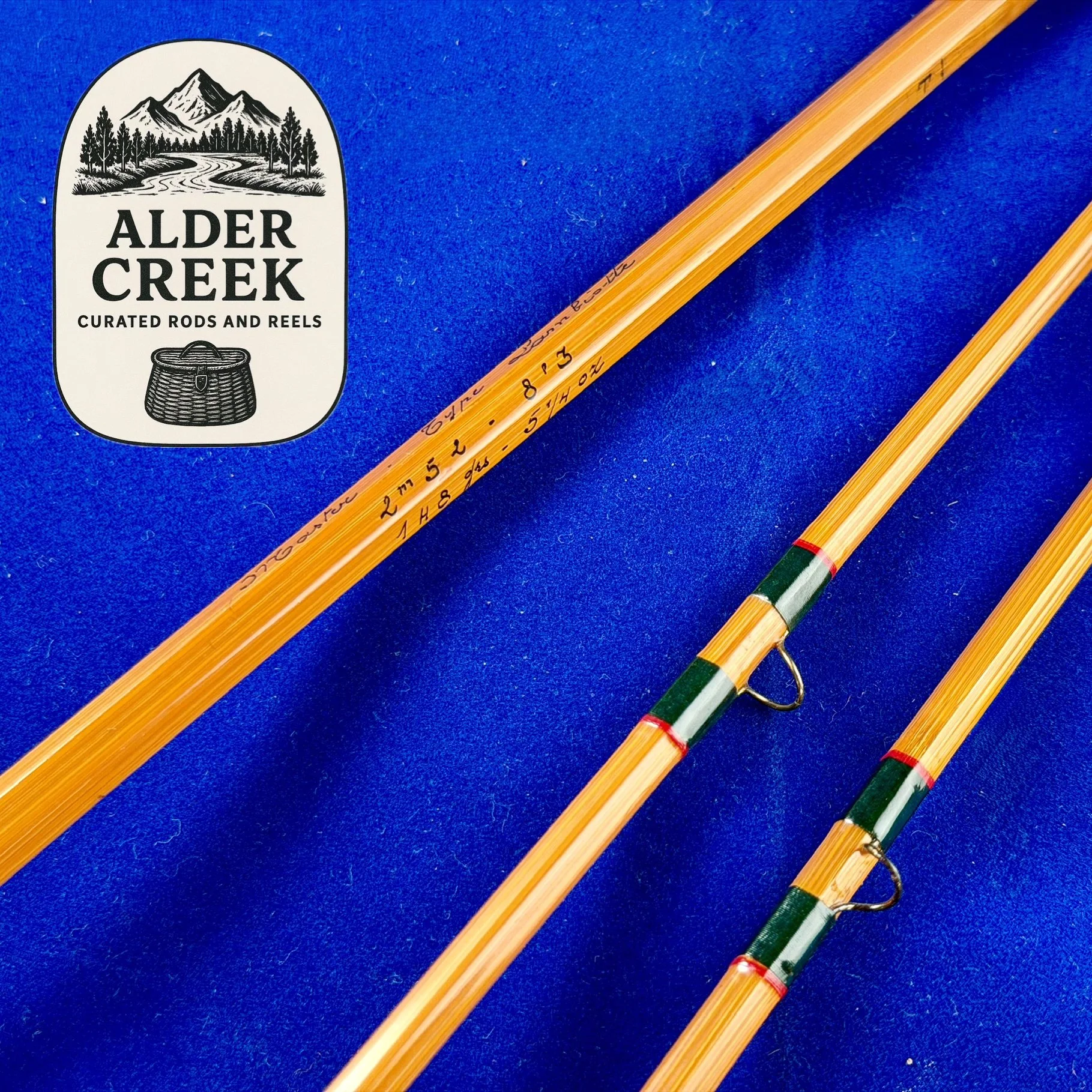
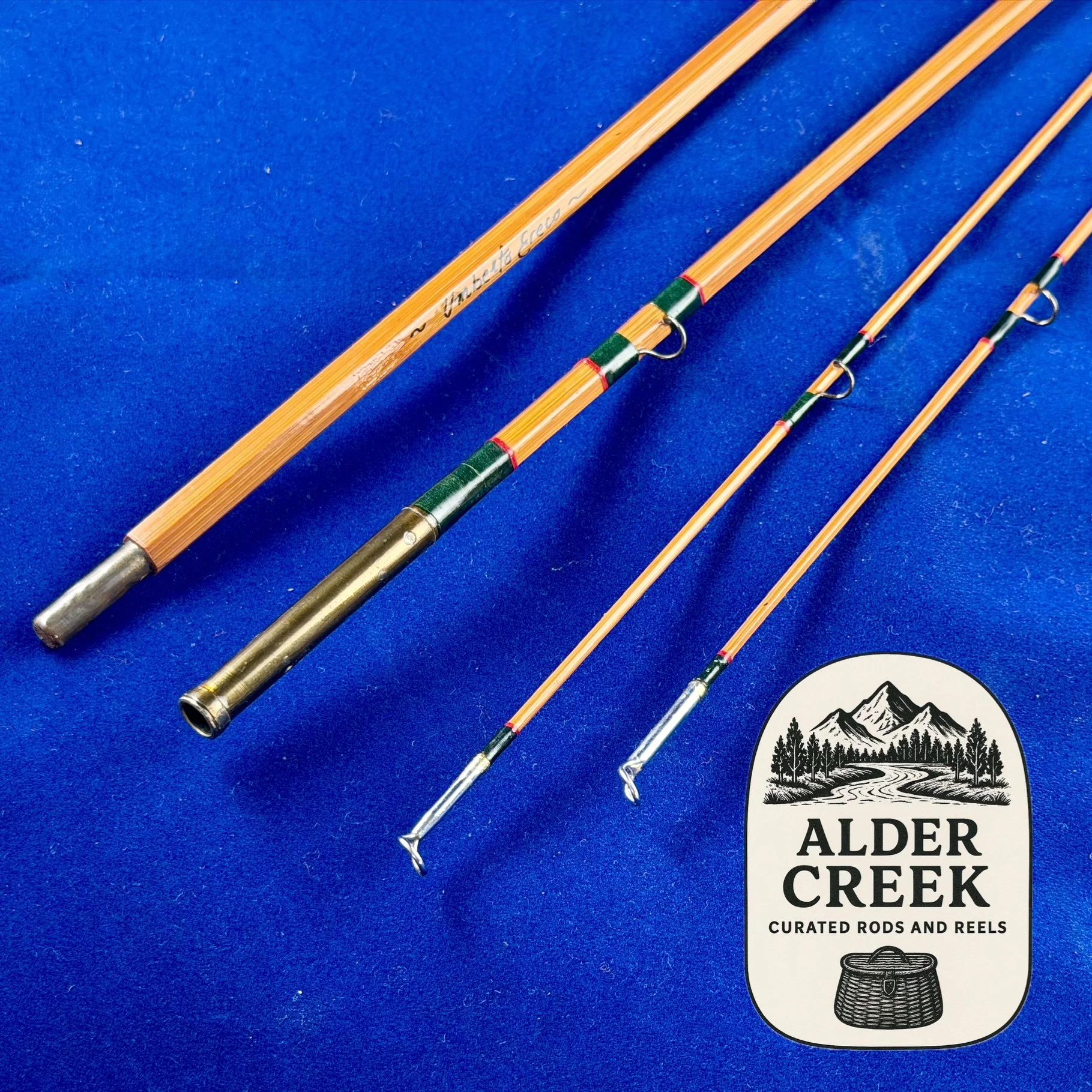
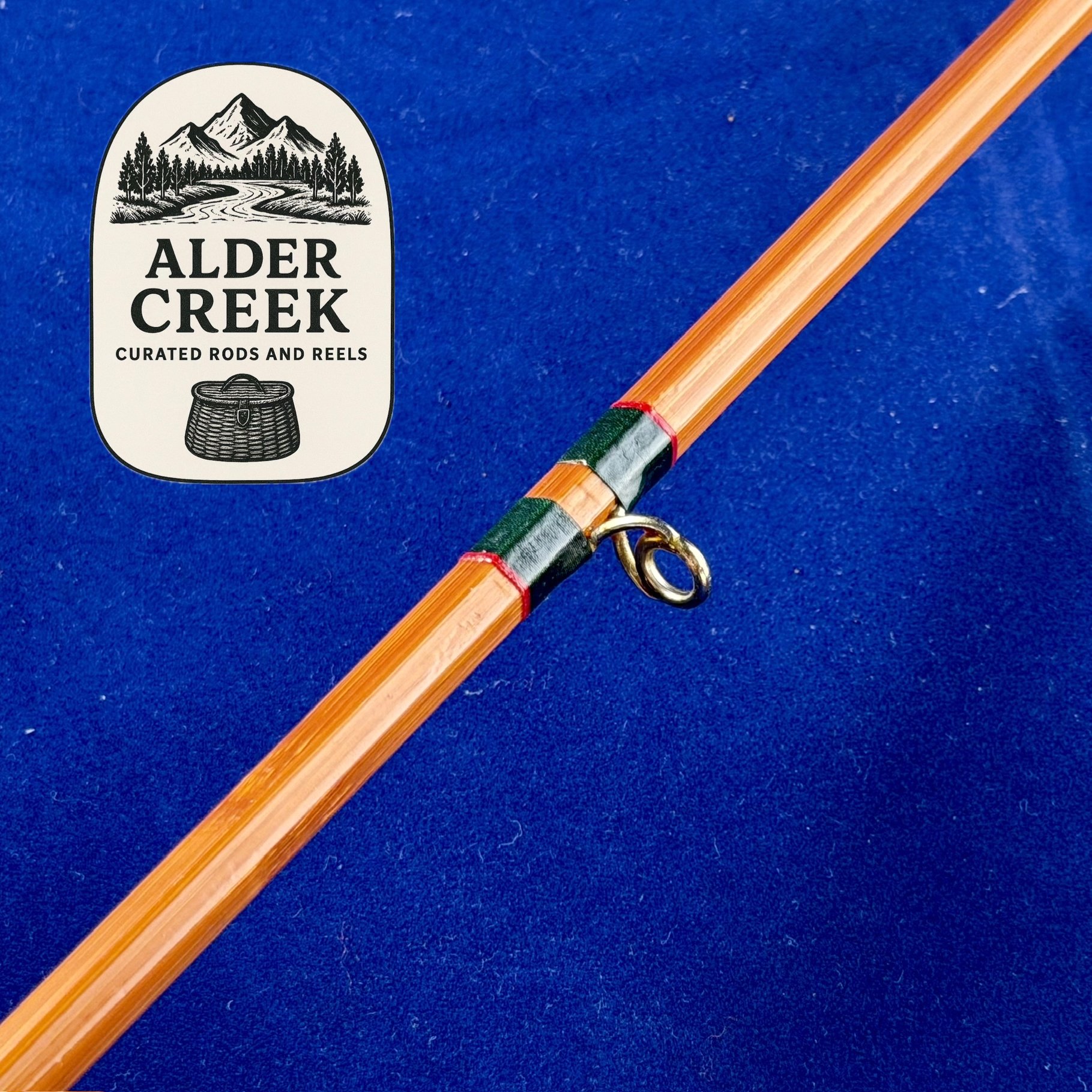
A fine and exceptionally well-preserved example of one of Pezon et Michel's most celebrated bamboo rod designs: the Ritz Super Parabolic PPP, Master — Lambiotte Type.
Measuring 8'3", built in two sections with two tips and weighing 5¼ oz., this rod is designed for a #5–6 line. Importantly, this is an original French-made Pezon et Michel rod, rather than a Sharpe's or Farlow's rod built on a P&M blank.
The rod remains in excellent original condition, retaining its characteristic staggered-ferrule construction and original bamboo ferrule plug. The cane is finished with the classic green silk wraps tipped in red, while the fittings and workmanship remain remarkably well preserved.
The long, elegant Ritz-style grip, with its subtle flare towards the rear, is paired with a champagne-coloured aluminium screw-lock reel seat. Ferrule fit is excellent throughout, and the rod retains the refinement and distinctive character for which the Ritz-designed Super Parabolic series is renowned.
The rod is accompanied by its original Pezon et Michel red satin bag and original plastic tube, complete with brown protective cover and the original P&M patch.
A particularly desirable French bamboo rod, and an excellent example of the Ritz/Lambiotte tradition that helped establish Pezon et Michel as one of Europe's great rodmakers.
Maker
Pezon et Michel, France
Series
Ritz Super Parabolic PPP
Type
Master – Lambiotte Type
Length
8'3"
Configuration
2-piece / 2-tip
Line
#5–6
Weight
5 1/4 oz
Action
Parabolic
Construction
Staggered ferrule
Wraps
Green silk with red tipping
Reel Seat
Champagne aluminium screw-lock
Condition
Excellent original condition
Includes
Original bag, tube and ferrule plug
Questions about this piece, international shipping, or price are always welcome.
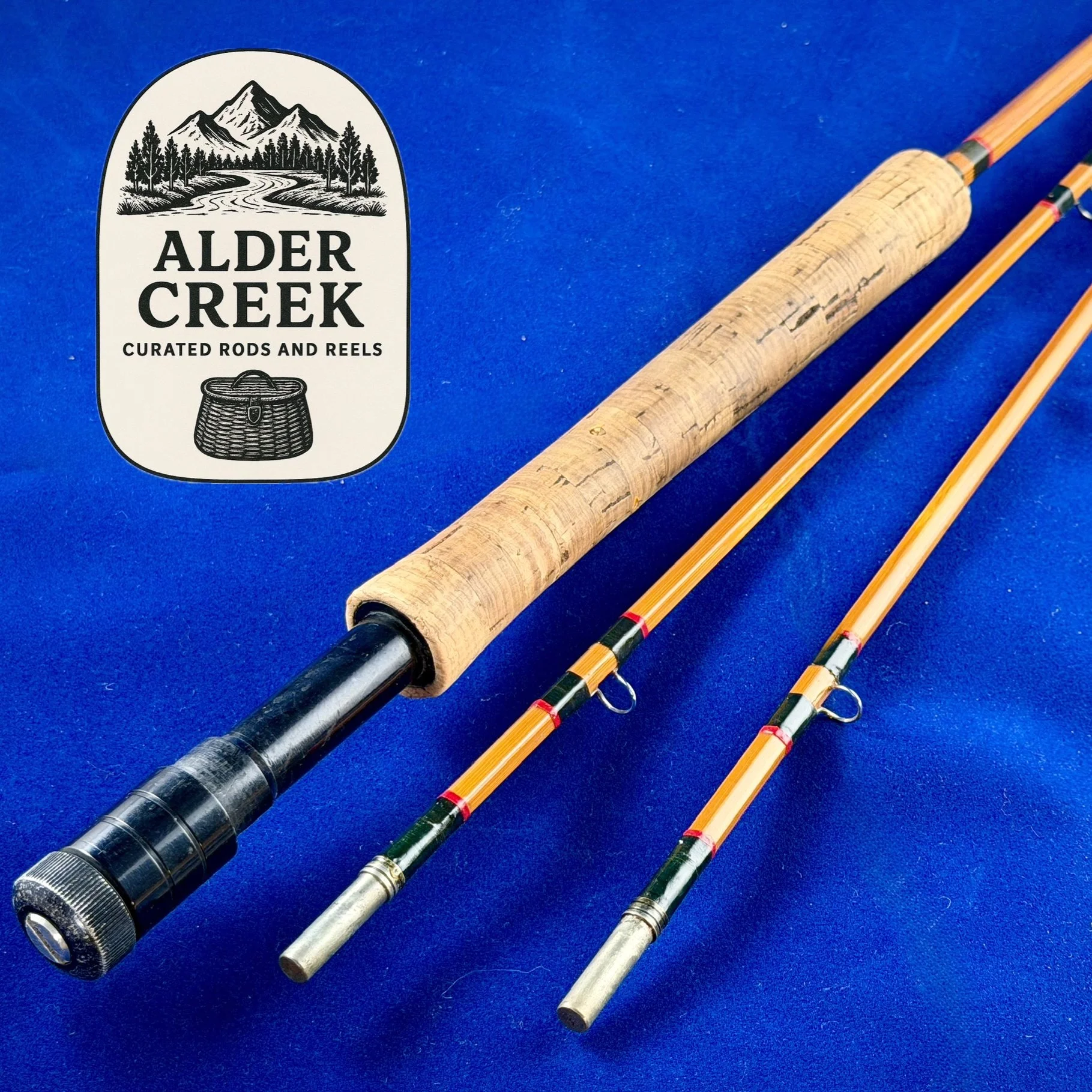
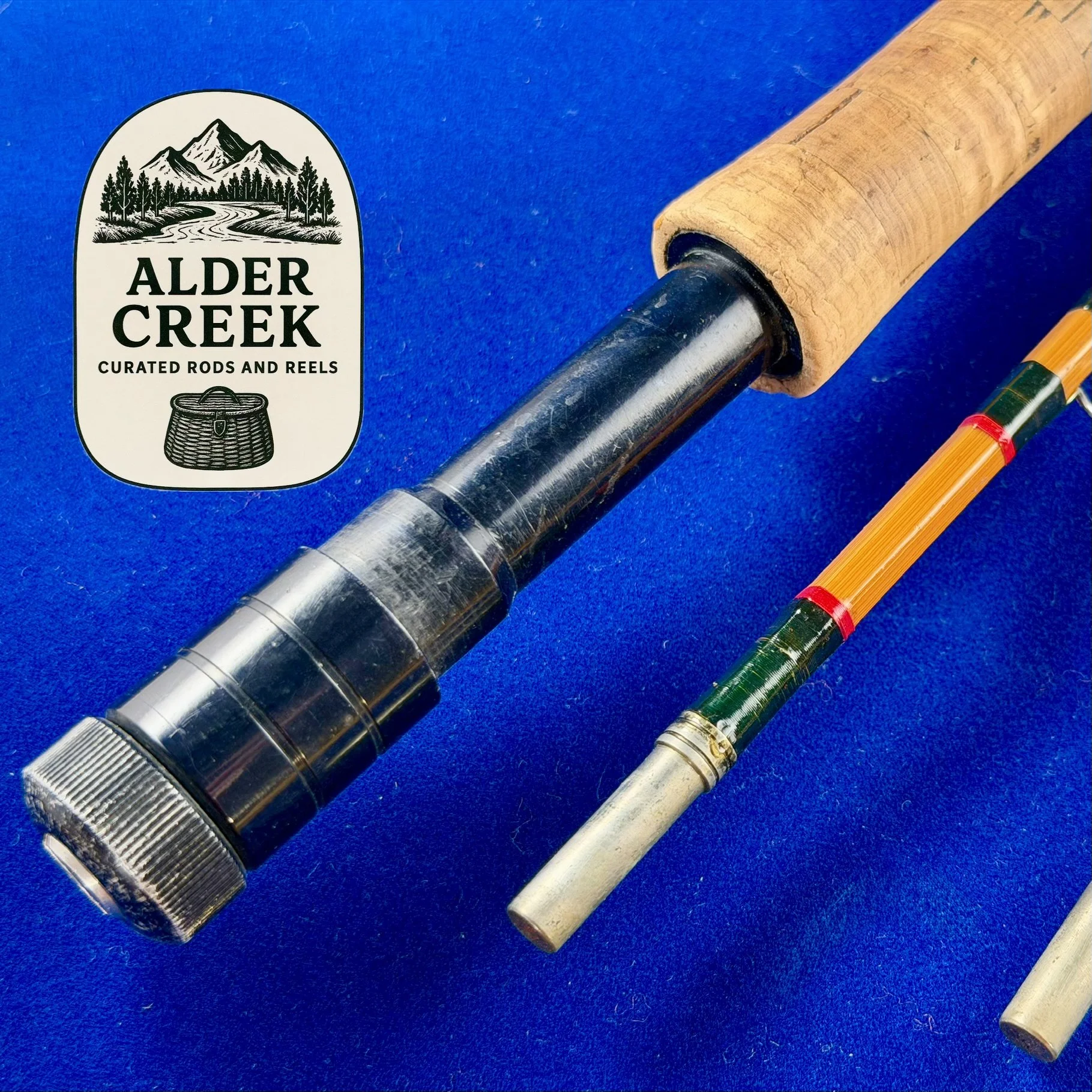
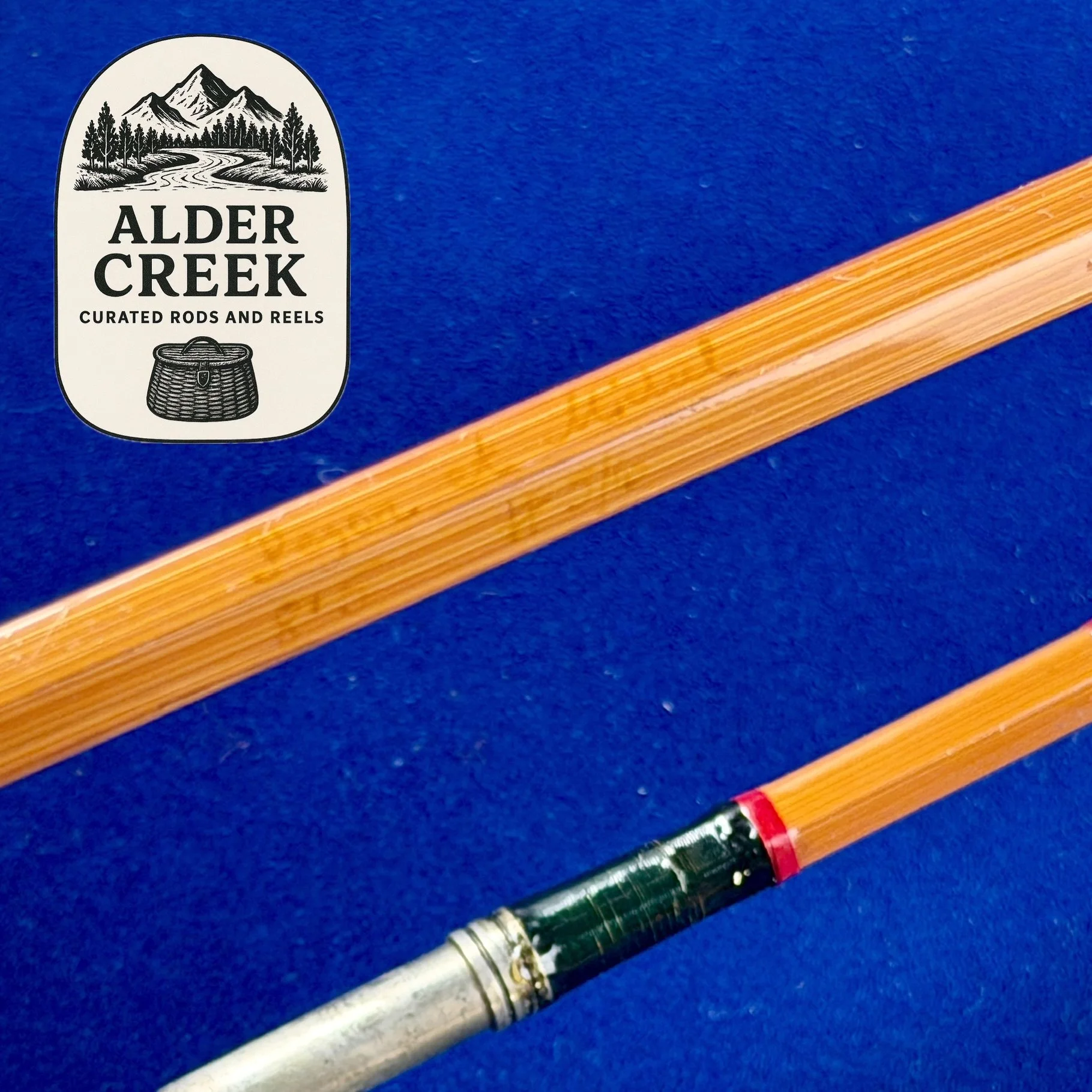
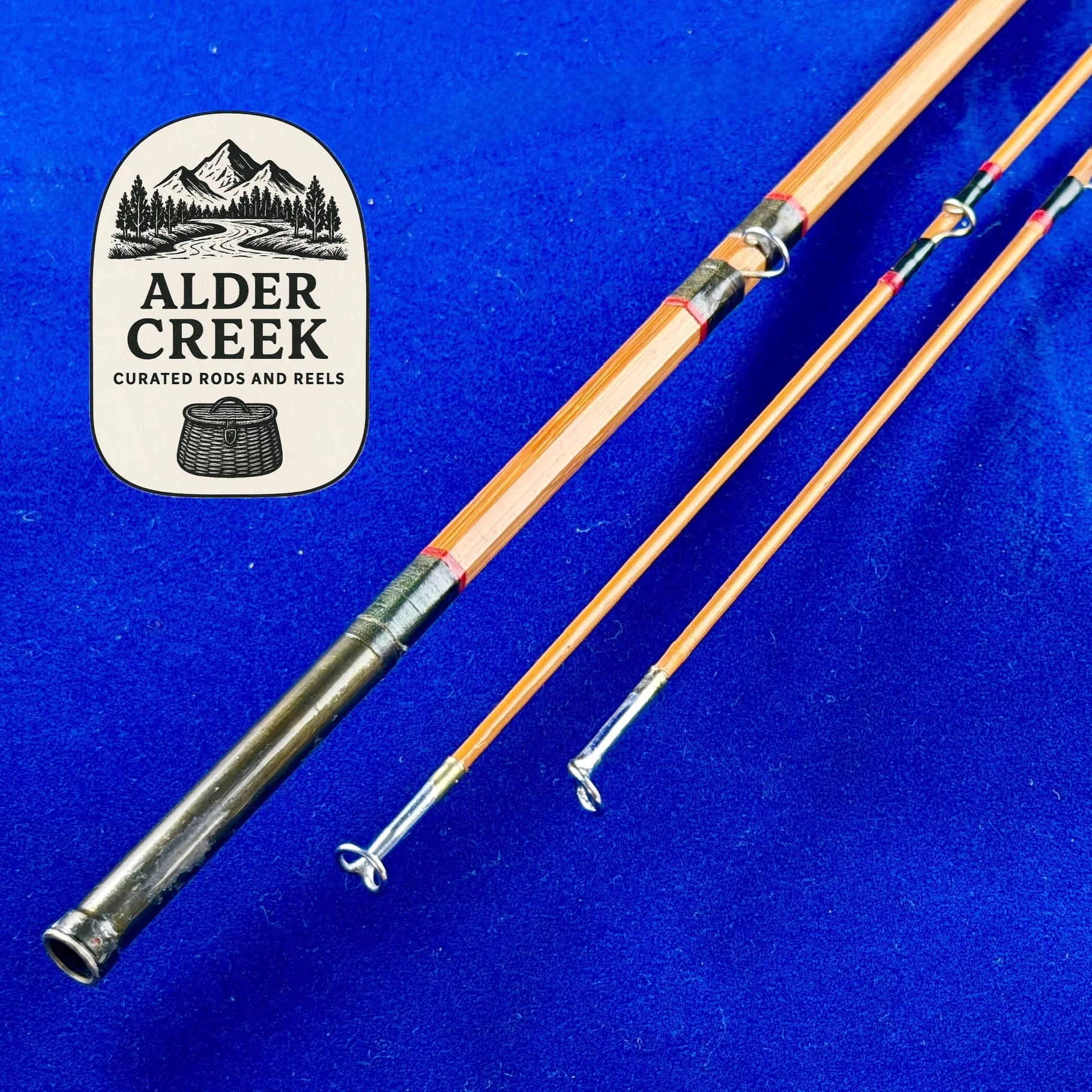
The classic European Trout Rod! Ritz Super Parabolic Fario Club 8′ 5″ with staggered ferules , alloy snake rings, smooth soiled cork handle with black alloy screw in reel fittings, green whippings tipped in red. Included is a original red satin rod bag. A rod heavily used with the brand markings faded and some set. But is ready to fish for many more years!
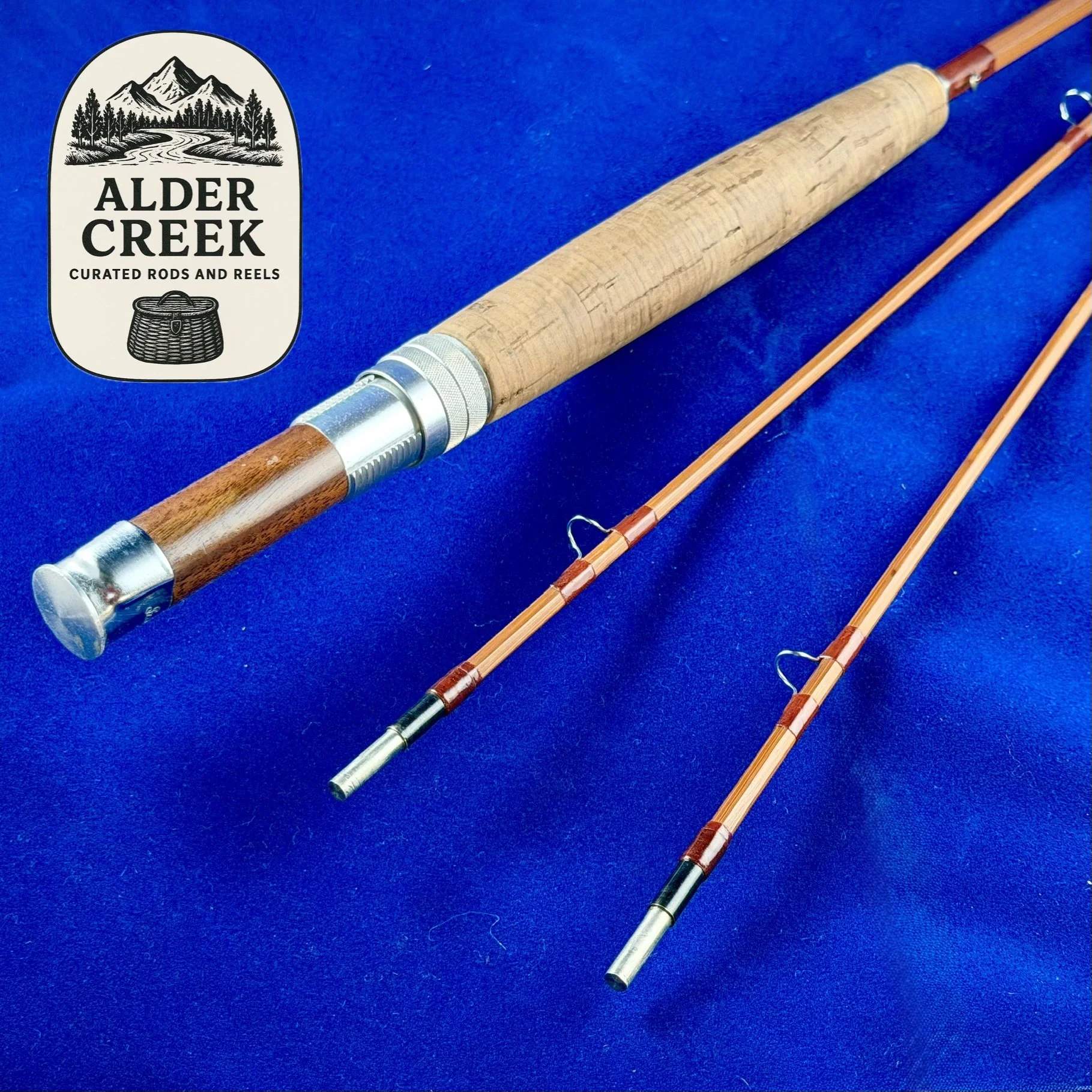
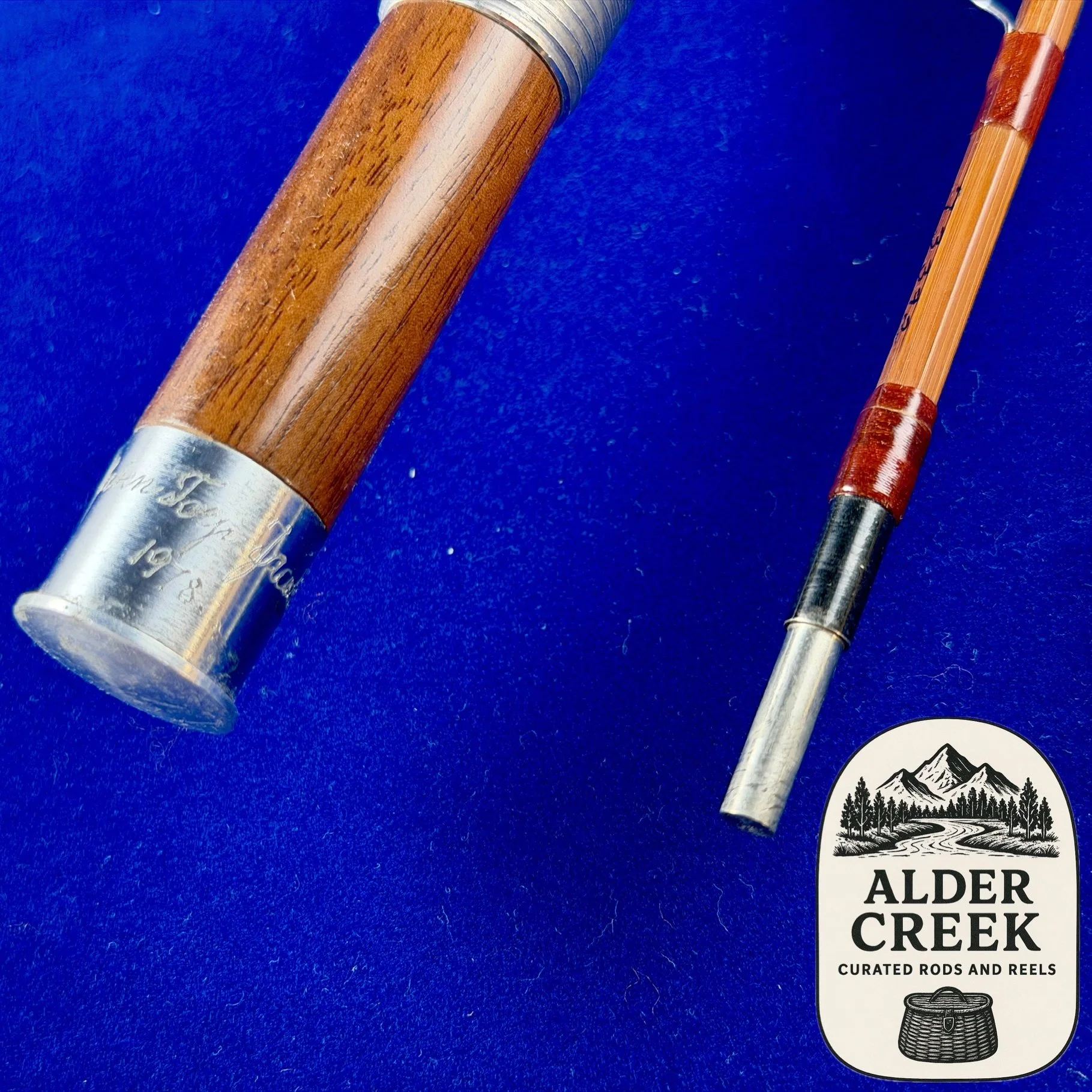
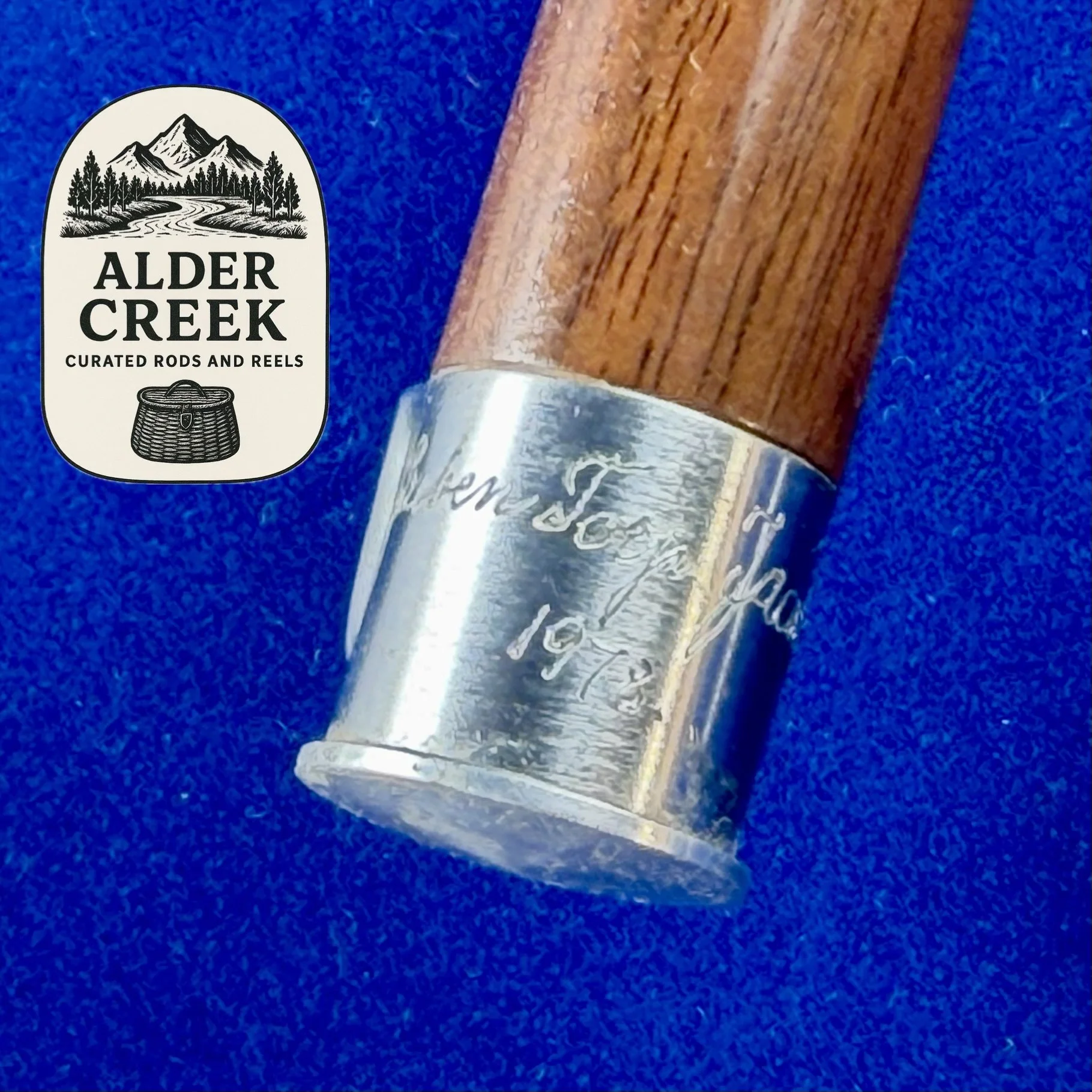
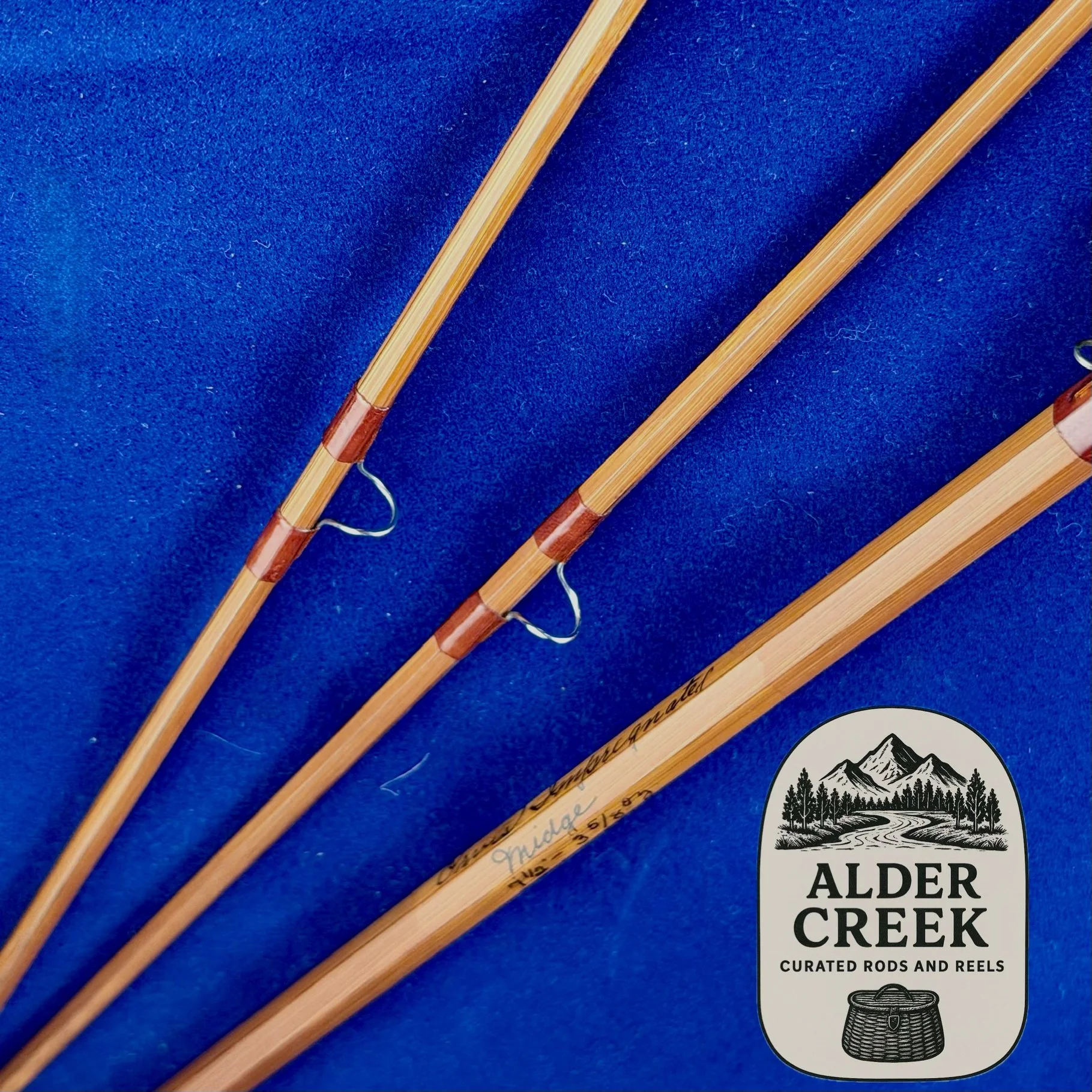
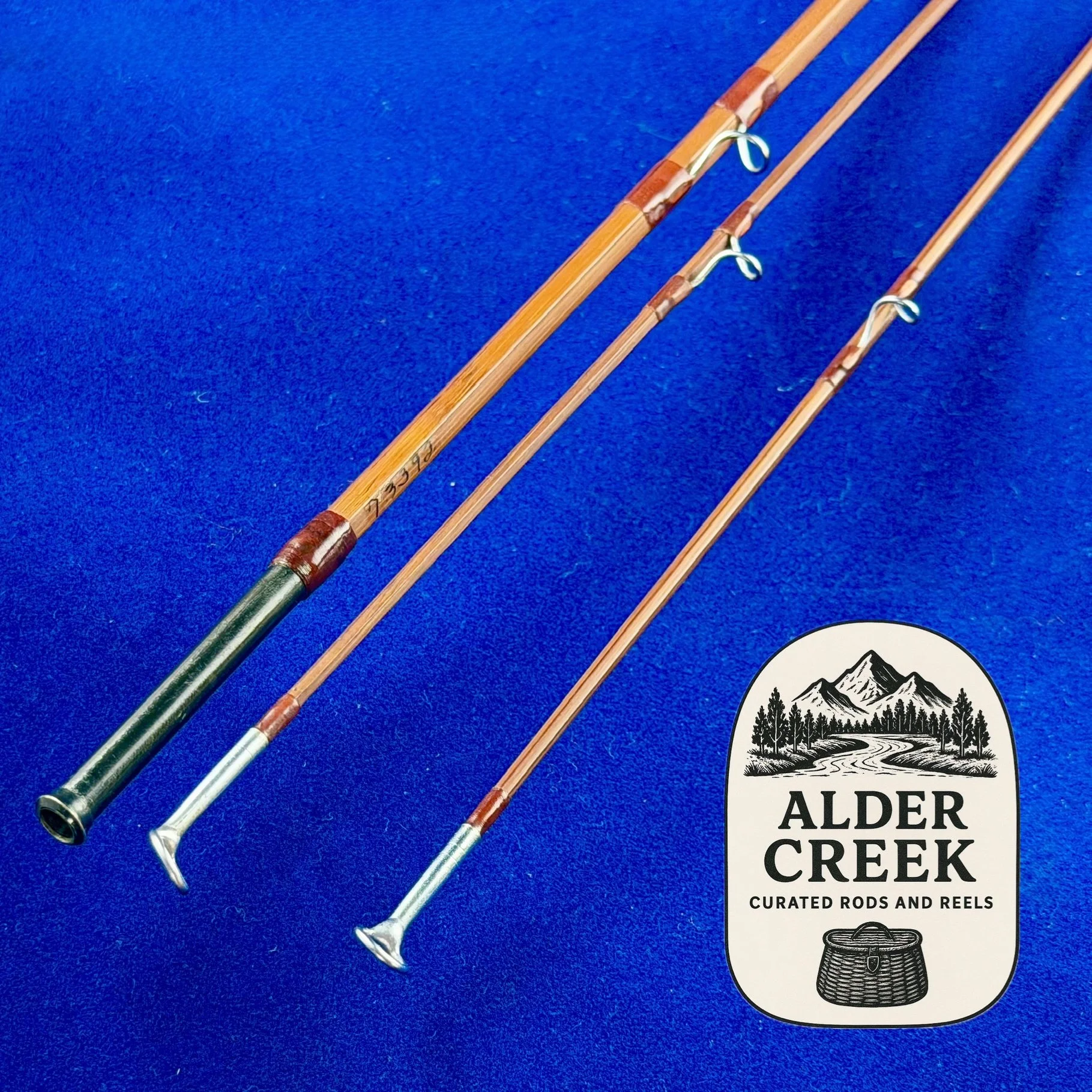
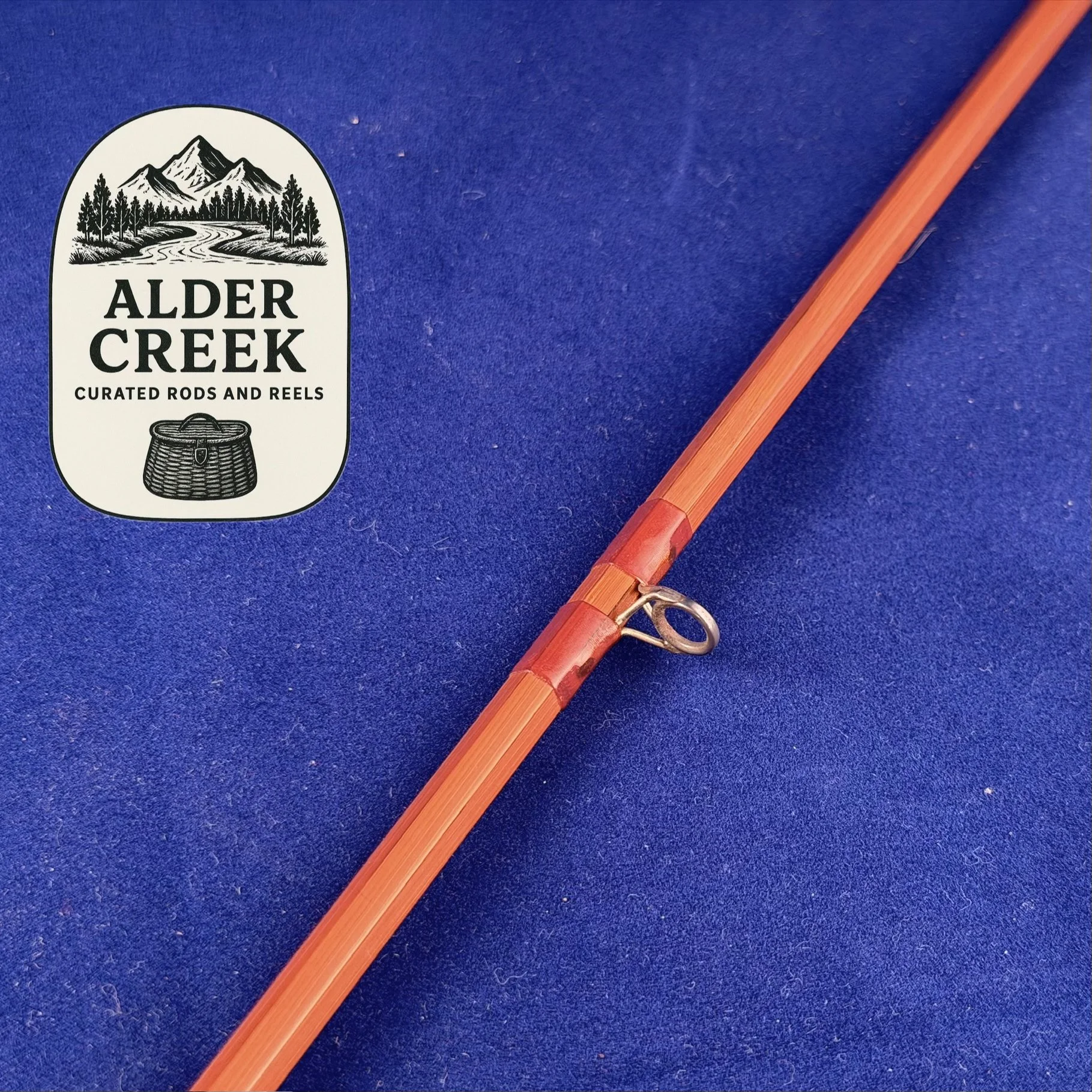
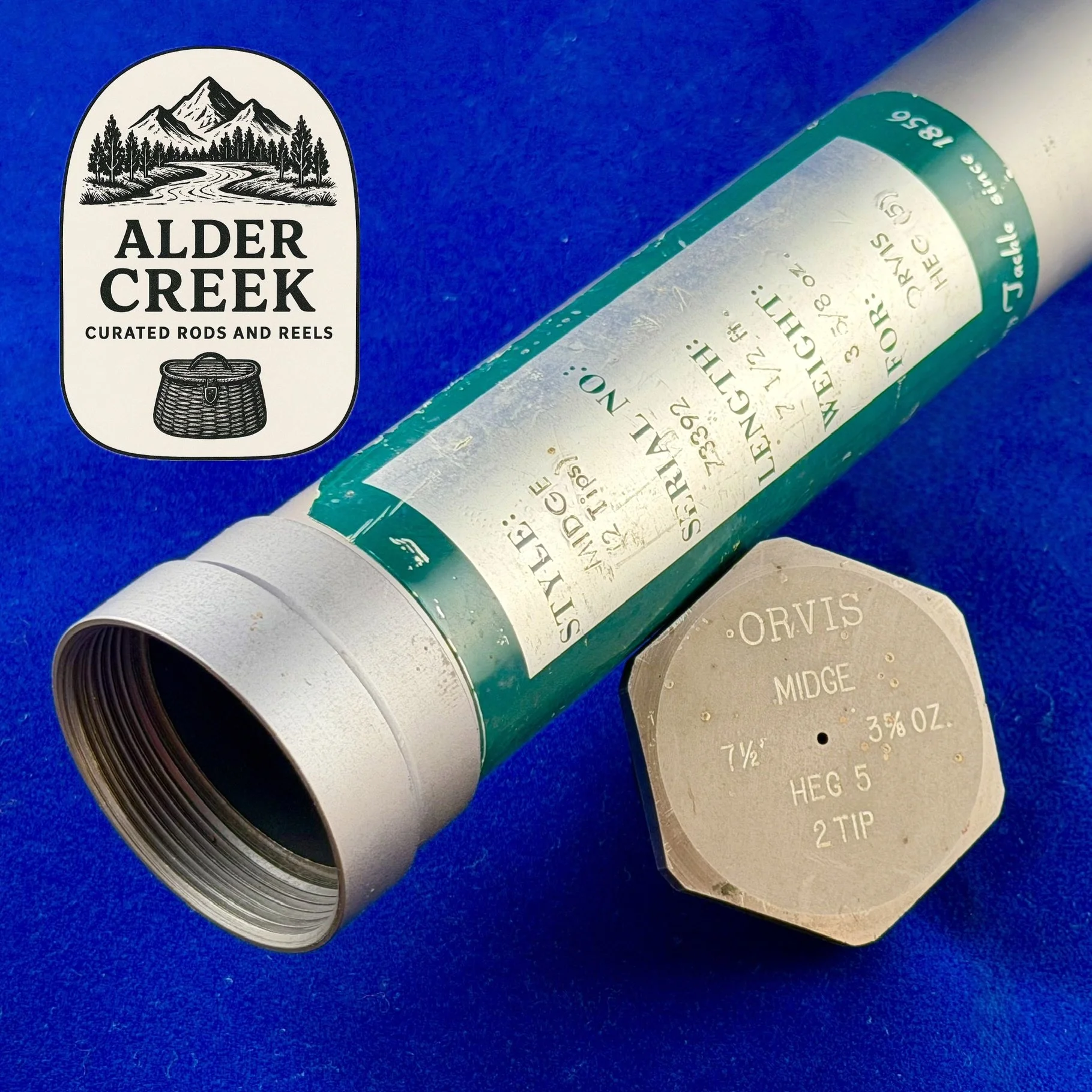
An Orvis Midge with an exceptional provenance, having belonged to Preben Torp Jacobsen, the renowned Danish author, veterinarian and one of the great figures of Scandinavian fly fishing.
Jacobsen's name and the year are engraved on the reel seat cap, while his published writings describe an Orvis Midge of precisely this length and line rating (see below).
The rod itself is an Orvis Midge, measuring 7'6", built in two sections with two tips and designed for a #5 line. Serial number 73392, with a listed weight of 3⅝ oz. It has seen light use and retains some light hand soiling.
The cane is a warm tan colour, finished in the characteristic three-up node configuration and constructed with traditional resorcinol glue. The original-style burgundy wraps are complemented by a carbide stripping guide and chrome guides. The step ferrules have developed an attractive oxidized black finish.
The classic Orvis cigar grip has very little front taper and a distinctive broad, square-ended butt. The reel seat is an aluminium down-locking screw-lock design with pocket cap and a handsome walnut spacer.
The rod is housed in an original Orvis aluminium tube and a non-original two-pocket tan cloth bag.
A lovely fishing rod in its own right, but above all a piece with an unusually personal connection to Scandinavian fly-fishing history. The combination of an Orvis Midge, Jacobsen's ownership and his own published appreciation of this very rod makes it a particularly evocative piece for the collector of both American bamboo and Scandinavian angling history.
This particular Orvis Midge was formerly owned by the celebrated Danish fly fisherman, author and fly dresser Preben Torp Jacobsen, one of the most influential figures in Scandinavian fly fishing. His name and year are inscribed on the rod's cap, providing unusually tangible provenance.
The importance of the association is further strengthened by Torp Jacobsen's own writing. In Tørfluefiskeri, in the chapter “Mine fluestænger” (“My Fly Rods”), he discusses the great American bamboo makers and writes of Leonard and Orvis:
“Alongside Leonard, Orvis has in recent years been among the most reliable makers for those who have wanted a true ‘Stradivarius’.”
He then specifically describes adding an Orvis Midge to his personal collection:
“Later I also added to my collection an Orvis ‘Midge’, 7½ feet long … and intended for a #5 line.”
Torp Jacobsen goes on to explain that, although the actions of the many rods in his collection inevitably overlapped, each possessed its own individual character, and that certain rods had qualities that made him prefer them over the others.
This is therefore considerably more than an Orvis Midge with an interesting former owner. The model itself is documented in Torp Jacobsen's own writing as part of his personal collection, while Orvis is placed alongside Leonard among the makers capable of producing what he evocatively called a “true Stradivarius.”
Explore our other classic Orvis bamboo fly rods, including the Orvis Midge Nymph, featuring an unusual longer tip for nymph fishing, and the 1968 Orvis Battenkill, a fine example of the Wes Jordan era.
Maker
Orvis
Model
Midge
Length
7'6"
Configuration
2-piece / 2-tip
Line
#5
Weight
3 5/8 oz
Serial Number
73392
Action
Medium-slow
Cane
Tan, three-up node pattern
Construction
Resorcinol-glued bamboo
Wraps
Burgundy silk
Reel Seat
Aluminium down-locking, walnut spacer
Provenance
Preben Torp Jacobsen
Condition
Light use, minor hand soiling
Includes
Original Orvis aluminium tube and non-original cloth bag.
Questions about this piece, international shipping, or price are always welcome.
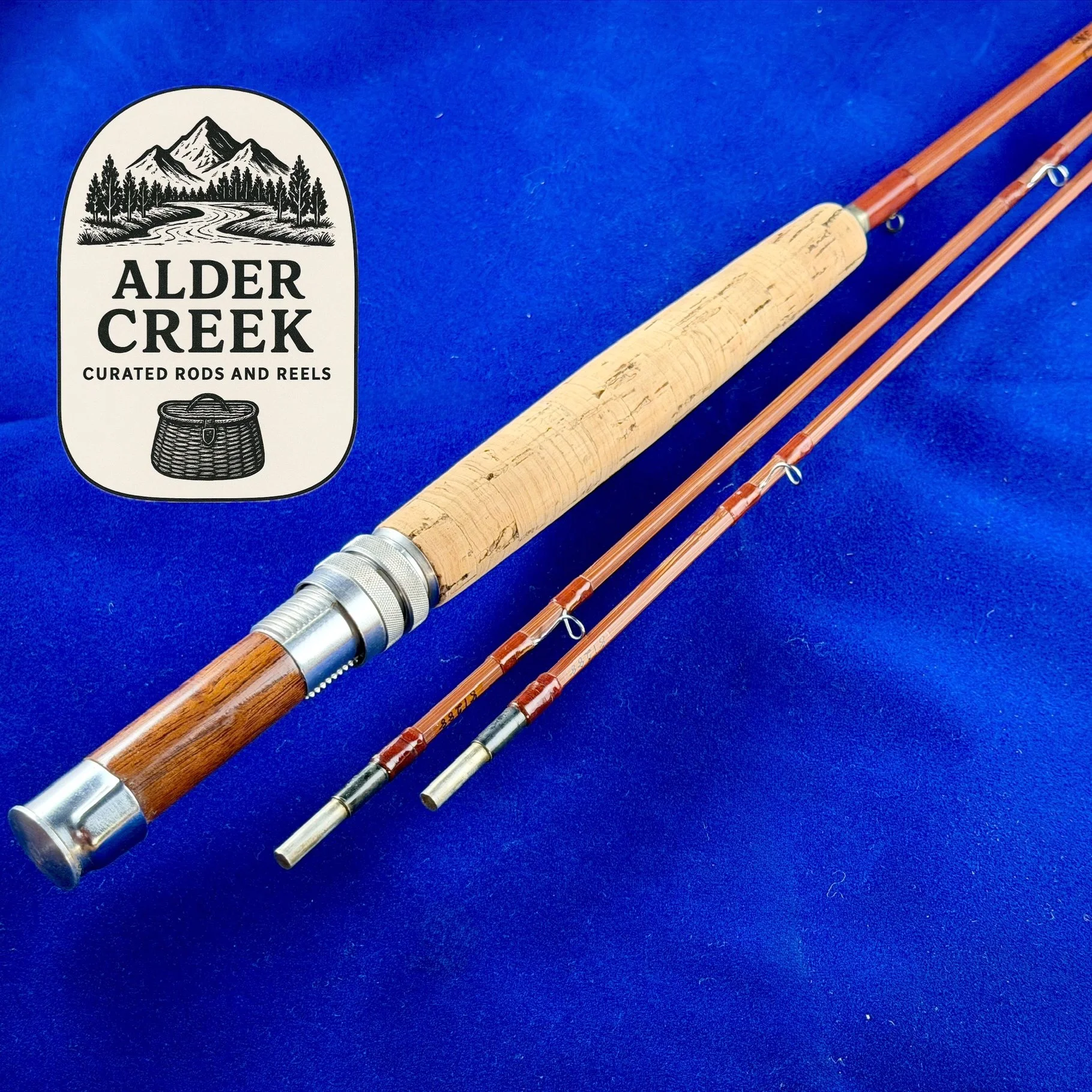
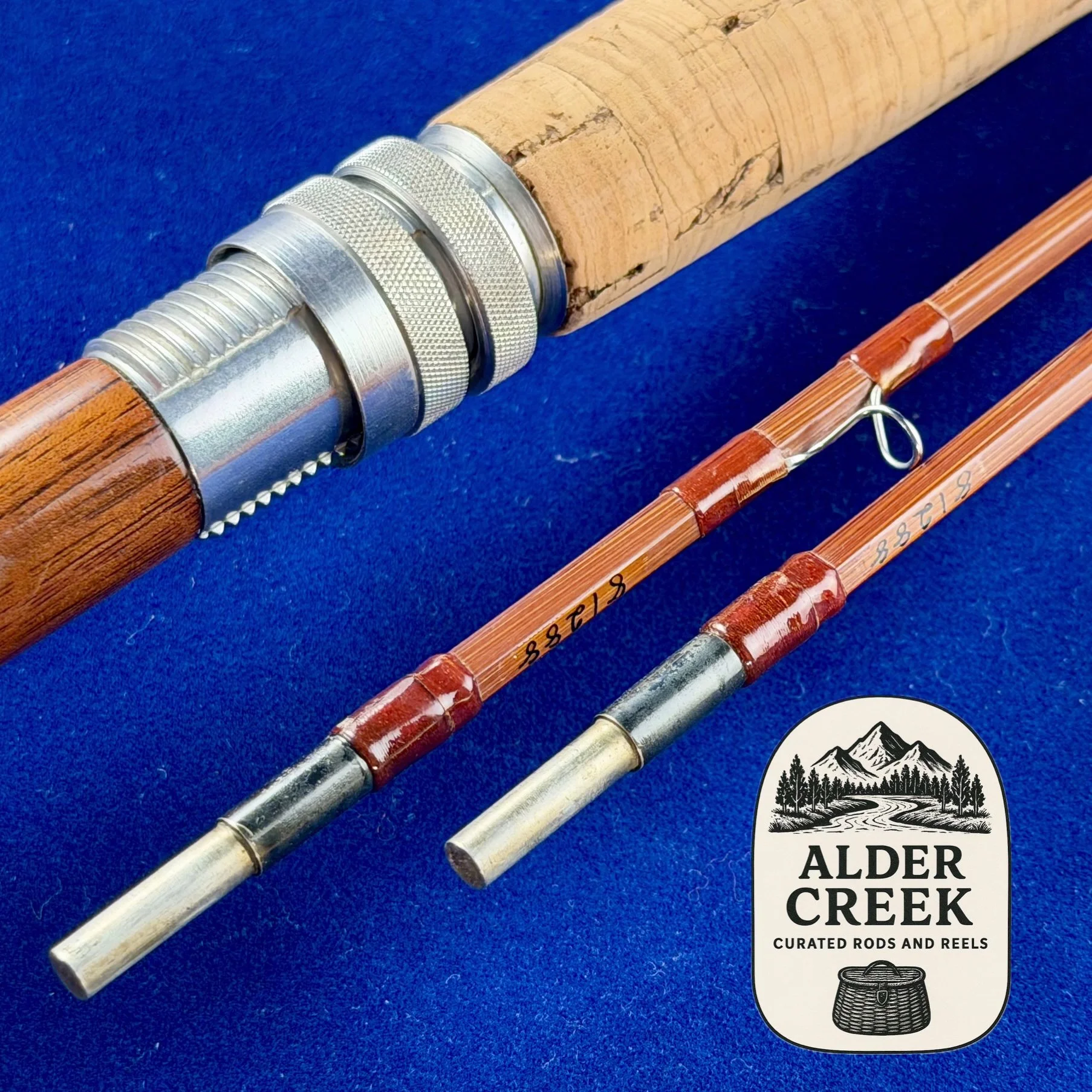
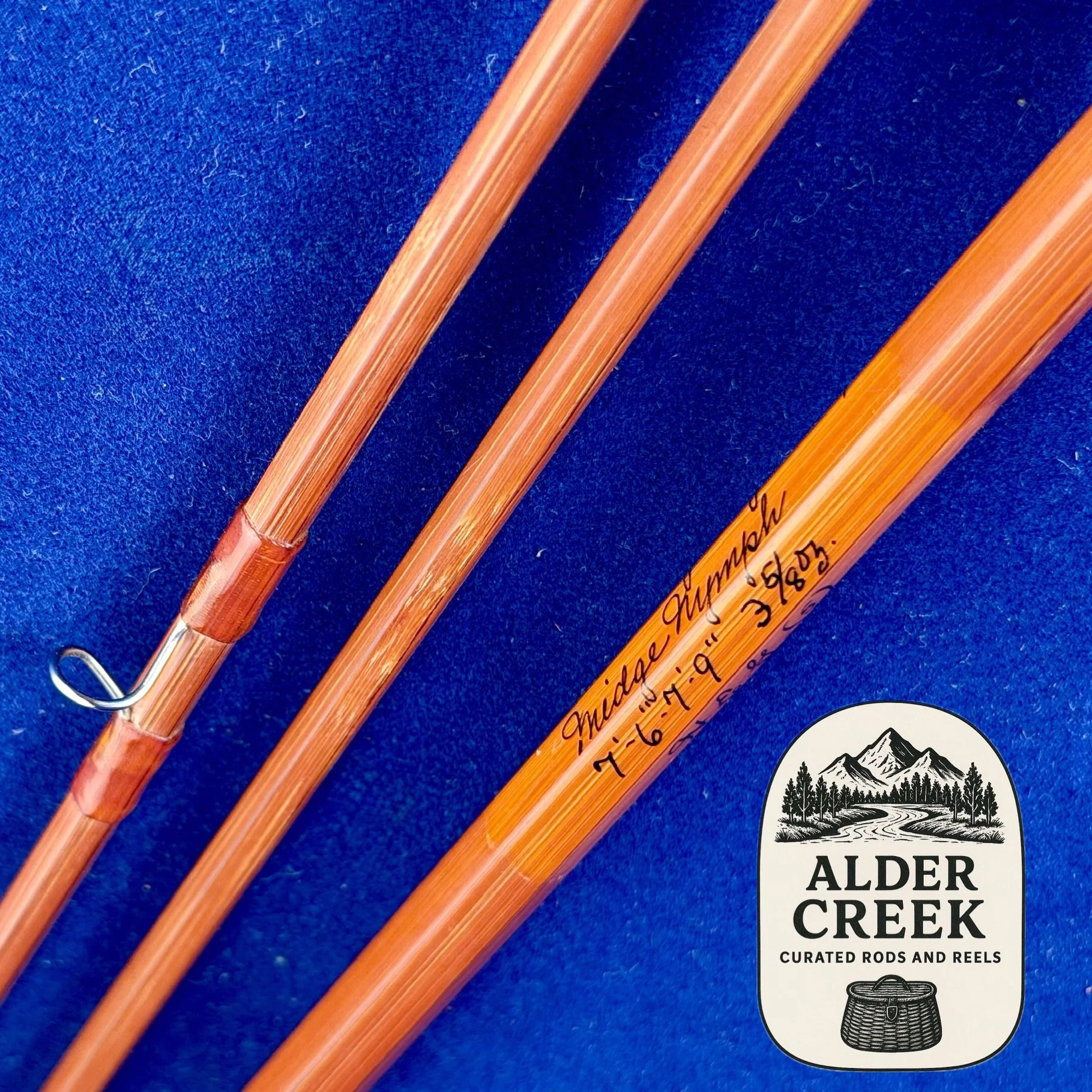
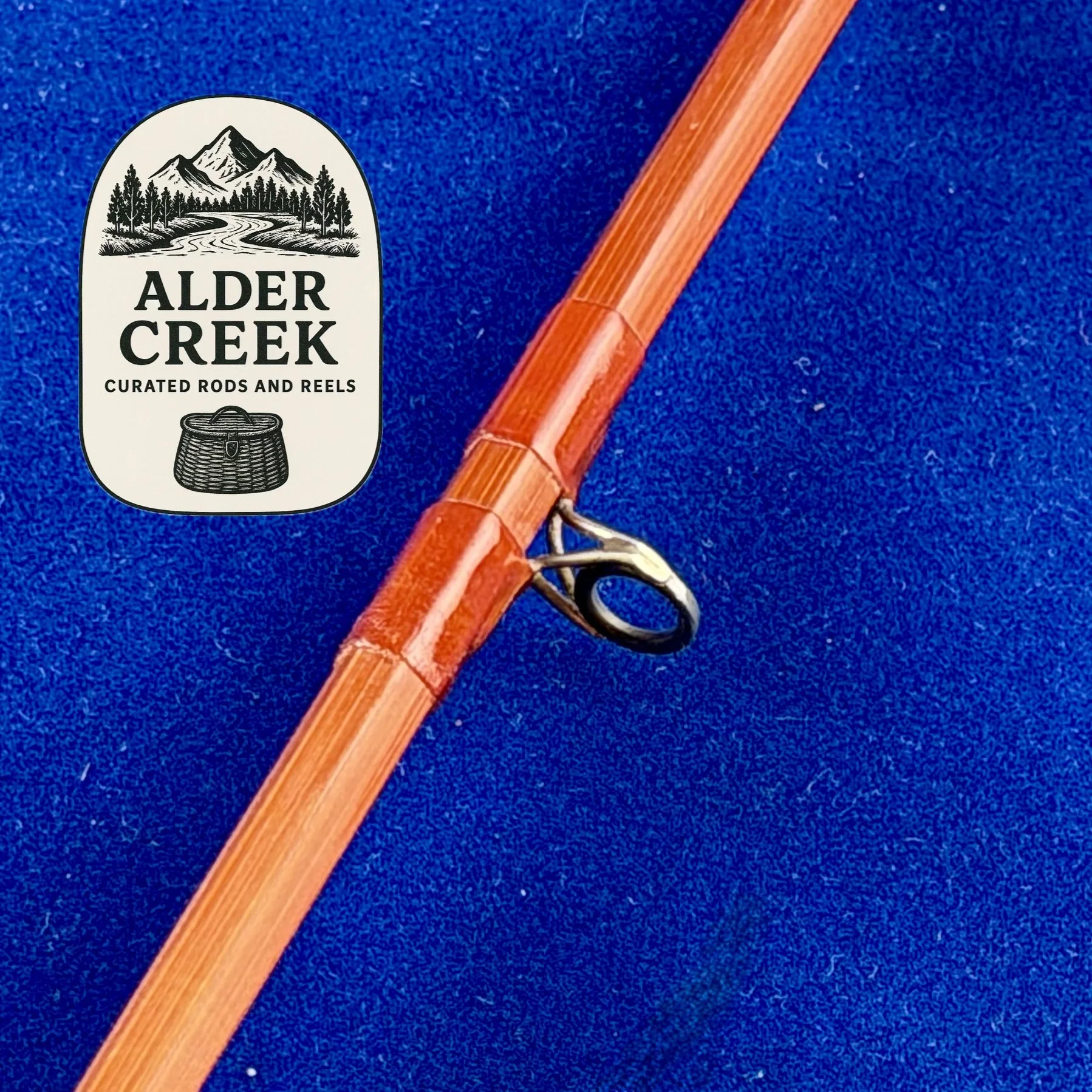
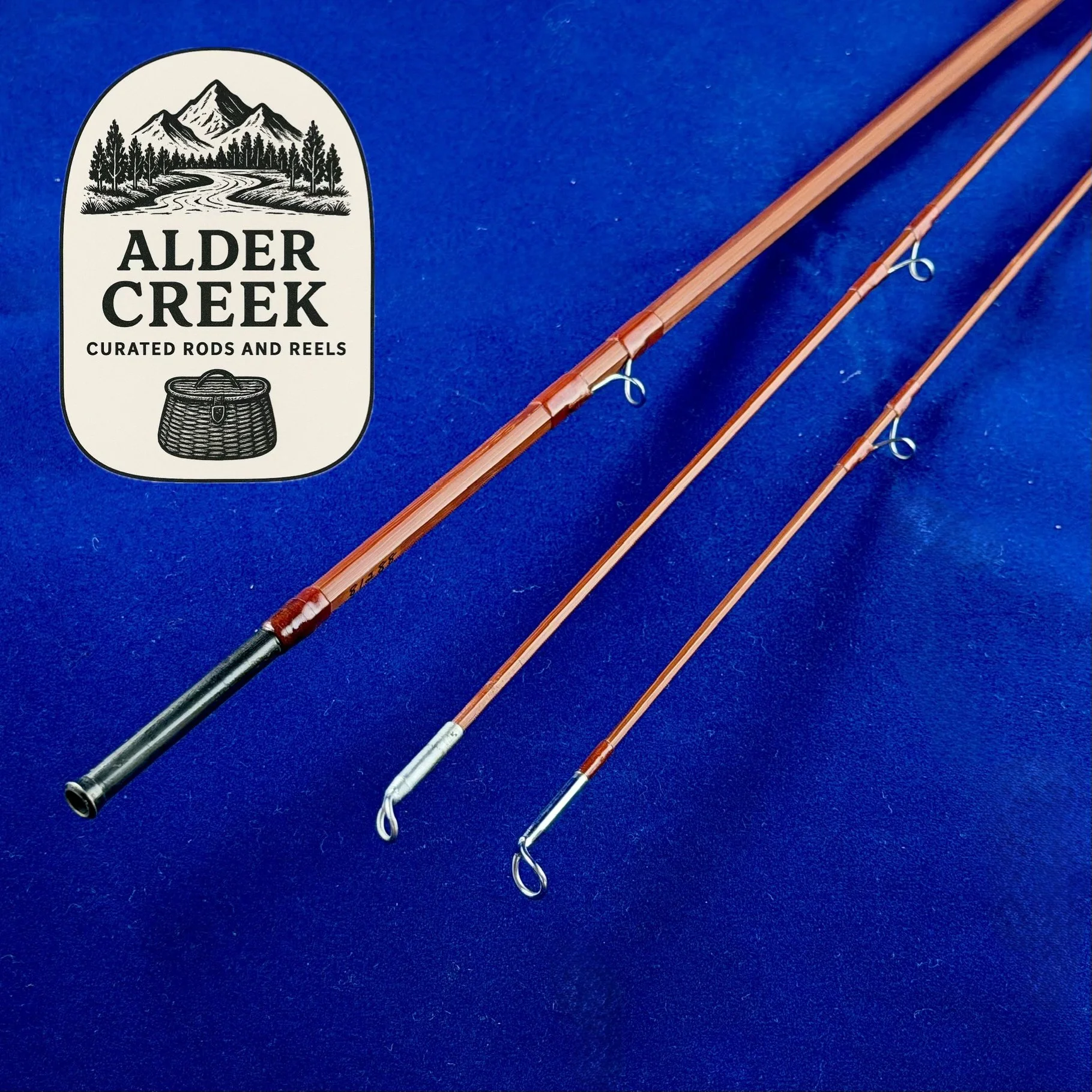
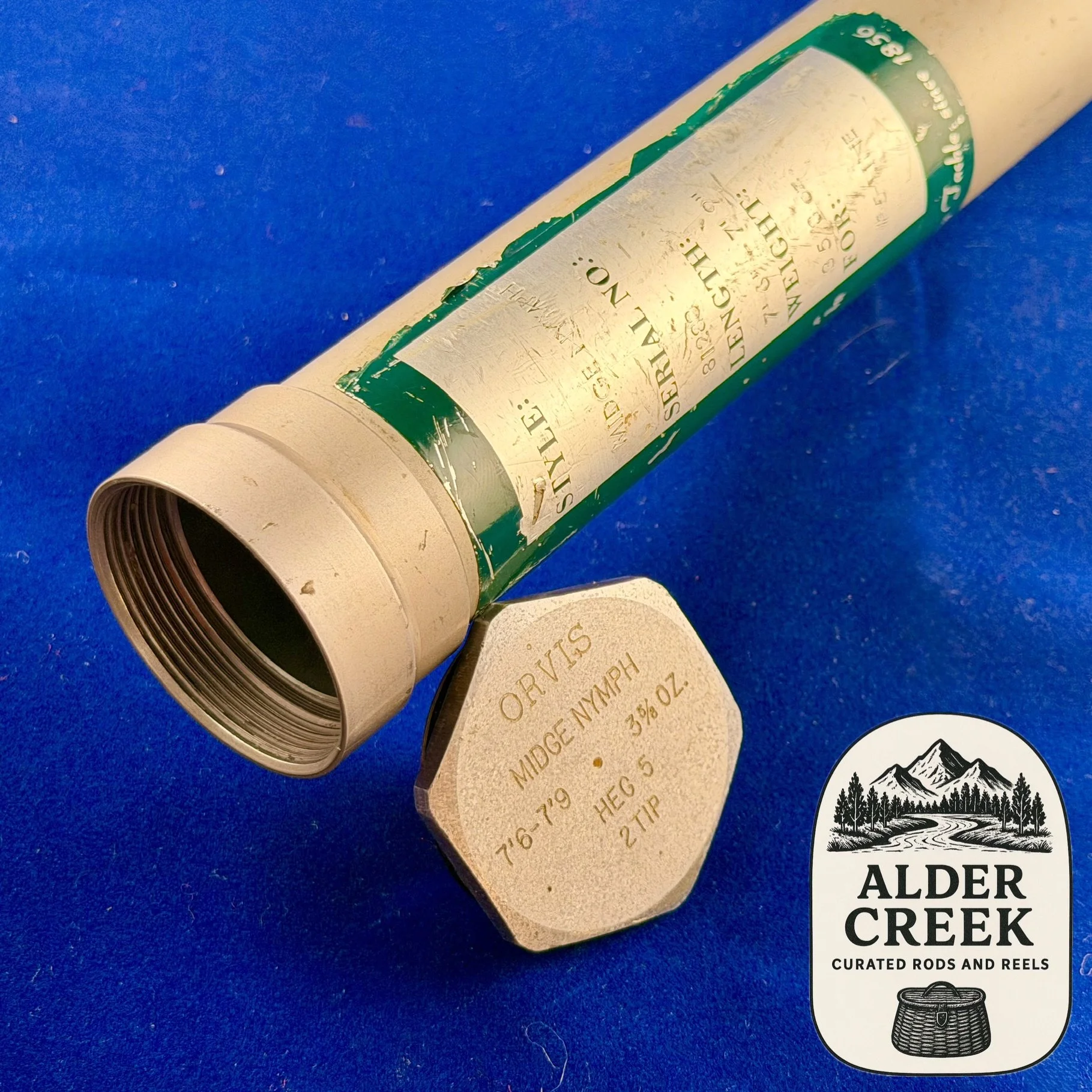
A particularly interesting and unusual Orvis model, the Midge Nymph is a versatile two-tip bamboo rod designed to offer two distinct lengths and presentations from a single blank.
This 2/2 rod is supplied with two tips of different lengths. With the shorter tip fitted, the rod measures 7'6"; the second tip adds approximately three inches, creating a slightly longer configuration specifically intended for nymph fishing. The result is a wonderfully versatile rod with the characteristic medium-slow action associated with the Midge family.
The rod remains in very good overall condition, with all sections original and straight. The cane is a warm tan colour, finished in Orvis' characteristic three-up node configuration and constructed with traditional resorcinol glue. The burgundy wraps are paired with a carbide stripping guide and chrome snake guides, while the step ferrules have developed an attractive oxidized black finish.
The classic down-locking reel seat features a handsome walnut spacer with nickel-silver cap and ring. The cork grip shows some light soiling consistent with use.
Serial number 81288 is present on all three sections and is also retained on the original tube label. The rod comes with its original Orvis tube, although the accompanying cloth bag is non-original. One of the top guides has been replaced.
An unusual Orvis configuration and an intriguing piece for the angler or collector who appreciates the less commonly encountered models in the company's bamboo catalogue.
Explore our other classic Orvis bamboo rods, including the Orvis Midge 7'6" #5, with its remarkable Preben Torp Jacobsen provenance, and the 1968 Orvis Battenkill.
Maker
Orvis
Model
Midge Nymph
Length
7'6" / 7'9"
Configuration
2-piece / 2-tip
Line
#4–5
Weight
3 5/8 oz
Serial Number
81288
Action
Medium-slow
Construction
Bamboo, resorcinol glue
Wraps
Burgundy silk
Reel Seat
Down-locking, walnut spacer
Condition
Very good used condition; one tip-top guide replaced
Includes
Original Orvis tube and non-original cloth bag
Questions about this piece, international shipping, or price are always welcome.
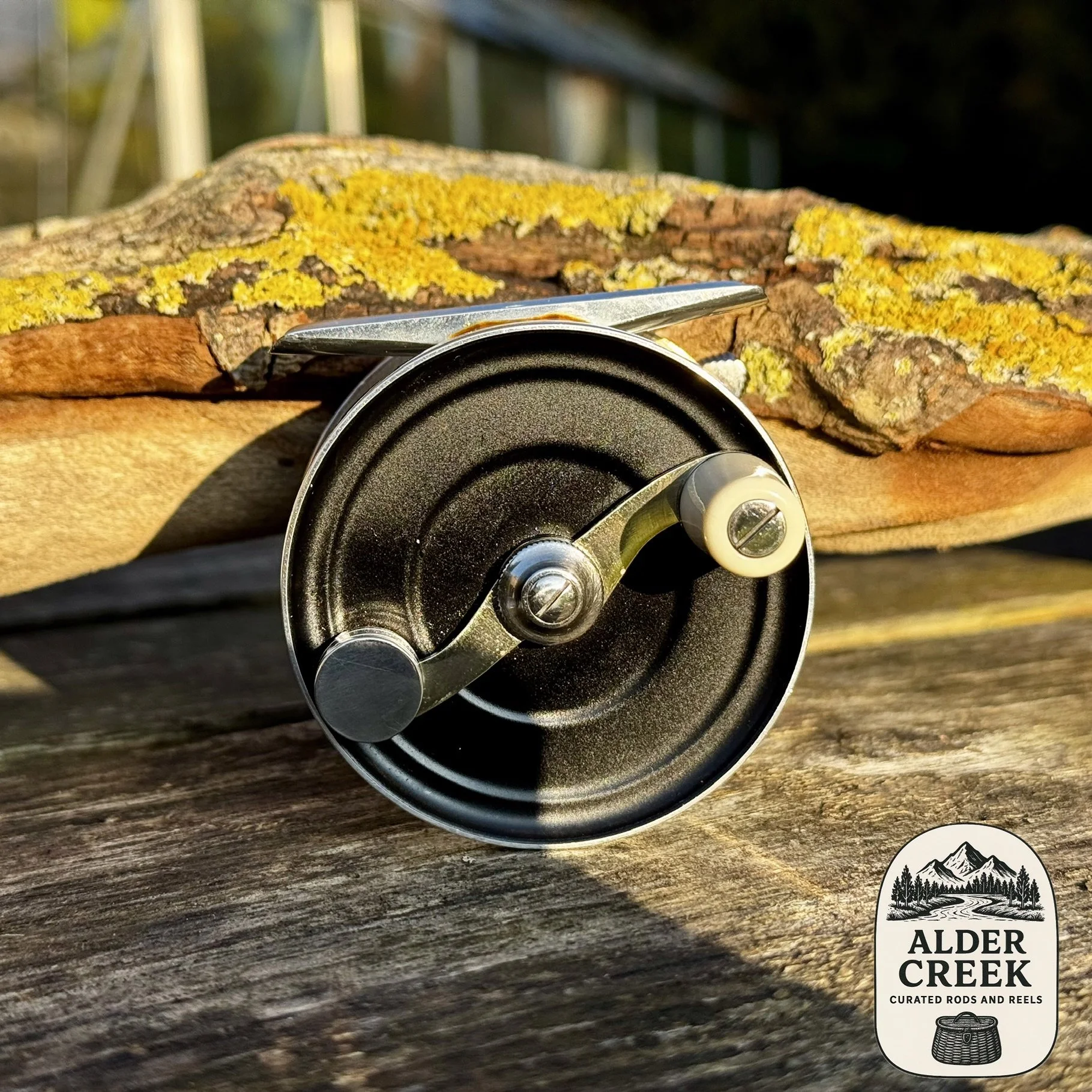
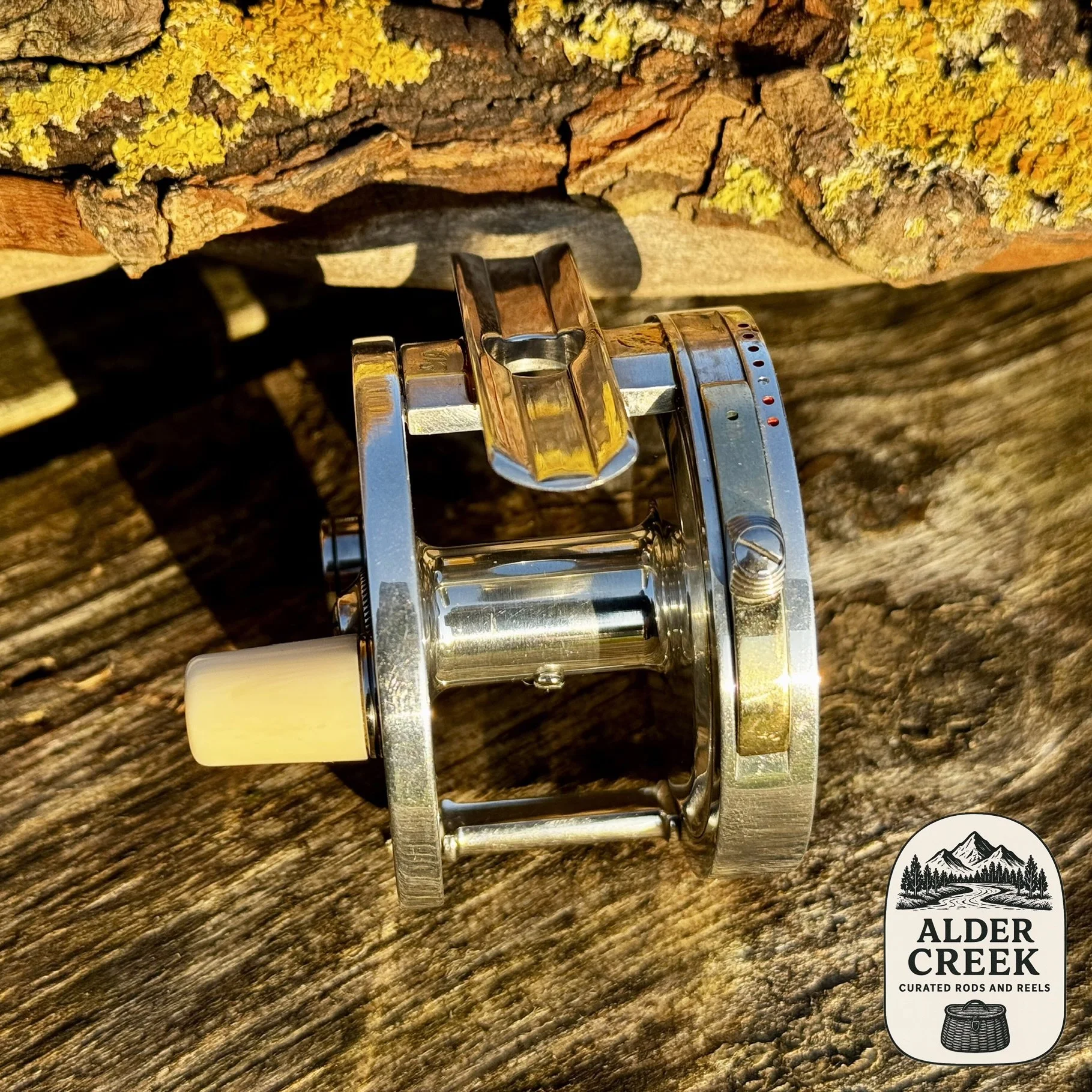
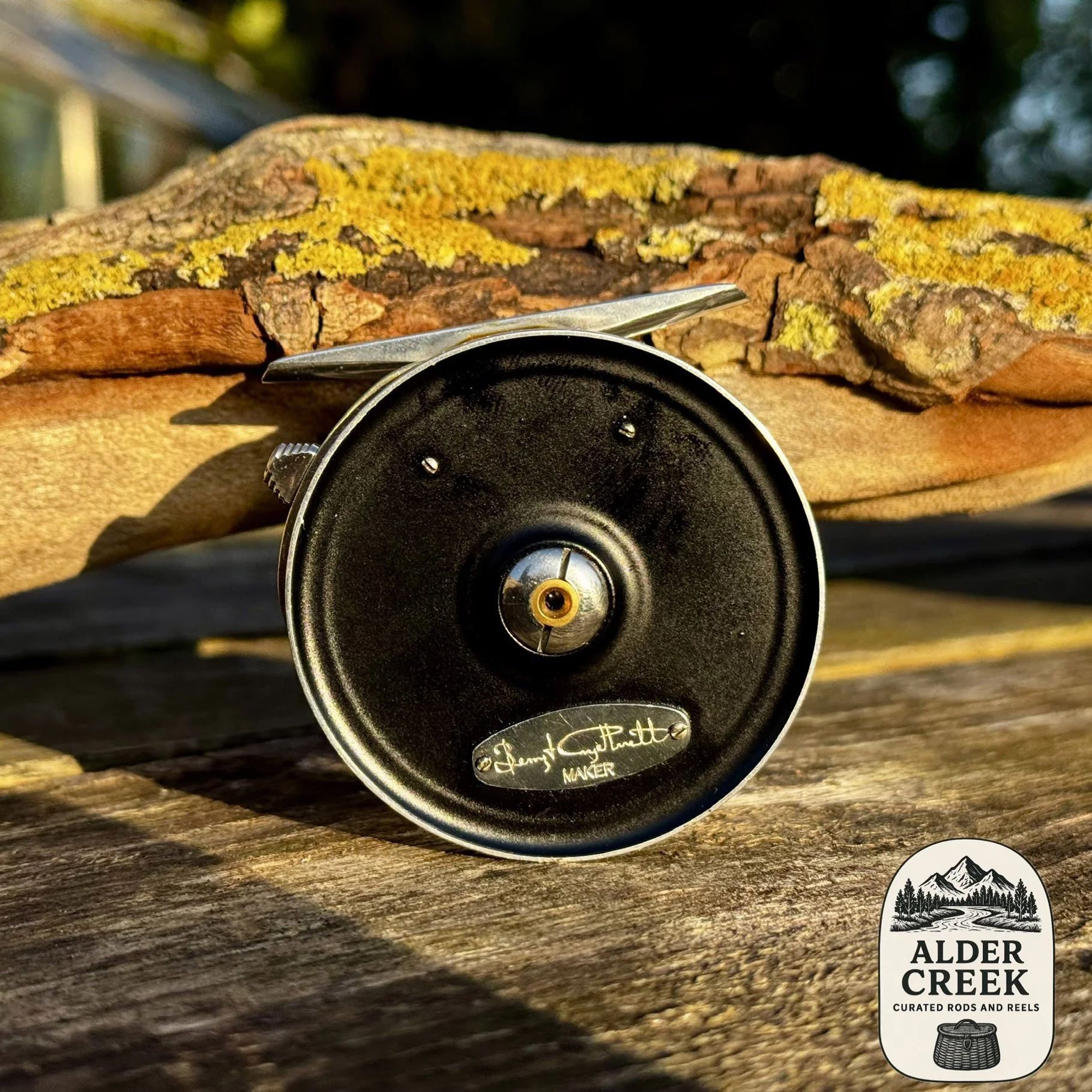
In my view, Bengt Engelbrekt is among the finest contemporary reelmakers working today, and his small trout reels represent a remarkable refinement of the form. Their proportions, aesthetics, attention to detail and exceptional workmanship are difficult to surpass.
Every component is made in Engelbrekt's own workshop, down to the smallest screw. Aluminium, phosphor bronze, nickel silver and steel are combined with Delrin or ebonite, finished with the distinctive ivory-coloured knob that has become one of his signatures.
This model features a fully enclosed drag system, with a wonderfully restrained click and silent retrieve. The reel is made for #1-3 lines. Drag tension is adjusted by the beautifully machined knob on the rim, allowing precise control while keeping the reel exceptionally clean in appearance.
The reel is RHW and cannot be converted. As with Engelbrekt's finest work, servicing is best entrusted to the maker himself.
Presented with a hand-sewn leather case.
A superb example of contemporary Scandinavian reelmaking—quietly luxurious, beautifully engineered and made to be fished.
Maker
Bengt Engelbrekt
Origin
Sweden
Type
Small trout fly reel
Recommended Rod
#1–3
Retrieve
Right-hand wind (RHW)
Drag
Enclosed drag mechanism
Retrieve Sound
Silent
Materials
Aluminium, phosphor bronze, nickel silver and steel
Handle
Ivory-coloured knob
Condition
Lightly used, essentially as new
Questions about this piece, international shipping, or price are always welcome.
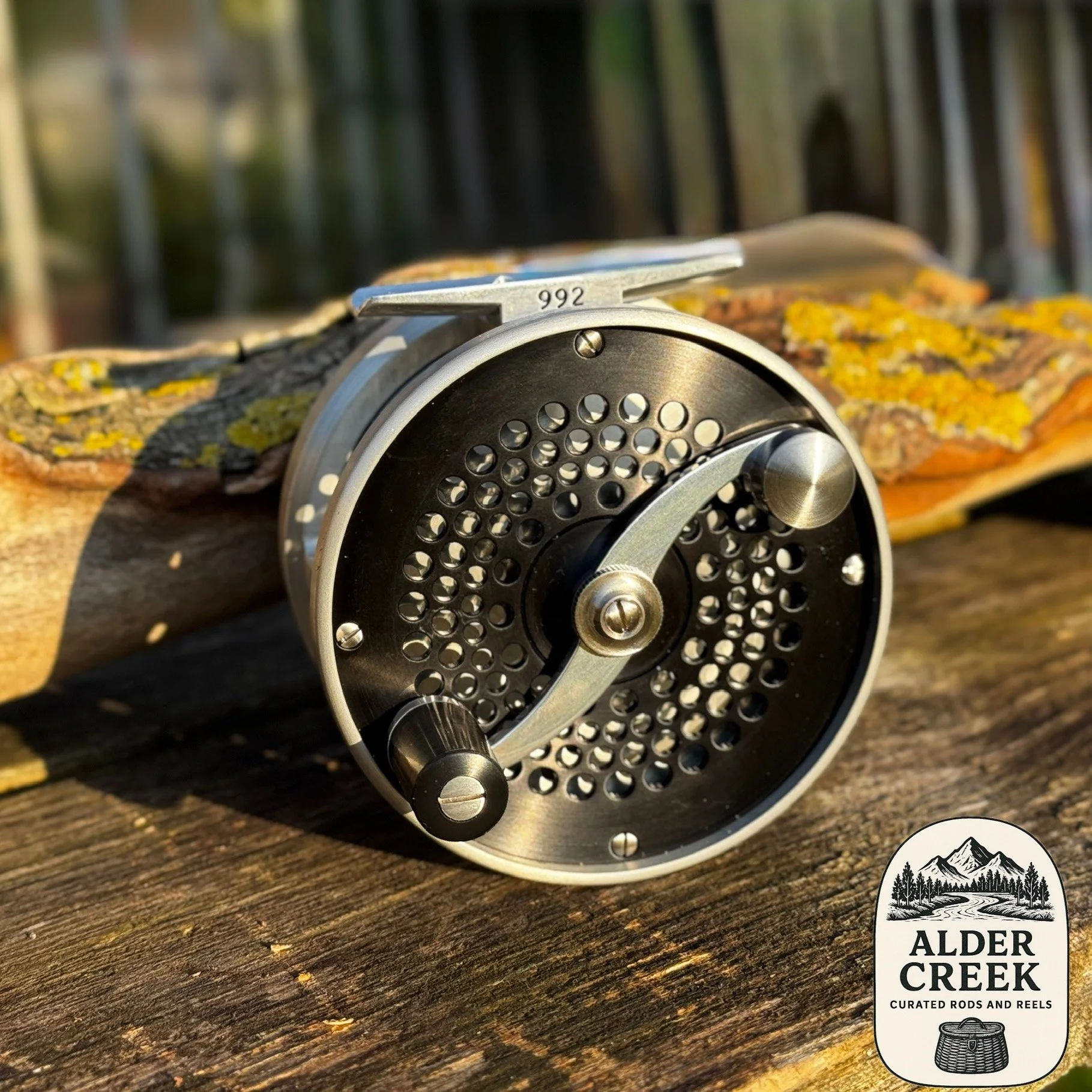

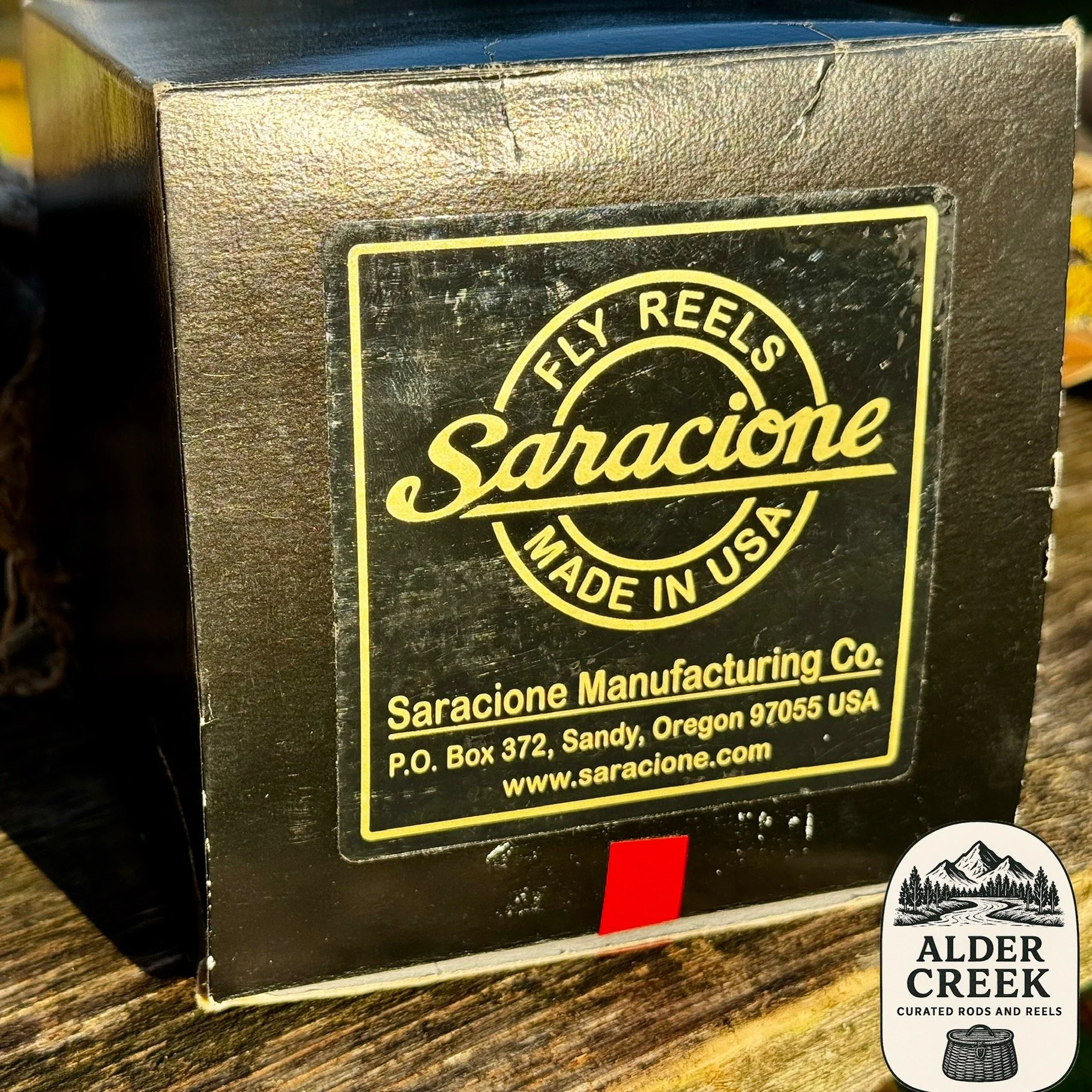
Use: Single hand salmon and steelhead rods in the 8 and 9 weight class. Also a perfect choice for lighter two handed rods in 5, 6 & 7 weights, and of course switch rods.
Joe Saracione is without a doubt one of the most accomplished current reel makers. With the Mark V drag you have a reel powerful to handle everything a big salmon might be up to. Spool Width 1 5/32.” Weight: 10 ounces Fly Line: 8,9 single hand rods, and 5,6,7 two handed rods and switch rods. Capacity: 150yds+ 20# micron 450gr Skagit Head +100ft/.035 shooting line. This reel comes as a LHW and with a neoprene pouch.
Condition: New in box.
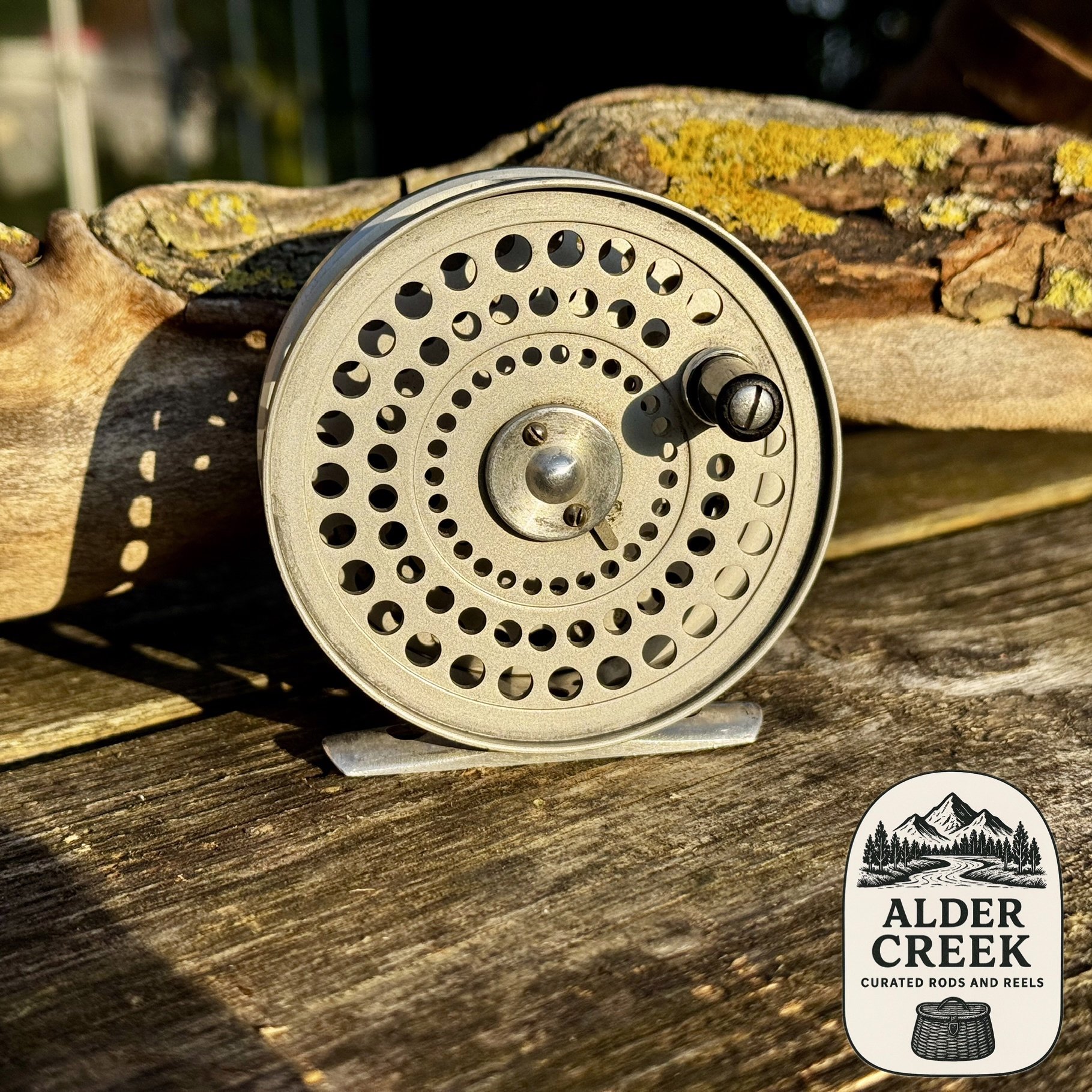
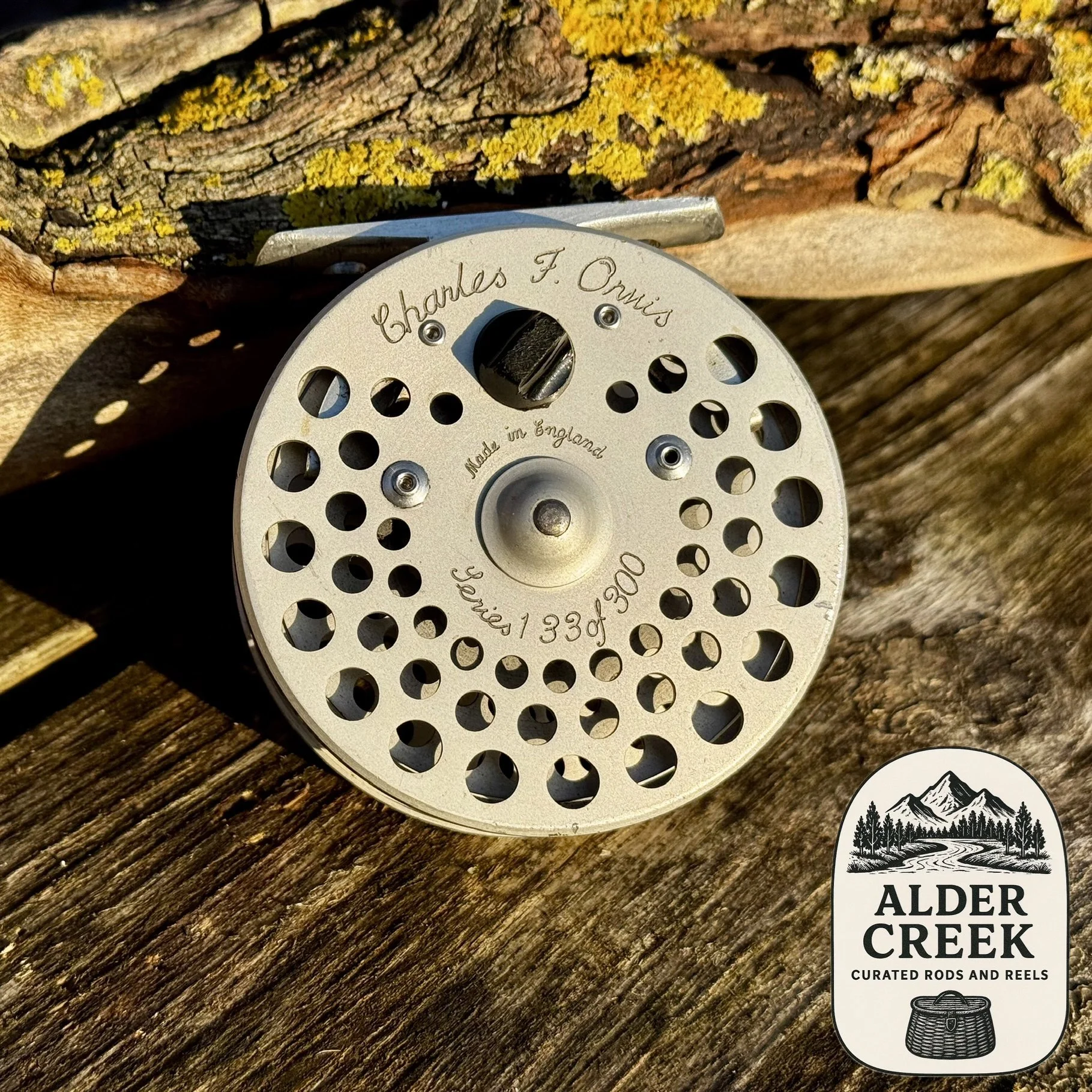
Use: Great for trout fishing in the range #4-6
The reel appeared in the 1977 and 1978 catalogs along with Limited Edition Orvis Classic Fly Rod with mahogany presentation chest, this limited edition model was limited to 300 reels, each numbered. The reel offered here is # 133. The reel was actually priced separately in the 1978 catalog as the "Limited Edition Charles F. Orvis Reel”, but only offered as part of the presentation set in the 1977 catalog. The reel was made in England for Orvis by Hardy. Left or right hand retrieve. Capacity up to a WF6 line + 50 yards of 20# backing. The reel weighs 3.0 oz.
Condition: Light use with basically only some aluminium oxide on latch.
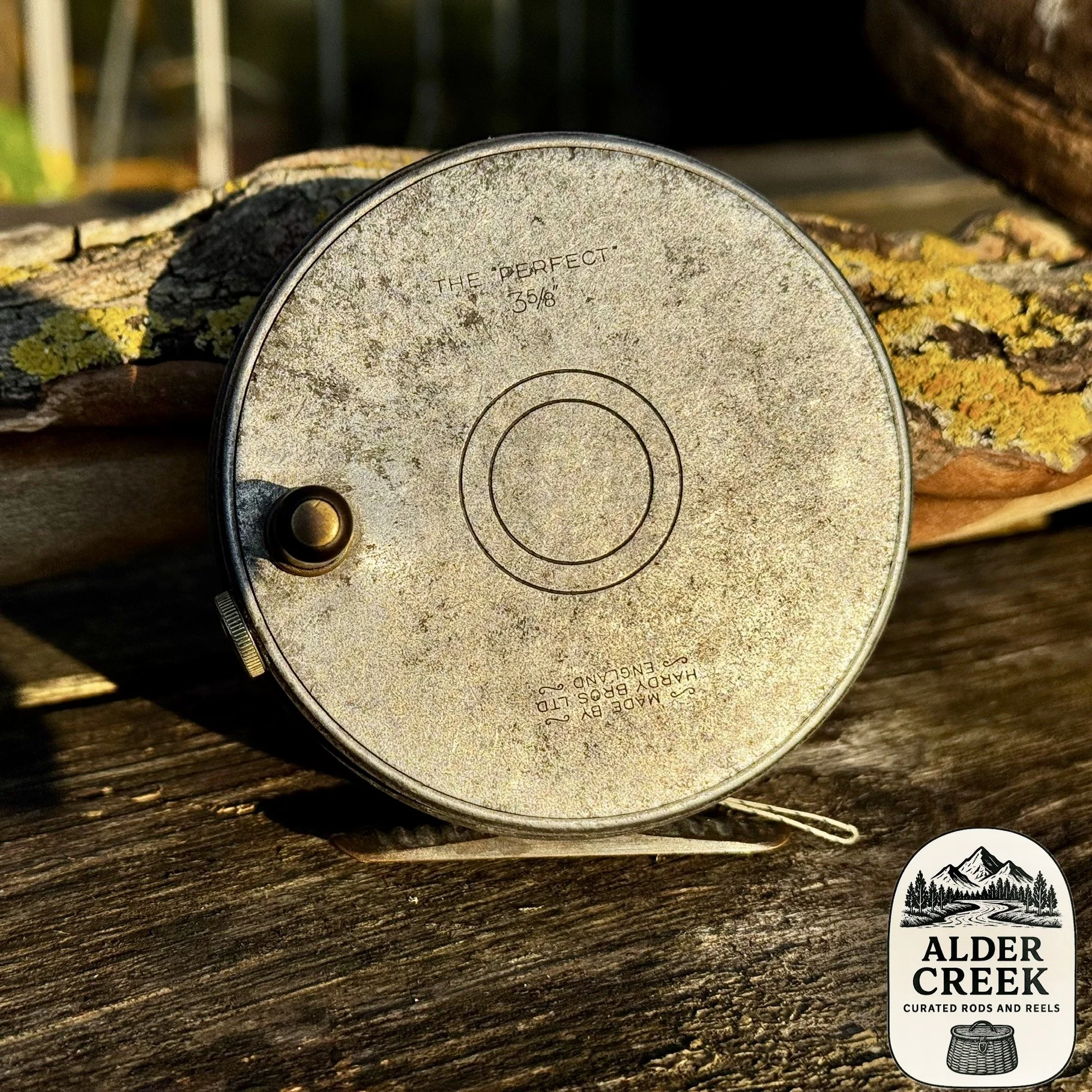
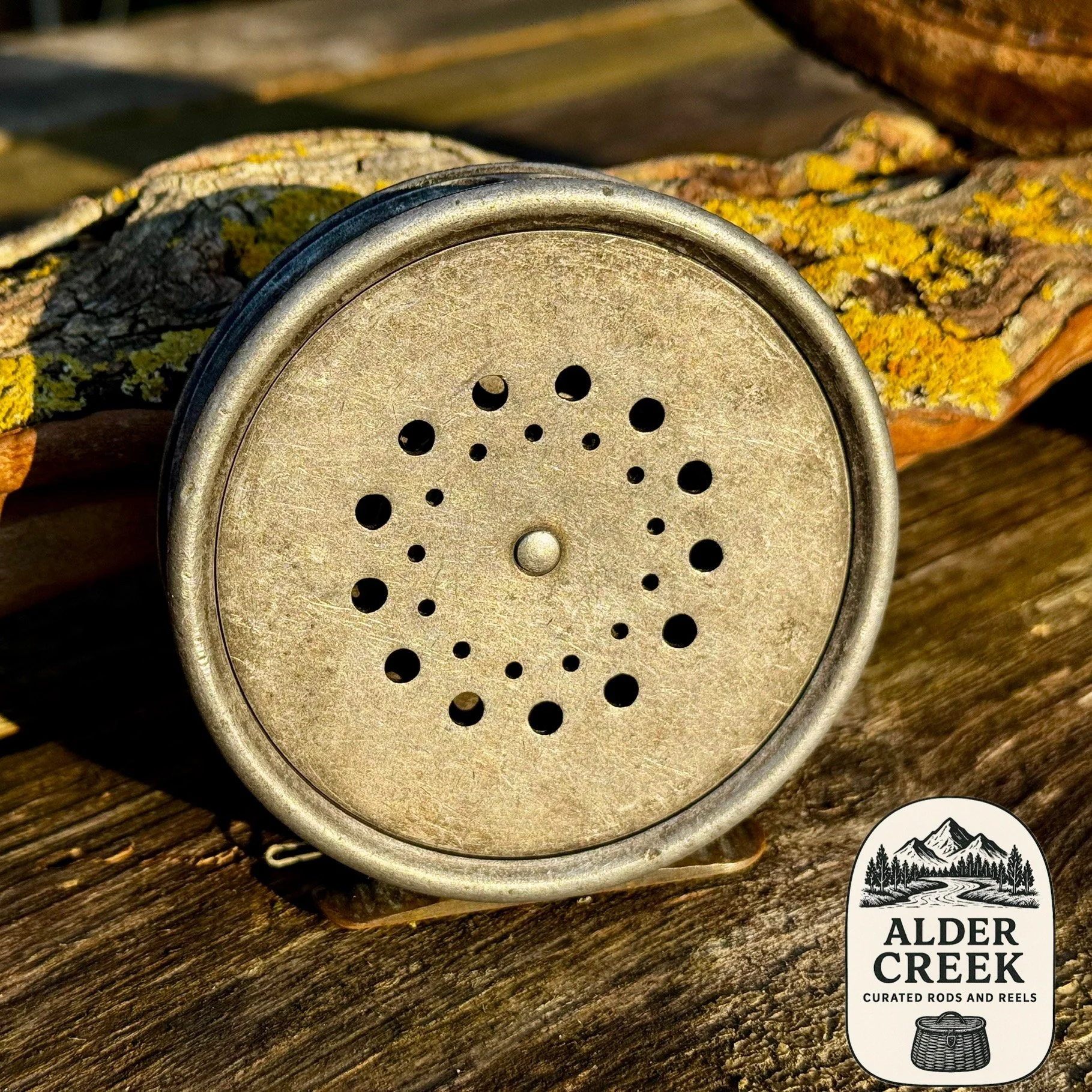
Use: Trout reel perfect for a #6 line.
For sale here is a Hardy Perfect 3 5/8" fly reel. The trusted Dup MkII check with tensioner working properly. The reel is manufactured without line guide which is a rarity and giving it versatility between RHW and LHW. Leading worn as seen in images. Brass and ebonite handle. Ribbed brass foot. The “TW” marking on the spool confirms it was inspected or made by Tom Willis, active during the 1950s to early 1960. Jim Hardy is said to have contracted 3 5/8” Perfects without line guard in the early fifties so I would guess this approximate period of the reels manufacture.
Condition: Good used condition
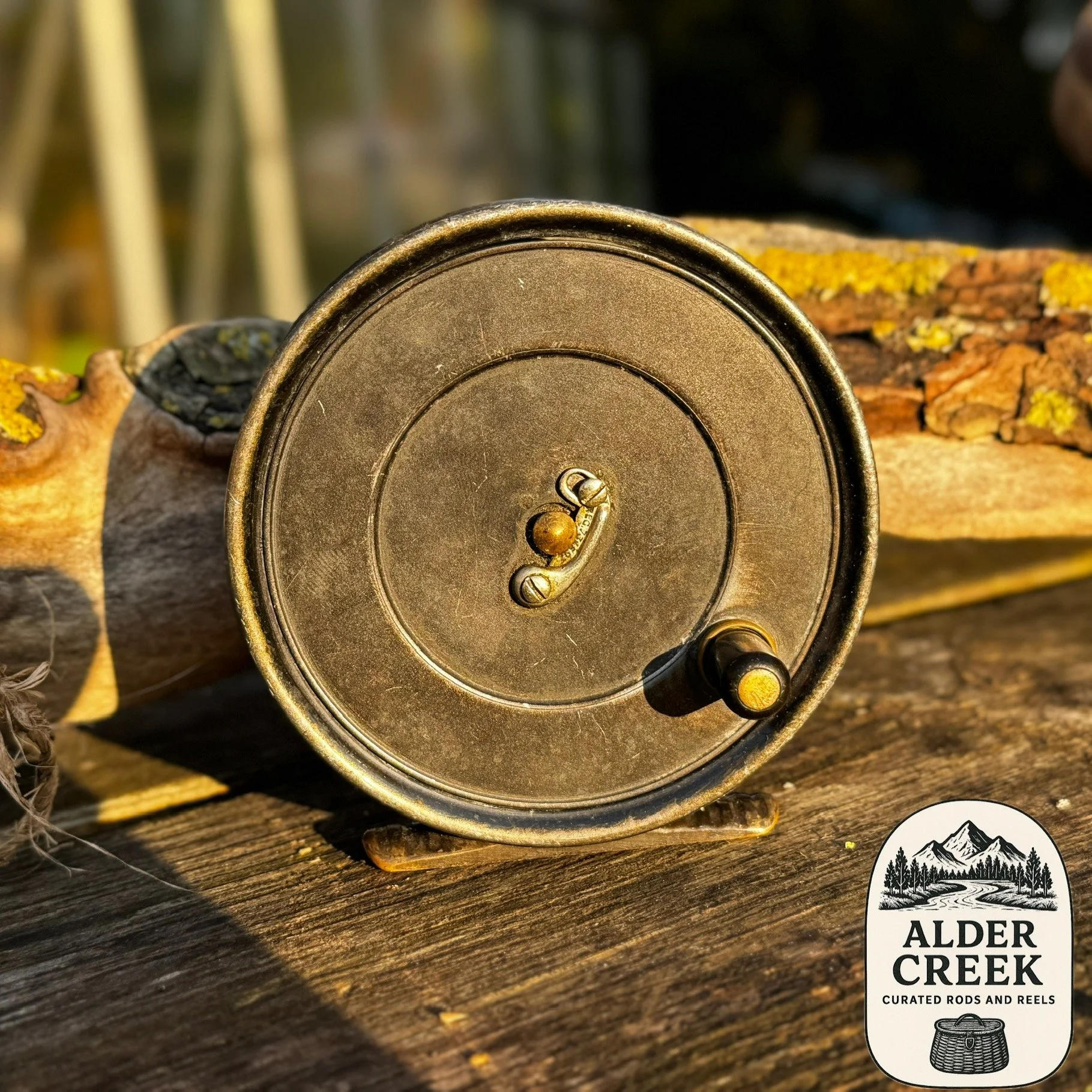
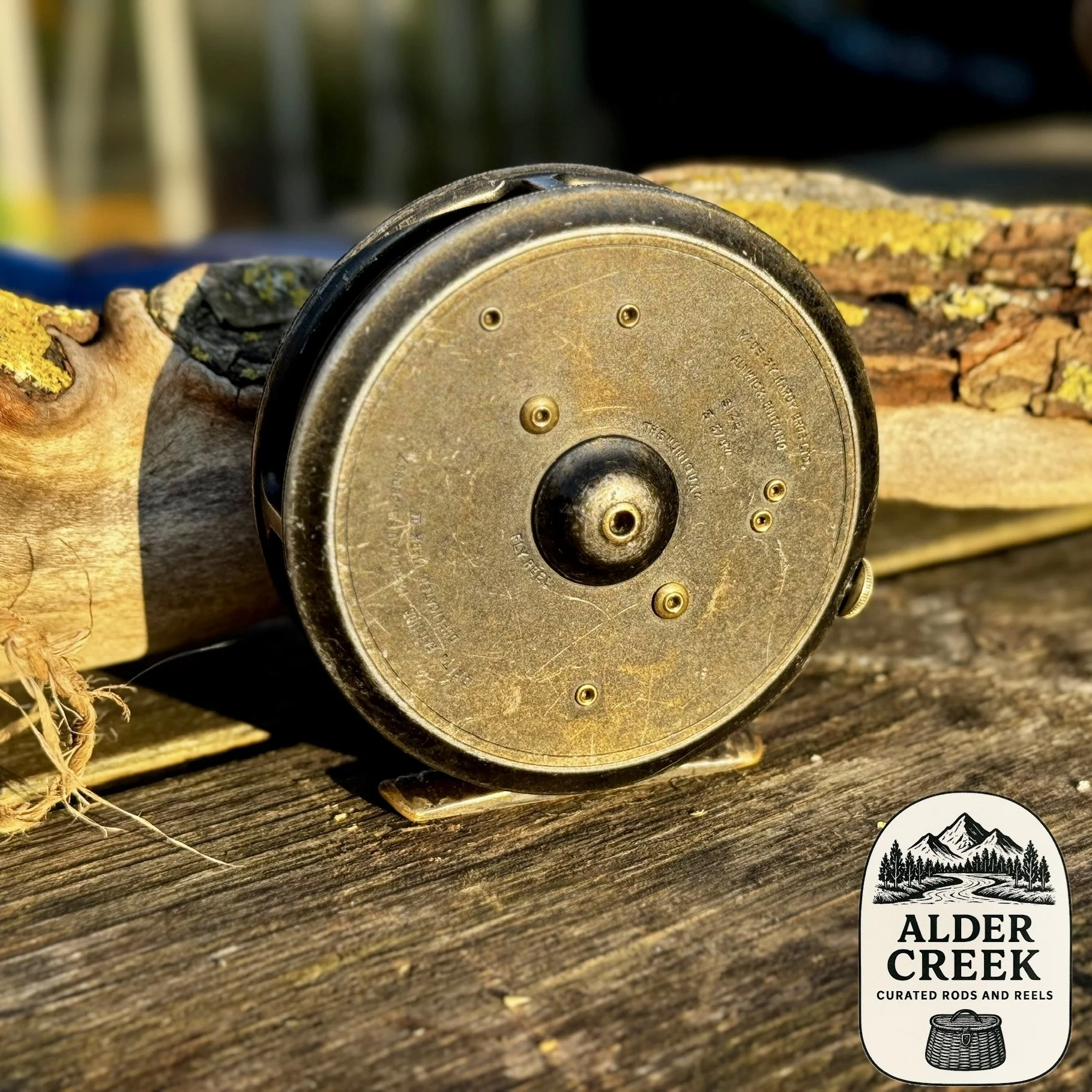
A fine interwar Hardy Uniqua 3 5/8" fly reel, manufactured in Alnwick, England, and dating to approximately 1930–1936.
This example features the distinctive horseshoe-latch spool release, an original ribbed brass foot and a black ebonite handle. The latch bears registration number 734597, while the reel carries British and American patent markings, Nos. 145904 and 369867 respectively.
A particularly appealing feature is the rim-mounted spool tension adjuster, complementing Hardy's dependable Duplicated Mark II check mechanism. The reel operates smoothly, with a crisp check and a firm, functional tension adjuster.
The original dark leaded finish remains well preserved, showing an attractive patina and light, honest wear consistent with its age.
Introduced in the early twentieth century, the Uniqua became one of Hardy's most enduring fly reel designs. Although conceived as a more economical alternative to the Perfect, it retained the robust engineering and reliable check mechanism associated with the Alnwick workshops.
The larger 3 5/8" size offers generous line capacity and is particularly well suited to traditional heavier trout fishing, including DT6 lines.
A handsome and mechanically sound Hardy Uniqua from the interwar period, combining historical character with genuine practical utility.
Explore our collection of classic Hardy fly reels, including the Perfect 3 3/8" Guide-less, Uniqua 3 3/8", and Uniqua 3 1/8".
Maker
Hardy Bros., Alnwick, England
Model
Uniqua Duplicated Mark II
Diameter
3 5/8"
Period
c. 1930–1936
Check
Duplicated Mark II
Latch
Horseshoe latch
Patent Markings
Brit. 145904; USA 369867
Registration Number
734597
Reel Foot
Original ribbed brass
Handle
Black ebonite
Finish
Original dark leaded finish
Drag
Rim-mounted spool tension adjuster
Line
Suitable for DT6
Condition
Very good vintage condition; smooth operation, original patina
Questions about this piece, international shipping, or price are always welcome.
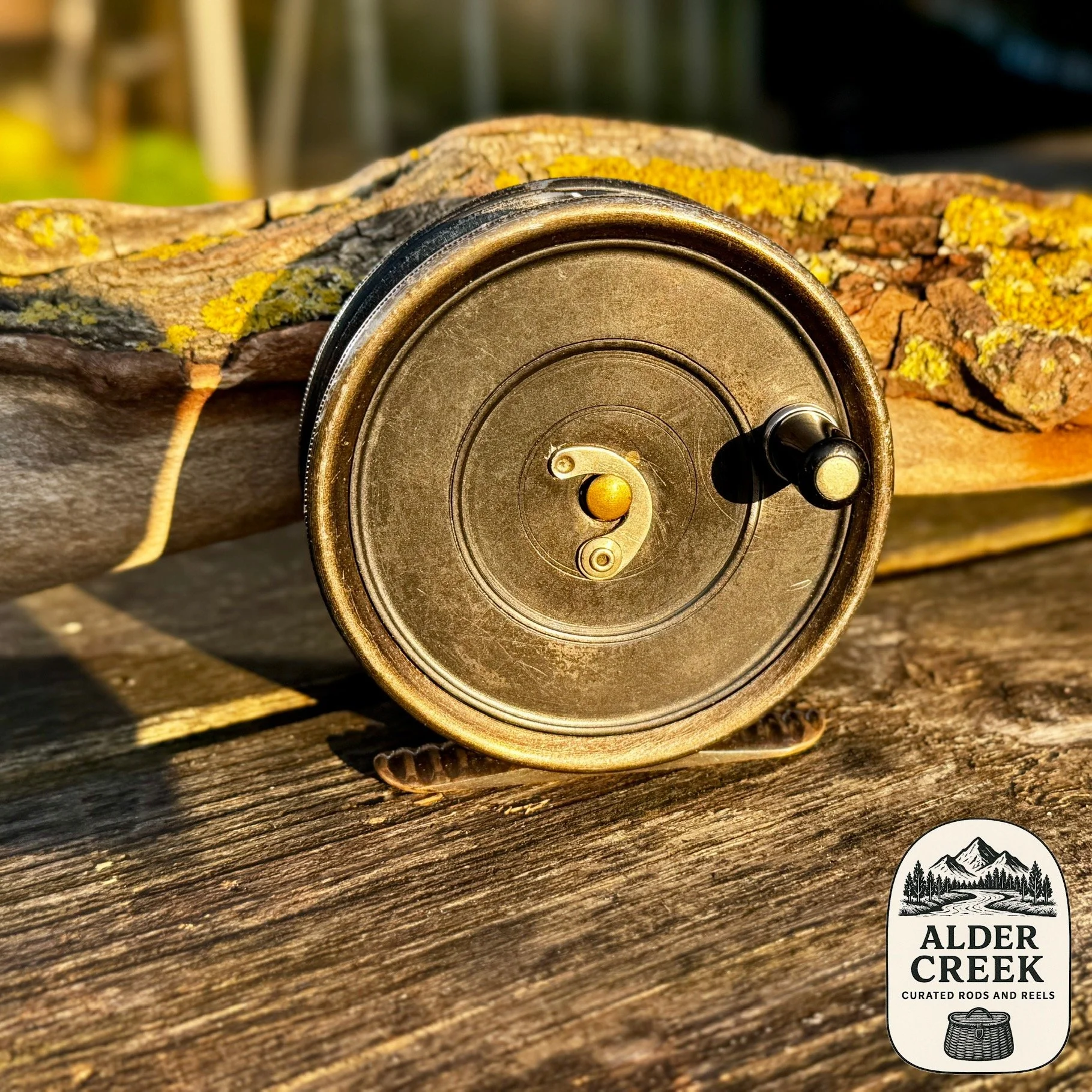
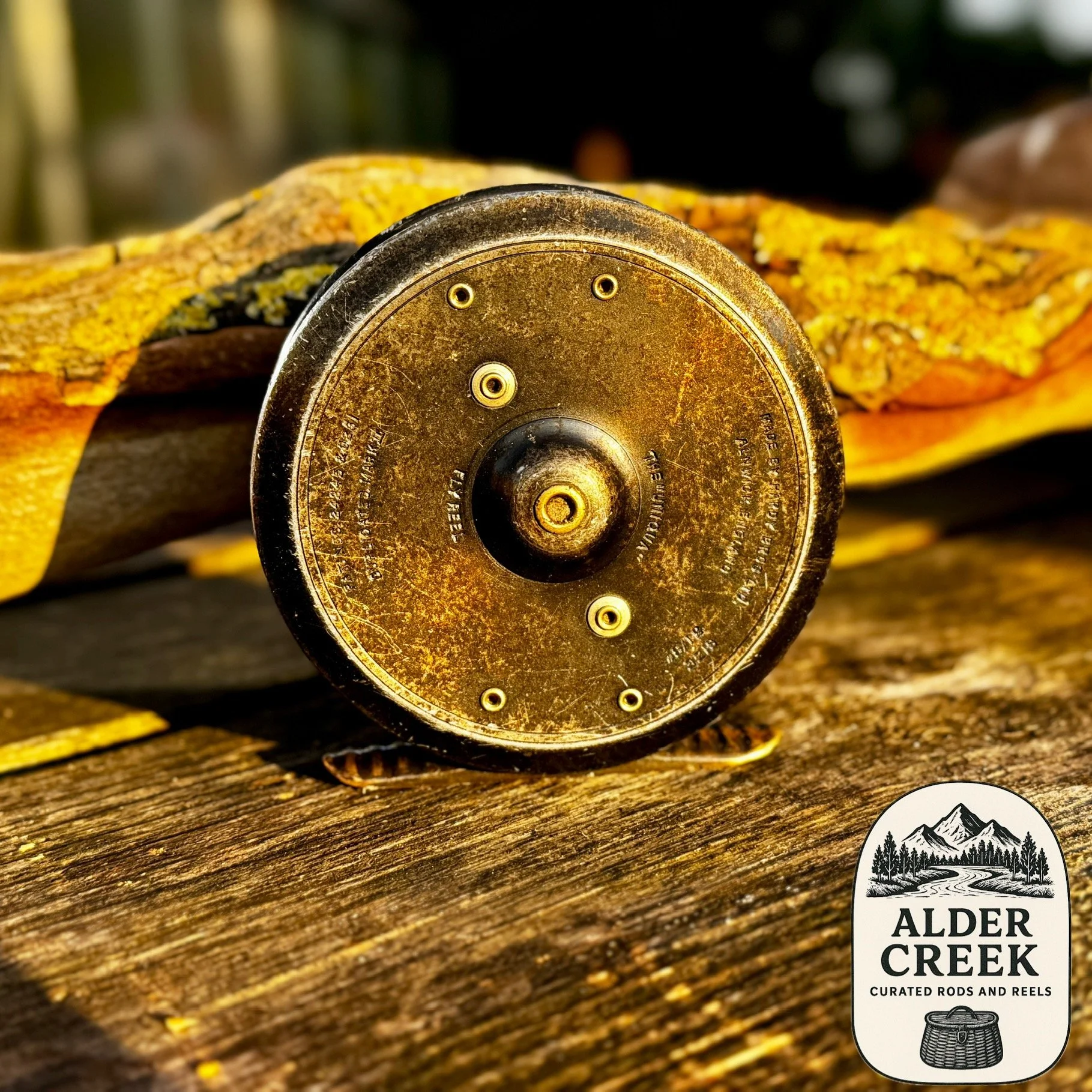
A fine early Hardy Uniqua 3 1/8" fly reel, manufactured in Alnwick, England, and dating to approximately 1921–1926.
This attractive example features the distinctive horseshoe-latch spool release, an original ribbed brass foot and a black ebonite handle. The faceplate bears the circular inscription “THE UNIQUA – 3 1/8 in.”, while the reel carries the early patent markings Nos. 24245 and 8281.
The original leaded finish has acquired a pleasing, naturally aged patina, with light surface wear consistent with a century of careful use. The reel remains unpolished and retains its original character, without apparent alterations.
Mechanically sound, with a crisp check and a tight-fitting spool, this is an appealing example of Hardy's early twentieth-century craftsmanship.
Introduced in the early twentieth century, the Uniqua became one of Hardy's most enduring fly reel designs. Conceived as a more economical alternative to the celebrated Perfect, it retained the dependable engineering and robust construction associated with the Alnwick workshops.
Early examples with horseshoe latches, leaded finishes and brass fittings remain particularly attractive to collectors. In the 3 1/8" size, the Uniqua is also a beautifully proportioned companion to traditional light trout rods.
A handsome early Hardy reel, combining practical fishability with considerable historical character.
Explore our collection of classic Hardy fly reels, including the Perfect 3 3/8" Guide-less, Uniqua 3 3/8", and Uniqua 3 5/8" Duplicated Mark II.
Maker
Hardy Bros., Alnwick, England
Model
Uniqua Duplicated Mark II
Diameter
3 1/8"
Period
c. 1921–1926
Check
Duplicated Mark II
Latch
Horseshoe latch
Patent Markings
Nos. 24245 & 8281
Reel Foot
Original ribbed brass
Handle
Black ebonite
Finish
Original leaded finish
Mechanism
Crisp check, tight spool
Condition
Very good vintage condition; unpolished, no apparent alterations
Questions about this piece, international shipping, or price are always welcome.
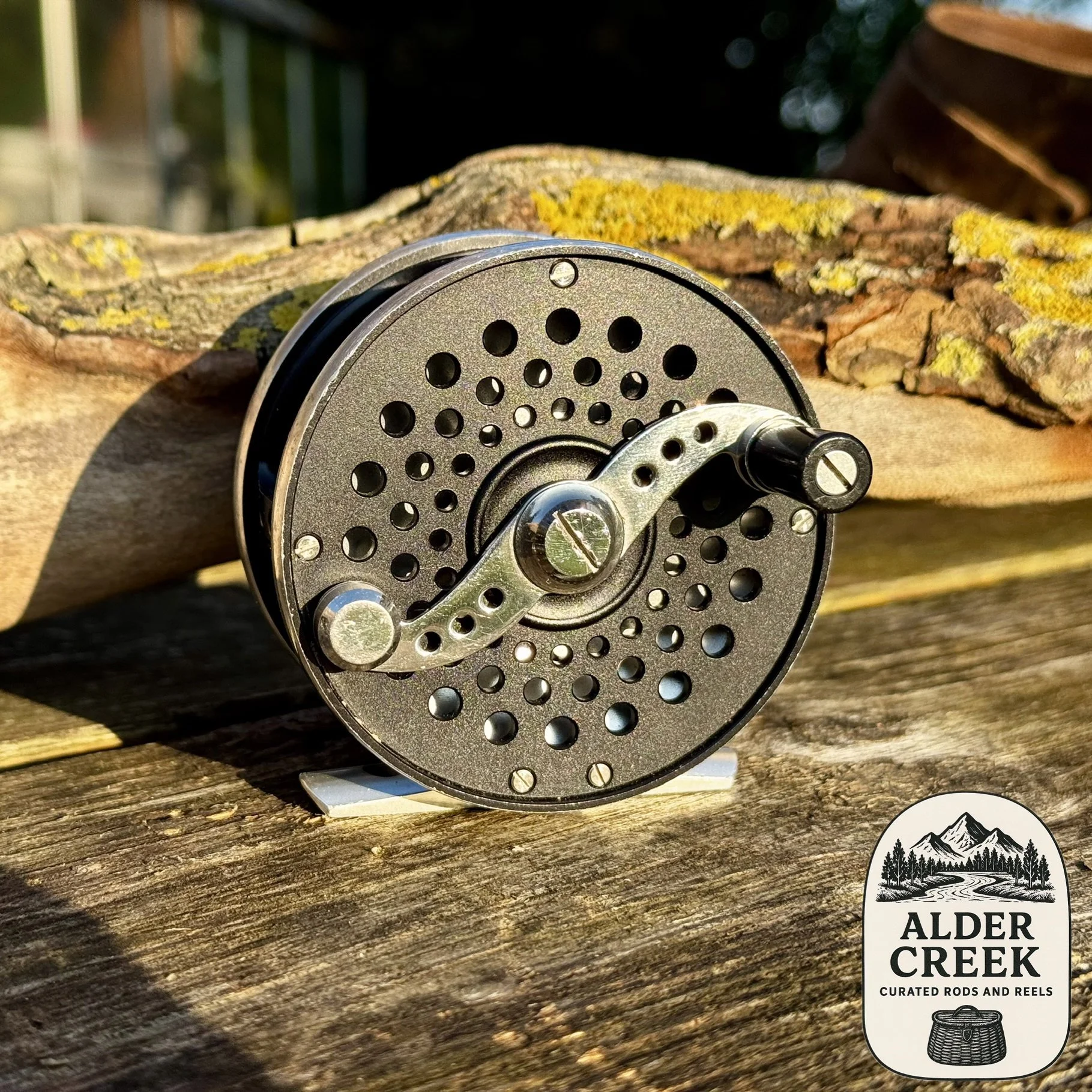
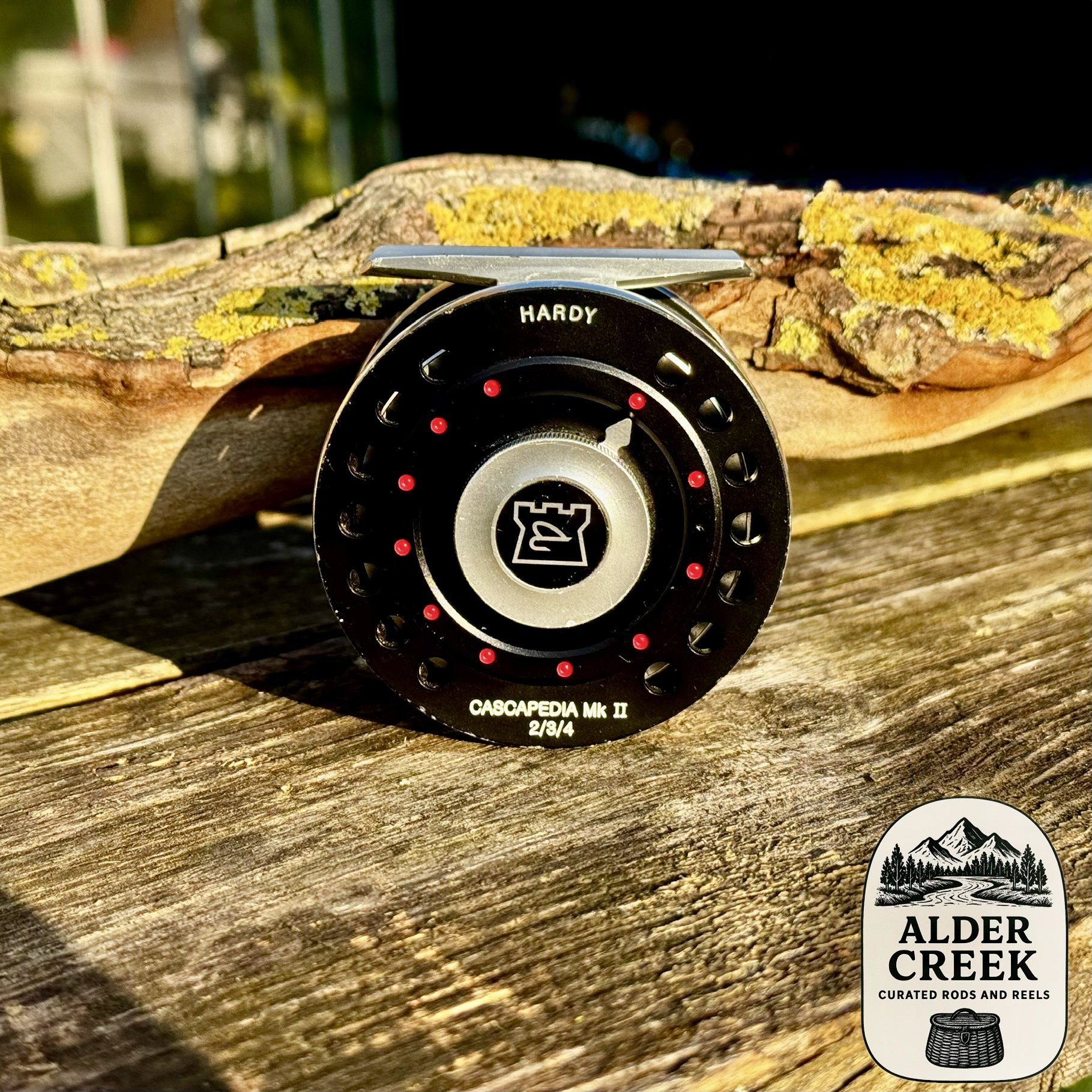
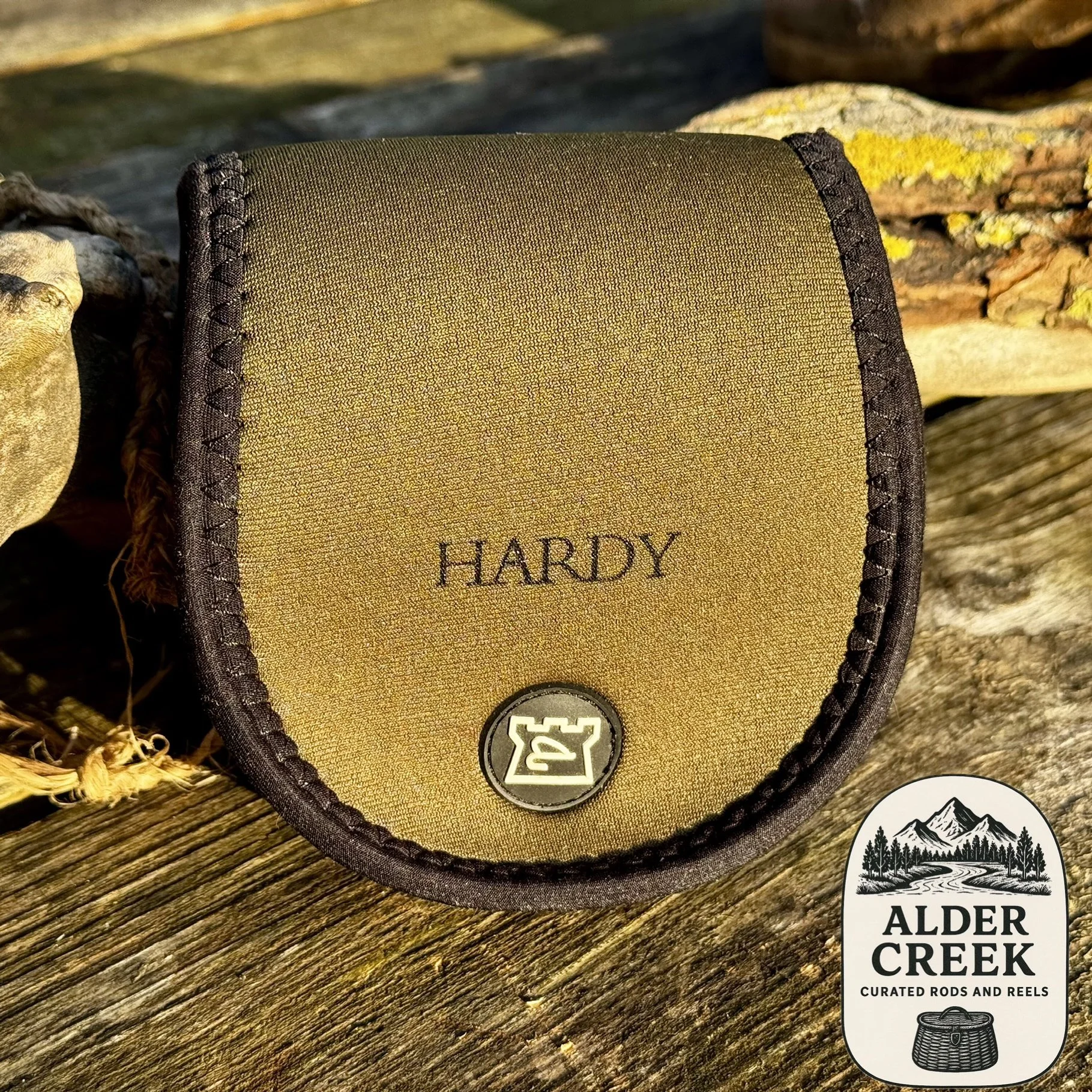
Use: Light trout fishing.
Made in Korea int the 1980’s I believe, machined to Hardy's exacting standards. The reel features black frame and spool with highly polished bands and bright aluminum foot. All parts are ventilated, including the counter balanced S-handle. Adjustable click & pawl drag with strong resistance. Set up LHW but can be converted to RHW without too much trouble. 2 7/8" diameter with a spool width of 15/16". Marked as a 2/3/4 reel but I would probably use it as a 4/5. Neoprene pouch included.
Condition: Signs of wear, mostly relegated to the rims and rear. Front screw has some wear.
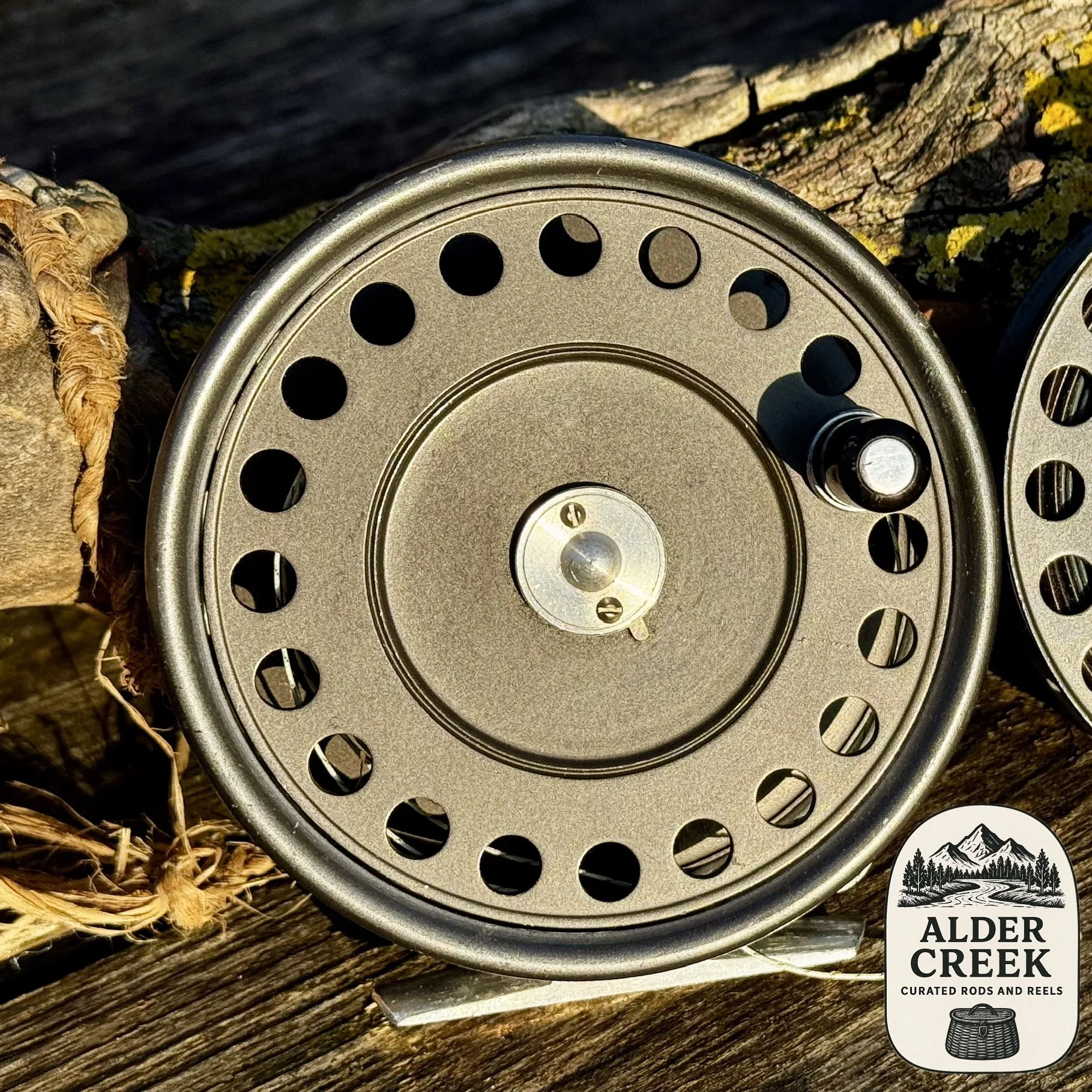
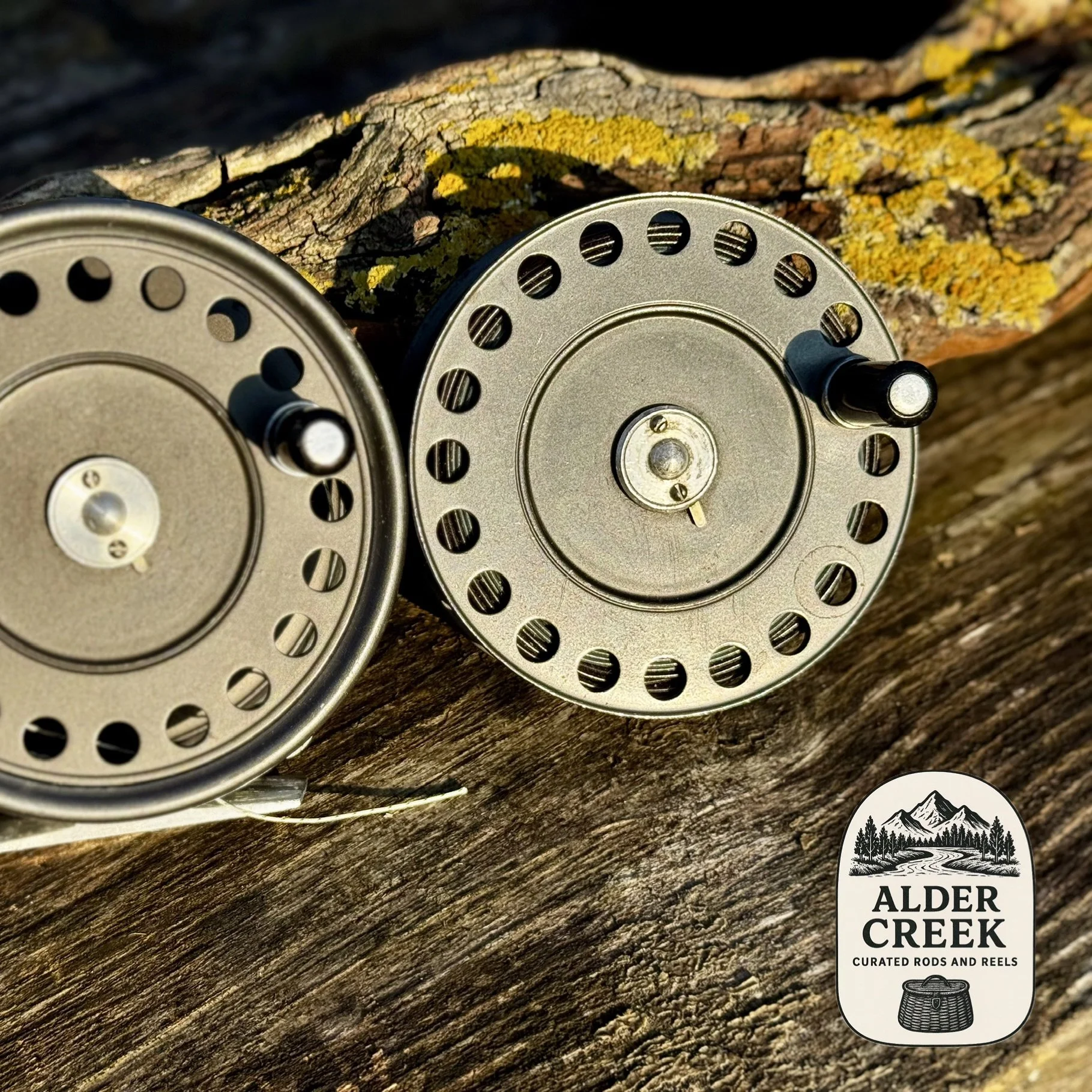
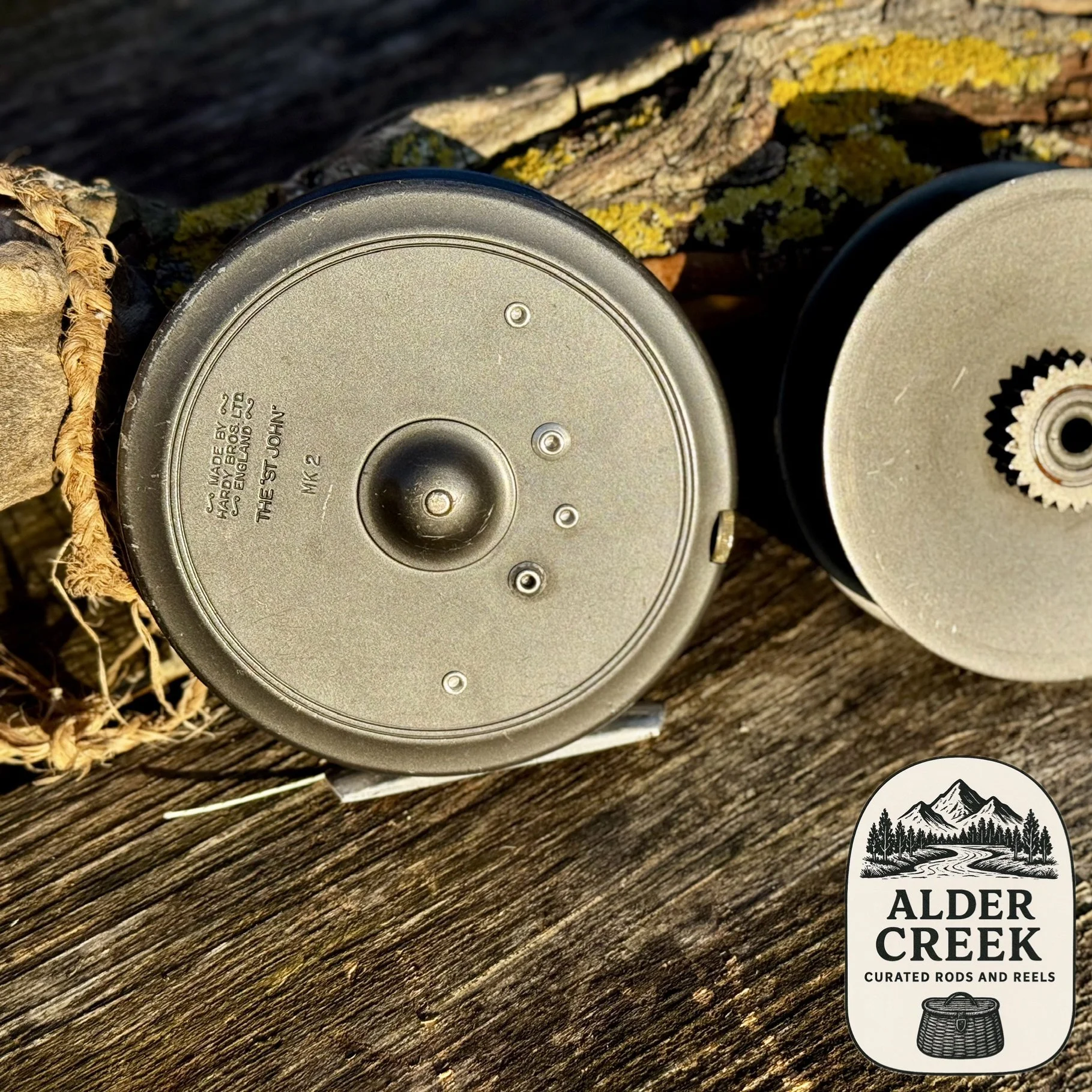
Use: Trusted companion for heavy trout fishing.
2 screw latch and straight writing with aluminium foot dates this reel to the 1970’s. Enjoy the screaming drag, which adjustable by a spool tensioner. Alternates between RHW and LHW easily. The St. John is a 3 7/8 diameter rated 7/9 reel. It will hold plenty of line; up-to DT #6/7 with 130+ yards of #30 backing. It is light for most two-handers. Handles the typical steelhead or sea trout just fine.
Condition: Light use, some scratches on the rear. Mechanically and spool-wise flawless.
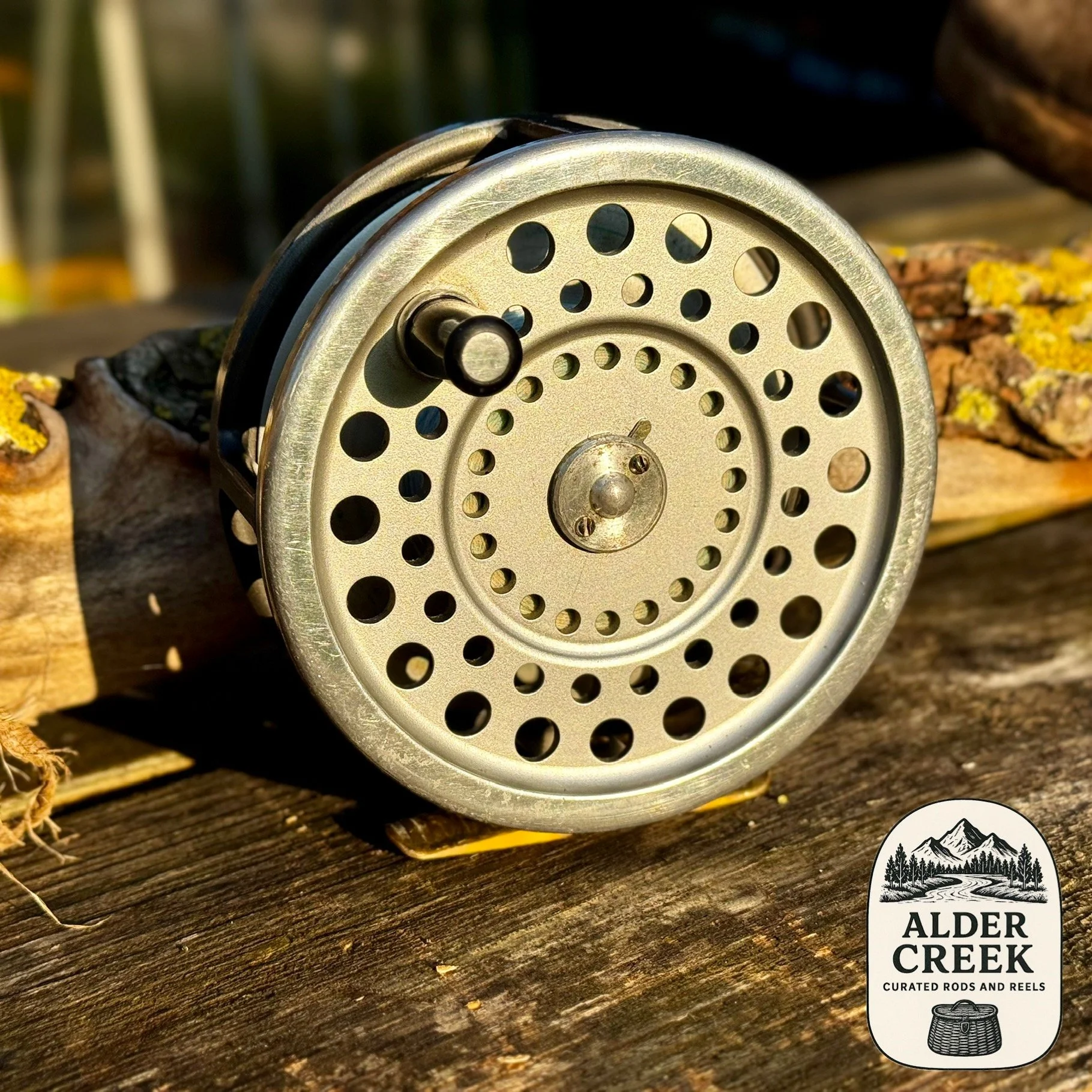
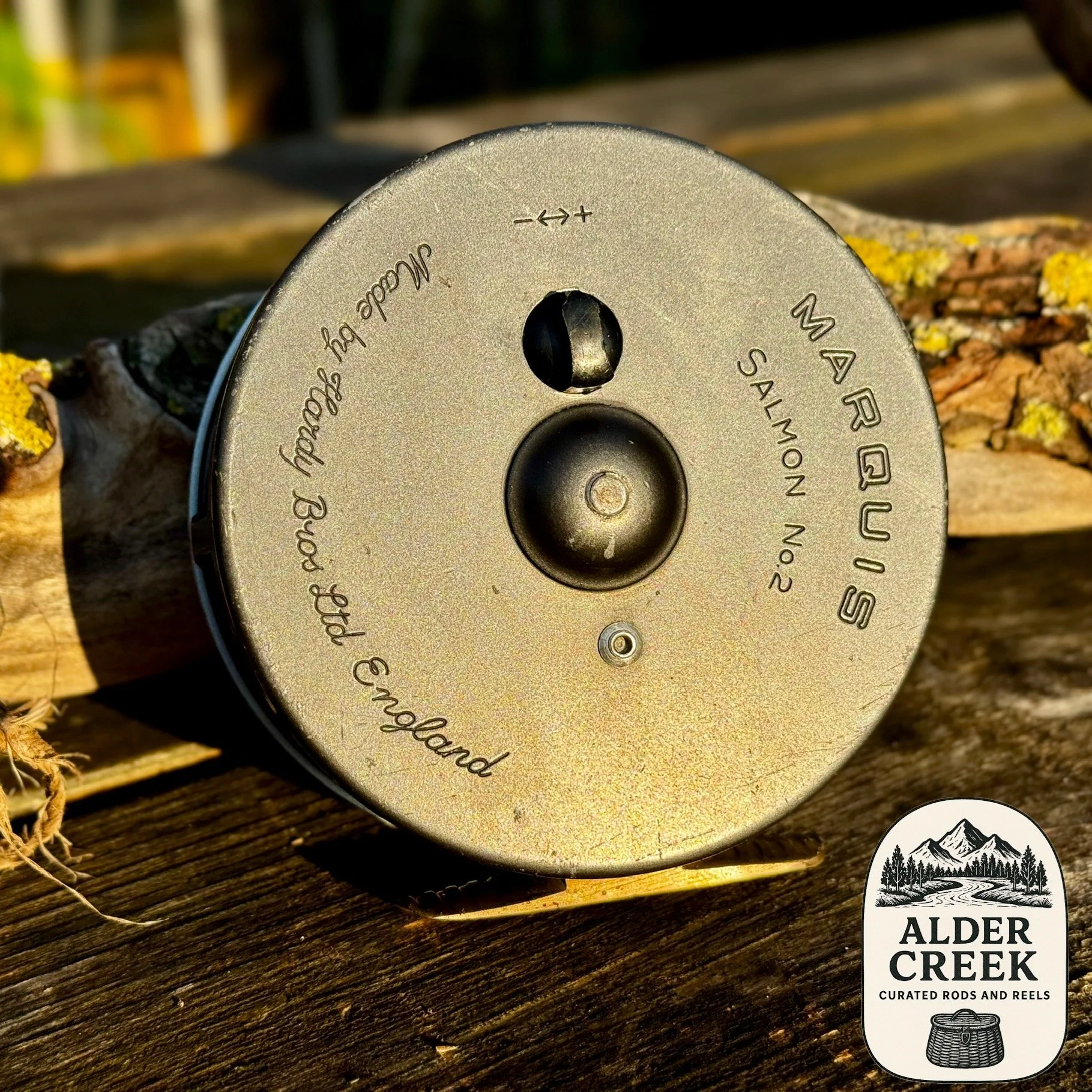
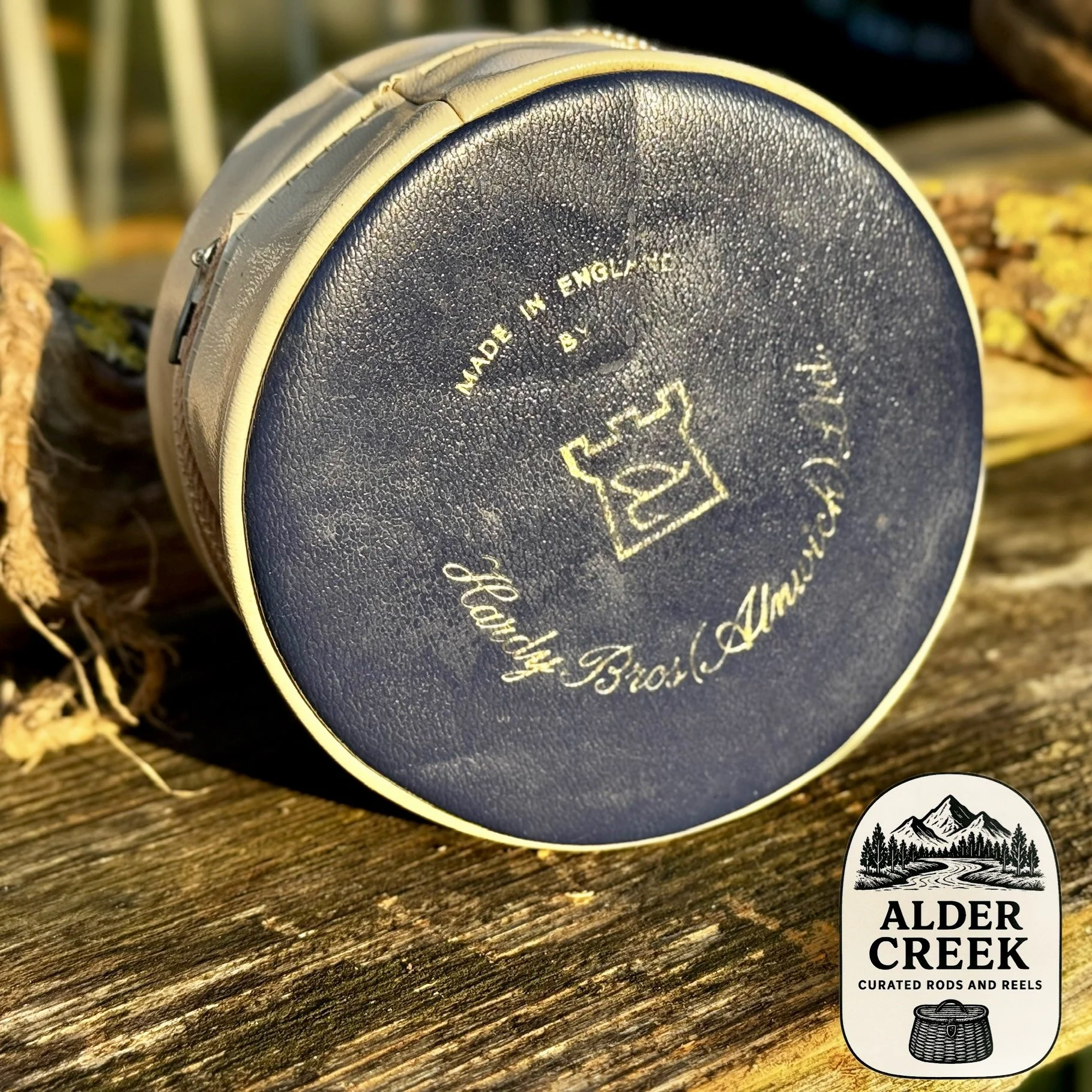
Use: Perfect for 2-handed salmon fishing.
Marquis salmon fly reel with black handle, brass ribbed foot, perforated face plate with two screw drum latch and black disc tensioner to rear plate. With classic Hardy case. From 1970’s. Sturdy, trustworthy companion for you two-handed rod.
Condition: Very good used condition.
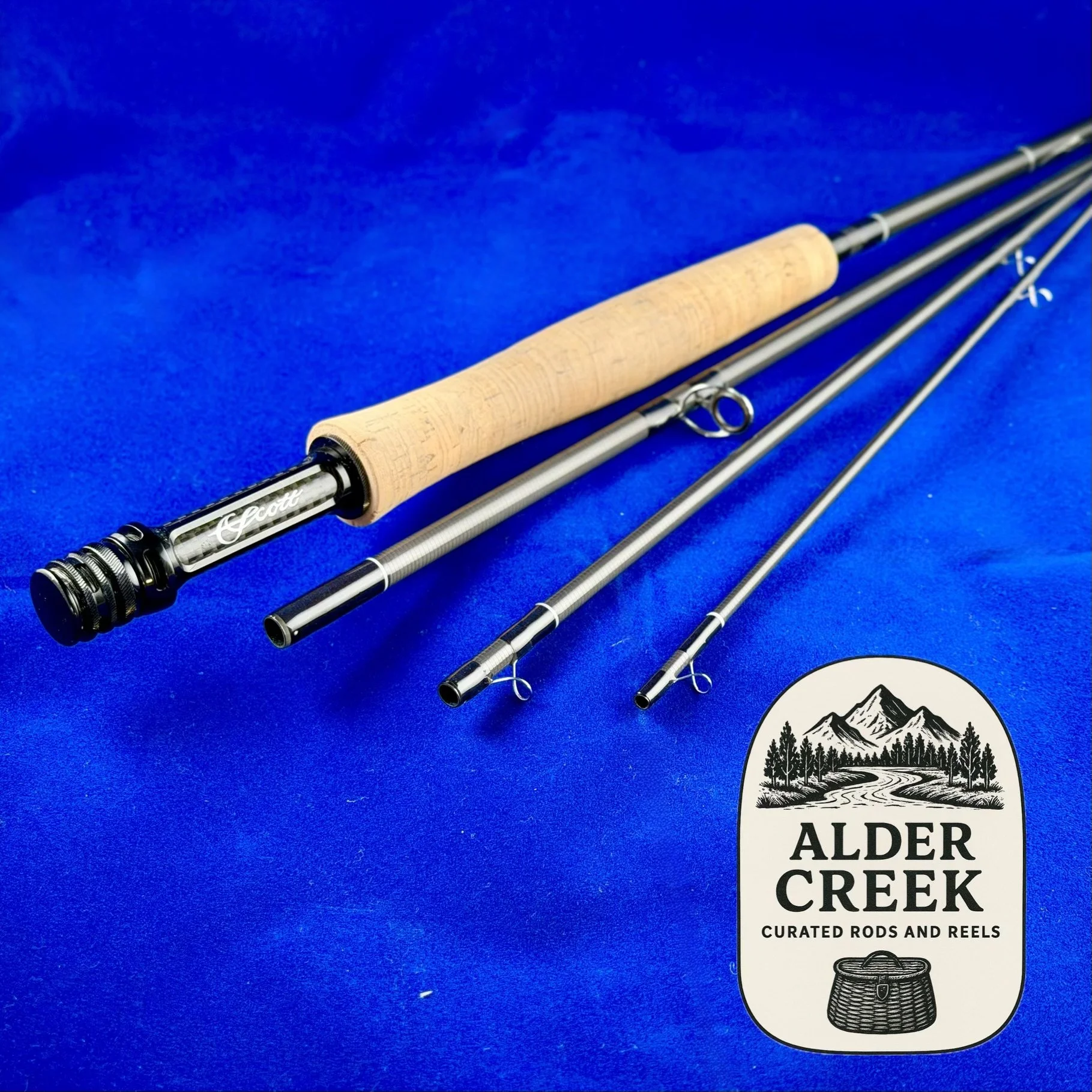
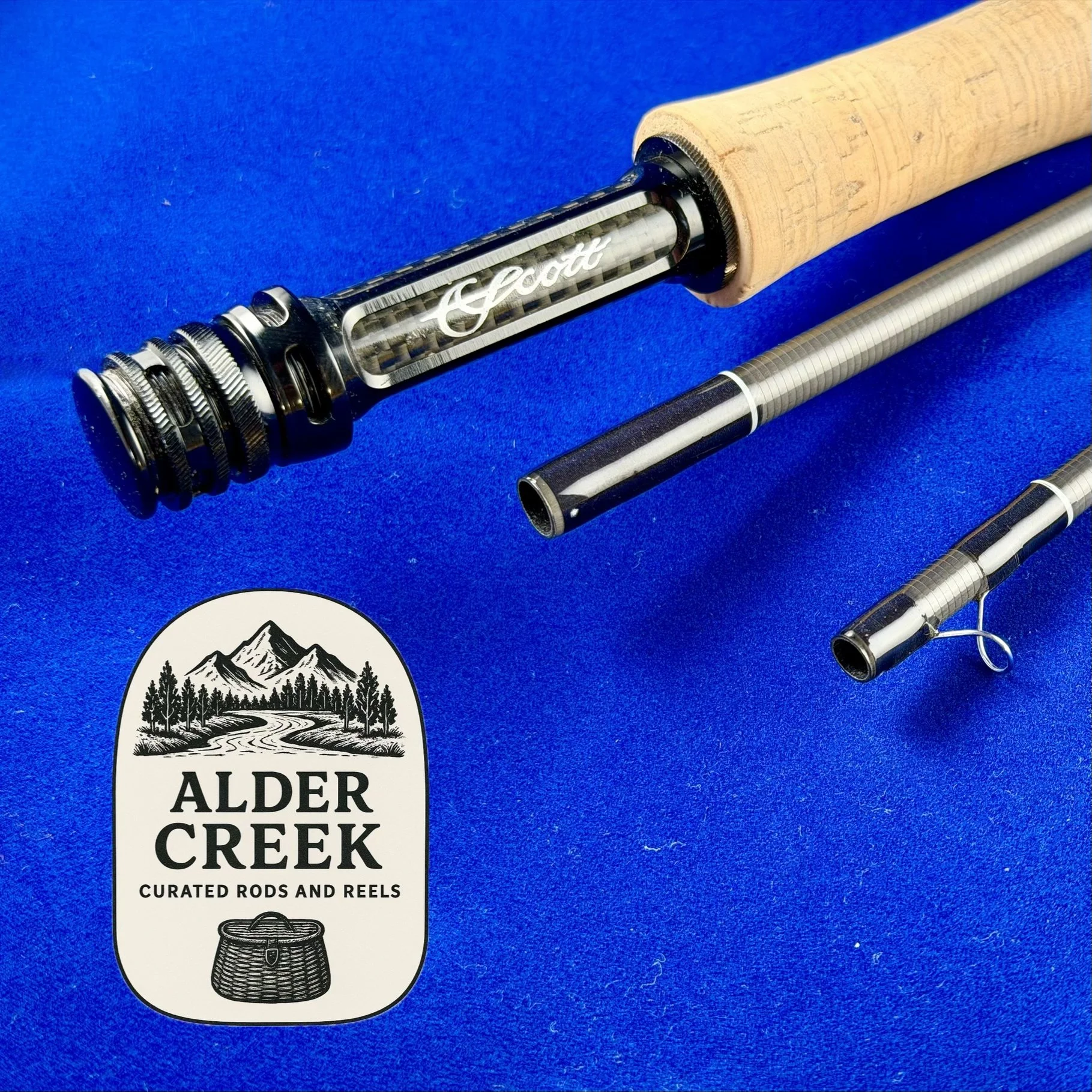
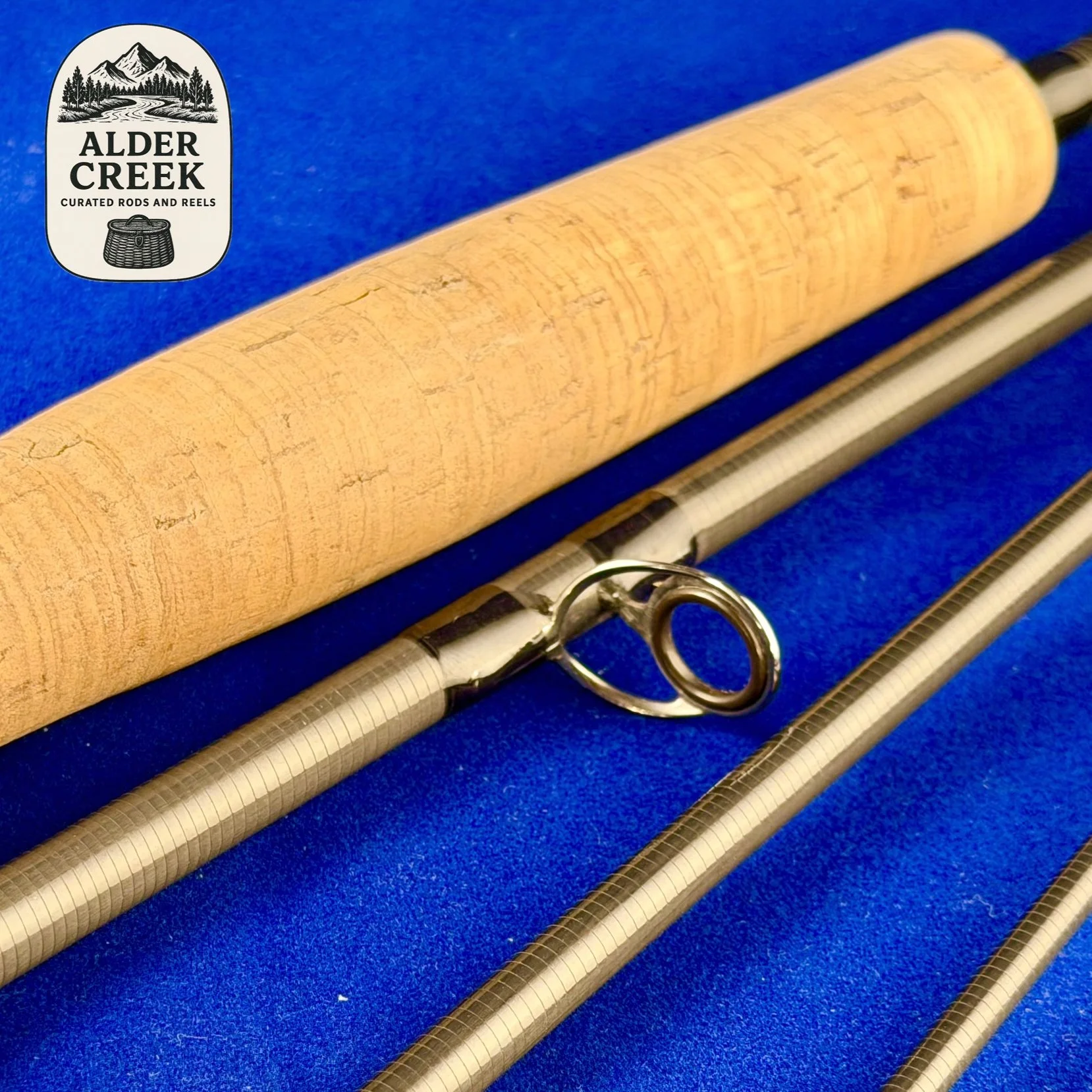
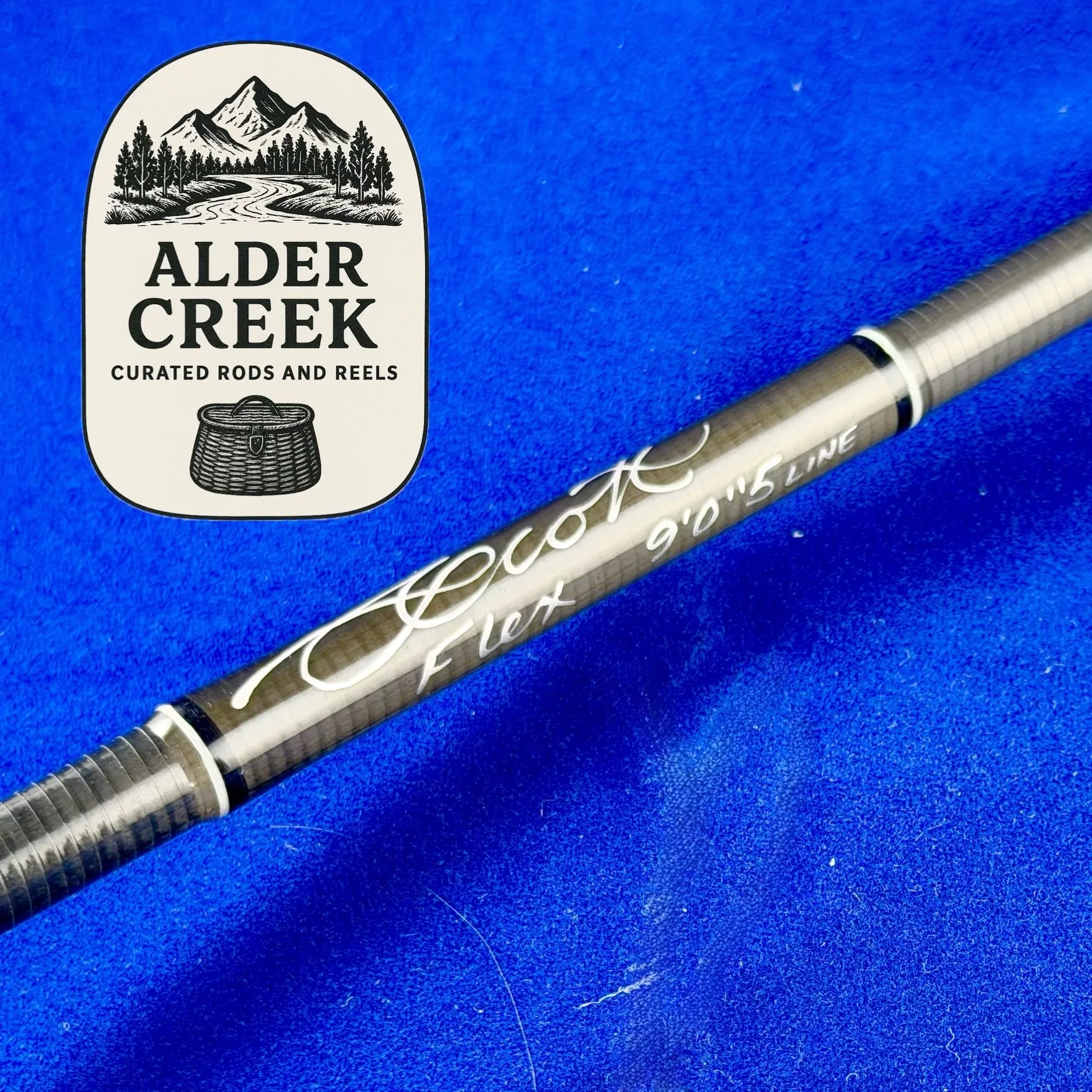
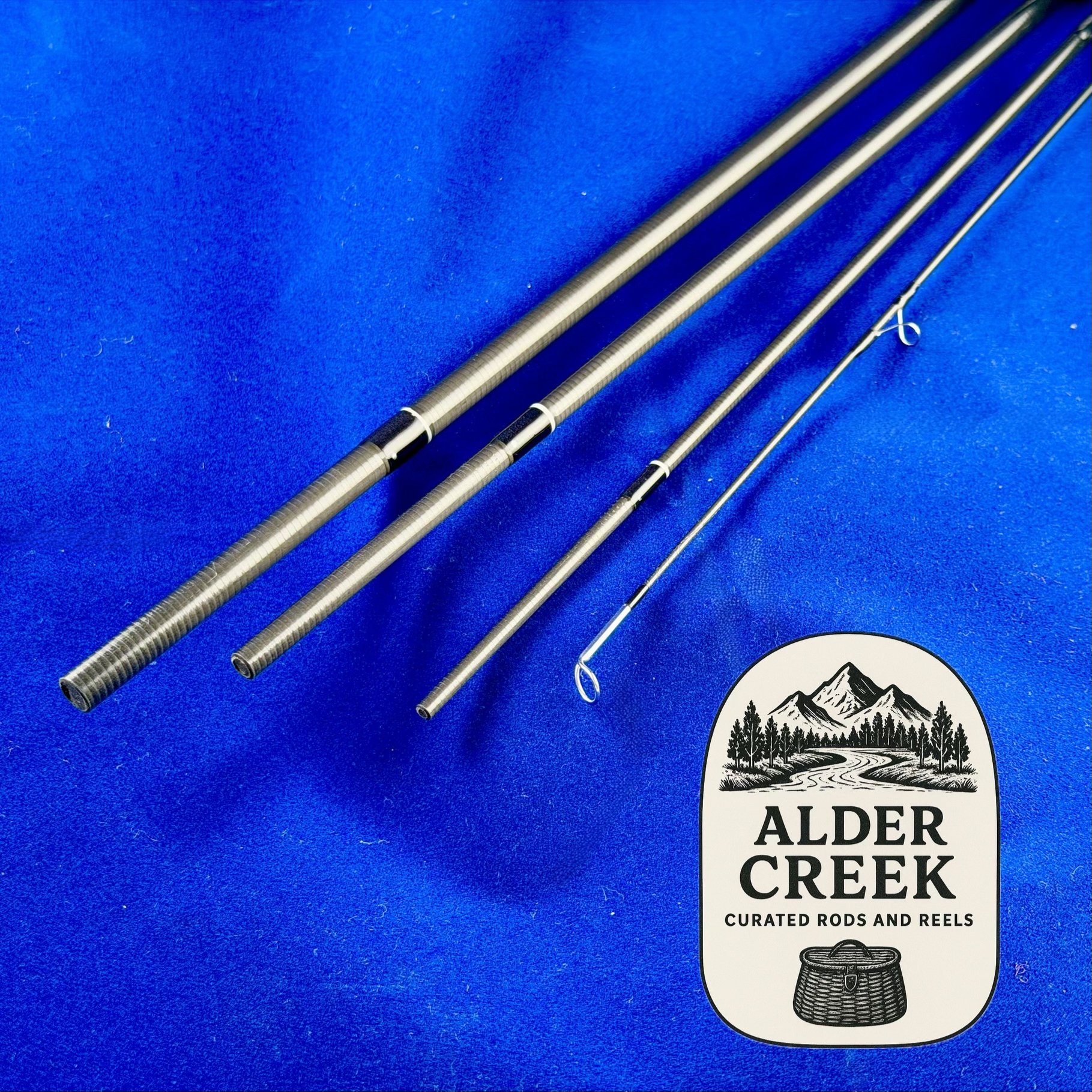
A modern rod with a fast, fast, fast action. Som cork soiling and some varnish rash but in good working condition. A good rod, punching above its weight regarding finish and details. Made in USA.
Scott wrote this about the rod: ”Flex rods generate line speed and tight loops effortlessly, helping you cast accurately and control your presentations. And, their powerful butt sections help with quick, positive hook sets and fish control.”
A Traditional British Angling Accessory
A handsome vintage trout priest from Hardy, combining a substantial brass head with a beautifully shaped teak handle.
The priest is one of the most traditional and enduring accessories of the British trout fisherman. Simple in its purpose and construction, it reflects an era when even the smallest items of fishing equipment were made with care and attention to materials.
Hardy Brothers of Alnwick produced a wide range of practical angling accessories alongside their celebrated rods and reels. Their traditional wooden-handled priests, fitted with weighted brass heads, are characteristic examples of the firm's approach to dependable fishing equipment.
The brass head has a pleasing, understated appearance, while the teak handle has acquired a smooth and supple feel through age and handling.
Its compact proportions make it an attractive companion to a traditional fishing bag or creel, and a fitting addition to a collection of classic Hardy tackle.
The priest is currently without a wrist lanyard. A simple leather strap could be fitted if the new owner intends to use it regularly.
An appealing piece of traditional British angling equipment, combining straightforward functionality with the quiet elegance of natural materials.
Maker: Hardy
Type: Trout priest
Head: Brass
Handle: Teak
Wrist lanyard: Not fitted
Period: Vintage; exact date not established
Condition: Used, with natural age-related character
Further photographs, measurements and international shipping information are available upon request.
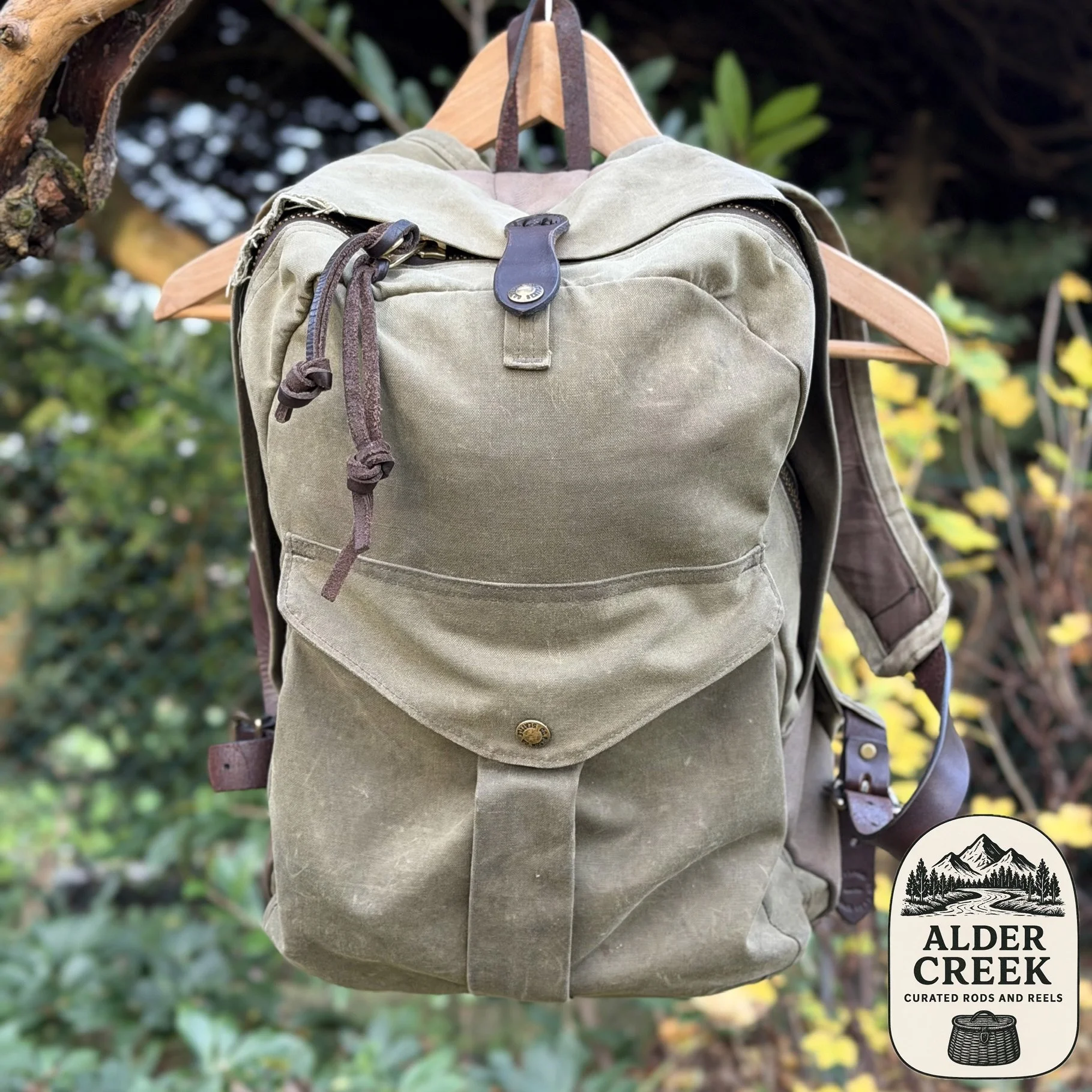
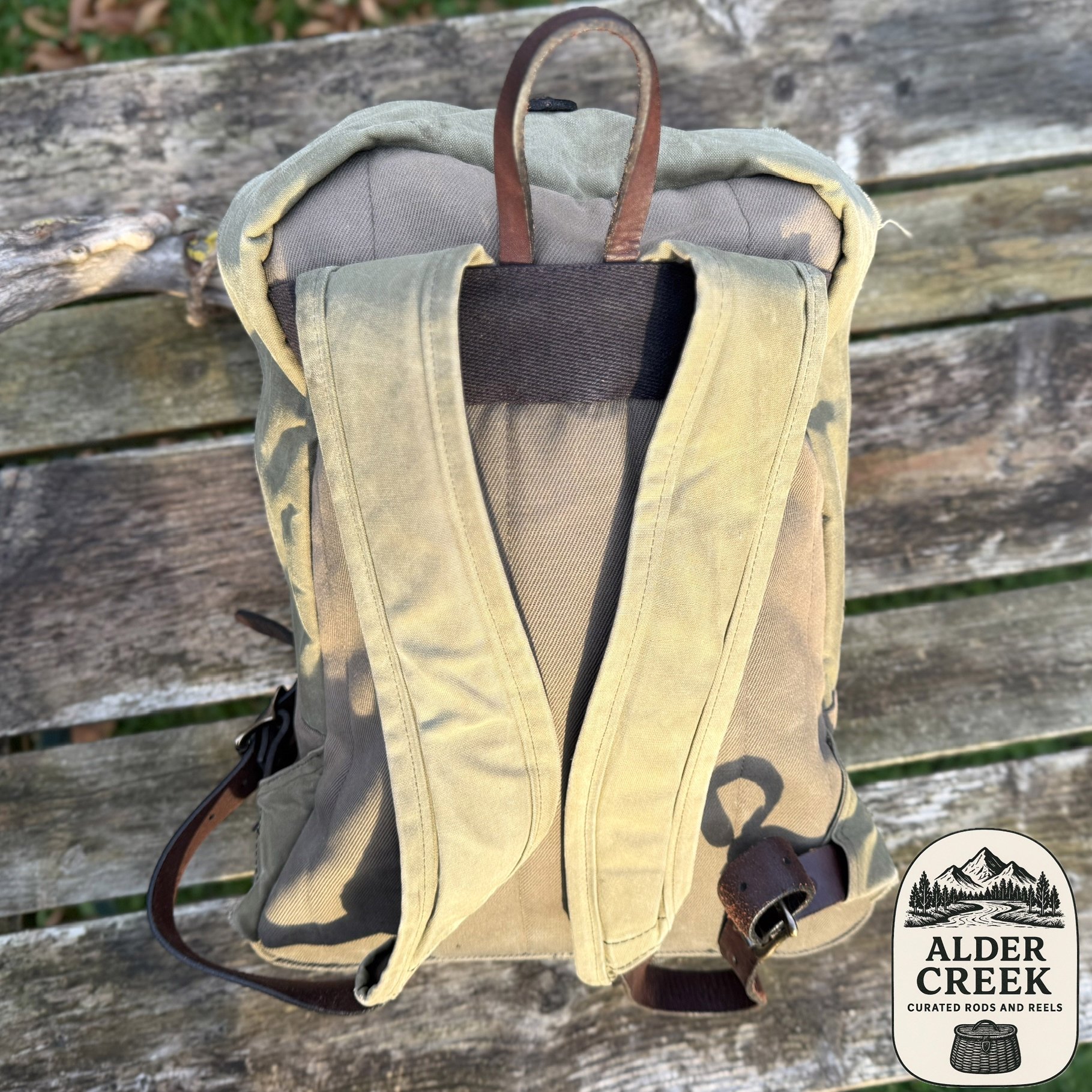
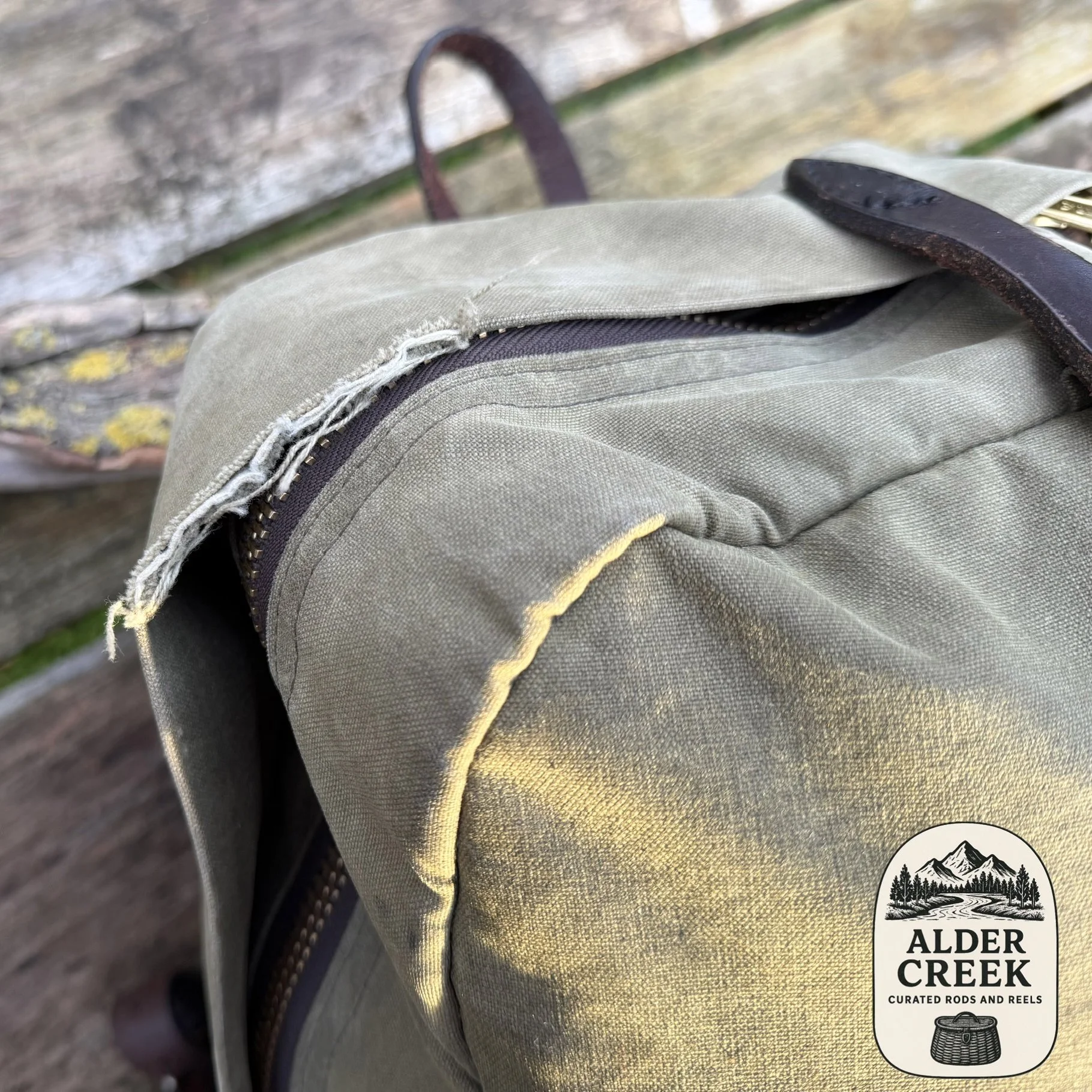
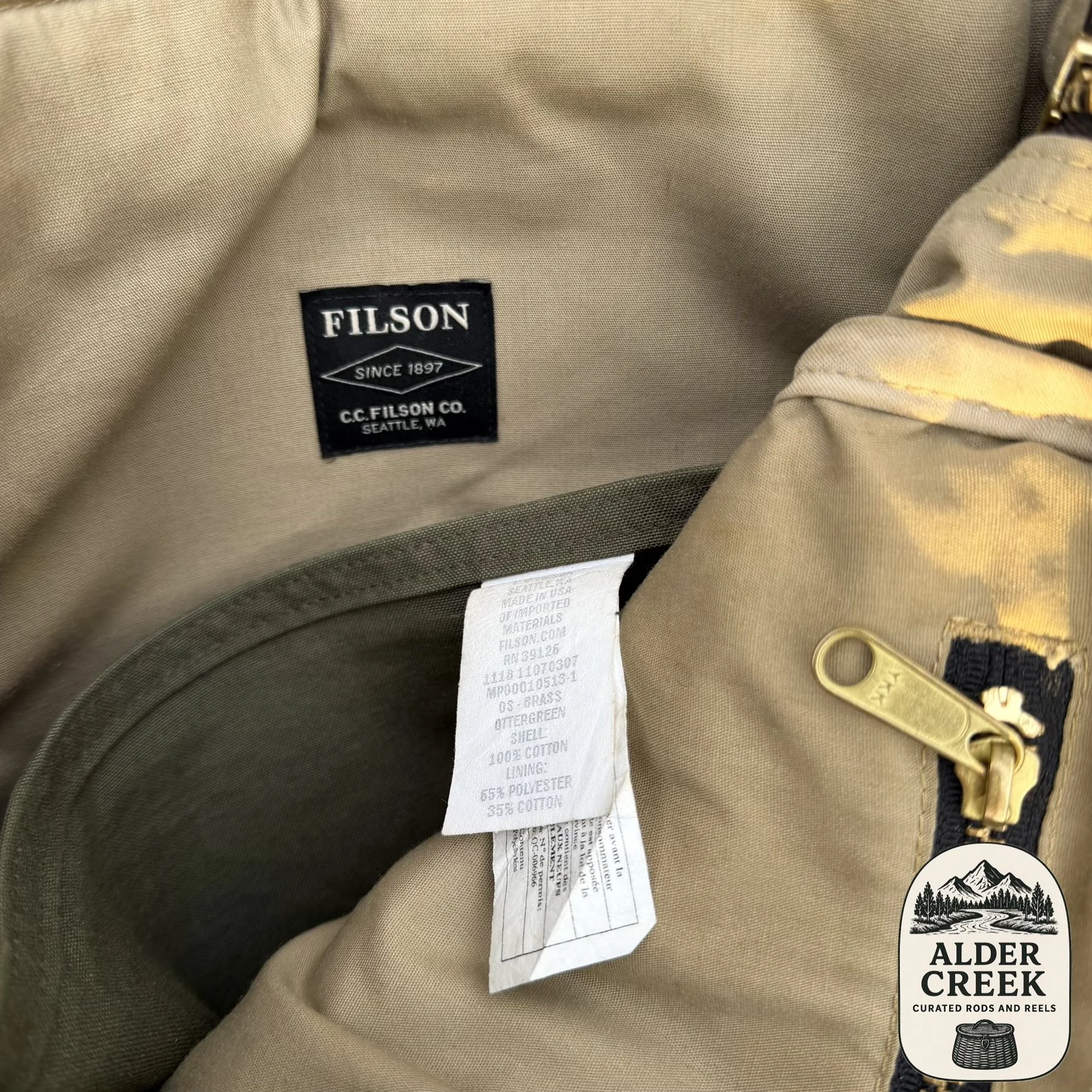
An otter green 23 L day pack made from tin cloth and rugged twill. Of course, this is USA produced Filson (not outsourced as nowadays) and by age the oil finish is gone from the tin cloth and it’s now has a smooth and supple fabric all over. Has a really nice patina but some fraying on exposed corners and such. Personally, I think this contributes to the feel of the bag, but it can easily be fixed at home or at your cobbler or tailor. Take it to the water, I think is deserves to be your companion for many years to come!
-Fully-lined with a padded pocket for laptops up to 15"
-Cotton Moleskin-lined shoulder straps with Bridle Leather adjustment straps
-Padded back panel
-Exterior snap-flap pocket with snap-secure expandable gussets
-Bridle Leather grab handle and zipper pulls
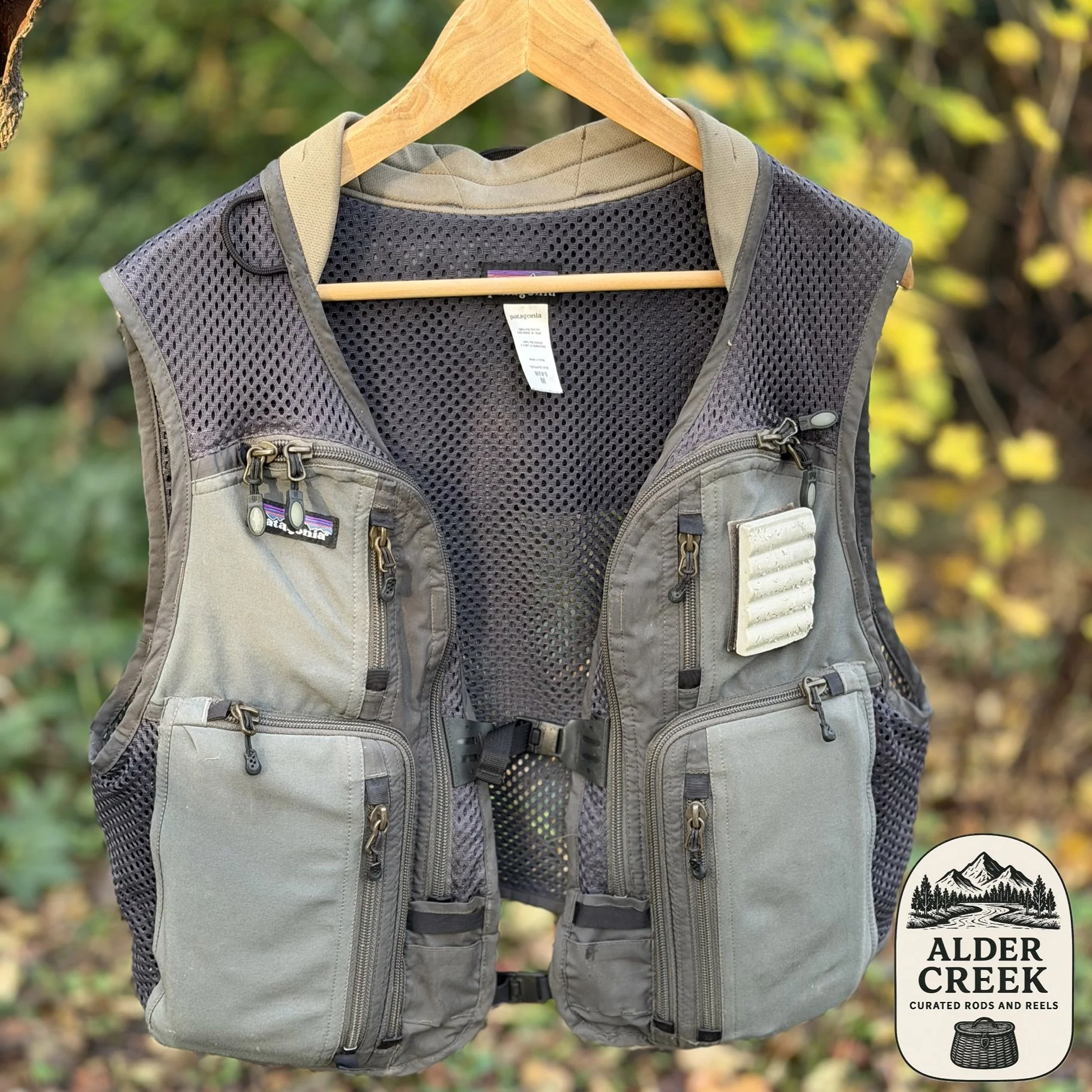
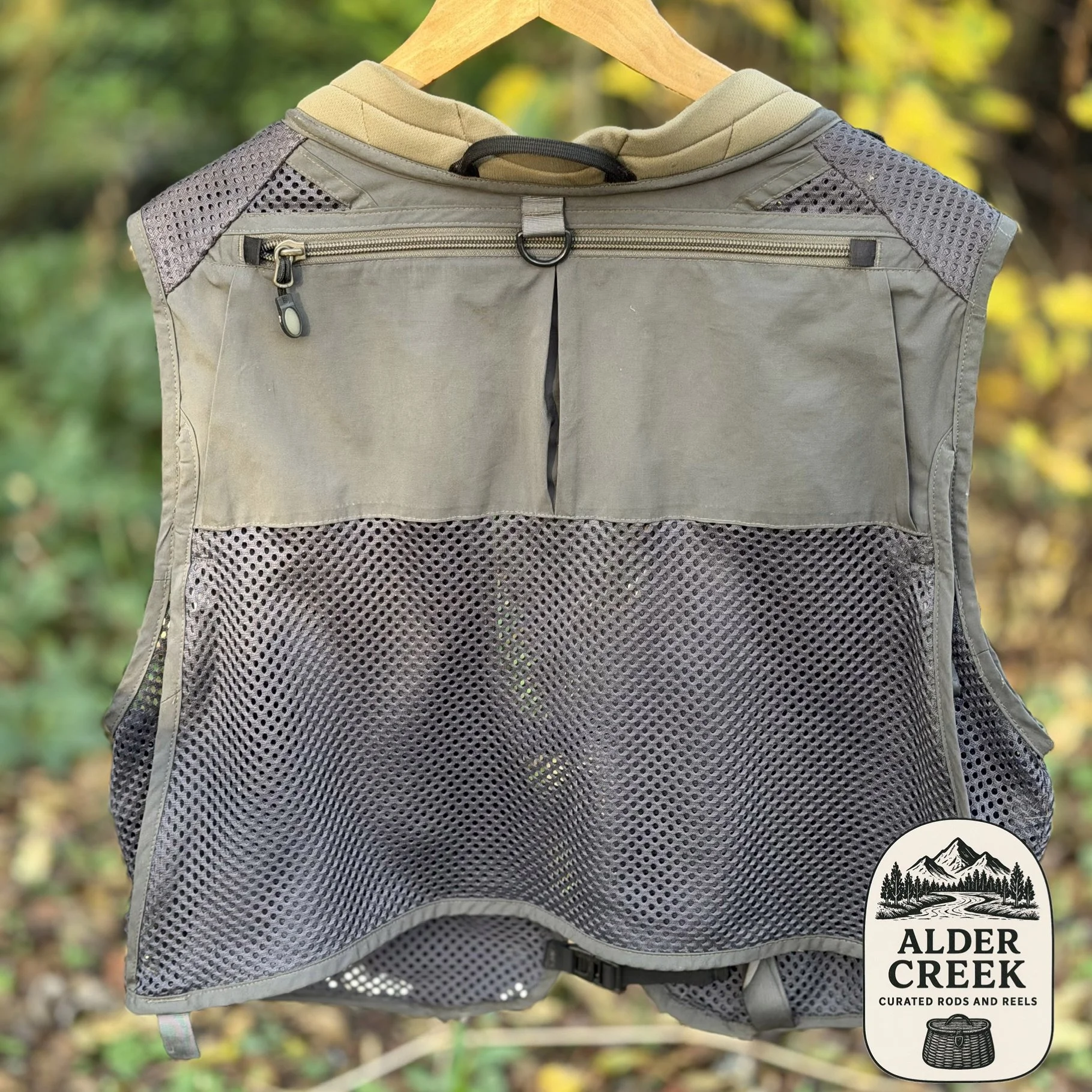
A modern classic of technical fly-fishing clothing
A fine example of Patagonia's highly regarded Riverwalker Vest, introduced for the Spring 2008 season as a modern interpretation of the company's original mesh fishing vest from 1987.
The Riverwalker represents an interesting chapter in the evolution of fly-fishing clothing. Combining the familiar comfort and breathability of a traditional fishing vest with the organised storage of a modern technical pack, Patagonia created a remarkably functional garment without abandoning the simplicity of the classic design.
The construction combines lightweight mesh and stretch nylon with numerous carefully arranged compartments for fly boxes, leaders, tippet and other essential fishing equipment.
Curved and straight zippers provide convenient access, while the integrated attachment points, removable fly patch and built-in rod holder reflect the attention paid to the practical requirements of the serious angler.
The back incorporates additional zippered storage, accessible without removing the vest. A padded collar and carefully designed shoulder construction help distribute the weight of a fully loaded vest.
This particular example is a size Medium and has accompanied its previous owner through many days on the river.
It shows honest signs of extensive use, but no defects have been reported. The vest retains the purposeful character that made the Riverwalker such a successful design.
Now discontinued and increasingly difficult to find, the Riverwalker has developed a following among anglers who appreciate Patagonia's earlier technical fishing equipment.
A highly practical and distinctive fishing vest, made to be worn rather than merely admired.
Maker: Patagonia
Model: Riverwalker Vest
Period: c. 2008
Size: Medium
Construction: Mesh and stretch nylon
Storage: Multiple specialised pockets for fly boxes, tools and accessories
Features: Integrated attachment points, removable fly patch and rod holder
Back: Additional zippered storage
Condition: Well used, with no reported defects
Production: Discontinued
Questions about measurements, condition, additional photographs or international shipping are always welcome.
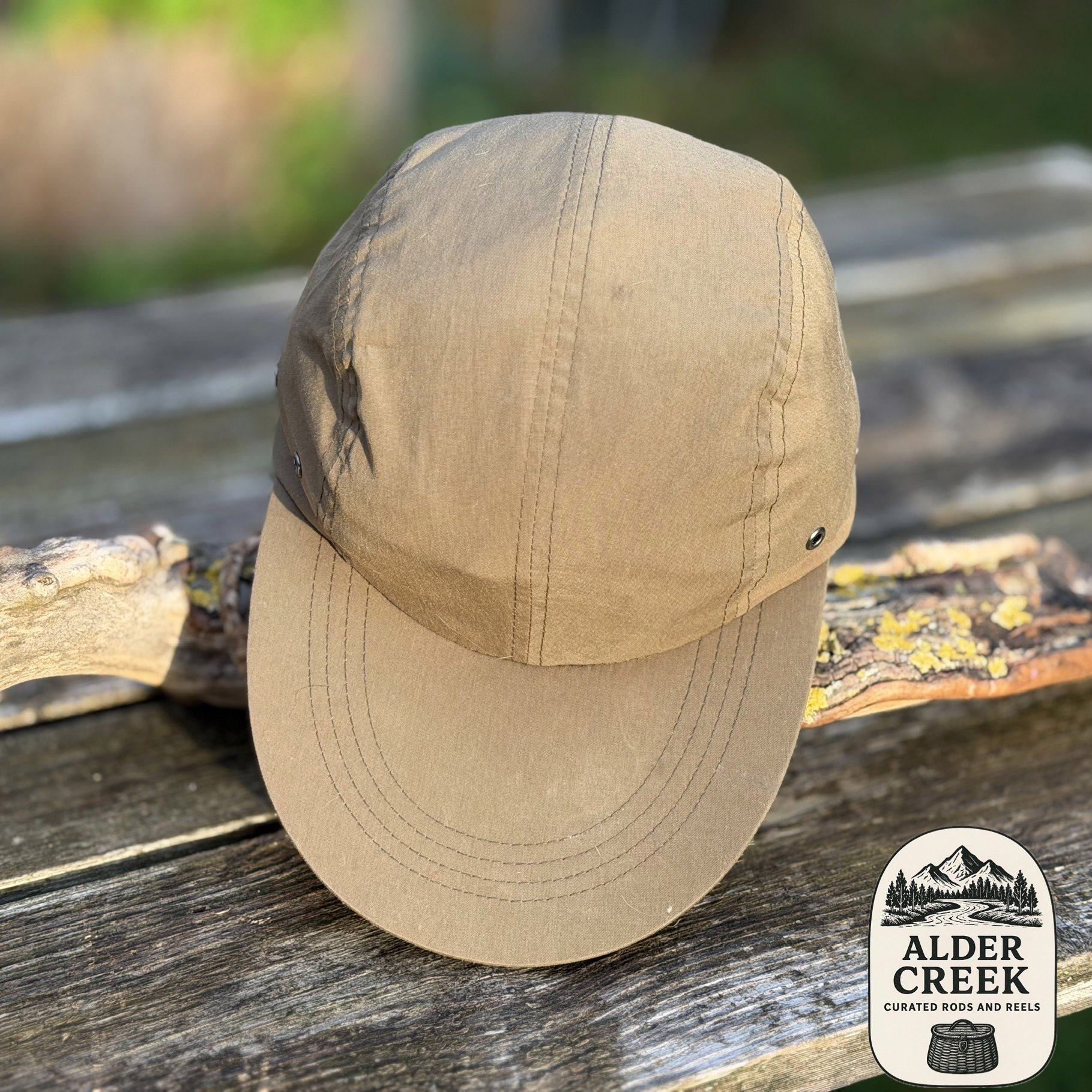
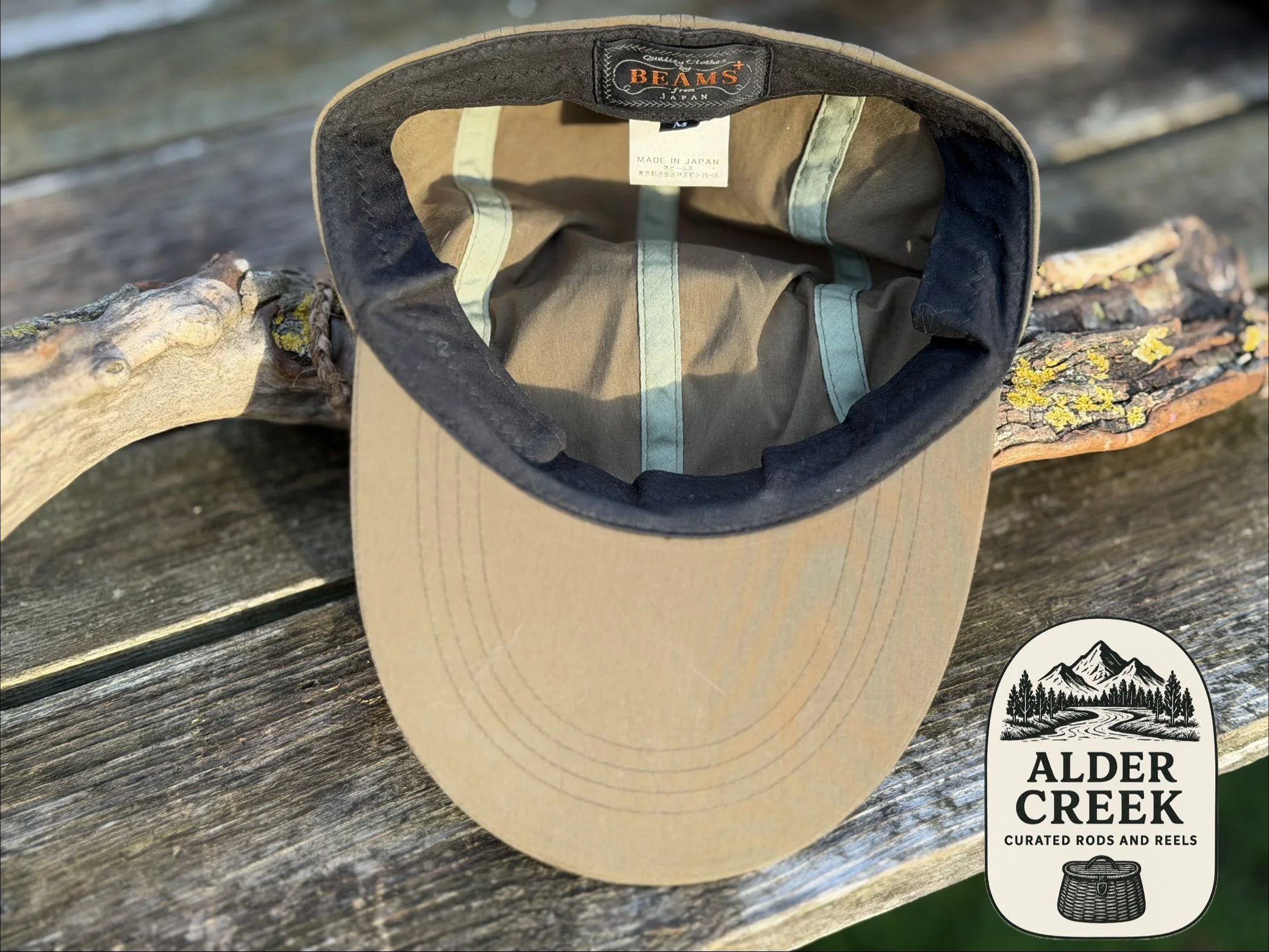
Long-Brim Fishing Cap · Lightweight Ripstop · Size M
A distinctive fishing cap from BEAMS PLUS, made in Japan and designed with a particularly long bill to provide generous protection from the sun.
Drawing upon traditional outdoor clothing and the practical requirements of the angler, the cap combines understated Japanese design with the purposeful simplicity of classic fishing equipment.
The lightweight ripstop fabric is comfortable to wear, while three ventilation eyelets on each side allow air to circulate during warmer days on the river. The extended bill provides additional shade, particularly useful when fishing in bright sunlight or studying the water for rising trout.
This is a used example in good, serviceable condition. There are signs of wear to the sweatband and maker's label, together with some minor staining to the bill.
These marks are consistent with its previous use and have been left as found.
A practical and rather unusual piece of Japanese fishing apparel, equally at home on a trout stream or as part of an everyday outdoor wardrobe.
Maker: BEAMS PLUS
Origin: Made in Japan
Type: Long-brim fishing cap
Size: Medium
Material: Lightweight ripstop fabric
Ventilation: Three eyelets on each side
Bill: Extended length for additional sun protection
Condition: Used, with wear to the sweatband and label and minor staining to the bill
Further photographs, measurements and international shipping information are available upon request.
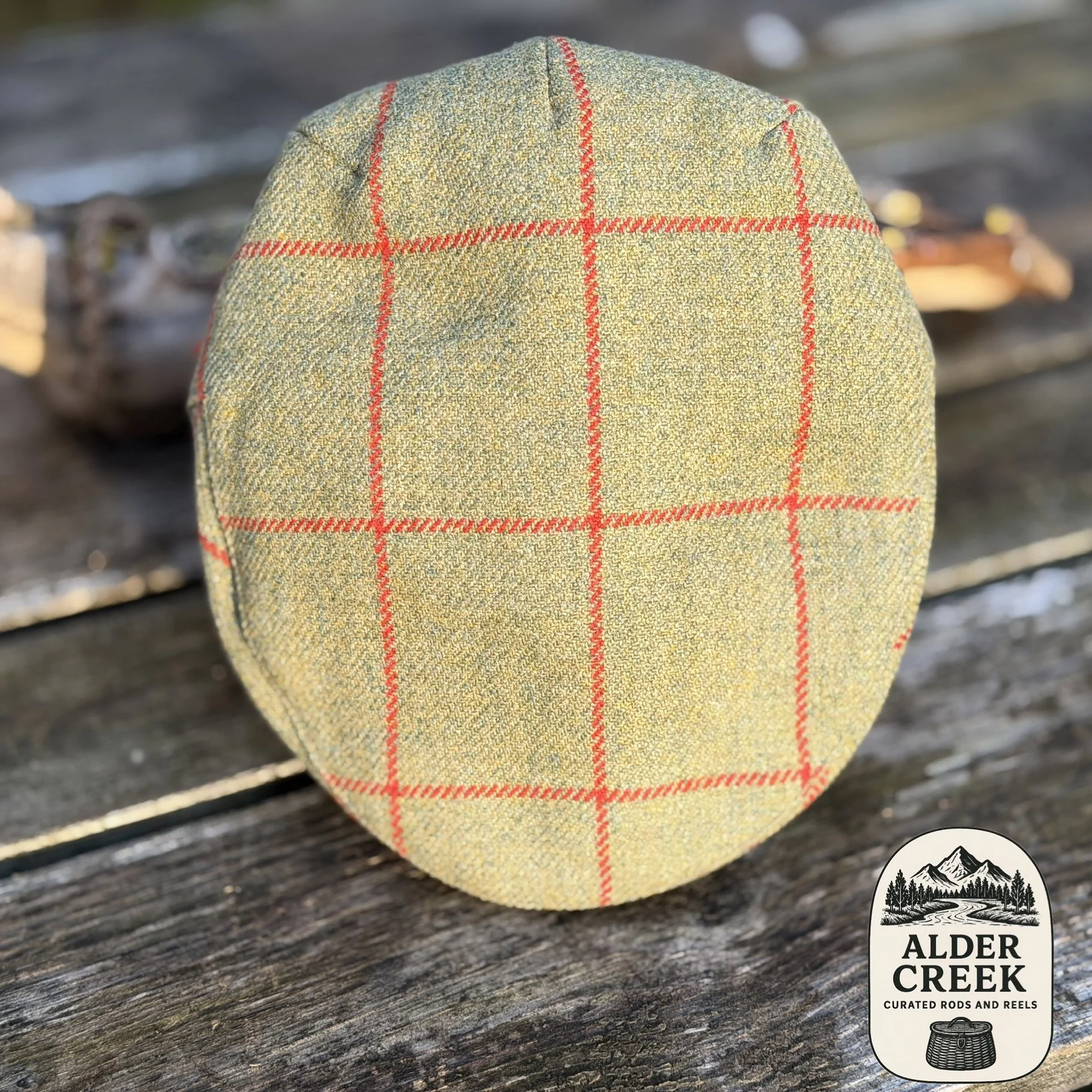
Traditional British Country Style · Pure Wool · Size M
A handsome traditional tweed cap from Hackett London, made from the firm's Horse & Hound tweed and reflecting the understated elegance of classic British country clothing.
Dating from a period when Hackett was particularly associated with traditional tailoring and sporting attire, this cap combines practical warmth with the timeless appeal of wool tweed.
The outer fabric is 100% wool, excluding lining and trim. Its traditional construction makes it a natural companion for autumn days beside the river, early-morning salmon fishing or simply a walk through the countryside.
This is a previously worn example, showing signs of use to the interior sweatband and lining. These marks are consistent with normal wear and do not detract from the cap's traditional appearance.
A pleasingly understated piece of British country clothing, equally suited to the fishing stream and everyday wear.
Maker: Hackett London
Collection/Fabric: Horse & Hound Tweed
Type: Traditional tweed cap
Size: Medium
Outer Material: 100% wool, excluding lining and trim
Condition: Used, with wear to the sweatband and lining
Further photographs, measurements and international shipping information are available upon request.
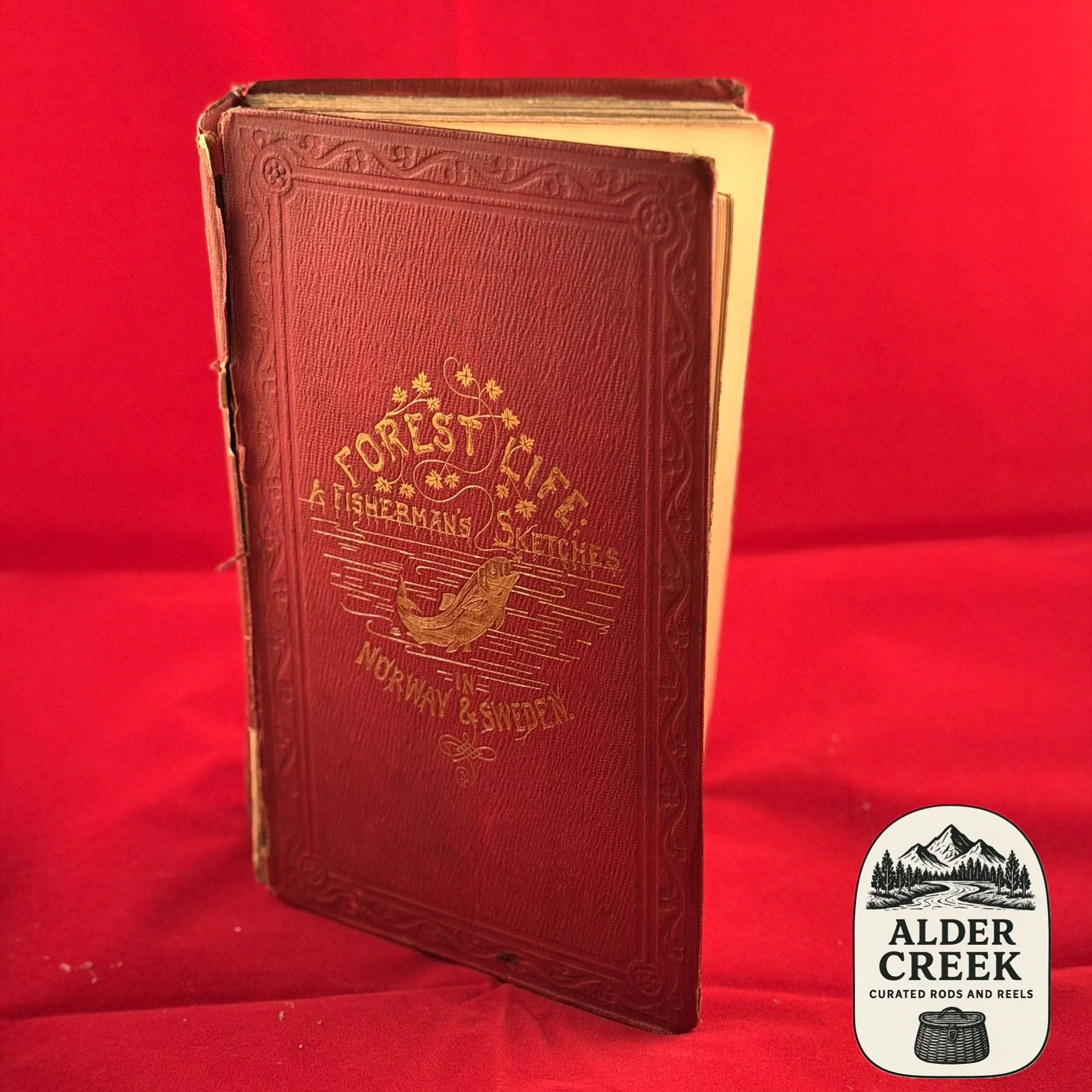
An evocative account of nineteenth-century Scandinavian travel and angling by the Reverend Henry Newland, offering a glimpse into the rivers, forests, landscapes, and fishing traditions of Norway and Sweden during the Victorian era.
Forest Life belongs to that appealing tradition of early sporting travel literature in which fishing, natural history, and observations of local life are woven together. Newland's narrative reflects a period when British anglers were increasingly drawn to the rivers and wilderness of Scandinavia, long before modern sporting tourism transformed many of these waters.
This is the second edition, published in 1855, comprising 418 pages with black-and-white illustrations, in a small octavo hardcover format. The hardcover is somewhat worn and frayed, see images.
A charming and historically interesting work, particularly appealing to collectors of early Scandinavian angling literature and Victorian sporting books.
Discover further works of early sporting and fly-fishing literature in our collection of rare and vintage angling books , including historic accounts of fishing, natural history, and the traditions of the sporting world.
Author
The Rev. Henry Newland
Title
Forest Life: A Fisherman's Sketches in Norway and Sweden
Year
1855
Edition
Second Edition
Original Publication
1854
Format
Small octavo, approximately 120 × 188 mm
Pagination
vi, 418 pages
Illustrations
Black-and-white illustrations
Binding
Hardcover
Subject
Scandinavian angling, travel and natural history
Questions about this book, its condition, international shipping, or price are always welcome.
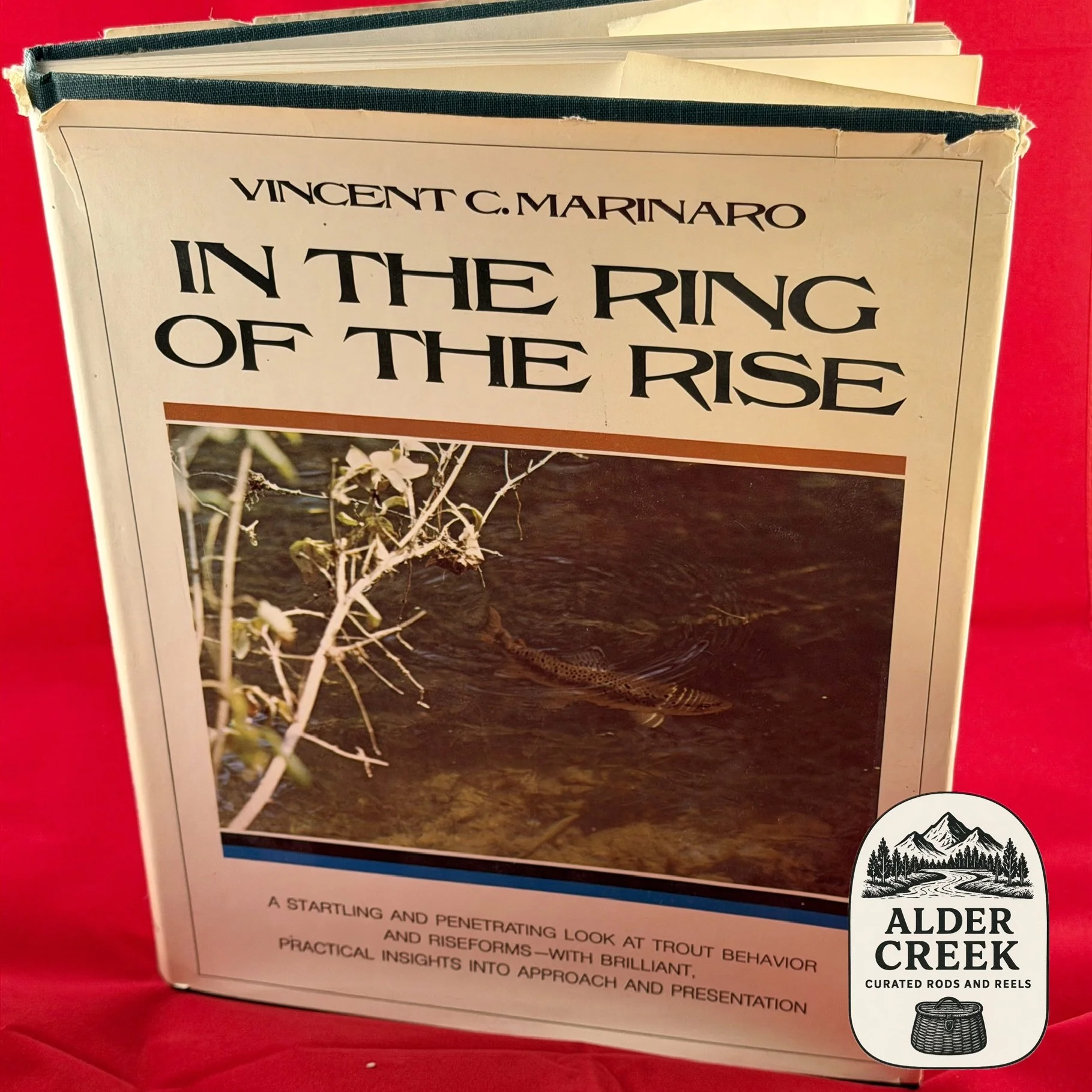
An important work by Vincent C. Marinaro, one of the most influential figures in twentieth-century American dry-fly fishing.
In In the Ring of the Rise, Marinaro continues the careful observations of trout and aquatic insects that made his earlier A Modern Dry-Fly Code a landmark in angling literature. Here, his attention turns to the rise itself: the subtle disturbances of the water's surface that reveal how trout feed and respond to natural insects.
Through close observation, photography and thoughtful analysis, Marinaro examines the relationship between rise forms, feeding behaviour and the presentation of the artificial fly. His approach encourages the angler to look beyond the simple appearance of a rising fish and to understand the activity taking place beneath the surface.
First published in 1976, the book remains a rewarding study of selective trout and the art of observation.
This copy is the first American edition, bound in green cloth with silver lettering to the spine. The large-format volume contains 184 pages, illustrated with black-and-white photographs and drawings, together with a selection of colour photographs.
The book itself is in very good condition, with minor bumping and wear to the spine and corners. The original dust jacket is present but shows fraying and creasing along the edges.
A distinguished contribution to American fly-fishing literature, and a natural companion to Marinaro's A Modern Dry-Fly Code.
Marinaro's observations of trout behaviour build upon the ideas first explored in A Modern Dry-Fly Code. Discover further works on selective trout, fly presentation and American angling history in our collection of classic fly-fishing literature .
Author
Vincent C. Marinaro
Title
In the Ring of the Rise
Year
1976
Edition
First American Edition
Pages
184
Format
Large-format hardcover
Illustrations
Black-and-white photographs and drawings; some colour photographs
Binding
Green cloth with silver spine lettering
Dust Jacket
Original; edge wear, fraying and creasing
Condition
Very good book; worn dust jacket; minor bumping to spine and corners
Subject
Trout rise forms, feeding behaviour and dry-fly fishing
Questions about this book, its condition, international shipping, or price are always welcome.
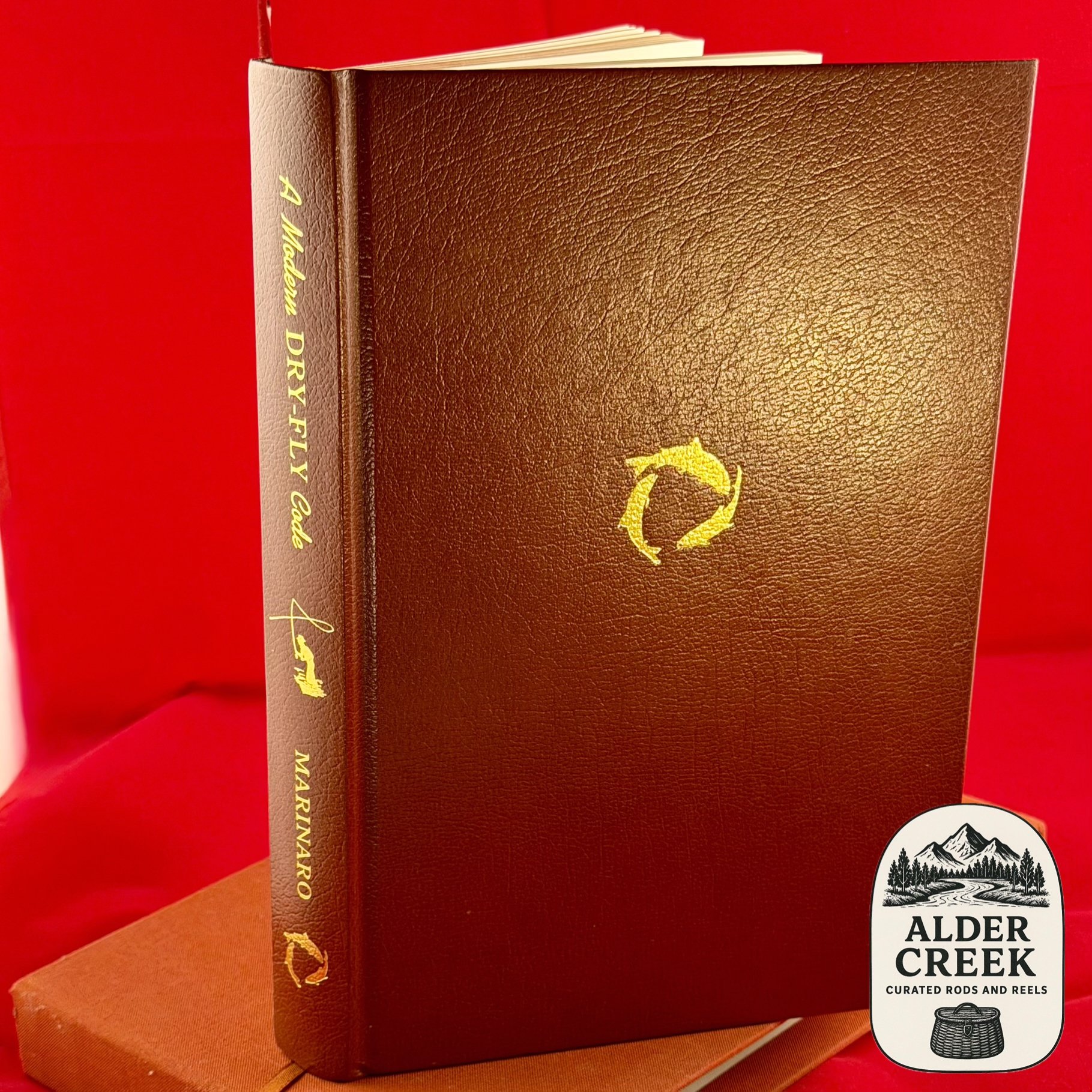
Few books have exerted a more lasting influence on American dry-fly fishing than Vincent C. Marinaro's A Modern Dry-Fly Code. First published in 1950, this remarkable work challenged established conventions and offered a new understanding of the relationship between trout, aquatic insects, and the artificial fly.
Drawing upon his observations of the limestone streams of Pennsylvania, Marinaro explored the subtleties of selective trout, fly design, presentation, and the importance of understanding what the fish actually sees. His ideas helped shape a more thoughtful and observant approach to dry-fly fishing and remain relevant to anglers today.
This handsome 1996 edition was produced by the Flyfisher's Classic Library in a limited printing of 500 copies. Bound in brown leather and accompanied by a sturdy cloth-covered slipcase, it retains the numerous black-and-white illustrations by Pearce Bates.
This copy is in excellent condition, with its original slipcase.
An important work of twentieth-century American angling literature, presented in an attractive collector's edition.
Author
Vincent C. Marinaro
Title
A Modern Dry-Fly Code
Publisher
Flyfisher's Classic Library
Year
1996
Edition
Limited collector's edition
Limitation
500 copies
Original Publication
1950
Binding
Brown leather
Illustrations
Black-and-white drawings by Pearce Bates
Slipcase
Original cloth-covered slipcase
Condition
Excellent
Questions about this book, international shipping, or price are always welcome.
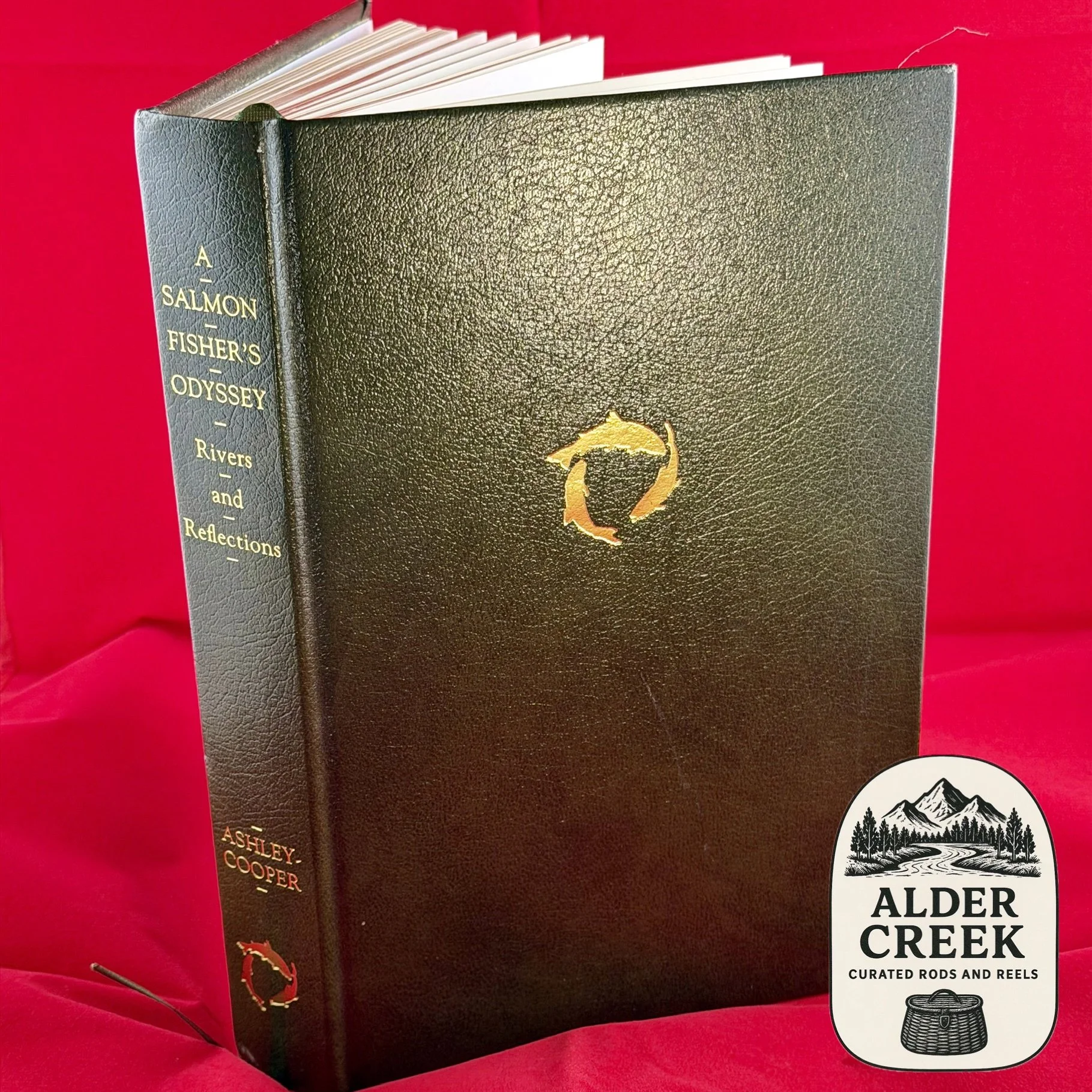
A distinguished account of a lifetime devoted to Atlantic salmon fishing by John Ashley-Cooper, one of the most knowledgeable and accomplished British salmon anglers of the twentieth century.
In A Salmon Fisher's Odyssey, Ashley-Cooper draws upon his extensive experience of salmon rivers, their individual characteristics and the traditions associated with fishing them. Combining personal recollections, observations and reflections, the book offers an intimate portrait of a sporting world shaped by remarkable rivers and generations of dedicated anglers.
The work is especially appealing for its accounts of British salmon waters and its appreciation of the history, character and enduring fascination of salmon fishing.
This handsome edition was published by the Flyfisher's Classic Library in 1996, in a limited printing of 500 copies. Bound in full leather with gilt lettering and decoration to the spine, it includes a silk ribbon marker and comprises 352 pages. No cassette.
This copy is in fine condition.
An attractive collector's edition of an important work of British salmon fishing literature, and a fitting addition to the library of anyone with an appreciation for classic salmon tackle and the great rivers on which it was used.
Explore further works on Atlantic salmon fishing, traditional salmon flies and British angling history in our collection of classic fishing literature , including works by John James Hardy and George M. Kelson.
Author
John Ashley-Cooper
Title
A Salmon Fisher's Odyssey: Rivers and Reflections
Publisher
Flyfisher's Classic Library
Year
1996
Edition
Limited leather-bound edition
Limitation
500 copies
Pages
352
Binding
Full leather with gilt spine decoration
Details
Silk ribbon marker
Condition
Fine
Subject
Atlantic salmon fishing and British salmon rivers
Questions about this book, international shipping, or price are always welcome.
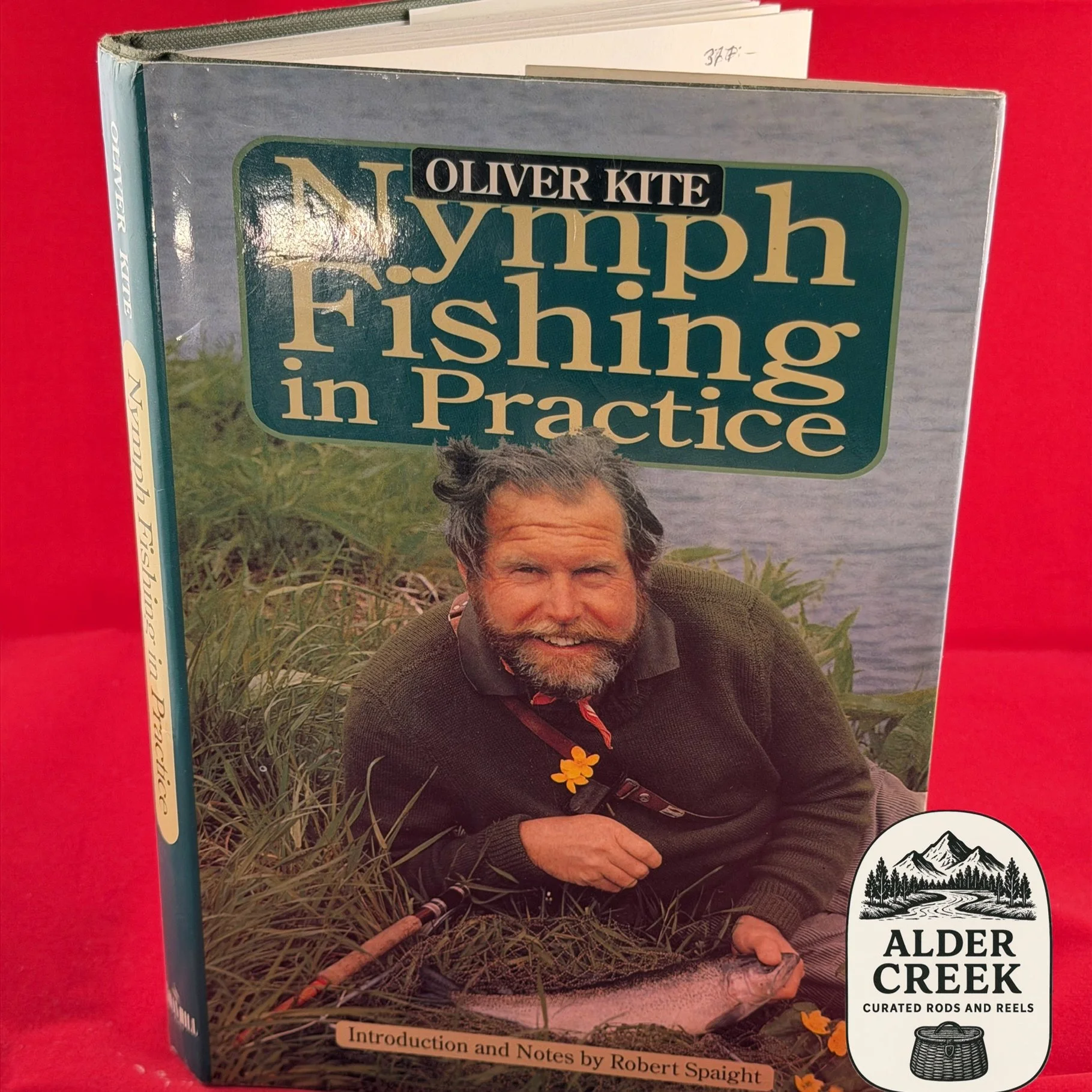
Oliver Kite's Nymph Fishing in Practice is one of the enduring works of twentieth-century British fly-fishing literature. First published in 1963, it offers a thoughtful and practical approach to fishing the artificial nymph, drawing upon Kite's close observation of trout, aquatic insects, and the behaviour of flies beneath the surface.
Kite was an influential angler, author and broadcaster whose methods helped establish nymph fishing as an essential part of the modern fly fisher's repertoire. His approach emphasised careful observation, accurate imitation and sensitive presentation rather than unnecessary complication.
This later edition reproduces the original 1963 text and introduces Kite's work to a new generation of readers. It includes colour photographs of his flies, a classification of natural nymphs and guidance on the essential characteristics of effective artificial imitations.
A valuable addition to the library of any thoughtful trout angler, and an engaging companion to the works of G.E.M. Skues and other pioneers of subsurface fly fishing.
Discover further works on trout fishing, fly presentation and the development of modern fly-fishing techniques in our collection of classic angling literature .
Author
Oliver Kite
Title
Nymph Fishing in Practice
Edition
Later edition reproducing the original text
First Published
1963
Illustrations
Colour photographs of Kite's flies
Contents
Nymph classification, fly design and fishing techniques
Subject
Nymph fishing and trout fly fishing
Questions about this book, its condition, international shipping, or price are always welcome.
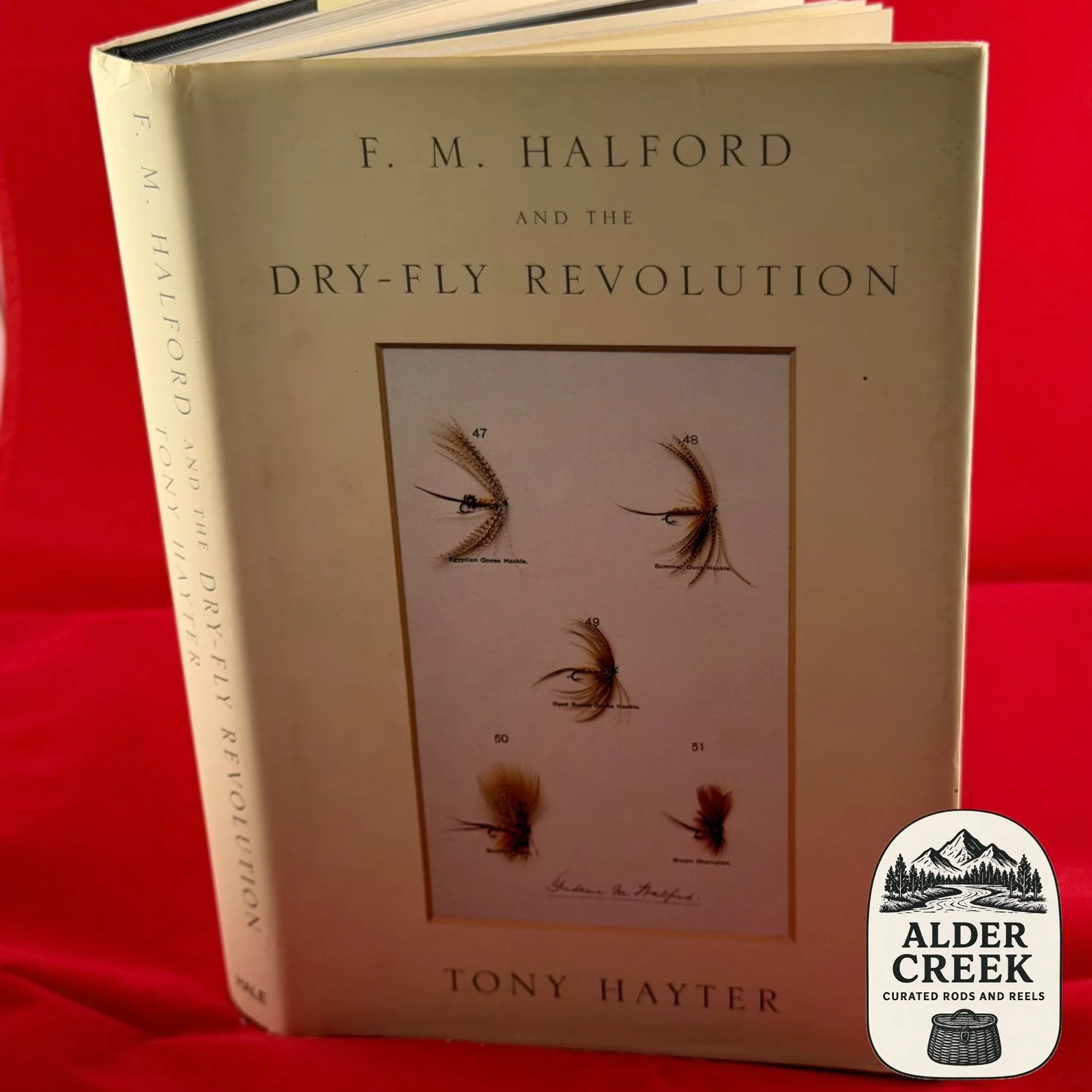
An important biography of Frederic Michael Halford (1844–1914), the influential British angler whose writings and methods helped establish the principles of modern dry-fly fishing.
In F.M. Halford and the Dry-Fly Revolution, Tony Hayter explores the life, achievements and lasting influence of a man whose name became synonymous with the chalk streams of southern England and the pursuit of trout with the floating fly.
Halford was not merely an accomplished angler. Through his meticulous observations of aquatic insects, his systematic approach to artificial fly design and his influential publications, he helped transform dry-fly fishing into a carefully considered discipline.
Hayter places these achievements within their historical and social setting, examining the development of the dry-fly tradition and the debates that followed, particularly those involving G.E.M. Skues and the emergence of modern nymph fishing.
First published by Robert Hale in 2002, this carefully researched biography offers a fascinating account of one of the defining periods in the history of fly fishing.
A valuable addition to any collection of British angling literature, and an especially rewarding companion to the classic works of Halford, Skues and their contemporaries.
Explore the origins of scientific observation in fly fishing through Alfred Ronalds' The Fly-Fisher's Entomology (1913 De Luxe Edition) , or discover more titles in our collection of classic angling literature .
Author
Tony Hayter
Title
F.M. Halford and the Dry-Fly Revolution
Original Publisher
Robert Hale, London
First Published
2002
ISBN
9780709067733
Subject
Fly-fishing history, biography, dry-fly fishing
Principal Subject
Frederic M. Halford (1844–1914)
Questions about this book, its condition, international shipping, or price are always welcome.
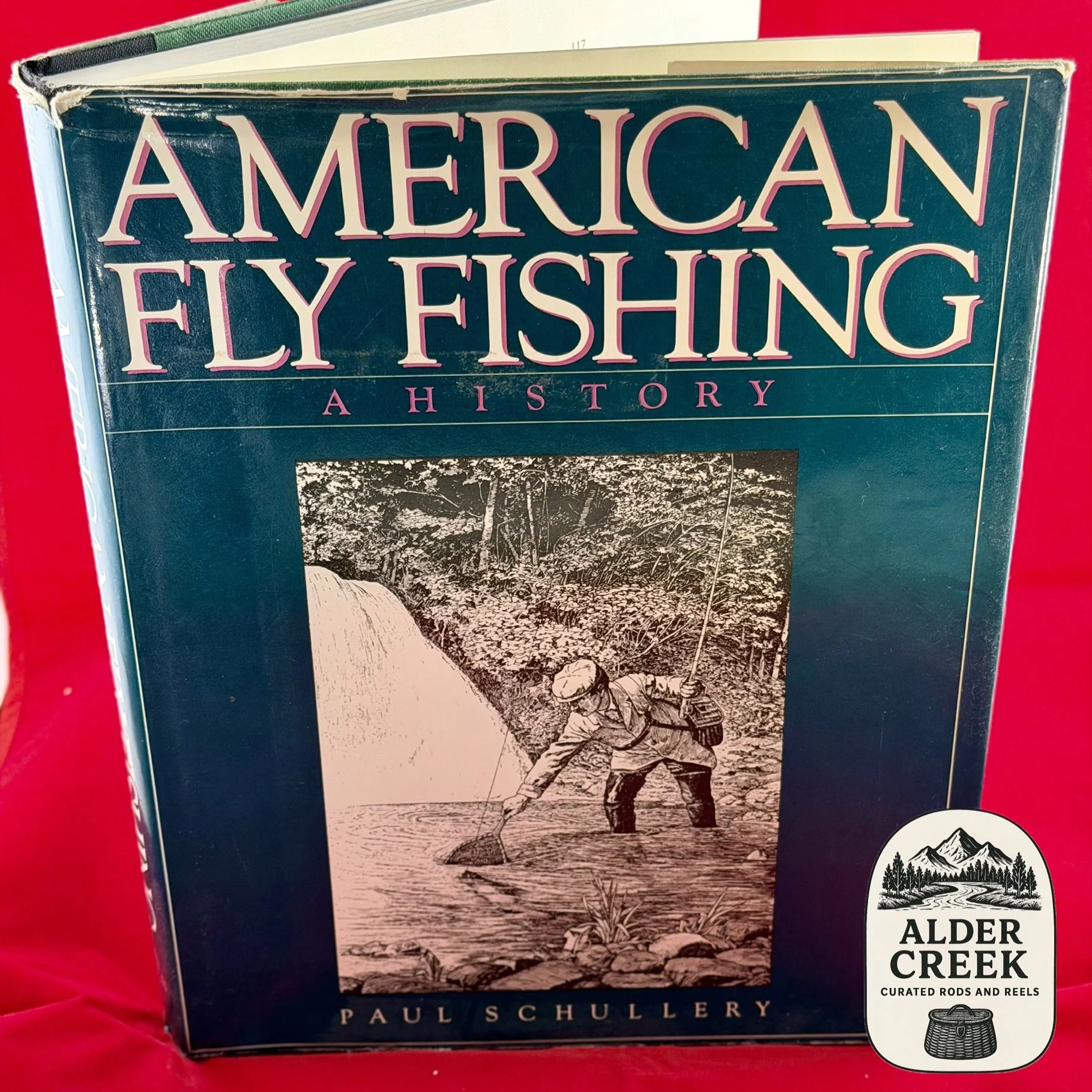
An important and thoroughly researched account of the development of fly fishing in America, written by Paul Schullery, historian, angling author and former executive director of the American Museum of Fly Fishing.
First published in 1987, American Fly Fishing: A History traces the evolution of the sport from its colonial beginnings through the nineteenth and twentieth centuries. Rather than concentrating solely on the established traditions of the eastern states, Schullery examines how American fly fishing developed across an increasingly diverse landscape of rivers, lakes and fisheries.
The book explores the craftsmen, writers and anglers whose contributions shaped American fly fishing, including Thaddeus Norris, Theodore Gordon, Preston Jennings and Vincent C. Marinaro. It also considers the development of fishing tackle, the emergence of new techniques and the relationship between regional fishing traditions and the waters in which they evolved.
Of particular interest to collectors of classic bamboo fly rods and reels is the book's broader historical perspective on American tackle design and craftsmanship.
Schullery's work remains a valuable reference for anyone interested in the heritage of American fly fishing and the people who helped define it.
A thoughtful and substantial addition to a collection of classic angling literature, equally rewarding for the historian, collector and practising fly fisher.
Explore the American fly-fishing tradition through our collection of classic bamboo fly rods and reels , or discover further works on the history and development of fly fishing in our collection of vintage angling literature .
Author
Paul Schullery
Title
American Fly Fishing: A History
First Published
1987
Subject
American fly-fishing history
Contents
Historical development of fly fishing, tackle, techniques, literature and notable anglers
Language
English
Questions about this book, its condition, international shipping, or price are always welcome.
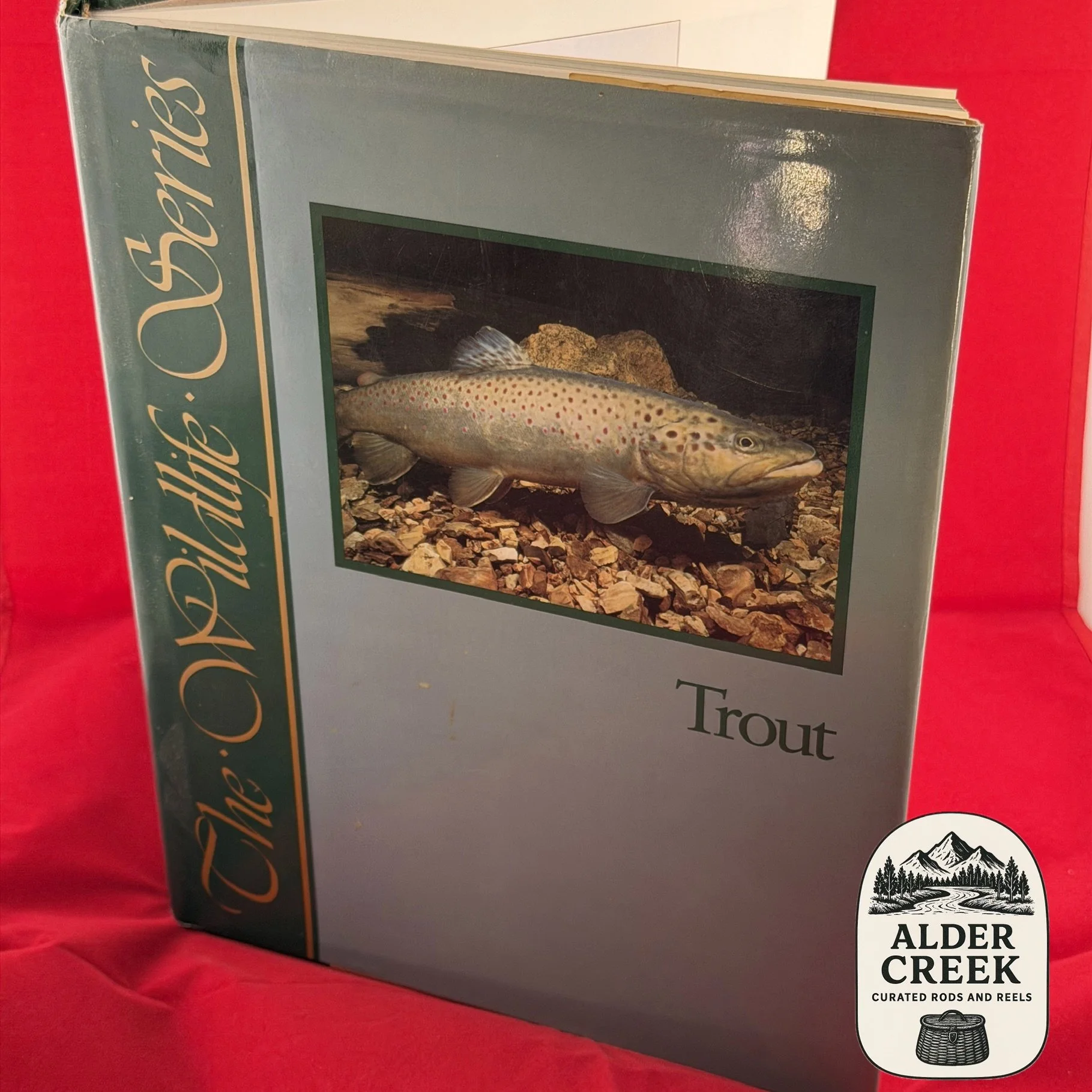
A substantial and authoritative study of North American trout, bringing together the knowledge of fisheries biologists, researchers and conservationists in a beautifully illustrated reference volume.
Unlike traditional angling literature, Trout approaches its subject from the perspective of natural history and fisheries science. The book explores the origins, anatomy, physiology and behaviour of trout, together with the environmental conditions that govern their survival and distribution.
Particularly valuable is its extensive treatment of the thirteen trout and char forms covered in the volume, including their distinguishing characteristics, habitats and life histories. Detailed descriptions, illustrations, charts and measurements provide a useful reference for the naturalist as well as the dedicated angler.
The book also considers feeding behaviour, reproduction, migration, habitat conservation and the challenges facing wild trout populations. Colour photographs, maps and tables complement the text, while an extensive bibliography provides a foundation for further study.
Published by Stackpole Books in 1991, this is a first-edition reference work of considerable interest to anyone wishing to understand the fish beyond the act of catching it.
This copy is in excellent condition.
An unusually comprehensive volume, equally at home in the library of a naturalist, fisheries biologist or thoughtful fly fisher.
Explore further works on trout behaviour, aquatic entomology and the natural history of fly fishing in our collection of classic angling literature , including studies by Vincent C. Marinaro, Brian Clarke and John Goddard.
Editors
Judith Stolz & Judith Schnell
Title
Trout – The Wildlife Series
Publisher
Stackpole Books, Harrisburg, Pennsylvania
Year
1991
Edition
First Edition
Pages
xiv + 370 pages
Format
Large quarto, approx. 221 × 286 mm
Illustrations
Colour photographs, plates, maps, charts and tables
Binding
Hardcover
ISBN
9780811716529
Condition
Excellent
Subject
Trout biology, ecology and conservation
Questions about this book, its condition, international shipping, or price are always welcome.
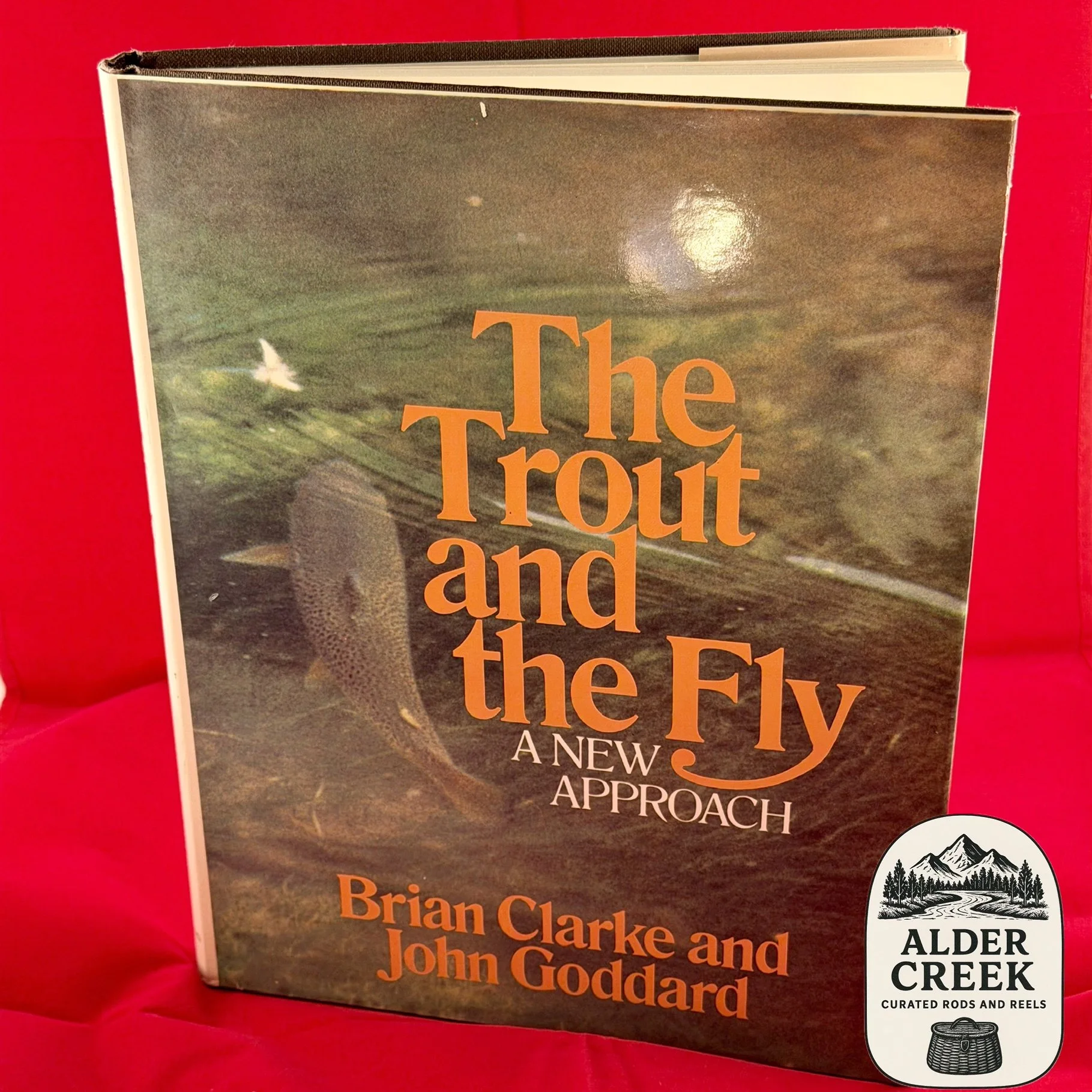
First Edition, 1980
One of the most influential works of modern trout fishing literature, The Trout and the Fly represents a significant departure from traditional approaches to artificial fly design and presentation.
Brian Clarke and John Goddard brought together careful observation, underwater photography and practical fishing experience to explore a fundamental question: how does a trout actually perceive the world above and beneath the surface?
Their findings challenged many established assumptions about the appearance of artificial flies, the behaviour of natural insects and the importance of presentation. The book examines trout vision, rise forms, feeding behaviour, the effects of light and the characteristics that distinguish a convincing artificial fly from an unconvincing one.
Particularly notable are the authors' observations of the trout's underwater perspective, offering insights that remain relevant to both dry-fly and nymph fishing.
This copy is the first edition, published in 1980. It comprises 192 pages, illustrated with colour and black-and-white photographs and line drawings. Bound in red boards with gilt spine lettering, it is in very good condition, apart from an inscription on the endpaper, and retains its dust jacket.
A landmark in modern fly-fishing literature and a valuable addition to the library of any thoughtful trout angler.
For further reading on trout behaviour, selective feeding and the development of modern fly-fishing techniques, explore our collection of classic and vintage angling literature , including works by Vincent C. Marinaro and Oliver Kite.
Authors
Brian Clarke & John Goddard
Title
The Trout and the Fly
Year
1980
Edition
First Edition
Format
Quarto, approximately 211 × 276 mm
Pages
192
Illustrations
Colour and black-and-white photographs; line drawings
Binding
Red boards with gilt spine lettering
Dust Jacket
Present
Condition
Very good; inscription on endpaper
Subject
Trout behaviour, fly design and presentation
Questions about this book, its condition, international shipping, or price are always welcome.
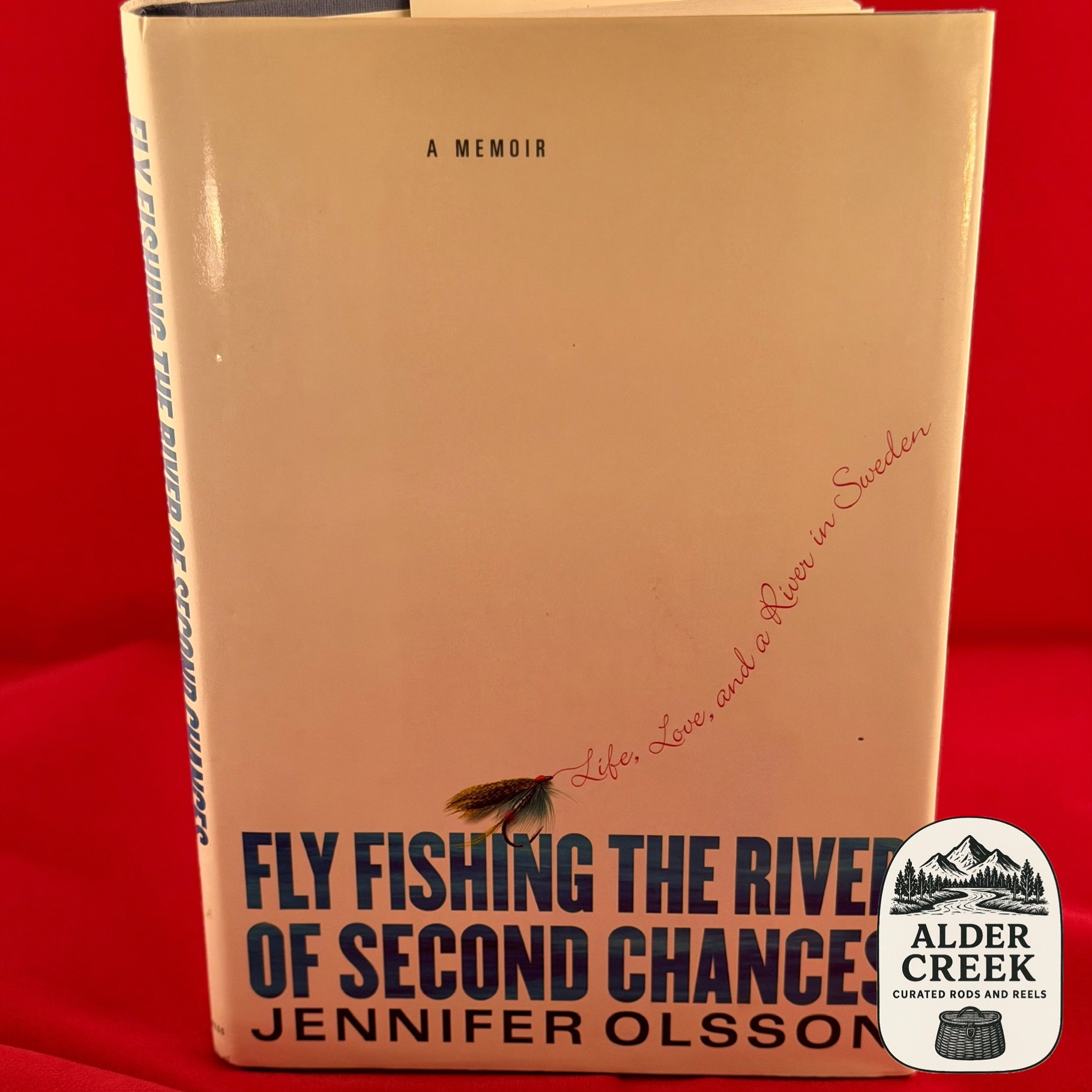
Life, Love, and a River in Sweden — Jennifer Olsson
An engaging and deeply personal memoir in which fly fishing, the rivers of Sweden and the unexpected turns of life become inseparable.
Jennifer Olsson was an experienced American fly-fishing guide living in Montana when an invitation arrived from Lars, a Swedish riverkeeper working to restore a river damaged by years of logging and neglect.
What began as a fishing journey became something far more consequential. Drawn to the beauty of the river, the surrounding countryside and the man who cared for it, Olsson found herself contemplating an entirely different life.
Leaving behind the familiar landscapes of the American West, she and her young son travelled to the small village of Gimdalen in Sweden, where the rhythms of rural Scandinavian life presented both challenges and unexpected pleasures.
With warmth and humour, Olsson recounts her experiences of Swedish customs, changing seasons, unfamiliar traditions and the sometimes bewildering business of finding one's place in a new country.
Throughout the narrative, the river remains a constant presence. Its grayling, currents and gradual restoration provide a fitting parallel to the author's own journey.
First published in 2003, Fly Fishing the River of Second Chances is not a technical fishing manual, but rather a thoughtful and entertaining account of the ways in which angling can lead us towards people, places and experiences we might never otherwise have encountered.
An appealing addition to a collection of Scandinavian angling literature, particularly for readers who appreciate the personal and literary side of fly fishing.
For another perspective on the rivers and landscapes of Scandinavia, discover Henry Newland's Forest Life: A Fisherman's Sketches in Norway and Sweden (1855), alongside further titles in our collection of classic angling literature .
Author
Jennifer Olsson
Title
Fly Fishing the River of Second Chances: Life, Love, and a River in Sweden
Original Publisher
St. Martin's Press, New York
First Published
2003
Original Edition
Hardcover, 256 pages
Original Edition ISBN
9780312313159
Subject
Fly fishing, Sweden, Idsjöströmmen, memoir and travel
Questions about this book, its condition, international shipping, or price are always welcome.
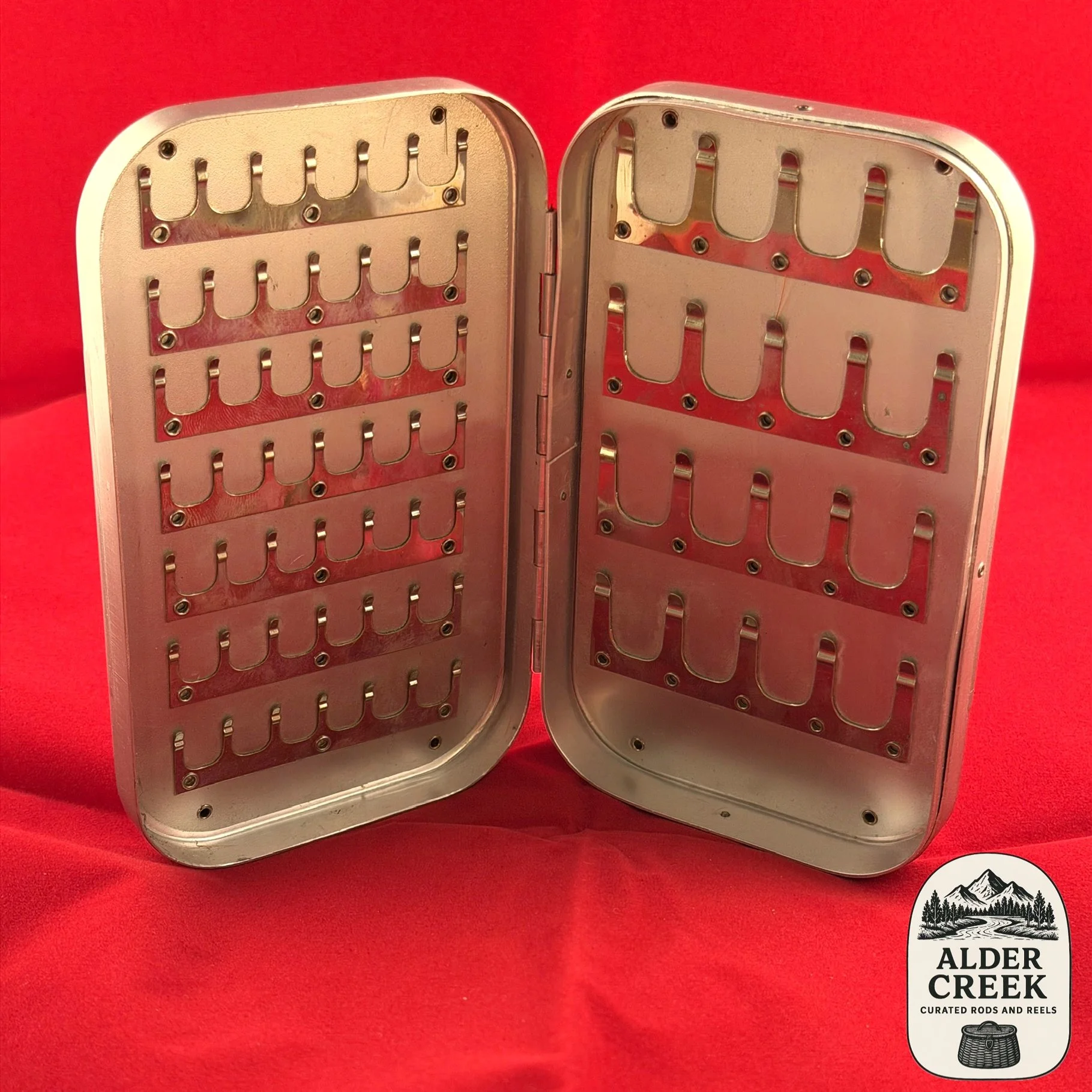
49 standard clips and 20 Deep clips. Good used condition. Probably from 60’s or 70’s. The light and trustworthy silmalloy material with some scratches and patina.
NB: Throughout Richard Wheatley’s long history boxes have always been referred to as 3 inch, 4 inch and 6 inch and this continue to be done in the old way. The boxes are actually 3 ½ x 2 3/8 x 1 inch (89 x 60 x 25mm) 4 ¾ x 3 ½ x 1 1/8th inch (121 x 89 x 29mm) and 6 x 3 ½ x 1 1/8th inch (152 x 89 x 29mm) or 6 x 3 ½ x 1 ½ inch (152 x 89 x 44mm)
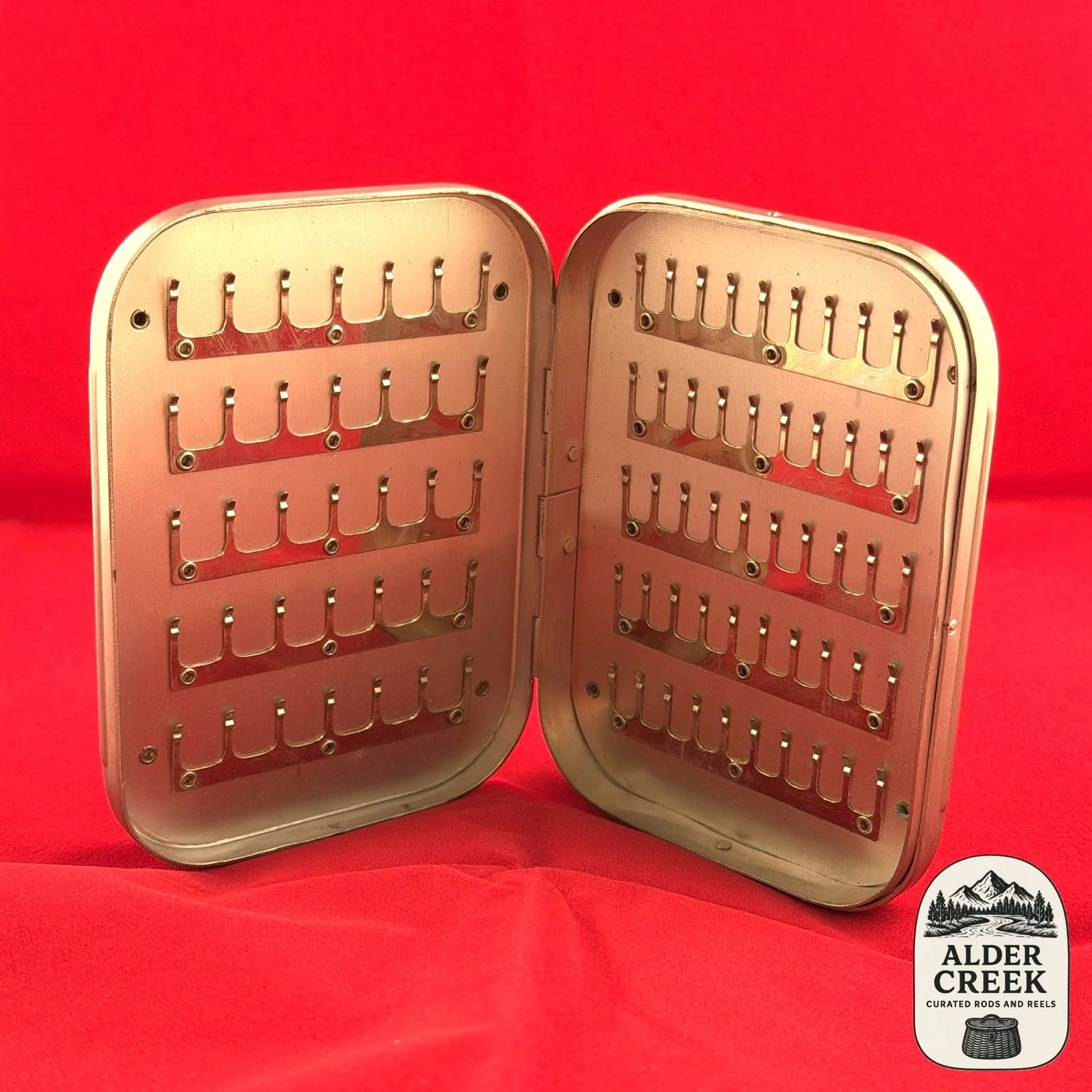
A Classic British Fly Box · c. 1960s–70s
A traditional Richard Wheatley clip fly box, made from the firm's characteristic lightweight Silmalloy material and dating approximately to the 1960s or 1970s.
Richard Wheatley's fly boxes have long been appreciated for their practical design, compact proportions and enduring usefulness. Their spring-clip arrangement offers a particularly elegant solution to storing traditional wet flies, salmon flies and other dressed patterns without relying on modern foam inserts.
This example contains 85 clips, comprising 50 small and 35 medium clips, arranged to provide convenient storage and organisation.
Although traditionally described as a 4-inch box, the actual dimensions of this model are approximately 4¾ × 3½ × 1⅛ inches (121 × 89 × 29 mm), reflecting Richard Wheatley's historic size designations.
The box is in good used condition, showing scratches and the natural patina associated with age and handling.
A handsome and practical piece of British angling equipment, equally suited to a collection of classic fly-fishing accessories or to continued use on the river.
Maker: Richard Wheatley
Type: Spring-clip fly box
Traditional size: 4 inches
Actual dimensions: Approximately 121 × 89 × 29 mm
Material: Silmalloy
Clip arrangement: 50 small and 35 medium clips
Total clips: 85
Estimated period: 1960s–70s
Condition: Good used condition with scratches and age-related patina
Further photographs and international shipping information are available upon request.
Traditional Spring-Clip Construction · 116 Clips
A traditional six-inch alloy fly box of the familiar British spring-clip design, closely resembling the classic boxes produced by Richard Wheatley.
Simple, lightweight and practical, this style of fly box has served generations of anglers. The spring clips hold individual flies securely in place, keeping them organised and readily accessible without the need for modern foam inserts.
This example accommodates up to 116 flies, with 60 small and 56 medium-sized clips, making it particularly useful for a varied selection of traditional wet flies, nymphs and smaller streamers.
Its unadorned metal construction and straightforward design are characteristic of an era when fishing equipment was made primarily for practical use.
The box shows scratches and some surface oxidation, consistent with age and previous use. These marks have been left untouched, preserving the character of the piece.
Although closely resembling a Richard Wheatley clip box, the maker has not been identified, and the box is offered as an unmarked example.
An affordable and attractive addition to a collection of traditional fishing accessories, or a useful companion for the angler who prefers classic equipment on the river.
Maker: Unmarked
Type: Traditional spring-clip fly box
Nominal size: 6 inches
Material: Metal alloy
Clip arrangement: 60 small and 56 medium clips
Total capacity: 116 flies
Design: Similar to traditional Richard Wheatley clip boxes
Condition: Used, with scratches and surface oxidation
Further photographs, measurements and international shipping information are available upon request.
A Traditional British Trout Fly Box
A charming vintage example of The Loch Leven Eyed Fly Box, one of the classic designs of British trout-fishing equipment.
The Loch Leven name recalls the celebrated Scottish trout fishery and a long tradition of fishing with carefully dressed artificial flies. The fly box itself has a history reaching back to the early twentieth century, when compact metal boxes with individual spring clips provided anglers with a practical means of storing eyed trout flies.
This example features 68 spring clips, allowing a useful selection of traditional wet flies and other trout patterns to be arranged securely and conveniently.
The straightforward metal construction and compact design reflect the practical ingenuity of an earlier generation of fishing equipment. Unlike modern foam-lined boxes, the individual clips hold the flies by their hooks, keeping them organised and readily accessible.
A vintage example showing the character of previous ownership and use. Please refer to the photographs for a detailed assessment of the surface finish, interior and clip arrangement.
The design is closely associated with Richard Wheatley, although the exact manufacturer and date of this particular example should be established from its markings and construction.
A delightful little piece of British angling history, suitable for continued use or as an addition to a collection of traditional fishing accessories.
Model: The Loch Leven Eyed Fly Box
Type: Traditional spring-clip trout fly box
Capacity: 68 clips
Construction: Metal
Origin of design: British, early twentieth century
Maker: To be confirmed from markings
Date of manufacture: Not established
Condition: Vintage used condition; please refer to photographs
Further photographs, measurements and international shipping information are available upon request.
No results match your search. Try removing a few filters.