
Literature
Literature
Filters
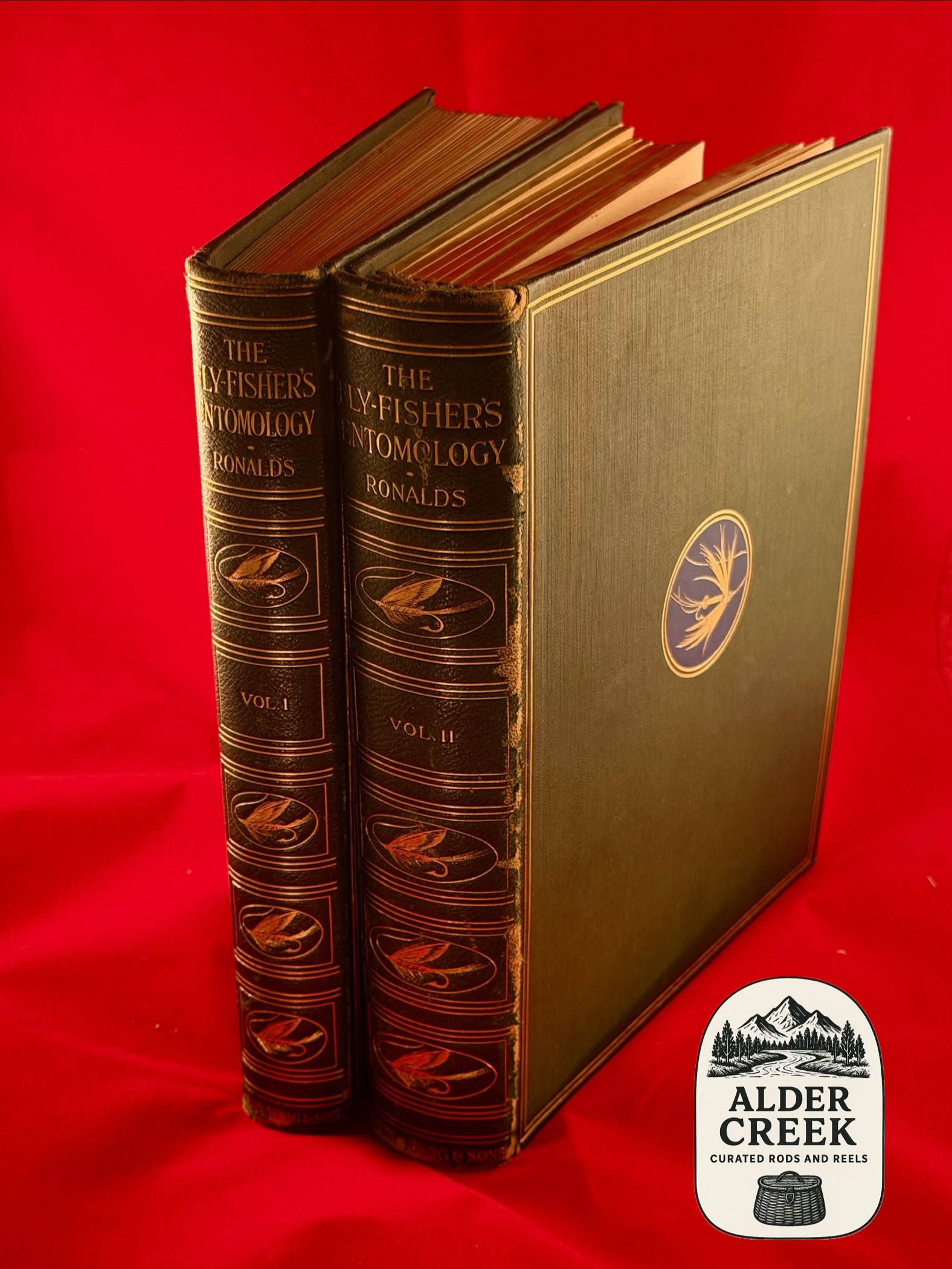
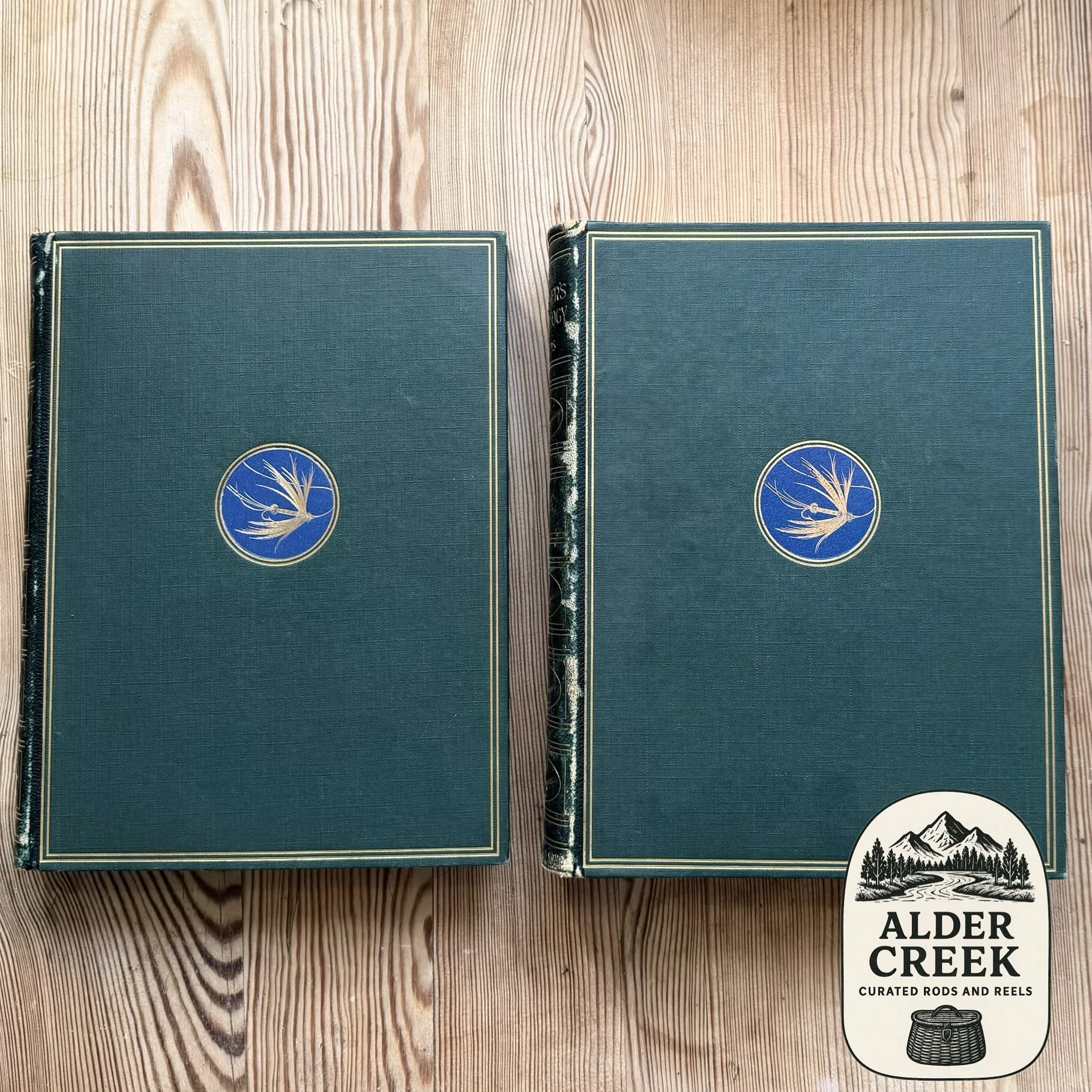
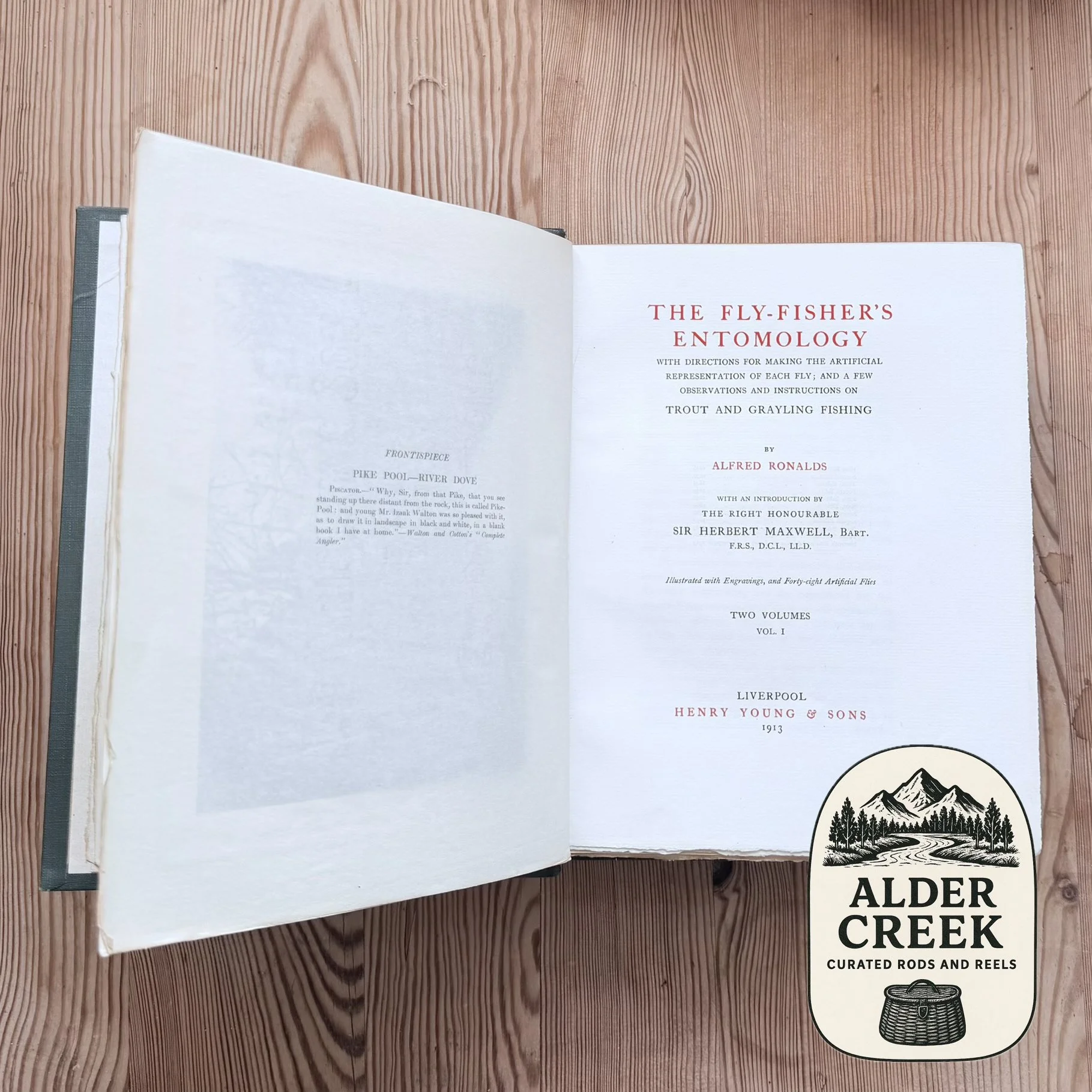
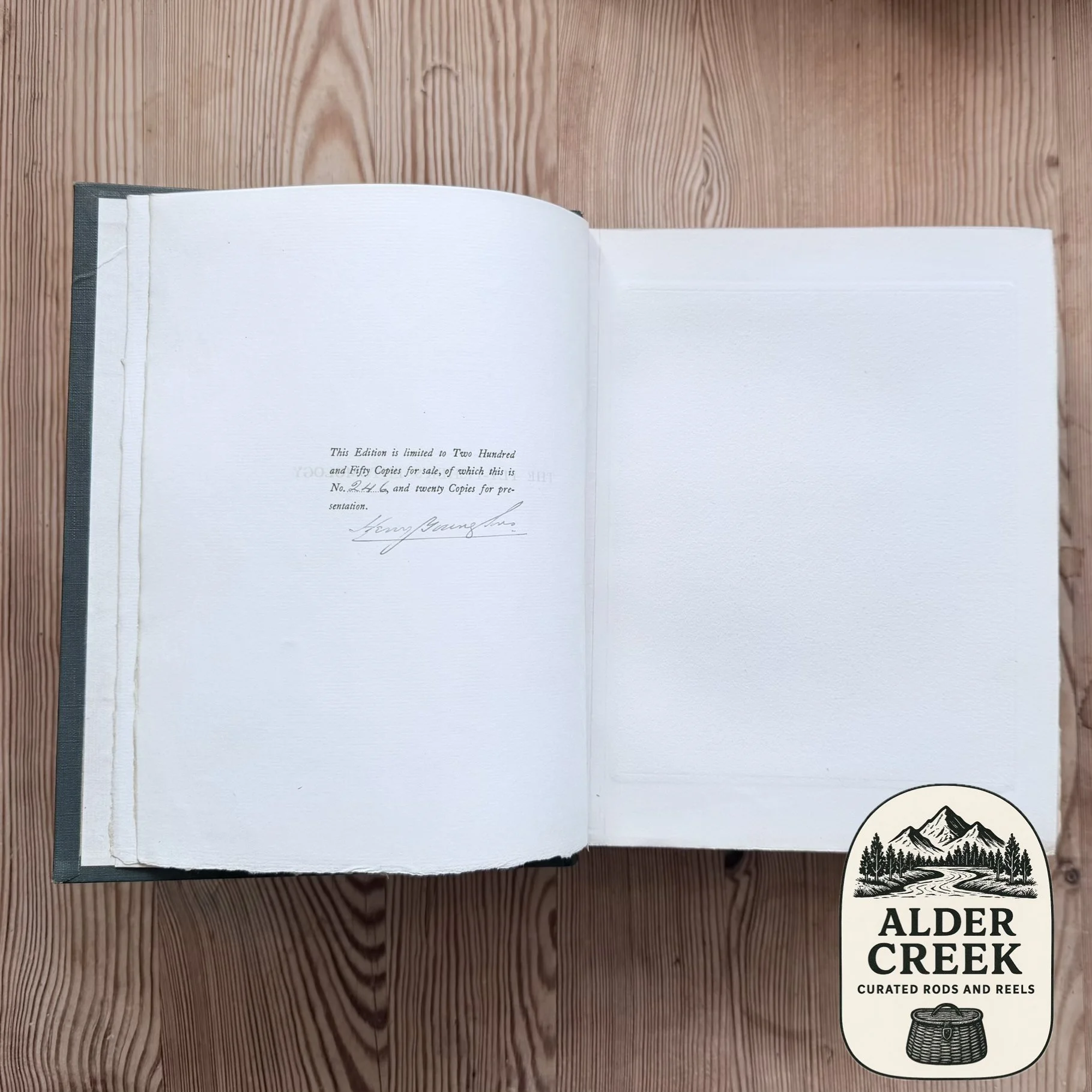
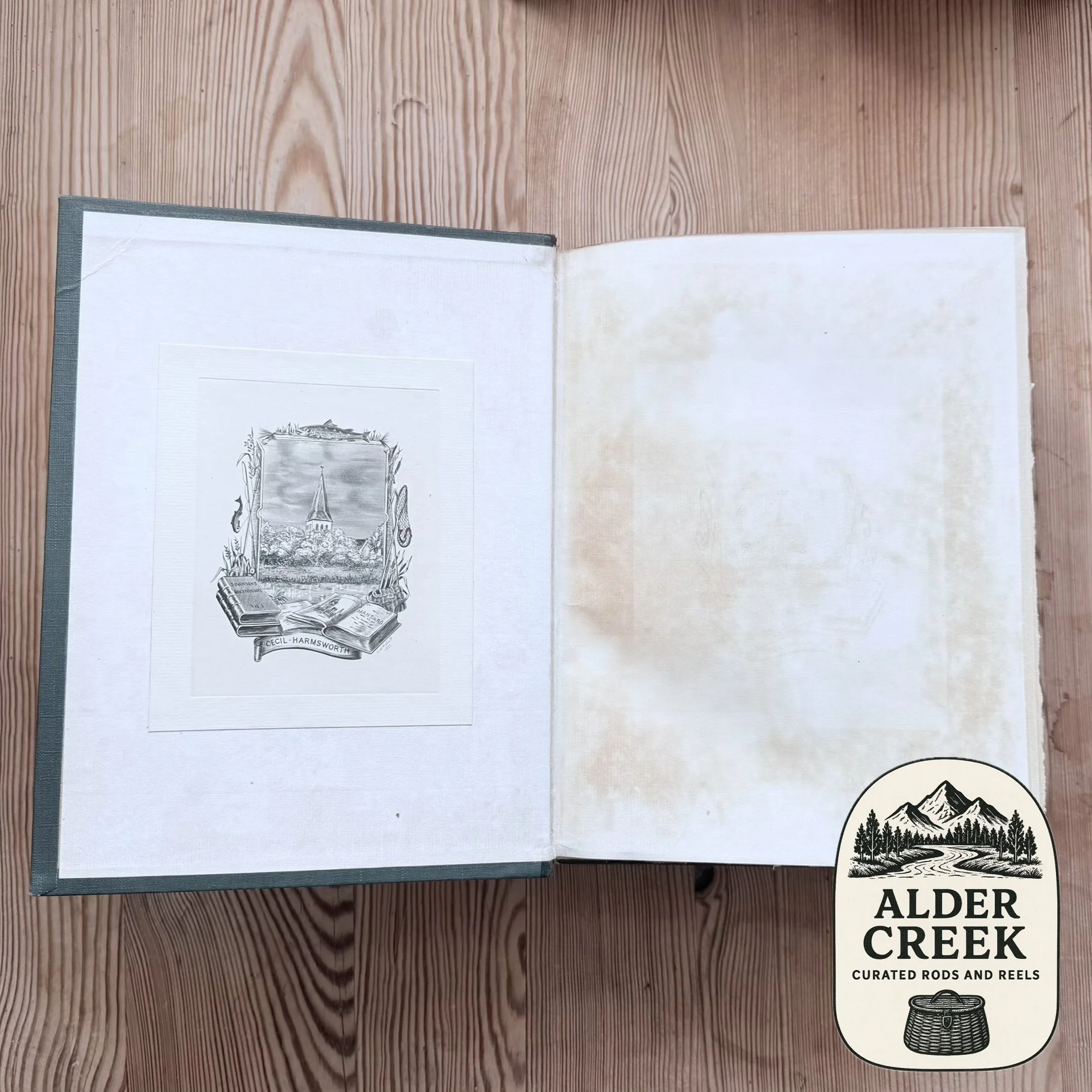
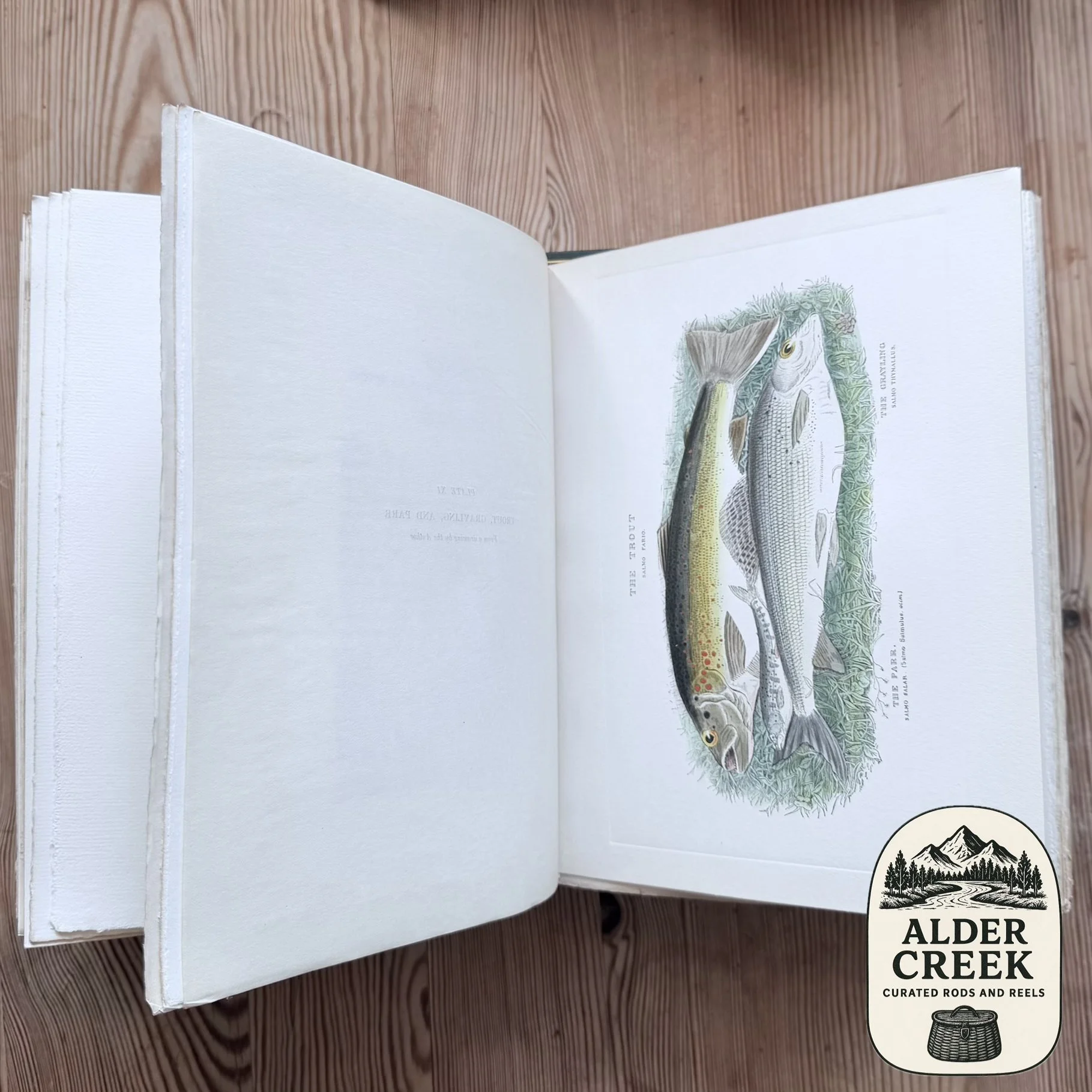
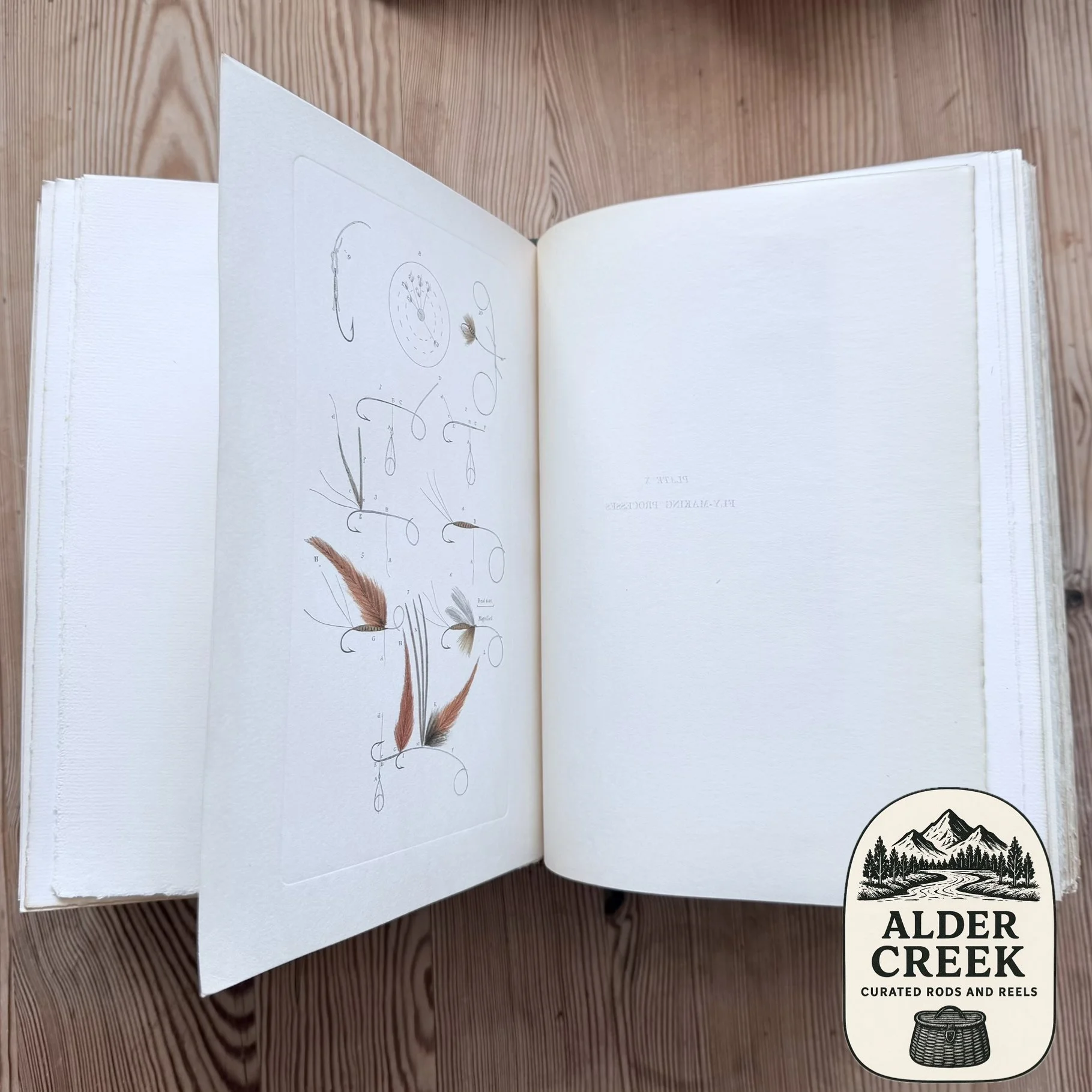
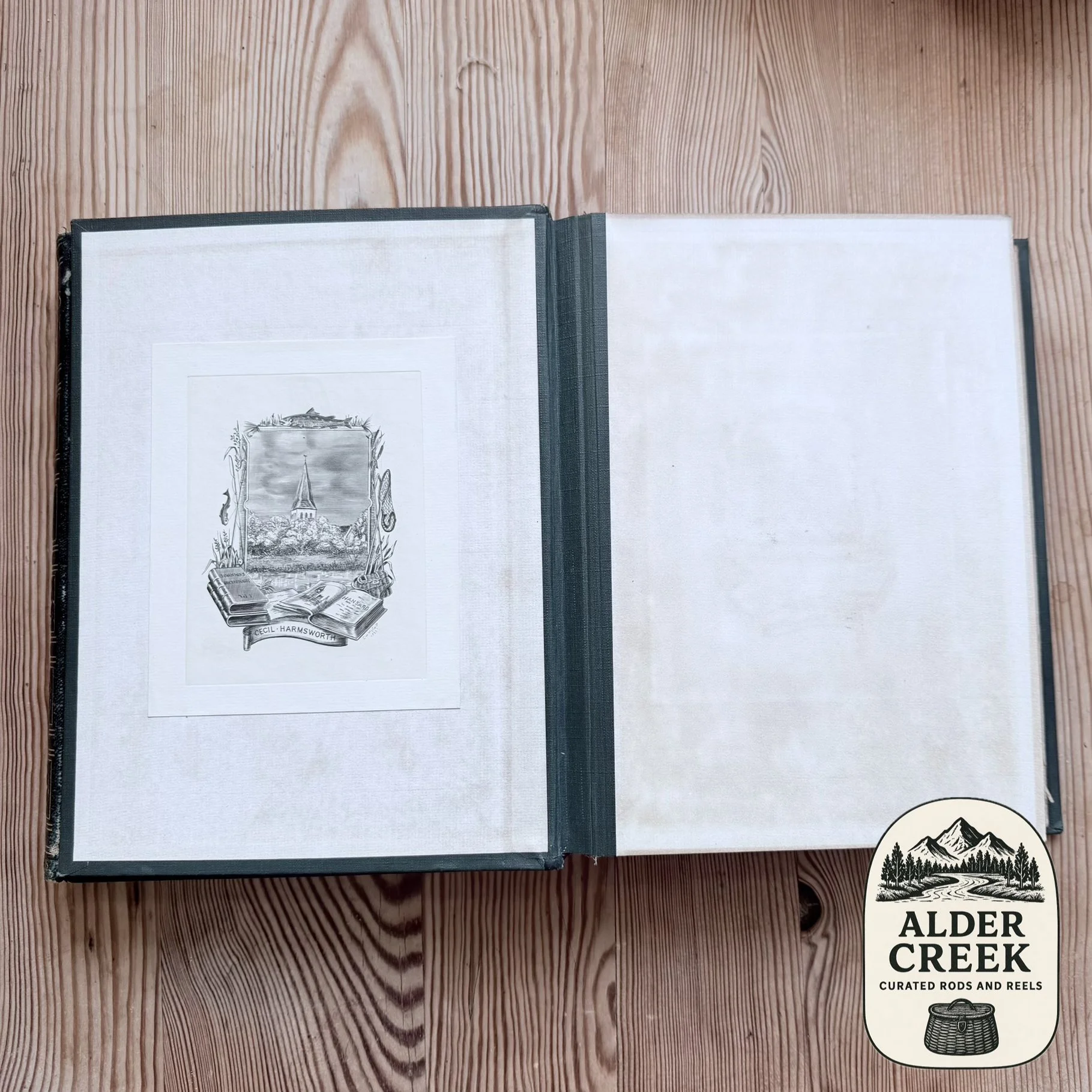
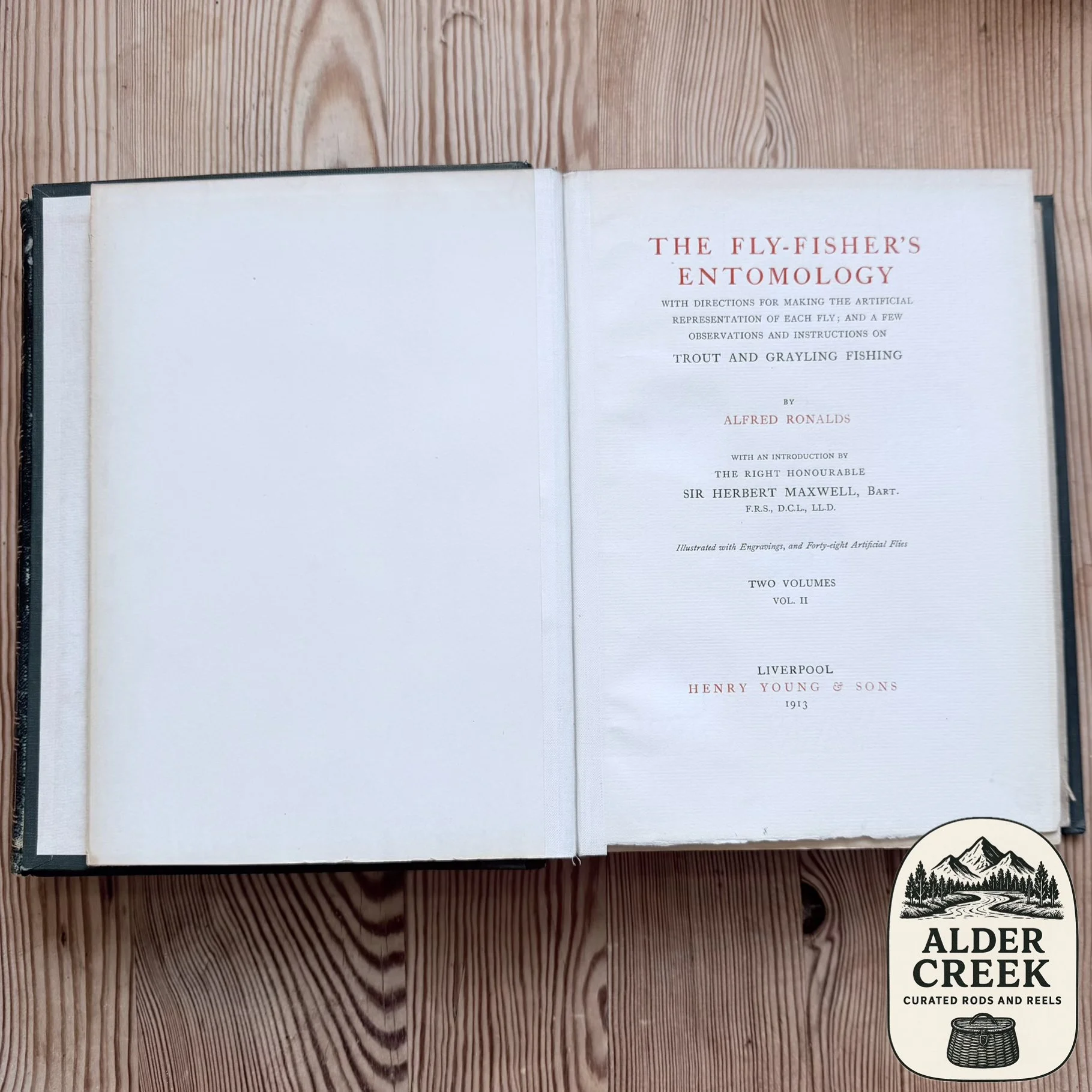
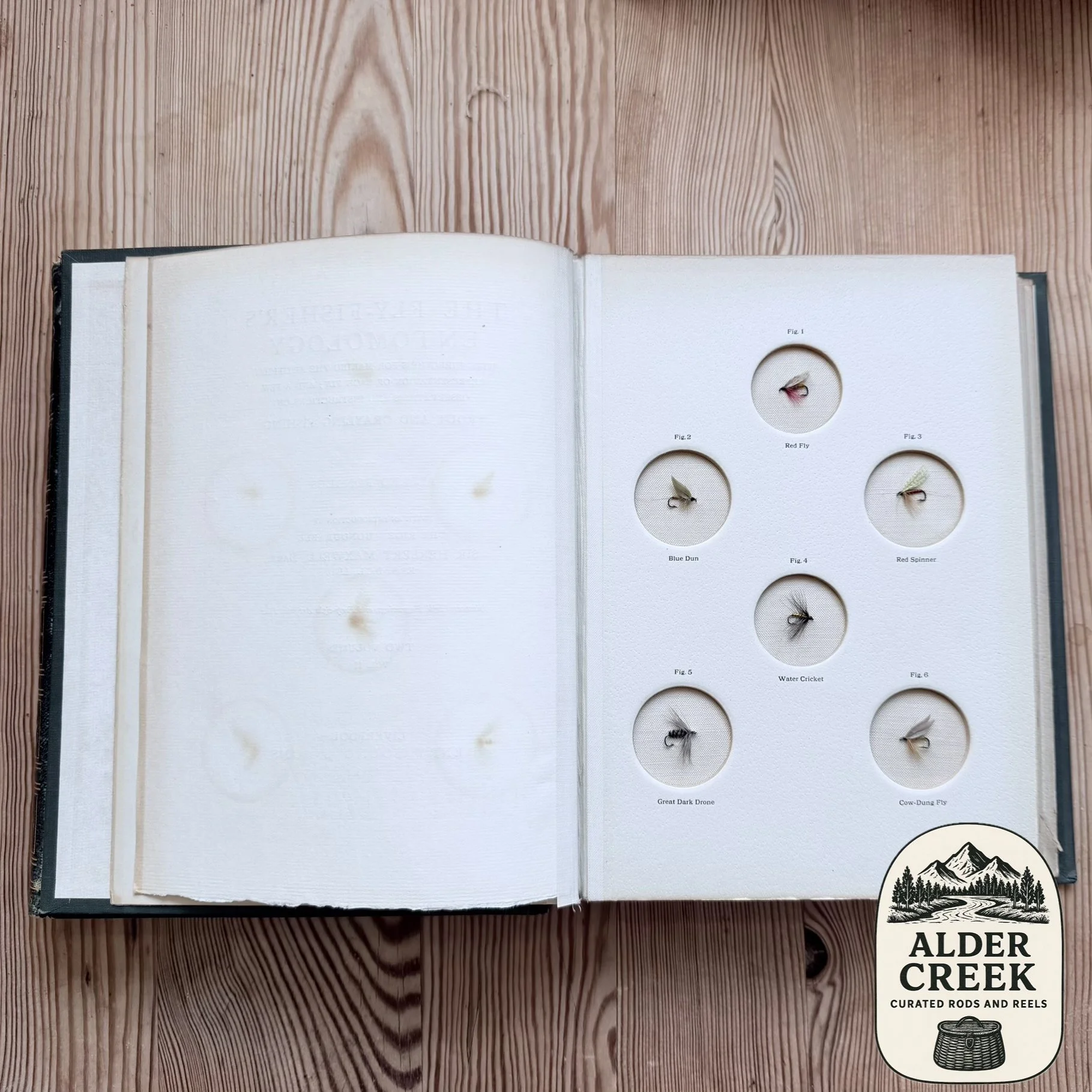
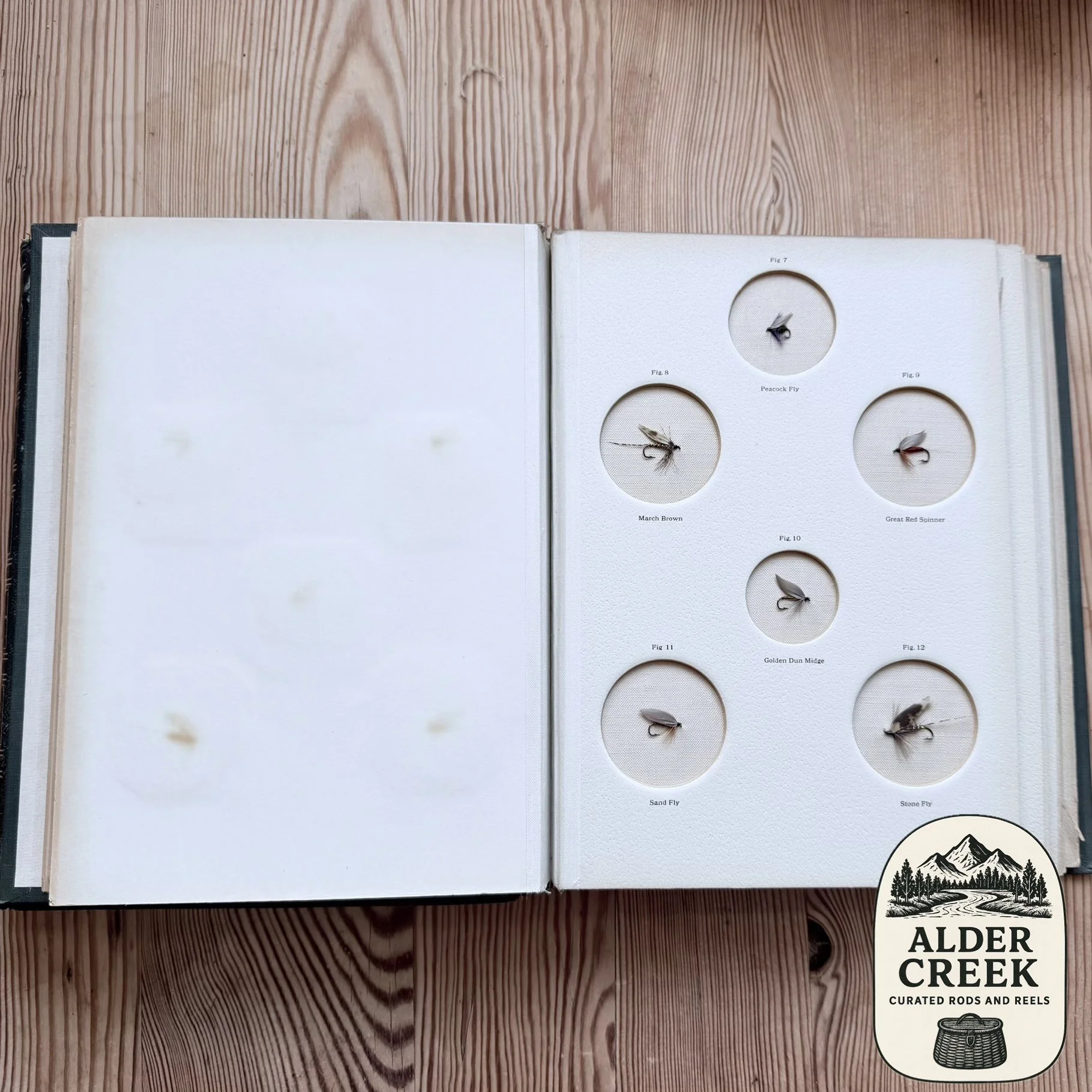
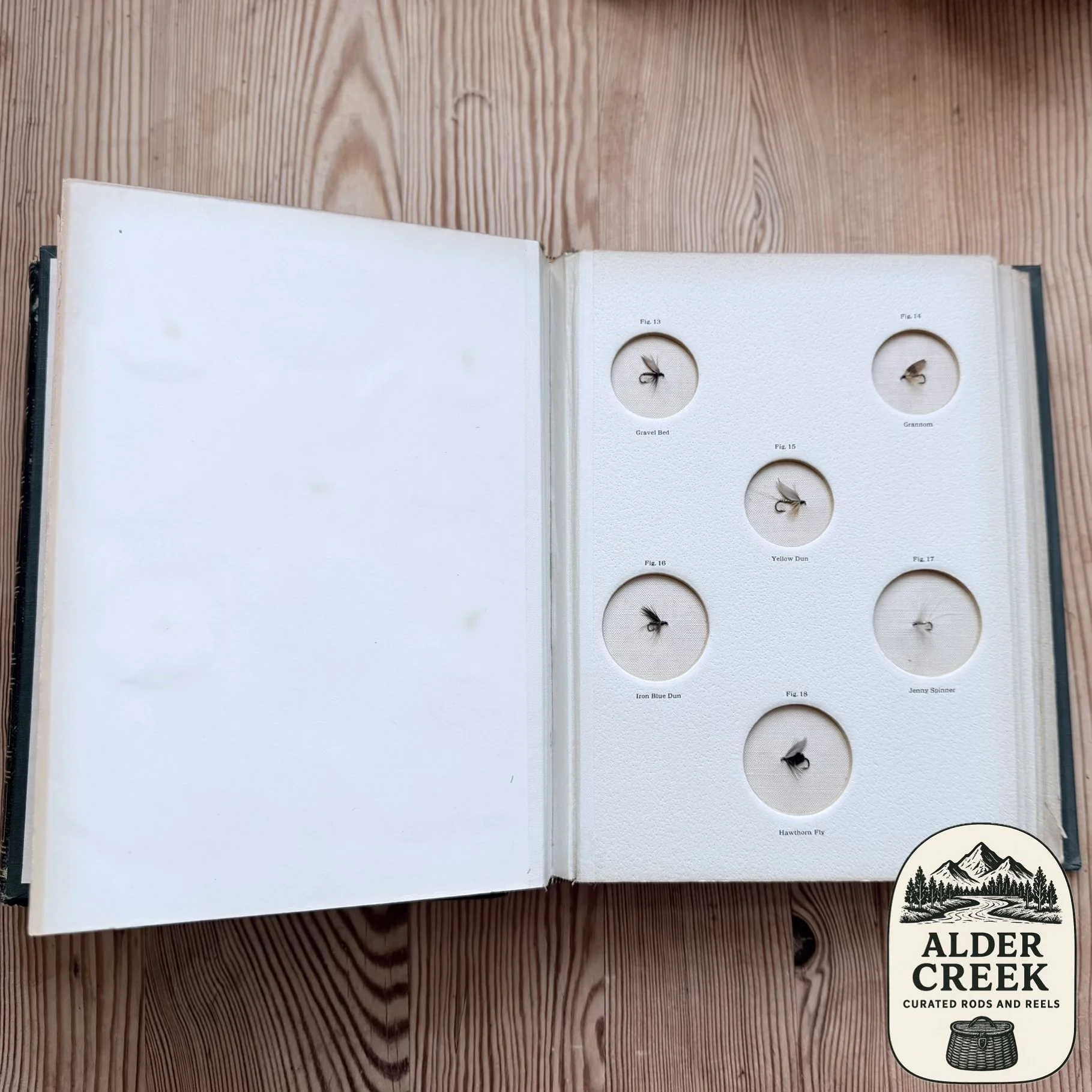
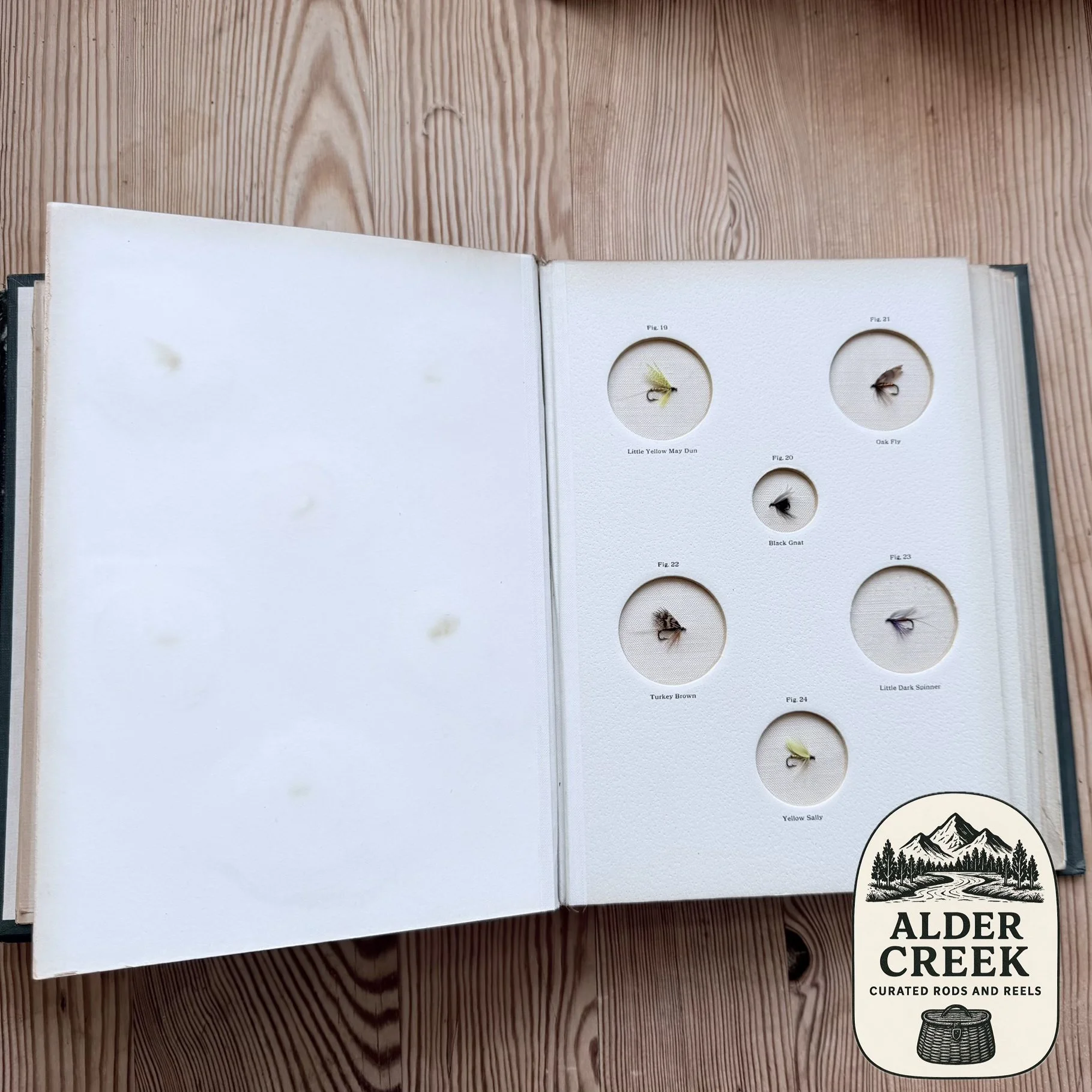
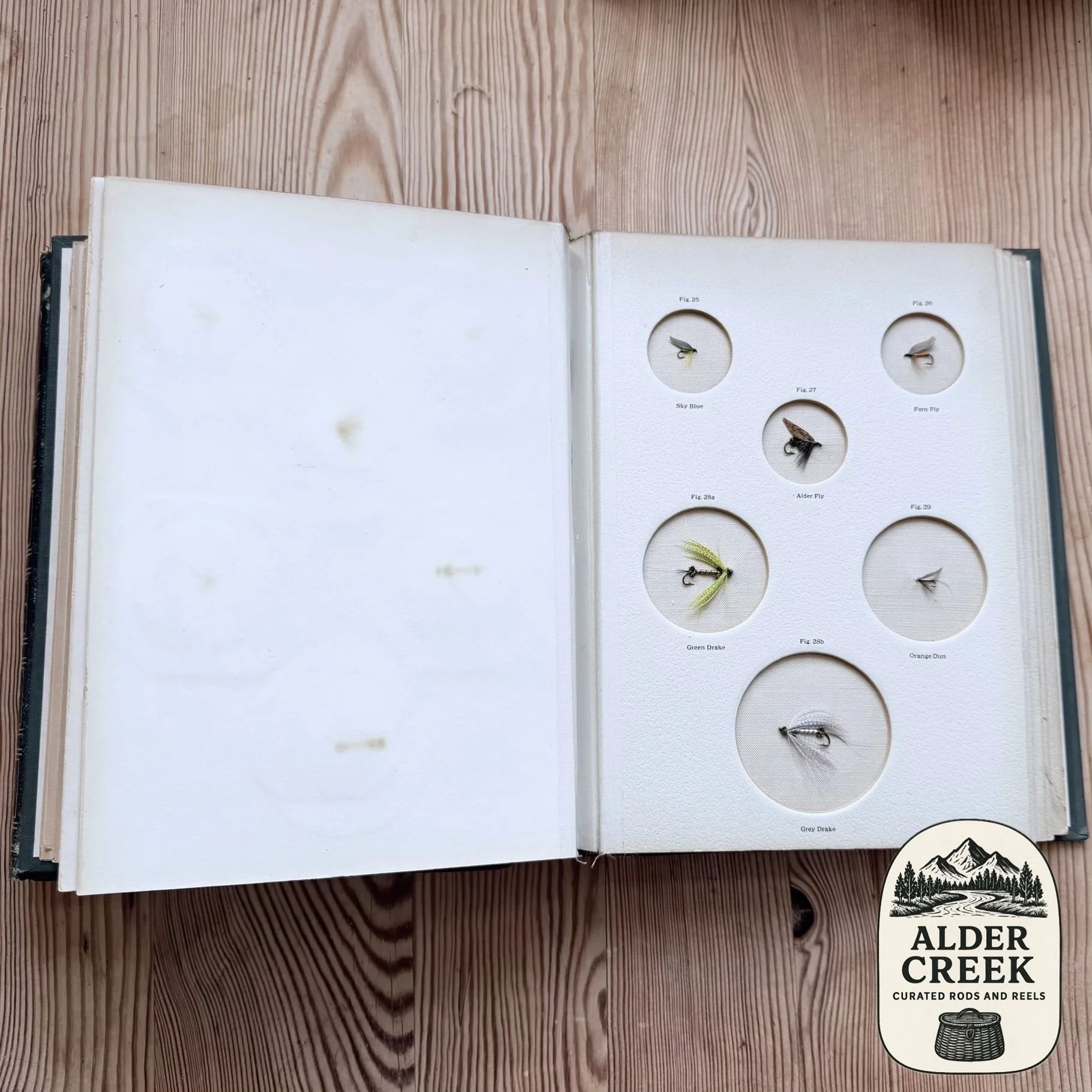
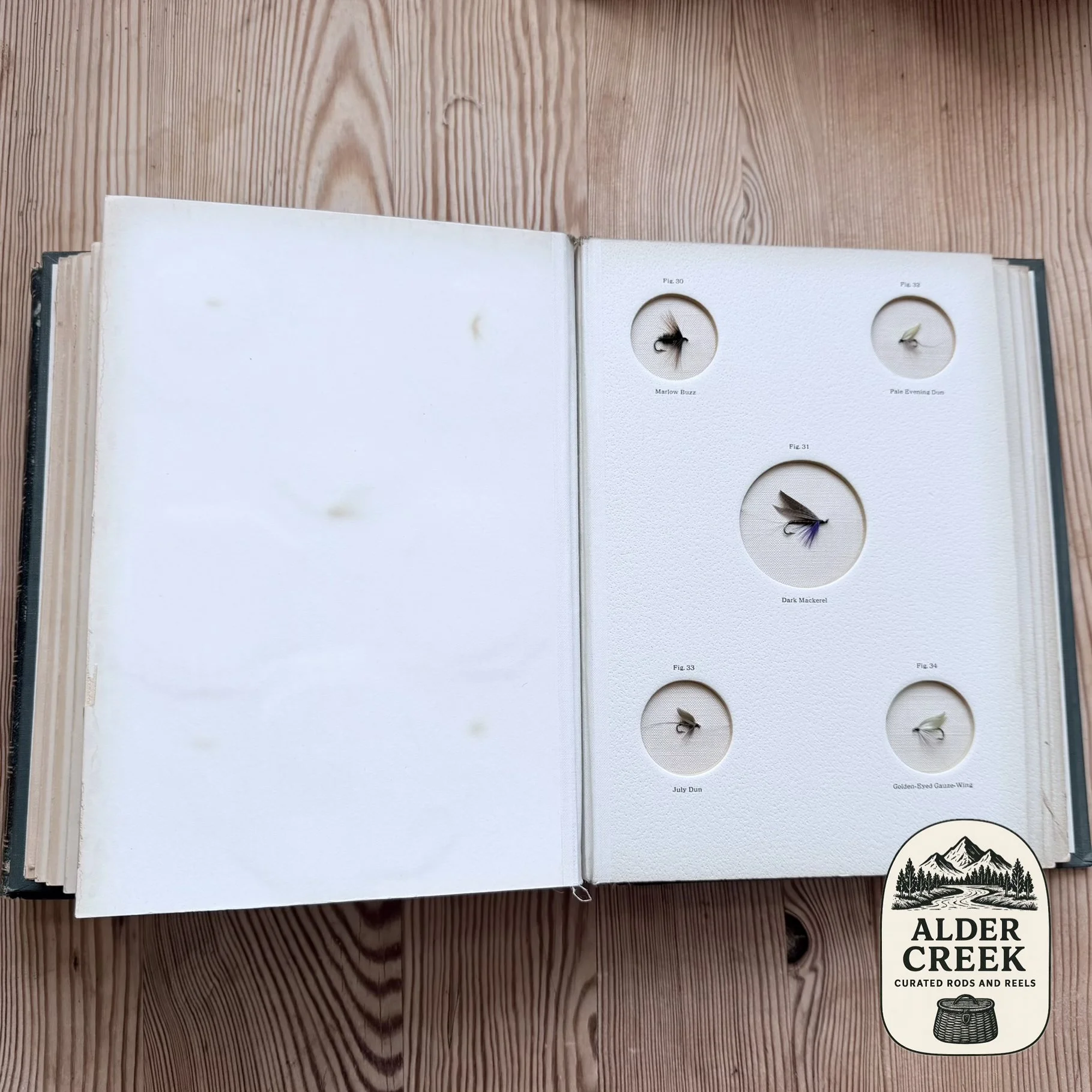
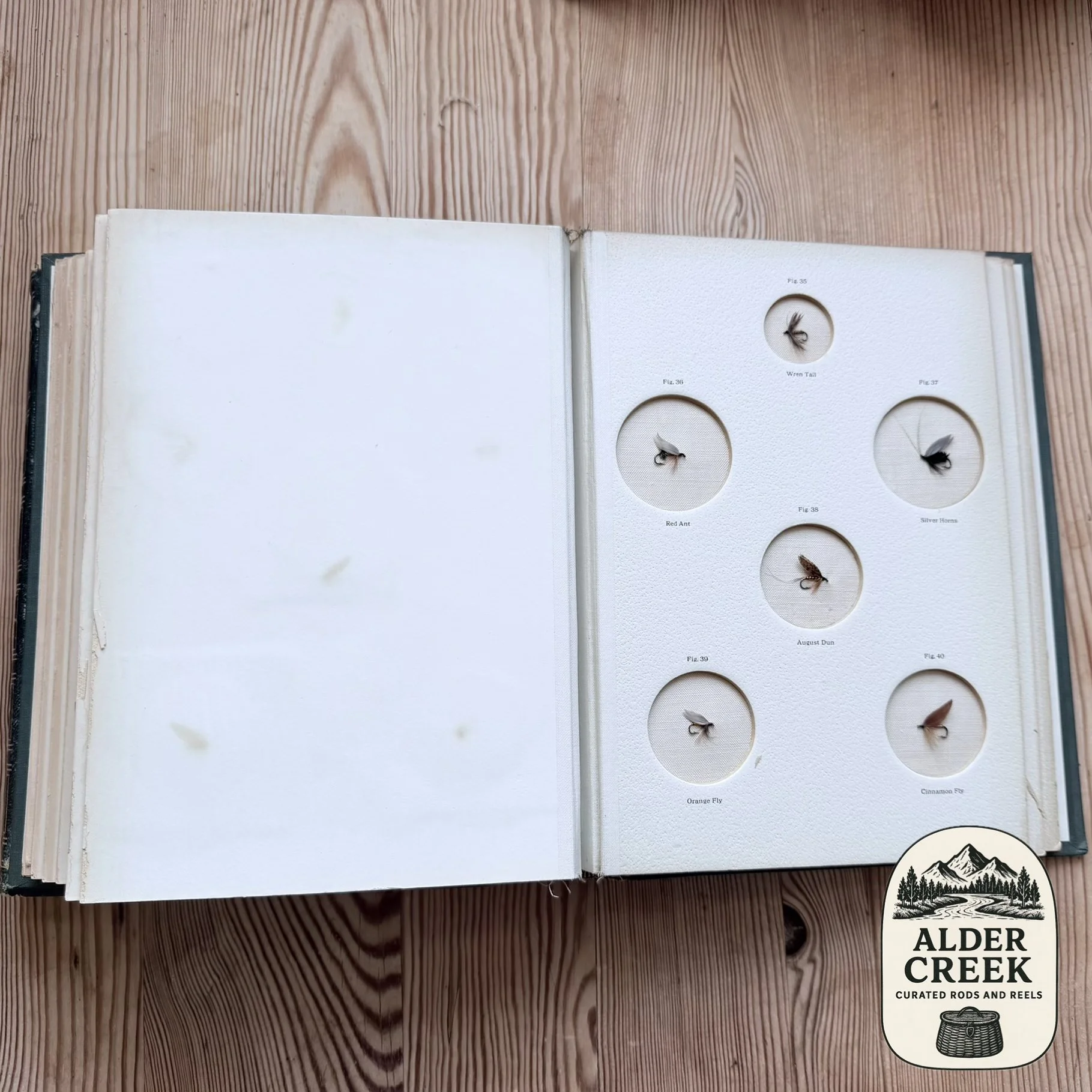
Edition de Luxe, 1913 — No. 243 of 250 — Two Volumes with 48 Original Flies
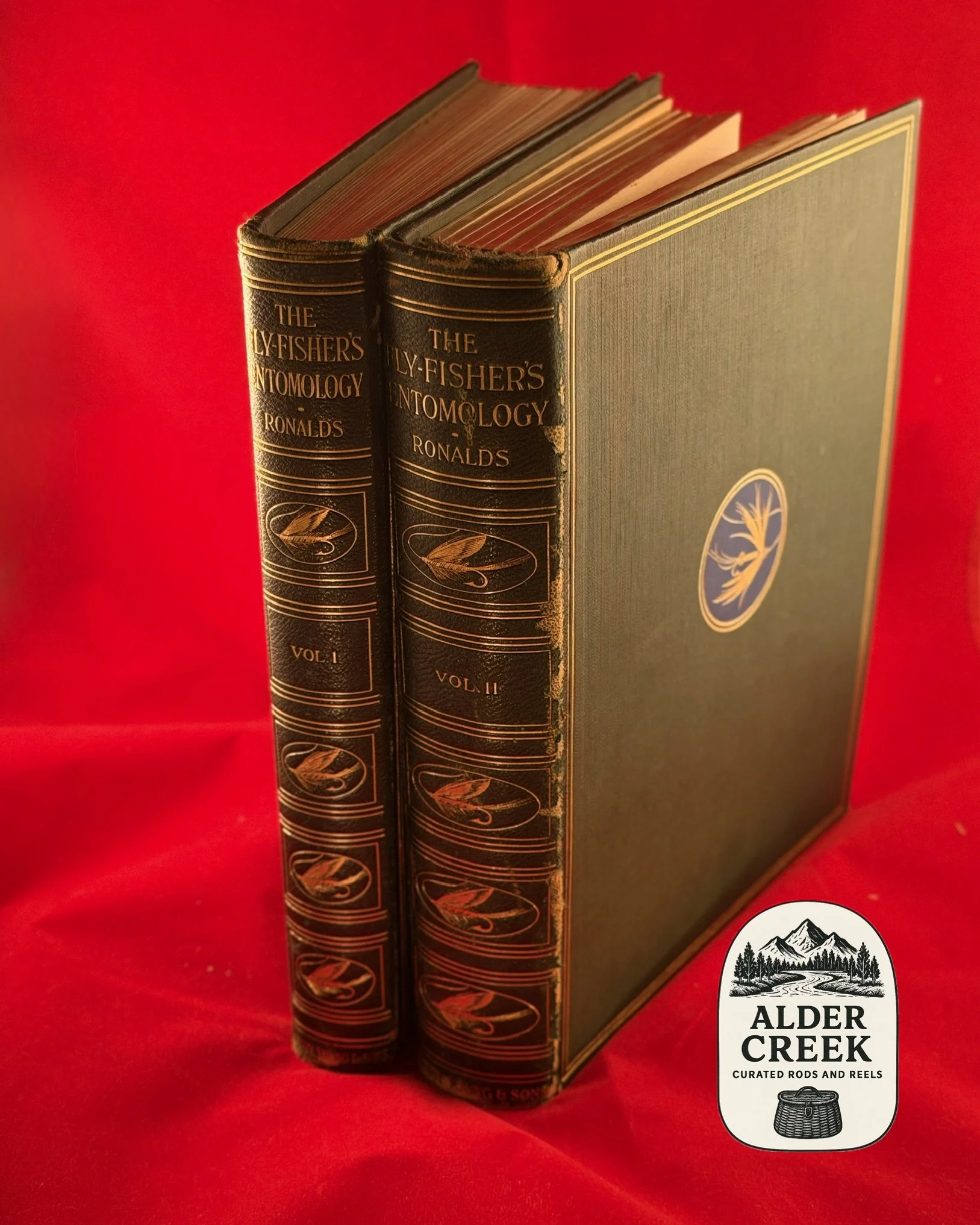
An exceptional example of one of the most celebrated works in the history of fly fishing, presented in the magnificent 1913 Edition de Luxe, published by Henry Young & Sons of Liverpool.
First published in 1836, Alfred Ronalds’ The Fly-Fisher’s Entomology established a new standard in the observation and imitation of aquatic insects. Combining scientific precision with the practical knowledge of an accomplished angler, Ronalds created a work that would profoundly influence generations of fly dressers and fly fishermen. Its importance to the development of the artificial trout fly can scarcely be overstated.
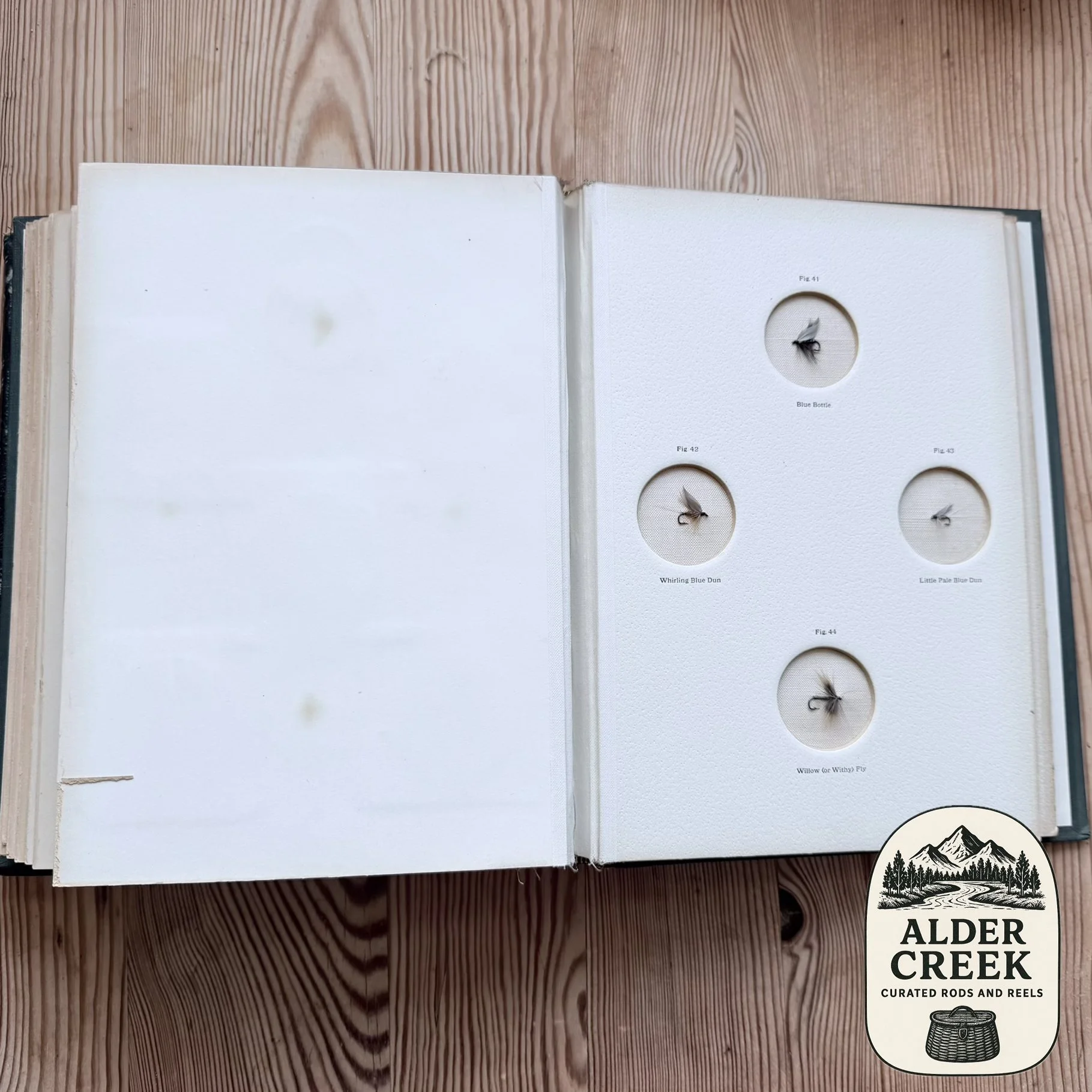
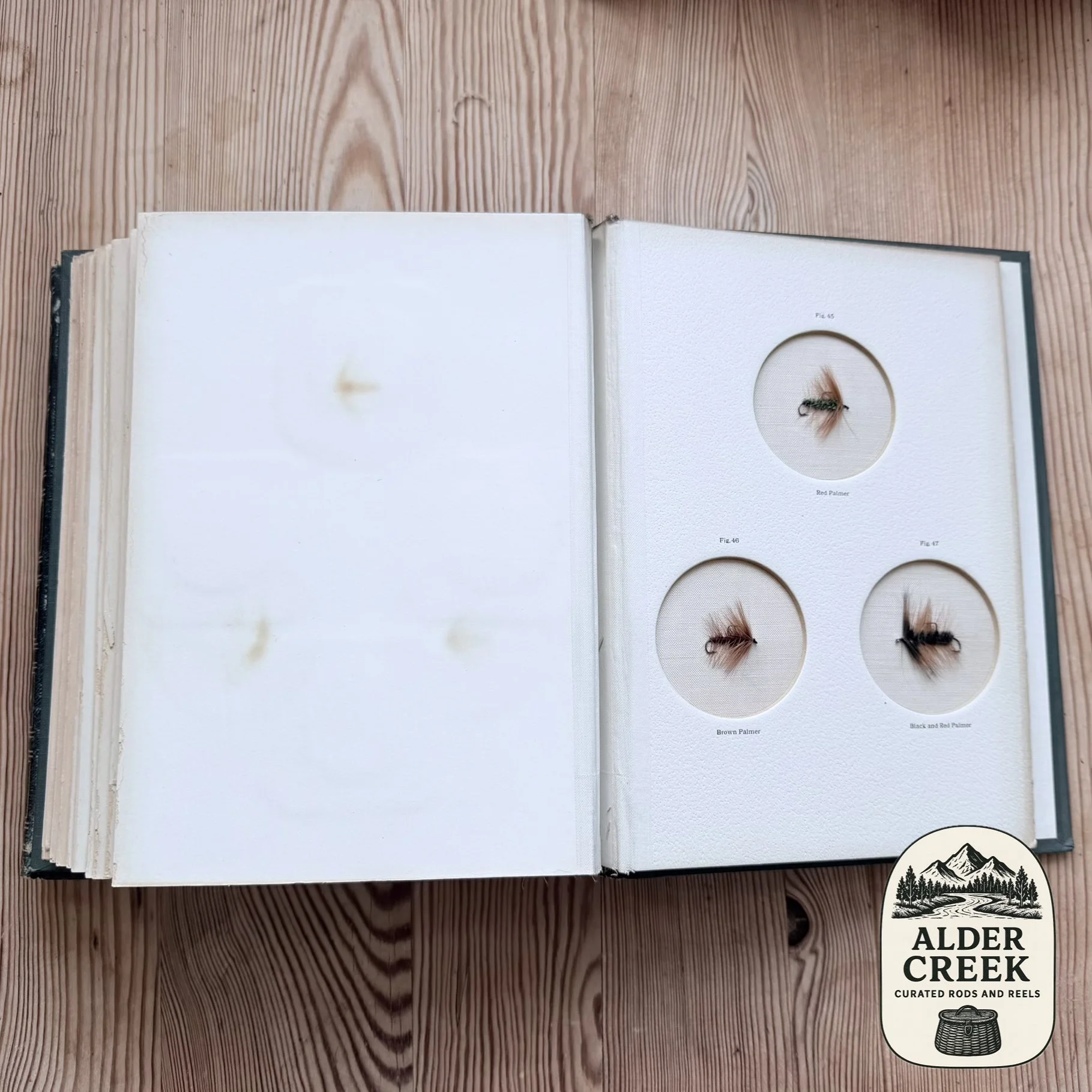
The 1913 Edition de Luxe represents one of the most desirable forms in which this landmark work was published. Issued in two substantial quarto volumes, it combines the original text and illustrations with an extraordinary collection of 48 actual artificial flies, arranged in recessed, linen-backed mounts across nine thick cards in the second volume.
These flies are not printed illustrations but individually dressed examples of the patterns associated with Ronalds’ pioneering work. Together they provide a remarkable physical record of the traditions of British fly dressing at the beginning of the twentieth century.
The first volume contains photographic views of rivers, portraits and beautifully hand-coloured engraved plates. Both volumes retain their original green morocco-backed cloth bindings, with gilt-lettered spines and gilt top edges.
This is copy number 243 of the 250 numbered copies, from a total edition limited to 270.
Of particular interest is the provenance: the volumes bear the bookplate of Cecil Harmsworth, the British politician and noted book collector, adding a distinguished historical association to an already important work.
The set remains in its original bindings, with some rubbing to the extremities and occasional light spotting, consistent with its age. All 48 flies are present. Photographs of the complete collection of mounted flies are included in this listing, allowing collectors to examine the individual patterns and their preservation in detail.
Few works unite the history of angling, entomology, fine book production and the art of fly dressing quite as convincingly as Ronalds’ The Fly-Fisher’s Entomology. In this lavishly produced edition, the book becomes something more than a classic text: it is a tangible record of the flies and craftsmanship that helped shape the modern sport.
An important addition to a serious collection of rare angling literature.
Bibliographical Details
Author: Alfred Ronalds
Title: The Fly-Fisher’s Entomology
Publisher: Henry Young & Sons, Liverpool
Year: 1913
Edition: Edition de Luxe, numbered 243 of 250 copies
Format: Two volumes, quarto (approximately 250 × 188 mm)
Volume I: Photographic views, portraits and hand-coloured engraved plates
Volume II: 48 original artificial flies mounted on nine recessed, linen-backed cards
Binding: Original green morocco-backed cloth, gilt spines, top edges gilt
Provenance: Cecil Harmsworth bookplate
Condition: Some rubbing to binding extremities and occasional light spotting; all 48 flies present in perfect condition.
Further photographs, details and international shipping information are available upon request. Serious enquiries and considered offers are always welcome.
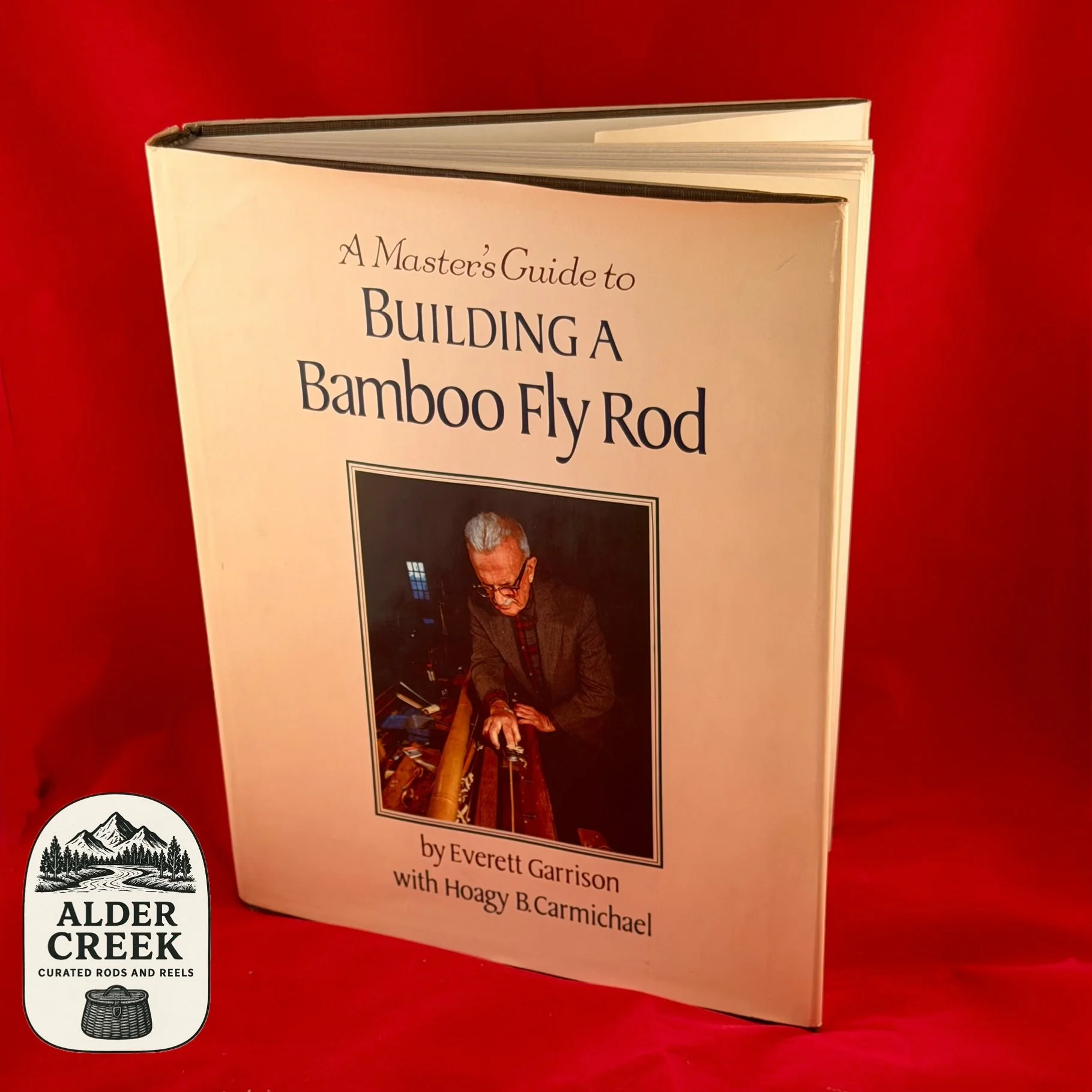
One of the most influential works ever published on the craft of bamboo fly rodmaking, A Master's Guide to Building a Bamboo Fly Rod remains an essential reference for rodmakers, collectors, and students of the American bamboo tradition.
Everett Garrison was among the most respected American bamboo rodmakers of the twentieth century, celebrated for his exacting methods, mathematical approach to rod design, and uncompromising standards of craftsmanship. Working with Hoagy B. Carmichael, his knowledge and techniques were preserved in a book that has become a cornerstone of modern bamboo rodmaking literature.
The work explores the principles and practical methods of constructing a split-cane fly rod, including taper design, bamboo preparation, tools, ferrules, fittings, and finishing. Richly illustrated, it offers a rare insight into the methods of one of the great masters of the craft.
This copy is the 1985 Winchester Press edition, bound in cloth and accompanied by its original dust jacket. The book is in near fine condition, remaining tight, clean, and well preserved. The dust jacket is in good condition, with some edge wear and minor nicks.
A distinguished addition to any collection of classic American angling literature, and a particularly fitting companion to a fine bamboo fly rod.
Explore further works in our collection of classic angling literature, or discover the craftsmanship described in these pages through our selection of vintage and contemporary bamboo fly rods.
Specifications
Authors
Everett Garrison & Hoagy B. Carmichael
Title
A Master's Guide to Building a Bamboo Fly Rod
Publisher
Winchester Press
Year
1985
Binding
Cloth hardcover
Pages
296 pages, with additional plates and preliminary pages
Illustrations
Black-and-white and colour illustrations, photographs, diagrams and facsimile
Format
Approximately 29 cm
Dust Jacket
Present; good condition with minor edge wear
Condition
Near fine book; tight, clean and well preserved
Enquiries
Questions about this book, international shipping, or price are always welcome.
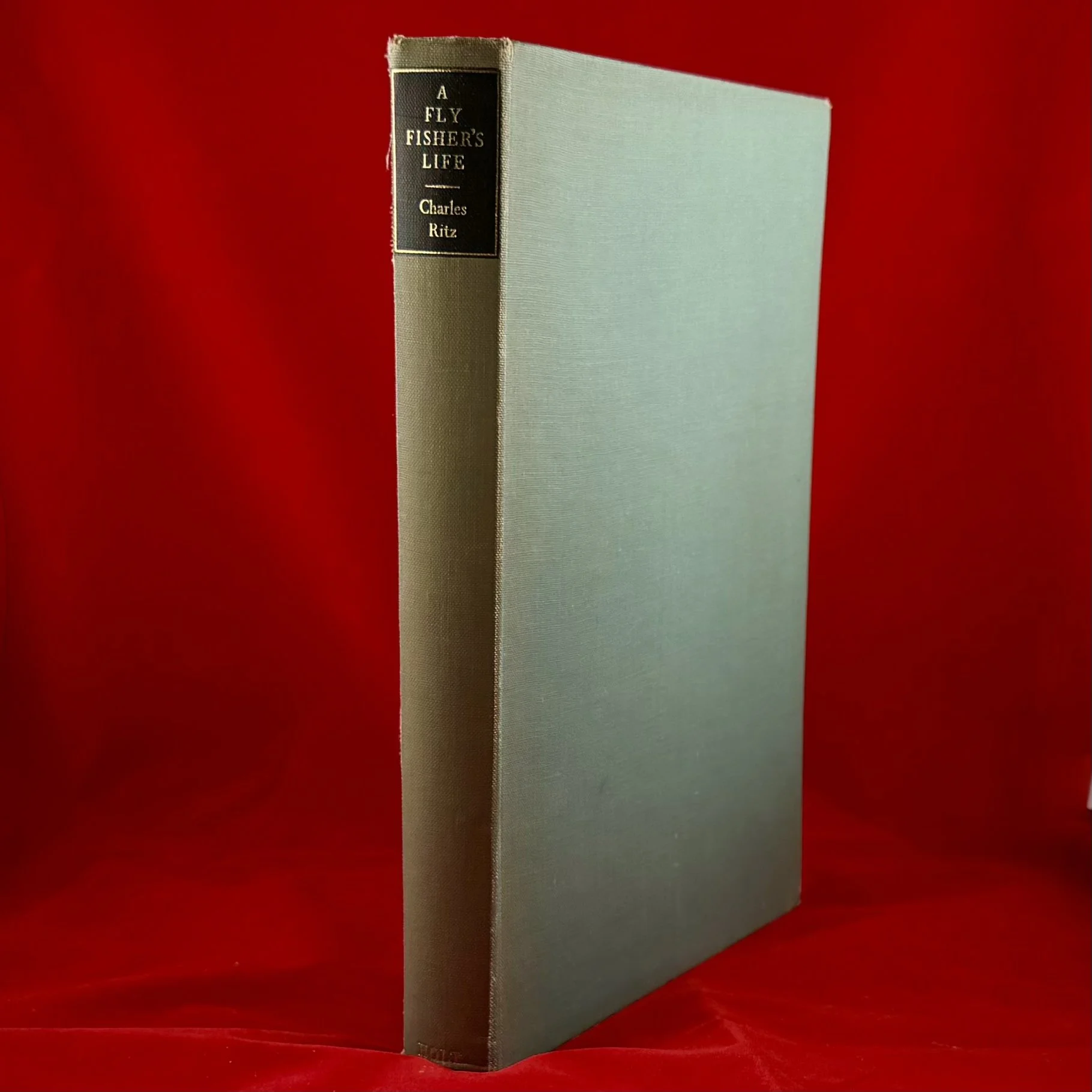
Few names are as closely associated with the development of modern fly fishing as Charles Ritz. A distinguished angler, writer, and advocate of parabolic bamboo fly rods, Ritz helped shape the techniques and traditions of European fly fishing during the twentieth century.
A Fly Fisher's Life is his celebrated account of a lifetime devoted to rivers, trout, and the art of fly fishing. Part memoir and part reflection on angling technique, the book brings together personal experiences, observations on fly rods and casting, and encounters with some of the notable figures of the sport. The American edition includes a foreword by Ernest Hemingway.
Ritz's association with Pezon et Michel and the development of the celebrated Ritz Super Parabolic rods makes this work particularly appealing to collectors of classic bamboo tackle.
This copy is the first American edition, published by Henry Holt & Company in 1959. It retains its original blue cloth binding and is in very good condition. The dust jacket is not present.
A distinguished work of twentieth-century angling literature, equally rewarding to read and to collect.
Charles Ritz's influence on fly rod design is reflected in the celebrated Pezon et Michel Super Parabolic series. Explore our Pezon et Michel Master Lambiotte , or discover further titles in our collection of classic angling literature .
Specifications
Author
Charles Ritz
Title
A Fly Fisher's Life
Publisher
Henry Holt & Company, New York
Year
1959
Edition
First American Edition
Binding
Original blue cloth hardcover
Dust Jacket
Not present
Foreword
Ernest Hemingway
Condition
Very good
Enquiries
Questions about this book, international shipping, or price are always welcome.
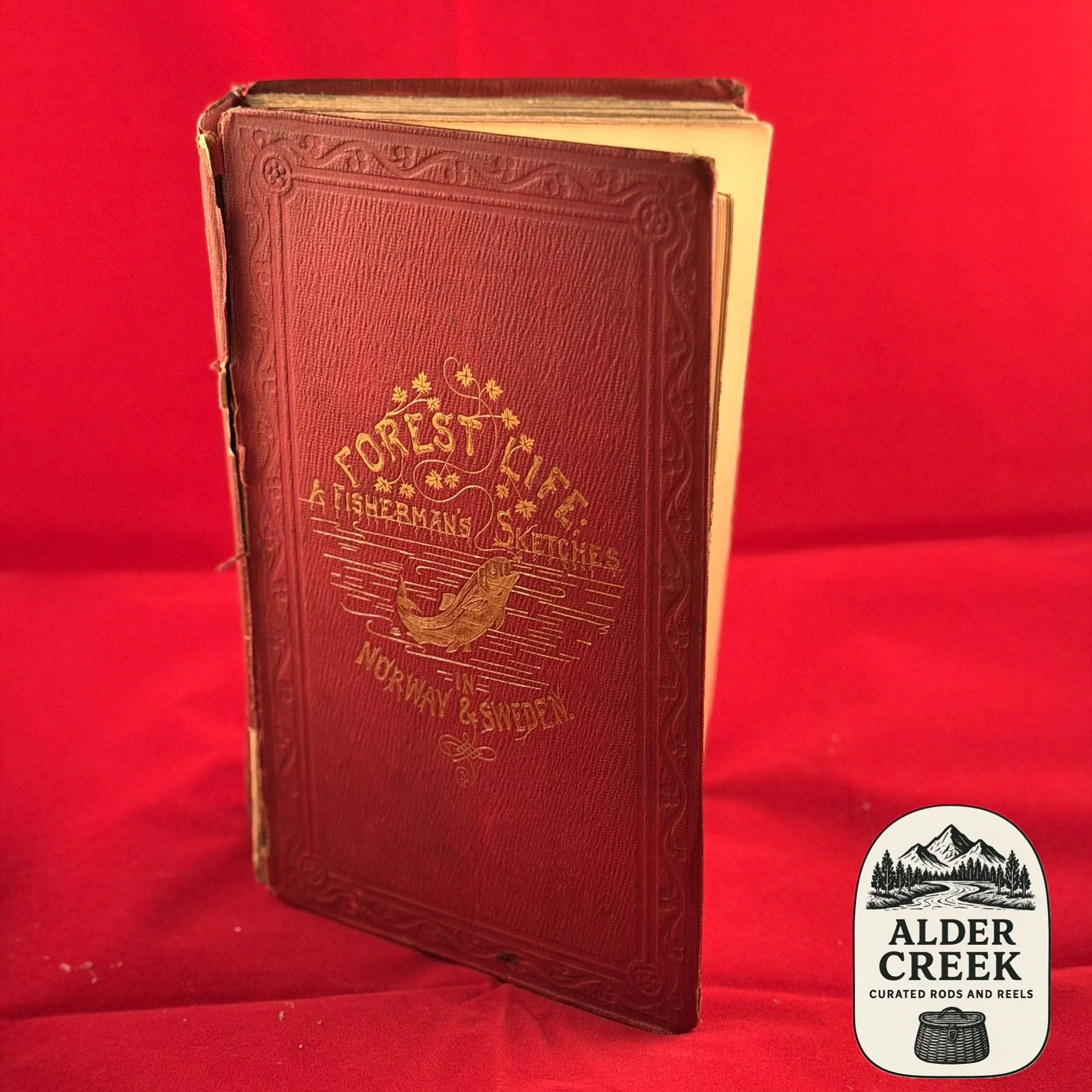
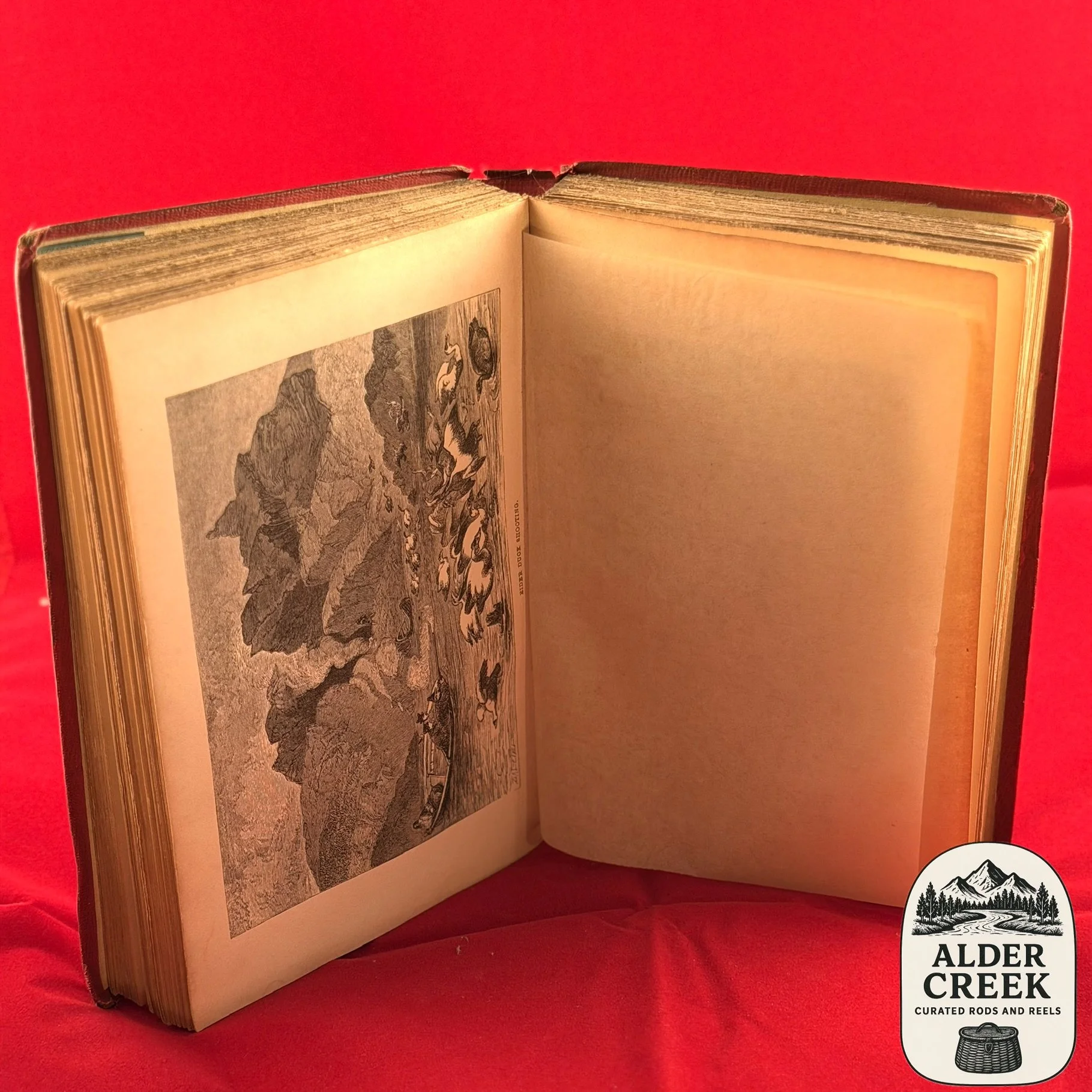
An evocative account of nineteenth-century Scandinavian travel and angling by the Reverend Henry Newland, offering a glimpse into the rivers, forests, landscapes, and fishing traditions of Norway and Sweden during the Victorian era.
Forest Life belongs to that appealing tradition of early sporting travel literature in which fishing, natural history, and observations of local life are woven together. Newland's narrative reflects a period when British anglers were increasingly drawn to the rivers and wilderness of Scandinavia, long before modern sporting tourism transformed many of these waters.
This is the second edition, published in 1855, comprising 418 pages with black-and-white illustrations, in a small octavo hardcover format. The hardcover is somewhat worn and frayed, see images.
A charming and historically interesting work, particularly appealing to collectors of early Scandinavian angling literature and Victorian sporting books.
Discover further works of early sporting and fly-fishing literature in our collection of rare and vintage angling books , including historic accounts of fishing, natural history, and the traditions of the sporting world.
Specifications
Author
The Rev. Henry Newland
Title
Forest Life: A Fisherman's Sketches in Norway and Sweden
Year
1855
Edition
Second Edition
Original Publication
1854
Format
Small octavo, approximately 120 × 188 mm
Pagination
vi, 418 pages
Illustrations
Black-and-white illustrations
Binding
Hardcover
Subject
Scandinavian angling, travel and natural history
Enquiries
Questions about this book, its condition, international shipping, or price are always welcome.
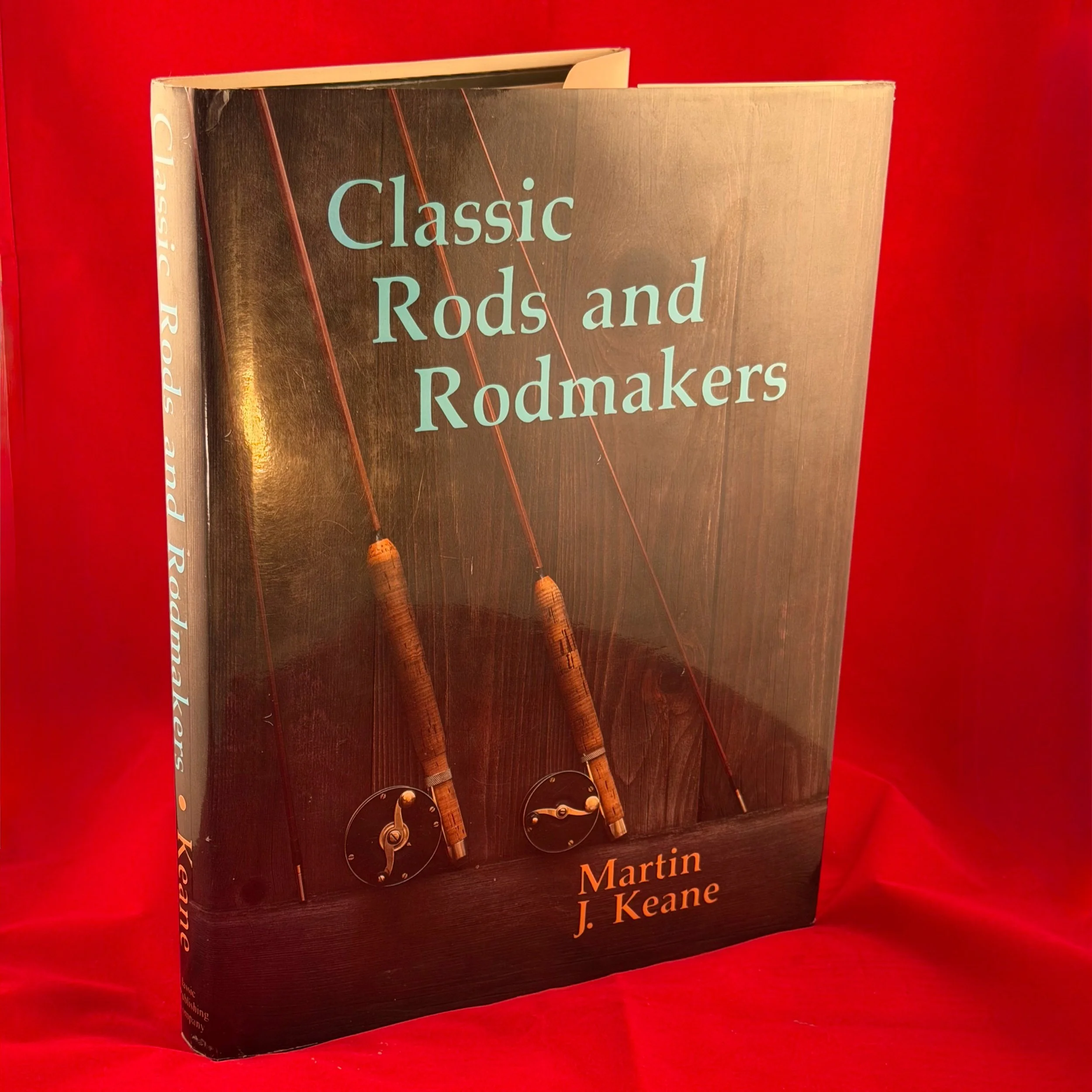
Few books have earned a more enduring place on the shelves of bamboo fly rod collectors than Marty Keane's Classic Rods and Rodmakers.
A respected dealer, collector and authority on classic American fishing rods, Keane brought together a wealth of knowledge concerning the makers, models and traditions that shaped the golden age of American bamboo rodmaking.
The book explores the work of distinguished manufacturers and individual craftsmen, including H.L. Leonard, Thomas & Thomas, and other celebrated names. Its observations on rod design, craftsmanship and the characteristics of individual models make it a particularly useful reference for those who collect, fish and appreciate traditional bamboo rods.
Of particular interest to Alder Creek is Keane's discussion of classic Leonard models, including the powerful 4099½ Tournament, a rod represented in our own collection.
This copy is the third printing, published by Classic Publishing Company in 1992. It is in fine condition and retains its original dust jacket, also in fine condition.
Marty Keane's observations on the great American bamboo rodmakers remain particularly relevant to collectors today. Discover our H.L. Leonard 4099½ bamboo fly rod , a model discussed in Keane's work, or explore our collection of classic angling literature .
Specifications
Author
Marty Keane
Title
Classic Rods and Rodmakers
Publisher
Classic Publishing Company
Year
1992
Printing
Third printing
Binding
Hardcover
Dust Jacket
Original, fine condition
Condition
Fine
Subject
Classic American bamboo fly rods and rodmakers
Enquiries
Questions about this book, its condition, international shipping, or price are always welcome.
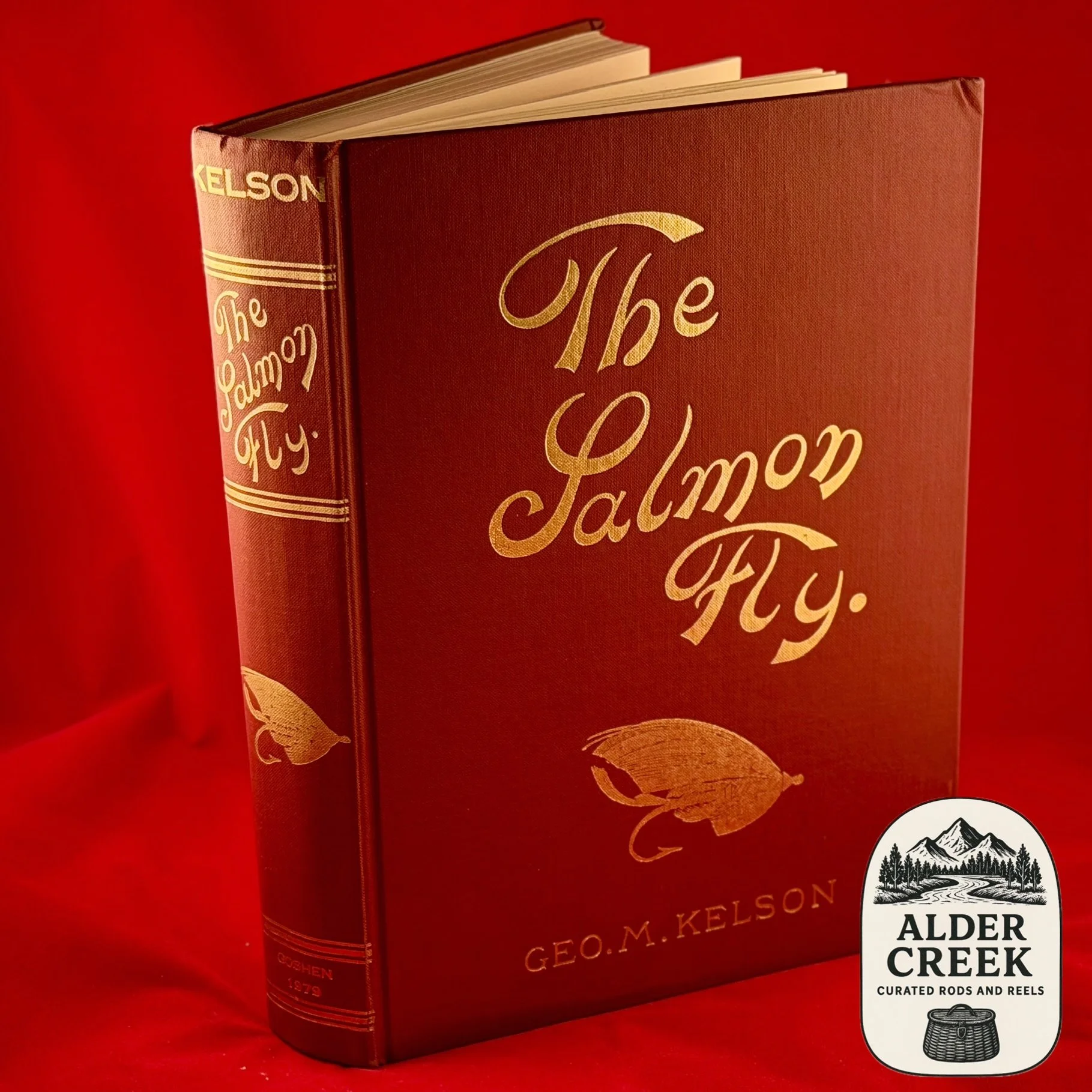
First published in 1895, George M. Kelson's The Salmon Fly: How to Dress It and How to Use It stands among the great works of nineteenth-century salmon fishing literature. Both an ambitious treatise on the art of dressing salmon flies and a practical guide to their use, it remains an important reference for collectors and fly dressers.
The work is particularly celebrated for its detailed accounts of traditional salmon fly patterns, their materials and construction, accompanied by the magnificent colour plates that have made the original edition so highly prized.
This is the first facsimile edition, published by The Angler's and Shooter's Press in Goshen, Connecticut, in 1979. It faithfully reproduces the celebrated 1895 work, including its distinctive scarlet cloth binding with gilt lettering and decoration.
The volume comprises 464 pages, eight colour plates of salmon flies, numerous text illustrations and a frontispiece depicting Kelson holding a seventeen-foot salmon rod.
This copy is preserved in splendid condition, with its handsome scarlet binding presenting particularly well.
An attractive opportunity to own one of the defining works of classic salmon fly literature in a beautifully produced and accessible edition.
Discover further classics of salmon fishing and fly dressing in our collection of rare and vintage angling literature
Specifications
Author
George M. Kelson
Title
The Salmon Fly: How to Dress It and How to Use It
Publisher
The Angler's and Shooter's Press, Goshen, Connecticut
Year
1979
Edition
First Facsimile Edition
Original Publication
1895
Pages
464
Illustrations
Eight colour plates, frontispiece and text illustrations
Binding
Scarlet cloth with gilt titles and decoration
Condition
Excellent
Enquiries
Questions about this book, international shipping, or price are always welcome.
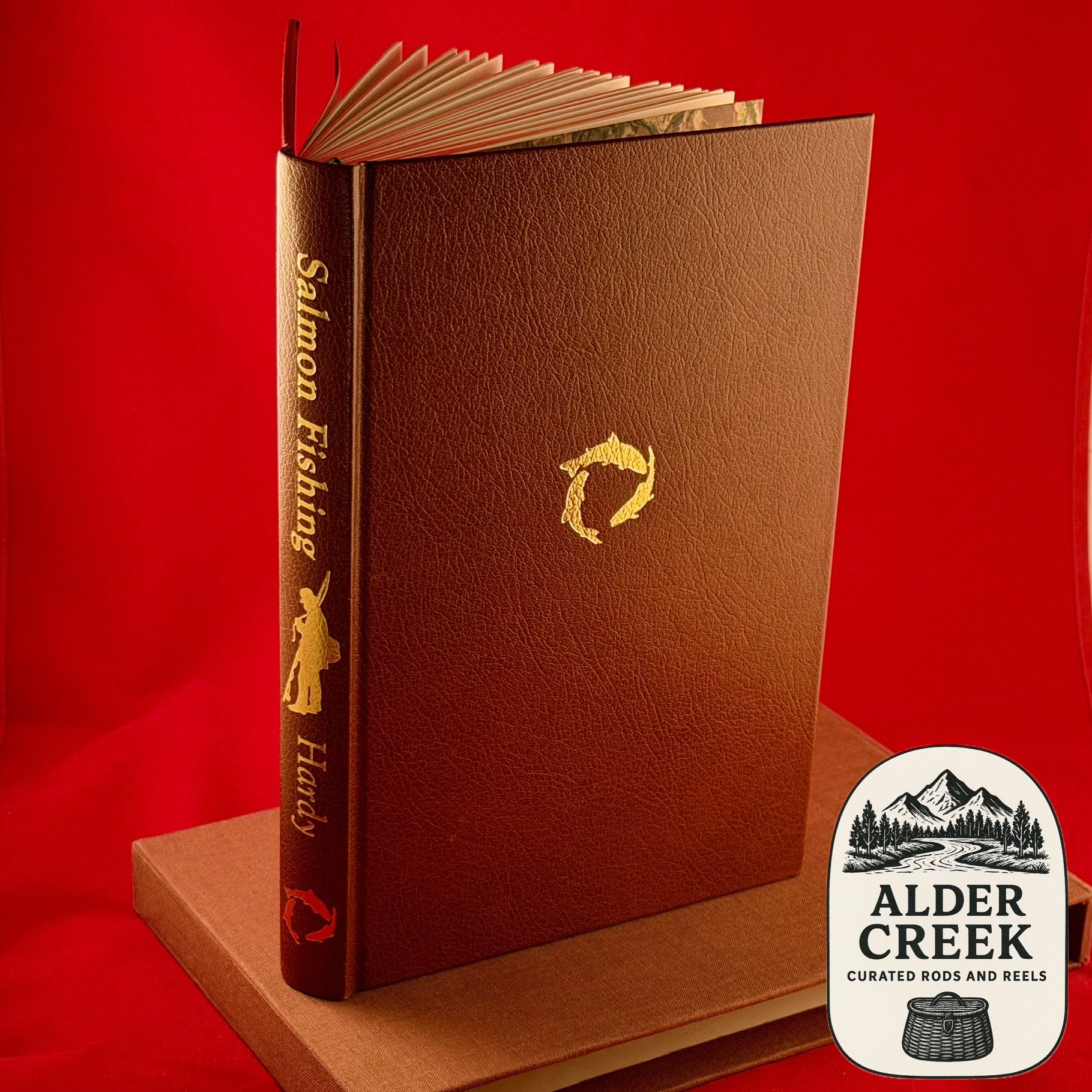
A distinguished work of classic British salmon fishing literature by John James Hardy, a member of the celebrated Hardy family of Alnwick, whose name has become inseparable from the history of fine fishing tackle.
Salmon Fishing is particularly valued for its extensive treatment of traditional salmon flies, including the dressings of 345 patterns. It offers a fascinating record of the materials, methods, and fly designs associated with the golden age of British salmon fishing.
This handsome edition was produced by the Flyfisher's Classic Library in a limited printing of 750 copies. Bound in full leather with gilt lettering to the spine and the library's gilt emblem to the front board, it features marbled endpapers, gilt top edge, and both black-and-white and colour illustrations.
This copy is in as-new condition and is accompanied by its original cloth-covered slipcase, also in fine condition.
An attractive addition to any collection of classic salmon fishing literature, and a particularly fitting companion to a vintage Hardy reel or traditional salmon fly collection.
Explore further works on traditional salmon flies and British angling history in our collection of classic fishing literature , or discover our selection of vintage Hardy reels and classic fishing tackle .
Specifications
Author
John James Hardy
Title
Salmon Fishing
Publisher / Series
Flyfisher's Classic Library
Edition
Limited leather-bound edition
Limitation
750 copies
Pages
169
Contents
Dressings of 345 salmon flies
Illustrations
Black-and-white and colour
Binding
Full leather, gilt titles and decoration
Details
Gilt top edge, marbled endpapers
Slipcase
Original cloth-covered slipcase
Condition
As new; fine slipcase
Enquiries
Questions about this book, international shipping, or price are always welcome.
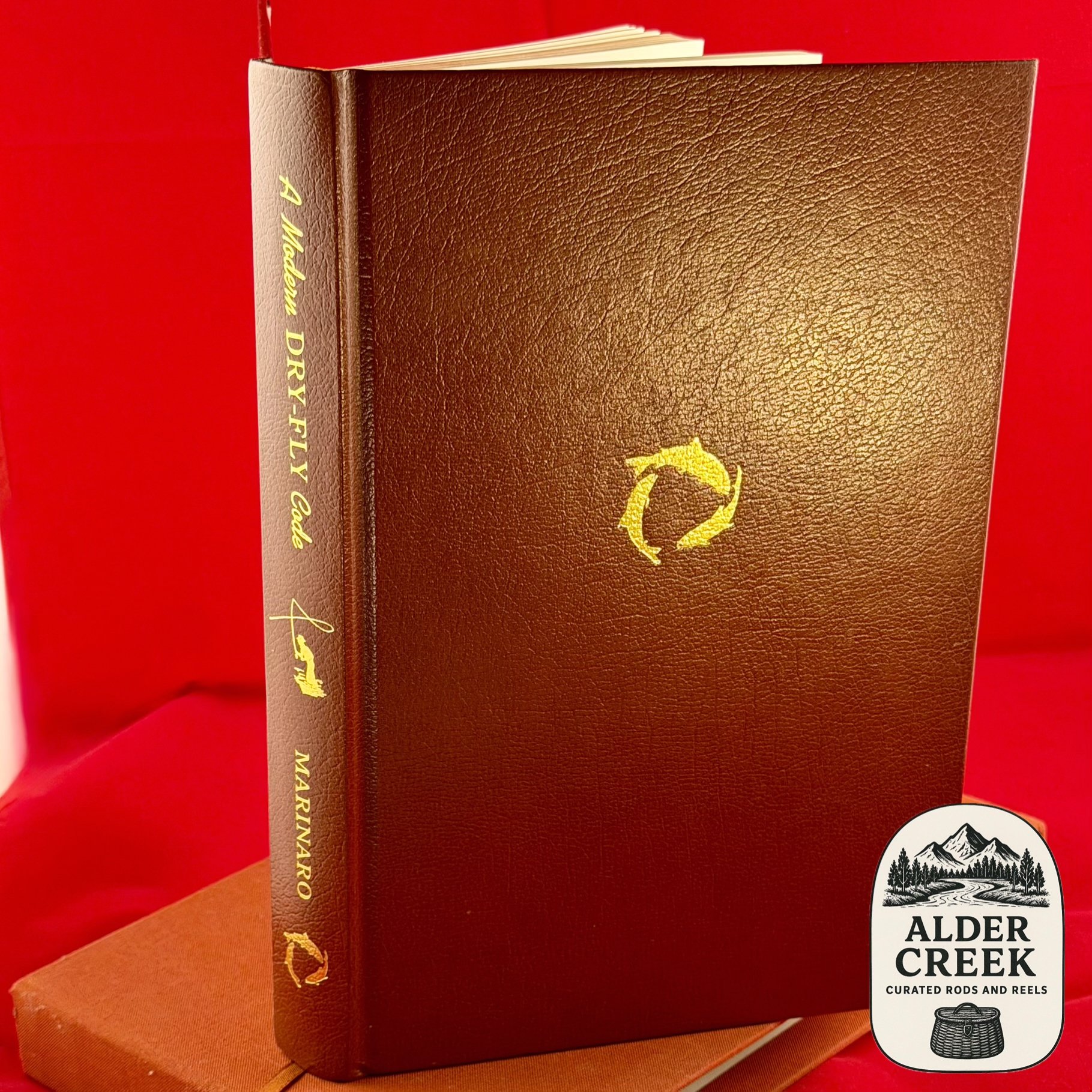
Few books have exerted a more lasting influence on American dry-fly fishing than Vincent C. Marinaro's A Modern Dry-Fly Code. First published in 1950, this remarkable work challenged established conventions and offered a new understanding of the relationship between trout, aquatic insects, and the artificial fly.
Drawing upon his observations of the limestone streams of Pennsylvania, Marinaro explored the subtleties of selective trout, fly design, presentation, and the importance of understanding what the fish actually sees. His ideas helped shape a more thoughtful and observant approach to dry-fly fishing and remain relevant to anglers today.
This handsome 1996 edition was produced by the Flyfisher's Classic Library in a limited printing of 500 copies. Bound in brown leather and accompanied by a sturdy cloth-covered slipcase, it retains the numerous black-and-white illustrations by Pearce Bates.
This copy is in excellent condition, with its original slipcase.
An important work of twentieth-century American angling literature, presented in an attractive collector's edition.
Specifications
Author
Vincent C. Marinaro
Title
A Modern Dry-Fly Code
Publisher
Flyfisher's Classic Library
Year
1996
Edition
Limited collector's edition
Limitation
500 copies
Original Publication
1950
Binding
Brown leather
Illustrations
Black-and-white drawings by Pearce Bates
Slipcase
Original cloth-covered slipcase
Condition
Excellent
Enquiries
Questions about this book, international shipping, or price are always welcome.
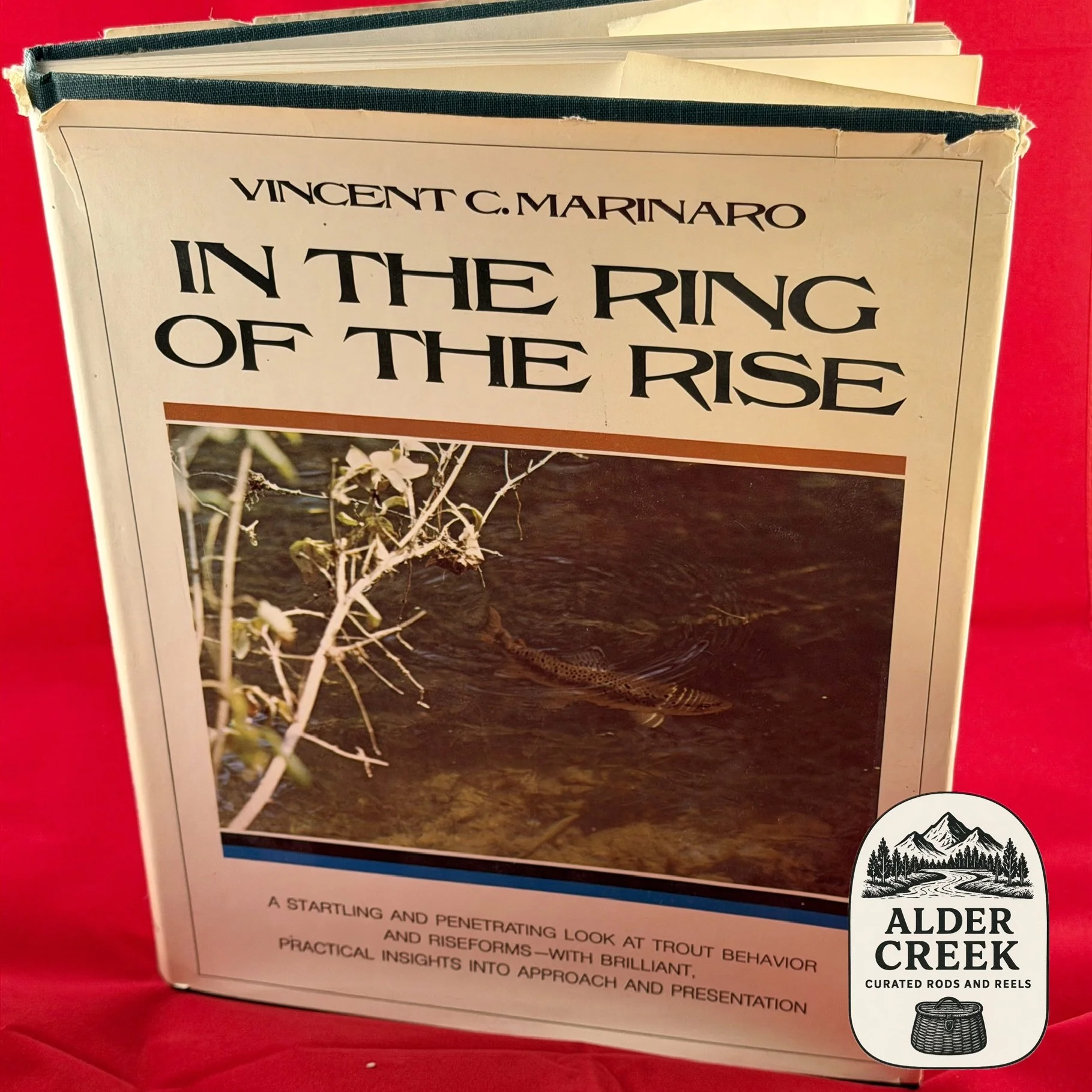
An important work by Vincent C. Marinaro, one of the most influential figures in twentieth-century American dry-fly fishing.
In In the Ring of the Rise, Marinaro continues the careful observations of trout and aquatic insects that made his earlier A Modern Dry-Fly Code a landmark in angling literature. Here, his attention turns to the rise itself: the subtle disturbances of the water's surface that reveal how trout feed and respond to natural insects.
Through close observation, photography and thoughtful analysis, Marinaro examines the relationship between rise forms, feeding behaviour and the presentation of the artificial fly. His approach encourages the angler to look beyond the simple appearance of a rising fish and to understand the activity taking place beneath the surface.
First published in 1976, the book remains a rewarding study of selective trout and the art of observation.
This copy is the first American edition, bound in green cloth with silver lettering to the spine. The large-format volume contains 184 pages, illustrated with black-and-white photographs and drawings, together with a selection of colour photographs.
The book itself is in very good condition, with minor bumping and wear to the spine and corners. The original dust jacket is present but shows fraying and creasing along the edges.
A distinguished contribution to American fly-fishing literature, and a natural companion to Marinaro's A Modern Dry-Fly Code.
Marinaro's observations of trout behaviour build upon the ideas first explored in A Modern Dry-Fly Code. Discover further works on selective trout, fly presentation and American angling history in our collection of classic fly-fishing literature .
Specifications
Author
Vincent C. Marinaro
Title
In the Ring of the Rise
Year
1976
Edition
First American Edition
Pages
184
Format
Large-format hardcover
Illustrations
Black-and-white photographs and drawings; some colour photographs
Binding
Green cloth with silver spine lettering
Dust Jacket
Original; edge wear, fraying and creasing
Condition
Very good book; worn dust jacket; minor bumping to spine and corners
Subject
Trout rise forms, feeding behaviour and dry-fly fishing
Enquiries
Questions about this book, its condition, international shipping, or price are always welcome.
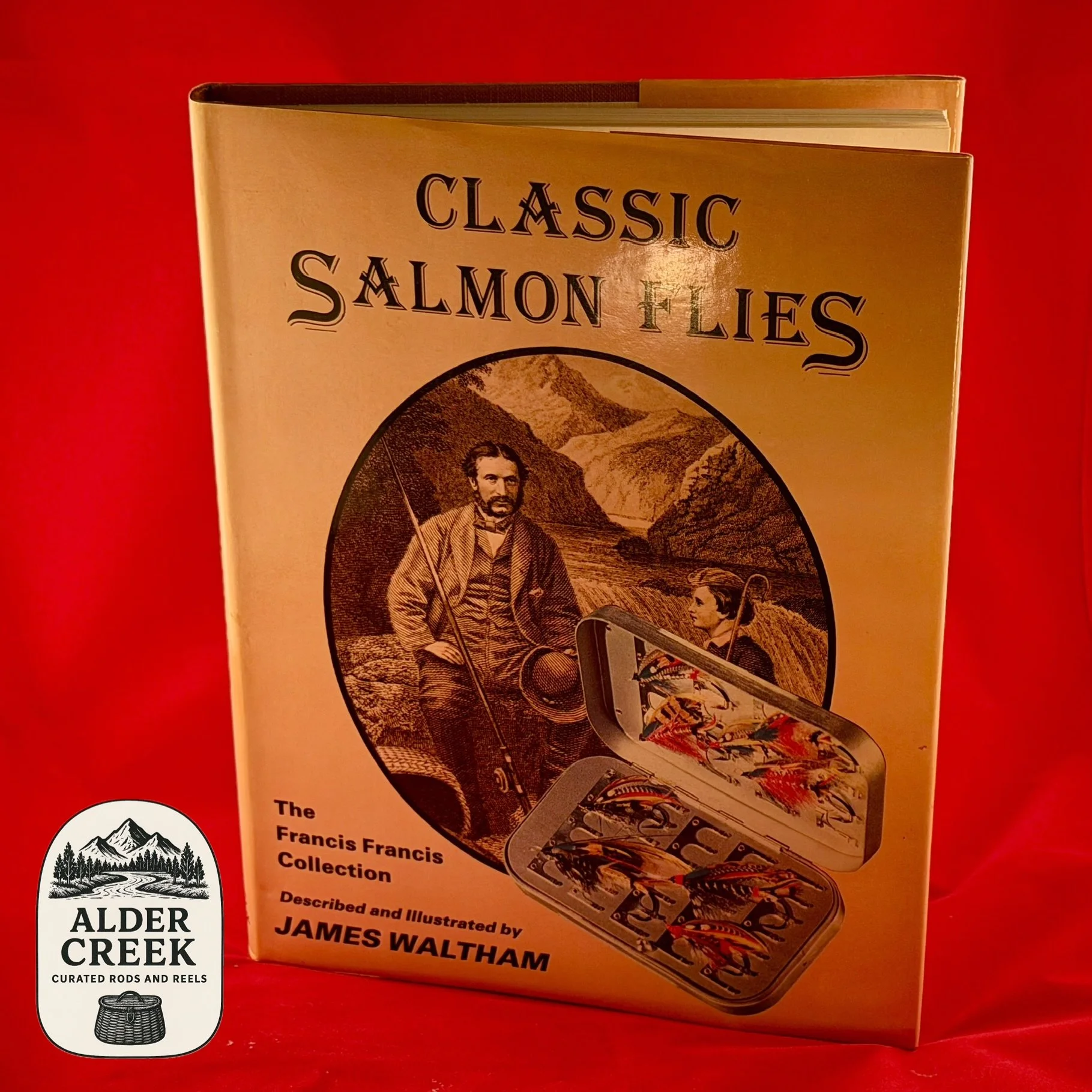
A beautifully illustrated exploration of traditional British salmon flies, drawn from the celebrated writings of Francis Francis and brought together by James Waltham.
Francis Francis's A Book on Angling, first published in 1867, remains one of the important works of nineteenth-century British fishing literature. His detailed accounts of salmon flies and their dressings offer a fascinating record of the patterns, materials and traditions of the Victorian salmon angler.
In Classic Salmon Flies, James Waltham presents a carefully edited selection of this material, making the original descriptions more accessible to the modern reader. The flies are arranged according to the regions of the British Isles with which they were associated, preserving a valuable sense of their historical and geographical origins.
Waltham supplements the original text with practical information on fly-dressing techniques, a guide to feathers and suitable substitutes, and an appreciation of the life and work of Francis Francis.
Of particular distinction are the eight colour plates of traditional salmon flies, painted by Waltham himself, which give the volume considerable visual appeal.
This copy is the first edition, published in 1983. The quarto-format volume comprises xii + 116 pages, with colour plates and black-and-white illustrations. Bound in brown boards with gilt spine lettering.
An attractive addition to a collection of classic salmon fishing literature, especially for those interested in the history and craftsmanship of the traditional fully dressed salmon fly.
Explore the history of the traditional salmon fly through George M. Kelson's The Salmon Fly and Keith Fulsher and Charles Krom's Hair-Wing Atlantic Salmon Flies, alongside further titles in our collection of classic angling literature .
Specifications
Author / Editor
James Waltham
Original Author
Francis Francis
Title
Classic Salmon Flies: The Francis Francis Collection
Year
1983
Edition
First Edition
Format
Quarto, approximately 195 × 254 mm
Pagination
xii + 116 pages
Illustrations
Eight colour plates of salmon flies; black-and-white illustrations
Binding
Brown boards with gilt spine lettering
Original Source
A Book on Angling (1867)
Subject
Traditional salmon flies and fly dressing
Enquiries
Questions about this book, its condition, international shipping, or price are always welcome.
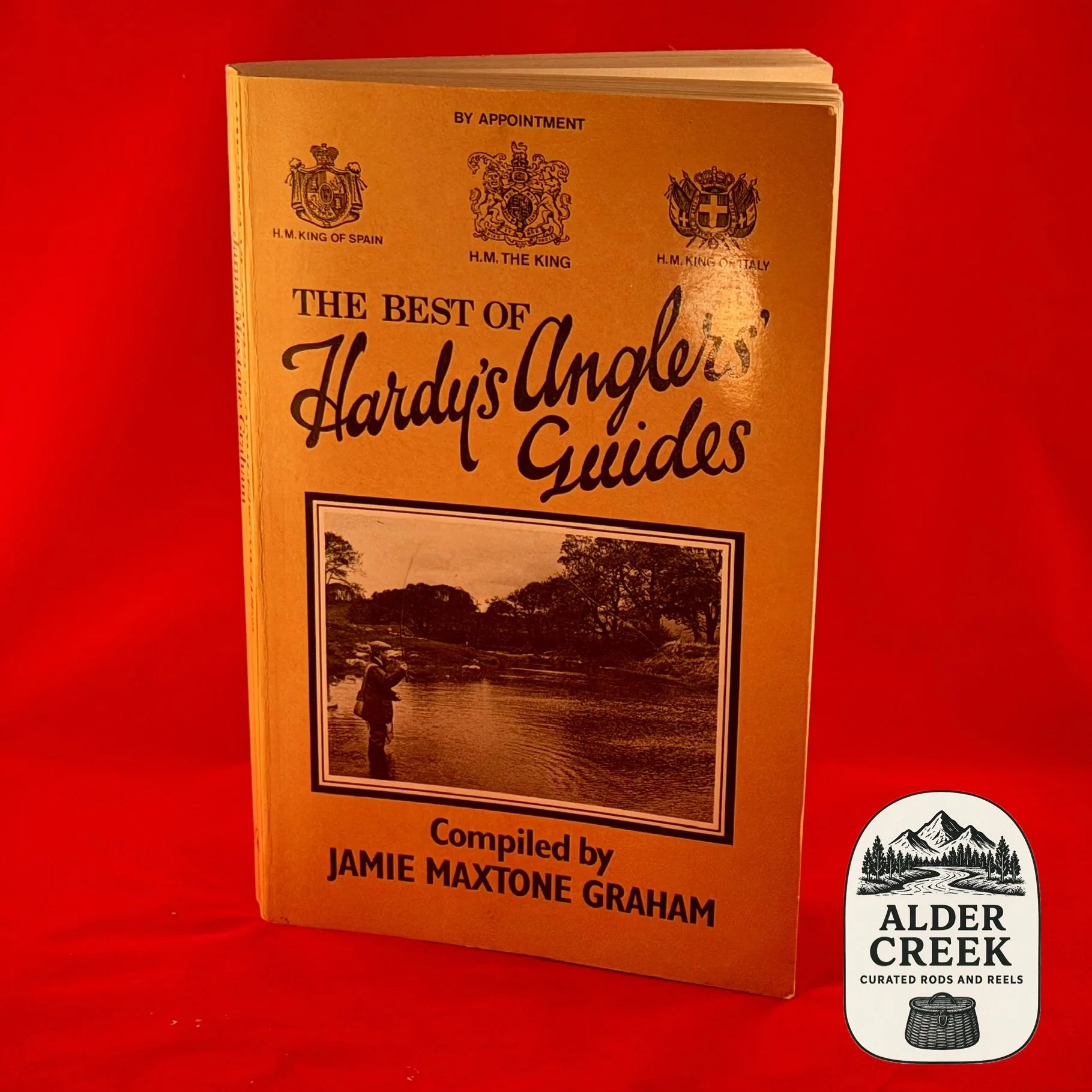
An engaging and particularly useful reference for collectors of vintage Hardy fishing tackle, bringing together selected material from the celebrated Hardy Brothers' catalogues.
For generations, the Hardy Anglers' Guides served as far more than ordinary sales catalogues. Lavishly illustrated and carefully produced, they documented the development of some of the finest fishing rods, reels and accessories ever made in Britain.
In The Best of Hardy's Anglers' Guides, Jamie Maxtone Graham draws upon his extensive collection of original Hardy catalogues to present a selection of historically important designs, innovations and products from the Alnwick firm.
Of particular interest are the developments in Hardy's celebrated fly reels, including the Perfect, alongside rods, flies, accessories and the many ingenious pieces of equipment that established Hardy's international reputation.
Beyond its value as a collector's reference, the book offers a fascinating insight into the evolution of fishing tackle during a period when craftsmanship, mechanical ingenuity and practical experience were closely intertwined.
This copy is the first edition, published by Macdonald Publishers, Midlothian, Scotland, in 1982. The volume comprises 208 pages, including an index, and contains colour plates, black-and-white photographs and line illustrations.
Bound in the original yellow pictorial wrappers with black titles.
An excellent companion to a collection of classic Hardy reels and an appealing record of one of the most distinguished names in British fishing tackle.
The evolution of Hardy's celebrated fly reels can be explored through our own collection, including the Hardy Perfect 3 3/8" and Hardy Uniqua 3 3/8" . Discover further works on classic tackle in our angling literature collection .
Specifications
Compiler
Jamie Maxtone Graham
Title
The Best of Hardy's Anglers' Guides
Publisher
Macdonald Publishers, Midlothian, Scotland
Year
1982
Edition
First Edition
Pages
208, including index
Format
Octavo, approximately 8 × 6 inches
Illustrations
Colour plates, black-and-white photographs and line drawings
Binding
Original yellow pictorial wrappers
Subject
Hardy Brothers, vintage fishing tackle, reels, rods and catalogues
Enquiries
Questions about this book, its condition, international shipping, or price are always welcome.
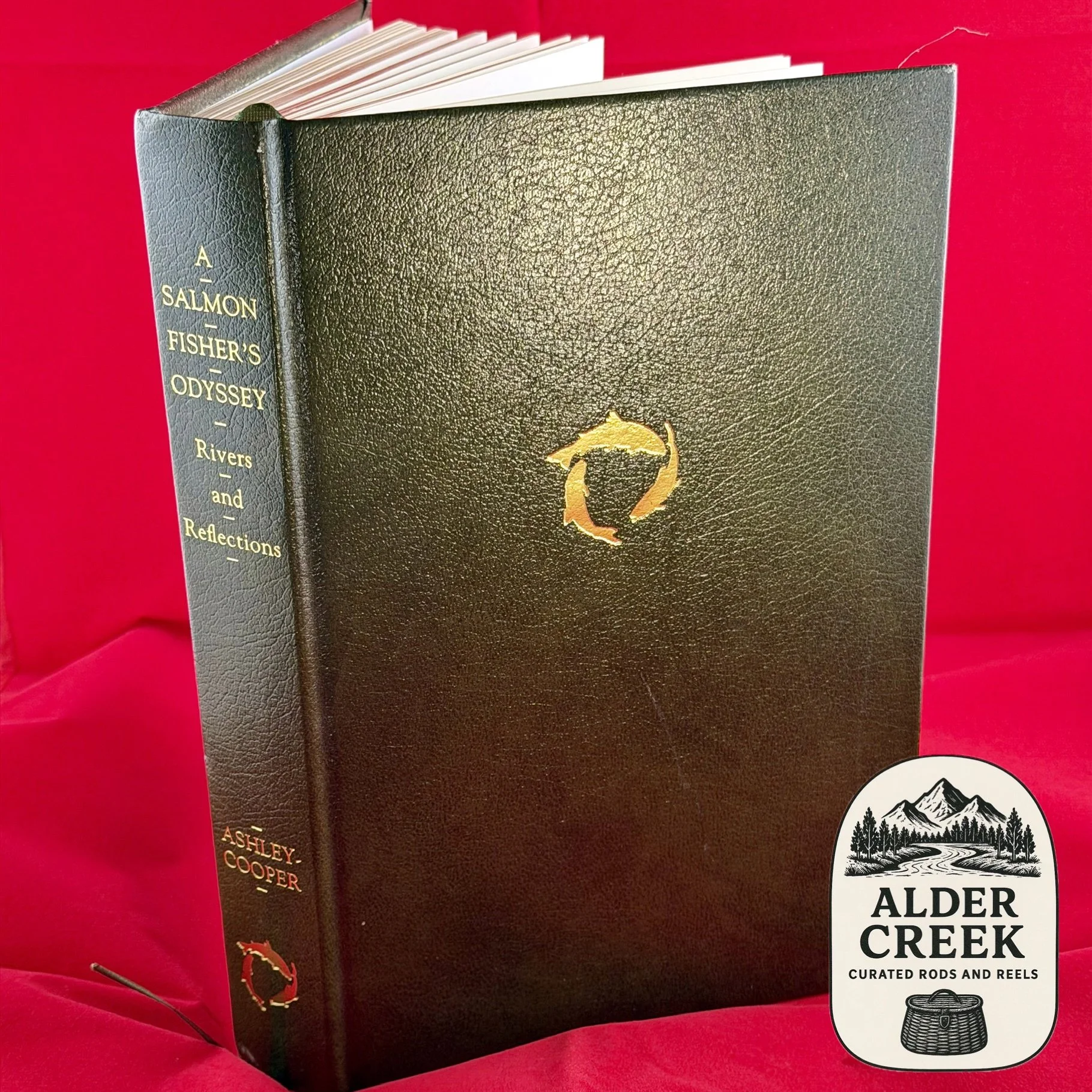
A distinguished account of a lifetime devoted to Atlantic salmon fishing by John Ashley-Cooper, one of the most knowledgeable and accomplished British salmon anglers of the twentieth century.
In A Salmon Fisher's Odyssey, Ashley-Cooper draws upon his extensive experience of salmon rivers, their individual characteristics and the traditions associated with fishing them. Combining personal recollections, observations and reflections, the book offers an intimate portrait of a sporting world shaped by remarkable rivers and generations of dedicated anglers.
The work is especially appealing for its accounts of British salmon waters and its appreciation of the history, character and enduring fascination of salmon fishing.
This handsome edition was published by the Flyfisher's Classic Library in 1996, in a limited printing of 500 copies. Bound in full leather with gilt lettering and decoration to the spine, it includes a silk ribbon marker and comprises 352 pages. No cassette.
This copy is in fine condition.
An attractive collector's edition of an important work of British salmon fishing literature, and a fitting addition to the library of anyone with an appreciation for classic salmon tackle and the great rivers on which it was used.
Explore further works on Atlantic salmon fishing, traditional salmon flies and British angling history in our collection of classic fishing literature , including works by John James Hardy and George M. Kelson.
Specifications
Author
John Ashley-Cooper
Title
A Salmon Fisher's Odyssey: Rivers and Reflections
Publisher
Flyfisher's Classic Library
Year
1996
Edition
Limited leather-bound edition
Limitation
500 copies
Pages
352
Binding
Full leather with gilt spine decoration
Details
Silk ribbon marker
Condition
Fine
Subject
Atlantic salmon fishing and British salmon rivers
Enquiries
Questions about this book, international shipping, or price are always welcome.
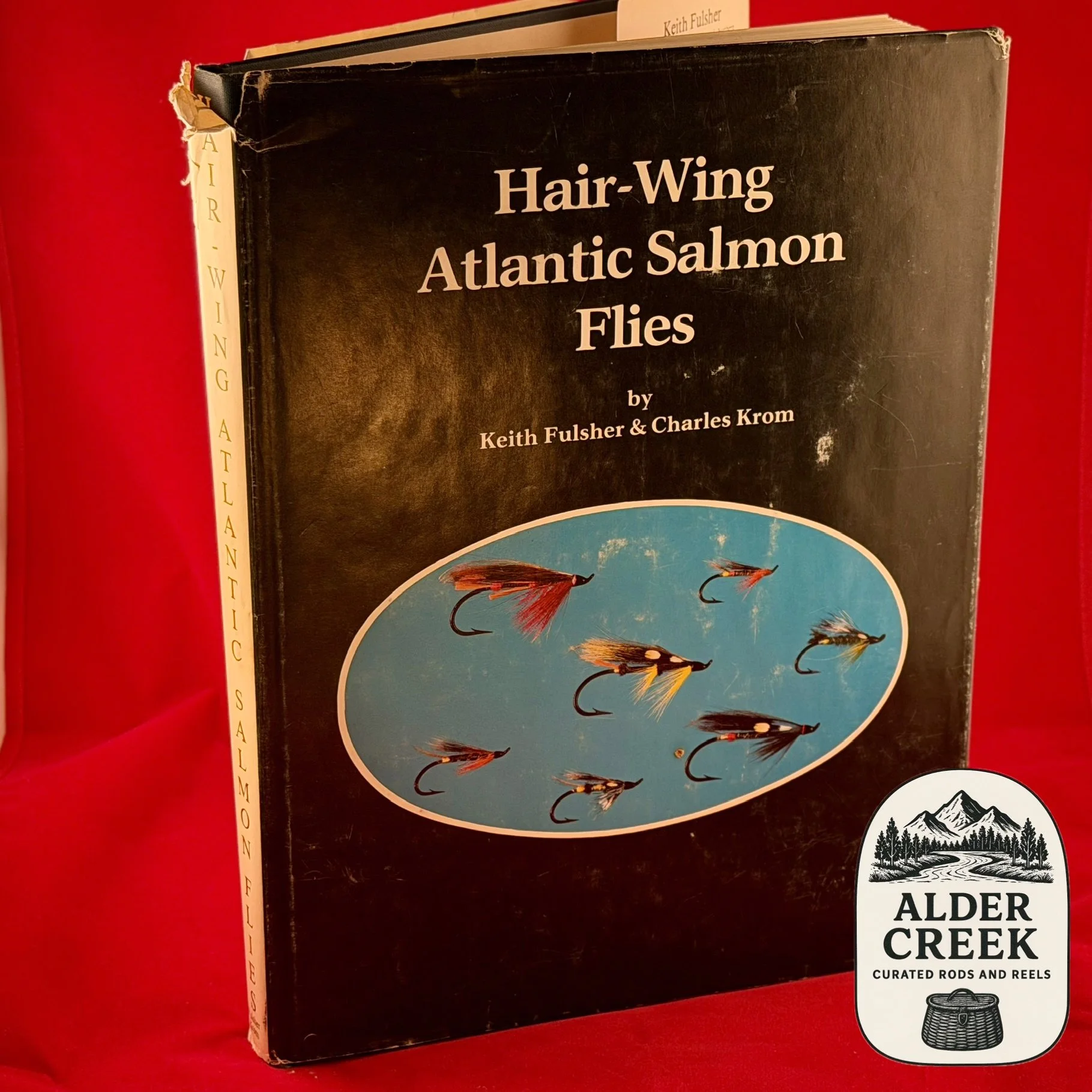
An important and beautifully illustrated work devoted to the art of dressing hair-wing Atlantic salmon flies, written by Keith Fulsher and Charles Krom.
Hair-Wing Atlantic Salmon Flies occupies a distinctive place in modern salmon fly literature. While the elaborate feather-wing patterns of the nineteenth century remain among the most admired creations in traditional fly dressing, the development of hair-wing flies brought a practical and highly effective alternative to the salmon angler.
Fulsher and Krom explore this tradition in considerable detail, offering clear instruction on materials, construction and the adaptation of classic feather-wing patterns into more practical hair-wing designs. Their work combines historical appreciation with the experience of anglers who dress flies to be fished.
The book contains an extensive collection of patterns, supported by six colour plates and numerous black-and-white photographs, including step-by-step illustrations of dressing techniques.
This copy is the first edition, published by Fly Tyer Inc., North Conway, New Hampshire, in 1981. The volume comprises 181 pages and is bound in blue cloth with gilt titles and decoration.
The book itself is in fine condition, retaining its original dust jacket, which shows noticeable wear.
A valuable reference for the salmon fly dresser and an attractive addition to a collection of classic Atlantic salmon fishing literature.
For a complementary perspective on traditional feather-wing salmon flies, discover George M. Kelson's The Salmon Fly (1895, 1979 facsimile) , alongside further works on salmon fly dressing in our collection of classic angling literature.
Specifications
Authors
Keith Fulsher & Charles Krom
Title
Hair-Wing Atlantic Salmon Flies
Publisher
Fly Tyer Inc., North Conway, New Hampshire
Year
1981
Edition
First Edition
Pages
181
Illustrations
Six colour plates; black-and-white photographs and step-by-step tying illustrations
Binding
Blue cloth with gilt titles and decoration
Dust Jacket
Original, worn
Condition
Fine book; worn dust jacket
Subject
Atlantic salmon flies, hair-wing patterns and fly dressing
Enquiries
Questions about this book, its condition, international shipping, or price are always welcome.
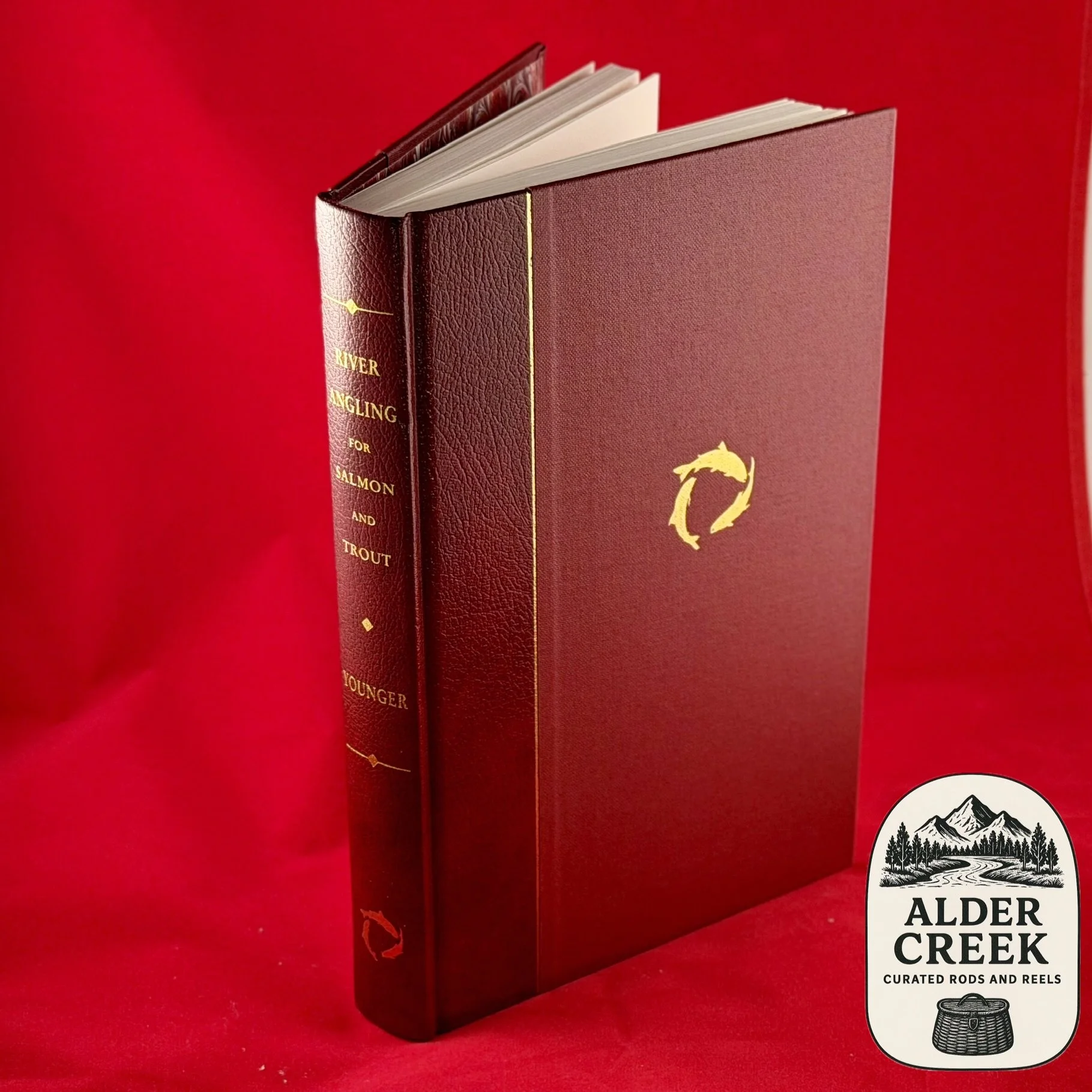
A handsome limited edition of one of the most remarkable works of nineteenth-century Scottish angling literature.
John Younger (1785–1860), the shoemaker of St Boswells on the River Tweed, was an extraordinary figure in the history of fly fishing. Largely self-educated, he became a respected poet, fly dresser and accomplished salmon angler, developing a practical understanding of the river that few of his contemporaries could rival.
First published in 1840, River Angling for Salmon and Trout is particularly celebrated for its observations on the salmon fishing of the Tweed and its early descriptions of traditional salmon flies. Younger's patterns belong to an important period in the development of Scottish salmon fly dressing, preceding the influential writings of William Scrope.
The work is notable for its independence of thought. Rather than relying solely upon established convention, Younger drew upon his own experience of fish, water, weather and the behaviour of salmon and trout. His discussions range from fly patterns and dressing techniques to casting, tackle, river conditions and the practical art of fishing.
This Flyfisher's Classic Library edition reproduces the enlarged third edition of 1864, incorporating a memoir of Younger, additional notes and material concerning the salmon casts and tributaries of the Tweed. It also includes Arthur Ransome's biographical appreciation, The Shoemaker of St Boswells.
This copy was published in 1995 in a limited edition of 1,000 copies. Beautifully produced, it is quarter-bound in dark red leather over matching cloth boards, with gilt spine lettering and the publisher's gilt motif to the front cover. Marbled endpapers, a silk marker ribbon and a frontispiece portrait with facsimile signature complete the presentation.
The book is in fine condition. The original slipcase is not present.
An appealing collector's edition of an important early work on Scottish salmon and trout fishing, particularly suited to admirers of the River Tweed and the traditions of the classic salmon fly.
Discover further classics of nineteenth-century British and Scottish angling, including works by George M. Kelson and John James Hardy, in our collection of classic angling literature .
Specifications
Author
John Younger (1785–1860)
Title
River Angling for Salmon and Trout
Publisher
The Flyfisher's Classic Library
Publication
Bovey Tracey, Devon, 1995
Original Edition
1840
Text Reproduced
Third Edition, 1864
Limited Edition
1,000 copies
Binding
Quarter-bound in dark red leather over red cloth
Details
Gilt lettering and decoration, marbled endpapers, silk marker ribbon
Illustrations
Frontispiece portrait with facsimile signature
Condition
Fine
Slipcase
Not present
Subject
Scottish salmon fishing, River Tweed, trout fishing and traditional salmon flies
Enquiries
Questions about this book, its condition, international shipping, or price are always welcome.
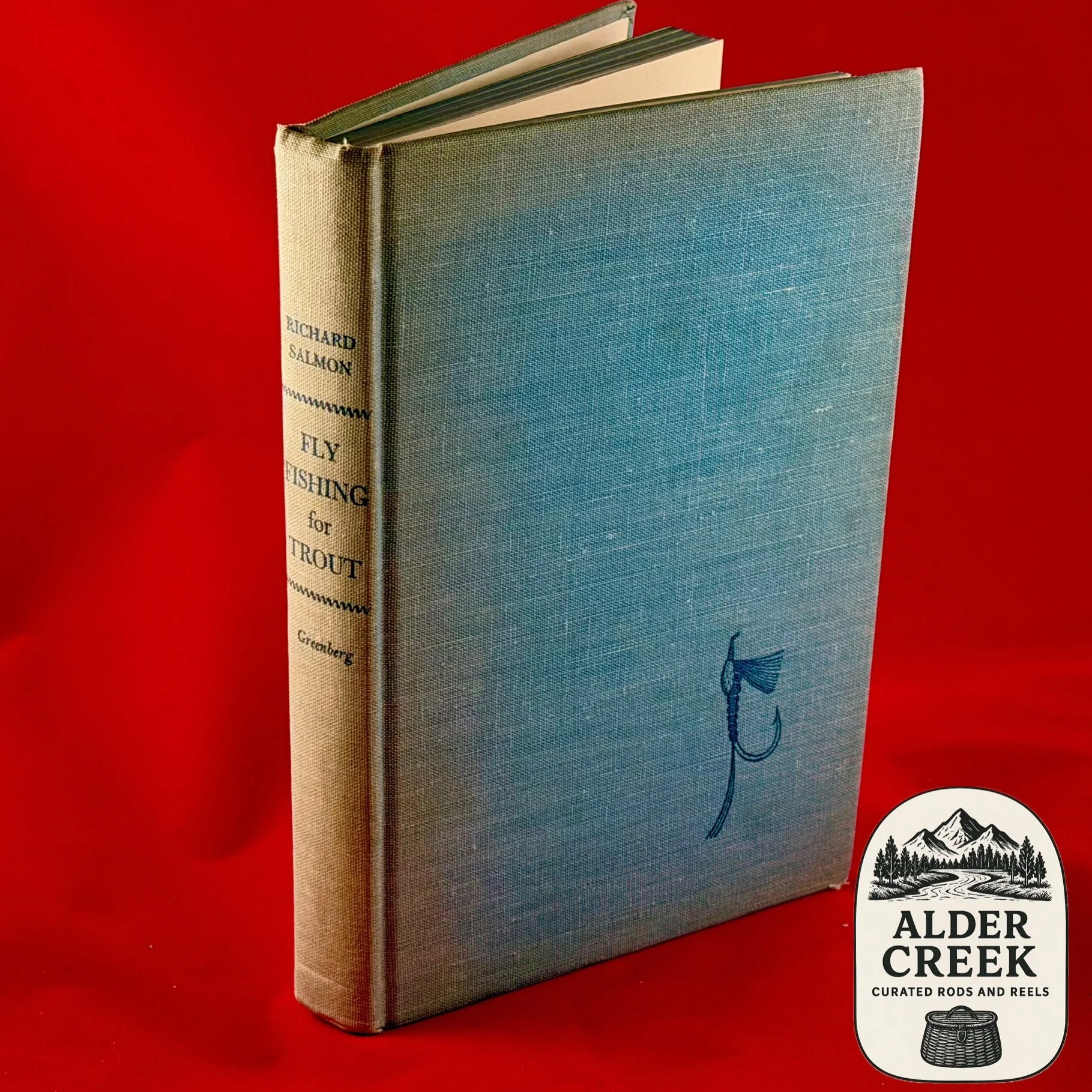
An engaging American fly-fishing manual from the early post-war period, Richard Salmon's Fly Fishing for Trout offers a broad introduction to the methods, equipment and traditions of trout fishing with the artificial fly.
Published in 1952, the book reflects an era when traditional fly-fishing techniques remained closely associated with the craftsmanship of split-bamboo rods, classic reels and hand-dressed flies.
Salmon approaches the subject from a practical perspective, with chapters covering trout, tackle selection, casting, fly tying and entomology. Streamside suggestions and a selection of recipes add a personal and distinctly period character to the work.
Beyond its instructional value, the book offers an appealing glimpse into mid-twentieth-century American trout fishing and the equipment and methods familiar to anglers of the time.
This copy is the first edition, published by Greenberg, New York, in 1952. The hardcover volume comprises 240 pages.
The book is in good vintage condition, with slight fading to the spine and some staining to the rear cover. The original dust jacket is not present.
A charming addition to a collection of American angling literature, particularly for those with an appreciation of the bamboo rod era.
Explore further works on American trout fishing, fly tying and the traditions of the bamboo rod era in our collection of classic angling literature , alongside our selection of vintage bamboo fly rods and reels .
Specifications
Author
Richard Salmon
Title
Fly Fishing for Trout
Publisher
Greenberg, New York
Year
1952
Edition
First Edition
Series
Rod & Gun Room Library
Pages
240
Binding
Hardcover
Dust Jacket
Not present
Condition
Good; slightly faded spine and staining to rear cover
Subject
Trout fishing, fly tying, casting and entomology
Enquiries
Questions about this book, its condition, international shipping, or price are always welcome.
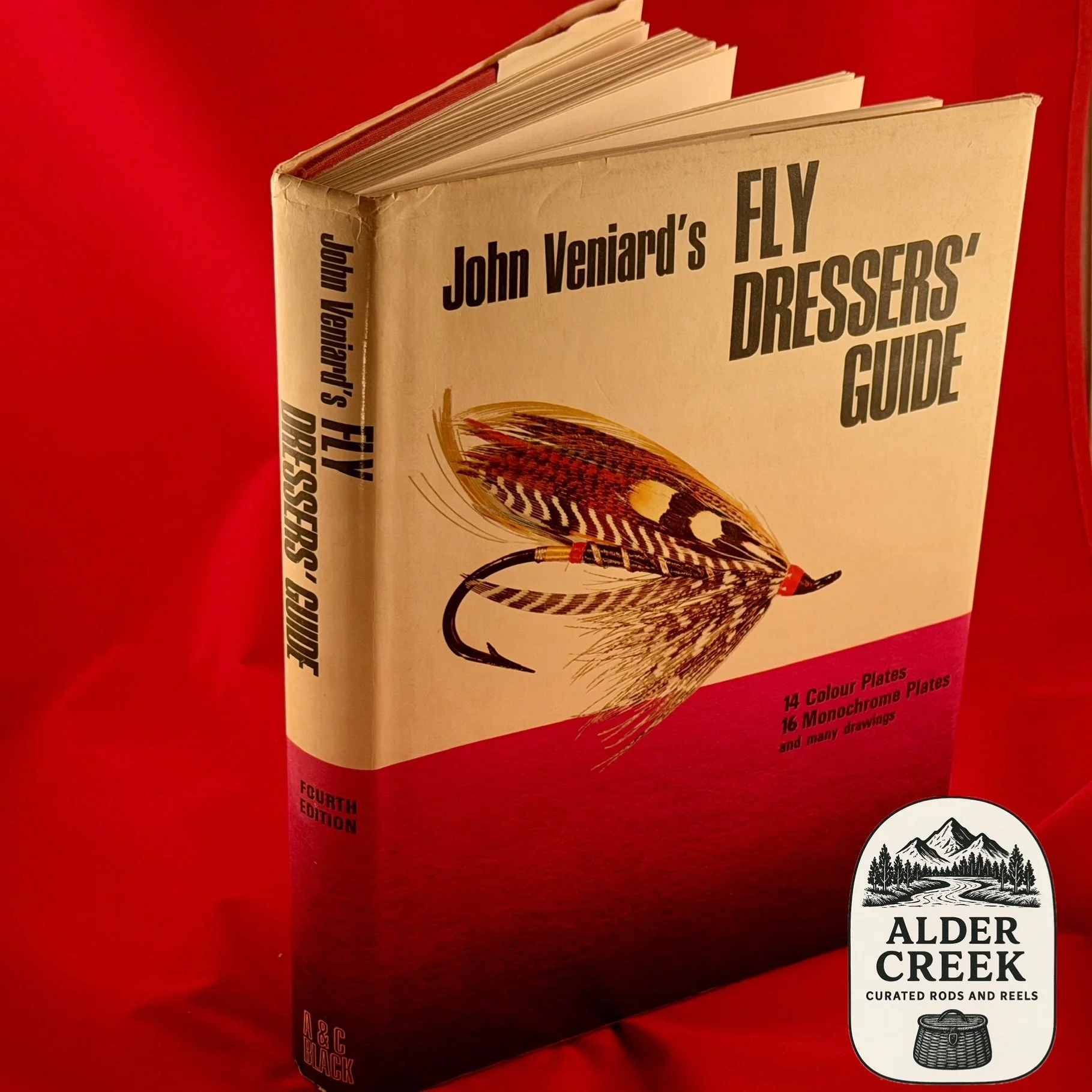
One of the great reference works of traditional British fly dressing, John Veniard's Fly Dressers' Guide has long been valued for its remarkable breadth of patterns, materials and practical instruction.
Drawing upon decades of experience as a fly dresser and supplier of specialist materials, Veniard assembled a comprehensive guide to the art of tying flies for a wide variety of freshwater and saltwater species.
The book covers traditional trout and salmon flies, dry and wet patterns, streamers, hair-wing flies, Spey and Dee patterns, as well as flies for grayling, pike, perch and coarse fish. Detailed discussions of hooks, silks, tinsels, feathers, dyeing and other materials are accompanied by colour plates, photographs and line illustrations.
Of particular interest to the collector is the book's extensive documentation of traditional salmon fly patterns and the materials used to dress them.
This copy is the fourth edition of 1970, reprinted in 1977. It comprises 256 pages and is bound in red cloth with gilt spine lettering.
Condition: Good, with the original dust jacket showing some rubbing and wear.
A practical and historically interesting reference, equally appealing to the experienced fly dresser and the collector of classic angling literature.
Explore further classics of traditional fly dressing, including George M. Kelson's The Salmon Fly and H.G. McClelland's The Trout Fly Dresser's Cabinet of Devices, in our collection of vintage angling literature .
Specifications
Author
John Veniard
Title
Fly Dressers' Guide
Edition
Fourth Edition (1970)
Printing
1977 Reprint
Pages
256
Binding
Red cloth, gilt spine lettering
Illustrations
Colour plates, black-and-white photographs and line drawings
Dust Jacket
Original, slightly rubbed
Condition
Good
Subject
Traditional fly tying, salmon and trout flies
Enquiries
Questions about this book, international shipping, or price are always welcome.
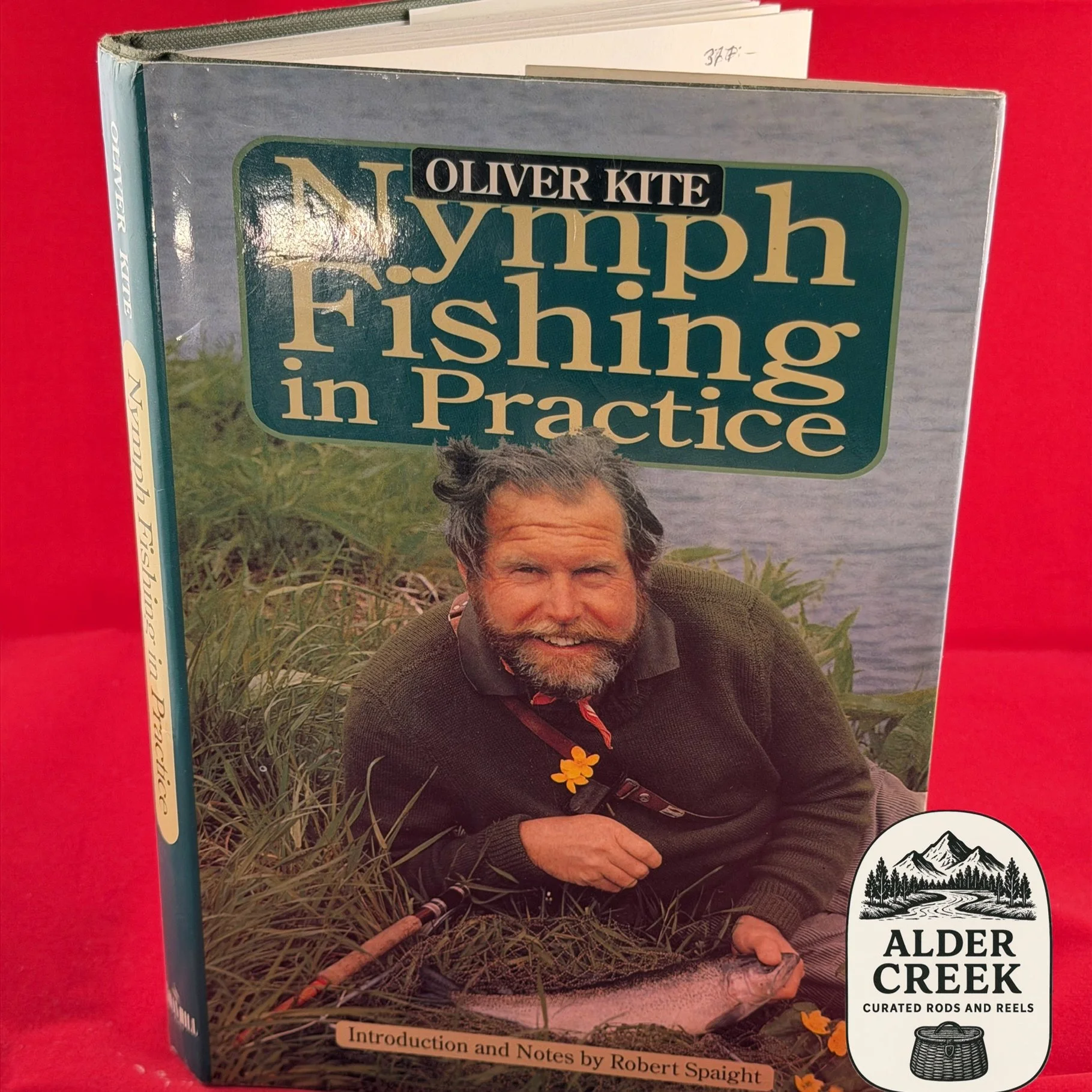
Oliver Kite's Nymph Fishing in Practice is one of the enduring works of twentieth-century British fly-fishing literature. First published in 1963, it offers a thoughtful and practical approach to fishing the artificial nymph, drawing upon Kite's close observation of trout, aquatic insects, and the behaviour of flies beneath the surface.
Kite was an influential angler, author and broadcaster whose methods helped establish nymph fishing as an essential part of the modern fly fisher's repertoire. His approach emphasised careful observation, accurate imitation and sensitive presentation rather than unnecessary complication.
This later edition reproduces the original 1963 text and introduces Kite's work to a new generation of readers. It includes colour photographs of his flies, a classification of natural nymphs and guidance on the essential characteristics of effective artificial imitations.
A valuable addition to the library of any thoughtful trout angler, and an engaging companion to the works of G.E.M. Skues and other pioneers of subsurface fly fishing.
Discover further works on trout fishing, fly presentation and the development of modern fly-fishing techniques in our collection of classic angling literature .
Specifications
Author
Oliver Kite
Title
Nymph Fishing in Practice
Edition
Later edition reproducing the original text
First Published
1963
Illustrations
Colour photographs of Kite's flies
Contents
Nymph classification, fly design and fishing techniques
Subject
Nymph fishing and trout fly fishing
Enquiries
Questions about this book, its condition, international shipping, or price are always welcome.
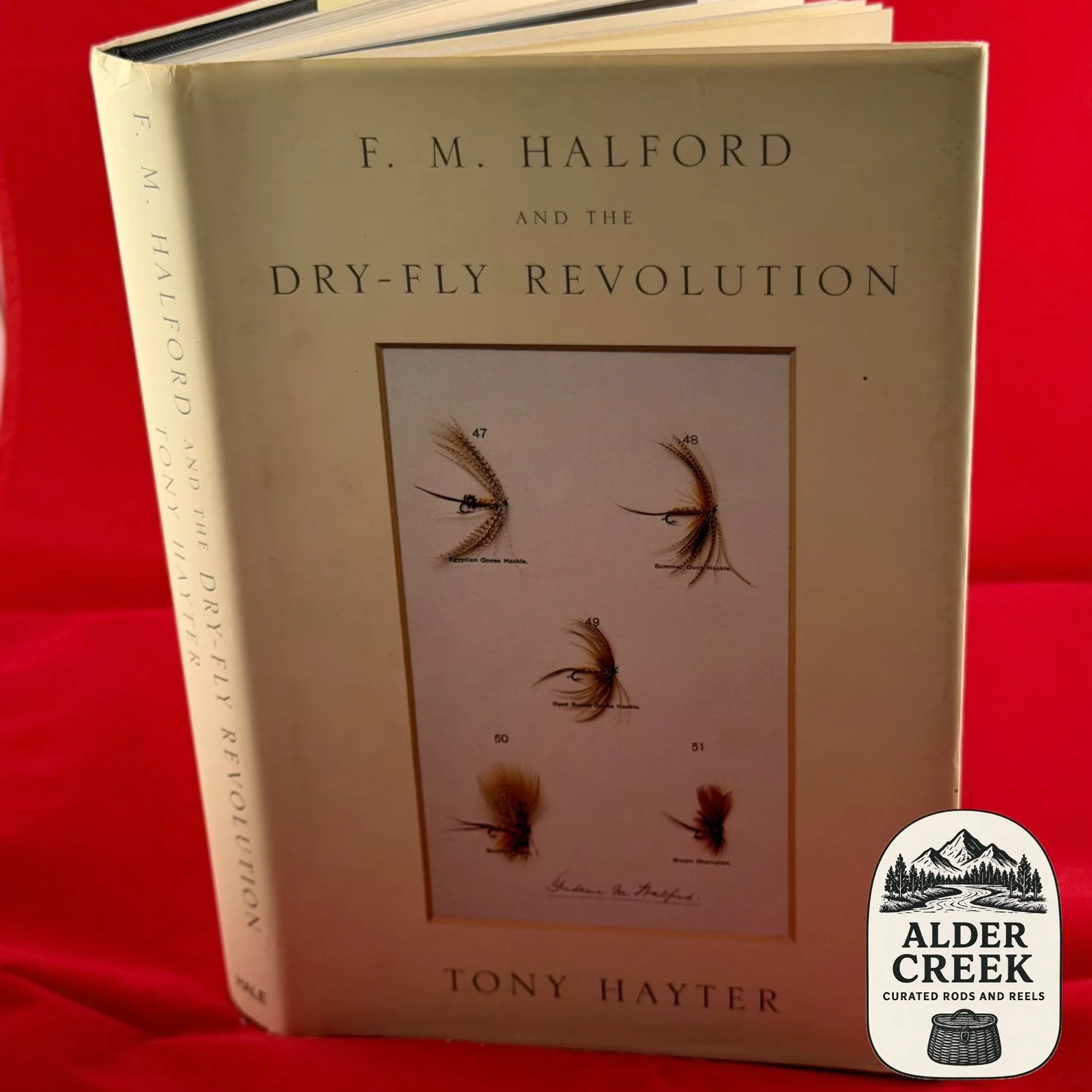
An important biography of Frederic Michael Halford (1844–1914), the influential British angler whose writings and methods helped establish the principles of modern dry-fly fishing.
In F.M. Halford and the Dry-Fly Revolution, Tony Hayter explores the life, achievements and lasting influence of a man whose name became synonymous with the chalk streams of southern England and the pursuit of trout with the floating fly.
Halford was not merely an accomplished angler. Through his meticulous observations of aquatic insects, his systematic approach to artificial fly design and his influential publications, he helped transform dry-fly fishing into a carefully considered discipline.
Hayter places these achievements within their historical and social setting, examining the development of the dry-fly tradition and the debates that followed, particularly those involving G.E.M. Skues and the emergence of modern nymph fishing.
First published by Robert Hale in 2002, this carefully researched biography offers a fascinating account of one of the defining periods in the history of fly fishing.
A valuable addition to any collection of British angling literature, and an especially rewarding companion to the classic works of Halford, Skues and their contemporaries.
Explore the origins of scientific observation in fly fishing through Alfred Ronalds' The Fly-Fisher's Entomology (1913 De Luxe Edition) , or discover more titles in our collection of classic angling literature .
Specifications
Author
Tony Hayter
Title
F.M. Halford and the Dry-Fly Revolution
Original Publisher
Robert Hale, London
First Published
2002
ISBN
9780709067733
Subject
Fly-fishing history, biography, dry-fly fishing
Principal Subject
Frederic M. Halford (1844–1914)
Enquiries
Questions about this book, its condition, international shipping, or price are always welcome.
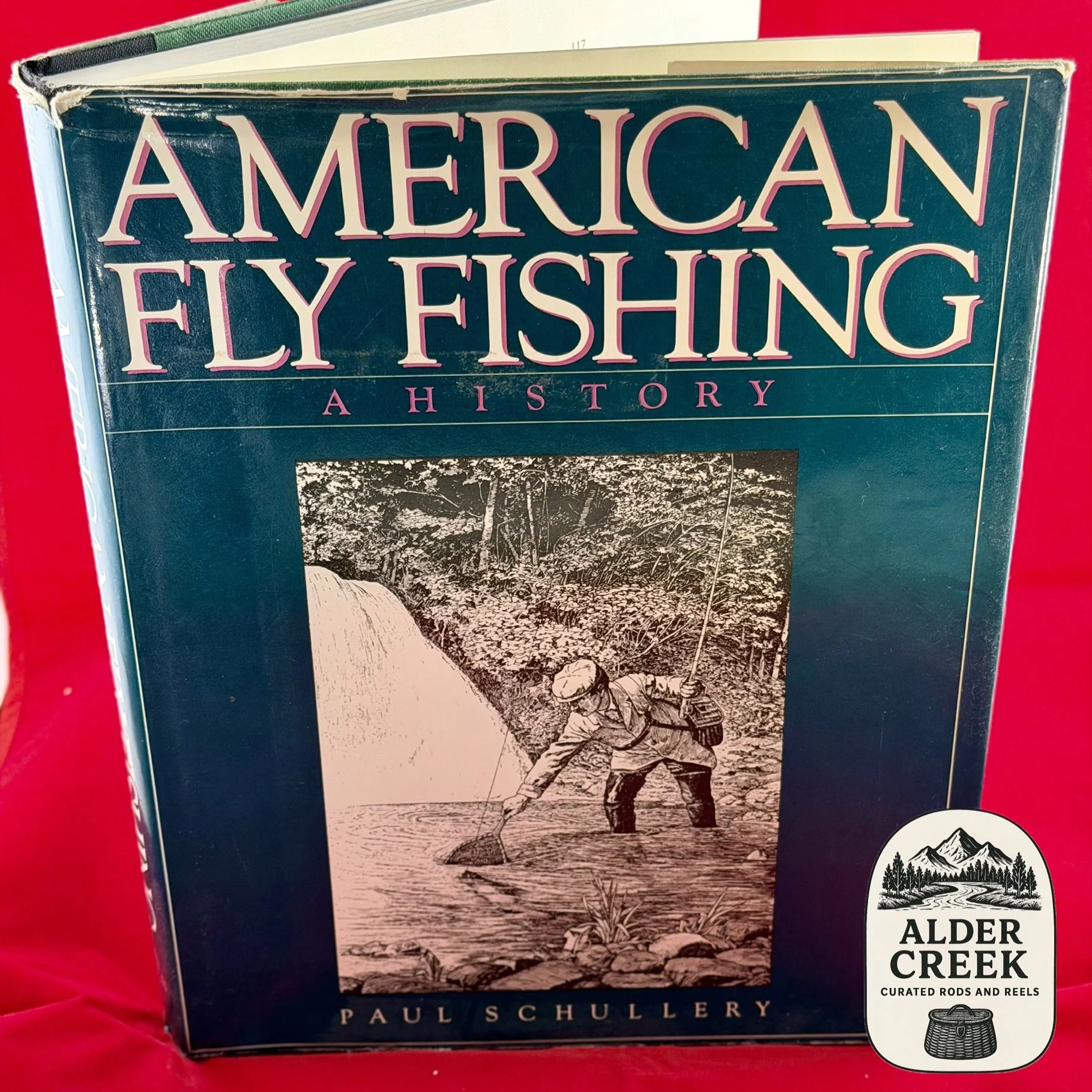
An important and thoroughly researched account of the development of fly fishing in America, written by Paul Schullery, historian, angling author and former executive director of the American Museum of Fly Fishing.
First published in 1987, American Fly Fishing: A History traces the evolution of the sport from its colonial beginnings through the nineteenth and twentieth centuries. Rather than concentrating solely on the established traditions of the eastern states, Schullery examines how American fly fishing developed across an increasingly diverse landscape of rivers, lakes and fisheries.
The book explores the craftsmen, writers and anglers whose contributions shaped American fly fishing, including Thaddeus Norris, Theodore Gordon, Preston Jennings and Vincent C. Marinaro. It also considers the development of fishing tackle, the emergence of new techniques and the relationship between regional fishing traditions and the waters in which they evolved.
Of particular interest to collectors of classic bamboo fly rods and reels is the book's broader historical perspective on American tackle design and craftsmanship.
Schullery's work remains a valuable reference for anyone interested in the heritage of American fly fishing and the people who helped define it.
A thoughtful and substantial addition to a collection of classic angling literature, equally rewarding for the historian, collector and practising fly fisher.
Explore the American fly-fishing tradition through our collection of classic bamboo fly rods and reels , or discover further works on the history and development of fly fishing in our collection of vintage angling literature .
Specifications
Author
Paul Schullery
Title
American Fly Fishing: A History
First Published
1987
Subject
American fly-fishing history
Contents
Historical development of fly fishing, tackle, techniques, literature and notable anglers
Language
English
Enquiries
Questions about this book, its condition, international shipping, or price are always welcome.
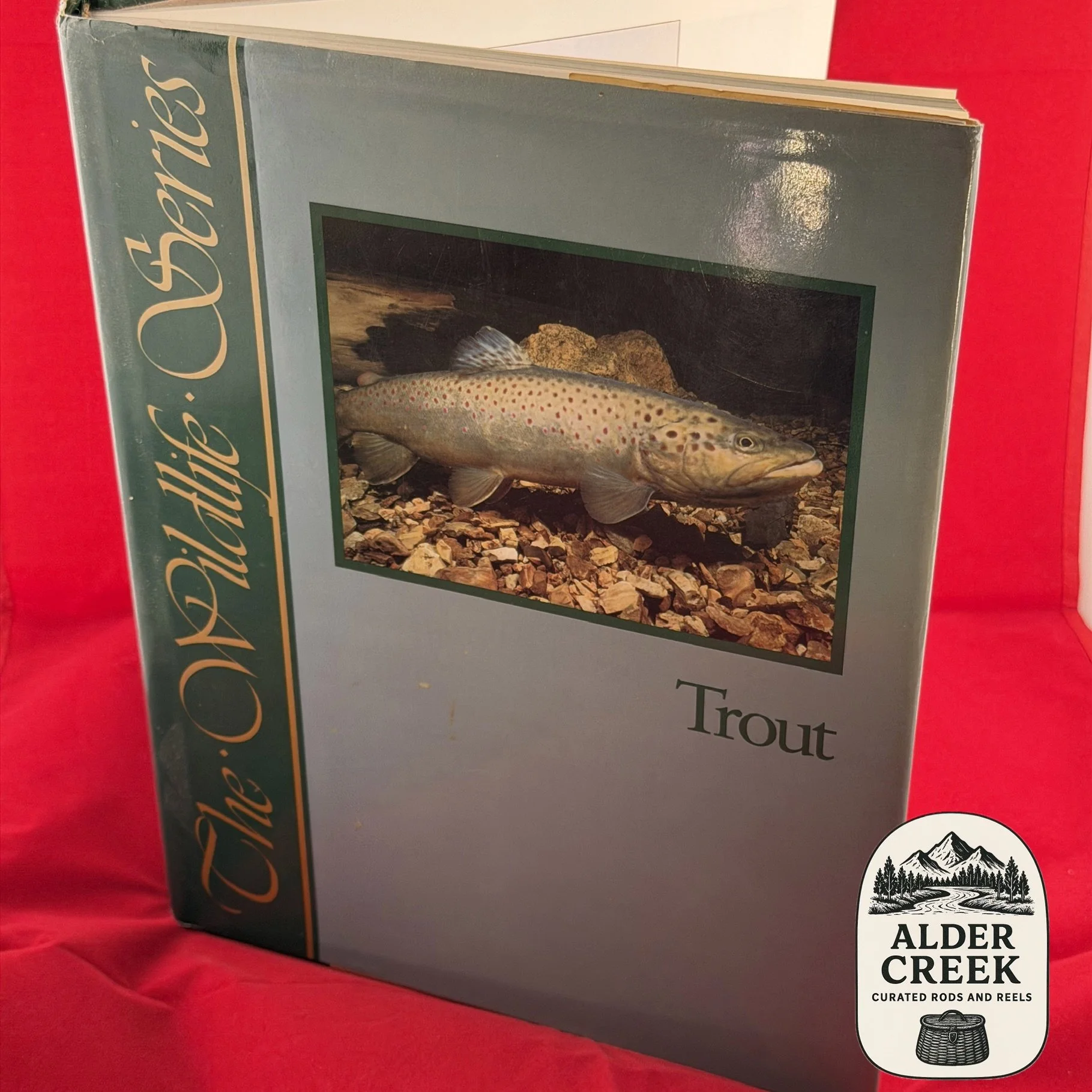
A substantial and authoritative study of North American trout, bringing together the knowledge of fisheries biologists, researchers and conservationists in a beautifully illustrated reference volume.
Unlike traditional angling literature, Trout approaches its subject from the perspective of natural history and fisheries science. The book explores the origins, anatomy, physiology and behaviour of trout, together with the environmental conditions that govern their survival and distribution.
Particularly valuable is its extensive treatment of the thirteen trout and char forms covered in the volume, including their distinguishing characteristics, habitats and life histories. Detailed descriptions, illustrations, charts and measurements provide a useful reference for the naturalist as well as the dedicated angler.
The book also considers feeding behaviour, reproduction, migration, habitat conservation and the challenges facing wild trout populations. Colour photographs, maps and tables complement the text, while an extensive bibliography provides a foundation for further study.
Published by Stackpole Books in 1991, this is a first-edition reference work of considerable interest to anyone wishing to understand the fish beyond the act of catching it.
This copy is in excellent condition.
An unusually comprehensive volume, equally at home in the library of a naturalist, fisheries biologist or thoughtful fly fisher.
Explore further works on trout behaviour, aquatic entomology and the natural history of fly fishing in our collection of classic angling literature , including studies by Vincent C. Marinaro, Brian Clarke and John Goddard.
Specifications
Editors
Judith Stolz & Judith Schnell
Title
Trout – The Wildlife Series
Publisher
Stackpole Books, Harrisburg, Pennsylvania
Year
1991
Edition
First Edition
Pages
xiv + 370 pages
Format
Large quarto, approx. 221 × 286 mm
Illustrations
Colour photographs, plates, maps, charts and tables
Binding
Hardcover
ISBN
9780811716529
Condition
Excellent
Subject
Trout biology, ecology and conservation
Enquiries
Questions about this book, its condition, international shipping, or price are always welcome.
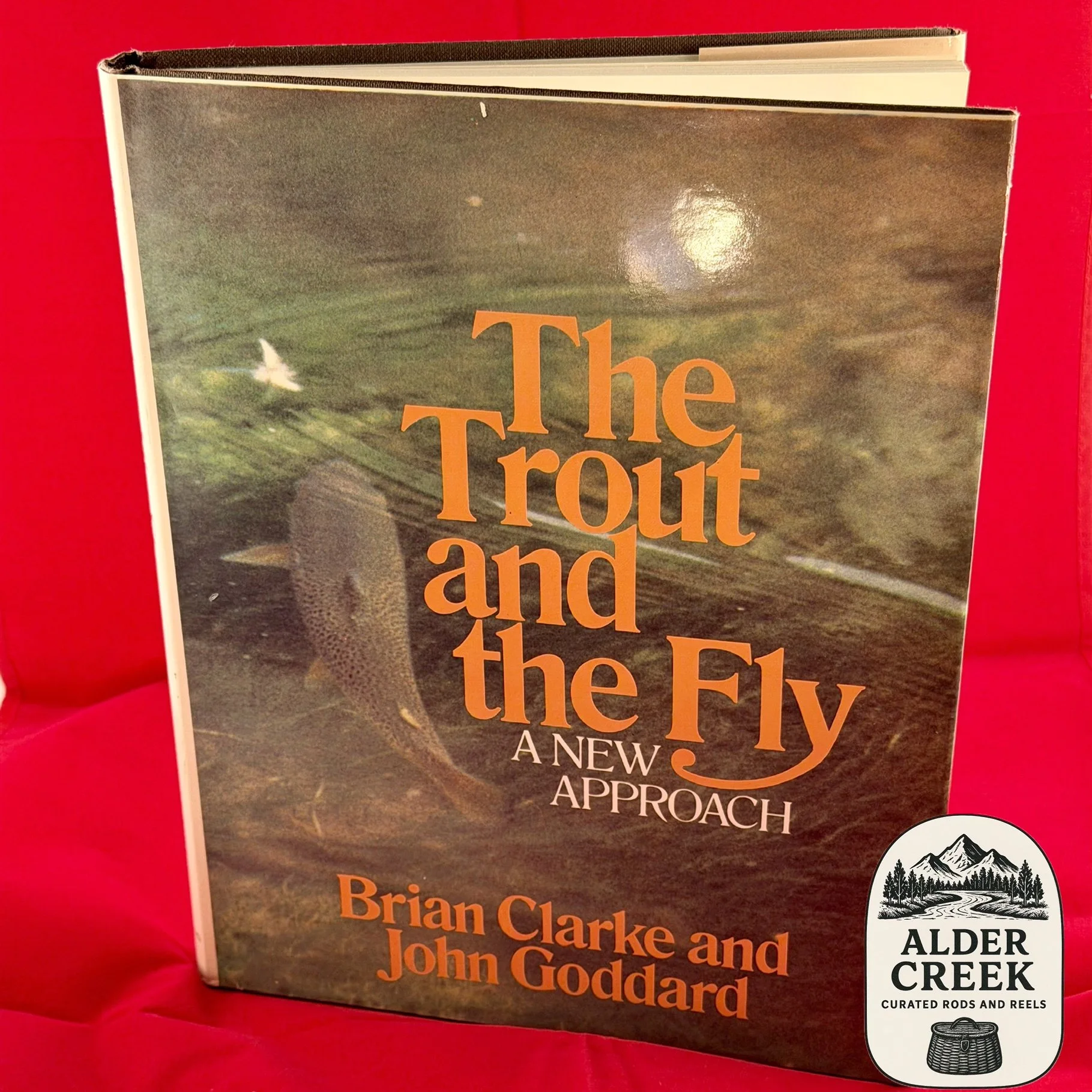
The Trout and the Fly — Brian Clarke & John Goddard
First Edition, 1980
One of the most influential works of modern trout fishing literature, The Trout and the Fly represents a significant departure from traditional approaches to artificial fly design and presentation.
Brian Clarke and John Goddard brought together careful observation, underwater photography and practical fishing experience to explore a fundamental question: how does a trout actually perceive the world above and beneath the surface?
Their findings challenged many established assumptions about the appearance of artificial flies, the behaviour of natural insects and the importance of presentation. The book examines trout vision, rise forms, feeding behaviour, the effects of light and the characteristics that distinguish a convincing artificial fly from an unconvincing one.
Particularly notable are the authors' observations of the trout's underwater perspective, offering insights that remain relevant to both dry-fly and nymph fishing.
This copy is the first edition, published in 1980. It comprises 192 pages, illustrated with colour and black-and-white photographs and line drawings. Bound in red boards with gilt spine lettering, it is in very good condition, apart from an inscription on the endpaper, and retains its dust jacket.
A landmark in modern fly-fishing literature and a valuable addition to the library of any thoughtful trout angler.
For further reading on trout behaviour, selective feeding and the development of modern fly-fishing techniques, explore our collection of classic and vintage angling literature , including works by Vincent C. Marinaro and Oliver Kite.
Specifications
Authors
Brian Clarke & John Goddard
Title
The Trout and the Fly
Year
1980
Edition
First Edition
Format
Quarto, approximately 211 × 276 mm
Pages
192
Illustrations
Colour and black-and-white photographs; line drawings
Binding
Red boards with gilt spine lettering
Dust Jacket
Present
Condition
Very good; inscription on endpaper
Subject
Trout behaviour, fly design and presentation
Enquiries
Questions about this book, its condition, international shipping, or price are always welcome.
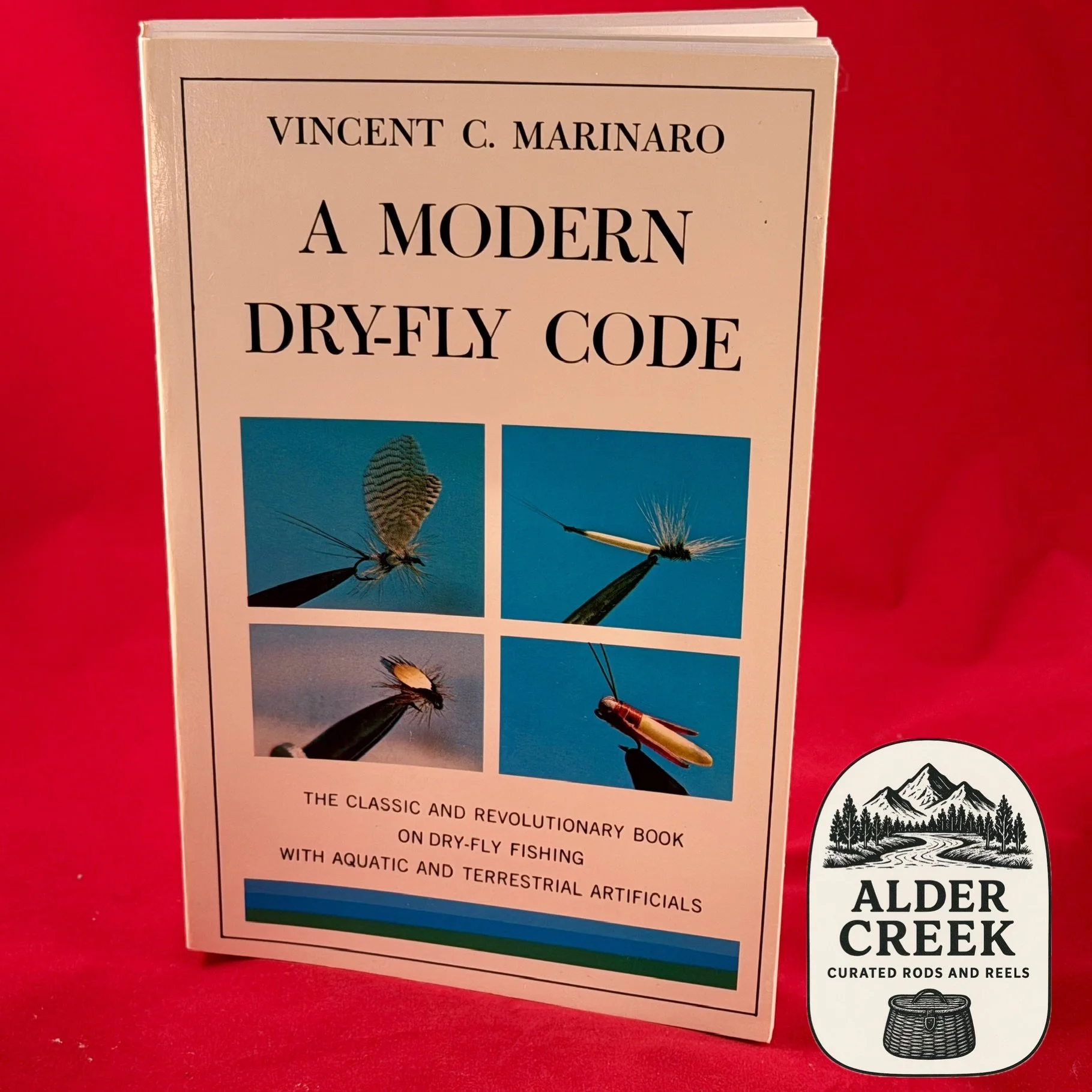
Few books have had a more lasting influence on American dry-fly fishing than Vincent C. Marinaro's A Modern Dry-Fly Code.
First published in 1950, this remarkable work challenged many established ideas about trout, artificial flies and their presentation. Drawing upon his observations of the limestone streams of Pennsylvania, Marinaro developed a thoughtful and systematic approach to the behaviour of selective trout and the insects upon which they feed.
His observations of the trout's feeding position, the appearance of natural insects upon the water and the importance of accurate presentation helped shape the development of modern dry-fly fishing.
Rather than offering merely a collection of patterns and techniques, Marinaro encouraged anglers to observe more closely, question accepted conventions and approach the river with a naturalist's curiosity.
This is the Nick Lyons paperback edition of Marinaro's classic, offering an accessible opportunity to study one of the defining texts of twentieth-century American fly fishing.
Condition: Like new and unread.
An essential addition to the working library of the thoughtful trout angler, and a particularly fitting companion to the writings of Frederic M. Halford, G.E.M. Skues and Charles Ritz.
For collectors seeking a more distinguished presentation, Alder Creek also offers a limited leather-bound edition of A Modern Dry-Fly Code (1996) , published by the Flyfisher's Classic Library in an edition of 500 copies.
Specifications
Author
Vincent C. Marinaro
Title
A Modern Dry-Fly Code
Edition
Nick Lyons paperback edition
Original Publication
1950
Binding
Paperback
Condition
Like new, unread
Subject
Dry-fly fishing, selective trout and aquatic entomology
Enquiries
Questions about this book, international shipping, or price are always welcome.
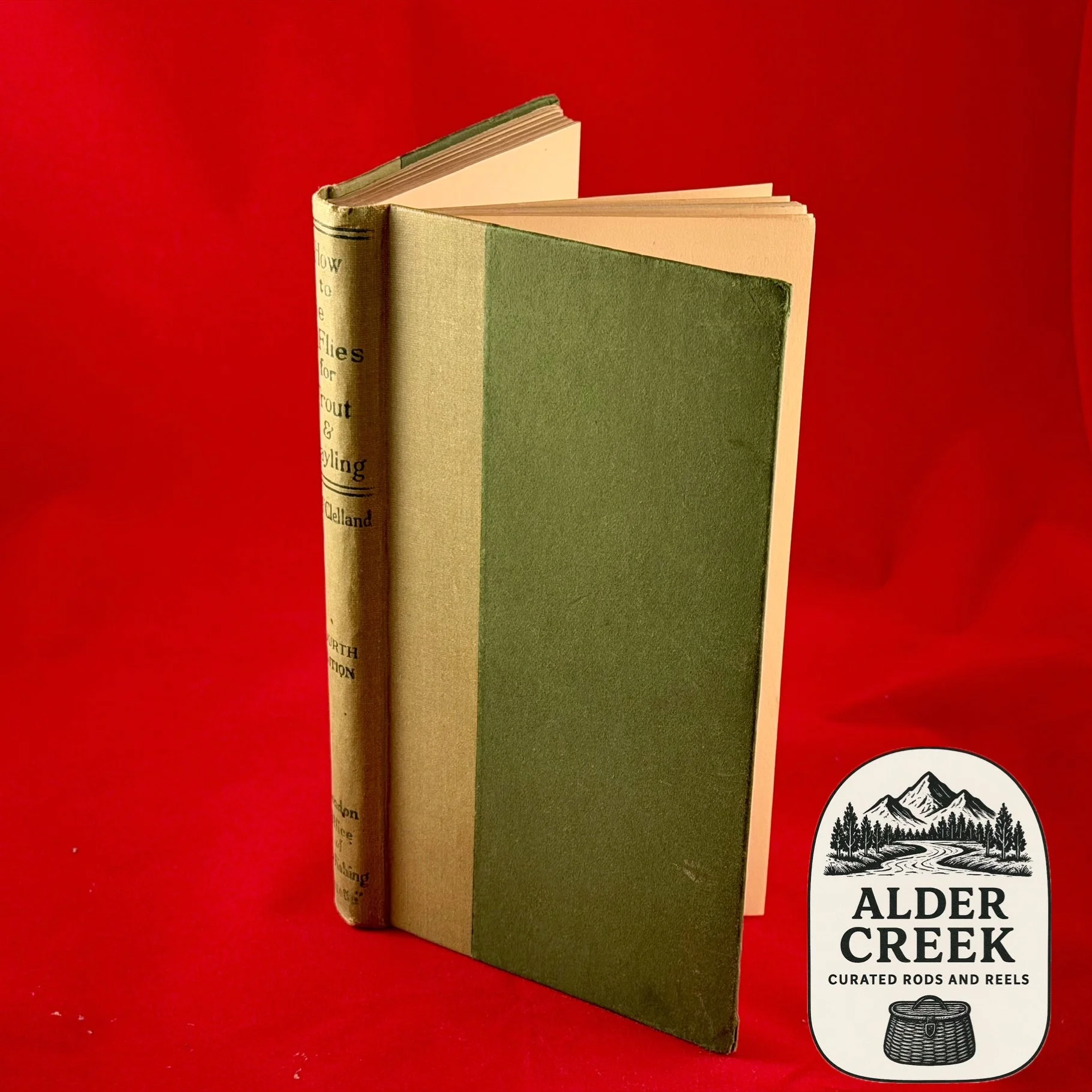
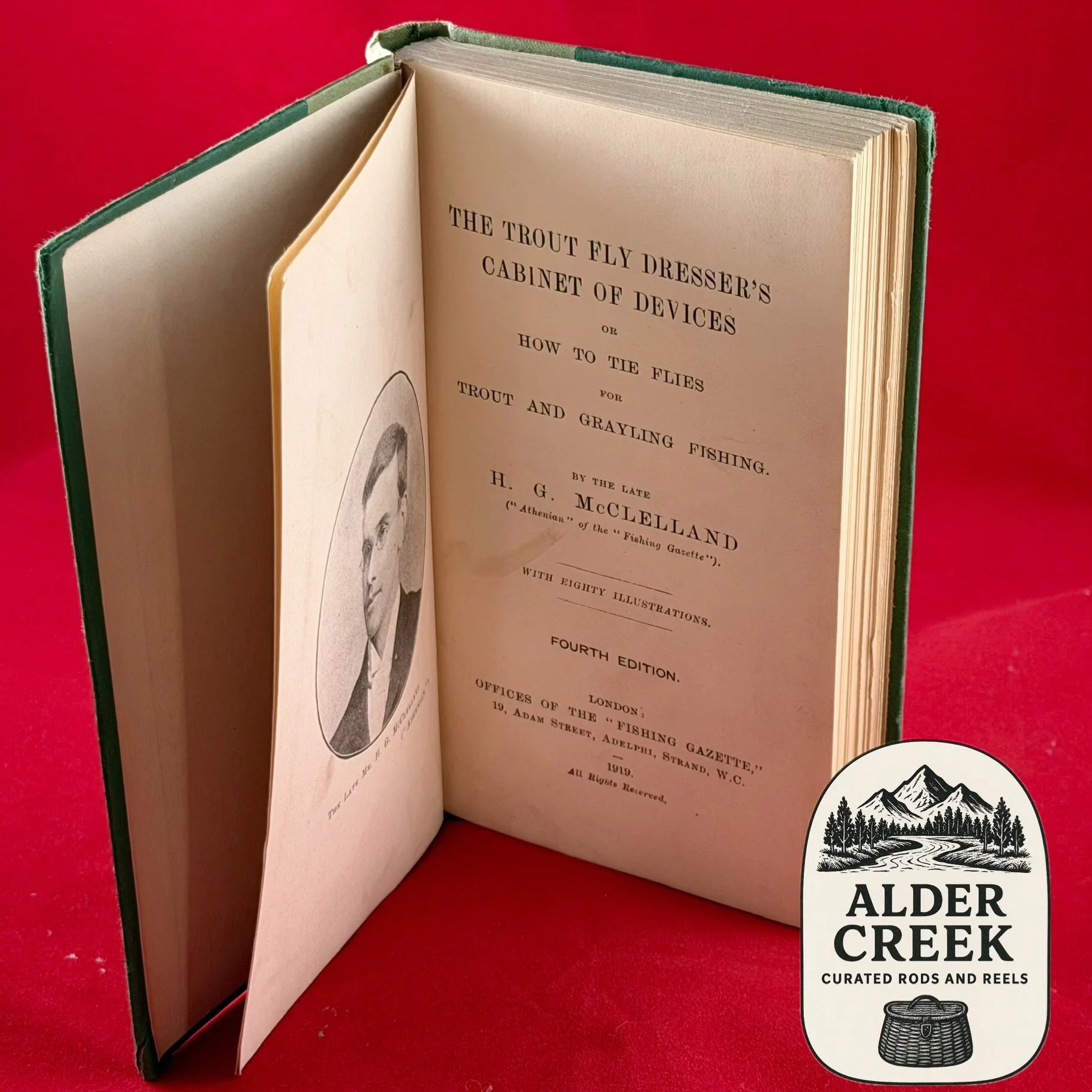
A charming and practical work from the golden age of British fly dressing, H.G. McClelland's The Trout Fly Dresser's Cabinet of Devices; or, How to Tie Flies for Trout and Grayling Fishing offers an engaging insight into the tools, techniques and traditions of early twentieth-century fly tying.
Written for the practical angler, the book explores the craft of dressing artificial flies for trout and grayling. Its numerous illustrations make it particularly appealing to those interested in traditional patterns and the development of fly-dressing methods.
This is the fourth edition, published in London by the Offices of the Fishing Gazette in 1919. The volume contains approximately 137 pages, 80 illustrations and a frontispiece portrait of the author.
This copy retains its original-style binding of light green cloth backing and mid-green paper-covered boards. The condition is good, with some staining to the rear cover and fading to the spine, consistent with its age.
An attractive and affordable addition to a collection of early British angling literature, particularly for the fly dresser with an appreciation of traditional methods and craftsmanship.
For further insight into the history of artificial flies, explore Alfred Ronalds' The Fly-Fisher's Entomology, De Luxe Edition (1913) , or browse our collection of classic angling literature .
Specifications
Author
H.G. McClelland
Title
The Trout Fly Dresser's Cabinet of Devices
Subtitle
Or, How to Tie Flies for Trout and Grayling Fishing
Publisher
Offices of the Fishing Gazette, London
Year
1919
Edition
Fourth Edition
Format
Tall 16mo
Pagination
Approx. 137 pages + 2 pages of advertisements
Illustrations
80 illustrations and frontispiece portrait
Binding
Light green cloth-backed, mid-green paper-covered boards
Condition
Good; staining to rear cover and faded spine
Enquiries
Questions about this book, international shipping, or price are always welcome.
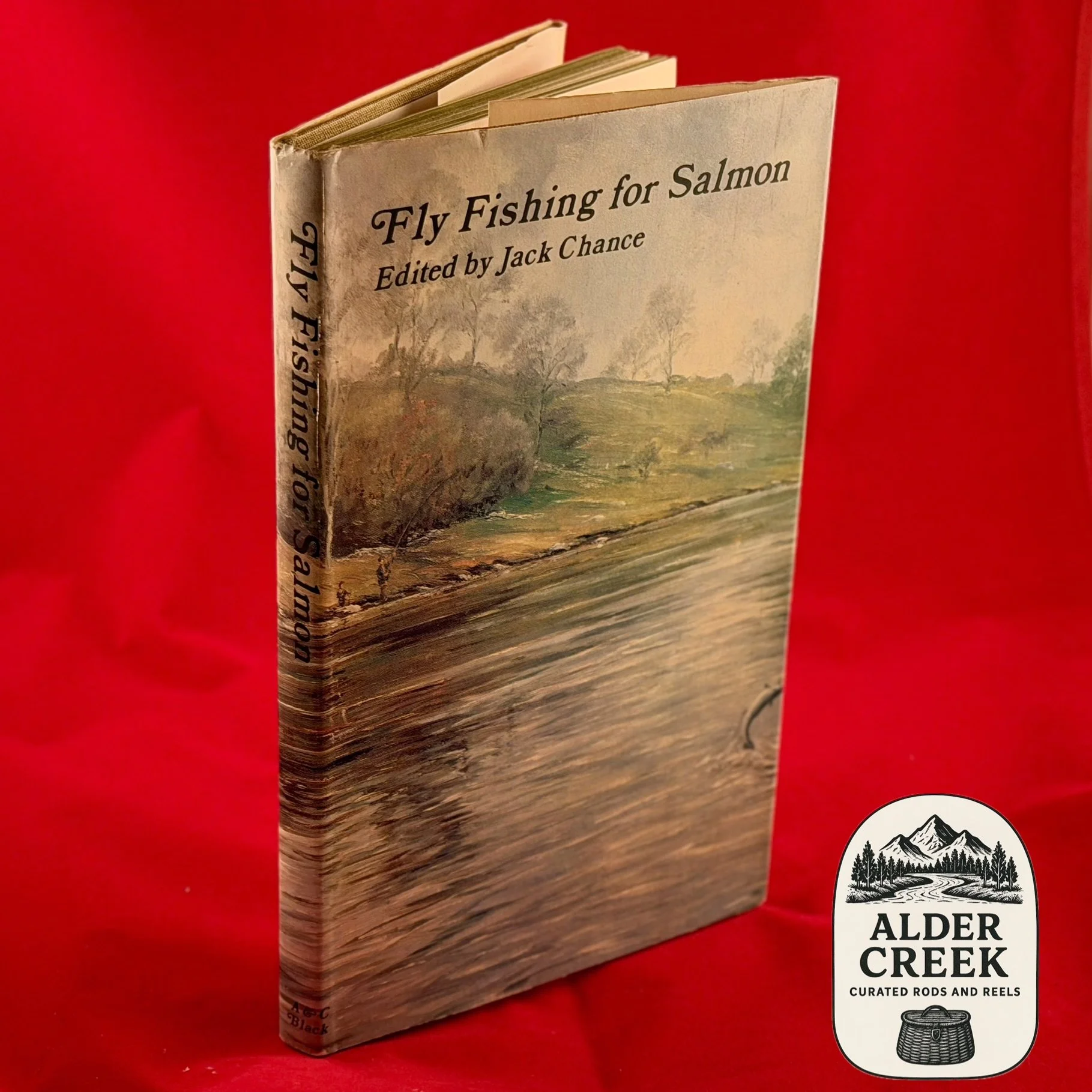
An unusual and quietly moving contribution to British salmon fishing literature, Fly Fishing for Salmon originated as a talk written by an anonymous angler during the final stages of a serious illness.
Shortly before his death, the author entrusted the manuscript to the wife of Jack Chance. Recognising its merit, Chance prepared the work for publication, preserving the original text with only minor alterations and adding occasional footnotes where he wished to clarify or offer a different perspective.
The resulting book is a concise and personal examination of Atlantic salmon fishing, covering the origins and habits of the salmon, suitable tackle, casting and practical methods of fishing.
Its particular charm lies in the circumstances of its creation and the direct, experienced voice of an angler reflecting upon a lifetime's knowledge of the sport.
Published by Adam & Charles Black, London, in 1973, this first edition contains xii + 84 pages, with a colour frontispiece by W.B. Barrington-Browne and black-and-white illustrations by Donald Downs.
This copy is bound in speckled green boards with gilt spine lettering. It is in good condition, showing some browning and signs of use, with slightly soiled endpapers. The original dust jacket is present.
A modest but appealing volume, particularly suited to collectors of British salmon fishing literature and those who appreciate the personal traditions of the sport.
Discover further accounts of British salmon fishing, including works by John Ashley-Cooper and John James Hardy, in our collection of classic angling literature .
Specifications
Editor
Jack Chance
Author
Anonymous
Title
Fly Fishing for Salmon
Publisher
Adam & Charles Black, London
Year
1973
Edition
First Edition
Pagination
xii + 84 pages
Format
Octavo, approximately 142 × 222 mm
Illustrations
Colour frontispiece by W.B. Barrington-Browne; black-and-white illustrations by Donald Downs
Binding
Speckled green boards, gilt spine lettering
Dust Jacket
Present
Condition
Good; some browning and signs of use, slightly soiled endpapers
ISBN
0713613742
Enquiries
Questions about this book, its condition, international shipping, or price are always welcome.
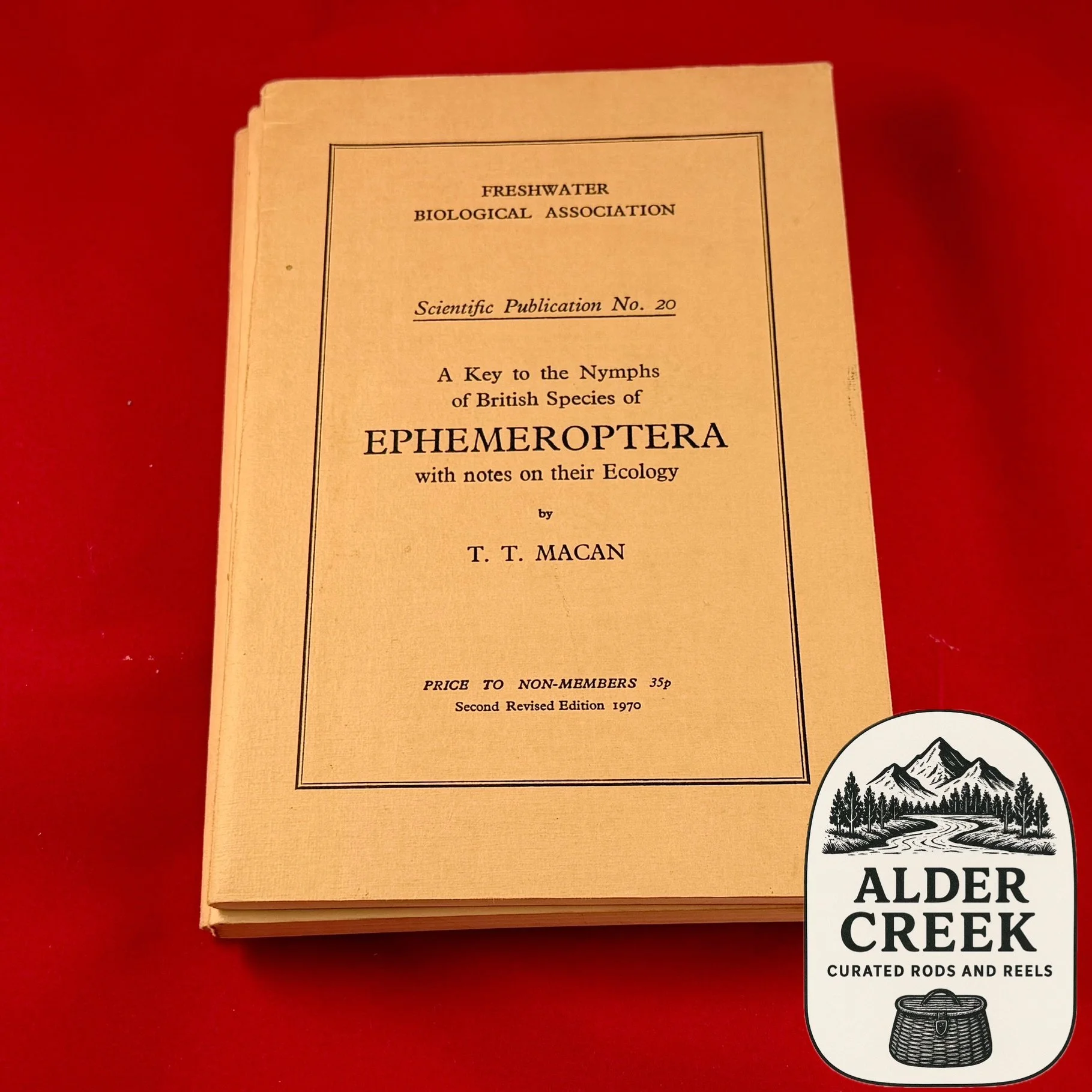
T. T. Macan — Freshwater Biological Association
A classic work of British freshwater entomology, devoted to the identification and ecology of mayfly nymphs.
Written by the distinguished freshwater biologist T. T. Macan, this specialist publication provides systematic identification keys to the nymphal stages of British mayflies, supported by detailed scientific illustrations and observations on their ecology.
Mayflies have occupied a central place in the history of fly fishing, from the earliest entomological observations of the nineteenth century to the development of increasingly accurate artificial fly patterns.
For the thoughtful trout fisherman, the study of aquatic insects offers a deeper understanding of the river and the life upon which trout depend. The ability to distinguish between different species and stages of development has particular relevance to traditional nymph fishing and the selection of suitable artificial patterns.
Published by the Freshwater Biological Association as Scientific Publication No. 20, Macan's work is both a practical identification guide and an interesting document of the development of modern freshwater biology.
A specialist addition to a collection of angling entomology, particularly appealing alongside the works of Alfred Ronalds, G. E. M. Skues and other writers concerned with the relationship between aquatic insects and trout fishing.Entomological key to nymphs of British mayflies.
Explore further works on aquatic entomology, including T. T. Macan's studies of British aquatic insects and Alfred Ronalds' The Fly-Fisher's Entomology, in our collection of classic angling literature .
Specifications
Author
T. T. Macan
Title
A Key to the Nymphs of the British Species of Ephemeroptera: With Notes on Their Ecology
Publisher
Freshwater Biological Association
Series
Scientific Publication No. 20
Original Publication
1961
Edition
To be confirmed
Illustrations
Scientific line drawings
Subject
Mayflies, Ephemeroptera, freshwater entomology and aquatic ecology
Enquiries
Questions about this publication, its condition, international shipping, or price are always welcome.
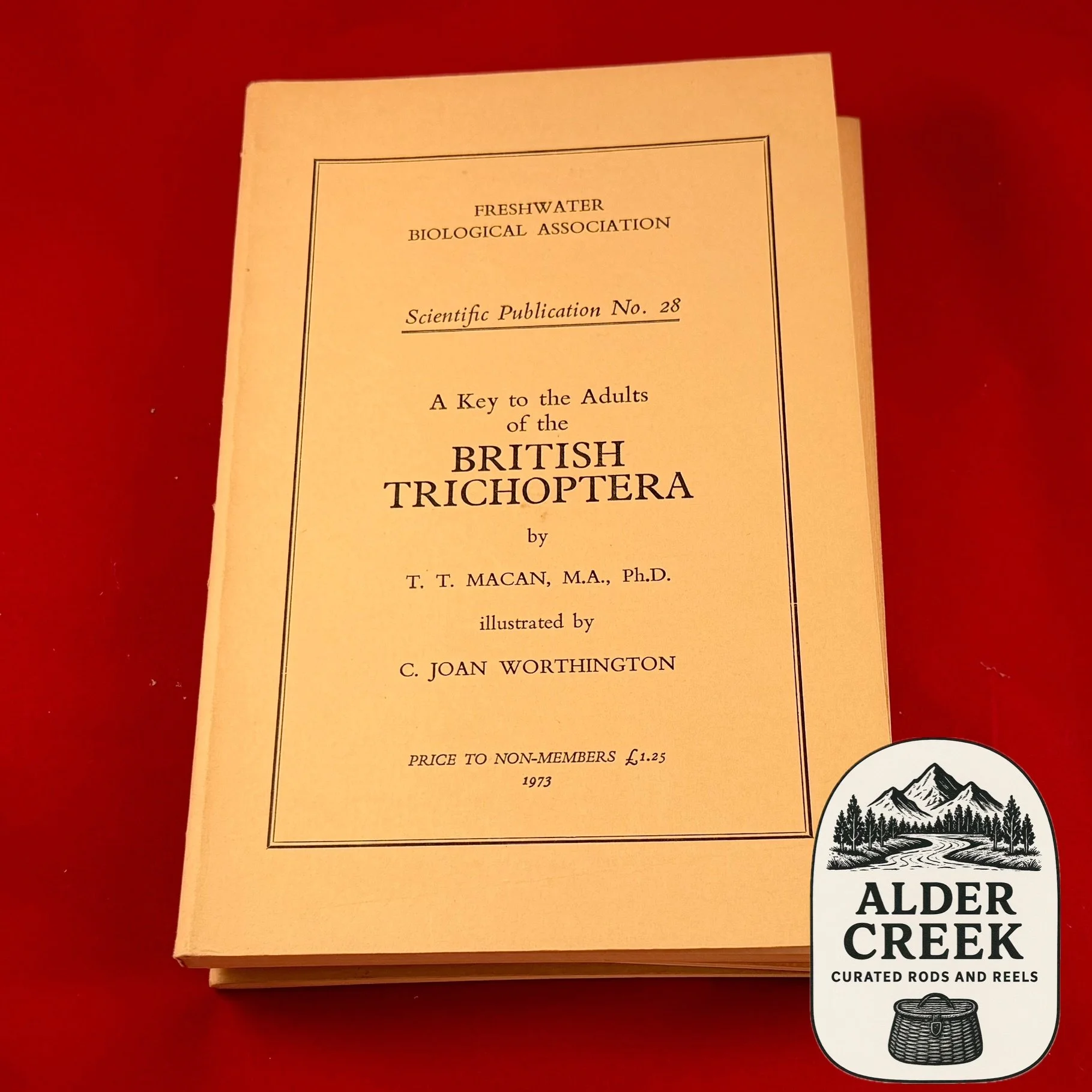
T. T. Macan — Illustrated by C. Joan Worthington
Freshwater Biological Association, 1973
A specialist work of British freshwater entomology, devoted to the identification of adult caddisflies — the insects of the order Trichoptera.
Published as No. 28 in the Scientific Publications series of the Freshwater Biological Association, T. T. Macan's guide provides detailed identification keys to the British species known at the time, supported by the precise scientific illustrations of C. Joan Worthington.
Although intended primarily for entomologists and students of freshwater biology, the book also holds considerable interest for the thoughtful fly fisherman. Caddisflies are among the most important aquatic insects encountered on trout streams, and an understanding of their forms and life cycles has long been central to the traditions of naturalistic fly dressing.
The work includes identification keys, detailed line drawings and plates illustrating the anatomical features used to distinguish different species.
An interesting addition to a collection of classic angling entomology, particularly alongside the writings of Alfred Ronalds and other pioneers of the scientific study of trout-stream insects.
For further reading on aquatic insects and their importance to fly fishing, explore Alfred Ronalds' The Fly-Fisher's Entomology and other works in our collection of classic angling literature .
Specifications
Author
T. T. Macan
Illustrator
C. Joan Worthington
Title
A Key to the Adults of the British Trichoptera
Publisher
Freshwater Biological Association
Year
1973 (original publication)
Series
Scientific Publication No. 28
Pages
151
Illustrations
Scientific line drawings and plates
ISBN
0900386193
Subject
Trichoptera, caddisflies, freshwater entomology
Enquiries
Questions about this publication, its condition, international shipping, or price are always welcome.
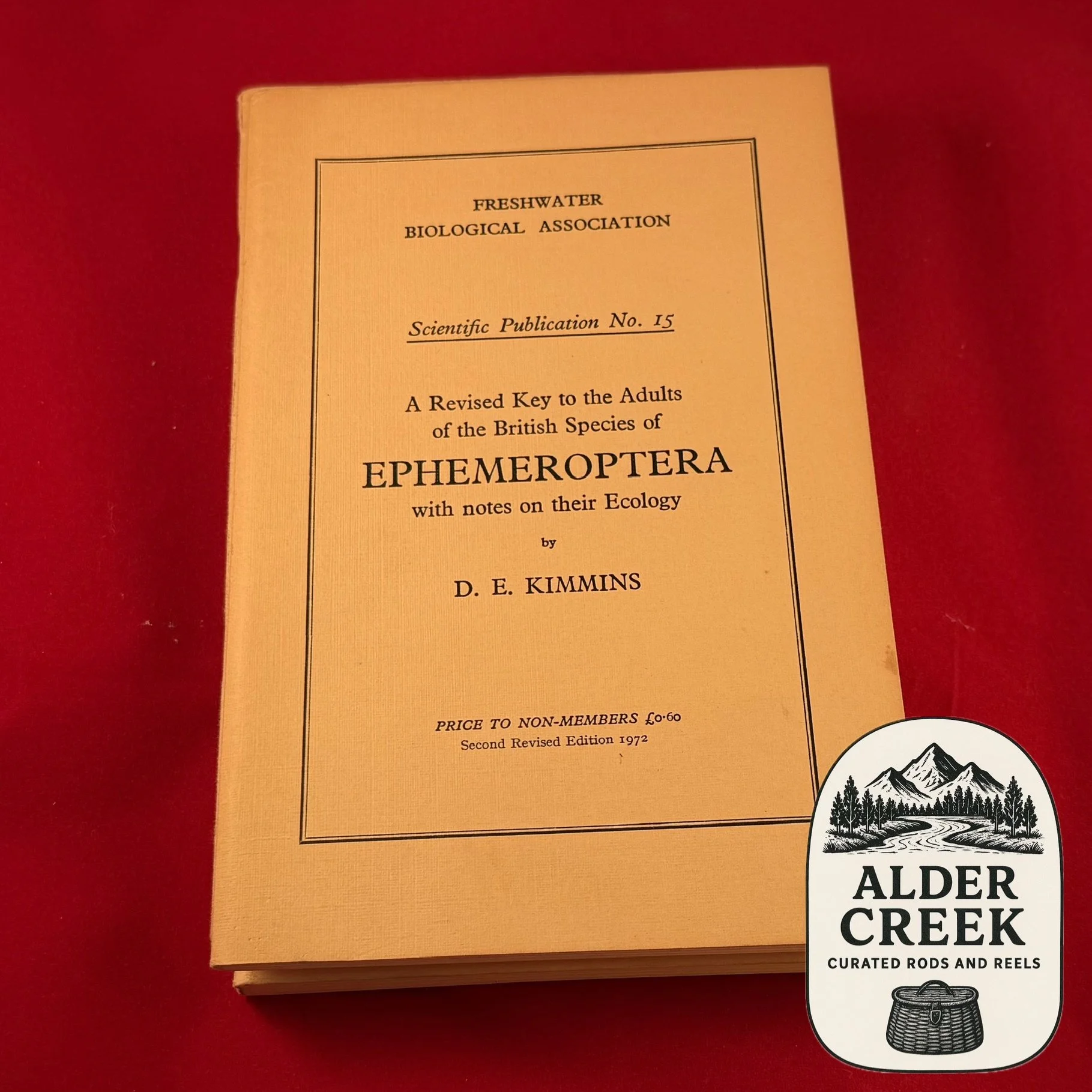
D. E. Kimmins — Second Revised Edition, 1972
A specialist work of British freshwater entomology, devoted to the identification of adult mayflies and their ecology.
Originally published in 1954 and revised in 1972, D. E. Kimmins' identification key forms part of the respected scientific publications of the Freshwater Biological Association.
The book provides systematic keys to the adult stages of British Ephemeroptera, accompanied by detailed scientific illustrations and ecological observations.
Mayflies have occupied a central place in the history of fly fishing. Their emergence, appearance and behaviour have inspired generations of fly dressers and trout anglers, from Alfred Ronalds to the great exponents of the British dry-fly tradition.
Although primarily intended for the naturalist and freshwater biologist, Kimmins' work offers the thoughtful fly fisherman a deeper understanding of the insects that have shaped so many traditional artificial fly patterns.
This copy is the second revised edition, published in 1972, as Scientific Publication No. 15 of the Freshwater Biological Association.
An interesting addition to a collection of classic angling entomology, particularly alongside the works of Alfred Ronalds and T. T. Macan.
Specifications
Author
D. E. Kimmins
Title
A Revised Key to the Adults of the British Species of Ephemeroptera: With Notes on Their Ecology
Publisher
Freshwater Biological Association, Ambleside
Year
1972
Edition
Second Revised Edition
Series
Scientific Publication No. 15
Pages
75
Illustrations
30 text figures
Binding
Paperback
Subject
Mayflies, Ephemeroptera, freshwater entomology
Enquiries
Questions about this publication, its condition, international shipping, or price are always welcome.
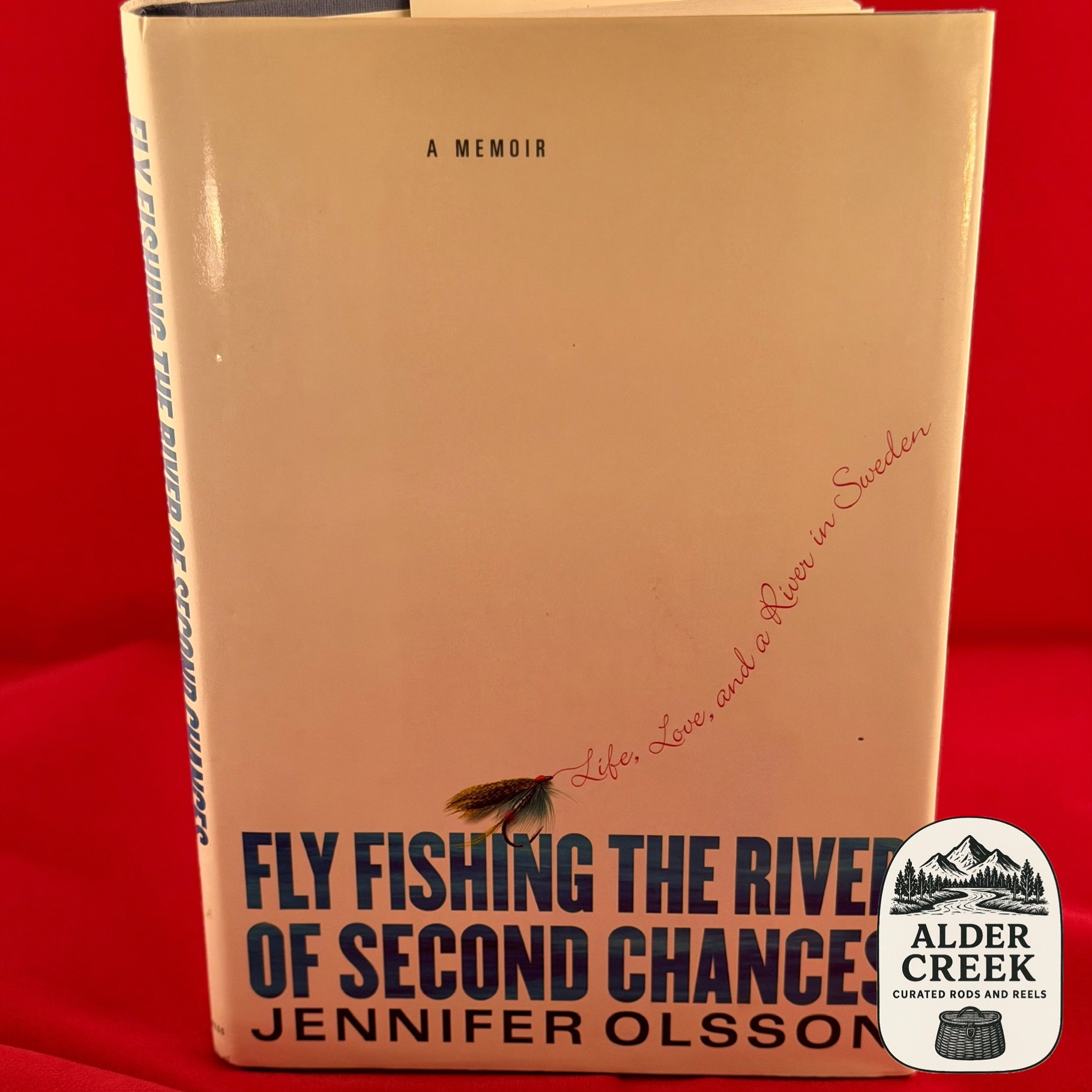
Life, Love, and a River in Sweden — Jennifer Olsson
An engaging and deeply personal memoir in which fly fishing, the rivers of Sweden and the unexpected turns of life become inseparable.
Jennifer Olsson was an experienced American fly-fishing guide living in Montana when an invitation arrived from Lars, a Swedish riverkeeper working to restore a river damaged by years of logging and neglect.
What began as a fishing journey became something far more consequential. Drawn to the beauty of the river, the surrounding countryside and the man who cared for it, Olsson found herself contemplating an entirely different life.
Leaving behind the familiar landscapes of the American West, she and her young son travelled to the small village of Gimdalen in Sweden, where the rhythms of rural Scandinavian life presented both challenges and unexpected pleasures.
With warmth and humour, Olsson recounts her experiences of Swedish customs, changing seasons, unfamiliar traditions and the sometimes bewildering business of finding one's place in a new country.
Throughout the narrative, the river remains a constant presence. Its grayling, currents and gradual restoration provide a fitting parallel to the author's own journey.
First published in 2003, Fly Fishing the River of Second Chances is not a technical fishing manual, but rather a thoughtful and entertaining account of the ways in which angling can lead us towards people, places and experiences we might never otherwise have encountered.
An appealing addition to a collection of Scandinavian angling literature, particularly for readers who appreciate the personal and literary side of fly fishing.
For another perspective on the rivers and landscapes of Scandinavia, discover Henry Newland's Forest Life: A Fisherman's Sketches in Norway and Sweden (1855), alongside further titles in our collection of classic angling literature .
Specifications
Author
Jennifer Olsson
Title
Fly Fishing the River of Second Chances: Life, Love, and a River in Sweden
Original Publisher
St. Martin's Press, New York
First Published
2003
Original Edition
Hardcover, 256 pages
Original Edition ISBN
9780312313159
Subject
Fly fishing, Sweden, Idsjöströmmen, memoir and travel
Enquiries
Questions about this book, its condition, international shipping, or price are always welcome.
No results found
No results match your search. Try removing a few filters.