“The Makers”
R.L. Winston
A Legacy in Bamboo
The story of an American rodmaking house, from its beginnings in San Francisco to the celebrated bamboo rods of Montana.
Few names in American fly fishing carry quite the same sense of tradition as R.L. Winston. Founded in 1929 in San Francisco, the company became known for rods that combined technical refinement with an unmistakable character on the water. Although Winston would eventually become a leading name in modern graphite fly rods, its reputation was first established through the craftsmanship of split-cane bamboo.
The history of Winston is also the story of the craftsmen who shaped it — men who approached rodmaking not simply as a manufacturing process, but as a lifelong pursuit of balance, precision and the subtle qualities that distinguish a truly fine fishing rod.
The San Francisco Years
R.L. Winston was established by Robert Winther and Lew Stoner, whose surnames gave the company its name. Working in San Francisco, they developed a reputation for exceptionally well-made fly rods, distinguished by their casting qualities, elegant appointments and careful attention to detail.
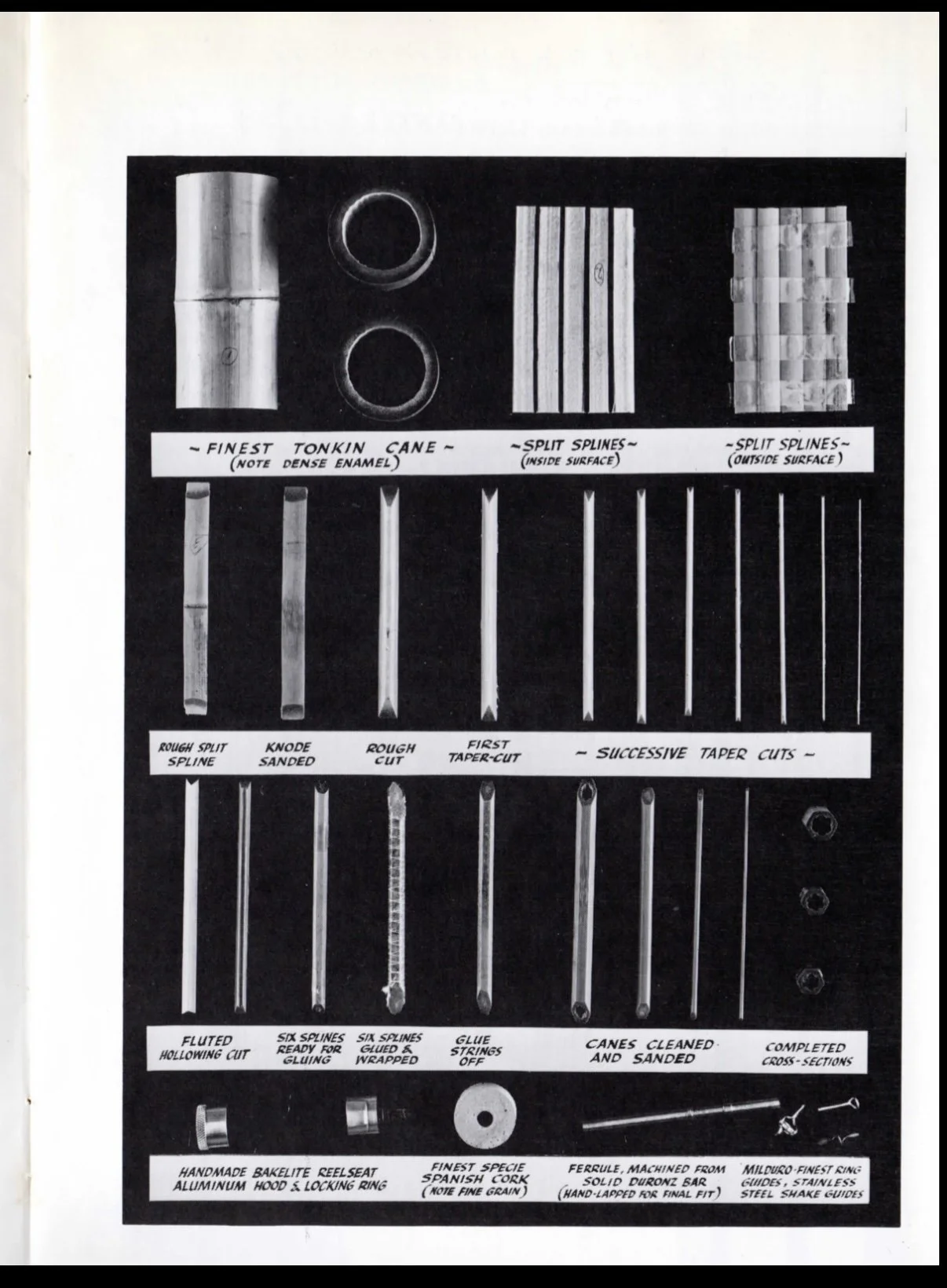
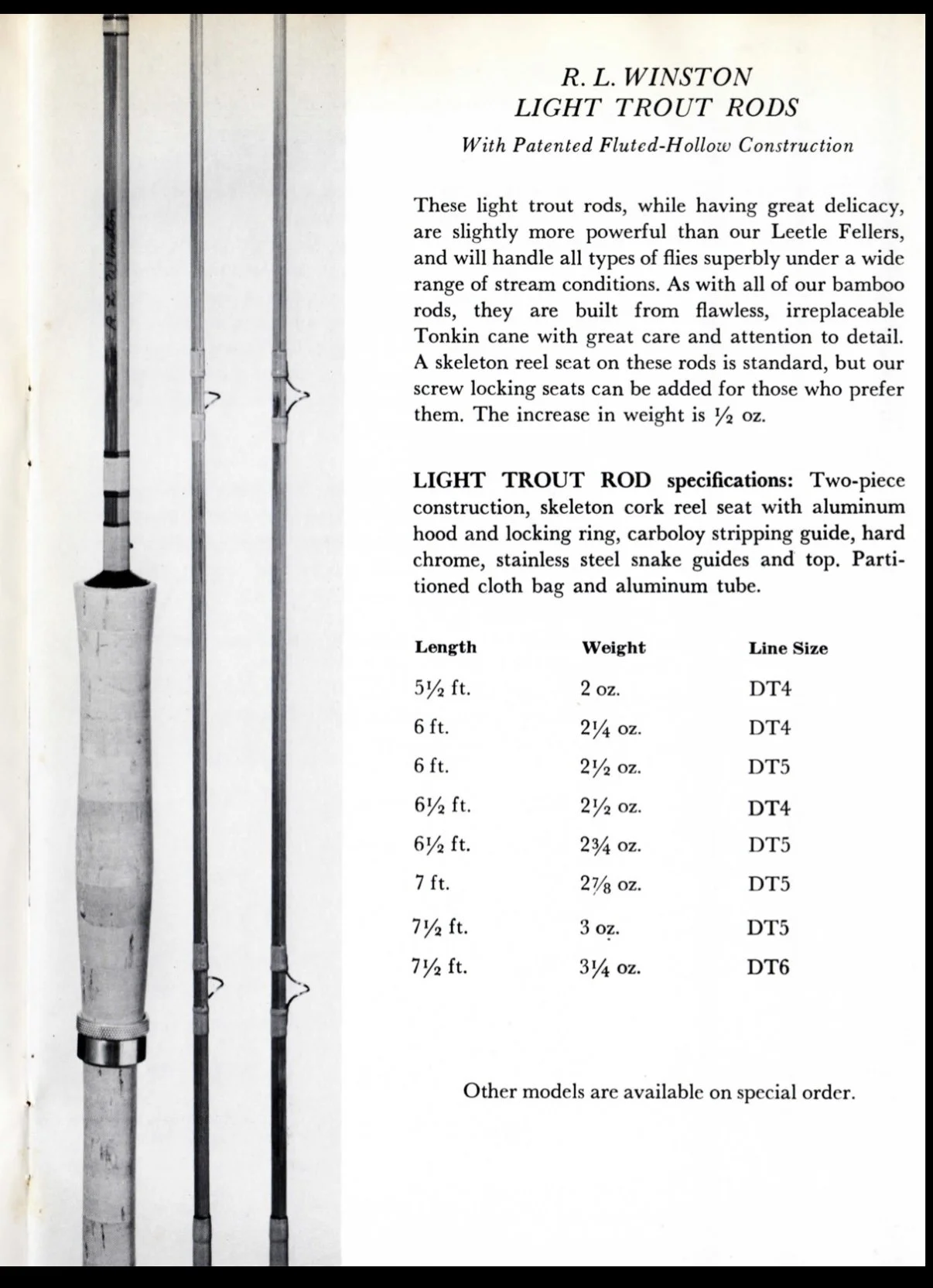
Among Winston's most important early contributions was the development of hollow-built bamboo construction, particularly associated with Lew Stoner. By removing material from the interior of the bamboo sections while preserving their structural integrity, Winston could produce rods that were lighter and more responsive than many conventional solid-built designs. This approach demanded considerable skill. The dimensions of the bamboo, the distribution of weight and the relationship between strength and flexibility all had to be carefully considered. The result was not merely a lighter rod, but one with a distinctive sense of liveliness and recovery.
For many collectors and anglers, the hollow-built Winston remains one of the defining achievements of twentieth-century American bamboo rodmaking.
The Winston Tradition of Craftsmanship
The finest Winston bamboo rods possess a character that is difficult to reduce to measurements or specifications. Their appeal lies in the relationship between taper, weight and action — qualities that become apparent only when the rod is assembled, cast and fished.
Winston rods were made to be working instruments, not simply objects of admiration. Their tapers reflected a belief that a fine fly rod should communicate with the angler, load naturally and deliver the fly with precision and grace.
The understated appearance of many classic Winston rods is equally characteristic. Rather than relying on elaborate decoration, their distinction comes from the quality of the cane, the precision of the construction and the harmony of the finished rod.
This combination of technical innovation and traditional craftsmanship helped establish Winston as one of the great names in American bamboo.
Doug Merrick and Gary Howells — Refining the Tradition
The arrival of Doug Merrick in 1945 marked the beginning of another important chapter in Winston's history. Merrick became a partner in 1953 and took sole ownership following Lew Stoner's death in 1957.
Under Merrick, Winston's bamboo rods gradually evolved beyond their tournament-casting origins. While retaining the advantages of hollow-built construction, the company refined its tapers to produce rods particularly well suited to the demands of trout fishing.
Among the craftsmen who worked alongside Merrick was Gary Howells, who joined Winston in 1957. Howells developed his skills in the San Francisco workshop before establishing his own rodmaking business in 1970. His later work would become highly regarded among collectors of American bamboo.
The Merrick years represent an important period in Winston's development: one in which the company's technical achievements were complemented by an increasingly refined understanding of the fishing qualities of bamboo.
Tom Morgan, Glenn Brackett and the Move to Montana
In 1973, Tom Morgan purchased Winston from Doug Merrick, bringing with him a deep understanding of trout fishing and a philosophy of rod design shaped by years spent on Montana's rivers. Glenn Brackett joined the company in 1974 and became closely associated with Winston's bamboo production. Together, Morgan and Brackett helped guide Winston through a period of considerable change.
In 1976, Winston relocated from San Francisco to Twin Bridges, Montana, placing the company close to the Beaverhead, Big Hole and Jefferson rivers. It was a significant geographical move, but also one that reflected the importance of fishing experience in the development of fine rods. While Winston expanded into fiberglass and graphite, bamboo remained an essential part of its identity. Brackett would become one of the most important figures in Winston's later bamboo tradition, eventually leaving to establish Sweetgrass Rods with fellow craftsmen.
The connection between Winston, Tom Morgan, Gary Howells and Glenn Brackett illustrates how knowledge and craftsmanship passed between generations of American rodmakers, creating distinct but closely related traditions.
The Enduring Appeal of Winston Bamboo
For the collector, Winston bamboo rods offer a particularly interesting history. The early San Francisco hollow-fluted rods, the refined Merrick-era examples and the later Montana-made rods each represent different chapters in the development of the company.
Their appeal extends beyond rarity or historical importance. A fine Winston bamboo rod remains, above all, a fishing instrument — one designed to be appreciated through the feel of the cane, the movement of the line and the quiet satisfaction of a well-placed cast.
Winston's bamboo tradition has endured through changes in ownership, materials and generations of craftsmen. Even after a devastating fire destroyed its original Montana bamboo workshop in 2017, the company reopened a dedicated facility in 2019 and continues to produce bamboo rods in limited numbers.
It is this continuity, perhaps more than any individual innovation, that defines the Winston legacy: an enduring commitment to the qualities of split cane and the belief that a truly fine fly rod should be made to fish, to last and to be passed on.