“The Makers”
Jim Payne

Edward’s legacy. Jim’s exacting standard.
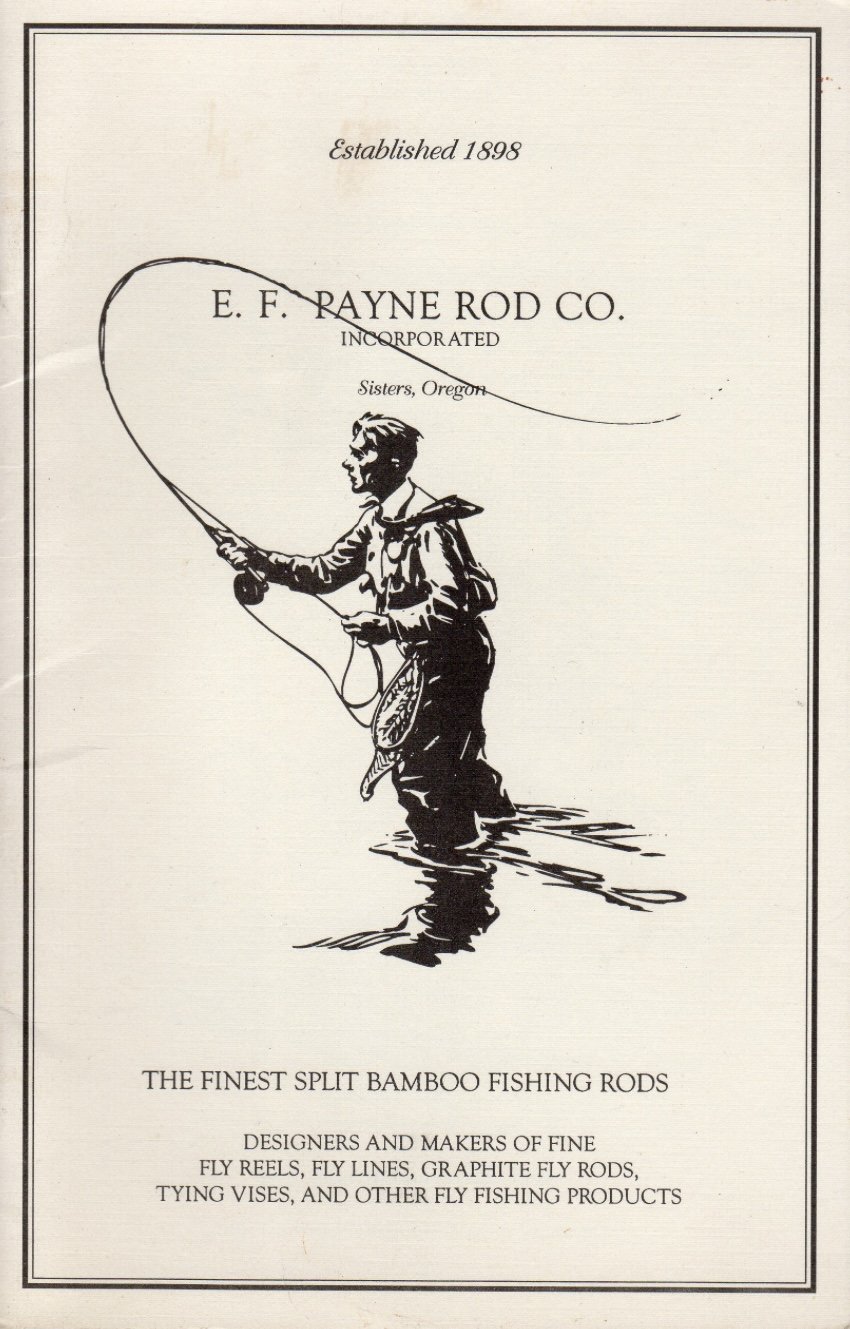
Few names command greater respect in American bamboo rodmaking than Payne. Established in Highland Mills, New York, in 1898, the E.F. Payne Rod Company became associated with exceptional workmanship and, under the direction of Jim Payne, a consistency that remains central to its reputation.
From Edward to Jim
Edward F. Payne belonged to the generation of craftsmen whose work helped establish the American split-cane tradition. His career included work with H.L. Leonard and involvement in the Kosmic enterprise alongside other distinguished makers, before he established his own company in Highland Mills. The Payne workshop grew from this close community of rodmakers, where knowledge of bamboo, machinery and fine metalwork passed between craftsmen who would each leave a lasting influence.
His son Jim began learning the trade at approximately ten years of age. When Edward died in 1914, Jim assumed responsibility for a business already bearing a respected name. Preserving its quality became a personal obligation: the American Museum of Fly Fishing describes his determination to maintain the standard of Payne rods as a tribute to his father.
Over the following decades, Jim developed a distinctive identity of his own. Flame-treated Tonkin bamboo gave his rods their characteristic deep brown colour, while his continuing refinements to design and action established Payne as one of the defining names of twentieth-century rodmaking.
The discipline of perfection
Jim’s perfectionism found expression in the complete rod. Carefully finished cane, precise metalwork and exceptionally accomplished varnishing formed an appearance of quiet restraint. Every detail belonged to the same coherent design, with the finish and casting qualities receiving equal consideration.
Writing in The American Fly Fisher in 1991, Gerald S. Stein described the remarkable breadth of affection for Payne rods. Anglers in his survey selected favourites ranging from short stream rods to long salmon rods, evidence of an achievement extending across many lengths and purposes. The reputation rested on a workshop capable of sustaining its standards throughout a substantial range of designs.
The Catskill Fly Fishing Center and Museum, drawing on Martin J. Keane’s Classic Rods and Rodmakers, credits Jim’s career with as many as 25,000 bamboo rods. Although the precise total remains uncertain, the figure conveys the scale of the undertaking: thousands of rods produced over decades under the direction of a craftsman remembered for meticulous workmanship and exacting expectations.
These were the products of a skilled workshop. George Halstead, for example, contributed important developments to the reel seats and ferrules associated with Payne rods. Jim’s achievement included bringing such craftsmanship together within a recognisable and enduring standard.
The last month
Jim sold the company to Gladding in 1963 but remained its master rodmaker. In May 1968, he left his workplace, reportedly telling friends and employees that he did not know when he would return. He died on 12 June, approximately one month later.
His standing among fellow craftsmen offers perhaps the clearest measure of his legacy. In an interview published by the American Museum of Fly Fishing, Hoagy B. Carmichael stated:
“I think Jim Payne was the greatest rodmaker who ever lived.”
For those who share that judgement, a Payne rod represents an unusually complete achievement: design, casting action and finish brought together through a lifetime of patient refinement.
Sources
Catskill Fly Fishing Center and Museum — Jim Payne. Biographical account drawing on Martin J. Keane’s Classic Rods and Rodmakers; includes the estimate of 25,000 rods and the timing of his final departure from the workshop.
American Museum of Fly Fishing — Jim Payne Fly Rod. His standards, commitment to his father’s legacy and continued role after the 1963 sale.
Gerald S. Stein — “Personal Treasures: The Bamboo Fly Rods and Reels Fishermen Love,” The American Fly Fisher, Fall 1991. Assessment of Payne’s workmanship and consistency, including Carmichael’s judgement and alternative production estimates.
American Museum of Fly Fishing — The American Fly Fisher, Winter 2008. Research on George Halstead’s contributions to Payne metalwork.
Italian Bamboo Rodmakers Association — Bamboo Journal, No. 17, November 2016, p. 40. Account of Jim’s departure from the workshop in May 1968.
The Classic Fly Rod Forum — History of the E.F. Payne Rod Company and Its Models. Supplementary collector research on Edward Payne’s earlier career and the company’s development.