“The Makers”
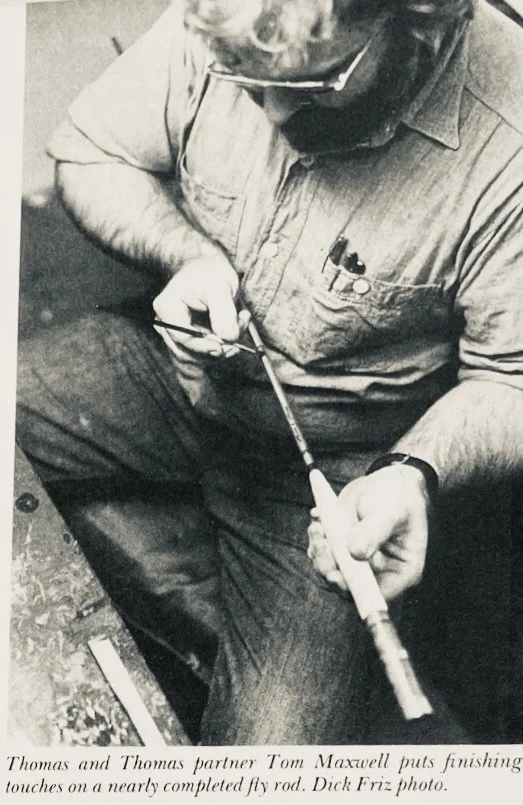
Thomas Maxwell
Tom Maxwell and the founding of Thomas & Thomas
The history of modern American bamboo rodmaking would be incomplete without Thomas Maxwell. A man of considerable intellect and a former professor of philosophy, Maxwell entered the world of professional rodmaking during a period when the traditional split-cane fly rod was increasingly being displaced by fiberglass and, subsequently, graphite.
In 1969, together with his brother-in-law Tom Dorsey, Maxwell founded Thomas & Thomas in Chambersburg, Pennsylvania. Both men had developed a passion for fly fishing and the craftsmanship of bamboo rods. What began as a modest enterprise would eventually become one of the most respected names in American fly rodmaking.
Their philosophy was rooted in an appreciation of traditional craftsmanship, but their approach was by no means confined to reproducing the past. The early Thomas & Thomas rods combined carefully considered tapers, elegant fittings, and meticulous finishing with an interest in improving the performance of the bamboo fly rod.
The company subsequently established itself in Greenfield, Massachusetts, attracting a new generation of talented rodmakers. Among them was Marc Aroner, who joined as an apprentice in 1973 and would later follow Maxwell to H.L. Leonard.
Thomas & Thomas became an important part of the renewed appreciation of American bamboo rodmaking. Its success demonstrated that the split-cane rod could remain a sophisticated and desirable fishing instrument, even as modern materials came to dominate the market.
Sources: Thomas & Thomas company history; Spinoza Rod Company historical account; Thomas & Thomas 50th anniversary history.
The Tom Maxwell period at H.L. Leonard
In early 1977, Maxwell left Thomas & Thomas to take charge of the rodbuilding operation at the venerable H.L. Leonard Rod Company in Highland Mills, New York. Marc Aroner joined him, bringing with him the skills acquired during his apprenticeship at Thomas & Thomas.
Leonard was one of the most distinguished names in American bamboo rodmaking, with a history extending back to the nineteenth century. By the time Maxwell arrived, however, the company faced considerable challenges. The increasing popularity of graphite rods had transformed the fly-fishing market, while maintaining the standards of traditional bamboo construction remained a demanding and costly undertaking.
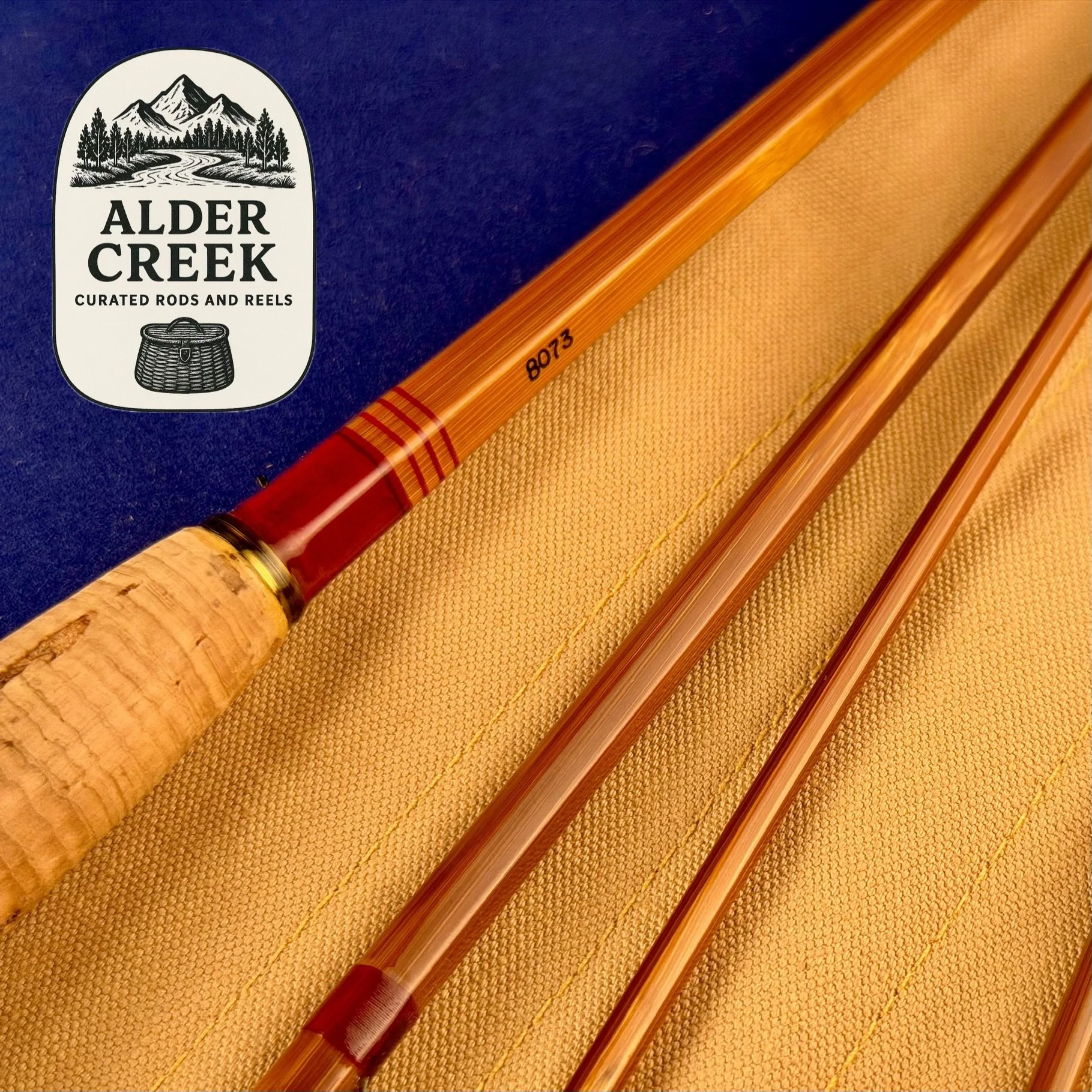
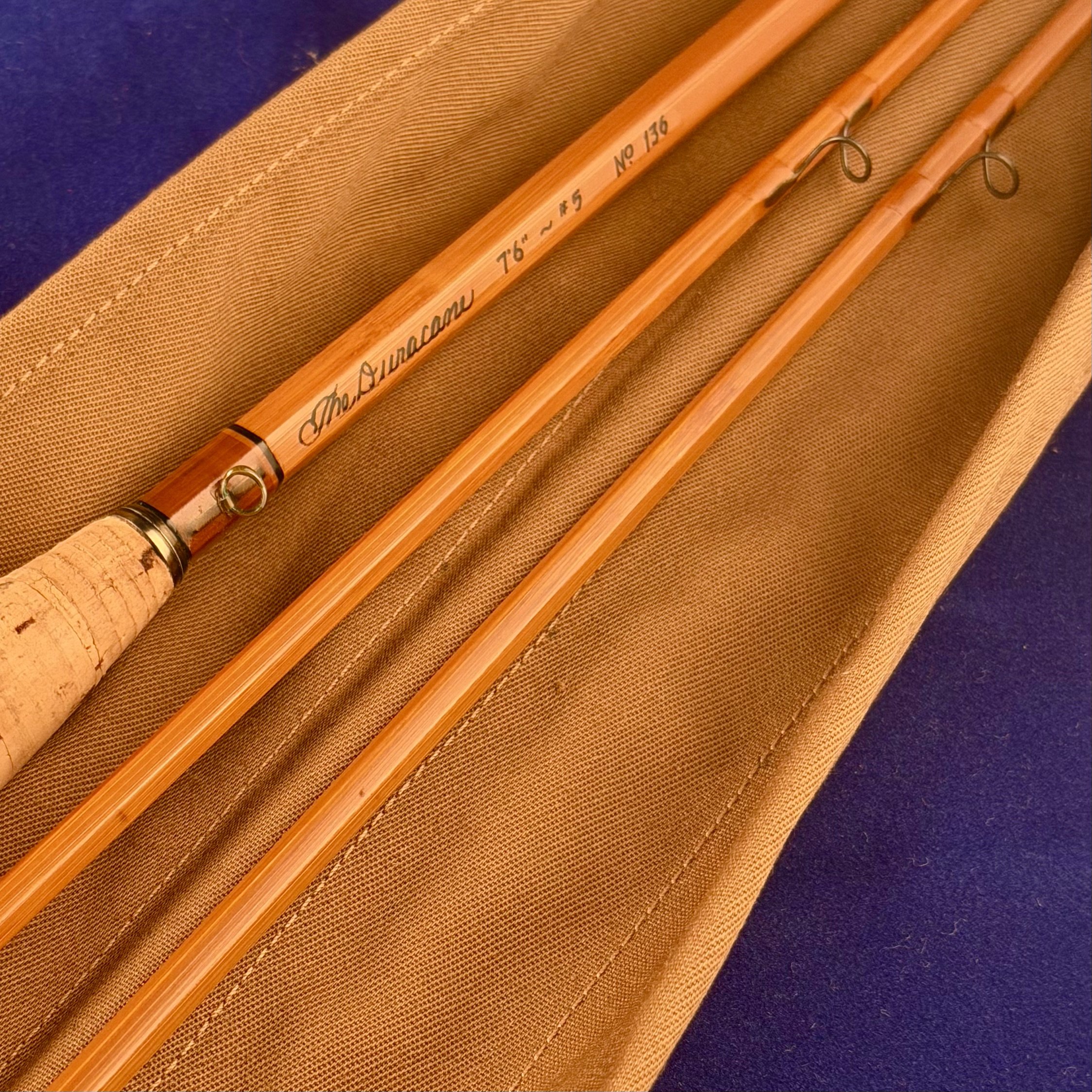
Maxwell brought both a deep respect for Leonard's heritage and a willingness to reconsider certain aspects of rod design. Under his direction, the company produced rods that combined traditional Leonard workmanship with a distinctive, often more responsive casting character. he also quickly implemented a new serial number system as well personally hand drew or “painted” the model designations on all rods.
The Hunt series is particularly associated with this period. The use of flamed bamboo, carefully selected fittings, and attention to reducing unnecessary weight contributed to rods that many anglers regard as lively, balanced, and exceptionally satisfying to cast.
Maxwell's tenure at Leonard was relatively brief, ending early 1982. Nevertheless, his influence was lasting. Rods from this period are now commonly described by collectors as Maxwell Leonards, a designation that reflects his direction of the workshop and its standards rather than necessarily indicating that he personally built every rod.
The distinction between rods produced during Maxwell's actual tenure and those made subsequently in a similar style is important. For collectors, provenance, serial numbers, inscriptions, and construction details can all help establish a rod's place within this period.
After leaving Leonard, Maxwell continued making bamboo rods independently. He died in 1998, leaving a legacy not only in the rods bearing his name but also through the craftsmen he had helped train.
Sources: Spinoza – Maxwell biography; What do you consider a Maxwell Leonard?; Leonard Hunt discussion.
Why are Maxwell rods so highly regarded?
The reputation of Tom Maxwell's rods rests upon a combination of craftsmanship, thoughtful design, and their distinctive place in the history of American bamboo rodmaking.
Craftsmanship and attention to detail
Maxwell placed considerable importance on the quality of the finished rod. The selection and preparation of bamboo, the fitting of ferrules, the finishing of guides, and the overall balance of the completed instrument were treated as essential parts of its performance. His approach was consistent with the finest traditions of American rodmaking: a fly rod should not merely be beautiful to look at, but should possess the qualities that make it a pleasure to fish.
An understanding of rod action
Maxwell's reputation also rests upon his understanding of taper design and the relationship between weight, stiffness, and casting characteristics. One particularly interesting observation made by experienced rodmakers on The Classic Fly Rod Forum concerns the Maxwell-period Hunt rods. Their lively action may have resulted not simply from changes to the bamboo taper, but also from careful reductions in the weight of components such as ferrules and guide feet. This attention to the distribution of weight illustrates a fundamental principle of fine rod design: relatively small changes in construction can have a noticeable effect on how a rod feels and performs.
The Maxwell-era Leonard Hunt rods
Among Maxwell's Leonard production, the Hunt models occupy a special place. Their flamed cane, restrained appointments, and often crisp, responsive action distinguish them from many earlier Leonard rods. Collectors who have fished multiple Maxwell-era models describe meaningful differences between the Hunt and the more traditional Dry Fly and Medium series. The Hunt rods are often characterised as more lively and responsive, while certain other models retain a smoother, more relaxed casting tempo. These differences help explain their appeal. A Maxwell Leonard is not simply a historical collectible, but a rod that can offer a distinctive and rewarding experience on the water. For example, see the Maxwell-era Hunt 50-5 carried here at alder creek rods.
Historical significance and collectability
Maxwell's importance is also historical. Few modern American rodmakers played such a direct role in the histories of two distinguished companies. As a founder of Thomas & Thomas, he helped establish a new generation of premium American bamboo rods. At Leonard, he contributed to the continuation and development of a much older tradition. His influence also extended through the rodmakers he mentored, including Marc Aroner and Rick Robbins.
The relatively short period of his association with Leonard adds to the interest of authenticated examples. Yet their desirability cannot be explained by rarity alone. For many collectors, the attraction lies in the combination of fine workmanship, distinctive casting qualities, and an identifiable connection to one of the important figures of modern American bamboo rodmaking.
A well-preserved Maxwell Leonard represents something more than a chapter in the history of H.L. Leonard. It reflects a period when traditional craftsmanship and modern thinking came together to produce some of the most admired bamboo fly rods of their generation.
Sources: Leonard Maxwell vs. Aroner rods; Leonard Hunt tapers and construction; Rate the Leonard rods.