“The Makers”
Gary H. Howells
The Quiet Master of California Bamboo Rodmaking
Few American bamboo rodmakers of the latter twentieth century achieved the quiet distinction of Gary H. Howells. Working largely alone in California, Howells produced rods of exceptional refinement, combining the traditions of the great San Francisco rodmakers with a deeply personal understanding of bamboo, casting and the qualities of a fine fishing rod.
His rods are admired for their elegant proportions, meticulous craftsmanship and progressive actions. Produced in relatively small numbers, they have become increasingly desirable among collectors and anglers who value both their remarkable fishing qualities and their place in the history of American bamboo rodmaking.
EARLY YEARS AND THE WINSTON TRADITION
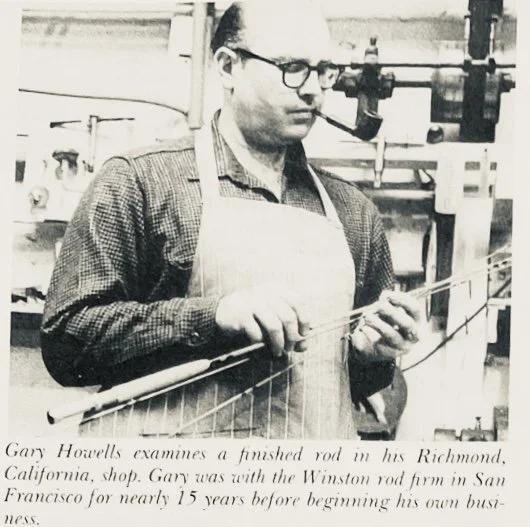
Gary Howells began making bamboo fly rods while still a teenager, hand-planing his first rod in the late 1940s. An accomplished fly tier as well as an aspiring rodmaker, he used his skills to help finance his university education. In 1957, Howells joined the R.L. Winston Rod Company in San Francisco, where he worked under the direction of Doug Merrick and became one of the company's principal bamboo rodmakers.
Winston was already an important name in American rodmaking. The pioneering work of Lew Stoner, particularly in the development of hollow-built bamboo rods, had established the company as a leader in rod design and casting performance. During his thirteen years at Winston, Howells acquired an intimate understanding of bamboo construction, taper design and the relationship between a rod's physical characteristics and its performance on the water.
The Winston tradition would remain an important influence throughout his career, although the rods he later produced under his own name developed a character unmistakably their own.
THE G. H. HOWELLS ROD COMPANY
In 1970, Howells left Winston to establish his own workshop in the San Francisco Bay Area, operating under the name G. H. Howells Rod Company.
Here he pursued an unusually independent approach to rodmaking. Rather than expanding production or employing a large workforce, Howells chose to remain a small-scale craftsman, maintaining personal control over the construction and finishing of his rods. Production was deliberately limited. For many years, customers could order no more than one rod annually, and his order book was frequently filled almost as soon as a new production period began.
Howells generally devoted approximately eight months of each year to rodmaking, reserving the remaining months for fishing and travel. His favourite waters lay in the American West, particularly Montana, Idaho and Wyoming, although his fishing also took him to British Columbia and South America.
These journeys were more than a diversion from the workshop. Howells was, above all, a fisherman, and his experience on the water informed his understanding of what a bamboo rod should accomplish.
THE HOWELLS ROD
A Gary Howells bamboo rod is immediately recognisable to those familiar with his work. His rods are distinguished by careful proportions, restrained appointments and a remarkably consistent standard of workmanship. The emphasis is never upon ornament for its own sake, but upon the relationship between construction, balance and performance.
Howells paid particular attention to the selection and preparation of bamboo, the arrangement of nodes and the precision of the finished taper. The resulting rods often exhibit a characteristic medium to medium-fast progressive action, combining sensitivity with a reserve of power that becomes apparent as the cast develops. Although individual models vary, many Howells rods possess an unusually harmonious character: delicate enough for precise presentations, yet capable of generating line speed and authority when required.
This balance between refinement and practical performance remains central to their appeal.
A RODMAKER'S PHILOSOPHY
Howells was known as a private and independent individual, more interested in the quality of his work and the pleasure of fishing than in public recognition.
He guarded many of his construction methods carefully, although he shared knowledge with a select circle of fellow craftsmen.
His limited production was not simply a matter of exclusivity. It reflected a deliberate decision to maintain control over the quality of each rod and to preserve the freedom to pursue his own interests.
In this respect, Howells belonged to a tradition of American craftsmen for whom rodmaking was not merely a business, but a lifelong exploration of materials, design and performance.
His rods were intended to be fished, and their lasting reputation rests as much upon their qualities on the water as upon the craftsmanship with which they were made.
THE HOWELLS LEGACY
Howells continued producing bamboo rods under his own name until 1997, leaving behind a comparatively small body of work.
His influence, however, extends beyond the rods themselves.
The G. H. Howells Rod Company represents an important connection between the historic San Francisco Winston tradition and the independent American bamboo rodmakers who helped sustain and renew the craft during the latter twentieth century.
His methods, workshop records and rodmaking equipment subsequently became part of the work of rodmaker Robert Bolt, helping preserve elements of the Howells tradition for a later generation.
Today, original Gary Howells rods occupy a distinctive place among collectible American bamboo fly rods.
Their appeal lies in a rare combination of historical significance, restrained craftsmanship and exceptional fishing character.
COLLECTING GARY HOWELLS RODS
For collectors, originality and condition are particularly important when considering a Gary Howells rod.
The most desirable examples generally retain their original length, configuration, ferrules, guides, wraps, grip and reel seat, together with the original rod bag and tube.
Serial numbers and documented provenance may provide valuable information concerning the period of manufacture and the history of an individual rod.
Rods from the 1970s are of particular interest as examples of Howells' early independent work, although fine rods from throughout his career remain highly regarded.
As with all important bamboo rods, condition and originality should be considered alongside the individual taper and its suitability for fishing.
Ultimately, the finest Howells rods are valued not simply as collectible objects, but as fishing instruments of enduring quality.
GARY HOWELLS AT ALDER CREEK
Alder Creek has handled examples of Gary Howells' independent rodmaking, including rods from the late 1970s.
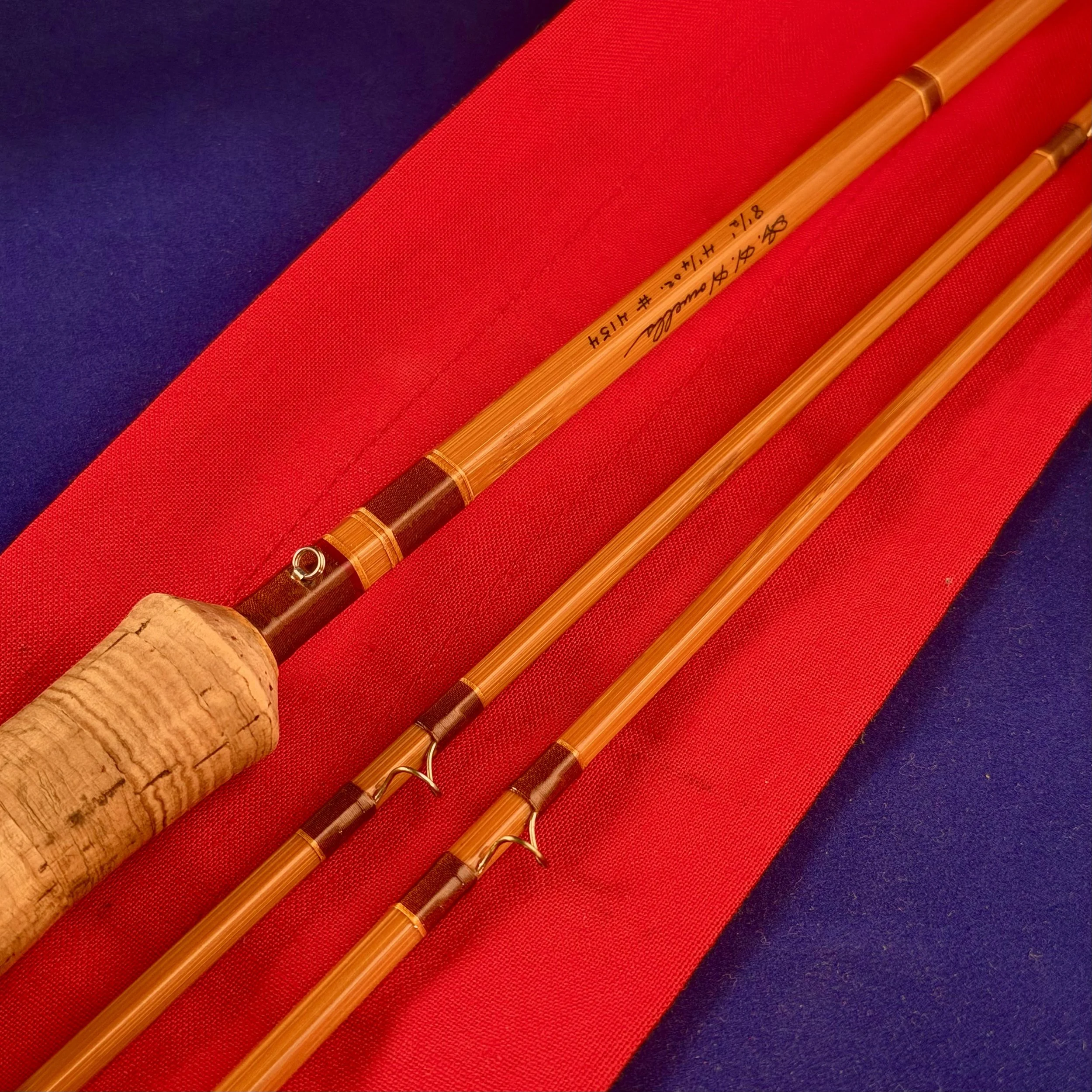
Of particular interest is an 8'6", two-piece, two-tip rod, serial number 4154, dating to approximately 1978–1979 and associated with the collection of Danish angler and author Preben Torp Jacobsen.
With its refined progressive action and characteristic Howells workmanship, it represents an appealing example of the California maker's mature approach to bamboo rod design.
Explore Gary Howells rods at Alder Creek, or contact us if you are searching for a particular model.
FURTHER READING
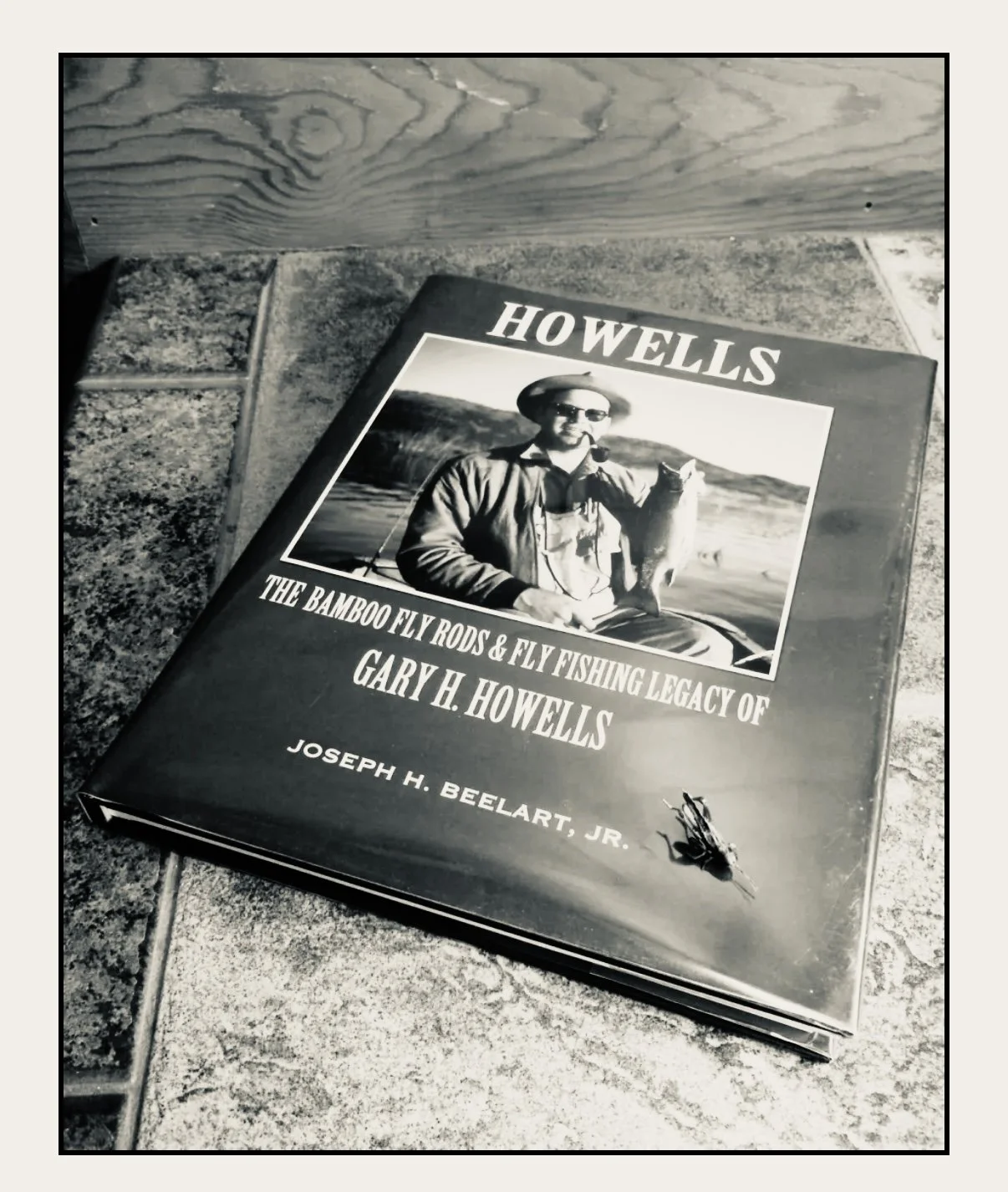
Howells: The Bamboo Fly Rods & Fly Fishing Legacy of Gary H. Howells, by Joseph H. Beelart Jr., published by Whitefish Press in 2013.